


Can You Sue for Emotional Distress in Arizona?
Emotional harm from negligent medical care can stay with a patient and their family long after treatment ends, often alongside a serious injury or worse. Fear that lingers, sadness through additional recovery time, and the strain of watching someone you love struggle can reshape everyday life at home and at work. Because that kind of harm is harder to see than a physical injury, many people are unsure whether it is taken seriously. Knowing how Arizona law treats emotional distress can bring some clarity to a hard and uncertain time.

Last Updated: November 4, 2026
What You Should Know About Suing for Emotional Distress in Arizona:
- Arizona lets you sue for emotional distress in two ways, either as part of the damages in a claim for an injury someone’s negligence caused or as a standalone claim for negligent or intentional infliction of emotional distress.
- A patient injured by medical negligence in Arizona can seek compensation for emotional suffering as part of pain and suffering and loss of enjoyment of life, once the evidence proves the care fell below the accepted standard and caused the injury.
- Temporary upset, crying, or sleeplessness alone is not enough for a negligence-based emotional distress claim in Arizona, but a substantial, lasting mental disturbance can meet the bodily-harm requirement without a separate physical injury.
- Rudeness alone is not enough for intentional infliction of emotional distress in Arizona, which requires extreme and outrageous conduct and severe distress, and the judge decides first whether the conduct could meet that bar.
- Arizona allows punitive damages only on clear and convincing proof of an evil mind, and negligence or gross negligence alone is not enough.
- A family member who witnessed a negligent injury in Arizona can claim for their own distress only if they were also in the zone of danger, while a spouse, parent, or child of a seriously and permanently injured patient may have a separate loss of consortium claim.
- Under Section 12-613 of the Arizona Revised Statutes, surviving family members in a wrongful death case can recover for their own proved grief, emotional distress, and lost companionship.
- A pre-existing mental health condition does not bar an emotional distress claim in Arizona, and Arizona’s civil jury instructions allow recovery for the worsening the negligence caused.
- Article 2, Section 31 of the Arizona Constitution bars any law capping damages for injury or death, and most Arizona medical negligence claims must be filed within two years under A.R.S. § 12-542.
How Can You Sue for Emotional Harm in Arizona?
You can sue for emotional distress in Arizona in two ways, either as part of the damages when someone’s negligence injured you or as a standalone claim for negligent or intentional infliction of emotional distress. In Keck v. Jackson (1979), the Arizona Supreme Court set the ground rules for negligence-based emotional distress claims.
Which route fits depends on what happened. When negligent medical care caused a physical injury, the anxiety, fear, or depression that followed counts with the rest of the harm in a medical malpractice claim. A standalone claim has its own, stricter elements, each of which has to be proved.
Can You Recover for Mental Suffering in an Arizona Medical Malpractice Case?
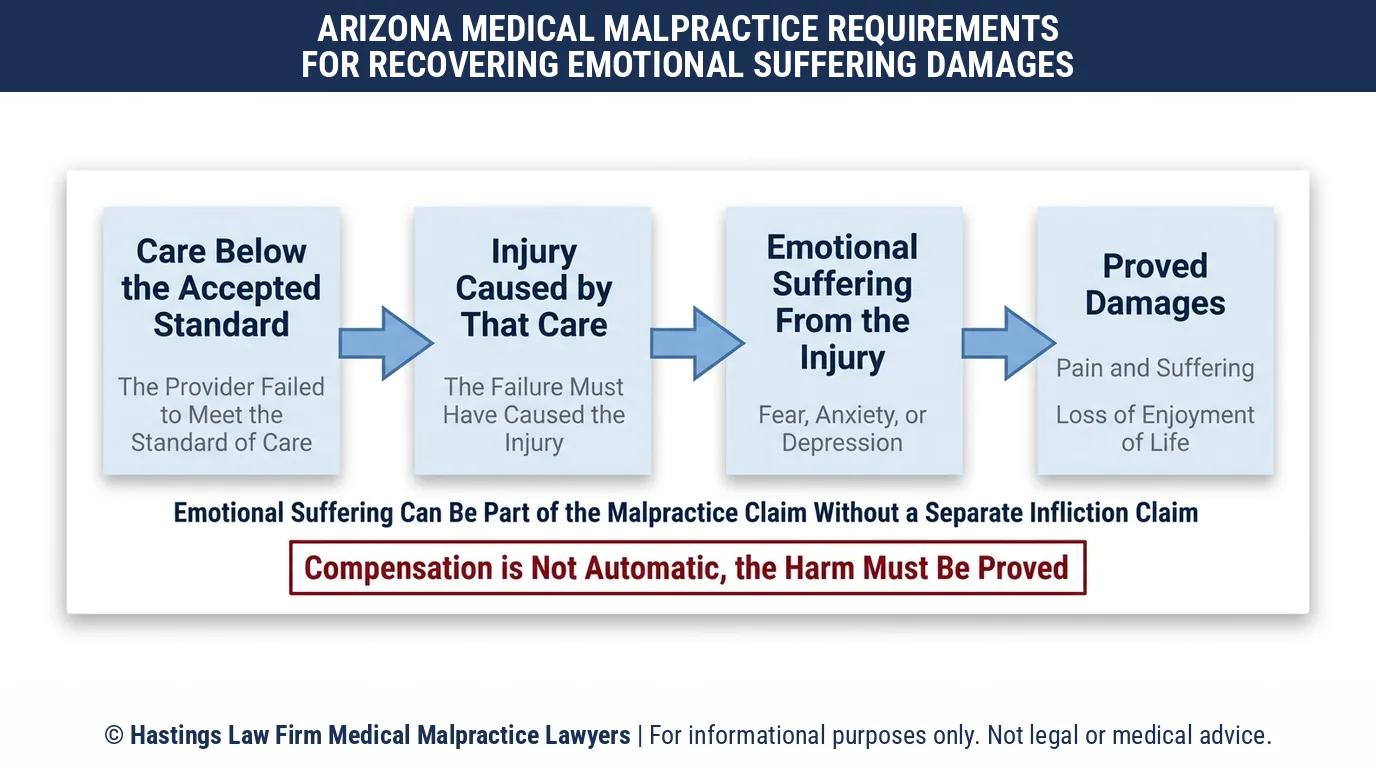
You can sue a doctor for emotional distress in Arizona when their negligence injured you, because a medical malpractice case can recover for mental suffering. Under the Revised Arizona Jury Instructions (Civil), the negligence must have caused an injury and the damages must be proved. Depending on the evidence, compensation can then cover the pain and emotional suffering the injury caused.
Before any damages are considered, every medical malpractice claim in Arizona must prove that the healthcare provider fell below the accepted standard of care and that this failure caused the injury. Medical experts usually explain both, with a narrow exception when the negligence is apparent to someone without medical training.
Once those elements are proved, a patient living with fear and anxiety after a surgical error, or with depression through additional recovery time, can seek compensation for that suffering within the malpractice claim itself, with no separate infliction claim needed. Arizona juries weigh that harm as part of pain and suffering and loss of enjoyment of life. Neither is awarded automatically, so the record of the harm matters from the start.
How Serious Must Mental Harm Be to Support a Claim in Arizona?
Emotional distress in an Arizona lawsuit is psychological harm such as anxiety, depression, fear, or trauma symptoms, and how serious it must be depends on the claim. A standalone intentional claim needs severe distress. For a negligent infliction claim, an Arizona appeals court has said a long-term mental disturbance can satisfy the bodily-harm requirement, while temporary upset, crying, or sleeplessness alone does not.
Harm that lasts usually shows in the record through ongoing treatment, a diagnosis, and changes at work or at home. Trouble sleeping still belongs in that record, because it does not defeat a claim when it comes with a substantial, lasting disturbance.
What is Negligent Infliction of Emotional Distress in Arizona?
Negligent infliction of emotional distress is an Arizona claim for the distress you suffer when someone’s negligence puts you at unreasonable risk of bodily harm. Arizona’s civil jury instructions require negligence, that risk of harm, resulting emotional distress, physical injury or illness caused by the distress, and damages.
The claim covers an event that endangered you without physically injuring you, such as a serious error in care that put your health at real risk. It rests on the danger to you, not on watching someone else get hurt, and not every careless act qualifies.
The distress also has to meet the bodily-harm requirement from Keck v. Jackson, showing up as physical injury or illness or as a long-term mental disturbance. That is why lasting, documented harm matters so much in a negligent infliction claim.
Can You Sue for Mental Anguish in Arizona Without a Physical Injury?
You can sue for mental anguish in Arizona without a physical injury, though what you must show depends on the kind of claim. Under Arizona’s civil jury instructions, a claim for intentional infliction of emotional distress needs no physical injury, but the distress must be severe. A claim for negligent infliction needs qualifying bodily harm, which a substantial, lasting mental disturbance can satisfy on its own.
For a patient, the question usually comes down to how serious the harm is and how long it lasts. Someone endangered by negligent care and left with lasting mental harm that needed treatment may have a claim. A brief scare is not enough, even when the moment itself was frightening.
What Does Intentional Infliction of Emotional Distress Require in Arizona?
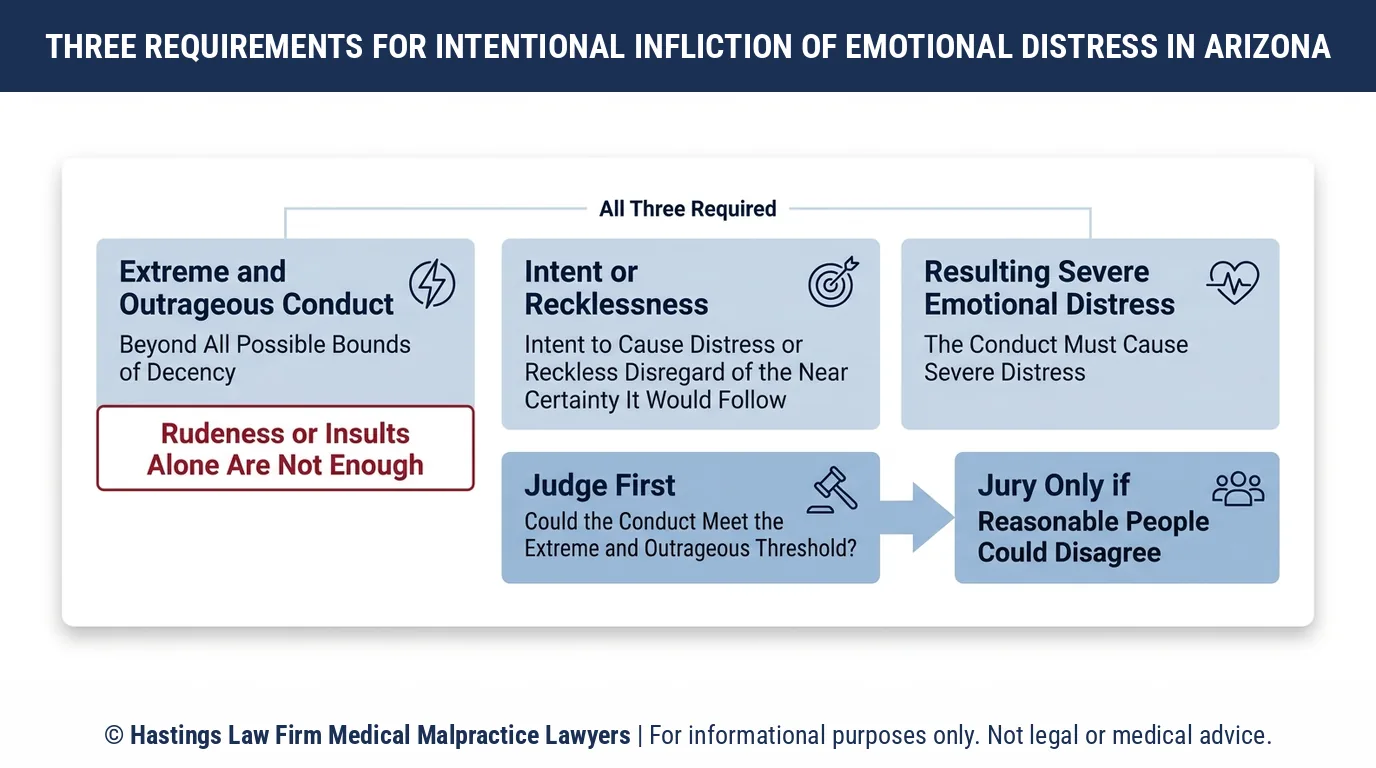
Intentional infliction of emotional distress in Arizona requires extreme and outrageous conduct, an intent to cause emotional distress or reckless disregard of the near certainty that it would follow, and severe emotional distress that results. Arizona’s civil jury instructions set out those three elements, and the first is a high bar.
The conduct must be so atrocious that it goes beyond all possible bounds of decency, and insults or rudeness on their own do not qualify. The trial judge decides first whether the conduct could clear that bar, and a jury hears the claim only when reasonable people could disagree about it.
A medical mistake is usually negligence, not intent, so it belongs in a malpractice claim rather than this one. Intentional infliction fits conduct such as the abuse of a vulnerable patient, which is why it can come up in nursing home abuse cases in Arizona.
Intentional or reckless conduct is also where punitive damages come up. In Swift Transportation v. Carman (2022), the Arizona Supreme Court confirmed that punitive damages require clear and convincing proof of an evil mind, and negligence or gross negligence alone is not enough.
Can Family Members in Arizona Recover for Their Own Mental Suffering?
Family members in Arizona can recover for their own mental suffering in limited situations, and seeing a loved one hurt by negligence counts only if they were in danger themselves, which courts call the zone of danger. Under Keck v. Jackson and Pierce v. Casas Adobes Baptist Church (1989), the Arizona Supreme Court also requires qualifying bodily harm from the distress, and learning about the injury afterward is not enough.
More often, a family’s own claim is loss of consortium, which covers the lost love, companionship, and care of a close relationship when the patient survives. A spouse may recover for those losses within the marriage. A parent may recover when a minor or adult child suffers a severe, permanent, and disabling injury that substantially impairs their relationship, which can include a serious birth injury in Arizona. In Villareal v. State Department of Transportation (1989), the Arizona Supreme Court recognized a child’s claim when a parent’s injury destroys or nearly destroys their relationship, even if the child did not witness it.
Can Survivors Claim Grief Damages After a Wrongful Death in Arizona?
Survivors can claim grief damages after a wrongful death in Arizona. Under Section 12-613 of the Arizona Revised Statutes, a jury considers the surviving family’s own proved losses, which can include grief, emotional distress, and lost companionship, though no family receives every category automatically.
The patient’s own pain and suffering, by contrast, does not carry over after the death, so a wrongful death claim looks to what the family has lost. Families who lost a mother after pregnancy or delivery care can learn more about maternal wrongful death claims in Arizona.
Does a Pre-Existing Mental Health Condition Affect an Emotional Distress Claim in Arizona?
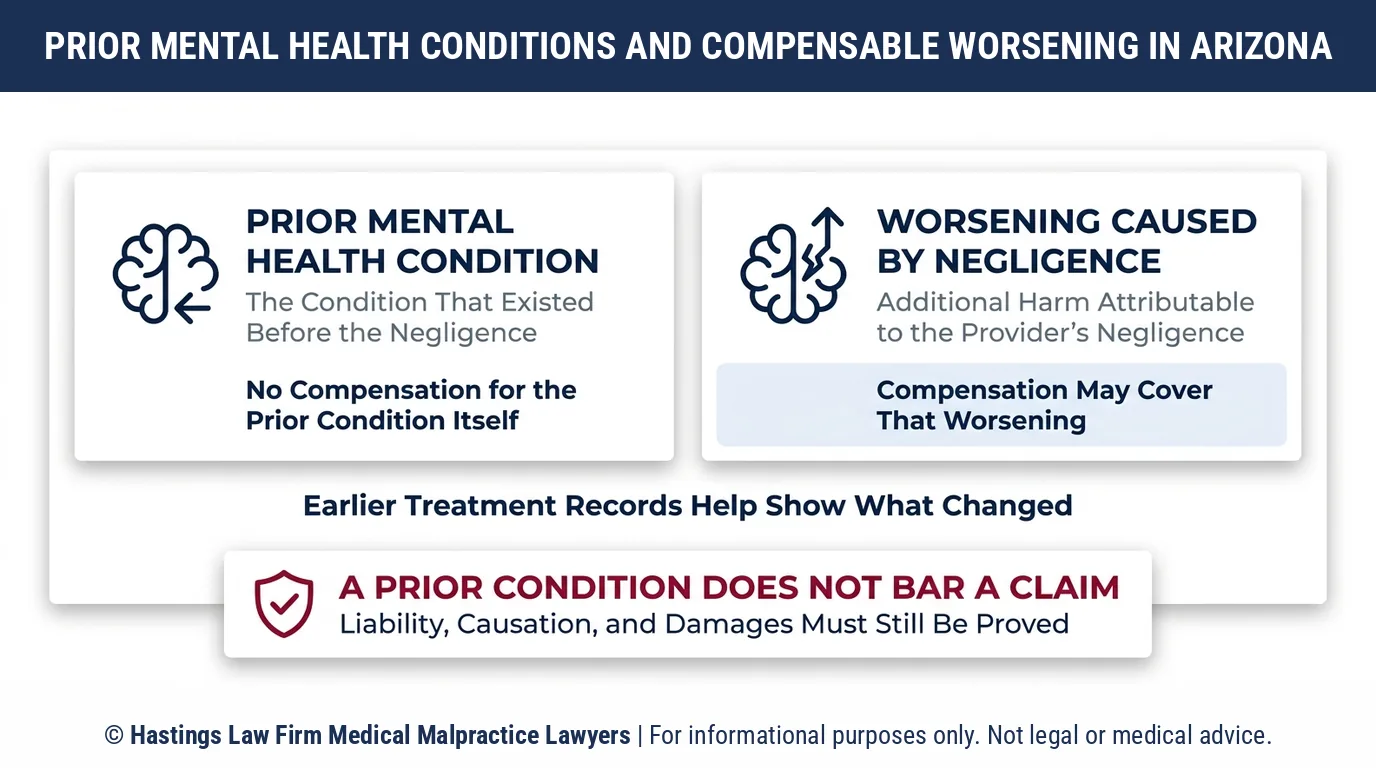
You can still sue for emotional distress in Arizona with a pre-existing mental health condition, and the condition affects what the claim covers rather than whether you can bring one. Arizona’s civil jury instructions allow an injured person to recover for the worsening of a pre-existing physical or emotional condition that someone’s fault caused, though not for the prior condition itself.
That rule protects a more vulnerable patient. A provider remains responsible for the harm their negligence caused even if a normally healthy person would not have suffered a similar injury, though liability, causation, and damages still have to be proved. Records of earlier treatment for anxiety or depression become part of the evidence, because they help show what changed.
How Much Compensation Can You Get for Mental Anguish in Arizona?
No set amount or formula exists for mental anguish compensation in Arizona. The jury decides what is fair from the evidence of how severe the harm was, how long it lasted, and how it changed your life. Under Article 2, Section 31 of the Arizona Constitution, no law may limit the damages a jury awards for injury or death.
That means Arizona places no cap on emotional distress damages in medical negligence cases. The Constitution does not guarantee any particular amount, so the evidence of the harm still decides what a claim is worth.
The Hastings Law Firm Difference
Results matter, but what truly sets us apart is how we achieve them. Every verdict, every settlement, and every courtroom victory comes from one guiding promise: To treat each client’s fight for justice as if it were our own.
This balance of skill, experience, and empathy reflects our core philosophy that justice should not only compensate the injured, but also make health care safer nationwide.

What Should You Do If Medical Negligence Left You With Emotional Distress in Arizona?
The first step if medical negligence left you with emotional distress in Arizona is to get care from a mental health professional and keep going to those appointments. Save every record and bill, write down how the harm affects your sleep, work, and family while it is fresh, and request the medical records of the care that caused it.
That treatment matters for your own health first, and it builds the record of the harm. The defense may point to a long gap in treatment as a sign the harm was not serious, so steady care protects both your recovery and the claim.
The people around you see the change too. Family members and coworkers can describe how you were before and after the care, and messages, journals, or notes written at the time help show how long the harm lasted. Their accounts matter because emotional harm does not show up on a scan or a lab result the way many physical injuries do.
Proving emotional distress comes down to putting those pieces together, from treatment records and a provider’s diagnosis and opinion to testimony from you and the people close to you about how daily life changed. No single item settles it on its own.
Some common mistakes can undercut that proof or the claim itself, including waiting to get help, posting about the injury or the case online, and signing anything from the provider or its insurer before talking to a lawyer. Social media posts in particular can be read out of context and used to suggest the harm is less serious than it is.
Delay also carries a legal risk, because most Arizona medical negligence claims, including the emotional distress damages in them, must be filed within two years under A.R.S. § 12-542. The clock can start when the patient knew or reasonably should have known enough to suspect that negligence caused the injury, which is not always the date of care, so the starting date is worth pinning down early.
Talk to an Arizona Medical Malpractice Attorney About Your Case
When you contact Hastings Law Firm, we listen to what happened and request the medical records at no cost, and our attorneys and medical professionals review them. Once that review is complete, we give you an honest answer about whether there is a claim.
Emotional harm is often part of the damages in a medical malpractice claim, and our lawyers have experience seeking compensation for it. We understand what lasting anxiety, depression, or grief after negligent care can mean for a patient and a family, from ongoing treatment to strain on work and relationships.
We work on a contingency fee, so you pay no attorney fees or costs unless we win, and we advance the cost of medical experts and everything else it takes to build the case. Hastings Law Firm has been dedicated exclusively to medical malpractice since 2005, and our Phoenix medical malpractice lawyers perform a free, confidential case review for patients and families. Our team is here for you.
Frequently Asked Questions About Emotional Distress Claims in Arizona
Is It Worth Suing a Doctor for Emotional Distress in Arizona?
Suing for emotional distress in Arizona can be worth it when negligent medical care caused a real injury and the harm is serious and lasting. The medical records show much of the injury and its effects, and a medical expert usually has to explain whether the care fell below the accepted standard and caused the injury.
That is why a careful review of the records comes before any decision. Arizona’s Constitution does not allow a cap on these damages, so the strength of that evidence also shapes what a claim is worth.
Can You Sue a Doctor in Arizona for Being Rude or Dismissive?
You cannot sue a doctor in Arizona for being rude, dismissive, or disrespectful alone. A claim for intentional infliction of emotional distress under Arizona’s civil jury instructions needs extreme and outrageous conduct, and ordinary rudeness, insults, or hurt feelings fall short of that bar.
A claim depends instead on the care itself, which must have fallen below the accepted standard and caused harm. If a dismissive doctor also missed a serious condition that a careful provider would have caught, that missed diagnosis can support a malpractice claim. A complaint about a doctor’s conduct can still go to the Arizona Medical Board, which investigates and disciplines physicians separately from any malpractice lawsuit.
Can a Delay in Treatment Support a Malpractice Claim in Arizona?
A delay in treatment can support a malpractice claim in Arizona when the delay fell below the accepted standard of care and caused harm that timely care would have prevented. Section 12-563 of the Arizona Revised Statutes requires proof of both, and a medical expert usually has to explain them.
The anxiety and suffering that come with a worsened condition can count as part of that claim’s damages, alongside the physical harm. When the delay comes from a missed or late diagnosis, it is the subject of failure to diagnose claims in Arizona.
Sources
- Keck v. Jackson, the Arizona Supreme Court’s emotional distress bodily-harm rule | CourtListener
- Arizona civil jury instructions on medical negligence, injury and damages | State Bar of Arizona
- Arizona appeals court opinion on long-term mental disturbance as bodily harm | CourtListener
- Arizona jury instructions on negligent infliction of emotional distress | State Bar of Arizona
- Arizona jury instructions on intentional infliction of emotional distress | State Bar of Arizona
- Swift Transportation v. Carman, the evil-mind standard for punitive damages | Arizona Supreme Court
- Pierce v. Casas Adobes Baptist Church, bystander and parental consortium rules | CourtListener
- Villareal v. State Department of Transportation, spouse and child consortium claims | CourtListener
- A.R.S. § 12-613, how Arizona measures wrongful death damages | Arizona State Legislature
- Arizona jury instructions on personal injury damages and pre-existing conditions | State Bar of Arizona
- Arizona Constitution Article 2, Section 31, no limit on injury damages | Arizona State Legislature
- A.R.S. § 12-542, Arizona’s two-year deadline for injury claims | Arizona State Legislature
- A.R.S. § 12-563, what an Arizona medical malpractice claim must prove | Arizona State Legislature
- Seisinger v. Siebel, expert testimony in Arizona medical negligence cases | Arizona Supreme Court

This content was researched and written by the Hastings Law Firm editorial team, which includes attorneys, medical professionals, and experienced researchers. Our writing is informed by internal knowledge and practical experience, and we cross-check critical details against authoritative sources cited throughout. Every piece undergoes human-led fact-checking and legal review. Because legal and medical information can change, if you spot an error, please contact us. Learn more about our content standards and review process on our editorial policy page.

Tommy Hastings, founder of Hastings Law Firm, is a board-certified personal injury trial lawyer (by the Texas Board of Legal Specialization) dedicated exclusively to healthcare injury cases. Since 2001, he has represented injured patients and families in litigation against major hospital systems, pharmaceutical companies, and negligent healthcare providers nationwide. He has handled numerous high-profile cases that have drawn national media attention and resulted in multi-million dollar recoveries.
