


Arizona Dangerous Drug Lawyer
Dangerous or defective prescription drugs can cause serious harm when risks are hidden, warnings are inadequate, or a product is contaminated. Injuries may stem from design defects, manufacturing problems, or failures to warn, and responsibility can extend beyond the manufacturer to a prescribing doctor or pharmacist when the standard of care is not met. These cases often involve complex medical evidence, disputed causation, and high stakes outcomes that can change a family’s life. If you or a loved one were harmed or worse due to a dangerous drug in Arizona, contact Hastings Law Firm for a free, confidential case review.
Last Updated: July 27, 2026
Arizona Dangerous Drug Attorneys Fighting for Injured Patients
When you take a prescribed medication, you trust that it has been properly tested, safely manufactured, and clearly labeled with known risks. That trust is the foundation of the patient-provider relationship. When a dangerous or defective drug causes serious harm, that foundation can feel shattered. You may be dealing with a new diagnosis, mounting medical bills, or the loss of someone you love, all because of a medication that was supposed to help.
You are not alone, and you are not without options. Board-certified trial attorney Tommy Hastings founded Hastings Law Firm to represent patients and families harmed by defective prescription drugs, contaminated medications, and pharmaceutical products with hidden risks. Our team of trial attorneys, former defense counsel, and in-house nurse consultants understands both the medicine and the law behind these claims.
If a medication caused you or a loved one serious harm, we can review what happened. This includes injuries tied to a drug recall, which is a formal action to remove a dangerous product from the market. We will explain your legal options in a free, confidential case evaluation.

When Medication Causes Harm: Understanding Dangerous Drug Claims
A dangerous drug claim arises when a pharmaceutical product causes injury due to defects in its design, improper labeling, or negligence at some point in its path from manufacturer to patient. This legal process involves an Arizona Dangerous Drug Lawyer evaluating how the product was brought to market and whether the manufacturer prioritized safety. If the drug carried unreasonable risks that outweighed its therapeutic benefits, or if the manufacturer failed to meet the standard of care by warning of severe side effects, injured patients may have a right to pursue compensation.
Many people assume that FDA approval means a drug is completely safe. That assumption is understandable, but it is not always accurate. The FDA reviews data submitted largely by the manufacturers themselves, and some risks only become apparent after a drug reaches millions of patients.
The FDA Adverse Event Reporting System (FAERS) is a database that collects reports of adverse drug reactions, which are unexpected or harmful responses to prescription drugs. It has documented thousands of cases where approved drugs later proved far more dangerous than initially disclosed. These life-altering outcomes, such as organ failure, stroke, or heart attack, are consequences no patient consented to when filling a prescription.
As Arizona dangerous drug attorneys, we see patterns across these cases. Certain drug categories appear in litigation more frequently than others:
- Blood thinners linked to uncontrollable internal bleeding
- Antidepressants and anti-anxiety medications associated with suicidal ideation or birth defects
- Chemotherapy and immunotherapy drugs with undisclosed toxicity risks
- Diabetes medications connected to cardiovascular events or kidney damage
- Proton pump inhibitors tied to chronic kidney disease
- Testosterone and hormone therapies linked to blood clots and stroke
- Opioids and pain management drugs associated with addiction, overdose, and death
The FDA’s drug recall database tracks products pulled from the market due to safety concerns, but many dangerous drugs remain available long after reports of serious harm surface. A dangerous drug lawyer in Arizona can help you determine whether your pharmaceutical injury is connected to a known pharmaceutical risk and whether you have grounds for a personal injury claim.
Grounds for a Claim: Defective Design, Manufacturing, and Failure to Warn
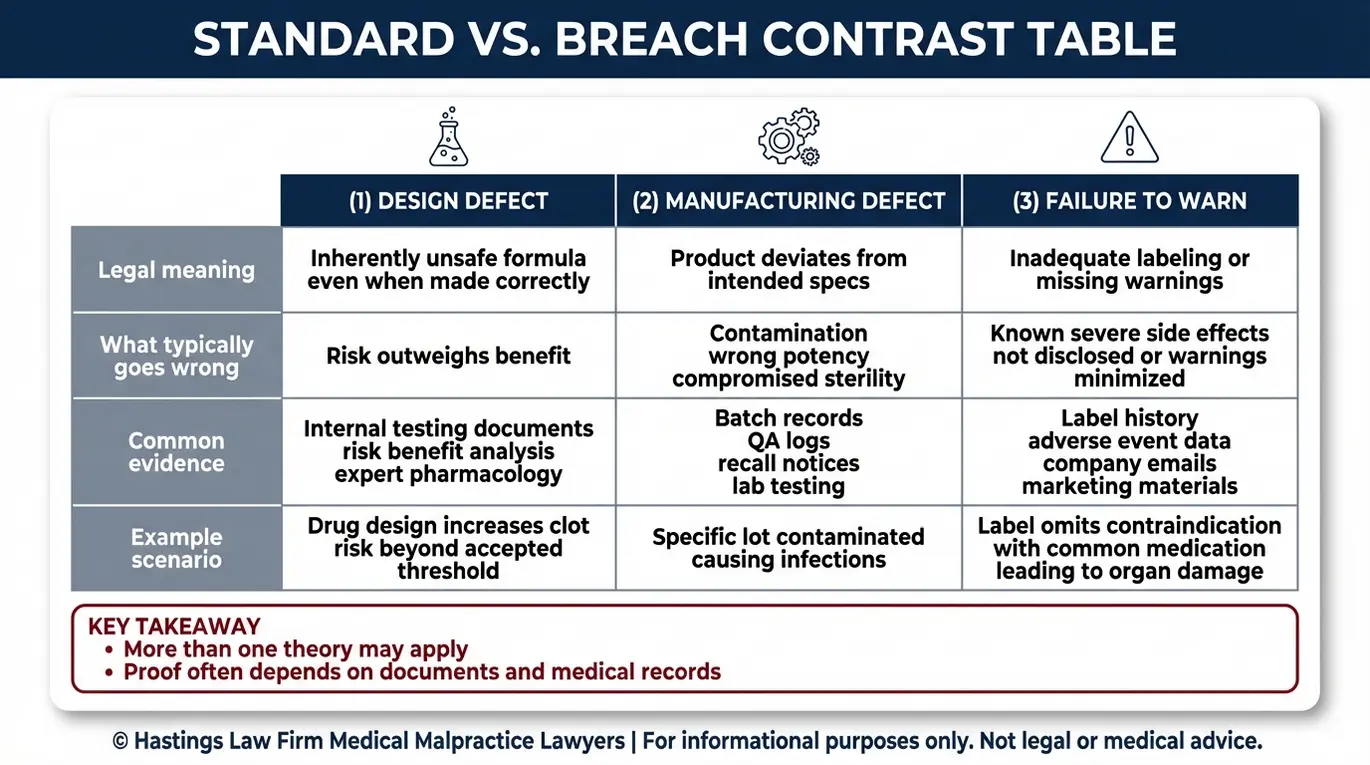
Product liability claims against drug manufacturers generally fall into three categories: design defects, manufacturing defects, and failure to warn (sometimes called marketing defects). These categories help establish strict liability, a legal rule where a manufacturer is responsible for a harm caused by their product regardless of intent or carelessness. Arizona recognizes strict liability in product liability cases, meaning you may not need to prove the manufacturer was careless. You may only need to show you were harmed by a defective drug.
The Arizona Law Review’s analysis of strict products liability and design defects outlines how Arizona courts evaluate whether a product’s design made it unreasonably dangerous. Here is how each defect theory works in dangerous drug litigation:
| Type of Defect | What It Means | Example |
|---|---|---|
| Design Defect | The drug’s formula is inherently unsafe, even when manufactured exactly as intended. The risks outweigh the benefits for the approved use. | A pain medication that causes fatal cardiac events at its recommended dosage. |
| Manufacturing Defect | A specific batch or lot was contaminated, improperly mixed, or compromised during production, making it different from the intended formula. | A contaminated injectable drug that introduces bacteria or foreign particles into the patient’s bloodstream. |
| Failure to Warn | The manufacturer knew or should have known about serious risks but did not adequately disclose them to physicians or patients through labeling defects or marketing materials. | A drug company that suppressed clinical trial data showing elevated cancer risk. |
A design defect, meaning a flaw in the drug’s underlying chemical formula, suggests the product was dangerous from the start. Manufacturing defects are different. The design may be sound, but something went wrong during production, such as contamination at a compounding facility or a breakdown in sterile processing.
Failure-to-warn claims focus on whether the manufacturer provided adequate labeling about known risks and whether marketing materials misrepresented the drug’s safety profile. Our Arizona dangerous drug legal team works with pharmacologists, toxicologists, and other expert witnesses to evaluate the evidence behind each theory. This helps us determine the strongest path forward as your lawyer for dangerous drug lawsuits.
The Hastings Law Firm Difference
Results matter, but what truly sets us apart is how we achieve them. Every verdict, every settlement, and every Arizona courtroom victory comes from one guiding promise: To treat each client’s fight for justice as if it were our own.
This balance of skill, experience, and empathy reflects our core philosophy that justice should not only compensate the injured, but also make health care safer nationwide.

Liability Beyond the Manufacturer: When to Sue the Doctor
Liability may extend beyond the drug manufacturer to the prescribing physician or pharmacist if they failed to meet the standard of care. The standard of care is the level of care and skill that a reasonably competent health care professional would provide under similar circumstances. In cases of medical negligence, we investigate whether a professional breach caused the injury. If the doctor prescribed the drug despite clear warnings or contraindications, the prescriber may bear responsibility for the resulting harm.
Prescriber negligence can contribute to a dangerous drug injury in several ways. A prescribing physician may prescribe a medication that conflicts with drugs the patient is already taking, creating a dangerous interaction. A pharmacist may dispense the wrong dosage or the wrong drug entirely.
In other cases, a doctor may prescribe a drug for off-label use, meaning a purpose not approved by the FDA, without fully informing the patient about the added risks. Off-label prescribing is legal, but it does not relieve the physician of the duty to exercise reasonable care. Our Arizona dangerous drug counsel reviews medical records and pharmacy logs to determine whether the physician, the manufacturer, or both may be liable for the injury.
The Learned Intermediary Doctrine in Arizona
One of the most important legal concepts in pharmaceutical injury cases is the Learned Intermediary Doctrine. Under this doctrine, drug manufacturers argue that their failure to warn liability runs to the prescribing physician, not directly to the patient. They claim the doctor acts as a “learned intermediary,” evaluating risks for each individual.
If the manufacturer provided adequate warnings, including a black box warning (the FDA’s most serious label warning, printed with a bold black border on the drug’s prescribing information), but the doctor did not relay them, your claim may shift to prescriber liability and medical malpractice. We analyze prescribing records and manufacturer disclosures to identify the correct liable party.
Mass Torts vs. Individual Lawsuits: How We Litigate Dangerous Drug Claims
Many drug injury cases are consolidated into Multi-District Litigation (MDL) rather than class actions. MDL is a federal court procedure that helps resolve multiple cases involving the same drug more efficiently while allowing each patient to maintain their own separate claim. This groups similar lawsuits before one judge to streamline pre-trial work like discovery and expert testimony, while preserving each plaintiff’s right to seek damages based on their own unique injuries.
This distinction matters. In a class action, all plaintiffs share a single settlement, which often results in smaller individual payouts. In MDL, your case stays yours. The process is more efficient than filing separately, but your compensation is still tied to the specific impact the drug had on your life.
- Class Action: One lawsuit, one settlement divided among all members. Better suited for cases where injuries are similar and damages are uniform.
- MDL: Individual lawsuits consolidated for pre-trial efficiency. Each plaintiff retains their own claim and can recover damages specific to their injuries.
In an MDL, courts often select bellwether trials, a small group of representative cases tried first to help both sides evaluate the strength of the claims and establish a framework for settlement negotiations across the larger group. The outcomes of these early trials can shape the value of remaining cases. The Federal Judicial Center’s MDL resource page provides a detailed overview of how this process works.
Hastings Law Firm is not a settlement mill. If your case is part of a mass tort, dangerous drug litigation in Arizona, or a nationwide MDL, we prepare every case as if it is going to trial. Our team builds each claim with the same level of investigation and medical analysis because that preparation is what drives fair results.
Arizona Statute of Limitations for Dangerous Drug Lawsuits
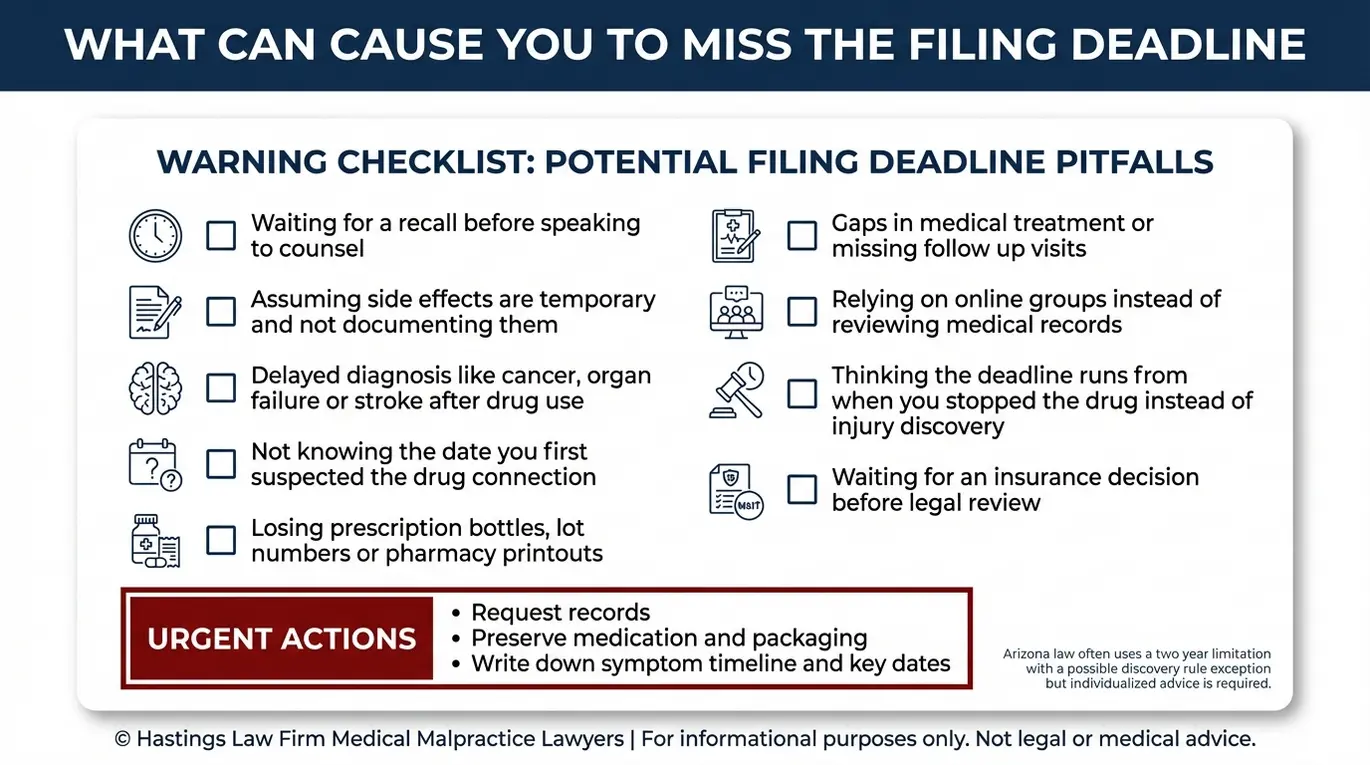
In Arizona, the statute of limitations for product liability and personal injury claims is generally two years from the date of injury. This deadline is set by Arizona Revised Statutes § 12-542. If you miss these time limits, the court will almost certainly bar your claim, regardless of how strong the evidence is.
Dangerous drug cases present a unique challenge because the injury may not appear for months or years after you start taking the medication. The discovery rule provides a critical exception to this timeline. Under this rule, the statute of limitations may begin running from the date you knew, or reasonably should have known, that the drug caused your injury.
This is especially relevant in cases involving slow-developing conditions like cancer, kidney disease, liver failure, or even wrongful death. Arizona’s product liability statute of repose, formerly codified at A.R.S. § 12-551, was declared unconstitutional by the Arizona Supreme Court, so there is no fixed outer time limit that automatically bars all product liability claims after a set number of years from the date of sale. However, the legal analysis can be complex, and waiting to act can put your claim at risk.
Do not wait to explore your legal options. Evidence can degrade, witnesses become harder to locate, and critical records may be lost. Consulting an Arizona dangerous drug lawyer as early as possible gives your legal team the best opportunity to preserve evidence and build the strongest case on your behalf.
Contact the Arizona Dangerous Drug Attorneys at Hastings Law Firm Today for Help
If a dangerous medication has caused you serious harm or taken someone you love, you deserve answers and a team that will stand with you. Hastings Law Firm brings together trial attorneys, former defense counsel, and in-house medical professionals who focus exclusively on medical negligence and pharmaceutical liability. We understand the science behind these injuries and the legal strategies needed to hold pharmaceutical companies and negligent prescribers accountable.
Your case evaluation is free, confidential, and carries no obligation. We work on a contingency fee basis, which means you pay no attorney fees or costs unless we recover compensation for you. If your claim involves a single prescriber or a nationwide MDL, we prepare every case with the same trial-ready discipline.
Contact our Arizona dangerous drug attorneys today. Let us review your situation, explain your legal options, and help you take the first step toward the answers and accountability you deserve.
Frequently Asked Questions About Dangerous Drug Injury in Arizona


This content was researched and written by the Hastings Law Firm editorial team, which includes attorneys, medical professionals, and experienced researchers. Our writing is informed by internal knowledge and practical experience, and we cross-check critical details against authoritative sources cited throughout. Every piece undergoes human-led fact-checking and legal review. Because legal and medical information can change, if you spot an error, please contact us. Learn more about our content standards and review process on our editorial policy page.

Tommy Hastings, founder of Hastings Law Firm, is a board-certified personal injury trial lawyer dedicated exclusively to healthcare injury cases. Since 2001, he has represented injured patients and families in litigation against major hospital systems, pharmaceutical companies, and negligent healthcare providers nationwide. He has handled numerous high-profile cases that have drawn national media attention and resulted in multi-million dollar recoveries. He draws on that experience in his writing, helping readers understand how these cases work and what options may be available to them.
