


Houston Birth Injury Lawyer
A preventable birth injury can leave families facing uncertainty, long term medical needs, and lasting emotional strain. These injuries are often tied to problems during labor or delivery such as missed warning signs, delayed interventions, or improper use of delivery tools. Some effects are visible right away, while others emerge later through developmental delays that raise new concerns about what happened at birth. Clear information and timely record review can help families understand whether the harm was avoidable and what accountability could look like. If your child suffered harm due to a preventable birth injury in Houston, Texas, contact Hastings Law Firm for a free, confidential case review.

Last Updated: July 27, 2026
Trusted Legal Representation for Preventable Birth-Related Injuries
When your child has been harmed during labor or delivery, the confusion and heartbreak can feel overwhelming. You may sense that something went wrong but feel unsure about what happened or what you can do about it. Those instincts matter, and you deserve clear answers.
At Hastings Law Firm, our team of attorneys, nurse consultants, and former defense lawyers focuses exclusively on medical malpractice. As a Houston birth injury lawyer team, we understand both the medicine and the law behind these cases. We are here to help you find out what happened and hold the responsible parties accountable.
If your child was injured during birth, we invite you to contact us for a free, confidential case evaluation. There is no cost and no obligation. We can review what happened and explain your options.

Understanding Preventable Birth Injuries in Texas Hospitals
A preventable birth injury occurs when a medical professional deviates from the accepted standard of care during pregnancy, labor, or delivery, causing harm to the infant that would not have occurred otherwise. These cases fall under medical malpractice, and they require a careful review of what happened and why.
One of the most important distinctions in these cases is the difference between a birth defect and a birth injury:
- Birth defects are typically genetic or developmental conditions that arise during pregnancy. They are not caused by a doctor’s actions during delivery.
- Birth injuries result from something that happened (or failed to happen) during labor, delivery, or the immediate postpartum period. They are caused by negligence, meaning a healthcare provider failed to meet the standard of care, which is the level of treatment a reasonably competent professional would have provided under similar circumstances.
Experienced birth injury attorneys know that this difference is important. A birth defect is generally unavoidable, whereas a birth injury often stems from medical error. The standard of care represents the acceptable medical treatment that a prudent healthcare provider would administer. When a doctor or nurse falls short of this benchmark, the consequences can be life-altering.
This distinction matters because birth injury claims focus on preventable injuries. Our Houston birth injury lawyer team works with in-house nurses and medical consultants who review your medical records to identify whether the care provided fell below what was expected.
Many families come to us not just seeking compensation but searching for the truth about what happened. That search is valid. Understanding whether your child’s injury was avoidable is the first step toward accountability, and it is often the step that brings the most clarity during an incredibly difficult time.
Recognizing Signs of Medical Negligence in Newborns
Signs of medical negligence may include low APGAR scores, seizures, the need for resuscitation (CPR), poor muscle tone or floppiness, and bruising or swelling on the head immediately following delivery. Recognizing these warning signs early can be critical to both your child’s medical care and any potential legal claim.
The APGAR scoring system is a quick assessment performed at one and five minutes after birth. It evaluates a newborn’s heart rate, breathing effort, muscle tone, reflex response, and skin color on a scale of zero to ten. A persistently low score, especially at the five-minute mark, can signal that the baby experienced oxygen deprivation or fetal distress during delivery.
Signs that may appear at or near the time of birth include:
- Bluish or pale skin color
- Absence of crying or weak cry
- Neonatal seizures, which are sudden, abnormal electrical discharges in the brain that can cause involuntary movements or stiffness in a newborn
- Visible bruising, swelling, or misshapen skull
- Difficulty breathing or the need for immediate resuscitation
- Admission to the neonatal intensive care unit (NICU)
An unexpected admission to the intensive care unit (NICU) is often the first clue for parents that the delivery did not go as planned. Monitoring in the NICU provides a paper trail of the infant’s condition immediately post-birth. These early indicators deserve careful medical and legal review. If your child experienced any of these, speaking with a birth injury lawyer in Houston who understands the medical context can help you determine whether negligence may have been involved.
Distinguishing Early vs. Late-Appearing Symptoms
Not all birth injuries are obvious right away. Some conditions, particularly those involving the brain, may not become apparent until months or even years later.
Developmental delays, which refer to a child not reaching expected milestones in areas like sitting, crawling, walking, or speaking, can be among the first signs that something happened during delivery. Conditions like cerebral palsy are often not diagnosed until a child is 12 to 24 months old, when delays in motor skills become more noticeable.
If your child is missing developmental milestones and you had a complicated delivery, it may be worth having both a medical specialist and an attorney evaluate the timeline. Late-appearing symptoms do not mean the window for legal action has closed.
The Hastings Law Firm Difference
Results matter, but what truly sets us apart is how we achieve them. Every verdict, every settlement, and every Houston courtroom victory comes from one guiding promise: To treat each client’s fight for justice as if it were our own.
This balance of skill, experience, and empathy reflects our core philosophy that justice should not only compensate the injured, but also make health care safer nationwide.

Types of Cases Our Houston Birth Injury Lawyers Handle
Common birth injury cases include Cerebral Palsy caused by oxygen deprivation, Erb’s Palsy from shoulder dystocia, brain bleeds, and fractures caused by improper use of forceps or vacuum extractors. Each type of injury involves different medical evidence and long-term consequences.
Brain Injuries: Hypoxic-ischemic encephalopathy (HIE) is a type of brain damage caused when an infant’s brain does not receive enough oxygen or blood flow around the time of birth. HIE can lead to cerebral palsy, seizure disorders, and lifelong cognitive challenges. Research published in PubMed Central on HIE pathophysiology and experimental treatments continues to expand our understanding of how oxygen deprivation damages the developing brain and how early intervention can affect outcomes.
Nerve Injuries: A brachial plexus injury, commonly known as Erb’s palsy, occurs when the network of nerves near the neck and shoulder is stretched or torn during delivery. This is also referred to as Brachial Palsy. This often happens during shoulder dystocia, a complication where the baby’s shoulder becomes lodged behind the mother’s pelvic bone. Excessive force applied during delivery can damage these nerves, resulting in weakness or paralysis of the affected arm.
Trauma from Delivery Instruments: Fractures to the collarbone or skull, as well as soft tissue injuries, can result from the improper use of forceps or vacuum extractors. These injuries may also cause intracranial hemorrhages. Our legal team works with neonatal specialists to investigate these trauma cases thoroughly.
| Injury Type | Medical Cause | Typical Long-Term Impact |
|---|---|---|
| Cerebral Palsy / HIE | Oxygen deprivation during labor or delivery | Motor impairment, cognitive delays, seizures, need for lifelong care |
| Erb’s Palsy (Brachial Plexus) | Excessive force during shoulder dystocia | Arm weakness or paralysis, limited range of motion |
| Skull/Bone Fractures | Improper use of forceps or vacuum extractors | Potential brain bleeds, developmental concerns |
Families dealing with the long-term effects of these injuries may benefit from Early Childhood Intervention services covered by Medicaid through the Brighton Center, which can provide therapy and support during the critical early years.

Understanding Neonatal Cooling Therapy
Therapeutic hypothermia, also called neonatal cooling therapy, is a treatment where a newborn’s body temperature is carefully lowered for 72 hours shortly after birth to slow brain cell damage caused by HIE. When administered within the first six hours of life, cooling therapy can significantly reduce the severity of brain injury.
In birth injury litigation, whether neonatal cooling therapy was offered, and whether it was initiated in time, is often a key issue. This treatment must be precise. If the cooling is not initiated within the six-hour window, the opportunity to mitigate brain damage may be lost forever. If a hospital failed to recognize the signs of HIE or delayed the transfer to a facility equipped for cooling, that failure may represent a breach of the standard of care. Our Houston birth injury lawyer team works with neonatal specialists to evaluate whether cooling protocols were followed appropriately.
Common Causes of Birth Injuries Caused by Doctor Error
Doctor errors leading to birth injuries often involve failure to monitor fetal distress signals, delayed performance of C-sections, improper use of forceps or vacuum extractors, and medication errors such as Pitocin misuse. These errors can cause oxygen deprivation, birth asphyxia, and physical trauma that may have been entirely preventable.
Fetal distress refers to signs that a baby is not tolerating labor well, often detected through abnormal heart rate patterns on the fetal monitor. When these warning signs are missed or ignored, the consequences can be severe. An experienced lawyer for birth injuries knows how to spot these errors in the medical charts.
Common types of negligent actions include:
- Failure to perform a timely C-section when fetal monitoring indicates distress, leading to prolonged oxygen deprivation or perinatal asphyxia
- Mismanagement of shoulder dystocia by applying excessive traction on the baby’s head and neck during delivery
- Medication errors, including administering too much Pitocin to induce or speed up contractions, which can cause uterine rupture or placental abruption (the premature separation of the placenta from the uterine wall, cutting off the baby’s blood and oxygen supply)
- Failure to recognize and respond to maternal complications, such as infection, hemorrhage, or preeclampsia
- Improper use of forceps or vacuum extractors, causing skull fractures or nerve damage
Pitocin is a synthetic form of oxytocin used to induce or augment labor. When administered negligently, it can cause contractions that are too strong or too frequent, reducing the baby’s oxygen supply. A recent report from the HHS Office of Inspector General found that hospitals did not capture half of patient harm events, limiting the information needed to make care safer. This underscores why independent investigation by a birth injury attorney is so important. Hospital records alone may not tell the full story.
Liability for Birth Injuries in Houston Hospitals
Liability can extend beyond the delivering obstetrician to include nurses, anesthesiologists, the hospital itself for staffing failures, and even pharmaceutical companies if a medication defect contributed to the injury. Determining who is liable requires a detailed review of every decision made during labor and delivery.
In many cases, the hospital bears responsibility as an institution. If inadequate staffing, broken communication protocols, or failure to maintain proper equipment contributed to the injury, the facility may be held liable for corporate negligence. We are committed to holding hospitals liable for these systemic failures. Hospital negligence often involves administrative failures, such as inadequate nurse-to-patient ratios that endanger patients.
Under the legal theory of vicarious liability, the hospital is responsible for the actions of its employees while they are on the clock. A doctor’s individual error and the hospital’s systemic failure can both be part of the same claim.
We understand that many families feel hesitant about holding a doctor or hospital accountable. Years of conditioning, sometimes called the “white coat effect,” can make it feel wrong to question a medical professional’s decisions. That hesitation is completely normal. But asking questions is not an accusation. It is an effort to understand what happened to your child.
Our Houston birth injury lawyer team includes former defense attorneys who once represented hospitals. That experience gives us direct insight into how hospital legal teams build their defenses, and it helps us anticipate those strategies from the start. We also have in-house nursing staff who can interpret clinical data, identify charting gaps, and evaluate whether protocols were followed.
Recovering Financial Compensation for Lifelong Care
Damages in birth injury cases cover past and future medical expenses, lifetime care costs, pain and suffering, loss of earning capacity, and specialized therapy equipment required for the child’s development. Because many birth injuries require care that lasts a lifetime, getting the calculation right the first time is essential. A knowledgeable birth injury lawyer ensures that no future need is overlooked.
Economic damages include the measurable financial costs of the injury:
- Past and future medical costs, including surgeries, medications, and hospitalizations
- Physical, occupational, and speech therapy
- Home modifications such as wheelchair ramps, accessible bathrooms, and specialized vehicles
- Assistive devices and medical equipment
- Loss of future earning capacity if the child’s injury limits their ability to work as an adult
Non-economic damages address the human cost that cannot be reduced to a dollar figure:
- The child’s physical pain and suffering
- Mental anguish experienced by both the child and the parents
- Loss of enjoyment of life
There are no do-overs in these cases. A settlement or verdict is typically a one-time resolution. If the amount does not account for decades of future care, the family bears the financial burden alone. Securing adequate compensation for families provides the resources necessary for the child’s well-being. That is why our team works with experts to create a Life Care Plan and economists to project the full scope of needs over the child’s expected lifetime.
Under Texas Civil Practice and Remedies Code Chapter 74, specific rules govern how medical malpractice damages are structured in Texas. Understanding these rules is an important part of building a claim that accurately reflects your family’s losses.
Claims for Both Child and Parents
Birth injury cases are unique because they often involve two sets of plaintiffs. The child has their own claim for pain, suffering, and future losses. The parents have a separate claim for the medical expenses they have paid, their own mental anguish, and in some cases, loss of consortium, which addresses the impact on the parent-child relationship. These distinct claims allow families to address both the child’s future care and the immediate financial and emotional strain on the household.
Parental claims ensure that the impact on the entire family is recognized. Both types of claims must be properly identified and calculated. Missing one can leave significant compensation on the table.
Texas Statute of Limitations for Birth Injury Lawsuits
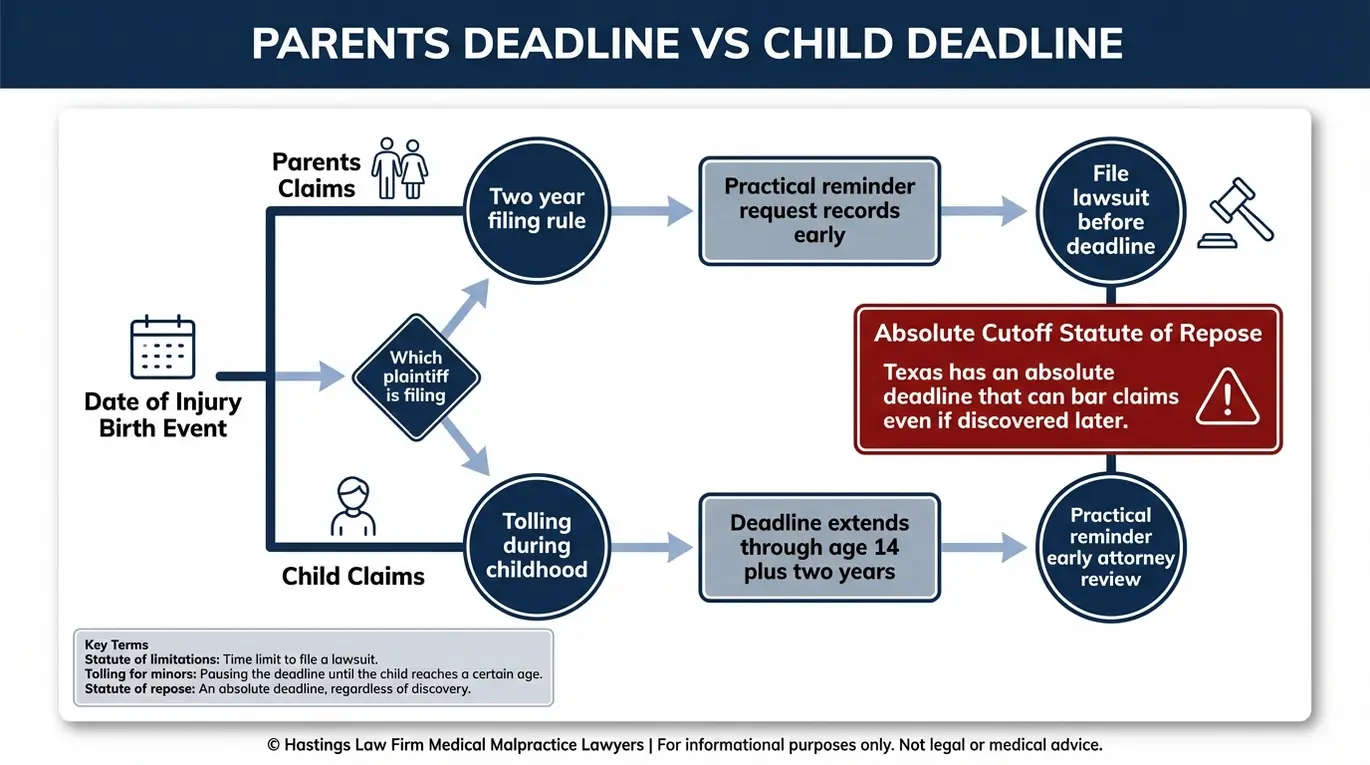
In Texas, the statute of limitations generally allows parents two years from the date of the injury to file a medical malpractice claim. However, the timeline for the child’s own claim is different. Because a minor child cannot file lawsuits on their own behalf, Texas law provides that minors under the age of 12 have until their 14th birthday to file, or have filed on their behalf, a health care liability claim.
There is an important exception. Texas also imposes a statute of repose, which sets an absolute outer deadline of 10 years from the date of the negligent act, regardless of the patient’s age. Under the Texas Civil Practice and Remedies Code § 74.251, this 10-year cap can cut off a child’s claim before they reach the age of 14 in some circumstances. This makes understanding the timeline essential for protecting your child’s rights.
Before filing suit, Texas law also requires a written notice to the healthcare provider at least 60 days in advance. Under Texas Civil Practice and Remedies Code § 74.051, this pre-suit notice must be served before the statute of limitations expires. Missing this step can jeopardize your case.
Because these deadlines interact in ways that can be confusing, consulting with a Houston birth injury lawyer early protects your family’s right to file. Evidence can also degrade over time, which makes early investigation valuable regardless of the filing deadline.
No Win, No Fee Representation for Birth Injury Claims
Hastings Law Firm operates on a contingency fee basis, meaning families pay nothing in upfront legal fees or case expenses. You only pay attorney fees if we successfully recover a settlement or verdict on your behalf. This approach provides financial security to our clients.
Birth injury litigation is expensive. It requires expert medical witnesses, detailed life care plans, and extensive investigation. We fund those costs upfront so that financial barriers never prevent a family from pursuing accountability. You focus on your child’s well-being while we focus on the legal battle.
Your case begins with a free, confidential evaluation led by a patient advocate on our team. This initial review helps us determine whether the facts support a potential claim, and it gives you a chance to ask questions without any financial risk.
As a Houston birth injury lawyer team, we believe that access to justice should not depend on your ability to pay out of pocket.
Steps to Take If You Suspect Medical Malpractice
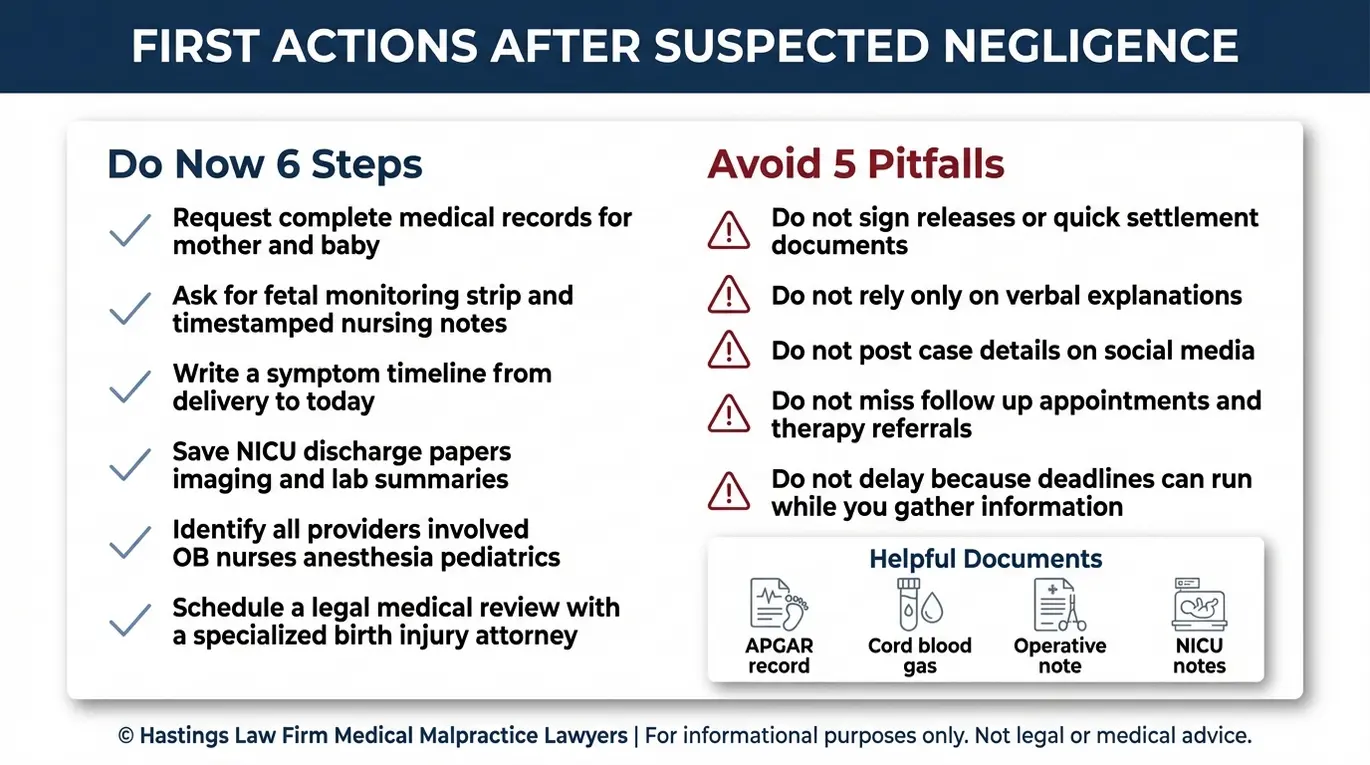
If you suspect malpractice, taking a few key steps early on can help protect your child’s legal rights and preserve important evidence.
- Request complete copies of all medical records for both the mother and the child. Under the HHS HIPAA right of access guidelines, you have a legal right to obtain these records. Request them as soon as possible, as they form the foundation of any investigation.
- Do not sign any documents or settlement offers from the hospital or its insurance carrier without legal advice. Early offers are rarely in your family’s best interest.
- Avoid detailed discussions with hospital risk management teams. What you say can be used later in litigation. Be polite, but protect your position.
- Document everything. Keep a written record of your child’s symptoms, medical appointments, and any conversations with healthcare providers.
- Contact a Houston birth injury lawyer with experience in medical malpractice. A board-certified attorney can evaluate the medical facts and provide an expert review of your potential claim.
Acting early helps preserve evidence and keeps your legal options open. You do not need to have all the answers before reaching out. That is our job.
Contact the Houston Birth Injury Attorneys at Hastings Law Firm Today for Help
At Hastings Law Firm, our mission is to restore trust for families who feel let down by the healthcare system. We believe that holding negligent providers accountable is not just about compensation. It is about making sure what happened to your child does not happen to another family.
Tommy Hastings, a board-certified trial lawyer and ABOTA inductee, built this firm to give families a voice when the system fails them. Our team of attorneys, in-house nurses, and former defense lawyers prepares every case as if it will go to trial, because that level of preparation is what it takes to secure fair results.
Time matters in birth injury cases. Medical records need to be preserved, and filing deadlines apply. Our medical team is ready to review your case at no cost and with no obligation.
Call Hastings Law Firm today for a free, confidential case evaluation. Let us help you find the answers you deserve.
Frequently Asked Questions About Birth Injury in Houston


This content was researched and written by the Hastings Law Firm editorial team, which includes attorneys, medical professionals, and experienced researchers. Our writing is informed by internal knowledge and practical experience, and we cross-check critical details against authoritative sources cited throughout. Every piece undergoes human-led fact-checking and legal review. Because legal and medical information can change, if you spot an error, please contact us. Learn more about our content standards and review process on our editorial policy page.

Tommy Hastings, founder of Hastings Law Firm, is a board-certified personal injury trial lawyer dedicated exclusively to healthcare injury cases. Since 2001, he has represented injured patients and families in litigation against major hospital systems, pharmaceutical companies, and negligent healthcare providers nationwide. He has handled numerous high-profile cases that have drawn national media attention and resulted in multi-million dollar recoveries. He draws on that experience in his writing, helping readers understand how these cases work and what options may be available to them.
