


Houston Infant Brain Injury Lawyer
Infant brain injuries during labor or delivery can leave families facing overwhelming uncertainty and long term care needs. Some injuries are linked to preventable breakdowns in monitoring, timely delivery decisions, medication use, or newborn care. Understanding what happened often requires careful review of fetal monitoring, medical records, and the clinical timeline to see whether the standard of care was met. Accountability may involve individual providers, hospital staff, or broader facility failures. If your child suffered harm due to infant brain injury from birth negligence in Houston, Texas, contact Hastings Law Firm for a free, confidential case review.

Last Updated: July 27, 2026
Trusted Legal Representation for Birth Negligence Claims in Houston
When a newborn suffers a brain injury during labor or delivery, the emotional weight on a family is enormous. You may be overwhelmed by medical information, uncertain about what went wrong, and unsure whether anyone will take your concerns seriously. These feelings are valid, and you deserve clear answers.
At Hastings Law Firm, our team of attorneys, in-house nurses, and medical consultants focuses exclusively on medical malpractice. Our team includes former defense attorneys and hospital nurses, providing a strategic advantage when investigating hospital protocols because we understand the internal systems they use. Founded in 2005 by Tommy Hastings, a board-certified trial lawyer (a distinction held by less than 2% of Texas attorneys), we understand both the medicine and the law behind these cases. We know how to uncover the truth in complex birth injury claims. If your child was harmed by medical negligence, a Houston Infant Brain Injury Lawyer at our firm can review what happened and explain your options in a free, confidential consultation .

Common Medical Errors Leading to Infant Brain Damage
The most common medical errors leading to infant brain damage include failure to monitor fetal distress, delayed C-sections that result in oxygen deprivation, and the misuse of labor-inducing drugs like Pitocin. These medical errors represent deviations from the standard of care that can lead to permanent neurological harm. Preventable birth injuries often occur when healthcare providers deviate from the clinical standard of care during labor. The most common medical errors leading to infant brain damage often stem from mishandled labor and delivery complications, including failure to monitor fetal distress, delayed C-sections that result in oxygen deprivation, and the misuse of labor-inducing drugs like Pitocin. Each of these errors can represent a clear breach of the standard of care, the level of treatment a reasonably competent medical professional would provide under similar circumstances.
According to the National Center for Biotechnology Information’s review of birth trauma, many birth-related injuries are preventable when medical teams follow established protocols. When those protocols break down, the consequences for the infant can be devastating and permanent.
Here are the most common categories of medical negligence our infant brain injury attorneys see in Houston birth injury cases:
- Fetal monitoring failures: Labor and delivery teams are responsible for continuously tracking the baby’s heart rate. Abnormal patterns on the fetal heart rate monitor can signal distress, including oxygen deprivation. When staff ignore, misread, or fail to act on these warning signs, precious minutes are lost.
- Delivery delays: If a baby is showing signs of distress, the standard of care may require an emergency C-section. Waiting too long to make that call can extend the period of oxygen deprivation and directly cause brain damage. In many of the cases we review, the delay between recognizing distress and performing the delivery is the central issue.
- Medication errors: Pitocin is used to induce or augment labor, but improper dosing can trigger uterine tachysystole, a condition where contractions become excessively frequent or prolonged. This can compress the umbilical cord and reduce blood flow to the baby, creating a dangerous oxygen deficit.
- Post-birth negligence: The risk of injury does not end with delivery. Failure to properly resuscitate a newborn, or failure to recognize and treat severe jaundice, can lead to kernicterus (bilirubin encephalopathy), a form of brain damage caused by dangerously high levels of bilirubin in the blood. Prompt intervention is essential, and delays in treatment during the first hours and days of life can cause irreversible harm.
Medical negligence during labor and delivery can take many forms, and the specifics matter. As a Houston birth injury lawyer, our role is to examine every detail of the medical record to identify exactly where the standard of care was violated and how that violation led to injury.
Types of Infant Brain Injuries Caused by Negligence
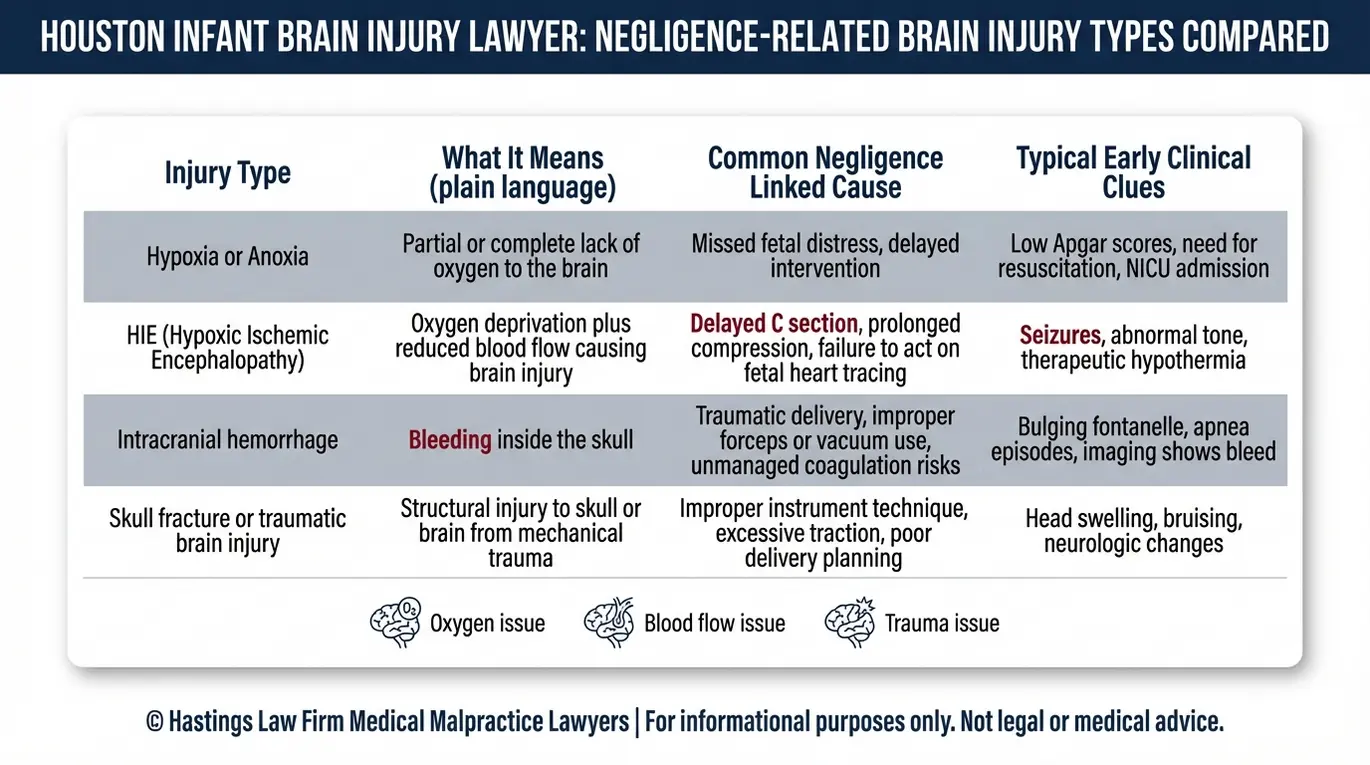
Medical negligence during birth can cause severe injuries such as Hypoxic-Ischemic Encephalopathy (HIE), Cerebral Palsy, and intracranial hemorrhages, often resulting in lifelong cognitive and physical disabilities. Understanding the type of injury your child sustained is an important first step toward building a case.
Hypoxia and Anoxia refer to a partial or complete loss of oxygen to the brain. Even brief periods of oxygen deprivation during labor can damage sensitive brain tissue. When blood flow is also restricted, the injury deepens. This combination of reduced oxygen and reduced blood flow is what leads to HIE, or hypoxic-ischemic encephalopathy, one of the most common and serious birth-related brain injuries. According to Nationwide Children’s Hospital, HIE can range from mild to severe and may result in long-term developmental delays, seizure disorders, or cerebral palsy depending on the extent and duration of oxygen loss.
Cerebral Palsy is a group of neurological disorders that affect movement, muscle tone, and coordination. It is not a single event but rather a condition that can develop as a consequence of brain damage sustained during birth, including damage from birth asphyxia or prolonged fetal distress.
Intracranial hemorrhages, also known as a brain hemorrhage or bleeding within the skull, can result from traumatic delivery practices. Improper use of forceps or vacuum extractors, excessive force during delivery, or failure to recognize a complicated presentation can cause brain bleeds or skull fractures in the newborn.
| Injury Type | Definition | Common Cause |
|---|---|---|
| Hypoxia / Anoxia | Partial or complete oxygen loss to the brain | Umbilical cord compression, placental abruption |
| HIE | Brain damage from combined oxygen deprivation and restricted blood flow | Prolonged fetal distress, delayed emergency delivery |
| Cerebral Palsy | Neurological disorder affecting movement and coordination | Often a long-term consequence of HIE or birth asphyxia |
| Intracranial Hemorrhage | Bleeding inside the skull | Misuse of forceps or vacuum extractors, traumatic delivery |
| Skull Fractures | Breaks in the infant’s cranial bones | Excessive mechanical force during delivery |
An infant brain damage lawyer can help connect the clinical diagnosis to the medical decisions that caused or contributed to the injury. Obtaining experienced legal help for infant brain injuries is the foundation of any legal claim.
The Hastings Law Firm Difference
Results matter, but what truly sets us apart is how we achieve them. Every verdict, every settlement, and every Houston courtroom victory comes from one guiding promise: To treat each client’s fight for justice as if it were our own.
This balance of skill, experience, and empathy reflects our core philosophy that justice should not only compensate the injured, but also make health care safer nationwide.

Signs Your Newborn May Have Suffered a Brain Injury
Immediate signs of infant brain injury often include seizures, low Apgar scores, difficulty feeding or latching, and the need for immediate resuscitation or NICU admission. Identifying these signs is the first step in understanding the extent of a possible injury. Some of these signs appear within minutes of birth. Others may develop over the first days or weeks of life.
The Apgar score, a standardized assessment performed at one and five minutes after birth, measures heart rate, breathing effort, muscle tone, reflex response, and skin color on a scale of 0 to 10. A low Apgar score does not confirm brain injury on its own, but consistently low scores, especially at the five-minute mark, can indicate that the baby experienced significant distress and may need immediate intervention.
If your baby required therapeutic hypothermia, sometimes called cooling therapy, a treatment where the infant’s body temperature is carefully lowered to reduce secondary brain damage, this often signals that the medical team identified a risk of brain injury. Intubation, NICU admission, or emergency resuscitation efforts are also indicators that something went wrong during or shortly after delivery.
Here are warning signs that may suggest a newborn has suffered a brain injury:
- Seizures within the first 24 to 48 hours of life
- Low or declining Apgar scores
- Difficulty feeding, latching, or swallowing
- Unusual limpness (hypotonia) indicating poor muscle tone, lethargy, or excessive stiffness (hypertonia)
- Abnormal or jerky eye movements
- Extended NICU stay or immediate transfer to a higher-level facility
- Need for breathing support, intubation, or resuscitation at birth
- Use of a cooling cap or full-body cooling therapy
If you noticed any of these signs after your child’s birth, speaking with a Houston infant brain injury lawyer can help you understand whether what happened may have been preventable. A lawyer for baby brain damage can review the clinical timeline and medical records to evaluate whether negligence contributed to the injury.

Proving Liability for Infant Brain Injuries in Texas
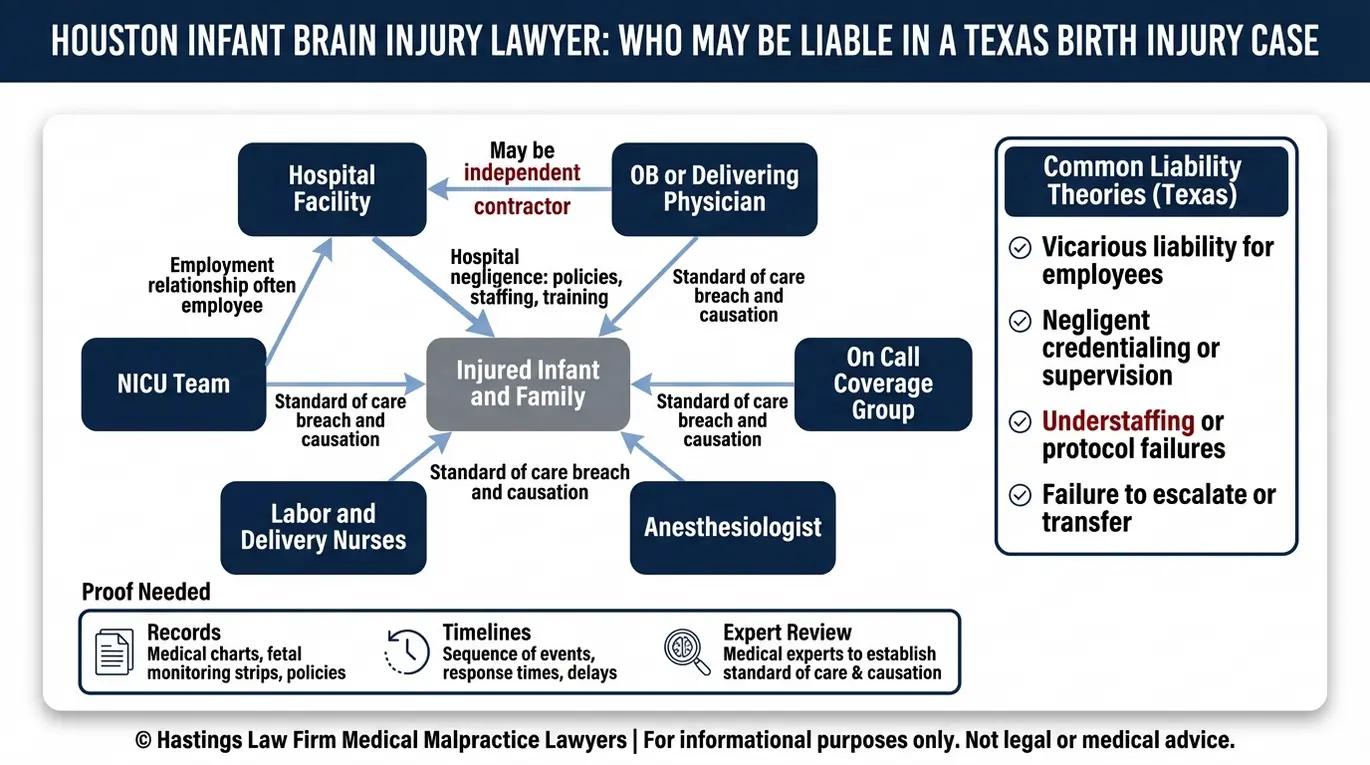
Liability in Texas infant brain injury cases can extend to the obstetrician, delivery nurses, anesthesiologists, and the hospital facility itself if staffing or protocols were inadequate. Medical liability refers to the legal responsibility healthcare providers have for errors that cause patient harm.
One important distinction involves the relationship between doctors and hospitals. Many obstetricians are not direct employees of the hospital; they operate as independent contractors with admitting privileges. This means the hospital may not always be automatically liable for the doctor’s actions. Nurses, on the other hand, are typically hospital employees, and their errors in monitoring or communication can create vicarious liability for the facility. This legal concept means the hospital is held responsible for the professional actions of its staff.
Hospital negligence, often referred to as corporate negligence, is a separate theory of liability that holds the hospital accountable for institutional failures. If the facility was understaffed during a critical delivery, failed to maintain functioning equipment, or did not enforce adequate training protocols, the hospital itself can be held responsible regardless of any individual provider’s conduct. When considering suing a hospital in Houston, understanding these distinctions is important.
The burden of proof in these cases requires demonstrating that the injury was preventable. That means showing that a specific provider or facility breached the standard of care. In Texas, this requires a qualified medical expert to provide an opinion supporting the claim. The expert must testify that the physicians or nurses committed a specific error that a prudent provider would have avoided. Building this evidence is complex and requires a deep understanding of medical protocols.
The Role of Life-Care Planners in Establishing Damages
When an infant suffers a permanent brain injury, the financial impact extends across the child’s entire lifetime. Life-care planners help estimate the full cost of care required for a child with permanent disabilities from the present through their expected lifespan.
These projections go well beyond past medical bills. A life-care plan typically accounts for future medical costs, ongoing physical and occupational therapy, special education needs, home modifications for accessibility, adaptive equipment, and the cost of around-the-clock care if needed. This detailed roadmap helps ensure that any settlement or verdict reflects the long-term financial reality of the injury.
How Our Houston Infant Brain Injury Lawyers Investigate
We investigate claims by securing all fetal monitoring strips and medical records, consulting with independent neonatology experts, and working with our in-house medical team to reconstruct the timeline of the injury. As a nationally recognized firm, we prepare every case for a jury trial from the first day of investigation. Our firm uses medical evidence and expert review to determine if a provider’s actions met professional requirements.
Here is how our investigation process typically unfolds:
- Intake and initial evaluation. A patient advocate reviews the details of your case during a free, confidential consultation. We listen to what happened and identify whether there are indicators of potential negligence.
- Medical record collection and review. Our in-house nursing staff secures the complete medical record, including electronic fetal monitoring (EFM) strips, which are continuous recordings of the baby’s heart rate and the mother’s contractions during labor. Our detailed medical record review looks for signs of fetal distress that may have been overlooked by the delivery team. We also obtain umbilical cord blood gas results, which are arterial blood samples taken from the cord at birth that help measure the baby’s oxygen levels at the time of delivery.
- Independent expert consultation. We work with a national network of specialists, including neonatologists, maternal-fetal medicine physicians, and neuroradiologists, to evaluate the standard of care, provide expert testimony, and establish causation.
- Case preparation and filing. Every case is prepared from day one as if it will go to a jury trial. This trial-ready approach signals to defense attorneys and insurance carriers that we will not accept less than fair value. During the discovery process, we uncover evidence, depose witnesses, and use electronic medical record audit trails to identify charting gaps, timing inconsistencies, or data that may have been altered.
As a Houston infant brain injury lawyer, our firm handles this entire process on a contingency fee basis. You pay no attorney fees or costs unless we secure a recovery for your family.
Calculating Lifetime Costs and Compensation
Compensation for an infant brain injury includes coverage for lifelong medical care, specialized therapy, home modifications, loss of future earning capacity, and non-economic damages for pain and suffering. Economic damages represent verifiable financial losses like medical bills. Securing compensation for birth injury claims is critical because these injuries affect a child for decades, and the financial scope of a claim is often significant.
A study published in PubMed Central on the cost of care for children with cerebral palsy underscores just how substantial these lifetime costs can be, particularly for children requiring ongoing rehabilitation and support services.
Recoverable economic damages and non-economic damages in an infant brain damage settlement or verdict may include:
- Past and future medical expenses, including surgeries, medications, and hospitalizations
- The cost of 24/7 home nursing or attendant care
- Physical therapy, occupational therapy, and speech therapy
- Special education and developmental support services
- Home and vehicle modifications for accessibility
- Assistive technology and adaptive equipment
- Loss of future earning capacity
- Pain, suffering, and physical impairment
- Loss of enjoyment of life
Protecting the child’s funds is another important consideration. Our firm helps families establish a Special Needs Trust or structured settlements to hold the settlement proceeds. This structure protects the child’s eligibility for government benefits like Medicaid and Supplemental Security Income while ensuring the funds are available for care and quality of life throughout adulthood.
Texas Statute of Limitations for Birth Injury Cases
In Texas, birth injury claims generally must be filed within two years of the injury, but specific exceptions exist for minors that may extend this deadline up to age 14 in limited circumstances. Statutes of limitations are legal deadlines that restrict how long a person has to file a lawsuit.
Under the Texas Civil Practice and Remedies Code Chapter 74, the Texas statute of limitations generally sets a two-year window. For parents’ claims, such as recovery of medical expenses, this window typically begins on the date of the injury or the date the injury was discovered.
For a minor child, Texas law provides tolling, which means the filing deadline is paused during childhood. However, a statute of repose creates a hard cap of ten years from the date of the negligent act, which means the child’s claim must generally be filed before the child turns ten, regardless of when symptoms fully manifest. Therefore, understanding the precise deadline to file birth injury lawsuit claims is critical.
There is also a practical reason not to wait. Medical records can be lost or overwritten, fetal monitoring strips may be discarded, and key hospital staff may leave or become unavailable. The sooner your Texas infant brain injury lawyer begins the investigation, the more evidence is available to build a strong case. Missing a legal deadline can have devastating consequences for your ability to recover damages.
Contact the Houston Birth Injury Attorneys at Hastings Law Firm Today for Help
Your child’s future depends in large part on the resources secured today. If you believe your baby’s brain injury was caused by medical negligence, you do not have to face this alone, and you do not have to have all the answers before reaching out.
At Hastings Law Firm, our mission goes beyond compensation. We believe that holding negligent providers accountable is one of the most effective ways to prevent the same thing from happening to another family. Our team of attorneys, nurses, and medical consultants is here to help you find the truth about what happened during your child’s birth.
Every consultation is free and confidential. We work on a contingency fee basis, which means you pay nothing unless we recover compensation for your family. Contact our Houston infant brain injury lawyers today to take the first step toward understanding your options and protecting your child’s future.
Frequently Asked Questions About Infant Brain Injury in Houston


This content was researched and written by the Hastings Law Firm editorial team, which includes attorneys, medical professionals, and experienced researchers. Our writing is informed by internal knowledge and practical experience, and we cross-check critical details against authoritative sources cited throughout. Every piece undergoes human-led fact-checking and legal review. Because legal and medical information can change, if you spot an error, please contact us. Learn more about our content standards and review process on our editorial policy page.

Tommy Hastings, founder of Hastings Law Firm, is a board-certified personal injury trial lawyer dedicated exclusively to healthcare injury cases. Since 2001, he has represented injured patients and families in litigation against major hospital systems, pharmaceutical companies, and negligent healthcare providers nationwide. He has handled numerous high-profile cases that have drawn national media attention and resulted in multi-million dollar recoveries. He draws on that experience in his writing, helping readers understand how these cases work and what options may be available to them.
