


Houston Eclampsia & Preeclampsia Lawyer
Preeclampsia and eclampsia are serious pregnancy complications that require careful monitoring and timely treatment to prevent severe harm. When warning signs are missed or symptoms are dismissed, a manageable condition can escalate into seizures, organ failure, or other life threatening outcomes for a mother or child. Accountability often turns on whether providers followed established obstetric standards for screening, testing, and escalation of care. If you or a loved one were harmed or worse due to preeclampsia or eclampsia malpractice in Houston, Texas, contact Hastings Law Firm for a free, confidential case review.

Last Updated: July 27, 2026
Trusted Legal Representation for Preventable Maternal Injuries in Houston
When a pregnancy complication like preeclampsia or eclampsia causes harm that could have been prevented, the emotional and physical toll can be overwhelming. You may be searching for answers about what went wrong and whether the care you or your loved one received fell short of what should have been provided. Those questions deserve honest, informed responses from a legal team that understands both the medicine and the law.
At Hastings Law Firm, we focus exclusively on medical malpractice. Our team includes in-house nurse consultants and former defense attorneys who know how to investigate whether your providers met the standard of care. If you believe negligence played a role in a preeclampsia-related injury, a Houston Eclampsia & Preeclampsia Lawyer at our firm can review your records and explain your options in a free, confidential consultation.

Understanding Preeclampsia and the Obstetric Standard of Care
Preeclampsia is a serious pregnancy complication characterized by high blood pressure and organ damage that requires strict monitoring and timely intervention to prevent injury. It typically develops after 20 weeks of gestation and, left unmanaged, can progress to eclampsia, a life-threatening condition marked by seizures. Both conditions are well-documented in obstetric medicine, and both are detectable with routine prenatal care.
That detectability is exactly what gives rise to legal accountability. A preeclampsia attorney in Houston does not need to prove that the condition itself was preventable. The question is whether the obstetrician identified it in time and responded appropriately.
The obstetric standard of care requires providers to monitor for warning signs at every prenatal visit and to act decisively when those signs appear. Because the condition can escalate rapidly from mild hypertension to multi-system organ failure, the standard of care is rigid. It demands that physicians not only identify high blood pressure but also actively rule out preeclampsia through rigorous testing and observation.
According to a review published in PubMed Central on the management of preeclampsia, current clinical guidelines establish clear protocols for diagnosis and intervention. When those protocols are ignored or delayed, a lawyer for eclampsia cases can help determine whether the care fell below accepted medical standards.
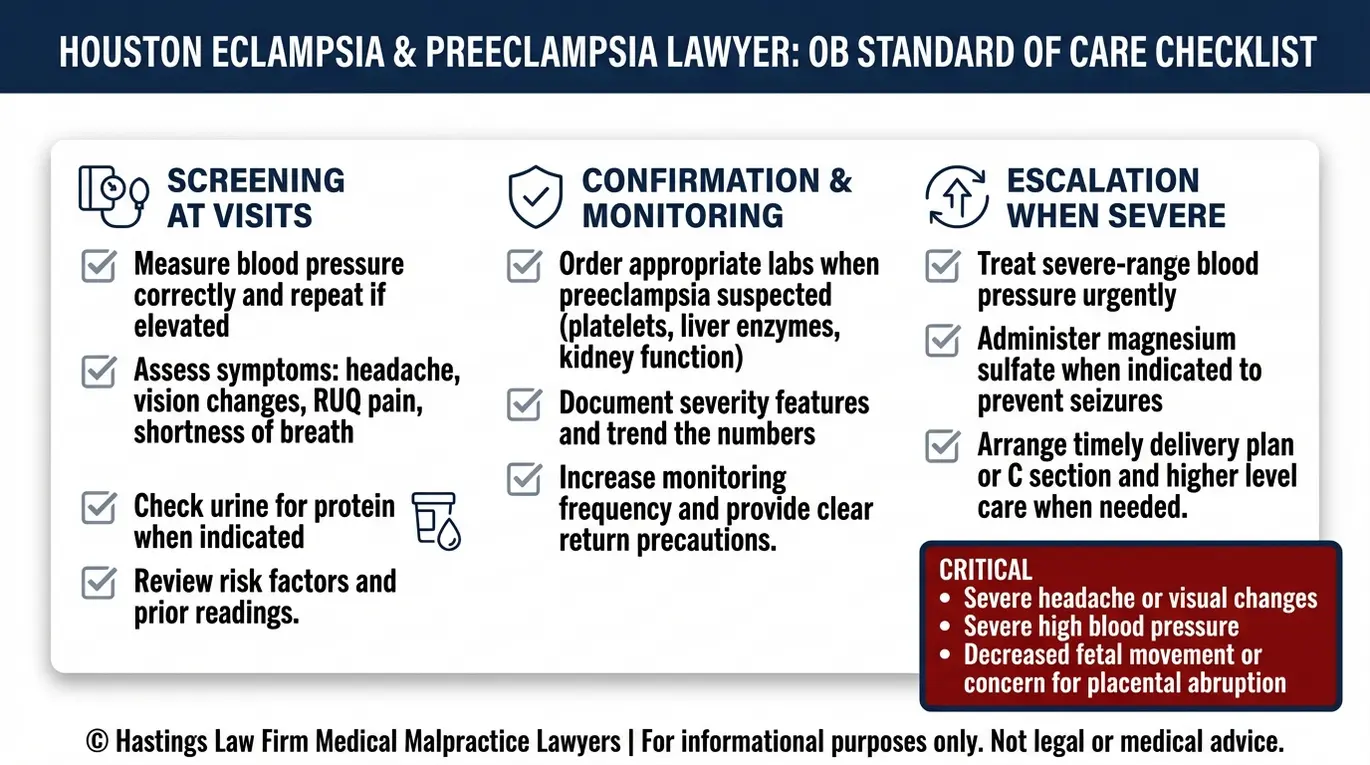
The standard of care for managing preeclampsia generally includes:
- Monitoring blood pressure at every prenatal appointment
- Testing for protein in urine (proteinuria) when hypertension is present
- Ordering blood panels to assess liver and kidney function
- Prescribing antihypertensive medications when blood pressure reaches dangerous levels
- Administering magnesium sulfate to prevent seizures when preeclampsia is severe
- Planning for early delivery when the mother’s or baby’s condition deteriorates
A Houston preeclampsia malpractice counsel evaluates whether each of these steps was taken, and if not, whether the gap in care caused harm. These are not judgment calls left to provider preference. They are established, evidence-based obligations.
Recognizing Symptoms and Warning Signs Often Ignored by Doctors
Doctors are trained to recognize critical warning signs like severe headaches and vision changes, and failure to act on these symptoms constitutes negligence.
Mothers often notice changes in their bodies well before a formal diagnosis. The challenge is that some providers dismiss these concerns as routine discomforts of pregnancy. Swelling in the hands and face, rapid weight gain over a few days, persistent headaches, and blurred vision are all symptoms that should prompt immediate evaluation, not reassurance that “everything is normal.”
One key sign is proteinuria, which refers to protein in the urine. This condition indicates kidney stress and requires immediate clinical attention. UC Davis Health identifies key preeclampsia symptoms and risk factors that providers are expected to recognize. When a patient reports these symptoms and they are brushed aside, the window for timely diagnosis narrows. That delay can be the difference between a manageable condition and a catastrophic one.
Preeclampsia does not always end at delivery. Postpartum preeclampsia, a form of the condition that develops after childbirth, can cause the same dangerous complications days or even weeks later. Providers have a responsibility to educate patients about these risks and to monitor for them during follow-up care.
A preeclampsia lawyer can investigate whether the medical team properly evaluated reported symptoms. Our in-house medical staff, including nurse practitioners and Board Certified Patient Advocates, reviews charting, nursing notes, and lab results to determine whether clinical signs were documented but not acted upon. When a provider has the information and fails to respond, the legal help for eclampsia-related injuries begins with that evidence.
| Symptom | Required Medical Action |
|---|---|
| Severe or persistent headache | Assess blood pressure; order labs for liver and kidney function |
| Visual changes (blurred vision, light sensitivity) | Evaluate for severe preeclampsia; consider magnesium sulfate |
| Upper abdominal pain (especially right side) | Test liver enzymes; assess for HELLP syndrome |
| Sudden facial or hand swelling | Check for proteinuria; monitor blood pressure trends |
| Rapid, unexplained weight gain | Evaluate fluid retention; order a full preeclampsia workup |
| Elevated blood pressure readings | Repeat measurement; escalate care plan if thresholds are met |
Systemic Healthcare Disparities and Maternal Mortality
The impact of preeclampsia is not distributed equally. Black maternal health research consistently shows that Black women in the United States face significantly higher rates of maternal mortality and are more likely to have their symptoms minimized. Systemic bias in clinical settings contributes to delayed diagnoses and inadequate treatment, which can turn a manageable condition into a fatal one.
These healthcare disparities represent real failures in care that disproportionately affect specific communities. Programs focusing on maternal health emphasize that when a provider’s implicit bias contributes to a missed diagnosis or a delayed response, it may also represent a breach of the standard of care. Our legal team takes these patterns seriously when reviewing the circumstances of a case.
The Hastings Law Firm Difference
Results matter, but what truly sets us apart is how we achieve them. Every verdict, every settlement, and every Houston courtroom victory comes from one guiding promise: To treat each client’s fight for justice as if it were our own.
This balance of skill, experience, and empathy reflects our core philosophy that justice should not only compensate the injured, but also make health care safer nationwide.

High-Risk Factors Demanding Vigilant Prenatal Monitoring
Obstetricians have a duty to screen for risk factors such as history of hypertension or obesity and implement heightened monitoring protocols for high-risk patients. This is not optional. It is a core component of competent prenatal care.
Several well-established risk factors should trigger closer prenatal monitoring:
- Chronic hypertension or a history of high blood pressure before pregnancy
- Previous pregnancy complicated by preeclampsia
- Obesity (BMI of 30 or higher)
- Multiple gestation (twins, triplets)
- Maternal age over 35 or under 18
- Pre-existing diabetes or kidney disease
- Autoimmune conditions such as lupus
- First pregnancy
- Family history of preeclampsia
When one or more of these factors is present, the standard of care may call for more frequent prenatal visits, additional lab work, and early planning for potential complications. This heightened surveillance allows the medical team to intervene before the mother’s blood pressure reaches stroke-level ranges or the fetus suffers from growth restriction. Without this vigilance, the risk of maternal death increases significantly.
Healthy People 2030, a federal initiative through ODPHP, recommends low-dose aspirin prophylaxis, a preventive medication protocol recommended to begin between weeks 12 and 28 of gestation, optimally before week 16, for patients at high risk. Superimposed preeclampsia, which occurs when a patient with chronic hypertension develops new or worsening symptoms, requires especially close attention because it can escalate quickly and be harder to distinguish from the underlying condition.
A Houston eclampsia attorney examines whether a provider identified these risk factors and adjusted the care plan accordingly. Tommy Hastings, a trial lawyer board-certified in Personal Injury Trial Law by the Texas Board of Legal Specialization, leads our investigation into whether the failure to respond to known risks caused avoidable harm.
Severe Complications Including Eclampsia and HELLP Syndrome
Untreated preeclampsia can escalate into eclampsia or HELLP syndrome, causing seizures and organ failure that threaten the lives of both mother and child.
Eclampsia occurs when preeclampsia progresses to the point of causing tonic-clonic seizures. These seizures can strike without warning, even in patients who appeared stable, and they can lead to stroke, brain injury, or cardiac arrest. When a provider has documented signs of worsening preeclampsia and does not take steps to prevent seizure activity, the resulting harm may be the basis of a malpractice claim. A Houston eclampsia lawyer investigates whether the clinical team failed to administer preventive treatment or to escalate the level of care.
HELLP syndrome is a life-threatening liver and blood clotting disorder characterized by the destruction of red blood cells, elevated liver enzymes, and low platelet counts. It can cause liver damage, kidney damage, internal bleeding, and death. HELLP can develop rapidly, sometimes before the hallmark signs of preeclampsia are even apparent, which makes vigilant lab monitoring essential. A HELLP syndrome attorney reviews lab trends and timing to assess whether the care team recognized the condition and acted within an appropriate window.
Placental abruption, the premature separation of the placenta from the uterine wall, is another complication linked to uncontrolled preeclampsia. When the placenta detaches, it cuts off oxygen and nutrients to the baby and can cause life-threatening hemorrhaging in the mother. This is a medical emergency that demands immediate delivery.
According to a literature review on hypertensive disorders of pregnancy published in PubMed Central, early recognition and aggressive management of these complications are essential to reducing maternal and fetal mortality.
| Complication | Potential Consequences |
|---|---|
| Eclampsia (seizures) | Stroke, brain injury, cardiac arrest, maternal death |
| HELLP Syndrome | Liver rupture, kidney failure, uncontrolled bleeding |
| Placental Abruption | Fetal oxygen deprivation, hemorrhage, emergency delivery |
| Organ Failure | Permanent kidney or liver damage requiring long-term treatment |
| Fetal Hypoxia | Cerebral palsy, developmental delays, brain damage |
A preeclampsia malpractice lawyer evaluates whether the progression from a warning sign to a catastrophic outcome could have been interrupted with competent medical care.

Establishing Liability for Preventable Birth Injuries and Maternal Harm
To prove liability in a preeclampsia or eclampsia case, a plaintiff must demonstrate that the provider deviated from accepted medical standards and that this deviation directly caused the injury or death. Texas medical malpractice law, outlined in the Texas Civil Practice and Remedies Code, Chapter 74, establishes the legal framework for these claims.
Every medical malpractice case requires proof of four elements, and a Houston preeclampsia lawyer builds each one using medical records, clinical guidelines, and expert analysis.
Duty. The obstetrician or healthcare provider had a professional obligation to provide care consistent with accepted medical standards. This duty is established the moment a provider-patient relationship exists. For pregnant patients showing signs of hypertension or preeclampsia, the duty includes ongoing monitoring, testing, and intervention planning.
Breach of Duty. The provider failed to meet that obligation. In preeclampsia cases, a breach may involve failing to prescribe magnesium sulfate, a medication used to prevent seizures in patients with severe preeclampsia, delaying a necessary C-section, or ignoring abnormal lab results. A malpractice lawyer for preeclampsia identifies the specific actions or omissions that fell below the standard of care.
Causation. The breach must be directly linked to the injury. This is often the most contested element. If a delay in delivery resulted in prolonged oxygen deprivation, or hypoxia, the legal team must establish that earlier intervention would have prevented the resulting brain damage or cerebral palsy. We work with qualified medical experts to reconstruct the clinical timeline and determine whether the outcome was avoidable.
Damages. The patient or family must have suffered quantifiable harm, whether physical, financial, or emotional. This includes the immediate medical consequences as well as long-term care needs.
Suing for eclampsia or preeclampsia-related injuries requires detailed medical evidence and credible expert testimony. Our team reviews fetal monitoring strips, nursing logs, lab panels, and physician orders to build a complete picture of what happened and when. A lawyer for birth injury cases tied to preeclampsia uses this evidence to establish whether a different course of action would have changed the outcome.

Securing Compensation for Long-Term Maternal and Infant Care
Compensation in preeclampsia cases covers past medical bills as well as future life care costs for permanently disabled children and noneconomic damages for pain and suffering. The financial impact of a preventable birth injury or maternal complication extends far beyond the initial hospitalization.
Recoverable damages in these cases may include:
- Economic damages for emergency medical costs, including NICU stays and surgeries
- future life care costs for children diagnosed with cerebral palsy, developmental disabilities, or brain damage related to premature birth or oxygen deprivation
- Rehabilitation services such as physical therapy, occupational therapy, and speech therapy
- Assistive devices, home modifications, and in-home care
- Lost wages and diminished earning capacity for the mother
- Pain and suffering, loss of enjoyment of life, and emotional distress
- Wrongful death damages when a mother or child does not survive
For children who will need a lifetime of care, a structured life care plan is essential to calculating future costs accurately. The American Academy of Nurse Life Care Planners publishes Standards of Practice that guide these assessments. Houston eclampsia & preeclampsia attorneys at our firm work with qualified life care planners and economists to ensure that a settlement or verdict reflects the full scope of what a family will need moving forward.
Compensation for preeclampsia-related injuries is not about assigning a dollar value to suffering. It is about ensuring that a family has the financial resources to provide proper care for as long as it is needed.
Contact the Houston Birth Injury Attorneys at Hastings Law Firm Today for Help
If you or someone in your family experienced a serious complication from preeclampsia or eclampsia, and you believe the medical team did not respond the way they should have, we are here to help you find answers.
Hastings Law Firm has focused exclusively on medical malpractice since 2005. Our legal team includes in-house medical professionals and former defense counsel who understand how hospitals operate and how to identify where the standard of care broke down. We prepare every case as if it is going to trial, and that preparation gives us strength at every stage of the process.
Contact a Houston preeclampsia lawyer at Hastings Law Firm for a free, confidential case evaluation. There is no fee unless we recover compensation on your behalf. You do not have to carry this alone, and you do not have to have all the answers before reaching out. That is our job.
Frequently Asked Questions About Eclampsia & Preeclampsia in Houston


This content was researched and written by the Hastings Law Firm editorial team, which includes attorneys, medical professionals, and experienced researchers. Our writing is informed by internal knowledge and practical experience, and we cross-check critical details against authoritative sources cited throughout. Every piece undergoes human-led fact-checking and legal review. Because legal and medical information can change, if you spot an error, please contact us. Learn more about our content standards and review process on our editorial policy page.

Tommy Hastings, founder of Hastings Law Firm, is a board-certified personal injury trial lawyer dedicated exclusively to healthcare injury cases. Since 2001, he has represented injured patients and families in litigation against major hospital systems, pharmaceutical companies, and negligent healthcare providers nationwide. He has handled numerous high-profile cases that have drawn national media attention and resulted in multi-million dollar recoveries. He draws on that experience in his writing, helping readers understand how these cases work and what options may be available to them.
