


Texas Eclampsia & Preeclampsia Lawyer
Preeclampsia, eclampsia, and HELLP syndrome are serious pregnancy related conditions that can escalate quickly when warning signs are missed or treatment is delayed. Families may face overwhelming medical bills, lasting health effects for a parent or child, and lingering uncertainty about whether proper monitoring and timely intervention occurred. The standard of care described includes careful blood pressure tracking, appropriate lab work, and prompt treatment when severe features appear. If you or a loved one were harmed or worse due to preeclampsia or eclampsia malpractice in Texas, contact Hastings Law Firm for a free, confidential case review.

Last Updated: July 27, 2026
Trial-Ready Birth Injury Attorneys Helping Families Across Texas
When pregnancy complications like preeclampsia or eclampsia cause serious harm, the emotional and physical toll can be overwhelming. You may be dealing with unexpected medical bills, ongoing health concerns for yourself or your child, and the painful question of whether your doctors did everything they should have. Those feelings are valid, and you deserve honest answers.
At Hastings Law Firm, we focus exclusively on medical malpractice. Our team includes in-house nurses and former defense attorneys who understand how hospitals operate from the inside. As a Texas eclampsia and preeclampsia lawyer, we review medical records, consult with qualified experts, and determine whether the care you received fell below accepted standards.
If you believe your provider missed warning signs or delayed treatment during your pregnancy, we are here to listen. Contact our patient advocates for a free, confidential case evaluation to learn where you stand.

Understanding Preeclampsia and HELLP Syndrome Claims
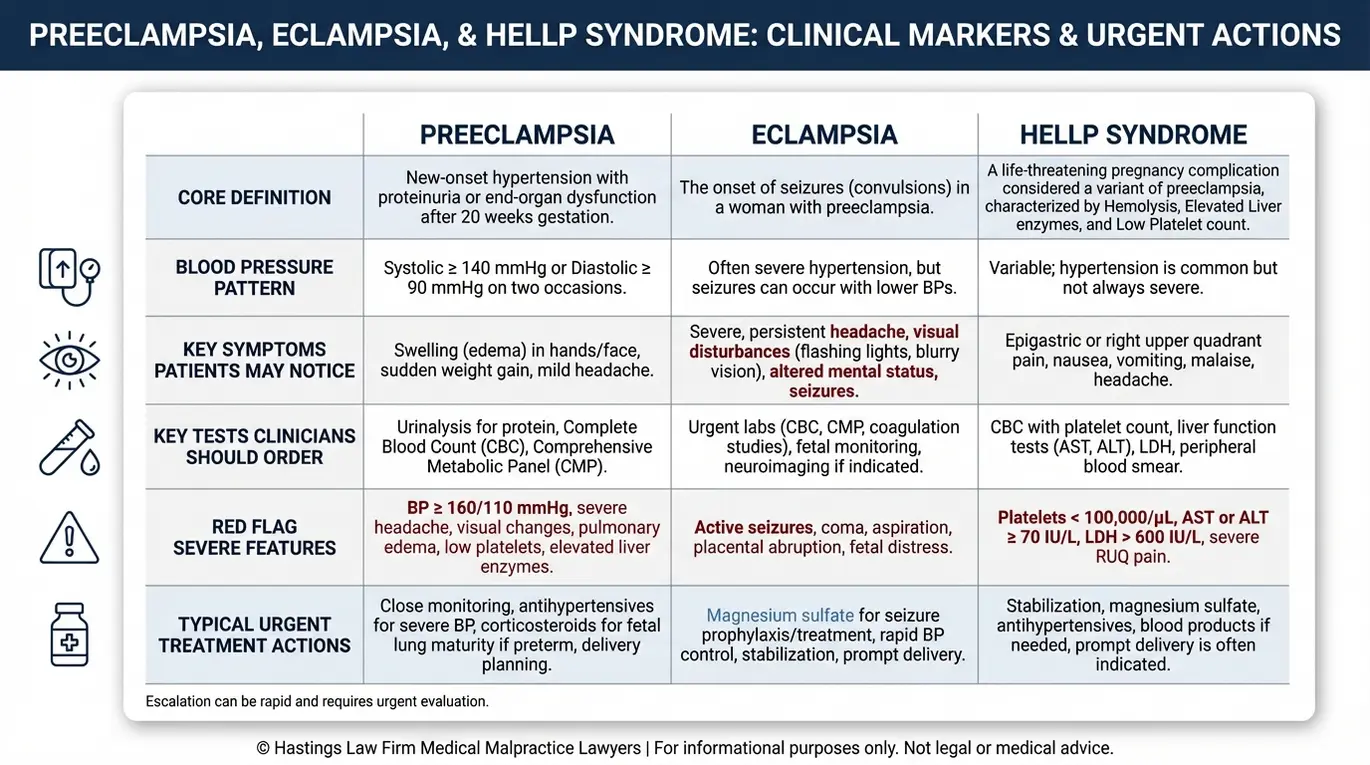
Preeclampsia, a serious pregnancy complication marked by high blood pressure and signs of organ damage, typically affects the kidneys and liver. These conditions represent a spectrum of pregnancy-induced hypertensive disorders. When left undiagnosed or inadequately treated, it can progress into eclampsia, a life-threatening condition that causes seizures, or into HELLP syndrome, a dangerous breakdown of blood cells and liver function. These are not rare or unpredictable events; with proper monitoring, they are detectable conditions that allow providers time to intervene.
The progression typically begins with gestational hypertension, or pregnancy-induced high blood pressure, which may then develop into preeclampsia when accompanied by protein in the urine or other organ involvement. If a provider fails to monitor blood pressure trends, order appropriate lab work, or act on abnormal results, the condition can rapidly escalate.
HELLP syndrome, a condition characterized by hemolysis (the destruction of red blood cells), elevated liver enzymes, and a low platelet count, can develop suddenly, sometimes even before a formal preeclampsia diagnosis. Consistent blood work and clinical vigilance are essential for detection. The Preeclampsia Diagnostic Criteria published by NCBI outlines how these conditions have been recognized in major medical guidelines for decades. Texas has also prioritized maternal safety through its TexasAIM Hypertension Family of Measures, which sets clear benchmarks for how hospitals should respond to hypertensive emergencies in pregnancy.
As a Texas preeclampsia malpractice attorney, our job is to determine whether these standards were followed. If your provider failed to identify the warning signs or delayed treatment as your condition worsened, that may constitute a breach of the standard of care.
| Condition | Key Features | Primary Risks |
|---|---|---|
| Preeclampsia | Elevated blood pressure (≥140/90), proteinuria, possible organ involvement | Organ damage, progression to eclampsia or HELLP |
| Eclampsia | Seizures occurring in a patient with preeclampsia | Maternal stroke, brain injury, death |
| HELLP Syndrome | Hemolysis, elevated liver enzymes, low platelet count | Liver rupture, hemorrhage, maternal and fetal death |
Recognizing the Warning Signs Your Doctor Should Have Caught
Doctors are trained to recognize critical red flags, including sudden weight gain, severe headaches, vision changes, and proteinuria (excess protein in the urine), all of which indicate that immediate intervention may be required. These critical red flags help providers determine if the pregnancy is progressing safely or if medical intervention is needed. When these signs are dismissed as normal pregnancy discomforts, the consequences can be severe.
Many patients report telling their doctors about symptoms that were brushed off or minimized. This experience is more common than it should be. When providers dismiss these signs as normal, they may overlook gestational hypertension, a condition characterized by high blood pressure during pregnancy that requires careful monitoring.
According to MedlinePlus guidance on preeclampsia self-care, patients should be educated about these warning signs and encouraged to seek emergency care if they appear. When providers fail to take patient reports seriously, critical time is lost.
Here are symptoms and corresponding clinical responses that should have been part of your prenatal care:
- Persistent or severe headaches: these should prompt blood pressure checks and neurological assessment
- Visual disturbances (blurring, flashing lights, seeing spots): these may indicate cerebral involvement
- Sudden swelling of the face and hands: this is distinct from typical pregnancy swelling
- Right upper quadrant or epigastric pain: this can signal liver involvement
- Blood pressure readings at or above 140/90 mmHg: these should trigger repeat monitoring and lab work
- Proteinuria on urine tests: a hallmark indicator of preeclampsia
- Rapid, unexplained weight gain: this may reflect fluid retention tied to organ dysfunction
If your doctor did not order blood work or urine tests after you reported these symptoms, or if elevated blood pressure readings were documented but not acted upon, a lawyer for eclampsia negligence can review the records to determine whether the standard of care was met. You were not wrong to be concerned. Your instincts about your own body matter.
Postpartum Preeclampsia Risks and Timeline
The danger does not end at delivery. Postpartum preeclampsia, a form of hypertensive disorder that develops after childbirth, can appear anywhere from 48 hours to six weeks after delivery. Symptoms may include severe headaches, shortness of breath, excessive swelling (edema), and elevated blood pressure.
Because many new mothers attribute these symptoms to normal postpartum recovery, and because some providers fail to screen for it, postpartum preeclampsia is frequently missed. If you were discharged without proper follow-up instructions or blood pressure monitoring, that gap in care deserves a closer look.

The Hastings Law Firm Difference
Results matter, but what truly sets us apart is how we achieve them. Every verdict, every settlement, and every Texas courtroom victory comes from one guiding promise: To treat each client’s fight for justice as if it were our own.
This balance of skill, experience, and empathy reflects our core philosophy that justice should not only compensate the injured, but also make health care safer nationwide.

Standard of Care for Monitoring and Treating Maternal Hypertension
The standard of care requires obstetricians to increase the frequency of prenatal visits, administer antihypertensives or magnesium sulfate, the primary medication used to prevent seizures in patients with severe preeclampsia, and plan for early delivery when severe features are present. The standard of care refers to the clinical guidelines and protocols that a reasonably competent health care professional must follow. Our firm’s founder, Tommy Hastings, is board-certified in Personal Injury Trial Law and ensures our investigations meet these high medical standards.
For patients identified as high-risk, ACOG guidelines recommend low-dose aspirin initiated between 12 weeks and 28 weeks of gestation (optimally before 16 weeks) to reduce the risk of developing preeclampsia. Risk factors include a history of preeclampsia, chronic hypertension, diabetes, kidney disease, and carrying multiples. When a provider fails to identify a patient as high-risk or does not prescribe aspirin prophylaxis, that omission may represent a preventable failure.
Once preeclampsia is diagnosed, the expected course of care includes regular blood pressure monitoring, lab work to track liver enzymes and platelet levels, and administration of magnesium sulfate, an anticonvulsant, to reduce the risk of eclampsia. Eclampsia is a severe complication characterized by the onset of seizures. If the condition progresses to severe preeclampsia, the provider must weigh the risks of continuing the pregnancy against the benefits of early delivery, which may require induction or an emergency C-section.
As a maternal injury attorney in Texas, we examine whether providers followed these protocols at each stage. We look at prenatal records, lab results, medication logs, and delivery notes to build a detailed timeline. When there is a gap between what should have happened and what actually happened, that gap is where the malpractice claim begins.

Common Forms of Medical Malpractice in Preeclampsia Cases
Malpractice occurs when a provider deviates from accepted medical practices by dismissing patient complaints, failing to order urine or blood tests, or delaying a necessary C-section. Medical negligence in these cases typically involves a failure to follow established safety protocols. In preeclampsia cases, even short delays can lead to irreversible harm.
According to data from the CDC’s Maternal Mortality Review Committees, many pregnancy-related deaths are preventable. The types of medical negligence we investigate in these cases include misdiagnosis, delayed diagnosis, and:
- Failure to diagnose: Ignoring consistently elevated blood pressure readings or not ordering lab work when clinical indicators are present.
- Failure to treat: Not administering magnesium sulfate or antihypertensive medications after a preeclampsia diagnosis.
- Failure to deliver: Delaying an emergency C-section or induction despite signs of fetal distress. This includes fetal growth restriction, where the baby does not grow at the expected rate due to restricted blood flow. It also covers a worsening maternal condition. This negligence can lead to placental abruption, stillbirth, or wrongful death.
- Premature discharge: Sending a mother home while blood pressure remains unstable or before adequate postpartum monitoring is completed.
A preeclampsia medical malpractice lawyer can help determine whether your provider’s actions, or inactions, fell below the standard of care. We work with qualified medical experts to evaluate the clinical decisions made at each point in your care.
The Devastating Impact of Untreated Preeclampsia
Untreated hypertension during pregnancy can lead to catastrophic outcomes, including maternal stroke, organ failure, cerebral palsy in the infant, or the wrongful death of the mother or child. These severe outcomes can affect both the birth parent and the infant. They are real consequences that families across Texas live with every day.
For mothers, severe preeclampsia and eclampsia can cause permanent brain damage from stroke, kidney failure requiring long-term dialysis, liver rupture, and death. Placental abruption, the premature separation of the placenta from the uterine wall, can cause hemorrhaging that threatens both the mother and baby.
For infants, the risks are equally serious. When the placenta is compromised, the baby may not receive enough oxygen, leading to hypoxic-ischemic encephalopathy (HIE), a type of brain injury caused by hypoxia (oxygen deprivation). HIE can result in cerebral palsy, developmental delays, seizure disorders, and other long-term disabilities. Preterm birth forced by the mother’s deteriorating condition carries its own set of risks, including underdeveloped lungs, organs, or neonatal death.
The financial cost of these injuries is staggering. Children with cerebral palsy or HIE may require lifelong medical care, therapy, adaptive equipment, and around-the-clock support. That is why, as a Texas eclampsia and preeclampsia lawyer, we work with medical economists and life care planners to calculate the full scope of damages. These professionals help us project future medical costs, lost earning capacity, and the resources needed to give your child the best possible quality of life.
Contact the Texas Birth Injury Attorneys at Hastings Law Firm Today for Help
No amount of compensation can undo what happened to your family. But financial recovery can provide the resources your child needs for future medical care, therapy, and support, while also holding the responsible parties accountable.
Hastings Law Firm focuses exclusively on medical malpractice litigation. Tommy Hastings, our founder, is a board-certified trial lawyer who has focused on medical negligence cases since 2005. We understand both the medicine and the law, and we ensure our team is trial-ready by preparing every case for a potential jury trial.
If you or your child were harmed by undiagnosed or untreated preeclampsia, eclampsia, or HELLP syndrome, reach out to our patient advocates for a confidential conversation about your case. As a Texas eclampsia and preeclampsia lawyer, we can review your records and explain your options. There is no fee unless we recover compensation for you.
Frequently Asked Questions About Eclampsia & Preeclampsia in Texas


This content was researched and written by the Hastings Law Firm editorial team, which includes attorneys, medical professionals, and experienced researchers. Our writing is informed by internal knowledge and practical experience, and we cross-check critical details against authoritative sources cited throughout. Every piece undergoes human-led fact-checking and legal review. Because legal and medical information can change, if you spot an error, please contact us. Learn more about our content standards and review process on our editorial policy page.

Tommy Hastings, founder of Hastings Law Firm, is a board-certified personal injury trial lawyer dedicated exclusively to healthcare injury cases. Since 2001, he has represented injured patients and families in litigation against major hospital systems, pharmaceutical companies, and negligent healthcare providers nationwide. He has handled numerous high-profile cases that have drawn national media attention and resulted in multi-million dollar recoveries. He draws on that experience in his writing, helping readers understand how these cases work and what options may be available to them.
