


Houston OB-GYN Malpractice Lawyer
Obstetrics and gynecological negligence can leave families coping with preventable injuries, overwhelming medical bills, and lasting emotional harm. The topic often involves errors in pregnancy care, labor and delivery decisions, and gynecological surgery or cancer screening, where missed warning signs or delayed action can lead to catastrophic outcomes or worse. Texas rules on notice, expert reports, and damage limits can also shape what recovery is possible. If you or a loved one were harmed or worse due to OB GYN malpractice in Houston, Texas, contact Hastings Law Firm for a free, confidential case review.

Last Updated: July 27, 2026
Trusted Houston Medical Attorneys for Obstetrics Negligence Claims
When a doctor you trusted during pregnancy or gynecological care causes preventable harm, the experience can feel like a deep betrayal. You may be left with unanswered questions, mounting medical costs, and a sense that the system designed to protect you failed at the moment it mattered most. Those feelings are valid, and you deserve clarity about what happened.
As a Houston OB-GYN Malpractice Lawyer, Hastings Law Firm focuses exclusively on medical malpractice. Our team includes in-house nurse consultants and former defense attorneys who understand exactly how hospitals build their cases. We use that knowledge to protect patients and families like yours.
If you believe an OB-GYN’s error caused harm to you or your child, we can review what happened and explain your options during a free, confidential case evaluation.

Common Forms of Negligence by Obstetricians and Gynecologists
Obstetric and gynecological negligence occurs when a specialist deviates from the accepted standard of care, resulting in preventable injuries such as birth trauma, surgical errors during hysterectomies, or failure to diagnose critical conditions like preeclampsia or cancer. Not every complication means a doctor was negligent. But when a provider fails to meet the level of treatment that a reasonably qualified OB-GYN would have delivered under similar circumstances, that breach of duty can form the basis of a legal claim.
The accepted standard of care encompasses the protocols a prudent physician must follow. When these standards are ignored, the consequences can be catastrophic. In severe cases, negligence can lead to a hospital-acquired infection after surgery or even wrongful death.
Under Texas Civil Practice and Remedies Code § 74.051, patients must provide written notice to the healthcare provider at least 60 days before filing suit. This requirement makes early consultation with a Houston OB-GYN malpractice lawyer critical to preserving your claim.
OB-GYN negligence generally falls into three broad categories:
- Diagnostic errors: Missing or delaying identification of conditions like cervical cancer, ectopic pregnancy, or preeclampsia, allowing a treatable condition to progress.
- Surgical mishaps: Mistakes during procedures such as hysterectomies or cesarean deliveries, including organ damage or retained surgical instruments.
- Labor and delivery management failures: Errors during active labor, such as ignoring fetal distress signals, mismanaging medication, or delaying necessary interventions.
Our medical-legal team conducts a thorough medical records analysis to determine whether the care you received fell below the standard. If you suspect something went wrong, an OB-GYN negligence attorney can help you understand whether negligence contributed to your outcome and guide you through the details of the legal process.
Distinguishing Obstetric Negligence From Gynecological Errors
Obstetric negligence specifically involves errors during pregnancy, labor, and delivery affecting the mother or fetus, whereas gynecological malpractice pertains to errors in reproductive health care for non-pregnant patients, such as surgical mistakes or misdiagnoses. While OB-GYNs are trained in both disciplines, the risks, timelines, and types of harm differ significantly, as outlined by Ross University School of Medicine’s overview of OB-GYN training and career paths.
| Area of Practice | Common Errors | Potential Injuries |
|---|---|---|
| Obstetrics | Delayed cesarean delivery (C-section, a surgical procedure to deliver the baby through the abdomen), labor induction errors, failure to monitor fetal heart rate | Uterine rupture, cerebral palsy, neonatal brain injury, maternal hemorrhage |
| Gynecology | Hysterectomy errors (surgical removal of the uterus), missed cervical cancer on biopsy, retained surgical instruments | Organ damage, delayed cancer treatment, infection, wrongful death |
Each type of case requires a different investigative approach. A Houston OB-GYN attorney knows which medical records to examine, which experts to consult, and how to reconstruct the clinical timeline specific to your situation.
That distinction matters because obstetric cases often involve minute-by-minute decisions under pressure, while gynecological cases may involve patterns of missed findings over months or years. We handle complex claims involving gynecological surgical errors on non-pregnant patients, such as the misdiagnosis of cervical cancer or organ damage, ensuring every aspect of your care is scrutinized.

The Hastings Law Firm Difference
Results matter, but what truly sets us apart is how we achieve them. Every verdict, every settlement, and every Houston courtroom victory comes from one guiding promise: To treat each client’s fight for justice as if it were our own.
This balance of skill, experience, and empathy reflects our core philosophy that justice should not only compensate the injured, but also make health care safer nationwide.

Birth Injuries Caused by Delivery Room Errors
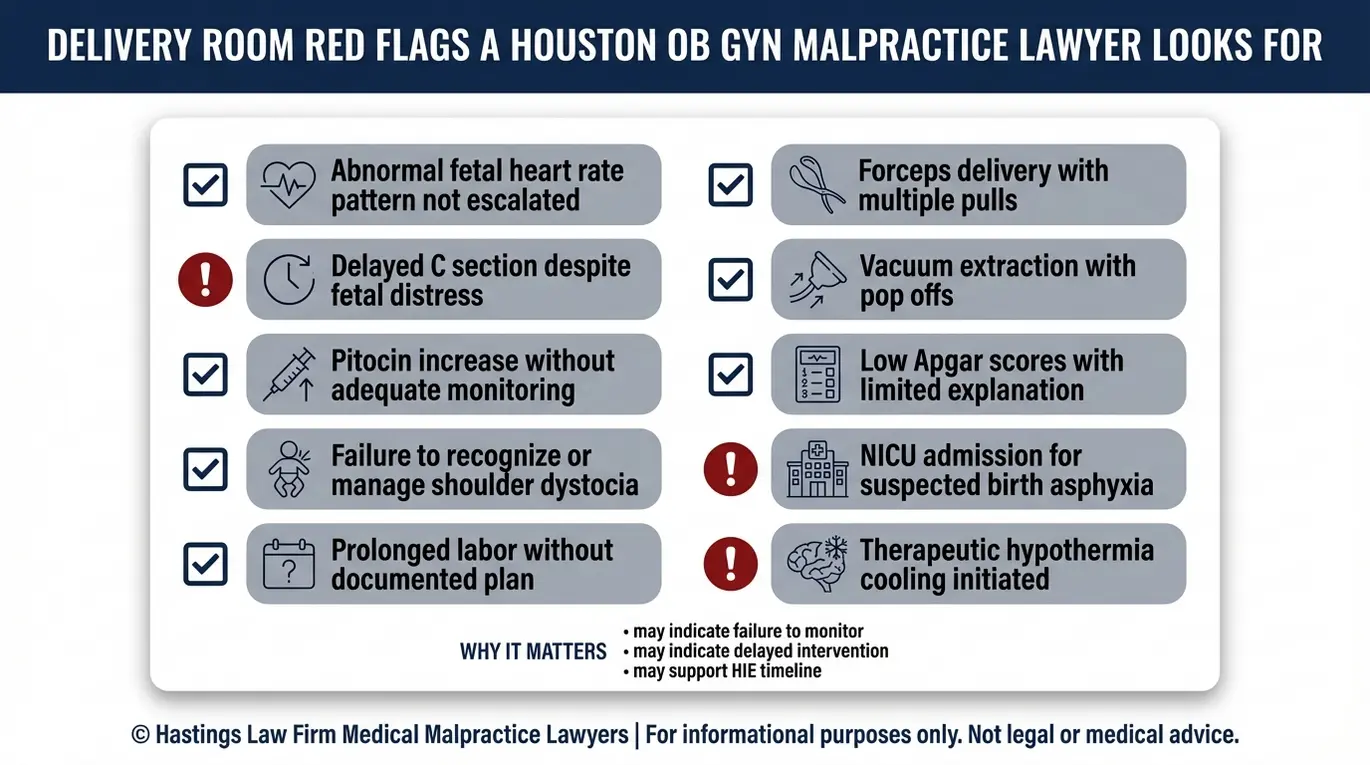
Preventable birth injuries often result from a failure to monitor fetal distress, improper use of delivery tools, or delaying a necessary C-section, leading to lifelong conditions such as Cerebral Palsy or Hypoxic Ischemic Encephalopathy (HIE). These errors can lead to devastating consequences for the infant and family.
One of the most important pieces of evidence in these cases is the fetal heart rate tracing, commonly called a fetal heart strip, which is a continuous electronic recording of the baby’s heart rate during labor. Research published in the National Institute of Child Health and Human Development (NICHD) 3-Tier Fetal Heart Rate Interpretation System study evaluated the reliability of a standardized framework for classifying these tracings. When warning signs appear on the strip and the care team fails to respond, the consequences can be severe.
Oxytocin (sold under the brand name Pitocin), a medication used to induce or strengthen contractions, carries real risks when administered improperly. Pitocin errors, such as excessive dosing, can cause contractions so frequent and intense that the baby’s oxygen supply is compromised, potentially leading to birth asphyxia or neonatal injury.
Houston OB-GYN malpractice lawyers at our firm look for specific red flags in birth injury cases, including:
- Prolonged Category II or Category III fetal heart rate patterns without intervention
- Shoulder dystocia that was not anticipated or managed according to protocol
- Delayed emergency C-section after signs of fetal distress
- Pitocin administration continued despite non-reassuring fetal tracings
- Improper use of forceps delivery or vacuum extraction causing trauma
The financial impact of a birth injury like cerebral palsy extends across a lifetime. According to the CDC’s analysis of economic costs associated with cerebral palsy and related conditions, the estimated lifetime cost per individual can reach over one million dollars. An OB-GYN malpractice counsel can help determine whether the harm was preventable and pursue compensation to cover future care needs.
Neonatal Therapeutic Hypothermia as Evidence
If your baby was placed on a “cooling cap” or cooling blanket shortly after birth, that treatment itself may be an important indicator of a birth injury. Neonatal therapeutic hypothermia, a controlled lowering of the baby’s body temperature, is a standard emergency intervention for newborns suspected of suffering HIE. Its use is evidence of injury, suggesting that the medical team recognized the baby experienced oxygen deprivation during delivery.
We also examine umbilical cord blood gas analysis, commonly called cord gases, which are blood samples taken from the umbilical cord immediately after birth to measure oxygen and acid levels. Abnormal cord gas values, combined with the decision to initiate cooling, can help establish when and how the injury occurred. These clinical decisions become key evidence in building a birth injury claim.
Surgical Errors and Misdiagnosis in Gynecological Care
Gynecological malpractice frequently involves surgical errors during procedures like hysterectomies, such as severing the ureter or bowel, as well as the failure to timely diagnose reproductive cancers. These cases can result in permanent injury or, in the worst circumstances, wrongful death.
A ureteral injury, which is damage to the tube that carries urine from the kidney to the bladder, is one of the most common surgical complications during pelvic procedures. Hysterectomy errors can cause significant trauma if not identified immediately. While the anatomy can be challenging, failing to identify and repair this damage before closing is often a preventable error.
A retained surgical item (RSI), such as a sponge or instrument left inside the body after surgery, is classified as a “never event,” a term meaning it should never occur under proper protocols. According to a PubMed Central analysis on retained surgical objects and mandatory technology adoption, these incidents remain a persistent patient safety concern despite existing count procedures.
Delayed misdiagnosis of cervical cancer or ovarian cancer is equally devastating. Misdiagnosis often occurs when abnormal test results are overlooked or follow-up is not ordered, leading to a failure to diagnose conditions before they become terminal. A gynecological malpractice attorney in Houston can work with oncology and surgical experts to establish whether earlier diagnosis would have changed the outcome.
Warning signs that may indicate gynecological negligence include:
- Unexplained pain, fever, or infection after a surgical procedure
- Discovery of a foreign object on imaging after surgery
- A cancer diagnosis at an advanced stage following years of routine screenings
- Sudden postpartum hemorrhage or organ damage identified only after emergency intervention
The Texas 120-Day Expert Report Requirement
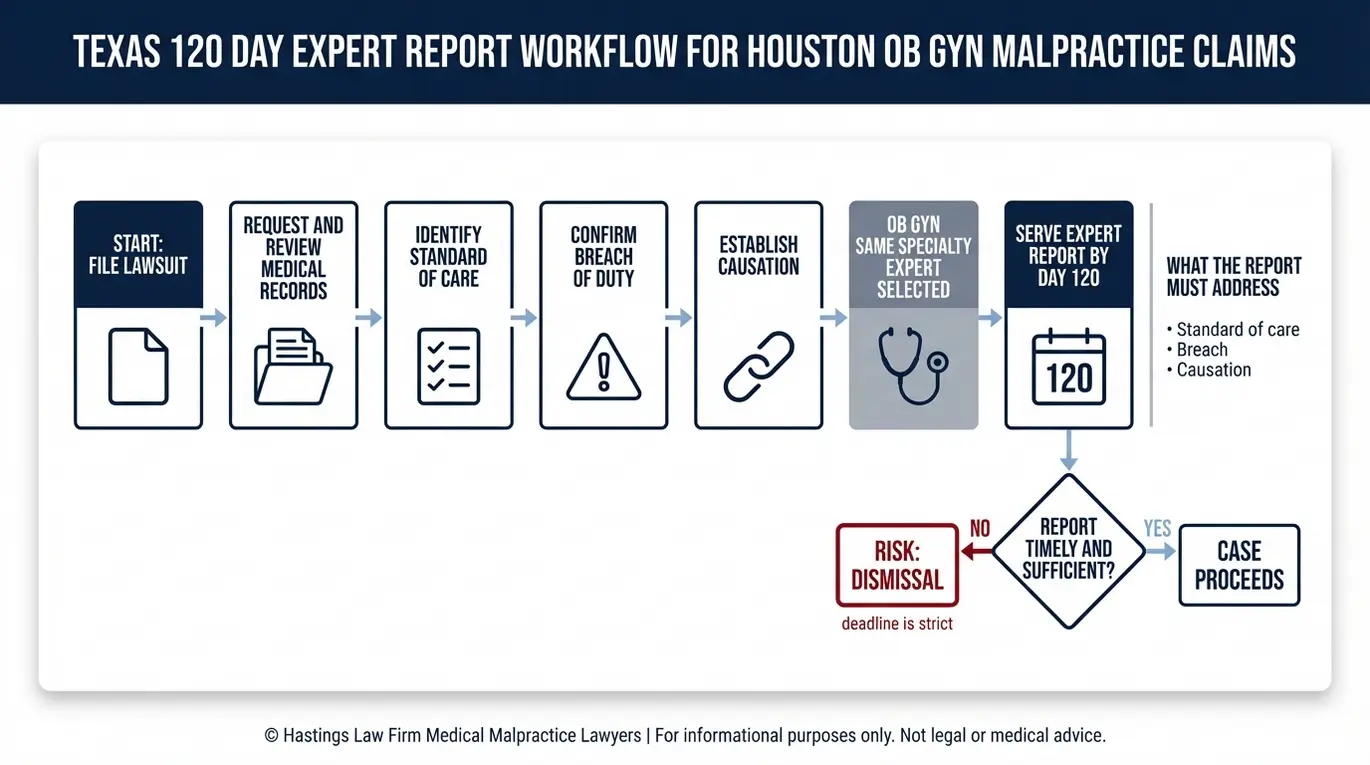
Under Texas law, a medical malpractice plaintiff must serve an expert report authored by a qualified physician within 120 days after the date each defendant’s original answer is filed, detailing the standard of care, the breach, and causation, or the case will be dismissed. This is not a flexible guideline. It is a hard deadline outlined in Texas Civil Practice and Remedies Code § 74.351, and missing it can permanently end your right to pursue a claim.
The 120-day expert report requirement necessitates speed and precision. Texas also enforces a “Same-Specialty Rule,” which means the report must come from a physician practicing in the same or a substantially similar medical specialty as the defendant. In an OB-GYN case, this typically means the report must come from a board-certified obstetrician-gynecologist.
This is one of the primary reasons general personal injury firms struggle with medical malpractice cases. An expert report attorney at Hastings Law Firm has an established national network of qualified medical experts ready to provide the credible, specialty-matched opinions these cases require. Because the statute of limitations Texas enforces is strict, we begin building the expert report from the day we accept your case, so this deadline is never in jeopardy.
Recovering Damages Under Texas Malpractice Laws
Texas law allows victims to recover economic damages for medical bills and lost wages without a cap, while non-economic damages for pain and suffering are generally capped at $250,000 against all individual physicians and healthcare providers combined, with additional caps of up to $500,000 against healthcare institutions, for a maximum of $750,000 in cases involving multiple defendants.
Understanding Texas medical malpractice caps is essential, particularly in birth injury cases where the cost of future care can be substantial. Houston OB-GYN malpractice lawyers at our firm work with life care planners and economists to document every dollar of future need. Calculating economic damages vs. non-economic damages requires a detailed assessment of lifetime expenses.
Recoverable damages in OB-GYN malpractice cases may include:
- Past and future medical expenses: Surgeries, rehabilitation, therapy, adaptive equipment, and ongoing specialist care
- Lost earning capacity: Income the patient or child will never be able to earn due to the injury
- Future cost of care: Lifetime care plans for children with conditions like cerebral palsy or HIE
- Pain and suffering: Mental anguish, and loss of companionship (subject to Texas caps)
- Wrongful death damages: Funeral costs and loss of financial support when negligence results in death
Because non-economic damages are capped, our strategy focuses heavily on fully documenting economic losses, which have no statutory limit. Compensation for OB-GYN errors depends on a thorough accounting of every past expense and every future need.
Exceptions to the Statute of Limitations
Texas generally requires medical malpractice claims to be filed within two years of the date of the negligent act. This time limit, known as a statute of limitations, is the window in which a patient must file a lawsuit. However, there are important statute of limitations exceptions.
The “Discovery Rule” may apply when an injury is not immediately apparent. In those situations, the two-year clock begins when the patient knew or should have known the injury occurred. For birth injuries involving minors, parents typically have until the child’s fourteenth birthday to file a claim on their behalf.
Texas also imposes an absolute deadline called the Statute of Repose, which generally bars claims filed more than ten years after the negligent act regardless of when the injury was discovered. Because these timelines are strict and fact-specific, early legal consultation is strongly recommended.
Contact the Houston Birth Injury Attorneys at Hastings Law Firm Today for Help
If you or your child suffered harm because of an OB-GYN’s error, you do not have to face this alone. Hastings Law Firm is not a high-volume settlement operation. We are a focused medical malpractice team built to handle exactly these cases, with in-house medical staff, former defense attorneys, and a national network of physician experts.
Tommy Hastings, a board-certified trial lawyer with over 20 years of experience, founded our firm to give a voice to patients silenced by medical errors. Accountability is the only path to safer care. When we take your case, we prepare it for trial from day one, because that preparation is what drives fair outcomes.
Every consultation is free and confidential. We work on a contingency fee basis, which means you pay no attorney fees or litigation costs unless we recover compensation for you. If you are unsure whether you have a case, let us review your records and explain your options. Contact Hastings Law Firm today to take that first step.
Frequently Asked Questions About OB-GYN Malpractice in Houston


This content was researched and written by the Hastings Law Firm editorial team, which includes attorneys, medical professionals, and experienced researchers. Our writing is informed by internal knowledge and practical experience, and we cross-check critical details against authoritative sources cited throughout. Every piece undergoes human-led fact-checking and legal review. Because legal and medical information can change, if you spot an error, please contact us. Learn more about our content standards and review process on our editorial policy page.

Tommy Hastings, founder of Hastings Law Firm, is a board-certified personal injury trial lawyer dedicated exclusively to healthcare injury cases. Since 2001, he has represented injured patients and families in litigation against major hospital systems, pharmaceutical companies, and negligent healthcare providers nationwide. He has handled numerous high-profile cases that have drawn national media attention and resulted in multi-million dollar recoveries. He draws on that experience in his writing, helping readers understand how these cases work and what options may be available to them.
