


Houston Shoulder Dystocia Birth Injury Lawyer
Shoulder dystocia is an obstetric emergency where a baby delivers head first but the shoulders become trapped, creating an immediate risk of oxygen deprivation and traumatic injury. When warning signs are missed or the response is forceful or delayed, the result can be lasting harm to a child and serious complications for a mother. Understanding risk factors, proper maneuvers, and common injury patterns can clarify whether the outcome was preventable. If your child suffered harm due to shoulder dystocia malpractice in Houston, Texas, contact Hastings Law Firm for a free, confidential case review.

Last Updated: July 27, 2026
Trusted Houston Birth Injury Attorneys for Shoulder Dystocia Malpractice Claims
When your child has been injured during delivery, the stress and uncertainty can feel overwhelming. You may suspect that something went wrong, that the medical team made a mistake, but you’re not sure how to confirm it or what to do next. Those instincts deserve answers, not dismissal.
As a Houston shoulder dystocia lawyer, Hastings Law Firm represents families whose children suffered preventable birth injuries caused by medical negligence. Our team of board-certified trial attorneys and in-house medical professionals works exclusively on medical malpractice cases, giving us the clinical depth and litigation experience these claims demand.
If your child was diagnosed with a nerve injury, arm weakness, or other condition following a difficult delivery, we can review what happened and explain your options. The consultation is free, and you pay nothing unless we recover compensation for your family.

Understanding Shoulder Dystocia and Preventable Birth Trauma
Shoulder dystocia is a medical emergency that occurs during delivery when the infant’s head is born, but one or both shoulders become stuck behind the mother’s pelvic bone. The baby’s body cannot follow the head through the birth canal, and delivery stalls at its most critical moment.
The danger is immediate. Once the head delivers and the shoulders remain trapped, the baby cannot breathe on its own. The umbilical cord may also become compressed between the baby’s body and the birth canal, cutting off its oxygen supply.
This condition, known as birth asphyxia (a dangerous drop in oxygen reaching the brain and organs), can cause irreversible harm in minutes. According to the National Center for Biotechnology Information’s overview of Shoulder Dystocia, this complication requires trained, immediate intervention to prevent serious birth trauma.
While labor is unpredictable, the mechanics of this injury are well-understood. It is not simply bad luck; it is a physical obstruction that requires physical solutions.
The complication is often influenced by fetal positioning or the size of the infant relative to the birth canal. Because the window to resolve this entrapment is so narrow, with the risk of permanent brain damage increasing with each passing minute, protocols must be executed properly. Any hesitation or deviation from established safety maneuvers can result in lifelong disabilities.
This is not a rare or unforeseeable event. Shoulder dystocia is a documented obstetric emergency, and every delivering physician should be trained to recognize it and respond without delay. When the medical team is prepared and acts quickly, the shoulder can often be freed safely. When they are not, the consequences for both mother and child can be severe.
Parents often suspect something went wrong when the room suddenly became chaotic or the doctor seemed forceful during delivery. A Houston shoulder dystocia lawyer can help uncover the truth about whether the medical team failed to anticipate or manage this crisis.
Our firm evaluates the delivery timeline, the medical team’s response, and the clinical decisions made in those critical moments to determine whether the standard of care was met. We use our experience with medical reconstruction to find the facts.
Posterior vs. Anterior Shoulder Dystocia
Most shoulder dystocia cases involve what is called anterior shoulder dystocia, where the baby’s front shoulder becomes lodged behind the mother’s pubic bone. Shoulder dystocia describes when a baby’s shoulders become trapped behind the mother’s pelvic bones during delivery. This is the more common presentation and the one most delivery protocols are designed to address.
In less common cases, the baby’s rear shoulder catches on the sacral promontory, the bony ridge at the base of the spine. This is known as posterior shoulder dystocia. The distinction in fetal positioning matters because each type may call for different maneuvers, and misidentifying the problem can lead to a preventable birth injury if the wrong response is applied at the worst possible time.

Recognizing the Warning Signs: Risk Factors and The “Turtle Sign”
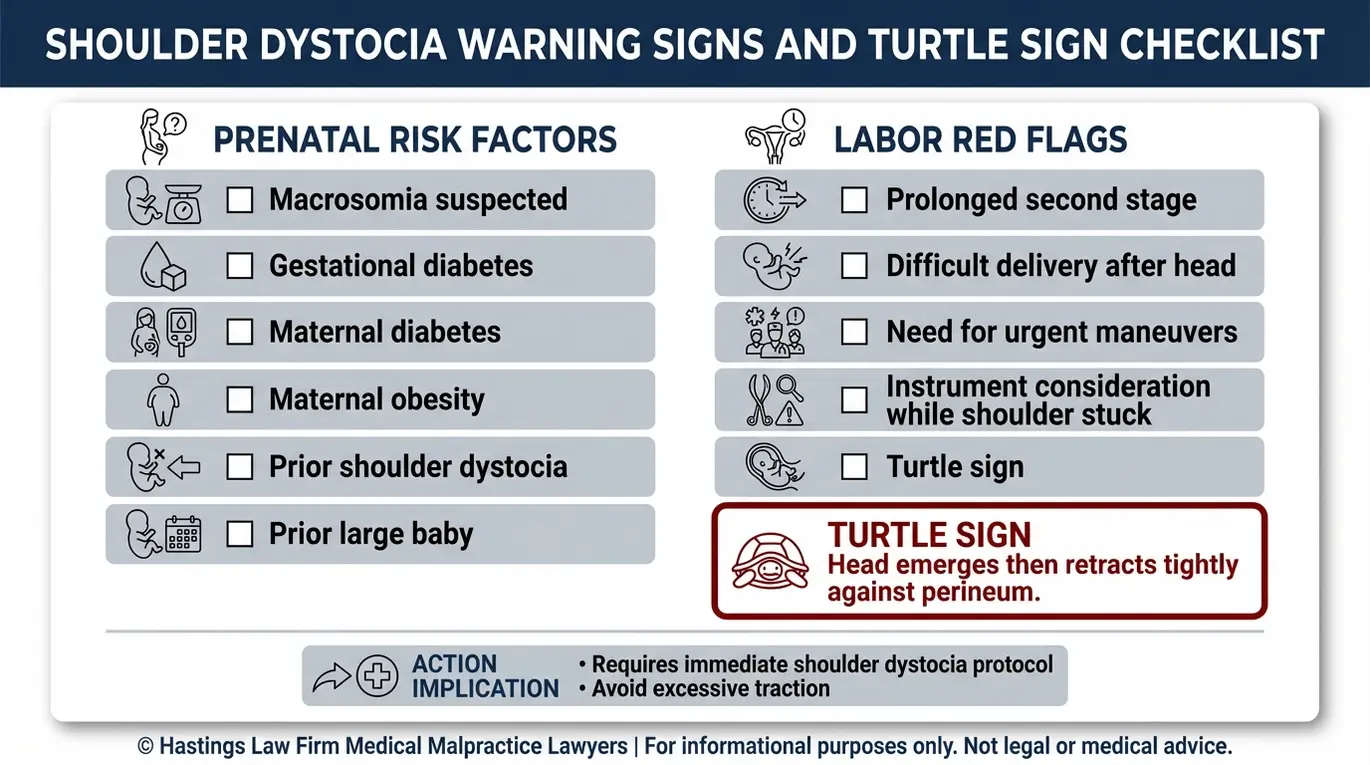
Doctors must monitor for risk factors such as macrosomia and gestational diabetes, and recognize the “Turtle Sign,” where the baby’s head retracts against the perineum immediately after emerging. Many of these warning signs are identifiable well before or during delivery, giving the medical team time to plan accordingly.
The most recognizable sign during labor is the “turtle sign,” a term describing what happens when the baby’s head emerges and then visibly retracts back against the perineum, as if pulling inward like a turtle retreating into its shell. This is a hallmark indicator that the shoulder is stuck and requires immediate, specific intervention.
The turtle sign is not subtle; it is a clear visual cue that the delivery has hit an obstruction. When this occurs, the physician cannot simply proceed with routine contractions or pushing, as this may wedge the shoulder further. A shoulder dystocia lawyer reviews whether the delivering physician identified and responded to this sign appropriately.
Prenatal risk factors that should raise concern include:
- Macrosomia, a condition where the baby is significantly larger than average (typically over 8 lbs, 13 oz), which increases the likelihood of a difficult delivery
- Gestational diabetes or maternal diabetes, which can contribute to excessive fetal growth
- Maternal obesity, which is associated with higher rates of dystocia
- A prior history of shoulder dystocia in an earlier delivery
- Prolonged labor, particularly a prolonged second stage, which may signal that the baby is not descending properly
When these risk factors are present and documented in the medical records, the care team has an obligation to plan for the possibility of shoulder dystocia. A lawyer for shoulder dystocia examines whether those risk factors were identified, communicated, and addressed in the delivery plan.
The Hastings Law Firm Difference
Results matter, but what truly sets us apart is how we achieve them. Every verdict, every settlement, and every Houston courtroom victory comes from one guiding promise: To treat each client’s fight for justice as if it were our own.
This balance of skill, experience, and empathy reflects our core philosophy that justice should not only compensate the injured, but also make health care safer nationwide.

How Negligence Occurs: Improper Maneuvers vs. Standard of Care
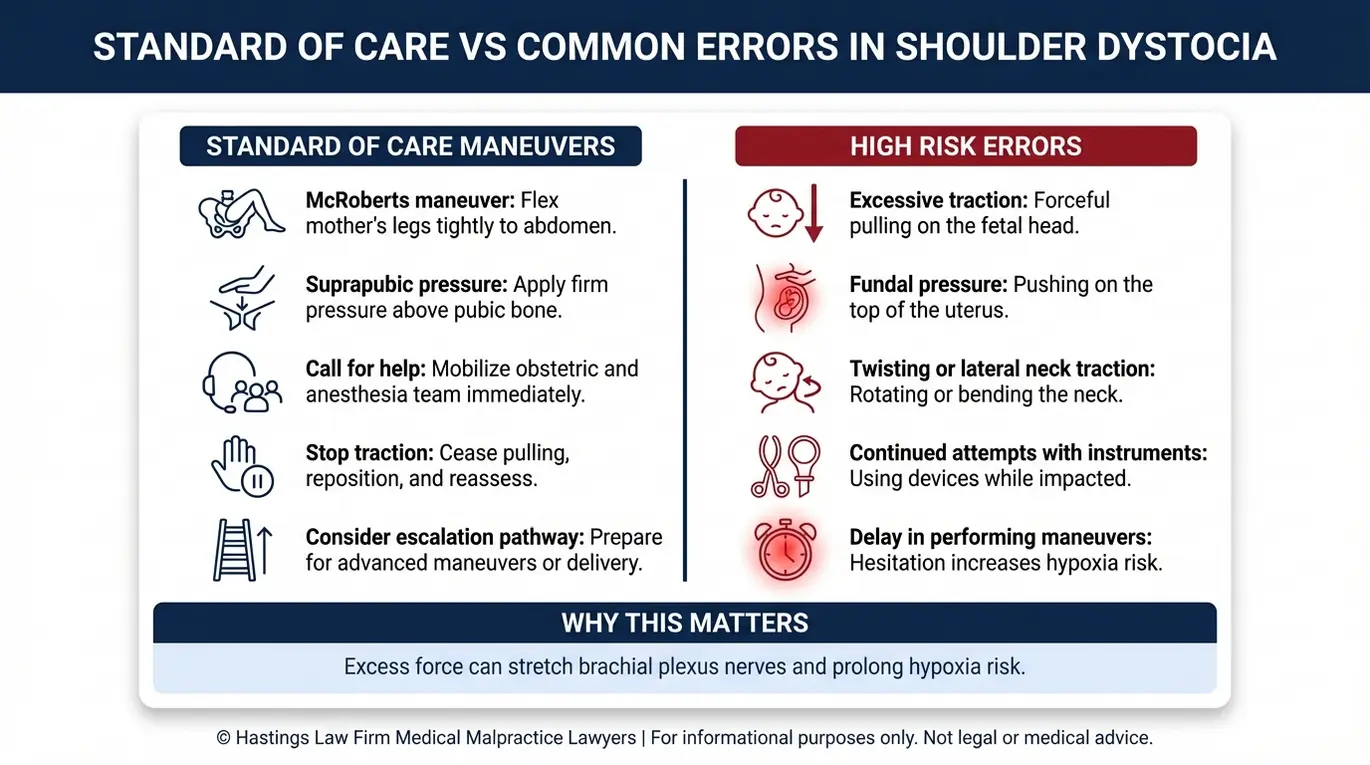
Negligence often occurs when a doctor applies excessive traction (pulling) on the baby’s head instead of performing safe maneuvers like the McRoberts maneuver or applying suprapubic pressure to release the shoulder. When a doctor applies excessive force to the head or neck instead of performing established maneuvers to free the shoulder, the risk of serious injury increases dramatically.
The standard of care, the level of treatment a reasonably competent physician would provide under similar circumstances, calls for a specific sequence of responses. According to a peer-reviewed shoulder dystocia management study published in PubMed Central, trained providers should follow evidence-based protocols to safely resolve the emergency.
Effective management requires a calm approach and adherence to protocol. The medical team should immediately stop pushing and call for help. They should then proceed through the ALARMER or HELPERR protocols, which are standard medical protocols for resolving trapped shoulders that prioritize non-invasive maneuvers to rotate the baby. Skipping these steps to rush the delivery is a breach of the standard of care.
A Houston shoulder dystocia lawyer examines which maneuvers were performed, in what order, and whether the physician deviated from accepted protocols. This analysis forms the core of most shoulder dystocia cases. An experienced lawyer in Houston knows that improper actions are often documented in the nursing notes or evident in the timing of the delivery.
| Safe, Standard Maneuvers | Dangerous Errors |
|---|---|
| McRoberts maneuver, where the mother’s legs are sharply flexed toward her abdomen to widen the pelvic opening | Excessive traction on the baby’s head or neck, which can stretch or tear nerves |
| Suprapubic pressure, where an assistant pushes on the lower abdomen just above the pubic bone to dislodge the anterior shoulder | Fundal pressure, pushing down on the top of the uterus, which can worsen impaction and increase the risk of uterine rupture |
| Rotational maneuvers to reposition the baby internally | Improper use of forceps or vacuum extractors while the shoulder remains stuck, applying force to the wrong problem |
| Delivery of the posterior arm to create space | Twisting the baby’s neck laterally under force |
A medical malpractice lawyer in Houston will compare what the records show against what the clinical guidelines require. The use of delivery instruments such as forceps must be avoided when the shoulder is impacted. When the documented actions fall short, that gap is where a claim for medical negligence begins.
Long-Term Consequences: Brachial Plexus Injuries and Erb’s Palsy
Excessive force during a dystocia delivery often stretches or tears the brachial plexus nerves, leading to conditions like Erb’s palsy, Klumpke’s palsy, or permanent arm paralysis. The brachial plexus is a network of nerves running from the spinal cord through the neck and into the arm that controls movement and sensation in the shoulder, arm, and hand. When a brachial plexus injury occurs, the consequences range from temporary weakness to permanent loss of function.
The most common result is Erb’s palsy, a condition caused by injury to the upper brachial plexus nerves. Children with Erb’s palsy may have limited ability to move the affected arm, reduced grip strength, or a noticeable difference in arm length as they grow. Many require surgery, nerve grafts, or years of physical and occupational therapy to address the nerve damage.
In more severe cases involving the lower nerves, a child may develop Klumpke’s palsy, which primarily affects the hand and wrist. A lawyer for birth injuries understands the lifelong impact these impairments have on a child’s development.
A Houston shoulder dystocia lawyer also evaluates whether the delivery delay caused oxygen deprivation. If the baby’s oxygen supply was interrupted for too long, the resulting brain injury can lead to cerebral palsy, seizure disorders, or developmental delays. These are separate but related injuries that may arise from the same negligent delivery.
Mothers can also suffer serious harm. Uterine rupture, postpartum hemorrhage, and severe tissue damage are all documented complications of mismanaged shoulder dystocia. A birth injury attorney reviews the complete picture, including injuries to both the child and the mother, when building a family’s case.
Recovering Damages: Compensation for a Lifelong Injury
Families may recover economic damages for past and future medical care, therapy, and surgical procedures, as well as non-economic damages for the child’s physical impairment, pain, suffering, and disfigurement. When a birth injury requires decades of treatment, the financial scope of these claims can be substantial.
Compensable damages in a shoulder dystocia lawsuit typically include:
- Current medical expenses, including NICU stays, emergency surgeries, and diagnostic imaging
- Future medical expenses, such as ongoing physical therapy, occupational therapy, nerve repair surgeries, and adaptive equipment
- Loss of earning capacity, if the child’s injury limits their ability to work as an adult
- Pain and suffering, reflecting the physical discomfort and emotional distress the child endures
- Loss of enjoyment of life and physical impairment, accounting for the activities and milestones affected by the injury
In birth injury cases, the lifetime cost of care reaches into the millions. Medical and economic experts develop what is known as a life care plan, a detailed projection of every service, device, and therapy the child will need throughout their life.
As documented in the Joint Legislative Audit and Review Commission’s Review of the Virginia Birth-Related Neurological Injury Compensation Program, the financial reality of caring for a child with a serious birth injury is significant and ongoing. A Houston shoulder dystocia lawyer works with these experts to ensure every category of compensation is documented and supported before entering negotiations or trial.
Why Choose Hastings Law Firm for Your Family’s Claim?
Hastings Law Firm offers a team of board-certified attorneys and registered nurses who focus exclusively on medical malpractice, ensuring your case is handled with the medical expertise and aggressive litigation strategy required to win.
Founder Tommy Hastings is Board Certified in Personal Injury Trial Law by the Texas Board of Legal Specialization, a distinction held by fewer than 2% of Texas attorneys. Our legal team includes former defense attorneys who previously represented hospitals, giving us direct insight into how the other side builds its case. Our in-house nursing staff reviews medical records alongside our attorneys, identifying charting inconsistencies and protocol failures that a general practice firm might miss.
We do not handle car accidents, slip-and-fall cases, or other personal injury matters. As a dedicated medical malpractice firm, medical malpractice is all we do. That singular focus allows us to prepare every Houston shoulder dystocia lawyer case as if it is going to trial from day one.
We also understand how it feels to have your trust broken by the people who were supposed to protect your child. You are not just a case number here. Our team operates on a contingency fee basis, meaning there is no fee unless recovery is secured on your behalf.
Contact the Houston Birth Injury Attorneys at Hastings Law Firm Today for Help
Texas law places strict time limits on when a medical malpractice claim can be filed. Waiting too long can mean losing the right to pursue your family’s case entirely, regardless of how strong the evidence may be.
If your child was injured during a delivery involving shoulder dystocia, the medical records from that day hold answers. Our team of attorneys, nurses, and medical consultants can review those records, identify what went wrong, and explain whether you have a viable claim.
Contact a Houston shoulder dystocia lawyer at Hastings Law Firm for a free, confidential case evaluation. There is no cost to speak with us, and no fee unless we win. Call today or complete our online form to take the first step toward finding out the truth about your child’s delivery.
Frequently Asked Questions About Shoulder Dystocia Birth Injury in Houston


This content was researched and written by the Hastings Law Firm editorial team, which includes attorneys, medical professionals, and experienced researchers. Our writing is informed by internal knowledge and practical experience, and we cross-check critical details against authoritative sources cited throughout. Every piece undergoes human-led fact-checking and legal review. Because legal and medical information can change, if you spot an error, please contact us. Learn more about our content standards and review process on our editorial policy page.

Tommy Hastings, founder of Hastings Law Firm, is a board-certified personal injury trial lawyer dedicated exclusively to healthcare injury cases. Since 2001, he has represented injured patients and families in litigation against major hospital systems, pharmaceutical companies, and negligent healthcare providers nationwide. He has handled numerous high-profile cases that have drawn national media attention and resulted in multi-million dollar recoveries. He draws on that experience in his writing, helping readers understand how these cases work and what options may be available to them.
