


Phoenix Birth Injury Lawyer
A preventable birth injury can leave families facing sudden medical needs, uncertainty, and lasting worry about what went wrong during labor and delivery. Some injuries show up immediately, while others appear over time through feeding problems, seizures, or developmental concerns. The text describes how oxygen deprivation, delayed surgical intervention, and errors with assisted delivery tools can lead to serious harm for infants and mothers. It also highlights the long term financial and emotional strain that can follow. If your child suffered harm due to a birth injury in Phoenix, Arizona, contact Hastings Law Firm for a free, confidential case review.

Last Updated: July 27, 2026
Trusted Legal Representation for Preventable Birth-Related Injuries
When your child is hurt during what should have been a safe delivery, the weight of that moment can be difficult to put into words. You may be dealing with unexpected medical appointments, unanswered questions, and a growing sense that something went wrong that did not have to. Those feelings are valid, and you deserve honest answers about what happened.
At Hastings Law Firm, we represent families across Arizona whose children suffered preventable injuries during labor and delivery. Our legal team includes in-house medical professionals, former defense attorneys, and board-certified trial lawyers who focus exclusively on medical malpractice. We understand both the medicine and the law behind these cases, and we prepare every one as if it is going to trial.
If you are looking for a Phoenix birth injury lawyer who will listen first and then take action, we are here. Contact us for a free, confidential case evaluation. There are no fees unless we recover compensation for your family.

Recognizing Signs and Symptoms of Infant Injury
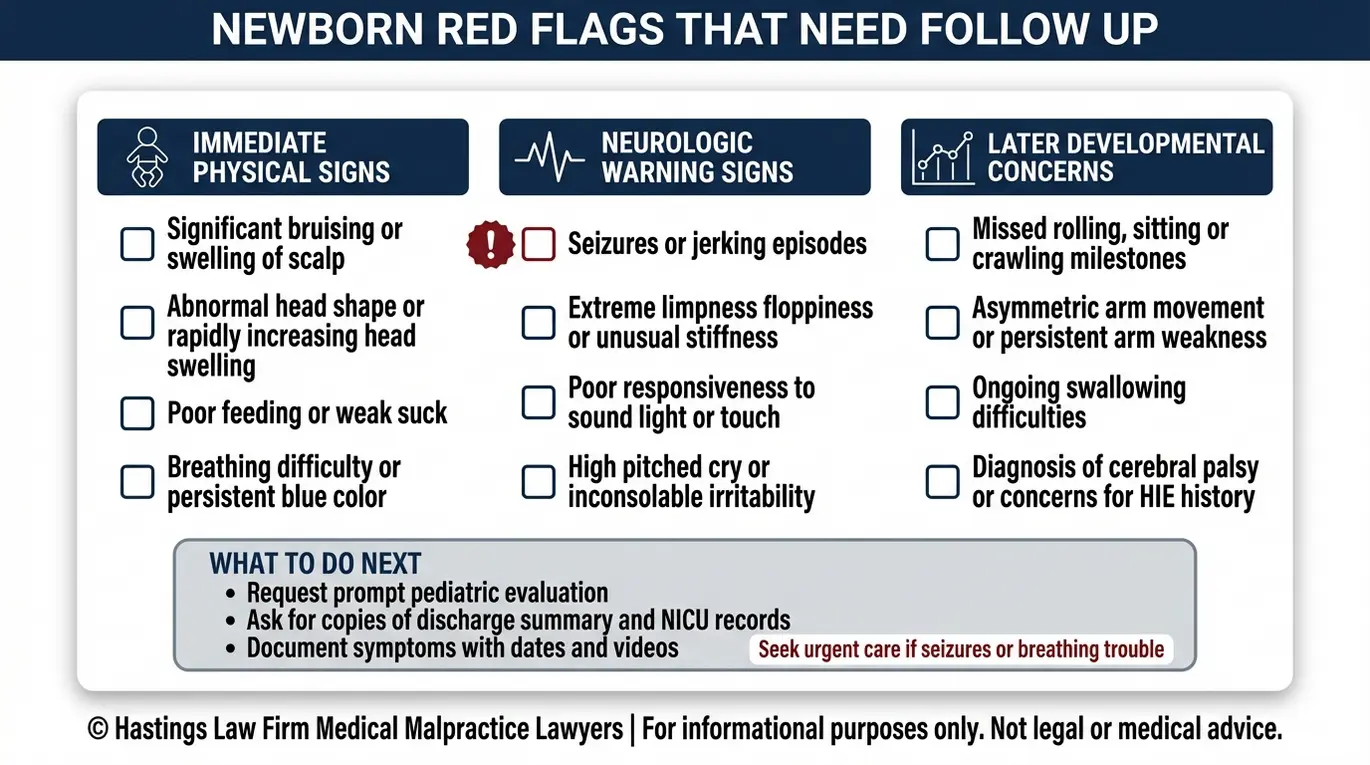
Many birth injuries are not immediately obvious; symptoms like seizures, limpness (floppiness), or feeding difficulties may appear hours or even days after delivery. Birth injuries often involve physical trauma or oxygen deprivation that occurs during labor or the delivery process. As a parent, trusting your instincts when something feels wrong is the first step toward protecting your child and preserving your legal options.
Some signs are visible right away. Bruising on the face or head, swelling, skull fractures, or an abnormal head shape can indicate physical trauma during delivery. Birth asphyxia, a condition where the baby does not receive enough oxygen around the time of birth, may present as bluish skin tone, weak breathing, or a low heart rate. A subgaleal hematoma, bleeding beneath the scalp’s connective tissue, can cause progressive swelling of the head and may not become apparent until hours after birth.
Neurological signs require close attention. Seizure disorders, including subtle seizures that may look like repetitive blinking or lip-smacking, can indicate brain injury. The American Academy of Pediatrics (HealthyChildren.org) provides guidance on recognizing seizure activity in young children. A baby who is unusually limp, unresponsive to sound or touch, or has difficulty feeding may also be showing signs of neurological damage.
Some injuries only become clear over time. Developmental delays, such as missed milestones in sitting, crawling, or speaking, can be linked to an injury sustained during birth. If your child is not meeting expected benchmarks, a medical evaluation may reveal an underlying condition. Proper medical diagnosis helps determine the necessary long-term support for the child.
Signs parents should watch for include:
- Unusual bruising, swelling, or misshapen skull
- Seizures or tremors in the first days of life
- Limpness, lack of muscle tone, or inability to grip
- Difficulty latching, sucking, or swallowing
- Weak or absent cry at birth
- Bluish skin color or labored breathing
- Failure to meet developmental milestones in the months that follow
If you notice any of these symptoms, consulting both a pediatric specialist and a birth injury attorney in Phoenix can help you understand whether medical negligence may have been a factor.
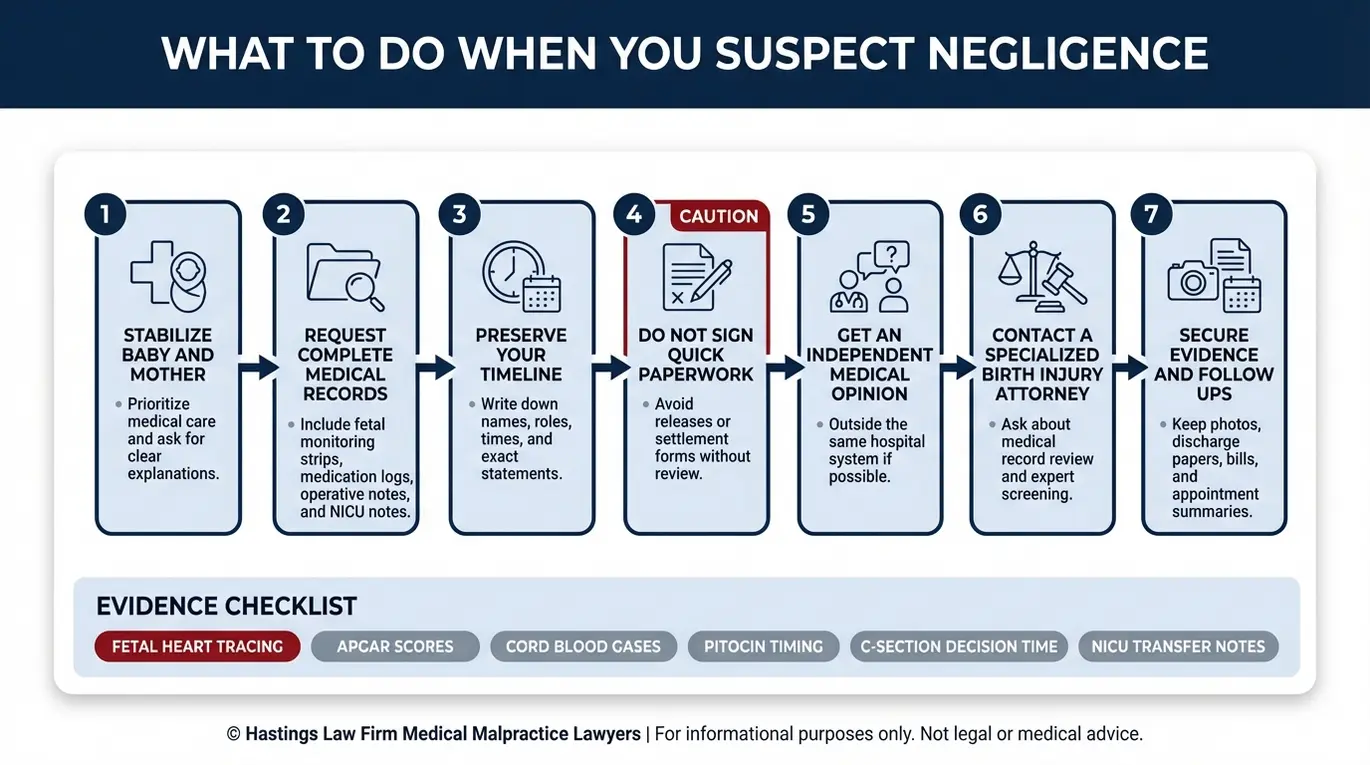
Immediate Steps After Suspecting Medical Negligence in a Phoenix Hospital
Parents should immediately request a full copy of the medical records, avoid signing any settlement offers from the hospital, and consult a specialized attorney to preserve evidence.
Acting quickly protects both your child’s health and your legal rights. We recommend following these protective legal steps:
- Request complete medical records. Ask the hospital for all records related to the pregnancy, labor, delivery, and postpartum care. Under Arizona Revised Statutes § 12-2293, patients have the right to obtain copies of their medical records. Securing these early helps ensure they are preserved in their original form.
- Document everything. Write down the names of every doctor, nurse, and staff member involved in your care. Record the dates and times of conversations and any statements made about your child’s condition. These details can become critical evidence later.
- Do not sign anything from the hospital or its insurer. Settlement offers or liability waivers presented shortly after an injury may not reflect the full extent of your child’s needs. Signing too early can limit your legal options.
- Seek a second medical opinion. Have your child evaluated by a provider outside the hospital system where the injury occurred. An independent assessment helps establish the nature and severity of the injury without potential bias.
- Consult a medical malpractice attorney. An attorney experienced in birth injury cases can begin an investigation to confirm medical negligence, identify the liable party, and determine whether the standard of care was met during delivery.
Time matters. The sooner evidence is gathered, the stronger your case will be.
The Hastings Law Firm Difference
Results matter, but what truly sets us apart is how we achieve them. Every verdict, every settlement, and every Phoenix courtroom victory comes from one guiding promise: To treat each client’s fight for justice as if it were our own.
This balance of skill, experience, and empathy reflects our core philosophy that justice should not only compensate the injured, but also make health care safer nationwide.

Common Causes of Preventable Birth Injuries in Arizona Hospitals
Preventable injuries often stem from failure to monitor fetal distress, improper use of delivery tools, or delaying a necessary C-section. Medical negligence occurs when healthcare providers deviate from the accepted standard of care. When medical providers do not respond appropriately to warning signs, the consequences for mother and child can be severe.
Fetal distress describes signs that a baby is not tolerating labor well, typically showing up on electronic fetal heart rate monitors. Abnormal heart rate patterns can signal that the baby is not receiving enough oxygen. Perinatal hypoxia, a dangerous reduction in the baby’s oxygen supply, can result in lasting brain damage if the medical team does not act quickly. Phoenix birth injury attorneys often investigate whether monitoring strips were properly interpreted and whether the response was timely.
Other common causes of preventable injury include:
- Failure to diagnose or manage preeclampsia. This serious pregnancy complication involves high blood pressure and can threaten both mother and baby if left untreated. The duty of care requires providers to screen for and treat it promptly.
- Failure to respond to umbilical cord complications. Cord compression or prolapse can cut off blood and oxygen to the baby. Delayed intervention in these situations can lead to permanent harm.
- Medication errors, including Pitocin misuse. Pitocin is commonly used to induce or strengthen contractions. When administered improperly or without adequate monitoring, it can cause hyper-stimulation of the uterus, reducing oxygen flow to the baby and creating an emergency.
- Delayed decision to perform a C-section. When vaginal delivery becomes unsafe, every minute counts. A delayed C-section during active fetal distress is one of the most frequently litigated issues in birth injury cases.
We review fetal monitoring strips, nursing logs, medication records, and physician orders to determine whether the care provided met the accepted standard.
Types of Birth Injuries From Cerebral Palsy to Brachial Plexus
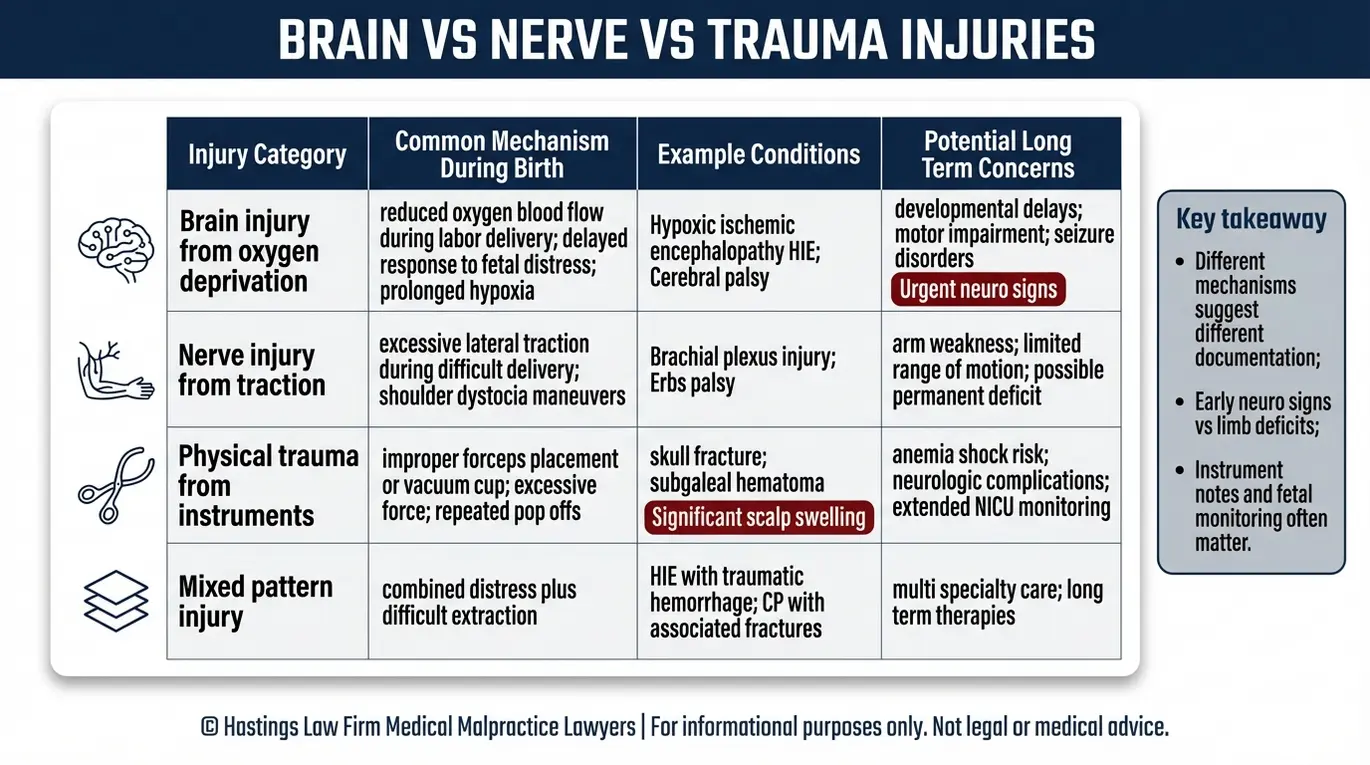
Birth injuries range from temporary nerve damage like Erb’s palsy to permanent brain damage such as cerebral palsy or HIE caused by oxygen deprivation. Understanding the injury your child sustained is an important step in planning for their future care.
Brain injuries are among the most serious outcomes. Cerebral palsy is a group of disorders affecting movement and muscle tone, often caused by damage to the developing brain. Hypoxic ischemic encephalopathy (HIE) occurs when the brain is deprived of adequate blood flow and oxygen. This can happen during prolonged labor, cord complications, or placental abruption and may lead to long-term developmental conditions.
Nerve injuries frequently involve the brachial plexus, the network of nerves running from the spine through the neck and into the arm. Shoulder dystocia, where the baby’s shoulder becomes lodged behind the mother’s pelvic bone, is a leading cause of brachial plexus injury. When excessive traction is applied to free the baby, the nerves can stretch or tear. Erb’s palsy affects the upper nerves of the brachial plexus and can cause weakness or paralysis in the affected arm.
Physical trauma injuries include bone fractures and bleeding complications sustained during difficult deliveries.
A birth injury lawyer evaluates the mechanism of injury alongside the medical records to determine whether the harm was preventable.
| Injury Type | Common Cause | Potential Long-Term Outlook |
|---|---|---|
| Cerebral Palsy | Oxygen deprivation during labor or delivery | Lifelong motor and cognitive impairment; may require full-time care |
| HIE (Hypoxic Ischemic Encephalopathy) | Interrupted blood/oxygen flow to the brain | Ranges from mild developmental delays to severe brain damage |
| Erb’s Palsy / Brachial Plexus Injury | Excessive traction during shoulder dystocia | Some cases resolve; others cause permanent arm weakness or paralysis |
| Skull Fractures | Improper forceps use or traumatic delivery | Usually heal, but may indicate deeper brain injury requiring monitoring |
| Subgaleal Hematoma | Vacuum extraction complications | Can be life-threatening if not identified and treated promptly |
Hazards of Forceps and Vacuum Extraction Errors
Improper placement or excessive force during assisted delivery can cause skull fractures, brain bleeds, and permanent nerve damage. While forceps and vacuum extractors are legitimate medical tools, their misuse accounts for severe forceps or vacuum trauma.
Vacuum extraction, where a suction cup is placed on the baby’s head to assist delivery, carries specific risks when used incorrectly. A study in *Acta Obstetricia et Gynecologica Scandinavica* examined risk factors for subgaleal hemorrhage in neonates exposed to vacuum extraction. It found that certain factors significantly increase the likelihood of subgaleal hematoma. Prolonged application, multiple pop-offs, and excessive traction all elevate the danger.
Forceps injuries present their own set of concerns. When forceps are improperly positioned or applied with too much pressure, they can cause facial nerve palsy, skull fractures, and intracranial bleeding. These injuries are especially concerning in cases where assisted delivery was attempted despite contraindications, such as an incompletely dilated cervix or uncertain fetal position.
The standard of care requires that providers assess whether assisted delivery is appropriate before proceeding. If conditions are not favorable, or if initial attempts fail, a C-section is generally the safer alternative to prevent assisted delivery trauma. As a Phoenix medical malpractice lawyer, we examine delivery records, operative notes, and nursing documentation to evaluate whether the decision to use these instruments was medically justified and whether they were applied correctly.
Management of High-Risk Deliveries and Failure to Perform C-Sections
Medical providers have a duty to recognize high-risk factors and perform a timely Cesarean section to prevent injury to the mother or child. When that duty is not met, the results can be catastrophic.
Certain conditions alert the medical team that a vaginal delivery may not be safe. Macrosomia describes a baby significantly larger than average, typically over 8 pounds, 13 ounces. This condition increases the risk of shoulder dystocia and related nerve injuries. Breech presentation, where the baby is feet-first or buttocks-first rather than head-down, also calls for a planned C-section.
The clinical practice guidelines from the American College of Obstetricians and Gynecologists outline how providers should interpret fetal heart rate patterns and respond to signs of distress. When monitoring reveals Category III tracings or other evidence that the baby is in danger, the standard of care requires prompt evaluation and intervention, including emergency surgical intervention if the abnormal pattern does not resolve with initial measures.
A delayed diagnosis or prolonged delay in performing a C-section during active fetal distress can lead to oxygen deprivation and permanent brain damage. Our birth injury legal team investigates the timeline of events leading up to delivery. We look for when abnormal fetal heart tracings were first identified, what interventions were attempted, and how long it took the team to move to surgical delivery. These details often reveal whether the response met the accepted standard of care.
Long-Term Financial and Emotional Impact on the Family
The lifetime cost of caring for a child with a severe birth injury can exceed several million dollars, necessitating comprehensive legal compensation. These cases are not just about what happened in the delivery room. They are about your family’s future and ensuring access to lifetime care costs.
The financial burden falls into several categories:
- Medical expenses: Surgeries, hospital stays, physical therapy, occupational therapy, speech therapy, and ongoing specialist appointments
- Medications: Seizure medications, muscle relaxants, and other prescriptions that may be needed for years or a lifetime
- Adaptive equipment: Wheelchairs, braces, communication devices, and modified vehicles
- Home modifications: Ramps, widened doorways, accessible bathrooms, and specialized beds
- Lost wages: Many parents reduce work hours or leave their careers entirely to serve as full-time caregivers
- In-home care: Nursing or aide services when the child’s needs exceed what a parent can provide alone
Families in Arizona may qualify for support through programs like the Arizona Health Care Cost Containment System (AHCCCS), which provides health insurance for eligible children. However, government programs rarely cover the full scope of care a child with a serious injury requires.
Non-economic damages, which include pain and suffering, loss of enjoyment of life, and the emotional toll on the family, are also an important part of a birth injury claim. As a Phoenix birth injury law firm, we work with life care planners and economists to document every current and future cost so that verdicts and settlements accurately reflect the true impact on your family.
Maternal Birth Injuries and Negligence Affecting the Mother
While infant injuries are the primary focus of many birth injury cases, negligence can also cause severe harm to the mother, including uterine rupture, hemorrhage, or life-threatening infection. Maternal healthcare negligence can lead to long-term health complications or even loss of life.
Failure to manage postpartum hemorrhage is one of the most common forms of maternal medical malpractice. When excessive bleeding is not recognized and treated quickly, it can lead to organ failure or death. According to data from the Centers for Disease Control and Prevention, maternal mortality remains a serious concern, and a significant number of these deaths are considered preventable.
Surgical errors during C-sections also put mothers at risk. Accidental lacerations to the bladder, bowel, or uterine arteries can cause prolonged recovery, additional surgeries, and lasting health complications. When these injuries result from a surgeon’s failure to follow proper technique, the liable party may include the surgeon, the surgical team, or the hospital itself.
In the most devastating cases, a mother’s death during or shortly after childbirth may give rise to a wrongful death claim. These cases allow surviving family members to seek compensation for their loss while holding the responsible parties accountable.
Proving Liability Using Medical Records and Expert Testimony
Proving liability requires establishing that the medical provider breached the accepted standard of care and that this breach directly caused the child’s injury. This foundation for medical malpractice cases demands both medical knowledge and legal skill to establish the four elements of negligence.
Every negligence claim rests on four elements: duty, breach, causation, and damages. The medical provider owed a duty of care to the mother and baby. If the provider’s actions fell below what a reasonably competent professional would have done, that is a breach. The breach must be the direct cause of the injury, and the injury must have resulted in measurable harm.
Expert testimony is central to this process. Medical experts review the records, identify where the care deviated from accepted practice, and explain that connection to a judge or jury. Our team includes in-house nurse consultants who analyze clinical data, fetal monitoring strips, medication logs, and operative reports before we even retain outside experts.
One of the challenges families face is the deep-seated reluctance to question a doctor’s judgment, often called the “White Coat Effect.” Hospitals often respond to injury claims by suggesting the outcome was unavoidable or caused by a pre-existing condition. As a medical malpractice attorney in Phoenix, we have former defense lawyers on our team who know exactly how these arguments are constructed. That insight helps us build a case that directly addresses and counters hospital denials with objective evidence.
The Birth Injury Litigation Process in Arizona Courts
The process involves an initial investigation, filing the complaint, discovery (depositions), and potentially a trial if a fair settlement is not reached. This Structured legal timeline helps families understand what to expect at each stage.
Step 1: Free Case Evaluation and Medical Record Review. We begin with a confidential consultation where our team listens to what happened and reviews the relevant medical records. Our in-house medical staff assesses whether the care provided fell below the accepted medical standard.
Step 2: Filing the Lawsuit. If the evidence supports a claim, we file a formal complaint in Arizona court. This initiates the legal process and puts the defendants on notice.
Step 3: Discovery and Depositions. Both sides exchange evidence during the discovery phase. This includes written interrogatories, requests for documents, and depositions, which are sworn, recorded interviews of the parties and witnesses. Discovery is where much of the critical evidence in medical malpractice cases is developed.
Step 4: Mediation or Settlement Negotiations. Many birth injury cases resolve through settlements before trial. Because we prepare every case as if it will go before a jury, we negotiate from a position of strength. We do not recommend accepting any offer that does not fully account for your child’s current and future needs.
Step 5: Trial. If a fair resolution cannot be reached, we are prepared to present the case to a jury. Our trial-ready approach means the groundwork is already in place long before a courtroom date is set. Throughout this process, we keep families informed at every stage.
Contact the Phoenix Birth Injury Attorneys at Hastings Law Firm Today for Help
No family should have to face the aftermath of a preventable birth injury alone. If your child was harmed during delivery because of medical negligence, you have the right to seek answers and pursue the compensation your family needs to move forward.
At Hastings Law Firm, we focus exclusively on medical malpractice. Founded by board-certified trial attorney Tommy Hastings, our team of attorneys, nurse consultants, and former defense lawyers brings a level of experience and preparation that families in Arizona can rely on. Tommy is a member of the American Board of Trial Advocates (ABOTA), an invitation-only organization for elite trial lawyers.
As your Phoenix birth injury lawyer, we take cases on a contingency fee basis, which means you pay no attorney fees or costs unless we recover compensation for you.
Contact us today for a free, confidential risk-free case evaluation. We will review what happened, explain your legal options, and help you take the next step with confidence.
Frequently Asked Questions About Birth Injury in Phoenix


This content was researched and written by the Hastings Law Firm editorial team, which includes attorneys, medical professionals, and experienced researchers. Our writing is informed by internal knowledge and practical experience, and we cross-check critical details against authoritative sources cited throughout. Every piece undergoes human-led fact-checking and legal review. Because legal and medical information can change, if you spot an error, please contact us. Learn more about our content standards and review process on our editorial policy page.

Tommy Hastings, founder of Hastings Law Firm, is a board-certified personal injury trial lawyer dedicated exclusively to healthcare injury cases. Since 2001, he has represented injured patients and families in litigation against major hospital systems, pharmaceutical companies, and negligent healthcare providers nationwide. He has handled numerous high-profile cases that have drawn national media attention and resulted in multi-million dollar recoveries. He draws on that experience in his writing, helping readers understand how these cases work and what options may be available to them.
