


Phoenix Cerebral Palsy Lawyer
A cerebral palsy diagnosis can leave families searching for clarity about what happened during labor and delivery and what support a child may need long term. Some cases are not preventable, but others involve medical negligence such as missed warning signs, delayed intervention, or delivery related trauma that can cause lasting brain injury. Understanding how these injuries occur and the long term care burden can help families make informed decisions. If your child suffered harm or worse due to cerebral palsy malpractice in Phoenix, Arizona, contact Hastings Law Firm for a free, confidential case review.

Last Updated: July 27, 2026
Advocating for Families Impacted by Preventable Birth Injuries in Arizona
When your child has been diagnosed with cerebral palsy and you suspect something went wrong during labor or delivery, the confusion and heartbreak can feel overwhelming. You may have questions about what happened, whether it could have been prevented, and what options exist to secure the care your child will need for years to come. These are reasonable questions, and you deserve clear answers.
A Phoenix cerebral palsy lawyer at Hastings Law Firm can review your child’s birth records, explain what the medical evidence shows, and help you understand whether medical negligence contributed to the injury. Our team focuses exclusively on medical malpractice, and we offer a free, confidential case evaluation with no obligation. If you are ready to take that first step, we are here to listen.

How a Phoenix Cerebral Palsy Lawyer Can Help Your Family
A specialized Phoenix cerebral palsy attorney investigates birth records to determine whether medical negligence caused your child’s injury, and works to secure the resources needed for lifelong therapy and care.
There is a meaningful difference between a difficult birth outcome and a preventable one. Not every case of cerebral palsy results from a medical error. But when a healthcare provider fails to meet the accepted standard of care, the level of treatment a reasonably competent professional would provide under similar circumstances, and that failure causes harm, it becomes a birth injury case rooted in medical malpractice.
Our founder, Tommy Hastings, is a board-certified trial lawyer with over two decades of experience in medical negligence. He leads a team focused on identifying the medical details that general personal injury attorneys may overlook. This includes recognizing which records to examine, which experts to consult, and how to connect a specific lapse in the duty of care to your child’s diagnosis. Without this specialized focus, important evidence of a breach in standards might remain hidden in the hospital charts.
The goal is never just a quick settlement. It is about building a case strong enough to secure the resources your child needs for a full quality of life, including therapy, assistive equipment, educational support, and ongoing medical care.
Understanding Cerebral Palsy: Types and Medical Definitions
Cerebral palsy is a group of disorders affecting movement and muscle tone, most often caused by damage to the developing brain before or during birth. According to the Centers for Disease Control and Prevention (CDC), it is the most common motor disability in childhood.
The condition is not a single diagnosis. It is classified into several types based on which area of the brain was affected and how movement is impaired. Severity ranges widely, impacting every child differently. Some children experience mild coordination difficulties, while others require round-the-clock assistance for basic daily tasks, such as eating or dressing.
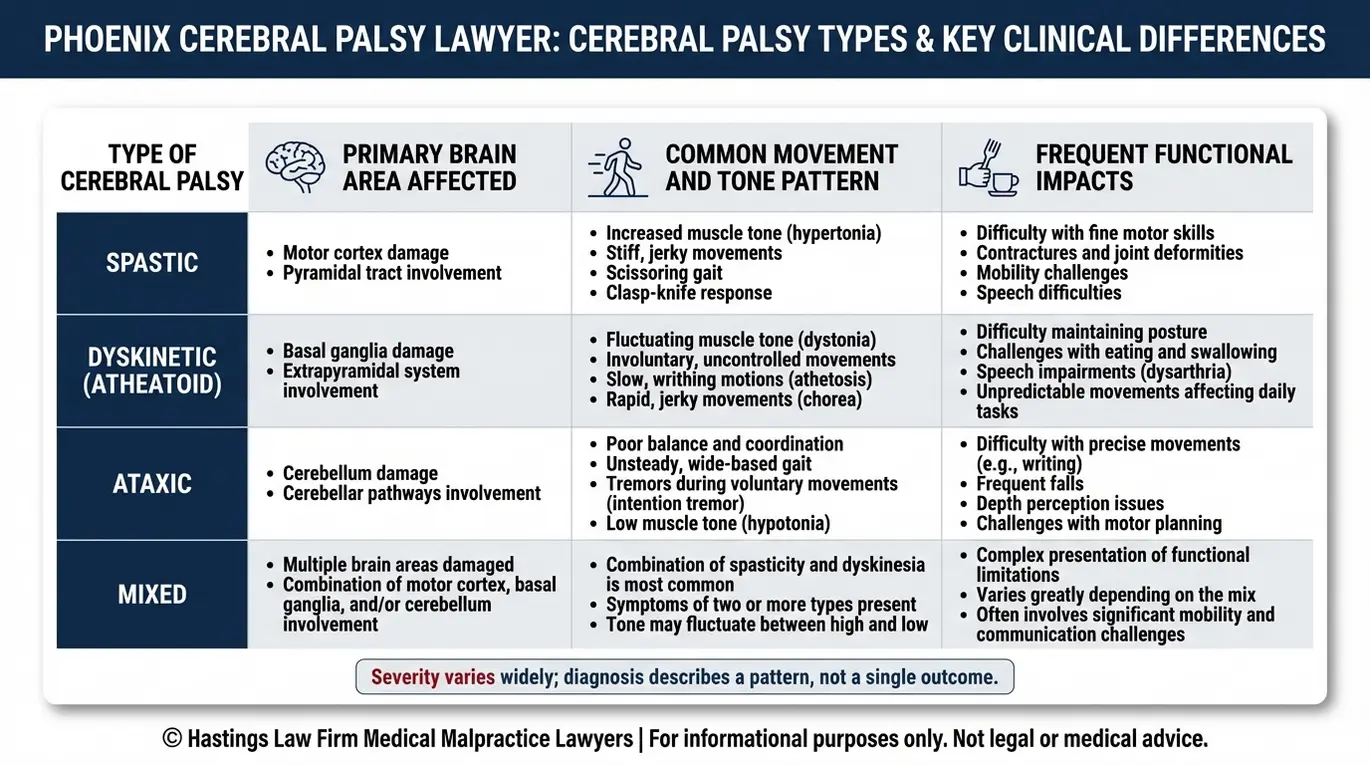
Spastic cerebral palsy, the most common form, involves increased muscle stiffness that makes movement rigid and difficult. It often affects walking and fine motor skills, such as holding objects. Dyskinetic cerebral palsy, sometimes called athetoid cerebral palsy, is characterized by involuntary, uncontrolled movements caused by damage to the basal ganglia. This can make it hard to sit or stand upright.
Ataxic cerebral palsy affects balance and coordination. Children with this type may have tremors or struggle with depth perception. Many children are diagnosed with a mixed type, meaning they show symptoms of more than one form.
The following table outlines the primary types, the brain regions involved, and the physical symptoms most commonly associated with each.
| Type of CP | Area of Brain Affected | Common Physical Symptoms |
|---|---|---|
| Spastic | Motor cortex or pyramidal tracts | Stiff, tight muscles; exaggerated reflexes; difficulty with fine motor tasks |
| Dyskinetic (Athetoid) | Basal ganglia | Involuntary writhing or jerky movements; fluctuating muscle tone |
| Ataxic | Cerebellum | Poor balance and coordination; unsteady walking; difficulty with precise movements |
| Mixed | Multiple areas | Combination of symptoms from two or more types listed above |
Understanding the type of cerebral palsy your child has been diagnosed with helps a Phoenix cerebral palsy lawyer identify which medical events during labor and delivery may have caused the specific brain injury involved.
The Hastings Law Firm Difference
Results matter, but what truly sets us apart is how we achieve them. Every verdict, every settlement, and every Phoenix courtroom victory comes from one guiding promise: To treat each client’s fight for justice as if it were our own.
This balance of skill, experience, and empathy reflects our core philosophy that justice should not only compensate the injured, but also make health care safer nationwide.

Medical Malpractice Leading to Cerebral Palsy Claims
Medical malpractice occurs when a healthcare provider deviates from the standard of care, causing injuries such as oxygen deprivation or physical trauma that lead to cerebral palsy.
The most common mechanism behind preventable cerebral palsy is oxygen deprivation during labor or delivery. When a baby’s brain is deprived of adequate oxygen for even a short period, the resulting condition is known as hypoxic-ischemic encephalopathy (HIE), a type of brain damage caused by a combination of low oxygen (hypoxia) and restricted blood flow (ischemia). HIE can occur when complications like birth asphyxia go unrecognized or untreated.
Physical trauma during delivery can also cause brain injury. Excessive force, improper technique, or the misuse of delivery instruments may damage delicate brain tissue or blood vessels. In either scenario, Phoenix cerebral palsy lawyers ask the same central legal question: did the medical team’s actions, or inactions, fall below the accepted standard of care?
In an obstetric setting, the standard of care requires providers to monitor the mother and baby throughout labor, recognize warning signs, and intervene promptly when those signs appear. A breach of duty happens when a provider fails to meet that standard, and that failure directly causes harm.
According to CDC data on cerebral palsy prevalence and research, cerebral palsy affects approximately 1 to 4 per 1,000 live births worldwide. While not every case is caused by medical negligence, many cases involve preventable errors during delivery. A dedicated cerebral palsy attorney can help determine whether your child’s injury falls into that category.
Some of the most frequently investigated failures include:
- Delayed response to signs of fetal distress on the monitor
- Failure to order a timely emergency cesarean section
- Improper administration of labor-inducing medications
- Inadequate monitoring of maternal and fetal vital signs
- Mismanagement of complications such as uterine rupture, a tear in the wall of the uterus that can cut off oxygen to the baby
Common Labor and Delivery Negligence in Arizona Hospitals
Common errors in labor and delivery include failure to perform a timely C-section, misuse of Pitocin, and improper use of forceps or vacuum extractors. These are patterns a Phoenix cerebral palsy lawyer investigates carefully in every birth injury case.
Failure to monitor fetal heart rate. Continuous fetal heart rate monitoring is a fundamental part of labor management. According to the American College of Obstetricians and Gynecologists (ACOG) Clinical Practice Guideline on Intrapartum Fetal Heart Rate Monitoring, providers must recognize non-reassuring heart rate patterns. Failure to respond to these signals can cause brain damage.
Delayed C-section. Delays in performing an emergency cesarean section when fetal distress is evident can result in permanent oxygen deprivation.
Medication errors with Pitocin. Improper dosing of Pitocin can cause uterine hyperstimulation, where contractions become too frequent, compressing blood flow and depriving the baby of oxygen.
Improper instrumental delivery. Operative vaginal delivery (forceps or vacuum extraction) carries risks. Incorrect use can cause skull fractures, intracranial hemorrhage, or nerve damage.
Mismanagement of cord or placental complications. Emergencies like cord compression, uterine rupture, or placental abruption (premature separation of the placenta) must be recognized immediately to prevent oxygen deprivation.
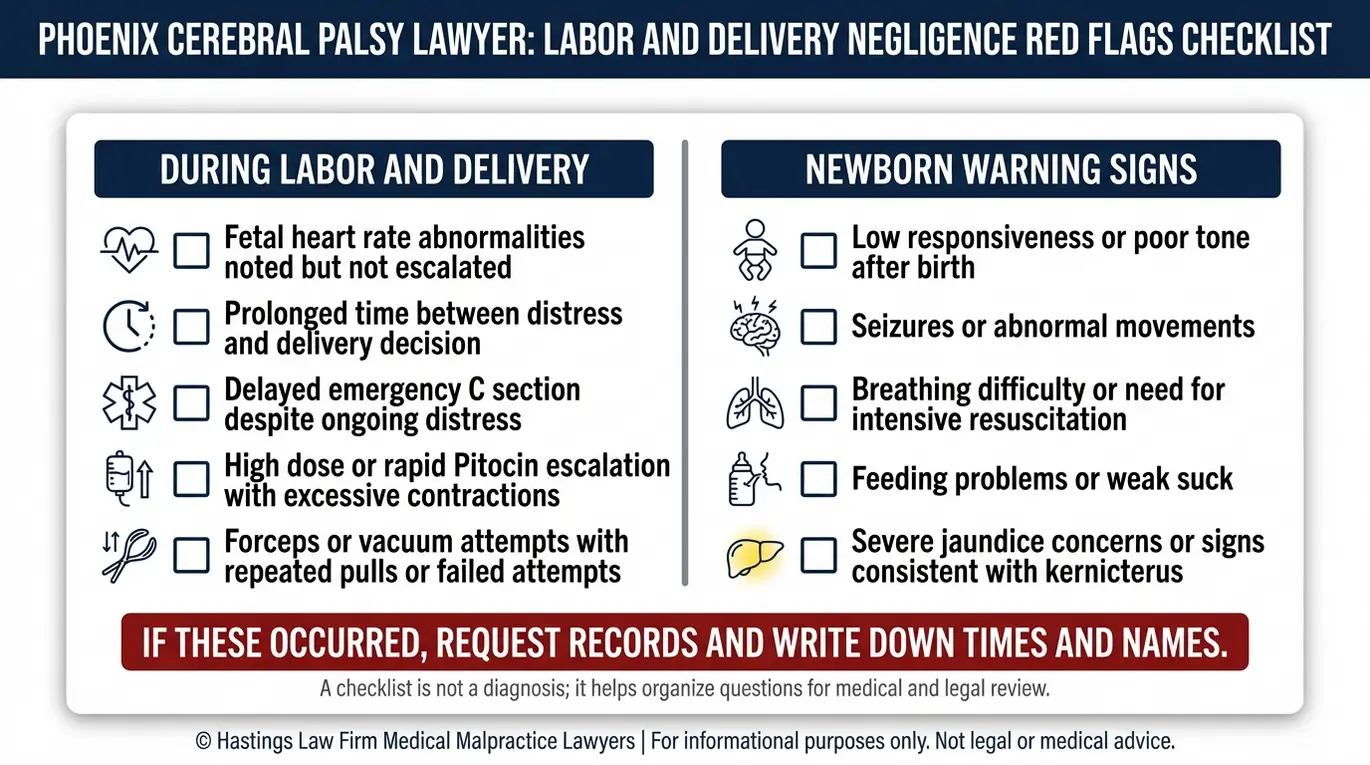
The following checklist outlines warning signs that may indicate negligence occurred during labor and delivery:
- Fetal heart rate decelerations that were documented but not acted upon
- A prolonged gap between signs of distress and delivery
- Pitocin administration continued despite evidence of uterine hyperstimulation
- Multiple failed attempts with forceps or vacuum before switching to C-section
- No documented plan for managing known high-risk conditions
- Delayed response to maternal hemorrhage or sudden blood pressure changes
Signs of Brain Damage in Infants
Early detection of birth injuries is important for securing the right care. These signs help parents seek the medical intervention their child needs for proper treatment.
Common early signs of brain damage in infants include seizures, floppy muscle tone, or irritability. Later, parents may notice developmental delays in sitting or speaking.
Untreated jaundice can lead to kernicterus (bilirubin-induced neurologic dysfunction), a form of brain damage caused by high bilirubin levels. Kernicterus is largely preventable with proper monitoring.
The Lifelong Impact and Financial Cost of Cerebral Palsy
The lifetime cost of care for a child with cerebral palsy can exceed millions of dollars, covering therapy, surgeries, adaptive equipment, and around-the-clock assistance. According to CDC data and statistics on cerebral palsy, the condition is among the most costly childhood disabilities regarding medical expenses.
One of the most important tools in a birth injury case is a life care plan, a detailed document prepared by medical and financial experts that projects every anticipated cost over the course of your child’s life. This includes ongoing therapy (physical, occupational, and speech); surgical interventions; prescription medications; assistive devices and adaptive technologies like wheelchairs; home and vehicle modifications; respite care for family members; and educational support services. The plan also accounts for the child’s lost earning capacity.
Beyond the financial numbers, there is the emotional weight of watching your child face challenges that could have been prevented. Parents often describe the grief of a “loss of a normal childhood,” not just for their child, but for the entire family. Daily routines center around care coordination, medical appointments, and advocating for services at school and in the community. This administrative burden can be overwhelming for parents who simply want to be parents, not case managers.
A Phoenix cerebral palsy lawyer understands that a lawsuit is not just about recovering money. It is about building a financial foundation that allows your child to access every resource and opportunity available, without forcing your family to shoulder costs that someone else’s negligence created. The practical challenges of long-term care coordination and financial planning are real, and a thorough legal case aims to address them directly.
Recoverable Damages in Arizona Birth Injury Lawsuits
Families can recover economic damages for medical bills and lost wages, as well as non-economic damages for pain, suffering, and loss of enjoyment of life. Arizona law recognizes that birth injuries caused by negligence impose both measurable financial costs and deeply personal losses.
Economic damages cover the tangible, calculable costs your family has incurred and will continue to face. These include:
- Past and future medical costs, including surgeries, hospitalizations, and specialist visits
- Physical, occupational, and speech therapy
- Assistive devices and adaptive technologies, such as wheelchairs, communication devices, and home modifications
- Lost earning capacity of the child, reflecting the income they would have been able to earn without the disability
- In-home care and nursing assistance
Non-economic damages address the losses that do not come with a receipt but are no less real:
- Physical pain and suffering
- Mental anguish and emotional distress
- Loss of enjoyment of life
- Physical impairment and disfigurement
- Loss of consortium (the impact on family relationships)
In rare cases involving especially reckless or egregious conduct, Phoenix cerebral palsy attorneys may also pursue punitive damages. These are not tied to compensation for your losses. Instead, they are intended to penalize extreme behavior and discourage similar conduct in the future.
Our role as your cerebral palsy lawyer is to document each one thoroughly so that the full scope of your child’s needs is presented clearly. Every case involves a unique combination of compensation and damages. Non-economic damages address the losses that do not come with a receipt but are no less real. These damages acknowledge that the injury has stolen more than just money from the client.
Proving Your Case: The Investigation and Litigation Process
Proving a cerebral palsy case requires expert testimony establishing that the medical provider breached the standard of care and that the breach directly caused the child’s brain injury. This process is methodical, and every step is designed to build a clear and credible record.
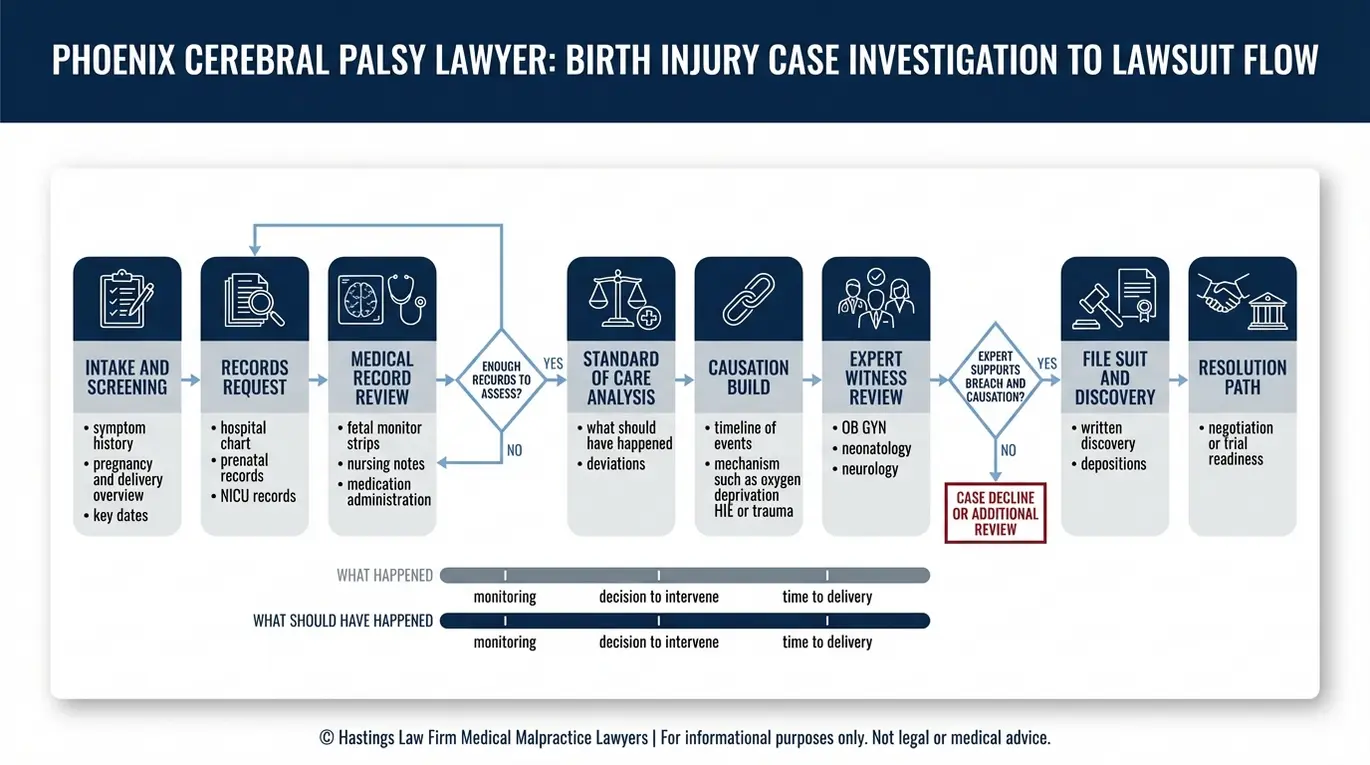
Here is how our Phoenix cerebral palsy lawyer team approaches these cases:
Step 1: Intake and screening. Your case begins with a free, confidential evaluation led by one of our patient advocates. During this stage, we listen to your account, gather initial information, and determine whether your case meets the legal threshold for a medical negligence claim.
Step 2: Medical record review. Once accepted, our in-house medical staff conducts a detailed review of the full medical record. This includes labor and delivery notes, nursing charts, and fetal heart rate monitoring strips. We also review electronic fetal monitoring (EFM), the continuous recording of the baby’s heart rate during labor that helps providers detect signs of distress. We also review medication logs to identify any evidence of uterine tachysystole, a condition in which contractions become excessively frequent, often as a result of improper Pitocin dosing.
Step 3: Expert witness review. We work with our national network of independent medical experts, including board-certified obstetricians and pediatric neurologists, to evaluate whether the care provided fell below the standard of care and whether that failure caused the injury. These experts form the backbone of the causation analysis.
Step 4: Filing suit and discovery. After the investigation confirms a viable claim, we file the lawsuit and begin the discovery process. This includes depositions of the attending physicians, nurses, and hospital staff, as well as requests for internal hospital policies and protocols.
A lawyer for cerebral palsy cases must be prepared to connect every piece of evidence into a timeline that shows exactly what went wrong and when. Our team, which includes former defense attorneys who know how hospitals prepare their cases, builds that timeline from day one.
Arizona Statute of Limitations for Birth Injury Claims
In Arizona, the statute of limitations for birth injuries is tolled while the injured child is a minor, meaning the clock does not begin to run until the child turns 18. The child then has two years to file a claim, generally allowing suit up until their 20th birthday. Parents’ claims for related medical expenses, however, must typically be filed within two years of when the injury was discovered or reasonably should have been discovered.
This creates a situation that many families find confusing. The child’s own claim may be tolled, meaning the legal deadline is paused, while the injured party is a minor child. But the parents’ individual claims for costs they have already paid or losses they have already suffered run on a shorter clock. Missing that deadline can mean losing the right to recover those specific damages entirely.
Strict time limits and exceptions can shorten or extend these deadlines. Evidence fades over time as well. Medical records from labor and delivery must be properly preserved, and key witnesses may become harder to locate as years pass. Managing hospital record requests early through the medical records department, such as Onvida Health’s patient records office, is a practical step to take now.
A Phoenix cerebral palsy lawyer can help you understand exactly which deadlines apply to your family’s situation. Even if you are unsure whether you have a case, consulting with an attorney sooner rather than later protects your ability to take action if the evidence supports a claim.
Contact the Phoenix Birth Injury Attorneys at Hastings Law Firm Today for Help
If your child has been diagnosed with cerebral palsy and you believe something went wrong during their birth, Hastings Law Firm is here to help you find answers. As a firm that handles nothing but medical malpractice cases, we understand both the medical complexity and the emotional weight of what your family is going through.
Our Phoenix cerebral palsy lawyer team, supported by in-house medical professionals and a national network of experts, will review your child’s records and explain your options with honesty and clarity. Our mission has always been to restore trust for families who feel let down by the healthcare system, and to hold negligent providers accountable so that the same mistakes are not repeated.
Your initial evaluation is free, confidential, and carries no obligation. We do not collect any fees unless we recover compensation on your behalf. If you are ready to take the first step, contact a cerebral palsy lawyer in Phoenix at Hastings Law Firm today.
Frequently Asked Questions About Cerebral Palsy Malpractice in Phoenix


This content was researched and written by the Hastings Law Firm editorial team, which includes attorneys, medical professionals, and experienced researchers. Our writing is informed by internal knowledge and practical experience, and we cross-check critical details against authoritative sources cited throughout. Every piece undergoes human-led fact-checking and legal review. Because legal and medical information can change, if you spot an error, please contact us. Learn more about our content standards and review process on our editorial policy page.

Tommy Hastings, founder of Hastings Law Firm, is a board-certified personal injury trial lawyer dedicated exclusively to healthcare injury cases. Since 2001, he has represented injured patients and families in litigation against major hospital systems, pharmaceutical companies, and negligent healthcare providers nationwide. He has handled numerous high-profile cases that have drawn national media attention and resulted in multi-million dollar recoveries. He draws on that experience in his writing, helping readers understand how these cases work and what options may be available to them.
