


Arizona Cerebral Palsy Lawyer
Cerebral palsy after labor or delivery can leave families searching for answers about whether preventable medical errors played a role. The discussion focuses on how oxygen deprivation and delivery room mistakes can lead to permanent brain injury, why alternative explanations like genetics or infection are often raised, and what evidence is commonly used to connect the timing of injury to the care provided. It also addresses the long term financial impact of lifelong care and the practical effect of Arizona rules on recovery. If you or a loved one were harmed or worse due to cerebral palsy malpractice in Arizona, contact Hastings Law Firm for a free, confidential case review.

Last Updated: September 24, 2026
Trial-Ready Legal Representation for Birth Injury Patients in Arizona
When your child has been diagnosed with cerebral palsy, particularly a severe form like spastic quadriplegia (a condition affecting all four limbs and the trunk), you may sense that something went wrong during delivery. That feeling deserves to be taken seriously. Many parents in your position struggle to get clear answers from the medical professionals involved, leaving you with questions about what happened and what comes next.
An experienced Arizona cerebral palsy lawyer can help you find those answers. At Hastings Law Firm, founded by board-certified trial attorney Tommy Hastings, our legal team includes former defense attorneys and experienced hospital nurses who previously worked for the systems they now challenge. If negligence played a role, we work to secure the compensation your family needs for a lifetime of care.
We invite you to contact us for a free, confidential case evaluation. Let us review what happened and explain your legal options.

Common Obstetric Errors Leading to Infant Brain Damage
Medical errors such as failure to monitor fetal distress or delayed C-sections can deprive an infant’s brain of oxygen, resulting in Hypoxic-Ischemic Encephalopathy (HIE) and permanent cerebral palsy. When the brain is deprived of oxygen during labor or delivery, the damage to the motor control centers can be severe and permanent.
Medical teams must remain vigilant for fetal distress, signs that a baby is not tolerating labor well often detected through changes in heart rate patterns on the electronic fetal monitor. When medical staff miss or misinterpret these warning signs, important intervention time is lost. The standard of care typically requires continuous monitoring and prompt response when distress indicators appear.
Cerebral palsy attorneys in Arizona frequently see cases involving misuse of delivery instruments like forceps or vacuum extractors. When obstetricians attempt to hasten delivery using these mechanical aids, they must strictly adhere to safety protocols to avoid crushing the delicate skull bones. These tools, when applied with excessive force or improper technique, can cause direct trauma to the infant’s head or worsen oxygen deprivation that has already begun.
Another serious concern involves umbilical cord prolapse, a condition where the cord slips through the cervix ahead of the baby. Because the fetus relies entirely on the cord for oxygen, any compression acts as a lifeline being pinched shut, necessitating rapid extraction to prevent permanent brain damage. This compresses the cord and cuts off blood flow to the infant.
The standard of care demands immediate recognition and emergency delivery, typically within 30 minutes when fetal distress is present. Delays in this scenario often result in severe neurological injury.
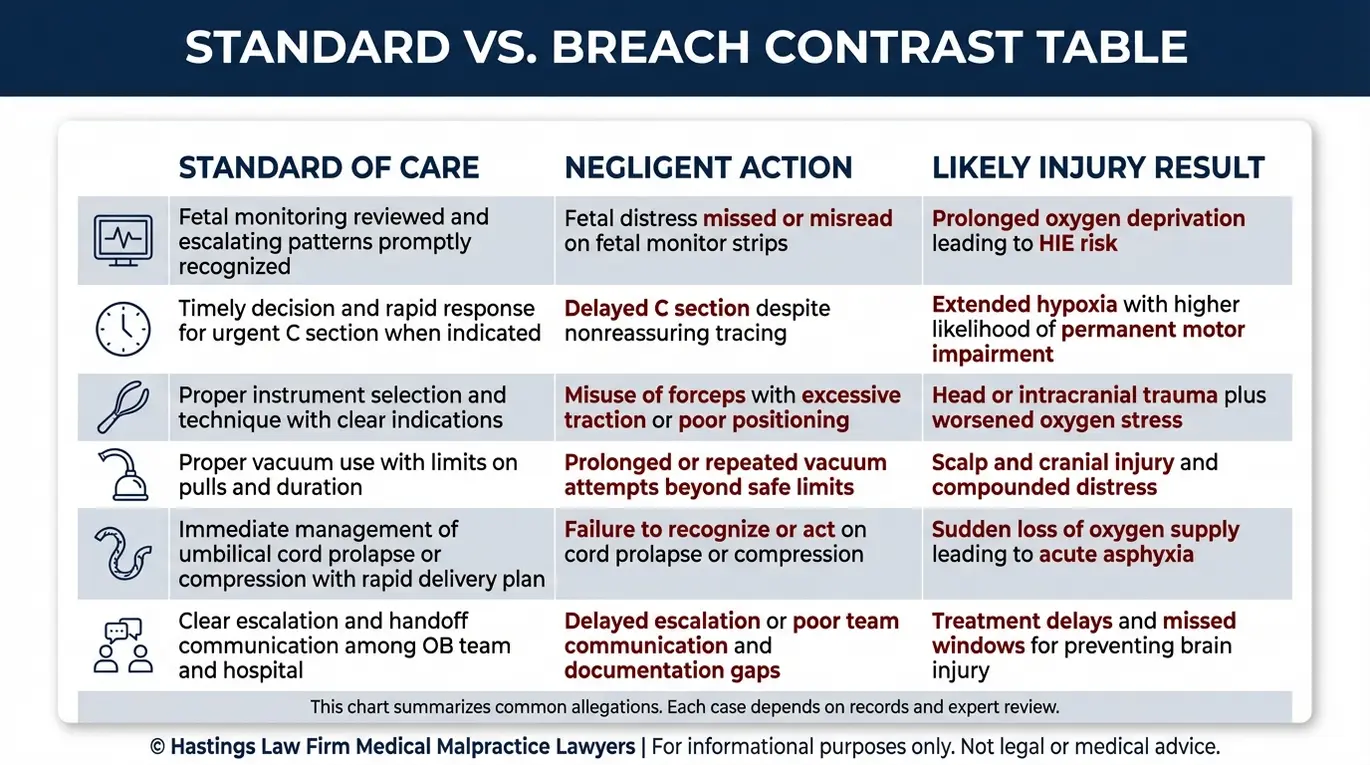
Birth injury lawyers investigate whether the medical team’s actions fell below accepted standards. The following table illustrates how specific failures connect to outcomes:
| Standard of Care | Negligent Action | Potential Injury Result |
|---|---|---|
| Continuous fetal heart rate monitoring | Failure to recognize non-reassuring patterns | Prolonged oxygen deprivation leading to HIE |
| Timely C-section when distress is detected | Delay in ordering or performing emergency delivery | Spastic cerebral palsy from brain damage |
| Proper use of forceps/vacuum | Excessive force or incorrect application | Skull fractures, intracranial hemorrhage |
| Immediate response to cord prolapse | Delayed recognition or response | Severe hypoxic brain injury |
Medical negligence during delivery is not always obvious to families in the moment. Our team reviews records to determine whether the care provided met the standard expected of reasonably competent professionals.
Understanding the Link Between Hypoxia and Cerebral Palsy Diagnosis
Cerebral palsy is often caused by intrapartum asphyxia, where a lack of oxygen during labor damages the motor control centers of the infant’s brain. The timing and severity of oxygen deprivation determine the extent of neurological injury.
Many birth injuries manifest as Hypoxic-ischemic encephalopathy (HIE), a specific type of brain injury caused by reduced oxygen and blood flow to the brain around the time of birth. According to consensus diagnostic criteria for neonatal encephalopathy, which is the broader term for brain dysfunction in newborns, specific clinical markers can help determine whether the injury occurred during delivery rather than from other causes.
Spastic quadriplegia represents the most severe form of cerebral palsy. It affects all four limbs and typically involves significant cognitive and developmental challenges. When an Arizona cerebral palsy lawyer reviews these cases, we often find evidence of prolonged oxygen deprivation that could have been prevented with timely intervention.
Not all cerebral palsy results from medical malpractice. Some cases stem from genetic conditions, infections, or events that occur well before labor begins. Defense attorneys often lean heavily on these alternative explanations, making it crucial to differentiate between an unavoidable congenital issue and an injury that resulted directly from a failure to monitor or respond during the birthing process. The distinction matters for legal purposes because only preventable injuries caused by provider negligence can support a lawsuit.
Parents often notice early signs that something is wrong, including:
- Missed developmental milestones such as sitting, crawling, or walking
- Unusual muscle stiffness or “floppy” muscle tone
- Difficulty feeding or swallowing
- Seizures in the first days or weeks of life
- Preference for using one side of the body
A lawyer for infant injuries works with medical experts to analyze the clinical timeline and determine whether negligence caused your child’s condition or whether other factors were responsible.
The Hastings Law Firm Difference
Results matter, but what truly sets us apart is how we achieve them. Every verdict, every settlement, and every Arizona courtroom victory comes from one guiding promise: To treat each client’s fight for justice as if it were our own.
This balance of skill, experience, and empathy reflects our core philosophy that justice should not only compensate the injured, but also make health care safer nationwide.

Proving Your Child’s Cerebral Palsy Was Caused by Medical Errors
Proving a birth injury claim requires clear evidence that a healthcare provider breached the standard of care and that this breach directly caused the child’s neurological impairment. Building this case demands a thorough investigation and qualified medical expert support.
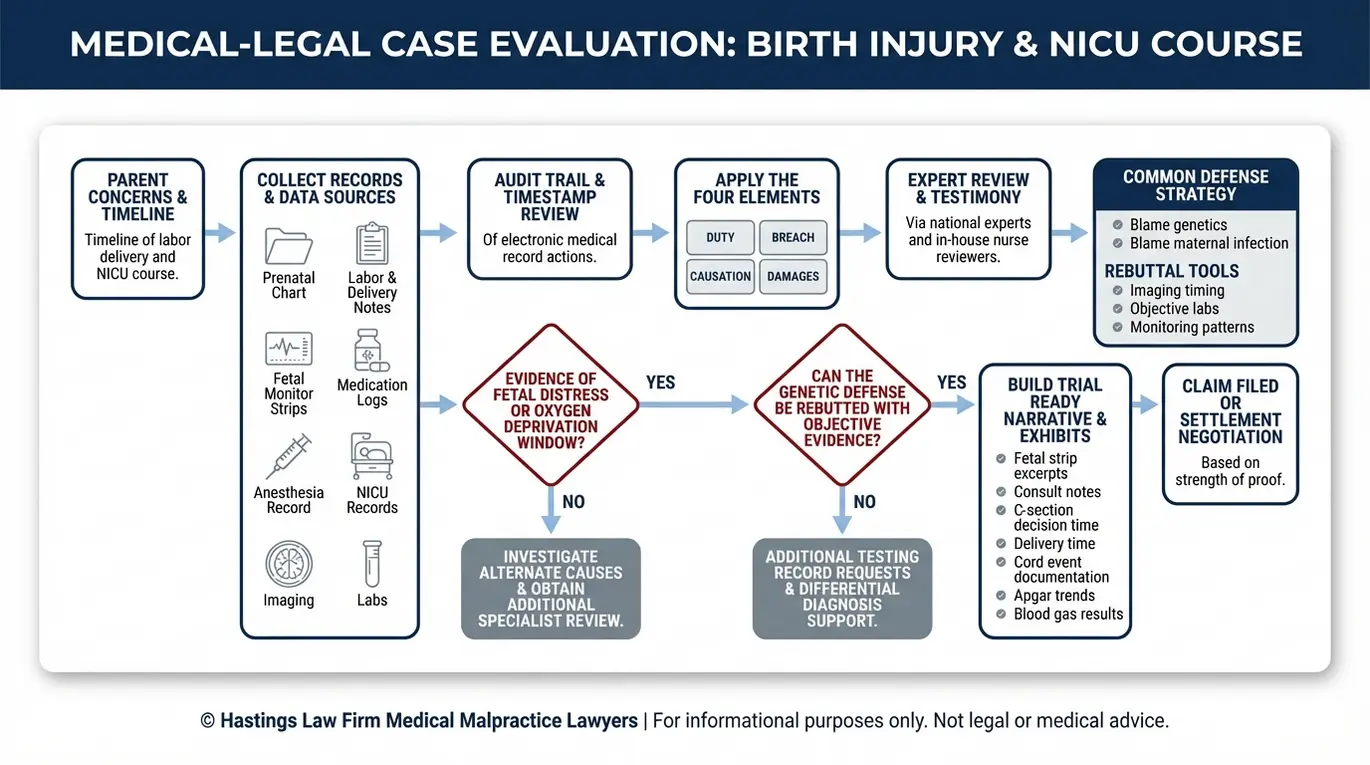
Every medical malpractice claim in Arizona must establish four elements. First, the provider owed your child a duty of care, which exists any time a doctor-patient relationship is formed. Second, the provider breached that duty by failing to act as a reasonably competent professional would under similar circumstances.
Third, that breach caused the injury. Fourth, your child suffered actual damages as a result.
A Phoenix cerebral palsy attorney begins by obtaining complete medical records, including the often-overlooked electronic audit trails. We closely examine electronic fetal monitoring (EFM), also called fetal heart rate tracing or monitor strips, which creates a continuous record of the baby’s heart rate and the mother’s contractions throughout labor. These strips reveal exactly what the medical team saw and when they saw it.
Umbilical cord blood gas analysis, which measures the arterial pH and base deficit from cord blood samples taken at delivery, provides objective evidence of whether oxygen deprivation occurred. Low pH and high base deficit values support claims that the baby experienced significant asphyxia.
Our firm’s National Expert Network includes specialists who can review these records and provide testimony about what the standard of care required and how the treating providers fell short. An Arizona cerebral palsy lawyer cannot prove causation without credible expert opinions connecting the breach to the injury. Our medical malpractice lawyer team coordinates with maternal-fetal medicine specialists, neonatologists, and neurologists to build the strongest possible case.
Overcoming the Genetic Defense Strategy
Hospitals frequently argue that cerebral palsy resulted from unavoidable genetic factors or maternal infections rather than anything the medical team did or failed to do. This defense strategy attempts to break the causation link between a medical error and the resulting brain damage.
One common argument involves chorioamnionitis, an infection of the fetal membranes that can occur before or during labor. Defense experts may claim this infection, not delivery room errors, caused the brain injury. While chorioamnionitis can contribute to neonatal complications, it does not excuse a medical team from monitoring for fetal distress and responding appropriately.
Our team counters these defense tactics by gathering causation evidence that demonstrates the timing and mechanism of injury. Clinical markers, imaging studies, and the baby’s condition immediately after birth can all help establish that the injury occurred during labor rather than from a pre-existing condition. We work with experts who can explain to a jury why the genetic defense does not apply in your child’s case.
Securing Compensation for Lifetime Care and Therapy Costs
Compensation in a cerebral palsy lawsuit covers past medical bills and, crucially, the projected costs of lifelong care, including therapy, housing modifications, and 24-hour assistance. The goal is to ensure your child has the resources needed for the best possible quality of life.
A thorough cerebral palsy settlement accounts for needs that may span decades. To calculate these costs accurately, our team works with economists and life care planners who project expenses based on your child’s specific diagnosis and limitations. We collaborate with these specialists to itemize every anticipated expense, from routine check-ups to major orthopedic surgeries, ensuring no future financial burden falls on the family. This “Life Care Plan” becomes essential evidence in negotiations and at trial.
Recoverable damages in Arizona birth injury cases typically include:
- Past and future medical expenses, including surgeries, hospitalizations, and medications
- Physical therapy, occupational therapy, and speech therapy costs
- Assistive devices such as wheelchairs, communication aids, and orthotics
- Home modifications including ramps, accessible bathrooms, and widened doorways
- Vehicle accommodations for wheelchair transport
- 24-hour attendant care or nursing services
- Loss of future earning capacity for the child
- Non-economic damages for the child’s pain, suffering, and diminished quality of life
- Compensation for birth injuries affecting parents, including lost wages and emotional distress
Arizona’s Constitution protects your family’s right to full compensation. Unlike many states, Arizona does not cap damages in medical malpractice cases, allowing juries to award what is truly needed for your child’s lifetime care. These funds are not merely a windfall but a necessary safety net to ensure a child with severe disabilities receives dignity and proper medical attention for decades after the parents can no longer provide care themselves.
Arizona Birth Injury Laws and The Statute of Limitations for Minors
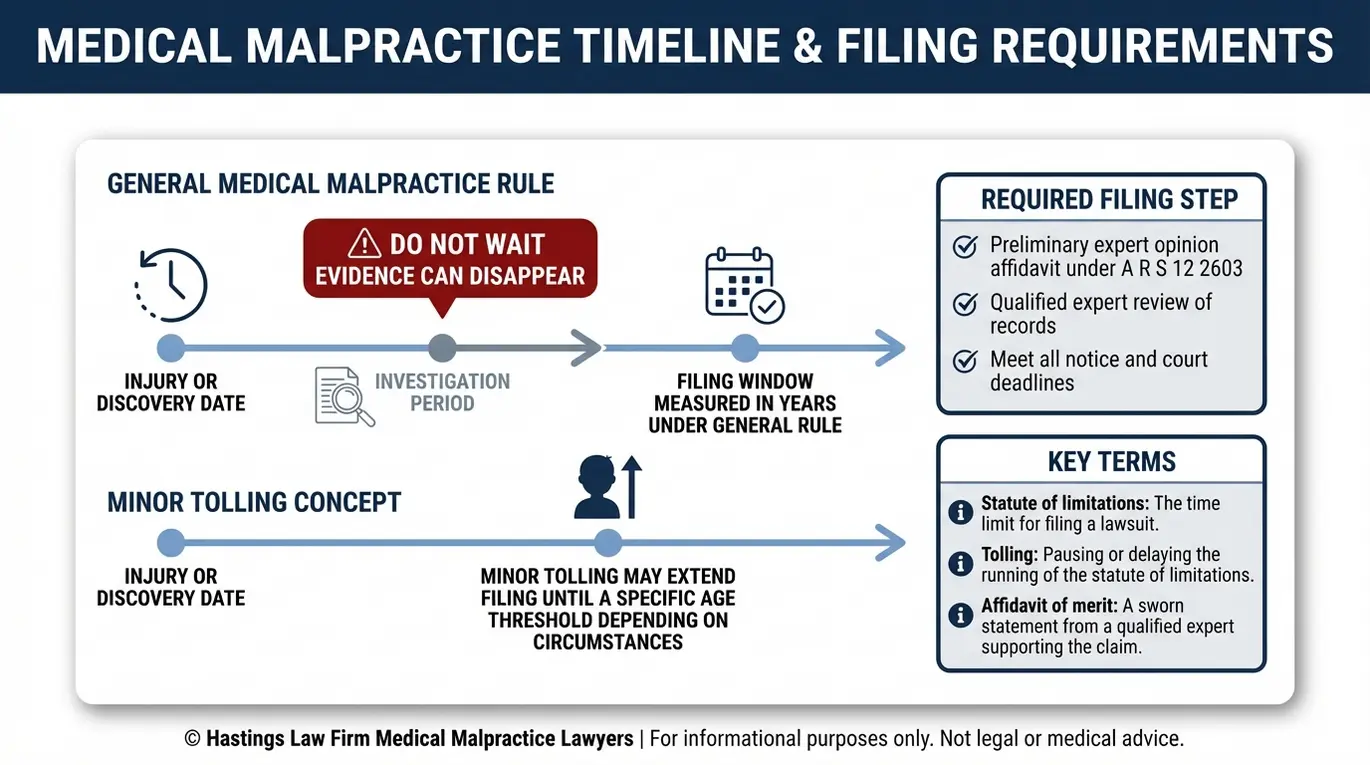
While Arizona generally has a two-year statute of limitations for medical malpractice, specific tolling rules apply to minors, allowing claims to be filed until the child turns a specific age. Understanding these deadlines is critical to preserving your family’s legal rights.
Under A.R.S. § 12-542, medical malpractice claims must typically be filed within two years of the date the injury occurred or was discovered. For birth injuries, the tolling provisions found in Title 12 of the Arizona Revised Statutes may pause the clock during the child’s minority, potentially extending the deadline.
Important Deadline Information:
- The standard limitations period is two years from the injury or discovery
- Tolling rules for minors may extend filing deadlines in certain circumstances
- Claims against government hospitals require a Notice of Claim within 180 days
- An Affidavit of Merit is required to file any Arizona birth injury lawsuit
Arizona law under A.R.S. § 12-2603 requires plaintiffs to submit a preliminary expert opinion affidavit with their complaint. This affidavit certifies that a qualified medical expert has reviewed the case and believes the standard of care was breached. Failure to include this document can result in dismissal.
Despite the tolling rules, families should not delay. Medical records can be lost or altered, witnesses’ memories fade, and electronic monitoring data may be overwritten. Early investigation preserves evidence and strengthens your case.
The sooner you contact an attorney to discuss Arizona birth injury laws, the better positioned we are to build a thorough record of what happened. If the delivery took place at a state or county-run facility, a Notice of Claim must be filed within 180 days. This strict deadline allows for no tolling, meaning families must act immediately to preserve their right to sue a government entity.
Contact the Arizona Birth Injury Attorneys at Hastings Law Firm Today for Help
Your family does not have to face the hospital system alone. If you believe your child’s cerebral palsy resulted from medical errors during delivery, you deserve answers and the resources to provide for your child’s future.
At Hastings Law Firm, our Arizona cerebral palsy lawyer team offers free case evaluations conducted by Board Certified Patient Advocates who understand both the medical and legal aspects of birth injury claims. We operate on a contingency fee basis, meaning you pay no attorney fees or costs unless we recover compensation for your family.
We know you may feel overwhelmed by the idea of challenging the medical professionals you once trusted. Our role is to investigate what happened, explain your options, and handle the legal process so you can focus on your child.
Contact us today for a confidential consultation. Let us help you find the truth and secure your child’s future.
Frequently Asked Questions About Cerebral Palsy Malpractice in Arizona


This content was researched and written by the Hastings Law Firm editorial team, which includes attorneys, medical professionals, and experienced researchers. Our writing is informed by internal knowledge and practical experience, and we cross-check critical details against authoritative sources cited throughout. Every piece undergoes human-led fact-checking and legal review. Because legal and medical information can change, if you spot an error, please contact us. Learn more about our content standards and review process on our editorial policy page.

Tommy Hastings, founder of Hastings Law Firm, is a board-certified personal injury trial lawyer (by the Texas Board of Legal Specialization) dedicated exclusively to healthcare injury cases. Since 2001, he has represented injured patients and families in litigation against major hospital systems, pharmaceutical companies, and negligent healthcare providers nationwide. He has handled numerous high-profile cases that have drawn national media attention and resulted in multi-million dollar recoveries.
