


Phoenix Eclampsia & Preeclampsia Lawyer
Preeclampsia and eclampsia are dangerous pregnancy complications that are often detectable with consistent screening and timely clinical response. When warning signs are missed or concerns are dismissed, a mother and baby can face permanent injury, life threatening consequences, or worse. The standard of care generally calls for monitoring blood pressure and urine findings and escalating care when results worsen. Understanding how care was handled can help families make sense of what happened and what comes next. If you or a loved one were harmed or worse due to delayed diagnosis or treatment of preeclampsia or eclampsia in Phoenix, Arizona, contact Hastings Law Firm for a free, confidential case review.

Last Updated: July 27, 2026
Trusted Legal Representation for Preventable Maternal Injuries in Phoenix
Preeclampsia and eclampsia are among the most dangerous complications in pregnancy, but they are also among the most detectable. When a healthcare provider fails to recognize the warning signs or delays treatment, the consequences for a mother and her baby can be devastating and permanent.
If you or a loved one suffered serious harm because a doctor did not respond appropriately to signs of preeclampsia, it is natural to have questions. You deserve to know what happened and whether the care you received fell below accepted medical standards.
As a dedicated Phoenix Eclampsia & Preeclampsia Lawyer, Hastings Law Firm focuses exclusively on medical malpractice. Our team, which includes attorneys, in-house nurse consultants, and board-certified patient advocates, can review your medical records and help you understand your legal options. Contact us for a free, confidential case evaluation.

Failure to Diagnose Preeclampsia: A Breach of the Standard of Care
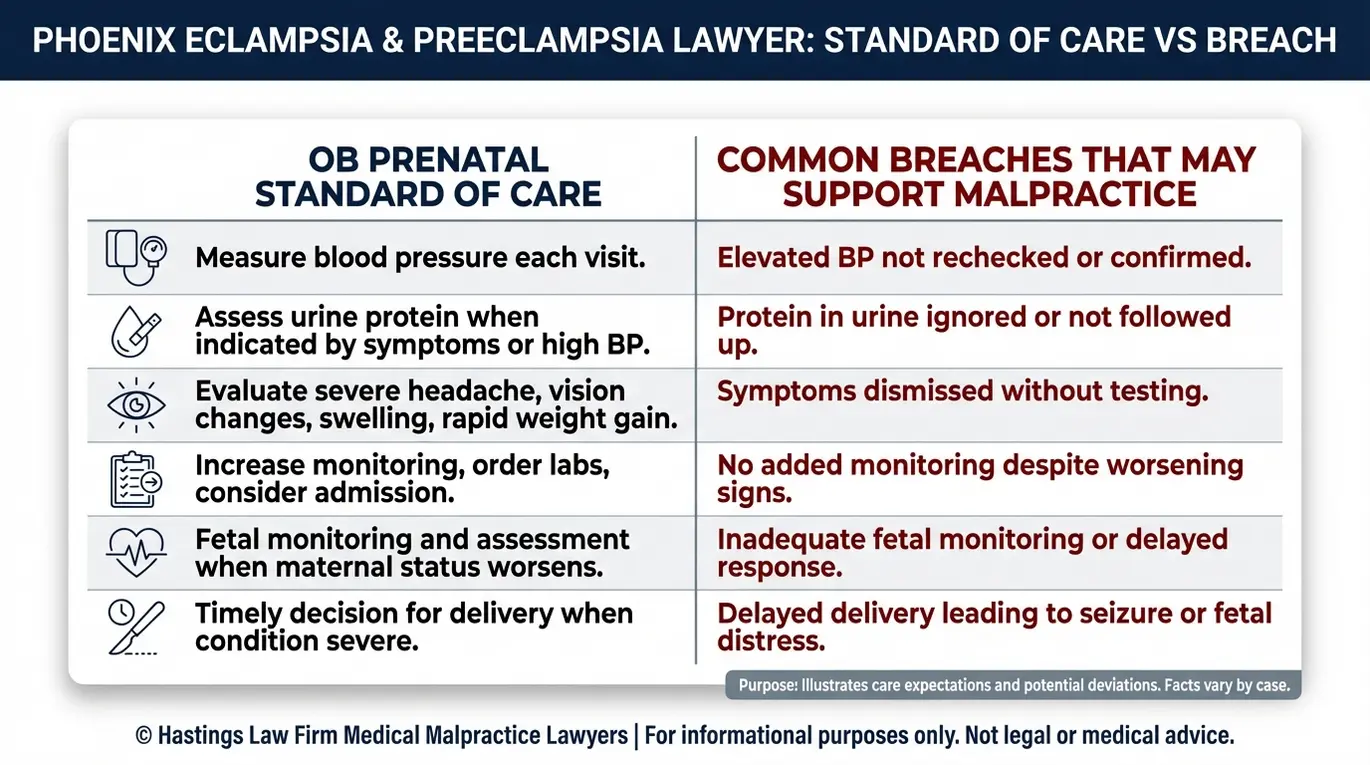
Preeclampsia is a detectable condition; failing to diagnose it often constitutes medical negligence when a provider ignores high blood pressure or protein in the urine. Standard of care protocols define how doctors should manage high blood pressure during pregnancy.
The standard of care, meaning the level of treatment a reasonably competent provider would deliver under similar circumstances, requires consistent screening at every visit. When blood pressure readings climb or urine tests reveal abnormalities, the treating physician is expected to escalate care immediately, whether that means ordering additional diagnostics, increasing the frequency of monitoring, or planning for early delivery.
These protocols exist because early detection is the primary defense against preeclampsia progressing to eclampsia, a life-threatening condition involving maternal seizures. As outlined in the Preeclampsia Diagnostic Criteria published on the NCBI Bookshelf, the medical community has maintained clear diagnostic guidelines for decades.
Our firm prepares every case as if it will go to trial from day one. This trial-ready approach ensures we are prepared for a jury. When an Arizona medical malpractice case involves preeclampsia, we examine the provider’s actions against those established benchmarks. Red flags that may point to negligence include:
- Elevated blood pressure readings documented in the chart but never acted on
- Absent or incomplete urine protein testing during routine prenatal visits
- Failure to refer a high-risk patient to a maternal-fetal medicine specialist
- Dismissal of reported symptoms such as severe headaches or visual disturbances
- Delayed decision to deliver despite worsening clinical indicators
Our Phoenix eclampsia lawyers work with qualified medical experts to reconstruct the timeline of care and determine whether a provider’s actions fell below what the standard required. If they did, and that failure caused harm, an attorney for preeclampsia cases can help you hold the provider liable.
Recognizing the Symptoms: Did Your Doctor Miss the Signs?
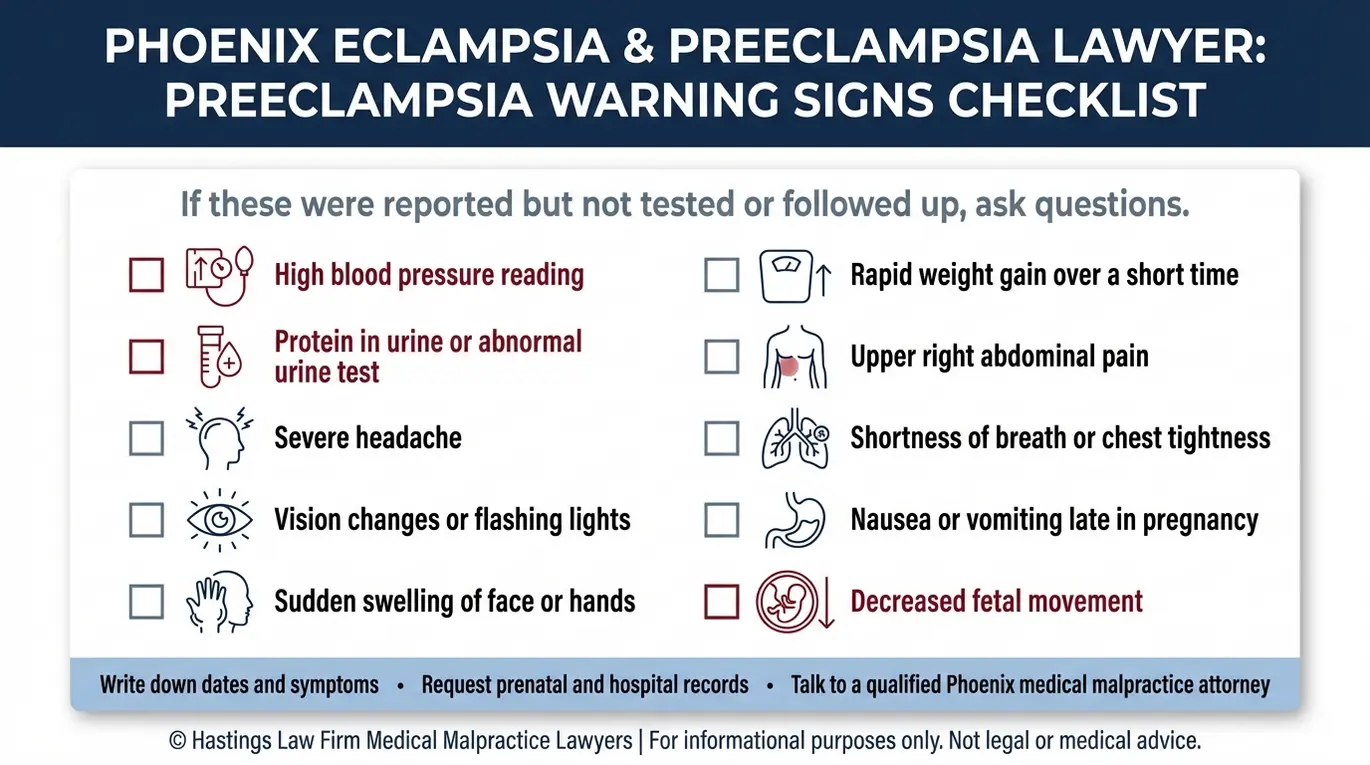
Common symptoms of preeclampsia include severe headaches, sudden vision changes, and rapid swelling. Clinicians use structured screenings to identify these symptoms and prevent the condition from worsening.
The condition is historically associated with a classic triad of warning signs: severe-range hypertension (dangerously high blood pressure during pregnancy), proteinuria (excess protein in the urine detected through lab testing), and sudden edema, particularly in the face and hands. However, current diagnostic guidelines from ACOG focus on hypertension combined with signs of organ dysfunction, and edema alone is no longer considered a diagnostic criterion. Certain risk factors should prompt heightened vigilance, including a first pregnancy, a personal history of high blood pressure, obesity, or carrying multiples.
The Emergency Department Postpartum Preeclampsia Checklist from the Kansas Department of Health and Environment reflects the kind of structured screening that the medical community recognizes as appropriate care. As a preeclampsia injury lawyer in Phoenix, we frequently hear from clients who reported clear symptoms only to have their concerns minimized or dismissed. That experience of not being heard is one of the most common grievances in these cases.
When we evaluate a potential claim, we look at whether the following symptoms were present and how the provider responded:
| Symptom | What It May Indicate | Expected Provider Response |
|---|---|---|
| Blood pressure ≥ 140/90 mmHg | Hypertension / possible preeclampsia | Repeat readings, lab work, increased monitoring |
| Protein in urine | Proteinuria / kidney involvement | 24-hour urine collection or protein-to-creatinine ratio |
| Severe headache not relieved by medication | Central nervous system involvement | Immediate evaluation, possible hospital admission |
| Visual disturbances (blurring, spots) | Risk of eclamptic seizure | Emergency assessment and potential delivery planning |
| Sudden facial or hand swelling | Fluid retention / worsening condition | Clinical workup and close observation |
| Rapid weight gain (several pounds in days) | Fluid retention | Further diagnostic evaluation |
Any one of these symptoms warrants a thorough clinical response. When multiple signs appear together, the urgency only increases.
The Hastings Law Firm Difference
Results matter, but what truly sets us apart is how we achieve them. Every verdict, every settlement, and every Phoenix courtroom victory comes from one guiding promise: To treat each client’s fight for justice as if it were our own.
This balance of skill, experience, and empathy reflects our core philosophy that justice should not only compensate the injured, but also make health care safer nationwide.

The Catastrophic Impact: Injuries to Mother and Infant
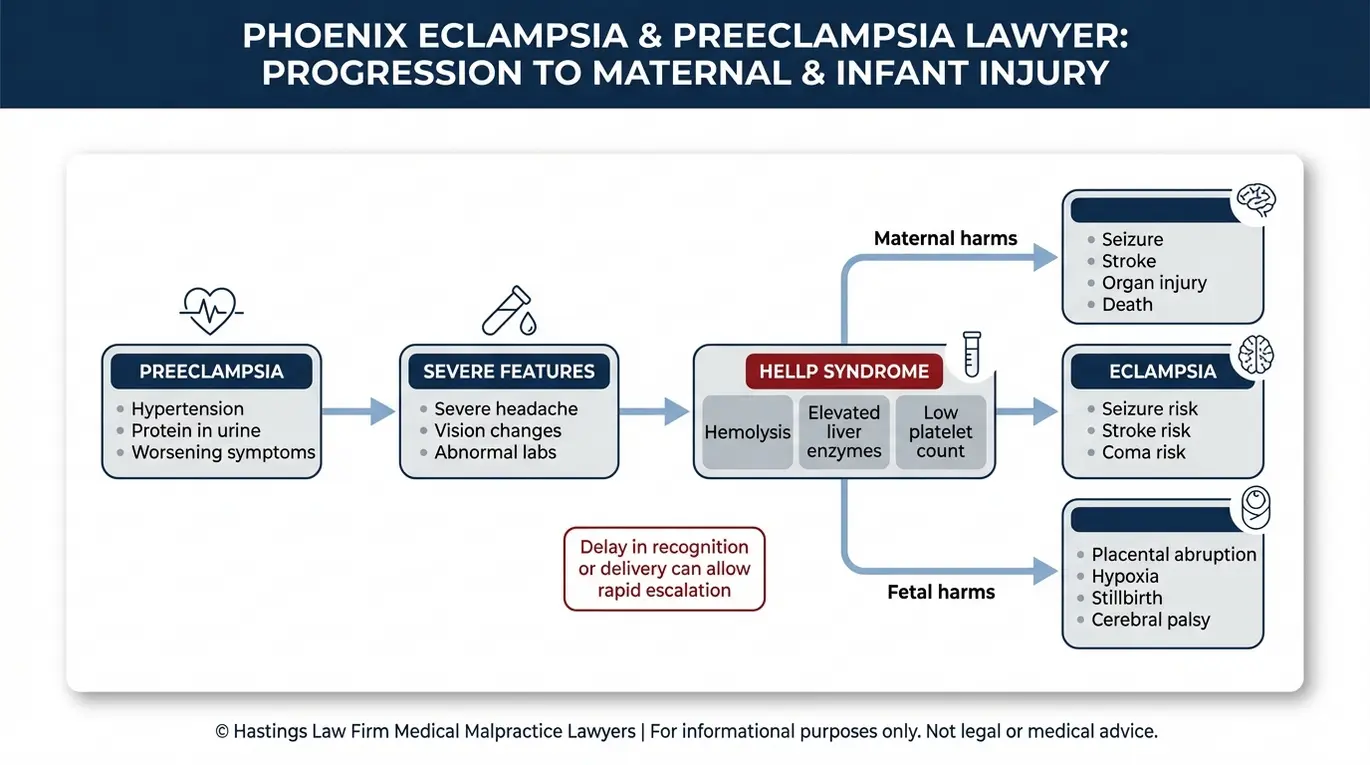
Untreated preeclampsia can lead to seizures, placental abruption, and permanent brain damage or death for both the mother and the baby. This condition is a medical emergency that requires immediate intervention to prevent life-altering results.
For the mother, unmanaged preeclampsia can progress to eclampsia, triggering maternal seizures that carry the risk of stroke, organ failure, or coma. Research published in Hypertensive Disorders and Cardiovascular Severe Maternal Morbidity in the US, 2015–2019 (PubMed Central) documents the serious cardiovascular harm associated with hypertensive disorders in pregnancy.
For the baby, placental abruption (the premature separation of the placenta from the uterine wall) can cut off the baby’s oxygen supply. This oxygen deprivation, known as hypoxia, may result in cerebral palsy, other forms of neurological damage, or stillbirth.
Common injuries linked to delayed or missed preeclampsia treatment include:
- Maternal seizures (eclampsia) leading to brain injury or death
- Stroke or organ failure from prolonged, uncontrolled hypertension
- Placental abruption causing hemorrhage and fetal oxygen loss
- Hypoxia-related brain damage in the infant, including cerebral palsy
- Stillbirth when delivery is delayed too long
- HELLP syndrome, a severe and rapidly progressing variant
When an eclampsia malpractice attorney evaluates these cases, the focus is on whether earlier action could have prevented the outcome.
HELLP Syndrome and Emergency C-Sections
HELLP syndrome involves Hemolysis, Elevated Liver enzymes, and Low Platelet count (thrombocytopenia). Thrombocytopenia, or low platelet count, affects the blood’s ability to clot.
As detailed in the HELLP Syndrome Chart from the Indiana Department of Health, the condition can lead to liver rupture, uncontrolled bleeding, and maternal death if not addressed quickly. The only definitive treatment is delivery, often by emergency C-section. When a provider delays delivery despite falling platelet counts and rising liver enzymes, the consequences can be fatal. We examine whether the decision to wait fell below the standard of care.
Recovering Compensation for Preeclampsia Injuries in Arizona
Families harmed by negligent preeclampsia management can recover damages for medical bills, future care costs, lost wages, and non-economic losses like pain and suffering. Arizona law provides a pathway for families to seek financial support for long-term care needs.
Economic damages cover the tangible financial impact: emergency medical treatment, NICU stays, ongoing therapy, rehabilitation, and any income lost during recovery or while caring for an injured child. For children diagnosed with permanent conditions like cerebral palsy, calculating future costs is essential. A life care plan prepared by qualified professionals can project the lifetime expenses for medical care, assistive devices, and specialized education.
Non-economic damages address the less visible toll: physical pain, emotional trauma, loss of quality of life, and the profound disruption these injuries cause to a family. In cases where a mother or child did not survive, Arizona law allows families to pursue wrongful death claims.
The right to a jury trial and full compensation for personal injuries is protected under The Arizona Constitution. As a Phoenix birth injury lawyer, our role is to document every category of harm so that any recovery reflects the true scope of what your family has endured and will continue to face.
Contact the Phoenix Birth Injury Attorneys at Hastings Law Firm Today for Help
Hastings Law Firm is not a general practice firm. Every attorney, nurse consultant, and patient advocate on our team is focused on one thing: holding negligent healthcare providers accountable when their failures cause serious harm.
Founded by Tommy Hastings, a board-certified trial lawyer with over 20 years of experience, our firm handles medical malpractice cases exclusively. If your family was affected by complications from preeclampsia or eclampsia, and you believe your medical team failed to act on warning signs, we want to hear from you. Our Phoenix eclampsia and preeclampsia lawyers can review your medical records, consult with qualified experts, and give you an honest assessment of your case.
There is no cost for your initial consultation, and you pay no attorney fees unless we recover compensation on your behalf. Reaching out is a low-risk step toward finding the answers you deserve. Contact Hastings Law Firm today for a free, confidential case evaluation.
Frequently Asked Questions About Eclampsia & Preeclampsia in Phoenix


This content was researched and written by the Hastings Law Firm editorial team, which includes attorneys, medical professionals, and experienced researchers. Our writing is informed by internal knowledge and practical experience, and we cross-check critical details against authoritative sources cited throughout. Every piece undergoes human-led fact-checking and legal review. Because legal and medical information can change, if you spot an error, please contact us. Learn more about our content standards and review process on our editorial policy page.

Tommy Hastings, founder of Hastings Law Firm, is a board-certified personal injury trial lawyer dedicated exclusively to healthcare injury cases. Since 2001, he has represented injured patients and families in litigation against major hospital systems, pharmaceutical companies, and negligent healthcare providers nationwide. He has handled numerous high-profile cases that have drawn national media attention and resulted in multi-million dollar recoveries. He draws on that experience in his writing, helping readers understand how these cases work and what options may be available to them.
