


Phoenix Brachial Plexus Injury Lawyer
Neonatal brachial plexus palsy can leave a child with lasting arm and hand weakness, loss of function, or paralysis, and families often need clear answers about what happened during delivery. These injuries are often linked to difficult births where the brachial plexus nerves are stretched, compressed, or torn, sometimes after shoulder dystocia is not managed safely. Understanding the type of nerve damage, early signs, and long term care needs can help families make informed decisions. If your child suffered harm due to brachial plexus birth injuries in Phoenix, Arizona, contact Hastings Law Firm for a free, confidential case review.

Last Updated: July 27, 2026
Trusted Phoenix Malpractice Attorneys for Preventable Birth Injuries
When your child has been diagnosed with neonatal brachial plexus palsy (NBPP), a nerve injury sustained during birth that affects the arm and hand, the weight of that news can feel overwhelming. You may be searching for answers about what happened during delivery and whether it could have been prevented. Those questions deserve honest, informed responses from professionals who understand both the medicine and the law behind these injuries.
At Hastings Law Firm, we focus exclusively on medical malpractice. Our team of attorneys, nurse consultants, and medical staff has the experience to evaluate what went wrong and determine whether negligence played a role. If your child suffered a brachial plexus injury during delivery in Phoenix, a Phoenix brachial plexus injury lawyer at our firm can review your case and explain your options at no cost.

Understanding Severe Nerve Damage and Brachial Plexus Injuries
A brachial plexus injury occurs when the network of nerves controlling the arm and hand is damaged during delivery, often resulting in conditions like Erb’s palsy or Klumpke’s palsy, which may cause permanent paralysis or loss of function. Nerve damage during birth is often categorized by the specific level of the nerve roots involved. Understanding the specific location of the damage is necessary for determining the proper treatment plan and identifying the extent of the functional loss.
The brachial plexus is a bundle of nerves that originates from the cervical spine, specifically the nerve roots at C5 through T1. These nerves branch out from the spinal cord, travel through the neck, and extend into the shoulder, arm, and hand. They control nearly all movement and sensation in the upper limb.
When these nerves are stretched, compressed, or torn during a difficult delivery, the result can range from temporary weakness to complete, irreversible paralysis. Because the nerves serve as the communication pathway between the brain and the limb, any interruption can severely impact a child’s development and daily life. The National Center for Biotechnology Information (NCBI) provides a detailed overview of this nerve anatomy and its clinical significance.
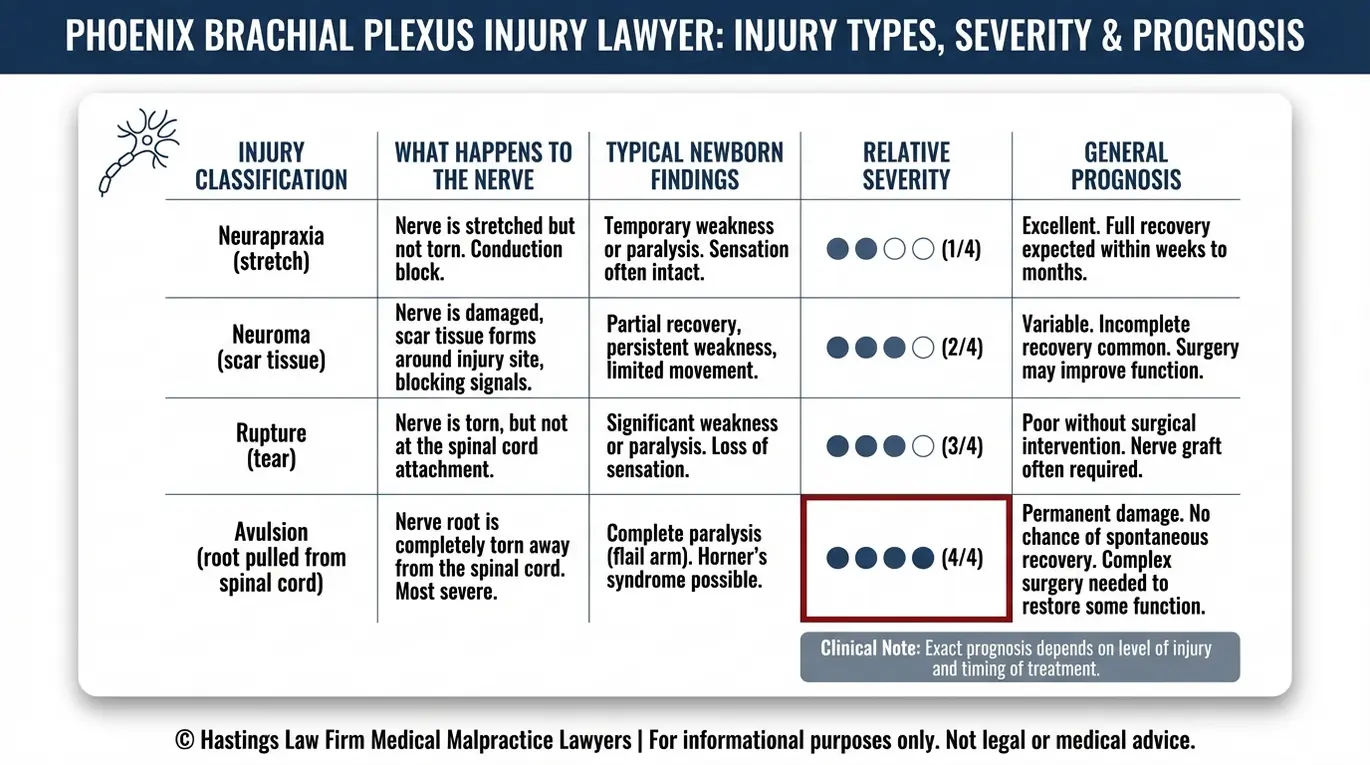
Not all brachial plexus injuries are the same. The severity depends on the type and extent of nerve damage. Neuropraxia, also called neurapraxia, is the mildest form, involving a stretch of the nerve that typically heals on its own within weeks to months. More serious injuries include neuromas (scar tissue that forms on the nerve and partially blocks signals), ruptures (where the nerve itself is torn), and avulsions (where the nerve root is completely torn away from the spinal cord). According to the Cleveland Clinic, avulsions are the most severe type and cannot repair themselves.
| Injury Type | Severity | What Happens | Typical Prognosis |
|---|---|---|---|
| Neuropraxia | Mildest | Nerve is stretched but not torn | Often resolves on its own within weeks to months |
| Neuroma | Moderate | Scar tissue forms on a partially damaged nerve | Partial recovery possible; may require therapy |
| Rupture | Severe | Nerve is torn but not at the spinal cord | Surgical repair (nerve graft) often needed |
| Avulsion | Most Severe | Nerve root torn from the spinal cord | Cannot self-repair; may require nerve transfer surgery |
A Phoenix brachial plexus birth injury attorney evaluates the specific type and severity of nerve damage to build a clear picture of how the injury occurred, what treatment your child will need, and what the long-term prognosis looks like.
Identifying Symptoms of Nerve Damage in Newborns
Early detection of a brachial plexus injury is important for both medical treatment and legal documentation. Recognizing these signs early is important because Erb’s palsy involves damage to the upper nerves that control the shoulder and elbow. Early recognition of symptoms can lead to more effective physical and surgical interventions for the newborn.
Signs and symptoms are usually visible shortly after birth. Erb’s palsy, the most common form of NBPP, affects the upper nerves of the brachial plexus. A baby with Erb’s palsy may hold the affected arm limp at the side with the elbow straight and the wrist turned inward, sometimes described as a “waiter’s tip” position. Klumpke’s palsy, a less common condition, affects the lower nerves and typically causes arm paralysis or weakness in the hand and fingers.
Parents and medical staff may also notice a lack of the Moro reflex, the startle response where a newborn spreads both arms outward. If only one arm responds, that asymmetry can be an early sign of nerve damage. Any reduced movement, grip weakness, or favoring of one arm should be evaluated and documented immediately.
Medical Errors That Cause Preventable Birth Injuries
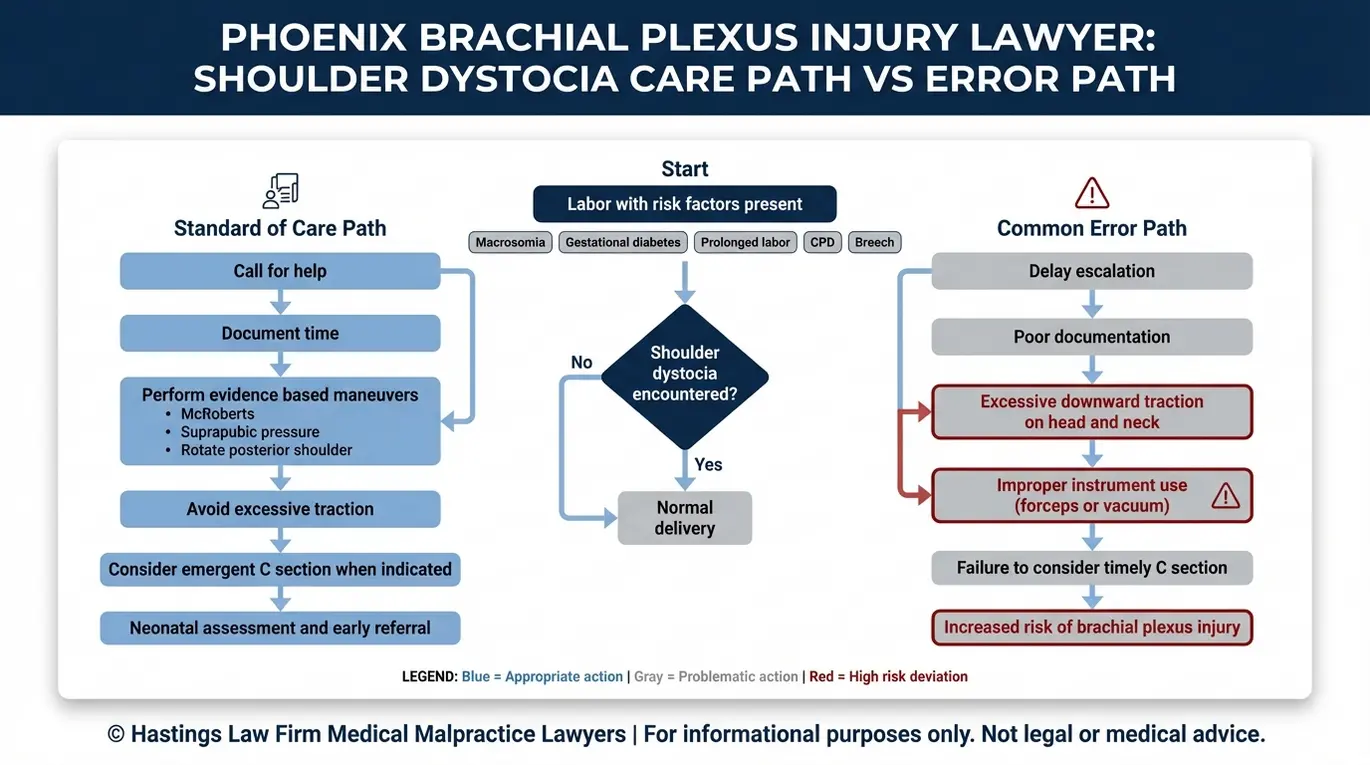
Many brachial plexus injuries are caused by medical negligence during labor, specifically the mismanagement of shoulder dystocia, where a doctor applies excessive force or fails to order a medically necessary cesarean section (C-section). Safety protocols exist to prevent excessive physical force during these difficult deliveries and protect the baby from trauma.
Shoulder dystocia is an obstetric emergency that occurs when the baby’s head delivers but one or both shoulders become trapped behind the mother’s pelvic bone. According to the American Academy of Family Physicians (AAFP), this complication requires specific, practiced maneuvers to safely free the baby. If a physician relies on excessive traction, meaning they pull too hard on the baby’s head and neck, the force can stretch or tear the brachial plexus nerves. This use of physical force may violate the standard of care, which is the level of treatment a reasonably competent physician would provide in the same situation.
The legal question in many of these cases is not just what happened during the delivery itself, but whether the medical team should have anticipated the complication. Certain risk factors, when present, can signal the need for a planned C-section instead of a vaginal delivery. Phoenix brachial plexus injury lawyers investigate whether the care team identified and responded appropriately to these warning signs.
Risk factors that should be evaluated before and during labor include:
- Macrosomia (large baby): A baby estimated to weigh over 4,000 to 4,500 grams. The NCBI’s clinical reference on macrosomia details how fetal size increases the risk of shoulder dystocia.
- Gestational diabetes: A maternal condition associated with larger birth weight and a higher likelihood of delivery complications.
- Cephalopelvic disproportion (CPD): A mismatch between the size of the baby’s head or body and the mother’s pelvis.
- Prolonged labor: Slow or stalled labor that can indicate the baby is having difficulty moving through the birth canal.
- Prior shoulder dystocia: A history of this complication in a previous delivery significantly raises the risk of recurrence.
- Use of Pitocin: This labor-inducing drug can cause uterine hyperstimulation, increasing the force of contractions and contributing to a traumatic delivery.
- Improper use of forceps or vacuum extractor: Assisted delivery tools, when misused, can add dangerous force to an already complicated situation.
When these risk factors are documented in the medical records but not acted upon, it can establish a clear breach of the standard of care.
The Hastings Law Firm Difference
Results matter, but what truly sets us apart is how we achieve them. Every verdict, every settlement, and every Phoenix courtroom victory comes from one guiding promise: To treat each client’s fight for justice as if it were our own.
This balance of skill, experience, and empathy reflects our core philosophy that justice should not only compensate the injured, but also make health care safer nationwide.

Securing Compensation for Long Term Care and Therapy
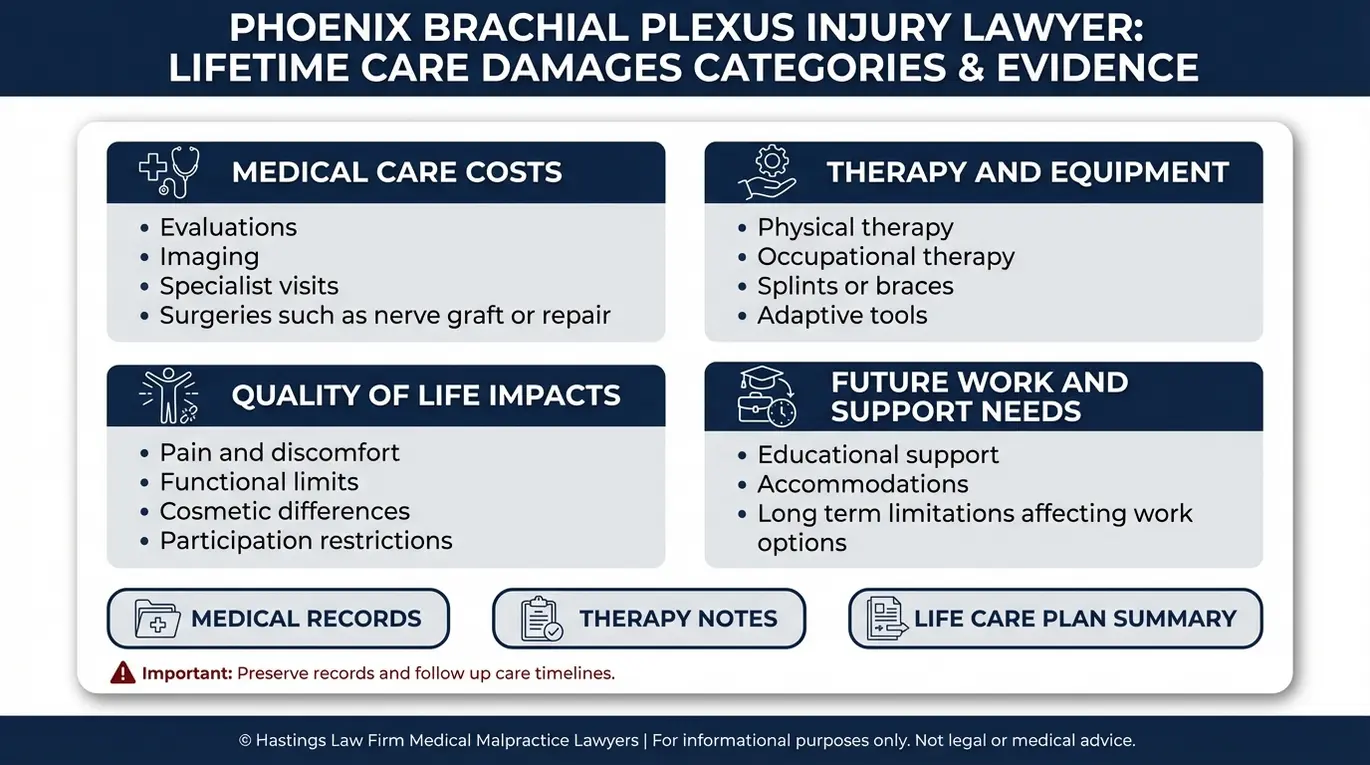
Compensation in a brachial plexus lawsuit covers past and future medical expenses, including surgeries and physical therapy, as well as non-economic damages for the child’s pain, suffering, and loss of quality of life. Recovery in a medical negligence case aims to provide the resources needed for a child’s lifetime of care. These resources are vital when the injury results in permanent disability or the need for continuous medical monitoring.
The cost of treating a brachial plexus injury can be significant, especially when the damage is severe. Children with ruptures or avulsions, where the nerve is torn or pulled from the spinal cord, often require surgical intervention such as a nerve graft. These surgeries aim to restore the electrical signals between the spinal cord and the affected limb using healthy nerve tissue.
Beyond surgery, many children need years of physical therapy and occupational therapy to rebuild strength and range of motion. Some may need adaptive equipment, specialized schooling support, or future corrective procedures as they grow. Data from the Medical Expenditure Panel Survey (MEPS) reflects the substantial outpatient costs families face for ongoing rehabilitative care.
Non-economic damages are equally important. These address the child’s physical pain, emotional distress, scarring or disfigurement, and the loss of enjoyment of life. A child who cannot throw a ball, play an instrument, or use their arm fully experiences real, measurable harm that goes beyond medical bills.
If the injury is expected to limit the child’s physical capabilities into adulthood, our team also works with economic and vocational experts to calculate future care costs and future lost earnings. This accounts for the career limitations the child may face because of reduced strength, mobility, or function in the affected arm.
We collaborate with life care planners to itemize every anticipated cost, from replacement orthotics to therapy sessions needed decades down the line. This ensures the settlement provides financial security for the child’s entire life, rather than just the immediate future. Every element of the damages claim is built on medical evidence and professional analysis, not guesswork.
Why Choose Hastings Law Firm for Your Phoenix Birth Injury Case
Hastings Law Firm offers a unique combination of Board Certified trial advocacy and in-house medical expertise, giving families the resources and focused representation needed to challenge well-funded hospital defense teams. Our approach focuses on identifying hospital failures through detailed medical record analysis and expert collaboration.
The Hastings Difference:
- Trial-Ready Philosophy: Every case we accept is prepared from day one as though it will go to a jury. This trial-ready approach sends a clear signal to the defense: we will not accept less than fair value for a child’s injury.
- Medical Resources: Our team includes former defense attorneys who know how hospitals and insurers build their arguments, and in-house nurse consultants who can identify inconsistencies in medical records and charting.
- Board Certified Expertise: Founder Tommy Hastings is Board Certified in Personal Injury Trial Law by the Texas Board of Legal Specialization, a distinction held by fewer than 2% of Texas attorneys. He was inducted into the American Board of Trial Advocates (ABOTA) in 2025, an invitation-only organization reserved for experienced trial lawyers.
We handle birth injury cases on a contingency fee basis. That means you pay no attorney fees and no upfront costs. We advance all expenses, and you only owe a fee if we recover compensation for your family. Our Phoenix office is here to make top-tier legal representation accessible to every family, regardless of financial situation.
Contact the Phoenix Birth Injury Attorneys at Hastings Law Firm Today for Help
Arizona’s statute of limitations sets deadlines for filing a medical malpractice claim, and acting sooner helps preserve the medical records and witness testimony that are critical to your case. Taking prompt action helps families secure the legal support needed for a medical malpractice claim.
Our goal goes beyond compensation. We believe that holding negligent providers accountable is one of the most effective ways to prevent the same mistake from happening to another family. If you suspect your child’s brachial plexus injury was caused by a preventable medical error, we want to help you find the truth.
Call our Phoenix medical law firm today for a free, confidential case evaluation. There is no fee unless we win.
Frequently Asked Questions About Brachial Plexus Malpractice in Phoenix


This content was researched and written by the Hastings Law Firm editorial team, which includes attorneys, medical professionals, and experienced researchers. Our writing is informed by internal knowledge and practical experience, and we cross-check critical details against authoritative sources cited throughout. Every piece undergoes human-led fact-checking and legal review. Because legal and medical information can change, if you spot an error, please contact us. Learn more about our content standards and review process on our editorial policy page.

Tommy Hastings, founder of Hastings Law Firm, is a board-certified personal injury trial lawyer dedicated exclusively to healthcare injury cases. Since 2001, he has represented injured patients and families in litigation against major hospital systems, pharmaceutical companies, and negligent healthcare providers nationwide. He has handled numerous high-profile cases that have drawn national media attention and resulted in multi-million dollar recoveries. He draws on that experience in his writing, helping readers understand how these cases work and what options may be available to them.
