


Phoenix Shoulder Dystocia Birth Injury Lawyer
Shoulder dystocia is a delivery emergency that can become a life altering birth injury when risk factors are missed or the response is delayed or improper. The standard of care focuses on timely recognition, appropriate maneuvers, and avoiding dangerous force that can lead to nerve damage, fractures, or oxygen deprivation with lasting neurological harm. Arizona rules on filing deadlines and expert support can affect whether a family can pursue compensation for long term care. If your child suffered harm or worse due to shoulder dystocia malpractice in Phoenix, Arizona, contact Hastings Law Firm for a free, confidential case review.

Last Updated: July 27, 2026
Trusted Phoenix Birth Injury Attorneys for Shoulder Dystocia Malpractice Claims
When your child has been hurt during delivery because of a preventable medical error, the weight of that experience can feel impossible to carry alone. You may be dealing with unexpected diagnoses, mounting medical bills, and the painful sense that something went wrong in the delivery room. Those feelings are valid, and you deserve answers.
At Hastings Law Firm, we focus exclusively on medical malpractice. Our team of attorneys, in-house nurses, and board-certified patient advocates understands both the medicine and the law behind shoulder dystocia injuries. As your Phoenix shoulder dystocia lawyer, we investigate what happened, identify where the standard of care was breached, and hold the responsible providers accountable.
If your child was injured during a difficult delivery, we welcome you to contact us for a free, confidential case evaluation. There is no fee unless we recover compensation for your family.

Understanding Shoulder Dystocia and Medical Malpractice
Shoulder dystocia is a birth complication where the infant’s shoulder becomes lodged behind the mother’s pubic symphysis, the firm joint at the front of the pelvic bone, creating a medical emergency that demands immediate and skilled intervention. When providers fail to anticipate known risk factors or respond with the correct maneuvers, what might have been a manageable complication can become a life-altering birth injury.
Not every difficult delivery is malpractice. The distinction lies in whether the medical team met the standard of care, which is the level of treatment a reasonably competent obstetrician or delivery provider would have given under similar circumstances. According to a comprehensive literature review on shoulder dystocia published in PMC, proper recognition, preparation, and response protocols can significantly reduce the risk of injury.
One of the most important factors in these cases is time. Clinicians often refer to the window immediately after a shoulder becomes impacted as the critical period for preventing oxygen deprivation and nerve damage. When the delivery team hesitates, applies improper force, or fails to transition to established rescue maneuvers, the risk of permanent harm increases with each passing moment.
As a Phoenix shoulder dystocia attorney, our job is to reconstruct the timeline of the delivery and determine whether the medical team’s actions fell below the accepted standard. Here is how we distinguish between an unavoidable emergency and potential medical negligence:
| Factor | Unavoidable Complication | Potential Malpractice |
|---|---|---|
| Risk factor screening | Documented and addressed during prenatal care | Known risk factors ignored or not assessed |
| Response time | Immediate recognition and appropriate action | Delayed response or failure to escalate |
| Maneuver selection | Correct protocols followed in proper sequence | Improper techniques, excessive traction, or skipped steps |
| Fetal monitoring | Continuous monitoring with timely interpretation | Gaps in monitoring or failure to act on warning signs |
| Delivery planning | C-section discussed when clinically indicated | Vaginal delivery pursued despite clear contraindications |

Recognizing the Risk Factors for Shoulder Dystocia
Doctors are expected to screen for risk factors such as fetal macrosomia (an estimated birth weight above 4,000 to 4,500 grams), gestational diabetes, and a history of prior difficult deliveries so they can plan appropriately and reduce the chance of shoulder dystocia.
When these risk factors are present, the standard of care generally calls for heightened monitoring, patient counseling about delivery options, and preparation for potential complications. In many cases, these warning signs point toward scheduling a C-section (cesarean delivery) rather than proceeding with a vaginal birth. A failure to offer or recommend a cesarean delivery when the clinical picture clearly supports one can form the basis of a medical malpractice claim.
A study on incidence and risk factors for recurrence published in PubMed Central confirms that certain maternal and fetal characteristics significantly increase the likelihood of shoulder dystocia. The risk factors a shoulder dystocia lawyer will examine in your case typically include:
- Fetal macrosomia: Larger babies face a substantially higher risk of shoulder impaction during delivery.
- Maternal diabetes or gestational diabetes: Both conditions contribute to excessive fetal growth, particularly in the trunk and shoulders.
- Prior shoulder dystocia: A history of this complication in a previous pregnancy is one of the strongest predictors of recurrence.
- Cephalopelvic disproportion (CPD): This condition occurs when the baby’s head or body is too large to pass safely through the mother’s pelvis.
- Prolonged labor or failure to progress: An extended second stage of labor can signal that vaginal delivery may not be safe.
- Maternal obesity: Higher body mass is associated with increased fetal size and delivery complications.
- Post-term pregnancy: Babies delivered past 40 weeks tend to be larger, raising the dystocia risk.
When an obstetrician recognizes these factors but proceeds without adjusting the delivery plan, the question shifts from “was this a complication?” to “was this preventable?”
The Hastings Law Firm Difference
Results matter, but what truly sets us apart is how we achieve them. Every verdict, every settlement, and every Phoenix courtroom victory comes from one guiding promise: To treat each client’s fight for justice as if it were our own.
This balance of skill, experience, and empathy reflects our core philosophy that justice should not only compensate the injured, but also make health care safer nationwide.

Proper Medical Protocols and The HELPERR Method
The HELPERR method is the standard clinical protocol for managing shoulder dystocia, involving a specific sequence of steps designed to release the infant safely and minimize the risk of injury. Each letter represents a distinct action, and delivery teams are trained to move through these steps in order when shoulder dystocia is identified.
According to a study on evidence-based approaches to shoulder dystocia published in PubMed Central, adherence to a structured protocol like HELPERR improves outcomes and reduces the severity of birth injuries.
The HELPERR method, sometimes called the HELPERR mnemonic, refers to:
| Step | Action | What It Involves |
|---|---|---|
| H | Call for Help | Alert additional staff, including anesthesia and neonatal teams |
| E | Evaluate for Episiotomy | Assess whether an episiotomy is needed to create more room (this alone does not resolve bony dystocia) |
| L | Legs: McRoberts Maneuver | The McRoberts maneuver involves sharply flexing the mother’s thighs toward her abdomen, which widens the pelvic opening and changes the angle of the pelvis to help free the shoulder |
| P | Suprapubic Pressure | Apply firm, directed pressure just above the pubic bone to dislodge the anterior shoulder |
| E | Enter Maneuvers | Perform internal rotation techniques such as the Rubin or Woods screw maneuver |
| R | Remove the Posterior Arm | Carefully deliver the baby’s posterior arm to reduce the shoulder width |
| R | Roll the Patient | Reposition the mother onto all fours (Gaskin maneuver) to shift pelvic dimensions |
Understanding what should have happened during delivery is central to any shoulder dystocia case. As a Phoenix shoulder dystocia lawyer, we compare the documented actions of the delivery team against this established protocol to identify where deviations occurred.
There are also actions that fall outside accepted practice and can constitute malpractice on their own. Fundal pressure, which involves pushing down on the top of the uterus during a shoulder dystocia event, is widely recognized as dangerous because it can worsen the impaction and increase the force on the brachial plexus nerves.
The improper use of assisted delivery instruments also raises serious concerns. Applying excessive traction to the baby’s head and neck, or using a vacuum extractor or forceps during an active dystocia event, can directly cause nerve tears, fractures, and brain injury. The standard of care requires that providers rely on the recognized maneuvers above rather than force.
A shoulder dystocia attorney will review fetal monitoring strips, nursing notes, and delivery logs to determine whether the HELPERR steps were followed, whether prohibited techniques were used, and whether the timing of each action was consistent with accepted practice.

Injuries Caused by Negligent Management of Dystocia
Mishandled shoulder dystocia can result in a range of serious injuries, from brachial plexus damage and bone fractures to oxygen deprivation that causes lasting neurological harm. The type and severity of the injury often depend on how much force was applied, which maneuvers were used, and how long the baby remained stuck in the birth canal.
Brachial Plexus Injuries
A brachial plexus injury occurs when the network of nerves running from the spinal cord through the neck, shoulder, and arm is stretched, compressed, or torn during delivery. This is one of the most common consequences of excessive lateral traction on the baby’s head. Research published by PubMed Central on neonatal brachial plexus palsy found that the persistence and extent of nerve damage are associated with the number of maneuvers performed and the total duration of the shoulder dystocia event.
The most frequently diagnosed brachial plexus conditions include:
- Erb’s palsy: Damage to the upper nerves (C5-C6) affecting the shoulder and upper arm, often resulting in weakness or paralysis of the affected limb.
- Klumpke’s palsy: Injury to the lower nerves (C8-T1) affecting the forearm, wrist, and hand, which can cause a limp or claw-like hand position.
- Horner’s syndrome: Nerve damage that affects the face and eye on the injured side, causing a drooping eyelid and constricted pupil.
Some children recover partial or full function over time. Others require surgery, years of physical therapy, or live with permanent disability.
Bone Fractures
Fractures of the clavicle (collarbone) and humerus (upper arm bone) are common birth injuries that can occur when excessive force is applied during delivery. While many fractures heal, they indicate that the delivery team may have used inappropriate traction rather than following the proper release maneuvers.
Brain Injuries from Oxygen Deprivation
When a baby remains trapped in the birth canal, the umbilical cord can become compressed, cutting off oxygen supply. Hypoxic ischemic encephalopathy (HIE), a type of brain damage caused by reduced oxygen and blood flow, can develop within minutes. If the oxygen deprivation is severe or prolonged, it may lead to cerebral palsy, developmental delays, seizure disorders, or other permanent neurological conditions.
For families facing these diagnoses, a Phoenix shoulder dystocia lawyer can help determine whether the birth injury was the direct result of medical negligence and pursue compensation to cover the long-term care your child needs.
Arizona Medical Malpractice Laws and Statute of Limitations
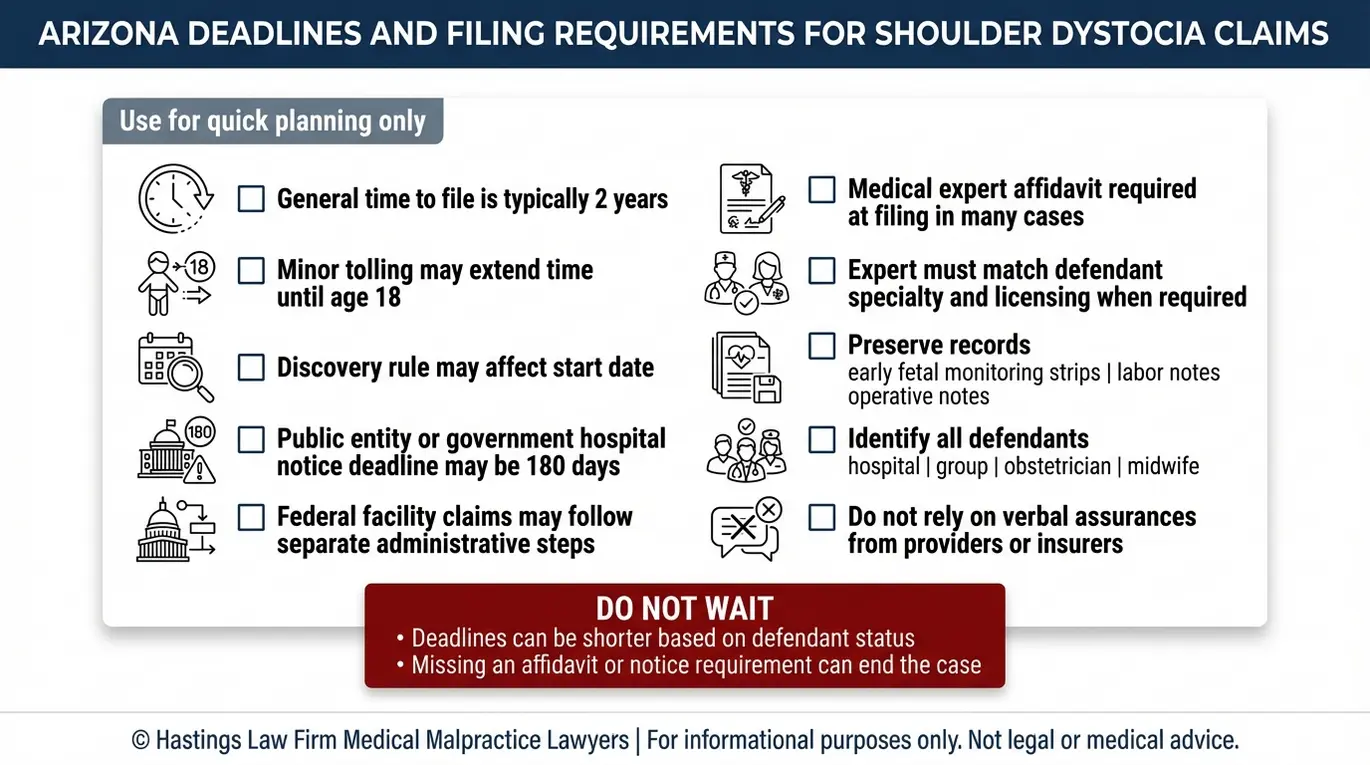
In Arizona, parents generally have two years from the date of injury to file a medical malpractice claim, but the statute of limitations for minors is tolled, meaning the clock is paused, until the child turns 18. There are important exceptions, however, and missing a filing deadline can permanently bar your family from recovering compensation.
Preliminary Expert Opinion Requirement
Before a medical malpractice lawsuit can proceed in Arizona, the plaintiff must provide a preliminary expert opinion supporting the claim. Under Arizona Revised Statutes § 12-2603, a medical expert affidavit must certify that there is a good faith basis to believe the standard of care was breached and that the breach caused the injury. This expert must hold a similar license to the provider being sued, whether an obstetrician or certified nurse midwife. For a shoulder dystocia lawyer handling your case, securing this opinion early is an essential part of the process.
Filing Deadlines and Tolling for Minors
While the general two-year statute of limitations applies to adults, Arizona law recognizes that injuries to minors may not be immediately apparent. The tolling provision allows a claim to be filed on a child’s behalf up until two years after they turn 18. Waiting years to investigate can make it harder to preserve evidence, locate witnesses, and build a strong case.
Claims Against Government Entities
If your child was delivered by government providers or at a provider employed by a public entity, shorter notice requirements may apply. In some cases, a Notice of Claim must be filed within 180 days to preserve the right to sue a government institution. These compressed timelines make early legal consultation critical.
No Caps on Damages
Arizona is one of the states that constitutionally prohibits caps on damages in personal injury and wrongful death cases. Under Article 2, Section 31 of the Arizona Constitution, the right to recover full damages cannot be limited by the legislature. This means juries are free to award compensation that reflects the true extent of your child’s injuries, both now and in the future. A Phoenix shoulder dystocia attorney can help ensure your claim accounts for the full scope of harm.
Critical Deadlines to Watch:
- Standard Statute: Two years from the injury date.
- Minors: Tolled until age 18 (filing deadline age 20).
- Public Entities: Notice of Claim often required within 180 days.
Compensation for Long-Term Care and Rehabilitation
Compensation in shoulder dystocia cases covers past and future medical expenses, physical therapy, lost earning capacity, and non-economic damages like pain and suffering. Because many of these injuries require care that extends across a child’s entire lifetime, the financial stakes in these cases are significant.
Economic Damages
Economic damages represent the measurable, documented costs associated with the birth injury. They may include:
- Past and future medical expenses: Surgeries (including nerve grafts or tendon transfers), hospitalizations, specialist appointments, and ongoing rehabilitation.
- Physical and occupational therapy: Many children with brachial plexus injuries or cerebral palsy require years of therapy to maximize function.
- Adaptive equipment and home modifications: Wheelchairs, braces, specialized car seats, and modifications to the family home.
- Lost earning capacity: If the injury limits the child’s ability to work as an adult, compensation can account for the income they would have otherwise earned.
Non-Economic Damages
Non-economic damages address the human cost of medical negligence, including physical and emotional pain and suffering. These damages address:
- Pain and suffering: The physical pain the child has endured and will continue to experience.
- Loss of enjoyment of life: Limitations on activities, milestones, and experiences that other children take for granted.
- Emotional distress: The psychological impact on both the child and the family.
Life Care Plans
As a Phoenix shoulder dystocia lawyer, we work with medical and economic experts to develop a life care plan for your child. This document projects the full cost of care from the present through the child’s expected lifespan. It accounts for inflation, evolving medical needs, and the specialized services your child may require at different stages of life. A well-constructed life care plan is one of the most important tools for ensuring a shoulder dystocia attorney can pursue compensation that ensures your family’s future financial security.
How Hastings Law Firm Investigates Shoulder Dystocia Claims
Hastings Law Firm uses a rigorous investigation process that brings together in-house nurses, board-certified patient advocates, and experienced attorneys to reconstruct the birth event and identify exactly where the standard of care was breached. Our legal team includes former defense attorneys and hospital nurses who previously worked for the systems they now challenge, providing a strategic advantage in identifying charting inconsistencies.
Medical Record Analysis
Our in-house medical team begins by conducting a detailed review of the complete medical record, including prenatal charts, labor and delivery logs, fetal monitoring strips, nursing notes, and physician orders. We look for inconsistencies, gaps in charting, and signs that records may have been altered after the fact. Electronic fetal monitoring data is particularly important because it provides an objective, time-stamped record of the baby’s condition throughout labor and delivery.
Expert Review
Once our internal team identifies potential breaches, we engage specialists from our national network of qualified medical experts. These are practicing obstetricians, certified nurse midwives, and neonatologists who can provide an objective, authoritative opinion on whether the delivery team’s actions met the standard of care. Their expert witness testimony is essential for satisfying Arizona’s preliminary expert opinion requirement and for building a case that can withstand defense challenges.
Trial-Ready Preparation from Day One
Every case we accept is prepared as if it will go before a jury. This means we are thorough in our investigation, strategic in our discovery requests, and deliberate in building a timeline that clearly demonstrates what happened and when. Because our team includes former defense attorneys, a shoulder dystocia attorney from our firm anticipates the arguments the other side will raise and address them before they gain traction.
We handle all of this on a contingency fee basis. You pay no attorney fees or costs unless we recover compensation for your family.
Why Choose a Board-Certified Specialist?
Not every attorney who handles injury cases has the medical knowledge or trial experience to take on a hospital’s legal team. Tommy Hastings is board certified in Personal Injury Trial Law by the Texas Board of Legal Specialization, which means he has achieved a high level of expertise and experience recognized by the state bar. This distinction is held by fewer than 2% of Texas attorneys. He is also a 2025 inductee into the American Board of Trial Advocates (ABOTA), an invitation-only organization for elite trial lawyers.
This level of specialization matters because medical malpractice cases require an attorney who can read medical records, understand clinical protocols, and explain complex medical concepts clearly to a jury. A Phoenix shoulder dystocia lawyer at Hastings Law Firm brings that combination of legal skill and medical fluency to every case.
Contact the Phoenix Birth Injury Attorneys at Hastings Law Firm Today for Help
If your child suffered a birth injury during a shoulder dystocia delivery, you do not have to face this alone. At Hastings Law Firm, our mission is to restore trust for families who feel let down by the healthcare system and to protect your child’s future.
Time matters in these cases. Medical records, fetal monitoring data, and other critical evidence can deteriorate or become harder to obtain as months pass. Early investigation gives us the best opportunity to build a strong case on your family’s behalf.
We invite you to contact a Phoenix shoulder dystocia lawyer at our office for a free, confidential evaluation with one of our patient advocates. There is no fee unless we recover compensation for you. Let us review what happened and explain your options so you can take the next step with clarity and confidence.
Frequently Asked Questions About Shoulder Dystocia Birth Injury in Phoenix


This content was researched and written by the Hastings Law Firm editorial team, which includes attorneys, medical professionals, and experienced researchers. Our writing is informed by internal knowledge and practical experience, and we cross-check critical details against authoritative sources cited throughout. Every piece undergoes human-led fact-checking and legal review. Because legal and medical information can change, if you spot an error, please contact us. Learn more about our content standards and review process on our editorial policy page.

Tommy Hastings, founder of Hastings Law Firm, is a board-certified personal injury trial lawyer dedicated exclusively to healthcare injury cases. Since 2001, he has represented injured patients and families in litigation against major hospital systems, pharmaceutical companies, and negligent healthcare providers nationwide. He has handled numerous high-profile cases that have drawn national media attention and resulted in multi-million dollar recoveries. He draws on that experience in his writing, helping readers understand how these cases work and what options may be available to them.
