


Dallas Medical Center Malpractice Lawyer
For patients and families hurt by care at Dallas Medical Center in Dallas, Texas, Hastings Law Firm pursues hospital malpractice claims. We bring those claims against the hospital, the employees whose care fell short, the treating physicians, or a combination of them. When medical care goes wrong, a patient and their family can be left with a serious injury, a longer recovery, or the loss of a loved one. Finding out what happened and who should be held accountable takes attorneys who understand medicine as well as they understand the courtroom. At Hastings Law Firm, medical malpractice is all we do!
Last Updated: September 28, 2026
Trial-Ready Hospital Negligence Attorneys for Dallas Medical Center Patients and Families
Hastings Law Firm’s hospital negligence lawyers bring experienced representation to Dallas Medical Center patients and families in Dallas, Texas. Our founder, Tommy Hastings, is Board Certified in Personal Injury Trial Law by the Texas Board of Legal Specialization, and he has represented injured patients since 2001. Our team also includes former malpractice defense attorneys who understand the tactics hospitals use to deny liability.
Because we recognize those tactics early, each claim is built to answer them. We work with a nationwide network of medical experts, physicians who can show what the standard of care called for and where the treatment departed from it. Our preparation treats every case as if it were going to trial, and our clients have recovered multimillion-dollar settlements and record-setting verdicts. Those results come from a firm that has been dedicated exclusively to medical malpractice since 2005.
Call us now for a free, confidential case review. We will listen to what happened, investigate your claim, and explain your options.

The Types of Dallas Medical Center Lawsuits Our Hospital Malpractice Attorneys Handle
Hastings Law Firm represents patients in Dallas Medical Center lawsuits in Dallas, Texas, that arise from emergency care, surgery and heart care. Our hospital malpractice lawyers build each case from the patient’s full chart and from physicians who practice in the field involved. We use that evidence to show where the care departed from accepted practice and what the departure has cost the patient and family.
The cases we see most often at a community hospital like Dallas Medical Center include:
- Delays in emergency care. A serious condition, including the warning signs of a stroke, can go unrecognized in the Emergency Department, or treatment or a transfer can come too late. Lost time at that stage can mean permanent disability, additional recovery time, or the loss of a loved one. Our Dallas medical misdiagnosis lawyers line up the triage notes, test results and transfer records by the minute to show when each decision was made.
- Surgical errors. A mistake can occur during general, gastrointestinal, weight loss, orthopedic, vascular or gynecologic surgery, or a complication after the operation can be missed. Repairing that harm can require another operation, a longer admission and additional recovery time. Our Dallas surgical error lawyers read the operative report alongside the anesthesia record and the nursing notes from recovery.
- Cardiac care errors. A heart problem can go unrecognized in testing, or a catheterization or pacemaker procedure, or the monitoring after it, can cause harm. Damage to the heart can permanently limit a patient’s strength and daily life. Our Dallas doctor malpractice lawyers examine the test results, the procedure notes and the monitoring records to identify who was responsible at each step.
While these are common claim types, our hospital malpractice attorneys handle any valid medical negligence case that arises at this hospital.
The Hastings Law Firm Difference
Results matter, but what truly sets us apart is how we achieve them. Every verdict, every settlement, and every Dallas courtroom victory comes from one guiding promise: To treat each client’s fight for justice as if it were our own.
This balance of skill, experience, and empathy reflects our core philosophy that justice should not only compensate the injured, but also make health care safer nationwide.

About Dallas Medical Center on Medical Parkway
Dallas Medical Center is a hospital at 7 Medical Parkway in Dallas, Texas, and its own About page describes it as located in Farmers Branch. It is a Prime Healthcare hospital with more than 100 beds. Its services include 24-hour emergency care, surgery, cardiology, neurology and critical care.
The Emergency Department is open around the clock, with triage, fast-track bays and a helipad for critical patients. The hospital also has a pulmonology and critical care service. Through its neurology service, it can give a clot-busting medicine for certain strokes and transfer other stroke patients to a higher level of care.
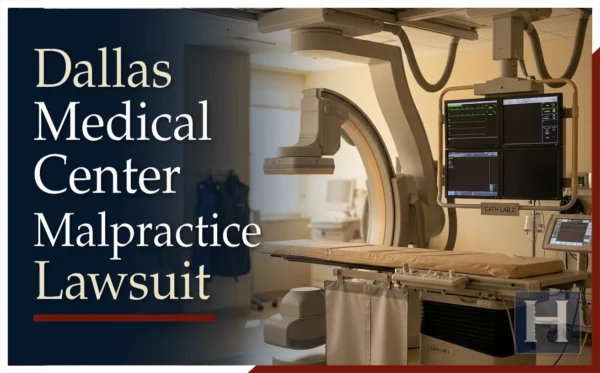
The hospital’s surgical services cover general surgery, gastrointestinal procedures, surgery for obesity including gastric bypass, and orthopedic, vascular and gynecologic surgery, as well as day surgery. Its cardiology services include a cardiac catheterization lab, pacemaker insertion, echocardiograms, EKGs and stress testing. The hospital offers cardiac rehabilitation as well.
Other listed services include imaging and radiology, the Advanced Center for Wound Healing and Hyperbarics, and outpatient rehabilitation and therapy. The hospital also names gastroenterology and colorectal surgery, pain management, and vascular services.
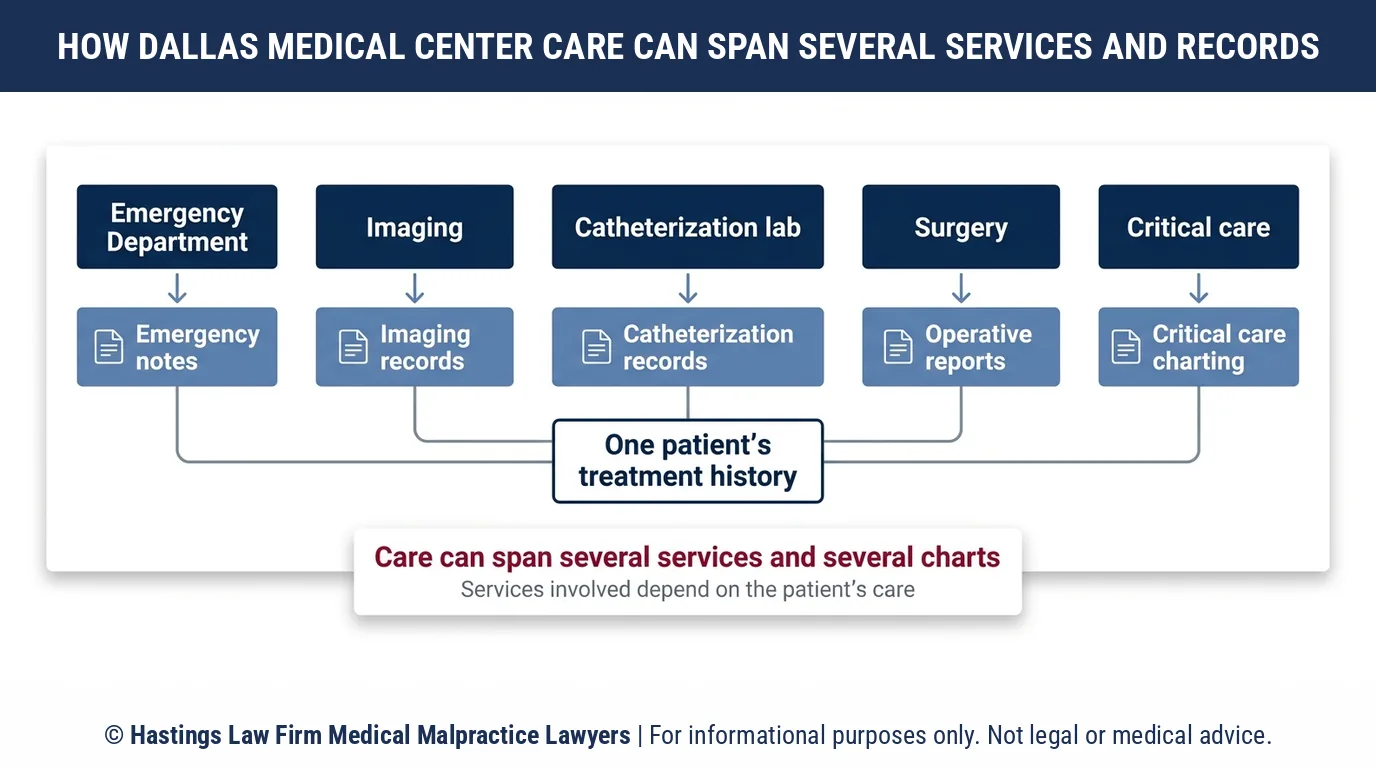
A patient can pass through several of these services in one course of care, from the Emergency Department to imaging, the catheterization lab, surgery and critical care. Each team keeps its own record, so the account of one patient’s treatment can be spread across several charts.
Our Dallas medical malpractice lawyers bring those charts together for patients hurt at hospitals across the city. Our firm also represents patients of other Dallas-area hospitals, including Medical City Dallas Hospital and Carrollton Regional Medical Center. Dallas Regional Medical Center in Mesquite is another Prime Healthcare hospital whose patients we represent.
Can You File a Lawsuit Against Dallas Medical Center, the Doctor, or Both?
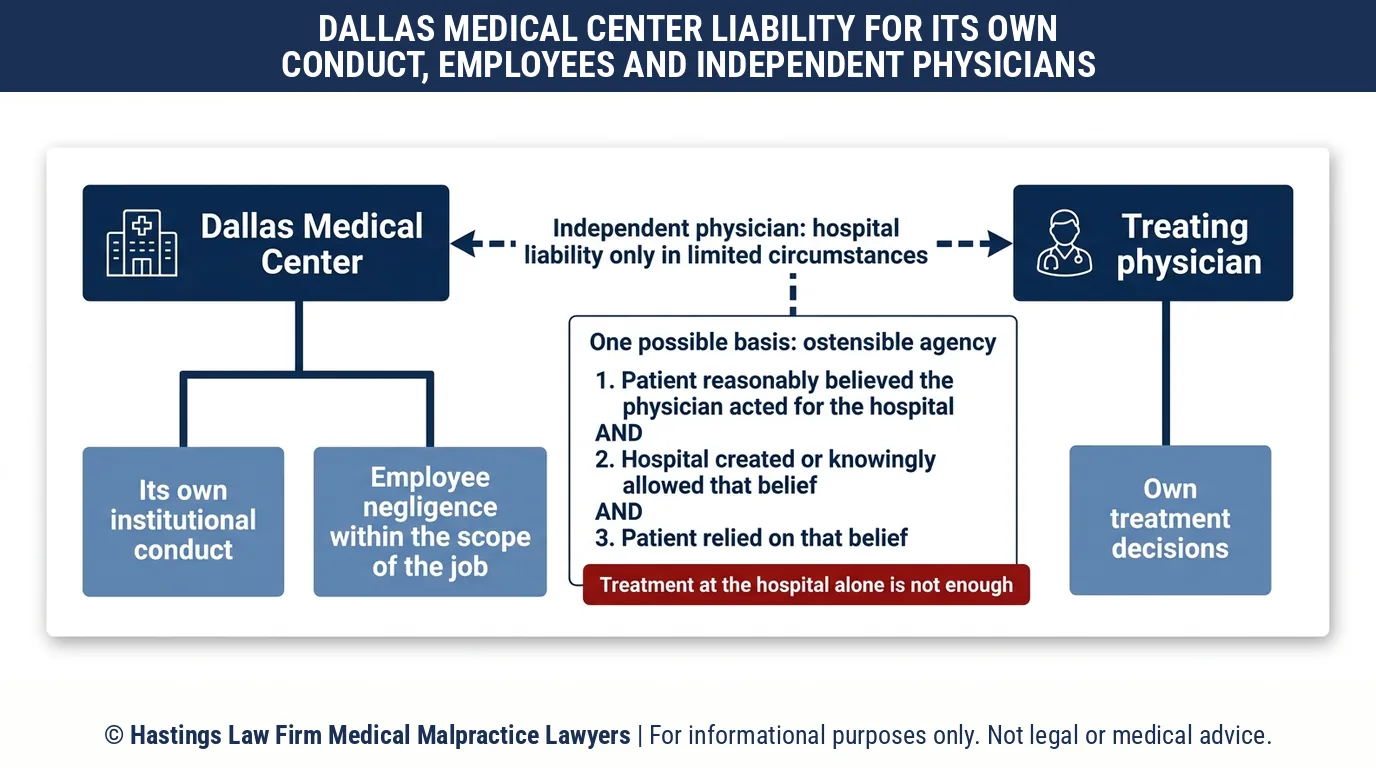
A patient can file a lawsuit against Dallas Medical Center, a treating physician, or both, depending on whose care caused the harm. The Texas Supreme Court held in Baptist Memorial Hospital System v. Sampson that a hospital is responsible for an employee’s negligence within the scope of the job. For an independent physician, the hospital answers only in limited circumstances.
Ostensible agency is one of those circumstances. The patient must have reasonably believed the physician was the hospital’s agent or employee, a belief the hospital created or knowingly allowed, and must have relied on it. Simply receiving treatment at the hospital is not enough.
The hospital also answers for its own conduct as an institution, and each physician is accountable for his or her own treatment decisions. Who employed or contracted each nurse, technician and physician is a question the medical records answer. Settling that question comes first for any lawyer to sue a hospital, because the answer determines which parties the claim names.
Texas adds an early requirement once the suit is filed. Under Section 74.351 of the Texas Civil Practice and Remedies Code, an expert report is generally due 120 days after each defendant files its original answer. Our Dallas hospital malpractice lawyers explain how a hospital, its employees and independent physicians can each carry responsibility.
Medicine carries risk, and a poor result does not always mean negligence. When a preventable error caused the harm, the providers responsible for it should be held accountable.
What Must Be Sent to Dallas Medical Center Before a Malpractice Lawsuit Can Be Filed in Texas?
Before a malpractice lawsuit is filed against Dallas Medical Center in Texas, each physician or health care provider the claim is made against must receive written notice of it. Under Section 74.051 of the Texas Civil Practice and Remedies Code, the notice goes by certified mail, return receipt requested, at least 60 days before suit. A medical authorization in the form Section 74.052 sets out must accompany the notice.
The authorization releases the patient’s protected health information to the provider. If the notice arrives without it, proceedings against that provider are put on hold until 60 days after the provider receives the authorization.
Notice given as the statute provides also affects the filing deadline. Under Section 74.051(c), it tolls the limitations period to and including 75 days after the notice is given, for all parties and potential parties. That protection depends on the notice being given correctly, so it is never a reason to wait.
For a family, the notice requirement means the records work comes first. Because notice goes to each provider separately, everyone who treated the patient, and who employed or contracted them, has to be identified before it is sent. At a hospital where care can move from the Emergency Department to the catheterization lab and surgery, that list can be long. We prepare the notice early, because the two-year deadline keeps running while the records are gathered.
How We Work With Injured Dallas Medical Center Patients and Their Families
Hastings Law Firm represents patients and families in Dallas, Texas, in malpractice claims after care at Dallas Medical Center has caused serious harm. Our lawyers take a claim from the first phone call through settlement or trial, handling the medical records, the expert opinions and all contact with the defense.
The first call reaches a member of our intake team. A relative can make that call when the patient is unable to. Describe what happened, roughly when, and who was involved, as far as you know. Our team works to make sure you are heard, and what you tell us starts our review.
Next, our team gathers the full medical records for you. Our attorneys and medical professionals study the Emergency Department notes, cardiology and catheterization records, operative reports and critical care charting to establish the order of events. When our hospital negligence lawyers accept a case, the claim is built on those records and on physicians qualified to explain them.
Once we represent you, the hospital, its insurer and its lawyers communicate with our firm instead of you. Our board-certified patient advocates stay in contact with you, putting each new development into plain language. Our hospital malpractice attorneys work toward a settlement that matches what the injury has taken from your family. If the offers fall short, we are prepared to take your case to a jury.
If You or a Loved One Were Injured at Dallas Medical Center, Speak With Our Medical Attorneys Today
Hastings Law Firm performs free case reviews of malpractice claims for patients and families in Dallas, Texas, after an injury linked to care at Dallas Medical Center. In that review, our attorneys look at what happened, which providers were involved, and whether the hospital, a physician, or both may be responsible.
The review is confidential, and it tells you whether you have a valid claim. Our team is here for you. You pay nothing unless we win, and we will explain your options.
Dallas Medical Center Malpractice FAQs


This content was researched and written by the Hastings Law Firm editorial team, which includes attorneys, medical professionals, and experienced researchers. Our writing is informed by internal knowledge and practical experience, and we cross-check critical details against authoritative sources cited throughout. Every piece undergoes human-led fact-checking and legal review. Because legal and medical information can change, if you spot an error, please contact us. Learn more about our content standards and review process on our editorial policy page.

Brady D. Williams is a nationally recognized medical malpractice attorney who has spent his career handling high-stakes litigation for injured patients and families across the country. Licensed in both Texas and California, Brady draws on experience from hundreds of resolved medical cases to break down complex legal and medical topics for the people who need that information most. His writing reflects the same attention to detail and commitment to clarity that he brings to every case he handles.
