


Texas Warfarin Mismanagement Lawyer
Warfarin mismanagement can cause severe harm when monitoring, communication, or dose adjustments break down. Because the medication works within a narrow therapeutic range, small changes in INR levels can lead to uncontrolled bleeding, stroke, or worse. Problems often arise from missed testing, overlooked drug interactions, or delayed response to warning signs of toxicity and internal bleeding. Responsibility may involve multiple providers or facilities when supervision and follow through fail. If you or a loved one were harmed or worse due to Warfarin mismanagement in Texas, contact Hastings Law Firm for a free, confidential case review.

Last Updated: October 30, 2026
Trusted Texas Medical Attorneys for Warfarin Negligence Claims
If you or someone in your family has been seriously harmed by improper management of Warfarin, a powerful anticoagulant also known as Coumadin, you likely have questions about what went wrong and who should be held accountable. Warfarin requires careful, ongoing oversight from medical providers. When that oversight breaks down, the consequences can be severe: uncontrolled bleeding, stroke, or worse.
At Hastings Law Firm, founded by board-certified trial attorney Tommy Hastings in 2005, we focus exclusively on medical malpractice. Our legal team, which includes in-house nurse consultants and former defense attorneys, understands both the medicine and the litigation behind these cases. We know how anticoagulant therapy is supposed to be managed, and we know how to identify where providers fell short.
If you believe a medical professional failed to properly monitor or adjust your Warfarin therapy, a Texas Warfarin Mismanagement Lawyer at our firm can review what happened and explain your options in a free, confidential consultation.

How Medical Professionals Fail to Monitor INR Levels Correctly
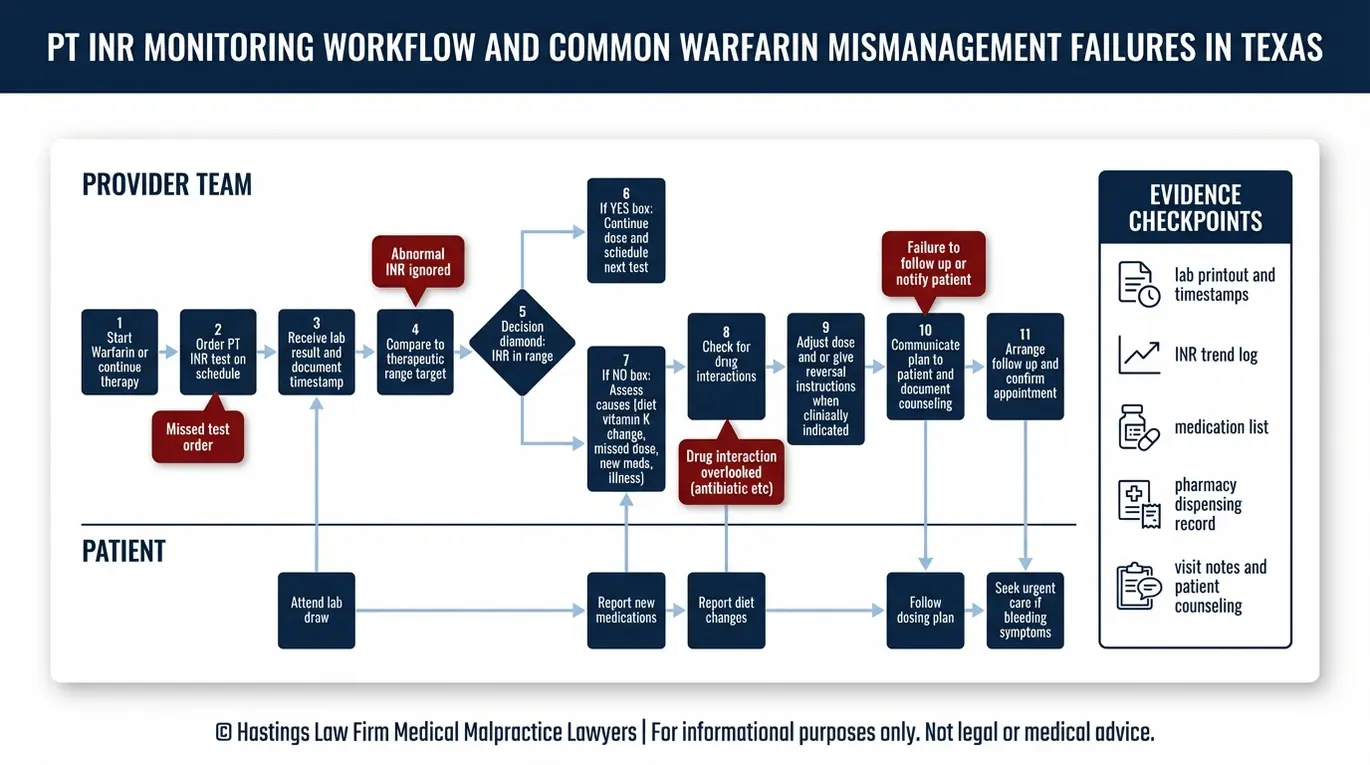
Medical professionals fail to monitor INR levels correctly when they neglect to schedule frequent blood tests, ignore dangerous fluctuations in results, or fail to adjust Warfarin dosages in response to new medications or changes in a patient’s diet and lifestyle.
Warfarin works within what clinicians call a narrow therapeutic range, the specific blood concentration window where the drug prevents dangerous clots without causing excessive bleeding. A patient’s Prothrombin Time/International Normalized Ratio (PT/INR), a lab test measuring how long it takes blood to clot, is the primary tool for tracking whether Warfarin levels stay within that window. According to the National Center for Biotechnology Information’s clinical overview of Warfarin, even small deviations outside this range can expose patients to life-threatening complications. Maintaining this balance is difficult because genetic factors, diet, and concurrent illnesses all influence how the body processes the medication, making strict vigilance mandatory.
The standard of care typically requires regular INR testing, timely communication of results, and prompt dosage adjustment when values drift. When providers fall short, the errors tend to follow recognizable patterns:
- Missed or delayed INR testing: This is a critical failure to follow up on blood draws at recommended intervals or neglecting to recheck values after a dosage change.
- Failure to communicate results: Lab values come back elevated or dangerously low, but no one contacts the patient or adjusts the prescription.
- Ignoring drug interactions: This occurs when providers prescribe antibiotics, antifungals, or pain medications that are known to increase or decrease Warfarin’s effect without recalculating the dose. As outlined in PubMed Central’s guide on managing warfarin therapy, drug interactions are one of the most common and preventable causes of INR instability.
- Overlooking dietary counseling: Not educating patients about how Vitamin K intake from foods like leafy greens can alter anticoagulant effectiveness.
As a Texas Coumadin malpractice lawyer, we examine the full record of INR values, prescription histories, and provider communications to determine where the breakdown occurred.
The Role of Physician Assistants in Supervision Breakdown
In many clinical settings, physician assistants (PAs) or nurse practitioners manage day-to-day anticoagulant therapy such as Warfarin. These medical professionals often handle routine monitoring. This is not inherently negligent, but it becomes a professional liability concern when these providers handle high-risk patients without adequate oversight from the supervising physician.
Drug interactions, meaning the way Warfarin’s blood-thinning effect can be dangerously amplified or reduced by other medications, require careful evaluation that may exceed what unsupervised physician assistants are equipped to catch. When a supervising physician fails to review prescribing decisions or co-sign critical lab orders, the responsibility for any resulting harm can extend to both the provider and the practice. Effective risk management protocols demand that attending physicians remain actively involved in these complex cases.
Identifying Signs of Dangerous Warfarin Toxicity and Internal Bleeding
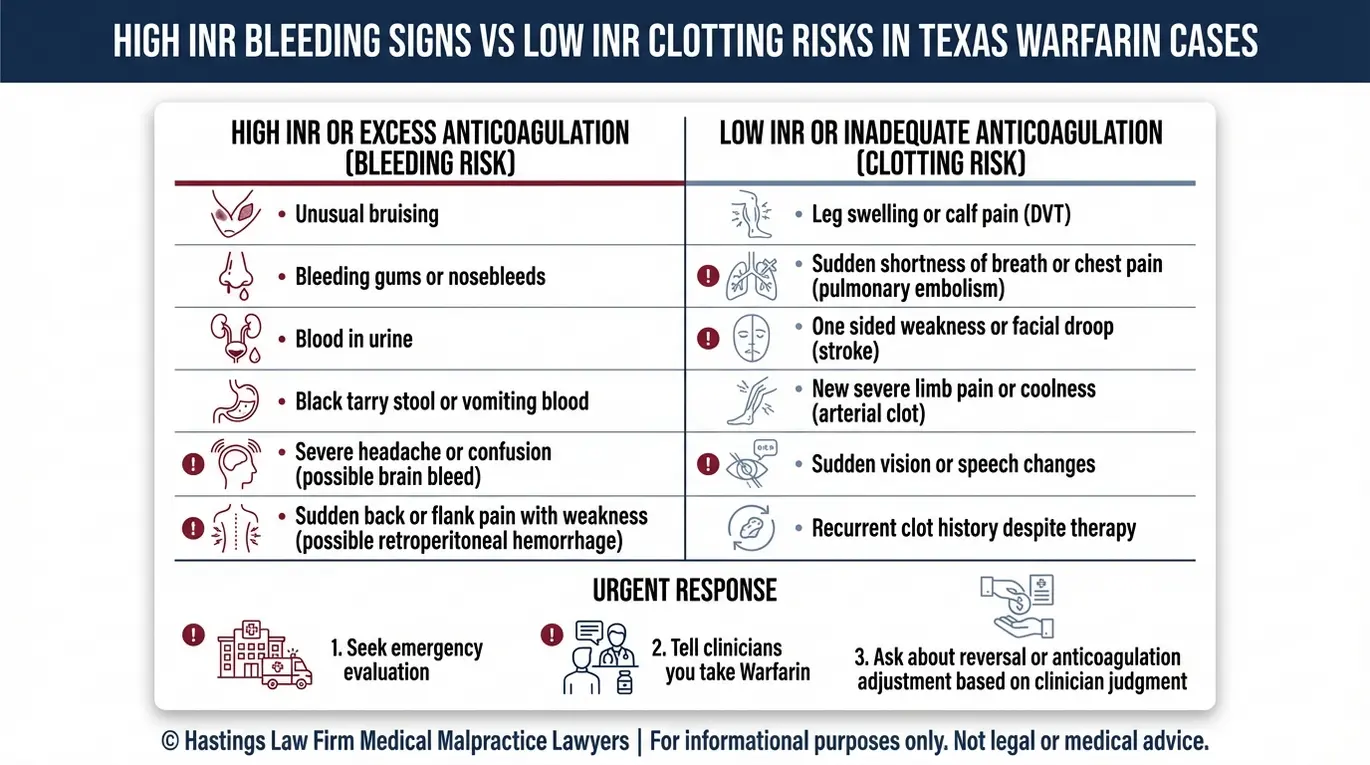
Signs of Warfarin toxicity, a state where the INR climbs well above the therapeutic range causing over-anticoagulation, include unusual bruising, bleeding gums, blood in urine or stool, severe headaches that may indicate intracranial hemorrhage, or sudden weakness. All of these require immediate medical intervention to reverse the anticoagulation.
When the INR is too high, patients face hemorrhagic complications. When it drops too low, the blood faces a dangerous clotting risk.
| High INR (Over-Anticoagulation) | Low INR (Under-Anticoagulation) |
|---|---|
| Gastrointestinal bleeding | Deep vein thrombosis (DVT) |
| Intracranial hemorrhage | Pulmonary embolism |
| Prolonged bleeding from minor cuts | Ischemic stroke |
| Blood in urine or stool | Organ damage from clot formation |
| Excessive bruising | Recurrent blood clots |
According to research published in Frontiers in Pharmacology on bleeding risks in oral anticoagulant users, hemorrhagic adverse drug events remain one of the leading causes of emergency hospitalizations related to anticoagulant therapy.
When toxicity is identified, timely administration of Vitamin K (phytonadione), a reversal agent that restores the blood’s clotting ability, can be lifesaving. The EMCrit Project’s anticoagulant reversal protocol details how plasma-based products and targeted reversal agents are used in emergency settings. A provider’s failure to act quickly can turn a reversible situation into a permanent injury. Our legal team includes former hospital nurses and defense attorneys who understand these protocols and where they often break down.
If you suspect that delayed treatment worsened your condition, a Warfarin injury attorney in Texas can help evaluate whether the standard of care was met.
Recognition of Retroperitoneal Hemorrhage Risks
One particularly dangerous form of internal bleeding is retroperitoneal hemorrhage, bleeding into the space behind the abdominal cavity that is not visible externally. Because the symptoms, such as flank pain, dropping blood pressure, and leg weakness, can mimic other conditions, this type of bleed is frequently missed or diagnosed late.
If not treated promptly, retroperitoneal hemorrhage can compress the femoral nerve, leading to femoral nerve neuropathy, a condition that causes permanent numbness, weakness, or loss of function in the leg. We review imaging timelines and clinical notes to determine whether providers should have identified the bleeding sooner.
The Hastings Law Firm Difference
Results matter, but what truly sets us apart is how we achieve them. Every verdict, every settlement, and every Texas courtroom victory comes from one guiding promise: To treat each client’s fight for justice as if it were our own.
This balance of skill, experience, and empathy reflects our core philosophy that justice should not only compensate the injured, but also make health care safer nationwide.

Establishing Liability and Damages in Anticoagulant Cases
Establishing liability in anticoagulant cases requires proving that the healthcare provider deviated from the accepted medical standard of care for dosing or monitoring and that this deviation directly caused the patient’s hemorrhage or thrombotic injury.
Under Texas Civil Practice and Remedies Code Chapter 74, a medical malpractice claim must be supported by a qualified expert report identifying the specific breach and its connection to the harm. This report is a sworn document from a medical peer that explains how the doctor failed. Our team works with hematologists, pharmacologists, and internal medicine specialists who can clearly articulate where the standard was breached and why the patient was injured as a result, ensuring every element of the claim is substantiated.
Liability in these cases does not always rest with a single provider. A physician who failed to order timely INR testing may share responsibility with a pharmacy that dispensed a contraindicated medication, or a nursing home that failed to administer the prescribed dose. We investigate every link in the chain to identify all responsible parties.
As medical negligence lawyers for blood thinner lawsuits, we pursue the full compensation and scope of damages our clients are entitled to recover. That may include past and future medical expenses, lost income, pain and suffering, diminished quality of life, and in the most tragic cases, wrongful death claims on behalf of surviving family members.
Our approach from the first day of investigation is to build every case as though it will go before a jury. This level of preparation puts our clients in the strongest possible position, whether the case resolves through settlement or at trial.

Contact the Texas Healthcare Malpractice Attorneys at Hastings Law Firm Today for Help
Warfarin errors can lead to life-altering injuries, but you do not have to face the healthcare system alone. At Hastings Law Firm, our team of attorneys, nurse consultants, and medical experts work together to uncover exactly what happened and hold the responsible parties accountable.
Tommy Hastings is board-certified in Personal Injury Trial Law, a distinction held by less than 2% of Texas attorneys. This level of expertise ensures our firm provides the focused advocacy required for complex medical malpractice litigation.
Our consultations are free and confidential, and you pay no fees unless we recover compensation on your behalf. Whether you are dealing with the aftermath of a bleeding event, a stroke, or the loss of a loved one, we are here to help you find answers and understand your legal options.
Call Hastings Law Firm today or contact us online to schedule your risk-free case evaluation.
Frequently Asked Questions About Warfarin Mismanagement in Texas


This content was researched and written by the Hastings Law Firm editorial team, which includes attorneys, medical professionals, and experienced researchers. Our writing is informed by internal knowledge and practical experience, and we cross-check critical details against authoritative sources cited throughout. Every piece undergoes human-led fact-checking and legal review. Because legal and medical information can change, if you spot an error, please contact us. Learn more about our content standards and review process on our editorial policy page.

Brady D. Williams is a nationally recognized medical malpractice attorney who has spent his career handling high-stakes litigation for injured patients and families across the country. Licensed in both Texas and California, Brady draws on experience from hundreds of resolved medical cases to break down complex legal and medical topics for the people who need that information most. His writing reflects the same attention to detail and commitment to clarity that he brings to every case he handles.
