


Houston Postoperative Malpractice Lawyer
Postoperative care is a critical phase of surgery, and preventable mistakes during recovery can turn a routine procedure into lasting harm. Problems often arise when warning signs are missed, monitoring is inadequate, or treatment is delayed in the recovery room or in the days after surgery. Negligence can also involve infection control failures or unsafe discharge decisions that leave a patient medically unstable at home, leading to life threatening consequences. If you or a loved one were harmed or worse due to postoperative malpractice in Houston, Texas, contact Hastings Law Firm for a free, confidential case review.
Last Updated: July 27, 2026
Trusted Houston Medical Attorneys for Surgical Recovery Negligence Claims
When a surgery goes as planned but recovery does not, it can leave you searching for answers. Postoperative care, the medical treatment and monitoring you receive after a surgical procedure, is one of the most important phases of any operation. Errors that happen in the recovery room, the dedicated hospital space where patients are monitored immediately after surgery, or during the days following surgery can cause serious, lasting harm.
If you or a loved one suffered a preventable injury after surgery, a Houston Postoperative Malpractice Lawyer at Hastings Law Firm can help. Led by Tommy Hastings, who is Board Certified in Personal Injury Trial Law, our firm focuses exclusively on medical malpractice litigation. Our team includes former defense attorneys and nurse consultants who provide insider insight into hospital care. Contact us for a free, confidential case evaluation to review what happened and learn about your options.

Common Types of Postoperative Complications Caused by Negligence
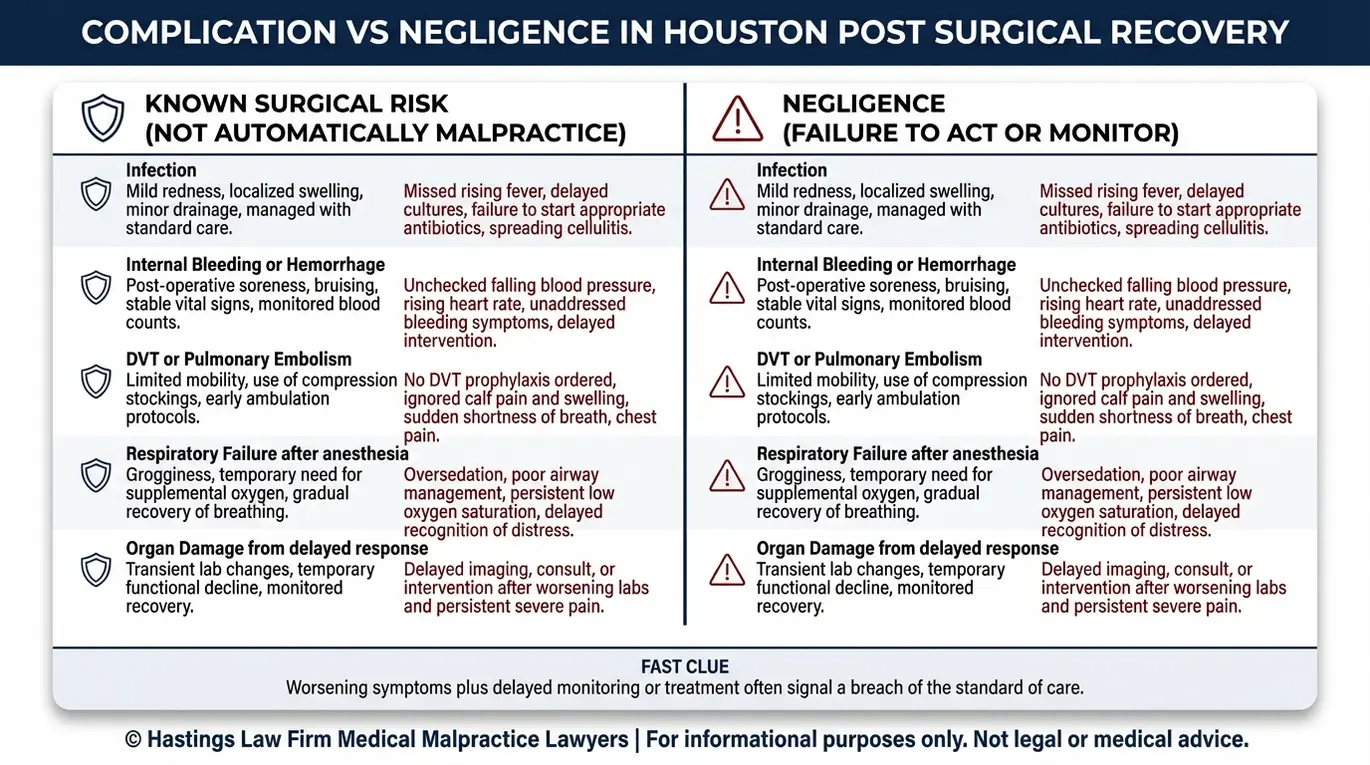
Postoperative malpractice occurs when medical staff fail to follow the standard of care during recovery, resulting in preventable harm such as untreated infections, undetected internal bleeding, or medication errors. Not every complication after surgery is the result of negligence. Some complications are known risks that can occur even when doctors and nurses do everything right. The legal question is not whether something went wrong, but whether the medical team failed to act appropriately when it did.
The distinction matters. A patient who develops a blood clot after surgery has experienced a known risk. A patient whose medical team ignores the signs of that blood clot for hours, allowing it to become life-threatening, may have experienced negligence. The difference lies in the response: did the care team recognize the problem and act, or did they miss it, overlook it, or delay treatment?
Postoperative malpractice attorneys evaluate these failures across a range of conditions that should have been caught and treated. Common postoperative complications linked to negligence include:
- Hemorrhage or internal bleeding that goes undetected because staff fail to monitor drainage, blood pressure, or hemoglobin levels after surgery
- Deep vein thrombosis (DVT), a blood clot that forms in a deep vein, often in the leg, when preventive measures like blood thinners or compression devices are not used
- Pulmonary embolism (PE), a potentially fatal condition where a blood clot travels to the lungs, frequently resulting from an untreated DVT
- Respiratory failure resulting from unmanaged airway complications or over-sedation
- Organ damage from surgical errors or delayed intervention when warning signs appear during recovery
- Surgical site infections that progress unchecked due to poor wound care or failure to follow sterilization protocols
Each of these conditions can cause permanent injury or death when the care team does not respond in time. If you suspect that inaction or delay made a post-surgical complication worse, a lawyer for post-surgical errors can review your medical records and determine whether the standard of care was met.
Liability for Errors in the Post Anesthesia Care Unit (PACU)
The post-anesthesia care unit (PACU), commonly known as the recovery room, is a critical monitoring zone where nurses must track vital signs every few minutes; failure to detect respiratory distress or adverse anesthesia reactions in this window constitutes actionable malpractice.
Many medical professionals call the PACU the most dangerous room in the hospital for good reason. Patients arriving from surgery are still under the effects of anesthesia, making them vulnerable to sudden changes in breathing, heart rate, blood pressure, and potential anesthesia errors. Medical standards require nurses to assess and document vital signs at frequent intervals during this period.
Deviating from PACU protocols can lead to severe consequences. Specific failures we examine in these cases include:
- Ignoring or silencing monitor alarms that signal drops in oxygen saturation or blood pressure
- Gaps in charting where vital signs were not recorded at required intervals
- Failure to recognize signs of respiratory failure or respiratory depression, a dangerous slowing or stopping of breathing often caused by residual anesthesia or opioid pain medication
- Delayed response to airway obstruction or over-sedation
- Inadequate nurse-to-patient ratios that leave recovering patients without proper observation
Research published in the journal *Biomolecules and Biomedicine* used the PRODIGY score to predict respiratory depression in the post-anesthesia care unit, confirming that certain patient risk factors make close monitoring even more necessary. When staff fail to account for these risks, preventable injuries occur.
Our team, which includes experienced nurses who provide insider knowledge of hospital settings, reviews electronic medical records to build a minute-by-minute timeline of what happened in the PACU. If you believe a monitoring failure during recovery harmed you or a loved one, a post-surgery malpractice lawyer at our firm can evaluate your case.
The Hastings Law Firm Difference
Results matter, but what truly sets us apart is how we achieve them. Every verdict, every settlement, and every Houston courtroom victory comes from one guiding promise: To treat each client’s fight for justice as if it were our own.
This balance of skill, experience, and empathy reflects our core philosophy that justice should not only compensate the injured, but also make health care safer nationwide.

Infections and Sepsis Due to Hospital Negligence
Hospital-acquired infections become malpractice when staff fail to follow sterilization protocols or ignore early signs of sepsis, allowing a treatable condition to progress into life-threatening organ failure.
A surgical site infection (SSI), an infection that develops at the location where a surgical incision was made, can sometimes be traced back to contaminated instruments, poor wound care, or non-sterile operating conditions. When caught early, most infections respond well to antibiotics. The problem arises when staff overlook warning signs, turning a treatable issue into a case of surgical neglect.
Sepsis, the body’s extreme and dangerous response to an infection, follows a predictable progression. It often begins with fever, elevated white blood cell counts, rapid heart rate, or confusion. Left untreated, sepsis can advance to septic shock and multi-organ failure. The National Institutes of Health patient education series on understanding sepsis describes how early recognition and treatment are necessary to survival. When hospital staff fail to use proper sepsis recognition, a treatable infection can become fatal.
Data from the Centers for Disease Control and Prevention on healthcare-associated infections shows that these events remain a persistent patient safety concern across U.S. hospitals. A postoperative negligence attorney can investigate whether the hospital followed proper infection control procedures and whether the care team responded appropriately to early warning signs.
Legal Recourse for Premature Hospital Discharge
If a hospital discharges a patient who is medically unstable to free up a bed, and that patient suffers a health crisis at home, the hospital and discharging physician may be liable for abandonment and negligence. Premature discharge, the release of a patient before they are medically ready to leave, is a serious and often overlooked form of medical negligence.
Discharge decisions should be based on clinical stability, not bed availability. Yet patients are sometimes sent home before their condition has been properly assessed. A Houston medical malpractice lawyer can investigate whether a discharge was medically appropriate by reviewing the records and consulting with qualified experts.
Red flags that may indicate a premature or unsafe discharge include:
- Unstable vital signs at the time of release, such as elevated heart rate, low blood pressure, or fever
- Inability to eat, drink, or urinate independently
- Uncontrolled pain or active signs of infection
- No written discharge instructions or return precautions, which are specific guidelines telling a patient what symptoms should prompt an immediate return to the emergency room
- No follow-up appointment scheduled before the patient left the hospital
- Readmission to the hospital within 24 to 48 hours for the same condition
Medicare’s Discharge Planning Checklist outlines what patients and families should expect before leaving the hospital. If your loved one was discharged without these basic safeguards and suffered serious harm or wrongful death as a result, that may support a breach of duty claim.

Proving Negligence and Recovering Damages in Texas
Texas law requires a Chapter 74 expert report to validate a claim, and patients can recover economic damages for medical bills and lost wages, as well as non-economic damages for pain and suffering.
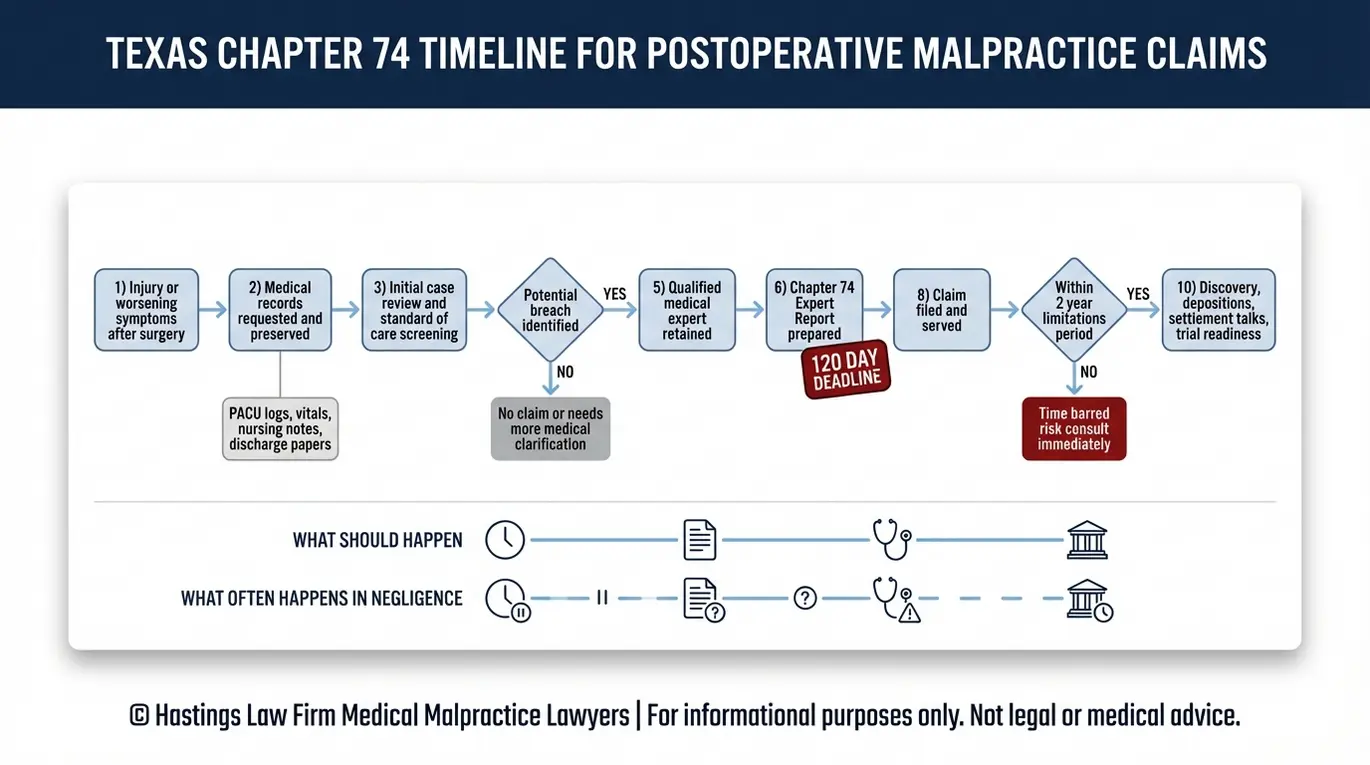
Filing a postoperative malpractice claim in Texas involves specific legal requirements that set it apart from other personal injury cases. The Texas Civil Practice and Remedies Code, Chapter 74, governs this process and imposes strict procedural steps.
The Chapter 74 Expert Report
Within 120 days after the date each defendant’s original answer is filed, your attorney must provide a written report from a qualified expert witness. This report must identify the standard of care, explain how it was breached, and establish how that breach caused your injury. If the report is not filed on time or does not meet the legal standard, the court can dismiss the case. Working with a post-operative malpractice lawyer who has in-house medical staff is important for this reason. At Hastings Law Firm, our nurse consultants and national network of medical experts help us build strong expert reports from the start.
Damages You Can Recover
Texas law allows patients to seek both economic and non-economic compensation. Here is how those categories break down:
| Damage Type | What It Covers |
|---|---|
| Past medical expenses | Hospital bills, surgeries, medications, and rehabilitation already incurred |
| Future medical expenses | Ongoing care, therapy, or procedures you will need going forward |
| Lost earning capacity | Wages lost and reduced ability to earn income in the future |
| Physical pain and suffering | Compensation for the physical pain caused by the injury |
| Mental anguish | Emotional distress, anxiety, and reduced quality of life |
Texas does enforce a damages cap on non-economic damages in medical malpractice cases. For claims against a single provider, the cap is $250,000, and for claims involving a hospital, there is a separate $250,000 cap.
Statute of Limitations
Under Texas Civil Practice and Remedies Code § 74.251, the statute of limitations for Texas medical malpractice claims is generally two years from the date of the occurrence or the last date of the relevant course of treatment. Limited exceptions may apply, but missing this deadline almost always means losing your right to file. If you are considering suing for surgical recovery errors, consulting an attorney early protects your ability to pursue a claim.
Who Can Be Held Liable for Post Surgical Errors
Liability often extends beyond the surgeon to include the hospital itself for understaffing, recovery room nurses for monitoring failures, and anesthesiologists for medication errors. Identifying every responsible party is a key part of building a strong case for surgical neglect.
When a surgeon is an independent contractor rather than a hospital employee, the hospital may argue it is not responsible for that surgeon’s actions. But the hospital can still be held liable for the negligence of its own nursing staff, for systemic failures like inadequate staffing ratios, or for unsafe policies that contributed to the injury. A Houston surgical error attorney evaluates vicarious liability claims involving nursing negligence, hospital administration failures, staffing records, and institutional protocols to determine who is accountable for the patient’s injuries.
Our team includes former defense attorneys who previously represented hospitals and medical systems. That experience gives us direct insight into how hospitals structure their liability protections and how to identify every party that played a role in your care.
Contact the Houston Surgical Error Attorneys at Hastings Law Firm Today for Help
Postoperative negligence can change the course of your life, and you should not have to face the hospital’s legal team on your own. If you or a loved one suffered a serious injury after surgery because of inadequate monitoring, an untreated infection, or a premature discharge, we are ready to listen.
Hastings Law Firm focuses exclusively on medical malpractice litigation. Our medical-legal team brings together trial attorneys, in-house nurse consultants, and former defense attorneys to hold hospitals and providers accountable. We prepare every case as if it is going to trial, because that level of preparation is what it takes to win.
We charge no fees unless we recover compensation for you under a contingency fee agreement. Contact us today for a free, confidential case evaluation. Let us help you find the answers you deserve.
Frequently Asked Questions About Postoperative Malpractice in Houston


This content was researched and written by the Hastings Law Firm editorial team, which includes attorneys, medical professionals, and experienced researchers. Our writing is informed by internal knowledge and practical experience, and we cross-check critical details against authoritative sources cited throughout. Every piece undergoes human-led fact-checking and legal review. Because legal and medical information can change, if you spot an error, please contact us. Learn more about our content standards and review process on our editorial policy page.

Tommy Hastings, founder of Hastings Law Firm, is a board-certified personal injury trial lawyer dedicated exclusively to healthcare injury cases. Since 2001, he has represented injured patients and families in litigation against major hospital systems, pharmaceutical companies, and negligent healthcare providers nationwide. He has handled numerous high-profile cases that have drawn national media attention and resulted in multi-million dollar recoveries. He draws on that experience in his writing, helping readers understand how these cases work and what options may be available to them.
