


Austin Pediatric Malpractice Lawyer
Pediatric medical malpractice can leave families facing sudden medical crises, lasting disability, and overwhelming uncertainty about what went wrong. Children have unique clinical needs, and errors in diagnosis, medication dosing, monitoring, or labor and delivery care can cause severe and permanent harm. Informed consent can also be complicated when parents must make urgent decisions based on what medical staff communicate. Understanding how pediatric standards of care differ from adult care can clarify whether an injury was preventable. If your child suffered harm due to pediatric medical malpractice in Austin, Texas, contact Hastings Law Firm for a free, confidential case review.
Last Updated: September 19, 2026
Trusted Austin Medical Attorneys for Pediatric Negligence Claims
When your child has been hurt by the very professionals you trusted to care for them, the confusion and fear can feel overwhelming. You may not know exactly what went wrong, and you may not be sure whether what happened was preventable. Those feelings are valid, and you do not have to sort through this alone.
As an Austin pediatric malpractice lawyer, Hastings Law Firm focuses exclusively on medical malpractice. Our team includes attorneys, in-house nurse consultants, and former defense lawyers who understand how hospitals and their insurers respond to these claims. We are here to help your family find answers and protect your child’s future.
If your child was harmed during medical treatment, we can review what happened and explain your options. Contact us for a free, confidential case evaluation.

Understanding Pediatric Medical Malpractice in Austin Hospitals
Pediatric medical malpractice occurs when a doctor, nurse, or hospital staff member deviates from the accepted pediatric standard of care, resulting in injury or harm to a child. Unlike adult patients, children present unique clinical challenges that require specialized training and heightened attention. Issues regarding informed consent also become complex, as parents must make critical decisions on behalf of their minors based on the information provided by medical staff.
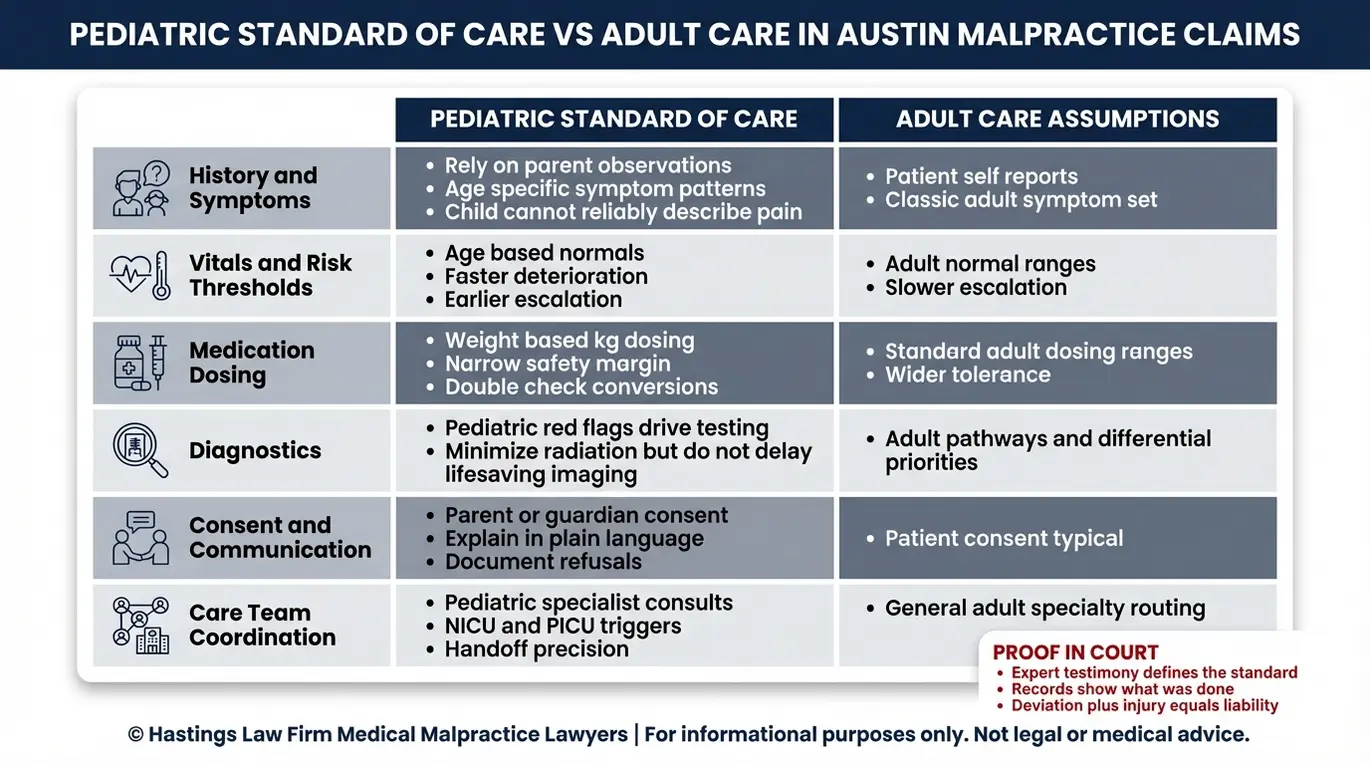
The pediatric standard of care refers to the level of treatment a reasonably competent healthcare provider with pediatric training would deliver under similar circumstances. This standard differs from adult care in several important ways. Children’s bodies metabolize drugs differently, their symptoms can present atypically, and infants and toddlers cannot describe what they are feeling. A provider who treats a child the same way they would treat an adult may be falling below the expected standard.
Proving that a provider deviated from this standard requires qualified expert testimony. Under Texas Civil Practice and Remedies Code, Chapter 74, a claimant must produce an expert report from a qualified health care provider with relevant pediatric experience. This expert identifies what the provider should have done, what they actually did, and how that gap caused injury.
A pediatric malpractice case typically involves these key elements:
- A duty of care between the provider and the child patient
- A breach of that duty, meaning the provider failed to meet the pediatric standard of care
- Causation, linking the breach directly to the child’s injury
- Damages, including medical costs, pain, and long-term consequences
Because children cannot advocate for themselves in a medical setting, the responsibility falls on providers to ask the right questions, order the right tests, and act on clinical signs quickly. When they fail to do so, Austin pediatric malpractice lawyers can help families determine whether medical negligence played a role. Consulting a qualified pediatric malpractice attorney is often the first step toward accountability.
Common Medical Errors Affecting Children and Infants
Common pediatric errors include birth injuries, medication dosage mistakes, surgical errors, and failure to diagnose critical conditions like meningitis or sepsis. These errors can happen across every type of medical setting, from emergency rooms to the neonatal intensive care unit, often referred to as the NICU, which is the specialized hospital unit that provides around-the-clock monitoring and treatment for critically ill or premature newborns. Parents often search for a birth injury attorney when they suspect these systemic failures contributed to their child’s condition.
Research published through PSNet by the Agency for Healthcare Research and Quality continues to document the scope of preventable harm in hospital settings. While that data focuses on adult populations, many of the same systemic failures, including communication breakdowns, staffing shortages, and protocol lapses, affect pediatric patients as well.
The types of medical errors we see most often in pediatric cases include:
- Surgical errors: Wrong-site procedures or a specific surgical mistake involving anesthesia error in small, developing bodies where the margin for safety is extremely narrow.
- NICU negligence: Failure to properly monitor oxygen levels, heart rate, or temperature, or the improper use of ventilators and IV equipment on fragile neonates. Premature infants are incredibly vulnerable. Even a momentary lapse in monitoring oxygen saturation can lead to retinopathy of prematurity or brain injury.
- Emergency room triage mistakes: Misclassifying a child’s condition as non-urgent, leading to dangerous delays in treatment for conditions that can deteriorate rapidly. Pediatric symptoms such as fever or lethargy can be subtle, yet they may indicate life-threatening infections that require immediate intervention.
- Medication errors: Incorrect weight-based dosing, including pounds-to-kilograms (lb-to-kg) conversion errors, where a provider miscalculates a child’s weight in the wrong unit and administers a dangerously incorrect dose.
- Monitoring failures: Discharging a child too soon or failing to observe post-operative warning signs.
Children are not small adults. Their physiology demands a different clinical approach. When a provider fails to account for those differences, the consequences can be severe and lasting. A pediatric malpractice lawyer in Austin can help you understand whether a preventable error caused your child’s injury, and an Austin pediatric malpractice lawyer at Hastings Law Firm can explain what steps to take next.
The Hastings Law Firm Difference
Results matter, but what truly sets us apart is how we achieve them. Every verdict, every settlement, and every Austin courtroom victory comes from one guiding promise: To treat each client’s fight for justice as if it were our own.
This balance of skill, experience, and empathy reflects our core philosophy that justice should not only compensate the injured, but also make health care safer nationwide.

Birth Injuries and Labor and Delivery Negligence
Birth injuries such as Cerebral Palsy or Erb’s Palsy often result from preventable medical negligence during labor, including failure to perform a timely C-section or improper use of delivery tools. These are not the same as birth defects. A birth defect is typically a genetic or developmental condition that occurs naturally, while a birth injury is birth trauma caused during labor or delivery that may have been avoidable with proper medical care.
One of the most serious birth injuries involves a brachial plexus injury, damaging the network of nerves running from the spine through the neck, shoulder, and arm. When excessive force is applied during delivery, these nerves can be stretched or torn, leading to Erb’s palsy and permanent loss of arm function.
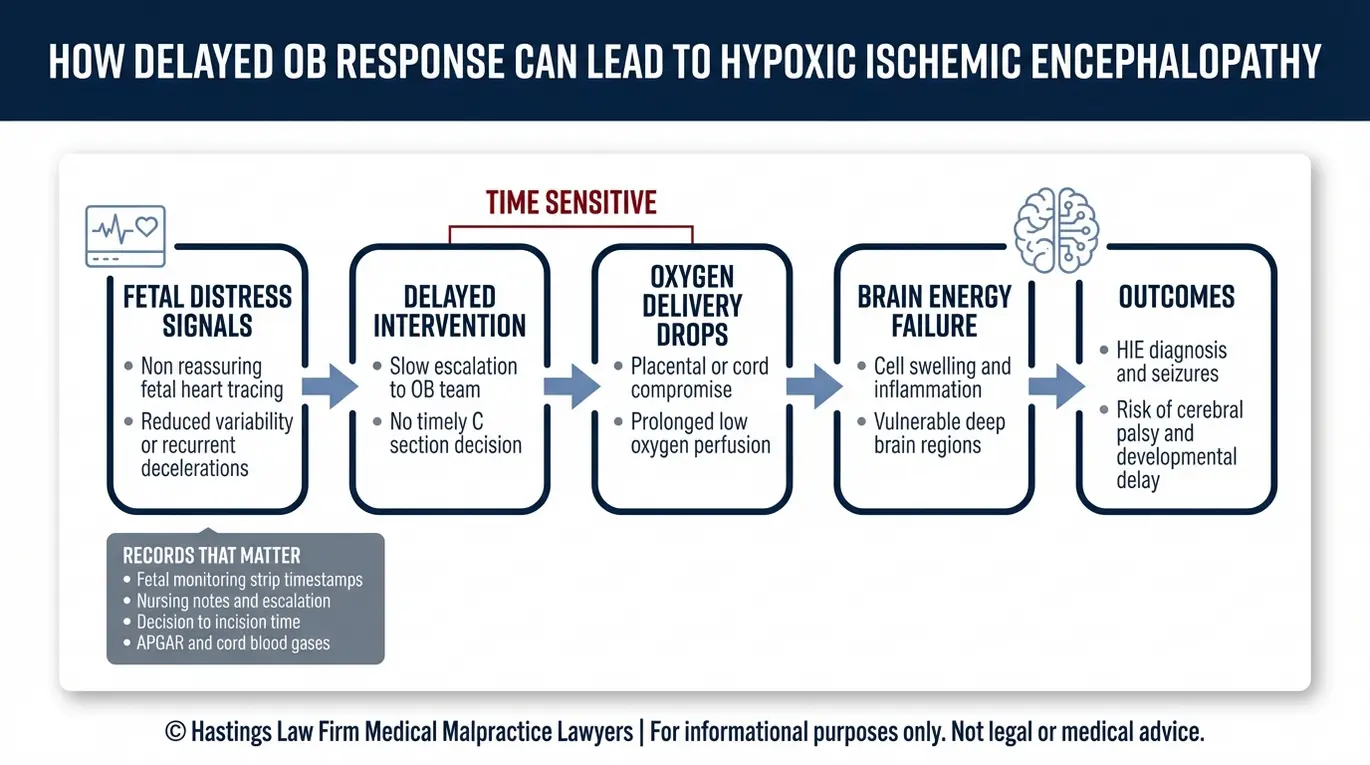
Oxygen deprivation during delivery is another major concern. When a baby’s brain is deprived of adequate oxygen, the result can be lasting neurological damage. An Austin pediatric malpractice lawyer can investigate the delivery timeline, fetal monitoring strips, and clinical decisions to determine whether the care team acted within the standard of care.
Mechanisms of Hypoxic Ischemic Encephalopathy
Hypoxic-ischemic encephalopathy, or HIE, is a specific type of brain injury caused by a combination of hypoxia (reduced oxygen reaching the brain) and ischemia (restricted blood flow to the brain). Hypoxic-ischemic encephalopathy is a diagnosis often explored when a newborn shows signs of neurological distress after a difficult delivery. During labor, conditions such as umbilical cord compression, placental abruption, or prolonged delivery can reduce the oxygen supply to the baby.
When intervention is delayed, even by minutes, the consequences can be irreversible. HIE can lead to cerebral palsy, seizure disorders, cognitive disabilities, and developmental delays. A cerebral palsy lawyer can help families facing this diagnosis. The financial burden of lifelong care for a child with these injuries can reach into the millions, covering therapies, adaptive equipment, and ongoing medical treatment. A lawyer for pediatric malpractice can work with medical and economic experts to build a clear picture of what happened and what your child will need going forward. An experienced birth injury attorney can help ensure no cost is overlooked.
Medication Errors and Dosage Miscalculations
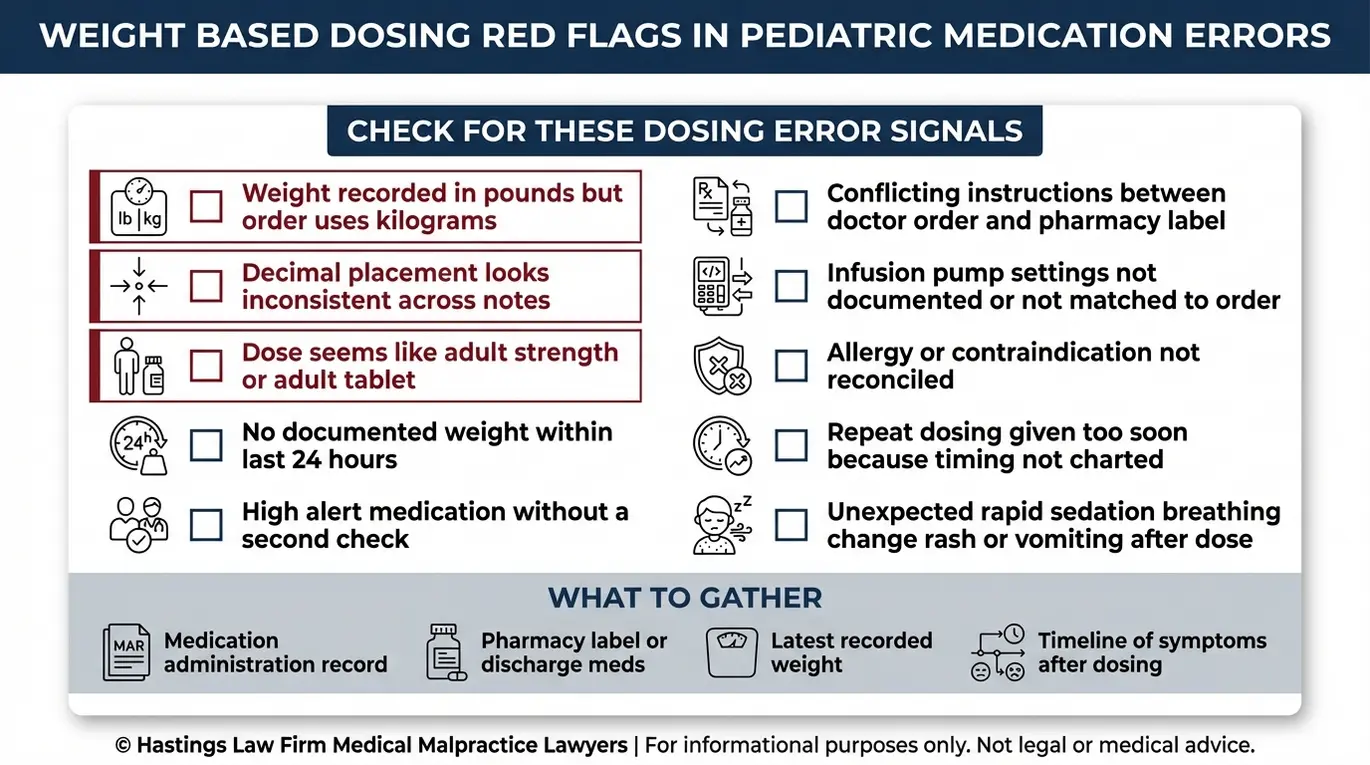
Pediatric medication errors frequently involve incorrect weight-based dosage calculations, leading to overdoses or toxicity that a child’s developing organs cannot metabolize. Weight-based dosing (mg/kg), the practice of calculating a drug dose according to the child’s weight in kilograms, is standard in pediatric medicine because children’s metabolisms, organ function, and body composition differ dramatically from adults.
Even a small miscalculation can be dangerous. The ISMP’s Guidelines for Standard Order Sets outline protocols designed to reduce these risks, yet breakdowns still occur at the prescribing, dispensing, and administration stages. Failures in medication management can also complicate conditions like sepsis.
Common risk factors for pediatric medication errors include:
- Failure to convert a child’s weight from pounds to kilograms before calculating the dose
- Misplaced decimal points leading to a dosage calculation error or tenfold overdose
- Administering adult-formulation drugs not approved for pediatric use
- Communication failures between the prescribing physician, pharmacy, and nursing staff
- Lack of double-check protocols during high-risk drug administration
In some cases, specific specialists such as heart surgeons may be involved, leading to claims of pediatric cardiologist negligence. Because children lack fully developed liver and kidney function, their bodies cannot clear medication the way an adult’s can. Toxic doses can lead to organ failure, cardiac arrest, or death. An Austin pediatric malpractice lawyer can review medication administration records, pharmacy logs, and nursing notes to identify exactly where the breakdown occurred. Hastings Law Firm’s in-house medical staff, including nurse practitioners, can analyze these records. As your pediatric malpractice counsel, we help determine whether medical negligence contributed to your child’s harm.
Misdiagnosis and Delayed Diagnosis in Pediatrics
A missed or delayed diagnosis of conditions like meningitis, appendicitis, or pneumonia can be fatal in children, as their symptoms often escalate much faster than in adults. Young children may not be able to describe their pain or point to where it hurts, which places a heightened responsibility on providers to conduct a thorough differential diagnosis, the systematic process of evaluating all possible conditions that could explain a patient’s symptoms before narrowing down to the correct one.
Research published by the National Library of Medicine on diagnostic errors in pediatric emergency departments highlights how frequently these mistakes occur in fast-paced clinical settings. When a provider dismisses a parent’s concerns or attributes serious symptoms to a common childhood illness without adequate testing, resulting in a failure to diagnose, the window for effective treatment can close quickly.
Not every misdiagnosis rises to the level of actionable negligence. A simple mistake in judgment is not automatically malpractice. The question is whether the provider failed to order tests to rule out jaundice, pneumonia, or other infections, ignored clinical indicators, or deviated from the standard of care in a way that a competent pediatric professional would not have under similar circumstances. An Austin pediatric malpractice lawyer evaluates these facts by consulting with qualified medical experts who can assess whether the diagnostic process fell short.
The Dual Dangers of Pediatric Misdiagnosis
Misdiagnosis in children creates a two-sided risk. First, the actual condition goes untreated, allowing it to worsen, creating the potential for developmental delay.
Second, the child may receive unnecessary treatment for a condition they do not have, potentially causing iatrogenic injury, meaning harm directly caused by the medical treatment itself. For example, a child misdiagnosed with a bacterial infection might receive unnecessary antibiotics that damage their kidneys, while the real condition, such as appendicitis, progresses to a rupture. A malpractice lawyer for children can investigate both sides of this harm to build a complete picture of the damage caused.
Securing Compensation for Your Child’s Future Needs
Compensation in pediatric cases goes beyond current medical bills; it covers future medical expenses, loss of earning capacity, and the cost of life care plans for permanently disabled children. Because these injuries often affect a child for their entire lifetime, the financial analysis in a pediatric case is far more complex than in a typical adult claim, especially in cases involving wrongful death.
An Austin pediatric malpractice lawyer works with medical and economic experts to identify every category of recoverable damages. These generally fall into two groups:
| Damage Category | Examples |
|---|---|
| Economic Damages | Future surgeries, rehabilitative therapy, prescription medications, adaptive equipment, home modifications, special education, and future loss of earnings |
| Non-Economic Damages | Physical pain and suffering, emotional distress, loss of enjoyment of life, and loss of normal childhood experiences |
One of the most important tools in a pediatric case is the life care plan. This is a detailed document prepared by medical and economic experts that projects every medical and non-medical need the child will have over the course of their lifetime. For a child with cerebral palsy, for example, a life care plan may cover 70 or more years of therapies, surgeries, medications, mobility devices, in-home care, and housing modifications.
Pediatric malpractice attorneys at Hastings Law Firm understand that no amount of money can undo what happened. But securing full compensation is essential to making sure your child has access to the care, support, and opportunities they deserve. An Austin pediatric malpractice lawyer can help your family build the strongest possible case for your child’s long-term needs.
Why Choose Hastings Law Firm for Your Family
Hastings Law Firm offers a trial-ready approach with a team that includes former defense attorneys and medical professionals, ensuring your family fights the hospital’s legal team on equal footing. Unlike general personal injury firms, Hastings Law Firm does not divide its attention among unrelated areas of law; the entire team is focused solely on medical malpractice litigation. Our team includes former defense attorneys who previously represented hospitals and insurers, giving us direct insight into how the other side builds its strategy. That experience allows us to anticipate defense arguments and prepare our cases accordingly.
Founder Tommy Hastings is Board Certified in Personal Injury Trial Law by the Texas Board of Legal Specialization, a distinction held by fewer than 2% of Texas attorneys. He has been recognized as a Texas Super Lawyer since 2013 and was inducted into the American Board of Trial Advocates (ABOTA) in 2025. Our legal team also includes in-house nurse practitioners and Board Certified Patient Advocates who review medical records, interpret clinical data, and help identify where the standard of care was breached.
We handle pediatric malpractice cases on a contingency fee basis, which means your family pays no attorney fees or costs unless we recover compensation for you. We operate on a “no win, no fee” basis. As your Austin Pediatric Malpractice Lawyer, we take on the financial risk so you can focus on your child.
Contact the Austin Doctor Malpractice Attorneys at Hastings Law Firm Today for Help
Texas law imposes strict time limits on medical malpractice claims, and the rules for cases involving minors have specific deadlines that vary depending on the child’s age at the time of injury. Acting early preserves evidence, protects your rights, and gives your legal team the time needed to build a thorough case.
We understand the weight of what your family is going through. You trusted a medical professional with your child’s care, and that trust may have been broken. Hastings Law Firm has the legal experience, medical knowledge, and resources to investigate what happened and pursue the free, confidential case evaluation your family deserves.
You do not have to face this alone. Contact us today for a free evaluation. There is no fee unless we win.
Frequently Asked Questions About Pediatric Malpractice in Austin


This content was researched and written by the Hastings Law Firm editorial team, which includes attorneys, medical professionals, and experienced researchers. Our writing is informed by internal knowledge and practical experience, and we cross-check critical details against authoritative sources cited throughout. Every piece undergoes human-led fact-checking and legal review. Because legal and medical information can change, if you spot an error, please contact us. Learn more about our content standards and review process on our editorial policy page.

Tommy Hastings, founder of Hastings Law Firm, is a board-certified personal injury trial lawyer dedicated exclusively to healthcare injury cases. Since 2001, he has represented injured patients and families in litigation against major hospital systems, pharmaceutical companies, and negligent healthcare providers nationwide. He has handled numerous high-profile cases that have drawn national media attention and resulted in multi-million dollar recoveries. He draws on that experience in his writing, helping readers understand how these cases work and what options may be available to them.
