


Texas Pediatric Malpractice Lawyer
Pediatric medical malpractice can leave families overwhelmed, especially when a preventable error changes a child’s health and future. Pediatric cases are medically complex because children respond differently to illness, medication, anesthesia, and trauma, and the standard of care is not the same as for adults. The discussion also highlights how causation is often disputed and how long term needs can shape damages, including future care and lost earning capacity. If you or a loved one were harmed or worse due to pediatric medical malpractice in Texas, contact Hastings Law Firm for a free, confidential case review.
Last Updated: September 19, 2026
Trusted Texas Attorneys for Pediatric Medical Malpractice Claims
When your child has been hurt by a medical error, the weight of that experience can feel impossible to carry alone. You trusted a doctor to care for the most important person in your life, and something went wrong. That kind of breach leaves families searching for answers, unsure of where to turn or who to believe.
A Texas pediatric malpractice lawyer can help you understand what happened, whether it should have happened, and what your legal options are. At Hastings Law Firm, our team of attorneys, in-house nurses, and medical consultants focuses exclusively on medical malpractice. We review pediatric cases every day and understand both the medicine and the law involved. If your child was harmed by a preventable medical error, we welcome you to contact us for a free, confidential case evaluation.

Why You Need a Specialized Pediatric Malpractice Attorney
A specialized attorney understands the unique physiological differences of children and the specific legal “tolling” rules that apply to minors in Texas. That combination of medical knowledge and legal experience is something a general practice firm simply cannot offer.
Pediatric cases are not smaller versions of adult cases. Children have developing bodies, and the medical standards that apply to them reflect that. A pediatrician negligence lawyer needs to understand physiological differences like growth plates, which are areas of developing cartilage near the ends of bones. They must also monitor developmental milestones like walking or talking. They need to know how an infant’s physiology responds differently to medications, anesthesia, and trauma. Without that foundation, critical errors in care can go unrecognized.
These cases also demand significant resources. Hospitals and their insurers hire experienced defense teams backed by institutional budgets. To build a credible claim of medical negligence, your attorney must have access to qualified pediatric experts who can author a detailed expert report and provide expert testimony connecting the error to your child’s injury. A child injury attorney working with the wrong expert, or no expert at all, puts your case at serious risk.
At Hastings Law Firm, we prepare every case from day one as if it will go to a jury trial. Our founder, Tommy Hastings, is Board Certified in Personal Injury Trial Law, a qualification held by less than 2% of Texas attorneys. Our legal team includes former defense attorneys and experienced hospital nurses who previously worked for the systems they now challenge. This experience helps us identify charting inconsistencies and predict how hospitals will build their cases.
The Hastings Difference:
- Exclusive focus on medical malpractice: We do not handle car accidents or slip-and-fall cases. Every resource in our firm is dedicated to medical negligence claims.
- In-house medical staff: Nurse practitioners and Board Certified Patient Advocates review records alongside our attorneys.
- National expert network: We work with top-tier pediatric specialists across the country to evaluate and support every claim.
- Trial-ready from day one: We build cases for the courtroom, which strengthens our position whether the case settles or goes to trial.
Defining Pediatric Negligence and The Standard of Care
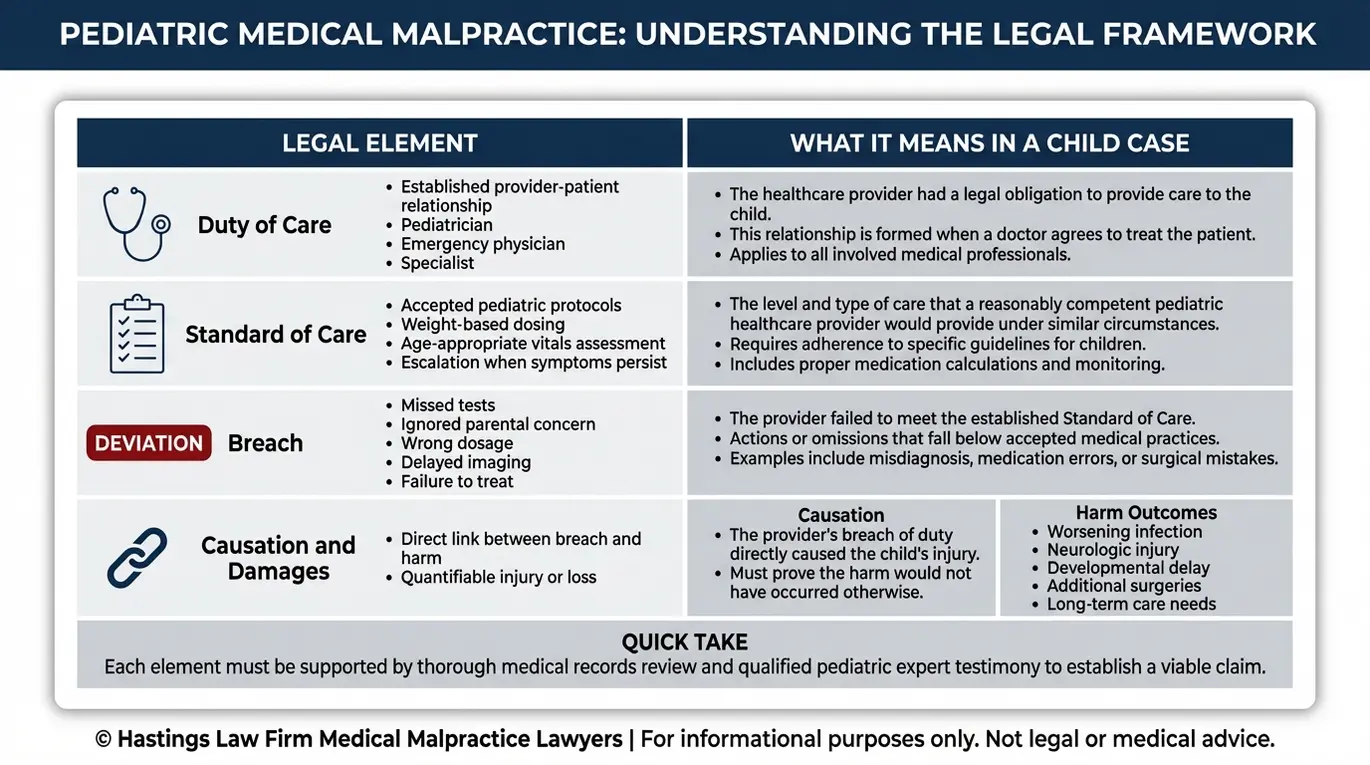
Pediatric negligence occurs when a healthcare provider fails to meet the accepted standard of care for treating children, directly resulting in injury or a worsening condition. Proving it requires more than showing that something went wrong. It requires showing that the provider’s actions fell below what a competent peer would have done in the same situation.
Every case of malpractice involving children starts with the duty of care. When a pediatrician or specialist accepts a child as a patient, they take on a legal obligation to provide treatment consistent with current medical standards. This duty includes recognizing how children differ from adults. This includes differences in pediatric pharmacokinetics, or how a child’s body absorbs and metabolizes medication. It also involves age-specific vital sign ranges like heart rate and blood pressure.
A Texas pediatric malpractice lawyer knows that a breach of that duty happens when the provider deviates from the expected Standard of Care. That deviation can take many forms: dismissing a parent’s concerns, failing to order appropriate diagnostic tests, or misreading lab results that fall outside normal pediatric ranges.
But a breach alone is not enough. Texas law requires a clear link between the provider’s error and the child’s harm. This element, known as causation, is often the most contested part of any case and is important for recovering damages. The defense will argue that the outcome would have been the same regardless of what the doctor did. Our job is to demonstrate, through qualified medical experts and a thorough record review, that the injury was a direct result of the provider’s failure. Before a lawsuit is even filed, Texas Civil Practice and Remedies Code, Section 74.051 requires that the provider receive written notice of the claim at least 60 days in advance.
The Hastings Law Firm Difference
Results matter, but what truly sets us apart is how we achieve them. Every verdict, every settlement, and every Texas courtroom victory comes from one guiding promise: To treat each client’s fight for justice as if it were our own.
This balance of skill, experience, and empathy reflects our core philosophy that justice should not only compensate the injured, but also make health care safer nationwide.

Common Types of Pediatric Malpractice and Preventable Injuries
Common pediatric errors include medication dosage mistakes, failure to diagnose conditions like meningitis or appendicitis, birth injuries, and surgical errors during routine procedures. Each of these categories carries distinct risks for children because of their size, developmental stage, and limited ability to communicate symptoms. These factors make the pediatric standard of care different from adult medicine.
Misdiagnosis and Delayed Diagnosis
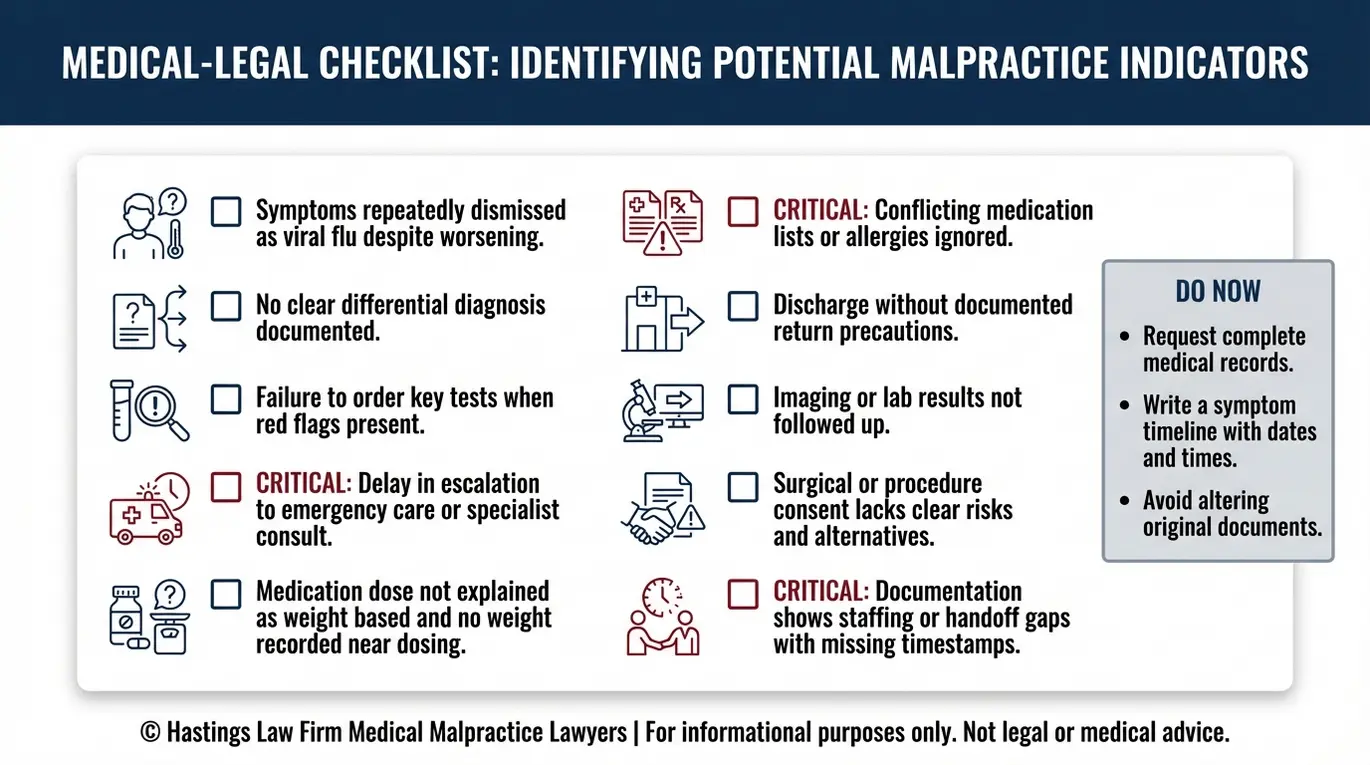
A lawyer for pediatrician errors often sees cases where time-sensitive conditions in children are misdiagnosed. Meningitis, for example, can present with symptoms that overlap with the flu, including fever, irritability, and fatigue. When a provider fails to consider meningitis early enough, the window for effective treatment narrows quickly. Appendicitis in younger children is another condition that may be overlooked because the symptoms do not always follow the classic adult pattern. A delayed diagnosis or failure to diagnose in these situations can lead to permanent injury or death.
Medication Errors
Children are especially vulnerable to dosage errors. Pediatric medications rely on weight-based dosing, which is calculated in milligrams per kilogram of body weight. Providers must also account for liquid medication concentration, or the amount of active drug per milliliter of solution. A miscalculation, a misread decimal point, or a failure to adjust for a child’s weight can result in a dangerous overdose or an ineffective treatment. These prescription errors are preventable when proper protocols are followed.
Surgical and Treatment Errors
Surgical errors in pediatric patients may involve anesthesia miscalculations, damage to surrounding tissue, or complications from procedures that were not age-appropriate. Treatment errors can also occur when a provider fails to act on abnormal test results or delays a referral to a specialist.
| Error Type | Common Consequence |
|---|---|
| Misdiagnosis of meningitis | Brain damage, hearing loss, death |
| Medication dosage error | Organ damage, toxicity, cardiac events |
| Delayed appendicitis diagnosis | Rupture, sepsis, extended hospitalization |
| Surgical or anesthesia error | Nerve damage, brain injury, prolonged recovery |
| Failure to treat abnormal results | Disease progression, preventable disability |
Systemic Contributors to Pediatric Errors
Not every error traces back to a single provider’s decision. In pediatric care, systemic issues like understaffing, provider fatigue, and training issues regarding pediatric protocols can all contribute to preventable harm. When hospitals lack systems like Pediatric Early Warning Scores, which are tools that flag early signs of distress in children, the risk of error increases. They should also use barcode medication administration to verify the right drug reaches the patient. Our pediatric malpractice attorneys examine the institutional environment that may have set the stage for the mistake.
The Long Term Impact and Calculating Future Damages
Damages in pediatric cases must account for a lifetime of care, including lost earning potential, future medical needs, and developmental delays, often calculated via a Life Care Plan. Because children have decades of life ahead of them, the financial impact of a serious injury is often far greater than in an adult case.
Texas law divides damages into two broad categories. Economic damages cover the measurable financial losses: past and future medical bills, rehabilitation, therapy, assistive devices, and home modifications. There is no cap on economic damages in Texas, which means these costs can be fully recovered. Non-economic damages address the less tangible harms, such as physical pain, emotional suffering, and loss of enjoyment of life. Texas does impose a damage cap on non-economic damages, limiting recovery to $250,000 against all physicians or individual providers and up to $500,000 total against healthcare institutions.
For children with severe or permanent injuries, a life care plan is essential. This is a detailed, expert-developed projection of every medical service, therapy, and support the child will need over the course of their lifetime. It includes costs for specialty care, assistive technology, and ongoing monitoring of conditions like neurodevelopmental impairment. These are brain-based conditions that affect cognitive function, motor skills, or behavior as a child grows.
A Texas pediatric malpractice lawyer must also address lost earning capacity. Even though the child has never worked, economists can project what they likely would have earned over a full career. When an injury alters that trajectory, the lost potential becomes a recoverable category of damages.
Key categories of damages in pediatric cases:
- Past and future medical expenses
- Rehabilitation and therapy costs
- Assistive devices and home modifications
- Lost earning capacity over a projected lifetime
- Pain, suffering, and mental anguish
- Loss of enjoyment of life
- Wrongful death damages, if the child did not survive
How We Prove Negligence Against Pediatricians
Proving negligence requires securing medical records, obtaining an expert report from a qualified physician, and demonstrating through expert testimony that the injury was preventable. At our pediatric malpractice law firm, we follow a structured process designed to build the strongest possible case.
1. Investigation
In a pediatric malpractice investigation, we begin by gathering the complete medical records, including hospital charts, nursing notes, lab results, imaging, and pharmacy logs. Our in-house medical staff conducts a thorough review of records to identify gaps in documentation, inconsistencies in charting, and deviations from accepted pediatric protocols.
2. Expert Review
Texas medical malpractice law sets a high bar early in the process. Under Texas Civil Practice and Remedies Code Chapter 74, plaintiffs must serve a written expert report within 120 days of the date each defendant’s original answer is filed. This report must come from a qualified physician, typically a peer in the same specialty, and it must identify the standard of care, explain how it was breached, and connect that breach to the child’s injury. Failure to meet this deadline can result in dismissal of the case.
3. Filing Suit and Building the Case
During pediatric injury litigation, once the expert report is served, we move into formal litigation. This includes depositions of the treating providers, retention of additional experts where needed, and development of a clear narrative for trial. Because we prepare every case as though it will be heard by a jury, the defense understands from the outset that we are ready to present the full scope of the evidence.

Contact the Texas Doctor Malpractice Attorneys at Hastings Law Firm Today for Help
If your child was harmed by a medical error, you deserve answers. You also deserve a legal team that understands how pediatric medicine works and how to hold the right people accountable.
At Hastings Law Firm, we represent families on a contingency fee basis, which means you pay no attorney fees or costs unless we recover compensation for your child. Our goal extends beyond financial recovery. We want to help you learn the truth about what happened and work to prevent it from happening to another family.
Speaking with a Texas pediatric malpractice lawyer does not commit you to anything. It gives you a chance to have your child’s medical records reviewed by professionals who know what to look for. Contact us today for a free, confidential case evaluation so we can begin that conversation together.
Frequently Asked Questions About Pediatric Malpractice in Texas


This content was researched and written by the Hastings Law Firm editorial team, which includes attorneys, medical professionals, and experienced researchers. Our writing is informed by internal knowledge and practical experience, and we cross-check critical details against authoritative sources cited throughout. Every piece undergoes human-led fact-checking and legal review. Because legal and medical information can change, if you spot an error, please contact us. Learn more about our content standards and review process on our editorial policy page.

Brady D. Williams is a nationally recognized medical malpractice attorney who has spent his career handling high-stakes litigation for injured patients and families across the country. Licensed in both Texas and California, Brady draws on experience from hundreds of resolved medical cases to break down complex legal and medical topics for the people who need that information most. His writing reflects the same attention to detail and commitment to clarity that he brings to every case he handles.
