


Dallas Hospital Infection Lawyer
Written by: Hastings Law Firm | Reviewed by: Brady D. Williams | Updated: July 27, 2026
A hospital acquired infection can turn routine care into a prolonged and frightening medical crisis. These infections can spread quickly, lead to sepsis, and cause lasting harm or fatal outcomes when prevention steps break down. The most common drivers involve hygiene lapses, poor sterilization, unsafe catheter or central line care, and failures to isolate contagious patients. Understanding how preventable infections happen and how responsibility is evaluated can help families make informed decisions after a serious hospital stay complication. If you or a loved one were harmed or worse due to a hospital acquired infection in Dallas, Texas, contact Hastings Law Firm for a free, confidential case review.

Trusted Medical Attorneys Representing Dallas Patients Harmed by Hospital Acquired Infections
What You Should Know About Medical Facility Acquired Infection Claims in Dallas:
- Outcomes can become life threatening when a hospital acquired infection progresses to sepsis or organ damage.
- Responsibility can extend beyond a single clinician when systemic hospital failures contribute to unsafe infection control.
- Options can narrow if required early case documentation is not provided, since Texas law can allow dismissal for noncompliance.
- Recovery can be limited by Texas caps on non economic damages even when pain and suffering are significant.
- Disputes often focus on whether the infection was an unavoidable complication or the result of a specific protocol breach.
- Harm can increase when warning signs are not recognized or treated promptly even if the initial infection was not preventable.
- Financial losses can escalate due to longer hospital stays, intensive treatment, and the need for ongoing care.
- Proof can depend on whether records show hygiene and sterilization practices, device care, and facility links to the pathogen.

A Healthcare Focused Law Firm
When you go to a hospital, you expect to leave healthier than when you arrived. Learning that you or a loved one developed a serious infection during a hospital stay can feel like a betrayal of that basic trust. Hospital-acquired infections (HAIs), which are infections that develop during or shortly after receiving medical care, affect hundreds of thousands of patients across the country each year. Many of these infections are preventable.
If you believe a hospital’s failure to follow proper safety protocols led to a harmful infection, you have a right to ask questions and explore your legal options. As a Dallas hospital infection lawyer team that focuses exclusively on medical malpractice, Hastings Law Firm has the medical knowledge and litigation experience to help you find answers. Contact us for a free, confidential case evaluation to learn whether you may have a claim.
Common Types of Dangerous Infections Linked to Hospital Negligence
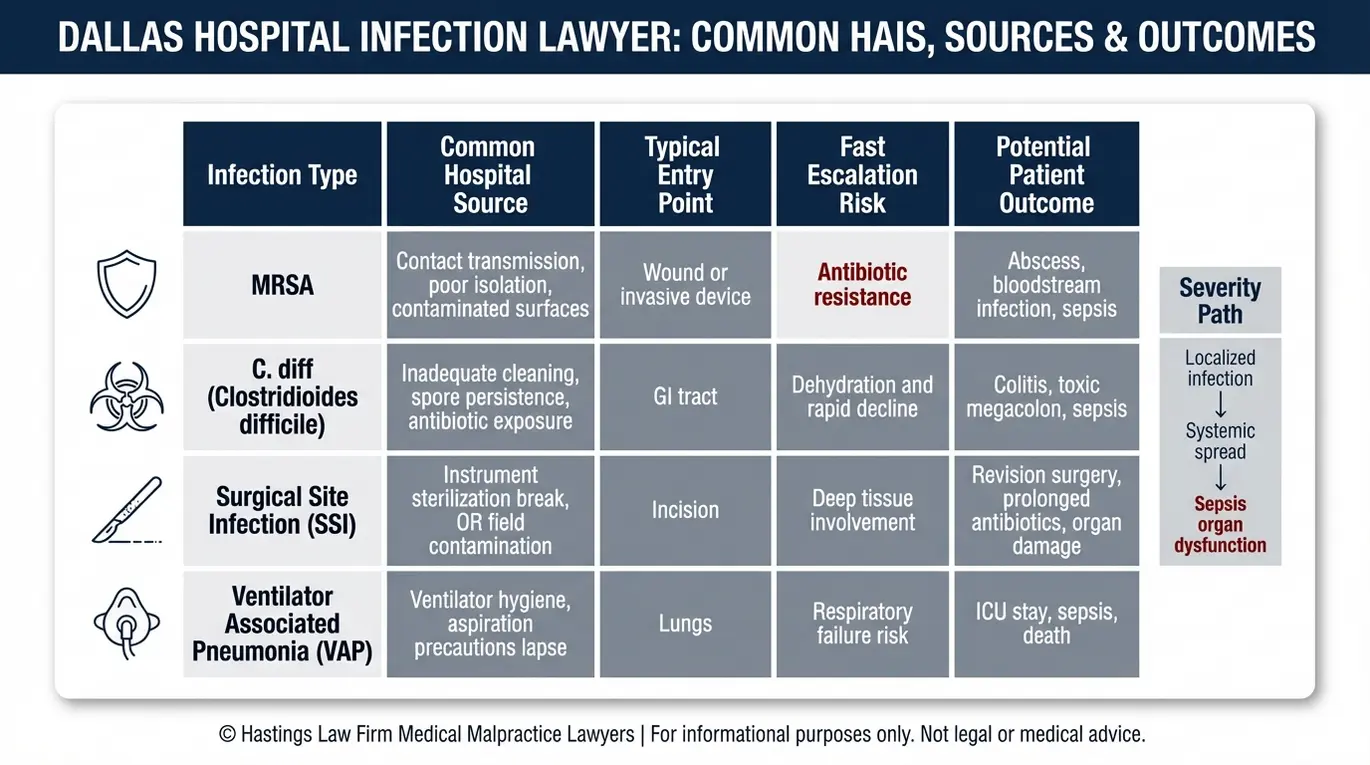
Hospital-acquired infections (HAIs) often result from unsterile environments or improper hygiene protocols, with the most common types being MRSA, C. diff, surgical site infections (SSIs), and ventilator-associated pneumonia (VAP). A surgical site infection (SSI) is an infection that develops in or near the area where a surgical incision was made, often because instruments or the operating environment were not properly sterilized. Clostridioides difficile, commonly known as C. diff, is a bacterium that causes severe diarrhea and inflammation of the colon, frequently spreading in hospitals where antibiotic use disrupts normal gut bacteria.
What makes many of these infections so dangerous is how quickly they can progress. A localized wound infection can enter the bloodstream and lead to sepsis, a life-threatening condition where the body’s response to infection starts damaging its own organs. Patients who develop sepsis may face extended ICU stays, organ damage, or death. The Texas Healthcare Safety Annual Reports track these infection rates across facilities, providing important data that our Dallas hospital infection attorneys review during investigations.
| Infection Type | Common Hospital Source | Potential Outcome |
|---|---|---|
| MRSA | Poor hand hygiene, contaminated surfaces | Skin destruction, bloodstream invasion, sepsis |
| C. diff | Antibiotic overuse, contaminated environments | Severe colitis, toxic megacolon, organ failure |
| Surgical Site Infection (SSI) | Unsterile instruments, improper wound care | Deep tissue damage, revision surgery, sepsis |
| Ventilator-Associated Pneumonia (VAP) | Contaminated ventilator equipment | Prolonged ICU stay, respiratory failure, death |
| Bloodstream Infection (BSI) | Infected central lines or catheters | Sepsis, organ damage, death |
Understanding Antibiotic Resistant Superbugs
Methicillin-resistant Staphylococcus aureus, better known as MRSA, is a type of staph bacteria that no longer responds to many common antibiotics. Superbugs like MRSA are dangerous because they resist standard medical treatments. This antibiotic resistance means the bacteria have evolved to survive drugs designed to kill them, which makes these infections extremely difficult to treat once they take hold.
Hospitals have a duty to identify patients carrying these organisms and isolate them to prevent outbreaks. When isolation protocols fail or staff move between patients without proper precautions, resistant bacteria can spread rapidly through a unit. The result is often a more severe infection that requires longer, more aggressive treatment with limited antibiotic options.
Causes of Preventable Infections in Dallas Medical Facilities
Most preventable hospital infections are caused by procedural failures, such as poor hand hygiene by staff, inadequate sterilization of surgical instruments, failure to isolate contagious patients, or the improper use of catheters and central lines. A central line is a catheter placed into a large vein to deliver medication or fluids. It can introduce bacteria directly into the bloodstream if inserted or maintained without strict sterile technique, which may cause a central line-associated bloodstream infection (CLABSI).
The standard of care, the level of treatment a competent medical professional would provide under similar circumstances, requires strict adherence to infection prevention guidelines. The Infection Control Manual for Ambulatory Care Clinics.pdf) published by the Texas Department of State Health Services outlines many of these protocols.
There is an important distinction between a known complication and a preventable infection. Some surgical patients develop infections despite everyone following the rules. That is a recognized risk of the procedure. But when an infection results from a specific breach in protocol, such as a failure to sterilize equipment or a skipped hand-washing step, that crosses the line into hospital negligence. Our hospital infection lawyers in Dallas look for exactly these kinds of breakdowns.
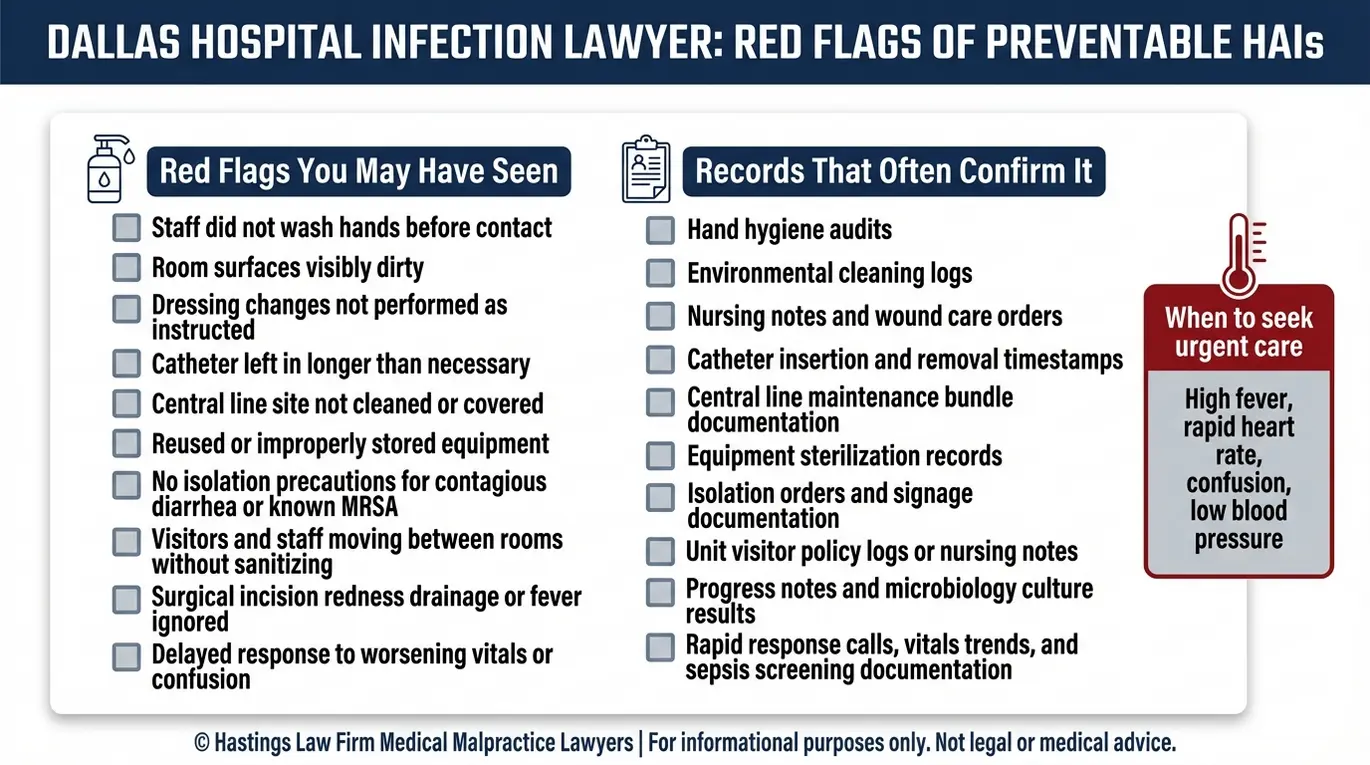
Red Flags That May Indicate Negligence:
- Staff not wearing gloves or washing hands between patients
- Dirty or visibly unclean room conditions
- Contaminated equipment or surgical instruments that were not properly sterilized
- Catheters or central lines left in place longer than necessary
- No isolation measures for patients with known contagious infections
- Delayed response to early signs of infection such as fever or wound changes
The Hastings Law Firm Difference
Results matter, but what truly sets us apart is how we achieve them. Every verdict, every settlement, and every Dallas courtroom victory comes from one guiding promise: To treat each client’s fight for justice as if it were our own.
This balance of skill, experience, and empathy reflects our core philosophy that justice should not only compensate the injured, but also make healthcare safer nationwide.

Determining Liability and Proving Medical Negligence
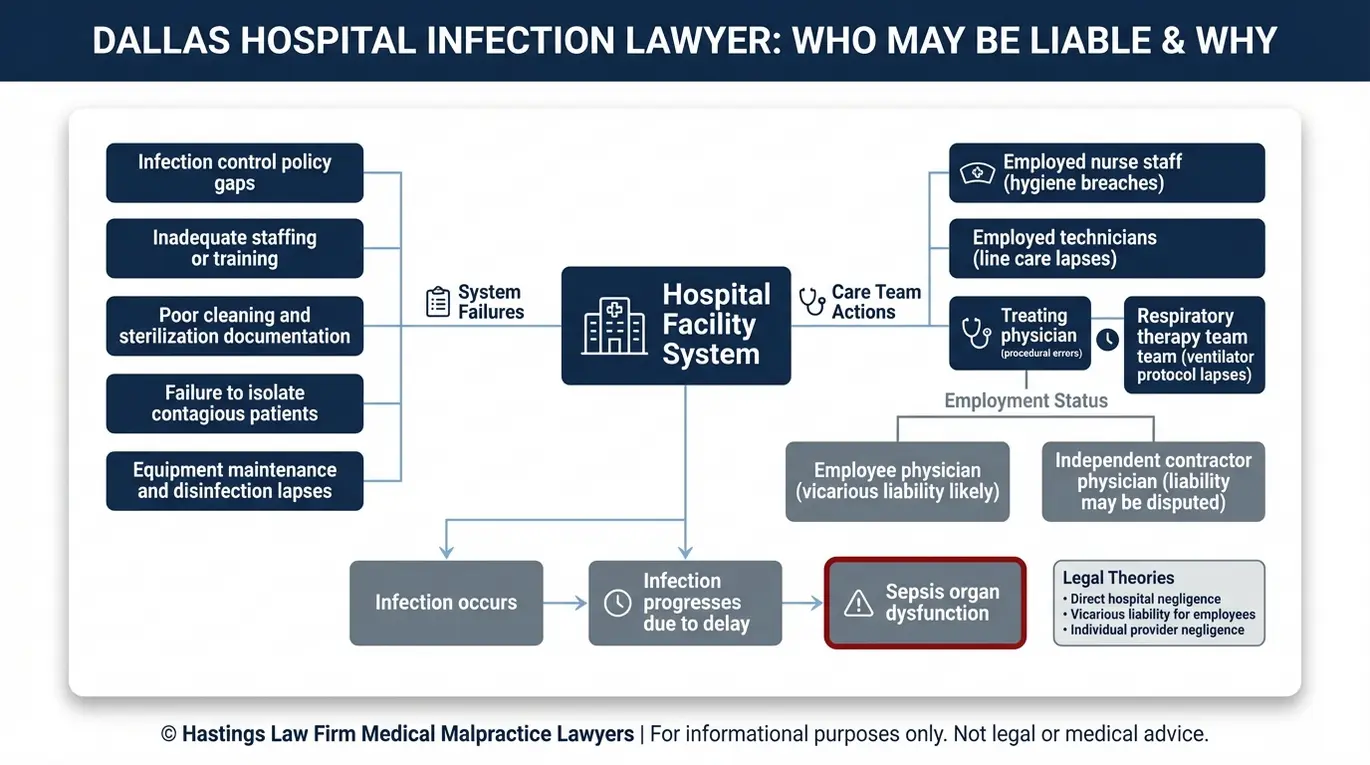
Liability for a hospital infection may extend to the hospital itself for systemic failures, individual doctors for procedural errors, or nursing staff for hygiene breaches, provided it can be shown that their actions deviated from the accepted standard of care. Proving liability requires showing a direct link between the provider’s actions and the patient’s injury. Our legal team includes former defense attorneys who understand the tactics hospitals use to deny claims.
In Texas medical malpractice cases involving healthcare-associated infections, the legal burden of proof rests with the patient. This involves demonstrating that a healthcare professional failed to meet the safety standards expected in their field. Your legal team must demonstrate that a healthcare provider owed you a duty of care, breached that duty, and that the breach directly caused your infection.
Texas law requires that an expert report be filed early in the case. Under Texas Civil Practice and Remedies Code Section 74.351, the plaintiff must serve a qualified medical expert’s written opinion within 120 days of the date each defendant’s original answer is filed to provide necessary expert testimony, or the case may be dismissed. This report serves as a preliminary validation of the claim’s medical merit.
Hospitals can be held vicariously liable for the actions of their employees, meaning the facility is responsible for the conduct of its nurses, technicians, and staff physicians. However, if the negligent provider was an independent contractor rather than a hospital employee, liability may shift. This distinction is something a Dallas hospital infection lawyer evaluates closely during the investigation.
Even if the initial infection was not caused by negligence, a failure to diagnose or treat it promptly can be its own basis for a claim. If a hospital failed to recognize the signs of a worsening infection or sepsis, a life-threatening emergency caused by the body’s extreme response to infection, the provider may be liable for the harm that resulted from the delay.
An experienced attorney for hospital infections understands that even if the original infection was unavoidable, timely intervention could have prevented the harm. Our team works with infectious disease experts to establish this, and we prepare each case as though it is going before a jury from day one.
Compensation Available for Infection Victims and Families
Victims of hospital negligence may be entitled to economic damages for medical bills and lost wages, as well as non-economic damages for pain and suffering, physical impairment caused by the infection. Economic damages are intended to cover the actual financial losses a family suffers, such as hospital invoices and missed paychecks.
The economic burden of a hospital-acquired infection can be staggering. According to a study published by PubMed Central on the clinical and economic burden of healthcare-associated infections, HAIs significantly increase hospital stays, treatment costs, and the risk of long-term complications. Patients harmed by hospital negligence may face months of antibiotic therapy, revision surgeries, or ongoing care for organ damage. The Texas Department of State Health Services Healthcare Associated Infections Reporting program also tracks these cases to support public transparency.
Recoverable damages in a hospital infection claim may include:
- Past and future medical expenses, including hospitalization, surgeries, long-term antibiotic treatment, and rehabilitation
- Lost income and reduced earning capacity from extended recovery or permanent disability
- Physical pain and suffering related to the infection and its treatment
- Emotional distress caused by prolonged illness, isolation, or disfigurement
- Wrongful death damages if a loved one died as a result of the infection, including loss of companionship and funeral costs
Every case is different, and the value of a claim depends on the severity of the infection and its impact on your life. Our infection malpractice legal team works with life-care planners and medical economists to document the full scope of your losses.
How Our Dallas Hospital Infection Lawyers Investigate Your Claim
Our team immediately works to secure your complete medical records, consults with infectious disease experts to trace the pathogen’s likely source, and uses our in-house medical staff to reconstruct the timeline of care and identify where safety protocols may have broken down.
This process of evidence collection starts on day one because we prepare every case as if it will go to trial. This trial-ready approach creates a strategic advantage during settlement negotiations. When the hospital’s defense team knows the evidence has been thoroughly analyzed and that qualified experts are prepared to testify, it changes the conversation.
Our national expert network includes physicians, infectious disease specialists, and infection control professionals who can review your records and provide objective opinions about whether the standard of care was met. Our founding attorney, Tommy Hastings, is Board Certified in Personal Injury Trial Law, a distinction held by less than 2% of Texas lawyers. Our in-house medical staff includes former hospital nurses and Board Certified Patient Advocates who help interpret clinical data and identify charting inconsistencies.
We also want to make sure the process does not add to your stress. There are no upfront costs and no attorney fees unless we recover compensation for you. If you need a lawyer for hospital infection cases, our team is here to answer your questions and walk you through what to expect.
Contact the Dallas Hospital Malpractice Attorneys at Hastings Law Firm Today for Help
You should not have to carry the burden of a preventable infection alone, especially when the people responsible have teams of lawyers and insurance carriers working to protect their interests. At Hastings Law Firm, our mission is to restore trust for patients and families who have been let down by the healthcare system, and to hold providers accountable so that what happened to you does not happen to someone else.
If you or a loved one developed a serious infection during a hospital stay in Dallas, we encourage you to reach out for a free, confidential case evaluation. Our team of attorneys, nurse consultants, and medical experts can review what happened and help you understand your options. There is no fee unless we win your case.
Call Hastings Law Firm today or contact us online to schedule your risk-free consultation.
Frequently Asked Questions About Hospital Infection in Dallas


This content was researched and written by the Hastings Law Firm editorial team, which includes attorneys, medical professionals, and experienced researchers. Our writing is informed by internal knowledge and practical experience, and we cross-check critical details against authoritative sources cited throughout. Every piece undergoes human-led fact-checking and legal review. Because legal and medical information can change, if you spot an error, please contact us. Learn more about our content standards and review process on our editorial policy page.

Brady D. Williams is a nationally recognized medical malpractice attorney who has spent his career handling high-stakes litigation for injured patients and families across the country. Licensed in both Texas and California, Brady draws on experience from hundreds of resolved medical cases to break down complex legal and medical topics for the people who need that information most. His writing reflects the same attention to detail and commitment to clarity that he brings to every case he handles.
