


Texas Hospital Infection Lawyer
Hospital acquired infections can leave patients facing serious illness, extended treatment, and lasting complications after care that was supposed to help. These cases often turn on whether an infection was an unavoidable risk or a preventable breakdown in hygiene, sterilization, staffing, or isolation practices. Liability may involve individual clinicians, the hospital itself, contractors, or equipment issues, and the most disputed point is often whether the infection began in the facility or elsewhere. If you or a loved one were harmed or worse due to a hospital acquired infection in Texas, contact Hastings Law Firm for a free, confidential case review.

Last Updated: September 20, 2026
Trial-Ready Representation for Medical Facility Acquired Infections in Texas
When you or a loved one develops an infection after a hospital stay, the experience can feel both frightening and isolating. You trusted a medical facility to provide safe care, and now you may be dealing with a serious illness that should never have occurred. A hospital-acquired infection (HAI), an infection a patient develops during or shortly after receiving treatment in a healthcare setting that was not present at the time of admission, raises difficult questions and demands clear answers.
As a Texas hospital infection lawyer, Hastings Law Firm focuses exclusively on medical malpractice and has the medical and legal resources to investigate what happened. If you believe a preventable infection harmed you or someone you love, we welcome the opportunity to review your situation and explain your options during a free, confidential case evaluation.

Identifying Negligence Behind Hospital Acquired Infections
Negligence in hospital infection cases is established when a facility breaches the standard of care through poor hygiene practices, unsterile equipment, or inadequate staffing that directly causes harm to a patient. The standard of care is defined as the accepted level of treatment a reasonably competent provider would deliver under similar circumstances.
Not every infection that develops in a hospital is the result of medical negligence. Infections are a known risk of medical treatment, and some patients are more vulnerable due to age, immune status, or the nature of their procedure. The legal question a hospital infection attorney investigates is whether the infection was a known complication that occurred despite proper precautions, or a preventable error caused by a failure to follow established protocols.
Common breaches of infection control standards include failure to perform proper hand hygiene between patients, improper sterilization of surgical instruments, and failure to implement contact precautions for patients known to carry resistant bacteria. These isolation measures are designed to prevent the spread of contagious organisms like MRSA or C. diff. Cross-contamination between patients can also occur when staff reuse single-use supplies or fail to properly disinfect shared equipment. These failures in aseptic technique, the sterile procedures required to prevent microbial contamination, often leave traces in a facility’s own records.
Texas law takes infection reporting seriously. Under the Texas Health and Safety Code Chapter 98, hospitals are required to report certain healthcare-associated infections and preventable adverse events. These reports can become important evidence when a lawyer for hospital infections is building a case.
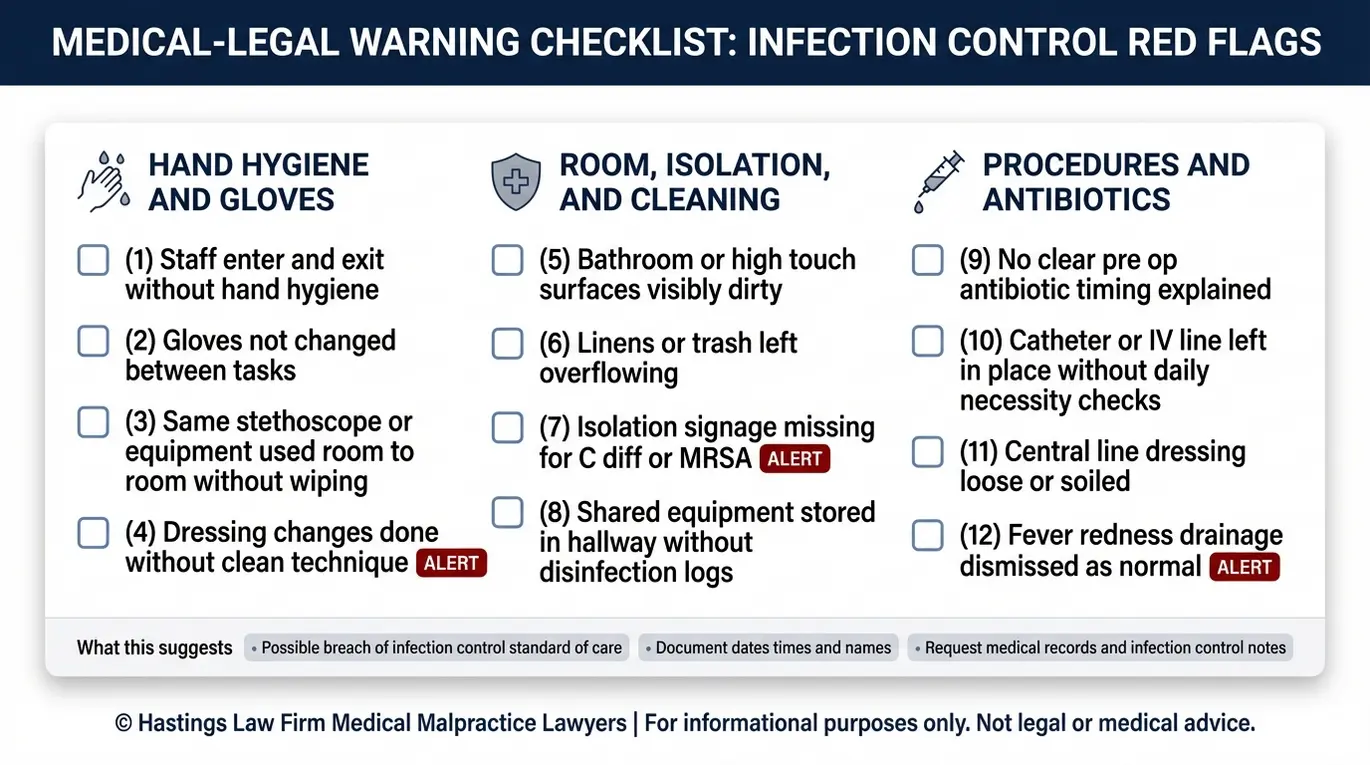
When we review a potential infection case, we look for specific indicators that protocols may not have been followed. Here are warning signs that may suggest negligence:
- Staff not wearing gloves or changing gloves between patients
- Visibly unclean patient rooms or shared medical equipment
- No pre-operative antibiotics administered before surgery when indicated
- Lack of isolation for patients with known resistant infections
- Surgical dressings that were not changed on schedule
- IV lines or catheters left in place longer than medically necessary
- No documentation of hand hygiene compliance in medical records
- Antibiotic resistance patterns suggesting facility-wide infection control failures
If any of these indicators are present in your experience, it does not automatically prove negligence, but it does warrant a closer look at the medical records and internal hospital protocols.
Types of Infections Commonly Linked to Medical Negligence
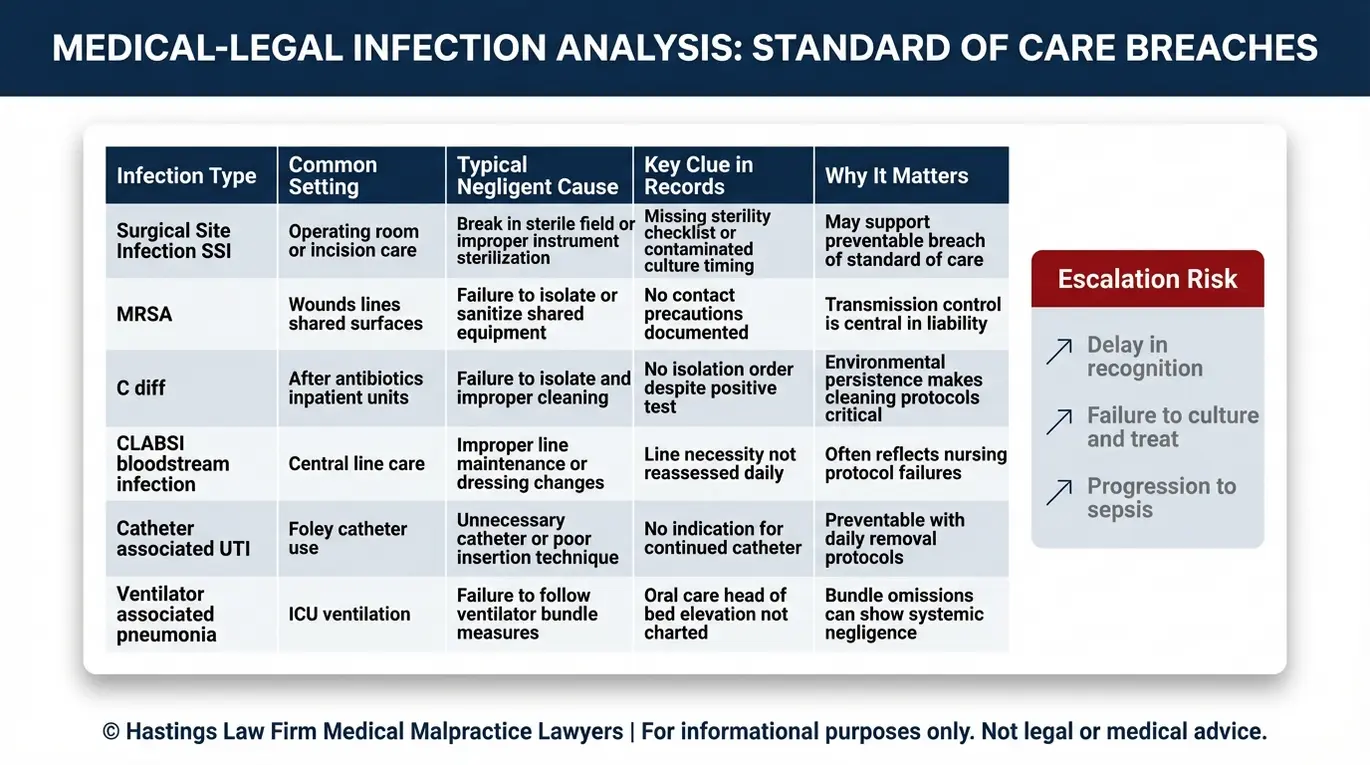
The most common infections that lead to malpractice claims include surgical site infections (SSIs), central line-associated bloodstream infections (CLABSI), and catheter-associated urinary tract infections, often resulting from procedural breakdowns rather than unavoidable complications.
Surgical site infections (SSIs), bacterial invasions entering the body through an incision, can range from a superficial wound infection to a deep tissue infection involving organs or implanted materials. SSIs are frequently tied to non-sterile operating conditions, improper wound care, or failure to administer prophylactic antibiotics. When an SSI involves organisms like MRSA or Staphylococcus, the treatment can require additional surgeries, prolonged IV antibiotics, and extended hospitalization.
Catheter and ventilator-related infections often point to nursing protocol failures. A CLABSI, or central line-associated bloodstream infection, develops when bacteria enter the bloodstream through a central venous catheter that was improperly inserted or maintained. Ventilator-associated pneumonia (VAP), an infection linked to mechanical ventilation, can develop when ventilator equipment is not kept clean or when a patient’s head is not properly elevated. Catheter-associated UTIs frequently result from urinary catheters left in place longer than necessary.
Sepsis represents one of the most dangerous outcomes. When an initial infection goes undiagnosed or untreated, it can progress to sepsis, a life-threatening immune response that may lead to organ failure and death. A Texas infection malpractice lawyer will examine whether clinical staff recognized early signs of infection and responded within the standard of care, as reported by the CDC’s guidelines on bloodstream infection events.
| Infection Type | Common Negligent Cause |
|---|---|
| :— | :— |
| Surgical Site Infection (SSI) | Non-sterile instruments, failure to administer pre-op antibiotics |
| CLABSI (Bloodstream) | Failure to maintain or timely replace central line |
| Catheter-Associated UTI | Catheter left in place beyond medical necessity |
| Ventilator-Associated Pneumonia | Improper ventilator hygiene, incorrect patient positioning |
| C. diff Infection | Failure to isolate infected patients, antibiotic overuse |
| MRSA | Poor hand hygiene, cross-contamination between patients |
| Sepsis | Delayed recognition and treatment of initial infection |
The Hastings Law Firm Difference
Results matter, but what truly sets us apart is how we achieve them. Every verdict, every settlement, and every Texas courtroom victory comes from one guiding promise: To treat each client’s fight for justice as if it were our own.
This balance of skill, experience, and empathy reflects our core philosophy that justice should not only compensate the injured, but also make health care safer nationwide.

Determining Liability for Hospital Acquired Infections in Texas
Liability in hospital-acquired infection cases may extend beyond the attending physician to include the hospital administration for staffing failures, third-party cleaning contractors, or medical device manufacturers.
Hospital direct liability applies when the institution itself creates the conditions for infection. This can include understaffing that leads to hygiene protocol breakdowns, failure to maintain environmental controls, or outdated sterilization equipment. When a facility’s infrastructure contributes to infection, the hospital bears direct responsibility. If a hospital relies on independent contractors for cleaning, equipment maintenance, or certain clinical services, we examine whether vicarious liability applies, meaning the hospital can be held responsible for the actions of those contractors depending on the level of control the facility exercised.
A catheter-associated urinary tract infection (CAUTI), an infection stemming from a urinary catheter left in place beyond medical necessity or inserted without sterile technique, raises questions about both individual and institutional accountability. If the healthcare-associated infection led to a patient’s death, surviving family members may have the right to pursue a wrongful death claim. Suing a hospital for infection requires tracing the chain of failures from the individual provider to the institutional policies that allowed the breach to occur.
Environmental Transmission and Facility Negligence
Environmental transmission refers to the spread of infection through non-human sources like contaminated air filtration systems (HVAC), unsterile water supplies, or improper biohazard waste disposal. We investigate these transmission routes closely to determine if facility-wide failures occurred. We analyze maintenance records for HVAC systems to determine if poor air quality contributed to an airborne infection. We also review water quality reports and waste disposal logs to ensure the facility maintained a safe environment for immunocompromised patients. When a Texas hospital infection lawyer investigates these cases, identifying every responsible party, including those managing the physical plant, is essential to building a complete picture of what went wrong.
Proving Medical Malpractice in Infection Cases
Proving malpractice in a Texas infection case requires distinct evidence that separates a hospital-acquired strain from one the patient may have carried into the facility, supported by expert testimony that meets the requirements of Chapter 74 of the Texas Civil Practice and Remedies Code.
Our legal team includes former defense attorneys and experienced hospital nurses who previously worked for the systems we now challenge. This insider perspective helps us identify charting inconsistencies and anticipate hospital defense tactics. We focus on building a clear evidentiary path from the medical error to the patient’s injury.
Distinguishing Between Community and Hospital Acquired Strains
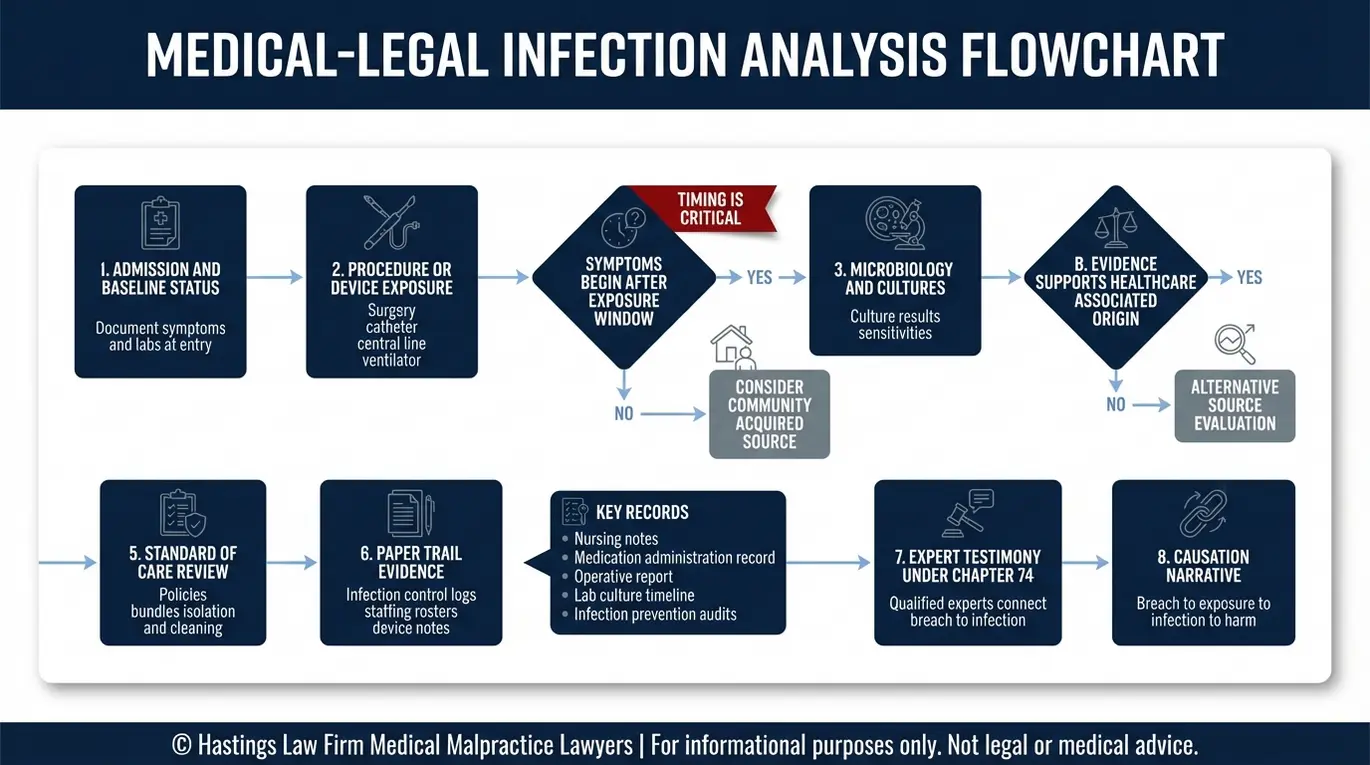
One of the most contested issues in hospital-acquired infection litigation is causation: did the infection originate inside the hospital, or did the patient arrive with it? The timing of symptom onset relative to admission is often the first clue. Most hospital-acquired infections develop 48 to 72 hours after admission, but the incubation period, the time between exposure to a pathogen and the appearance of symptoms, varies by organism.
To establish a stronger causal link, our team works with infectious disease specialists who can perform bacterial strain typing. This scientific process compares the genetic fingerprint of the patient’s infection to strains known to exist within the facility. If the genetic profile matches organisms found in the hospital environment rather than common community-acquired strains, that evidence can be powerful.
Building this proof requires a thorough paper trail. Research published in PubMed Central on documentation of adherence to infection prevention best practices underscores how gaps in charting can reveal breakdowns in protocol. As an infection malpractice attorney, our team reviews internal hospital hygiene audit logs, staffing rosters, sterilization records, and nursing notes to identify where protocols failed.
Here is the general process we follow to build an infection malpractice case:
- Medical record collection and review: Our in-house nursing staff analyzes admission records, lab results, and clinical notes to establish a baseline of the patient’s condition at intake and identify any pre-existing conditions.
- Timeline construction: We map the onset of infection symptoms against the patient’s treatment history, procedures, and device placements (catheters, central lines, ventilators) to pinpoint the moment of exposure.
- Expert medical review: Qualified infectious disease specialists evaluate whether the standard of care was met and identify the likely source and mechanism of infection based on the bacterial type.
- Causation analysis: Experts connect the identified breach directly to the patient’s harm, ruling out alternative explanations such as community acquisition or natural progression of disease.
- Chapter 74 compliance: Under Texas Civil Practice and Remedies Code § 74.351, we prepare and serve the required expert report within the statutory deadline, detailing the standard of care, the breach, and causation.
Each step is designed to build the evidentiary foundation that Texas courts require before a medical malpractice case can move forward.
Recovering Damages for Sepsis and Surgical Site Infections
Patients harmed by a hospital-acquired infection may recover compensation for past and future medical bills, lost earning capacity, and non-economic damages such as pain and suffering, subject to certain caps under Texas law.
Economic damages cover the measurable financial losses caused by the infection. These often include the cost of corrective surgeries, long-term antibiotic therapy, extended hospital stays, home health care, and rehabilitation. In severe cases involving sepsis or resistant infections like MRSA, a life care plan may be necessary to project the full cost of future medical needs, ensuring that funds are available for years of required treatment.
Non-economic damages address the human toll: physical pain, emotional suffering, disfigurement from debridement surgeries, loss of enjoyment of life, and the psychological impact of a prolonged recovery. Under Texas Civil Practice and Remedies Code § 74.051, specific procedural requirements apply to medical liability claims, including pre-suit notice provisions that must be followed.
We also evaluate whether negligence diminished a patient’s prospects for recovery. In some cases, a delayed diagnosis or failure to treat an infection in its early stages may have reduced a patient’s chance of a better outcome. Our attorneys work with medical experts to determine how the breach of care affected the patient’s prognosis and to pursue the fullest recovery the law allows.
The types of damages typically pursued include:
- Past and future medical expenses
- Lost wages and diminished earning capacity
- Pain and suffering
- Physical disfigurement or permanent disability
- Loss of consortium (impact on spousal relationship)
- Wrongful death damages if the infection proved fatal
Contact the Texas Hospital Malpractice Attorneys at Hastings Law Firm Today for Help
Hospital infection cases are medically complex and legally demanding, but they are winnable when the right “trial-ready” team is investigating from the start. At Hastings Law Firm, every case is prepared as if it will go to a jury. Our team of attorneys, including former defense counsel who know how hospitals respond to these claims, works alongside in-house nursing professionals and a national network of infectious disease experts to build the strongest possible case.
Founder Tommy Hastings is Board Certified in Personal Injury Trial Law by the Texas Board of Legal Specialization, a distinction held by fewer than 2% of Texas attorneys. His dedication to medical malpractice is driven by a belief that accountability is the only path to prevention.
We handle these cases on a contingency fee basis, meaning you pay no attorney fees or costs unless we secure a recovery for you. If you or a loved one suffered a serious infection after hospital care, contact us for a free, confidential evaluation. Time matters in these claims, so reaching out now helps preserve evidence and protects your right to file within the statute of limitations.
Frequently Asked Questions About Hospital Infection in Texas


This content was researched and written by the Hastings Law Firm editorial team, which includes attorneys, medical professionals, and experienced researchers. Our writing is informed by internal knowledge and practical experience, and we cross-check critical details against authoritative sources cited throughout. Every piece undergoes human-led fact-checking and legal review. Because legal and medical information can change, if you spot an error, please contact us. Learn more about our content standards and review process on our editorial policy page.

Brady D. Williams is a nationally recognized medical malpractice attorney who has spent his career handling high-stakes litigation for injured patients and families across the country. Licensed in both Texas and California, Brady draws on experience from hundreds of resolved medical cases to break down complex legal and medical topics for the people who need that information most. His writing reflects the same attention to detail and commitment to clarity that he brings to every case he handles.
