


Austin Hospital Infection Lawyer
Hospital acquired infections can turn a routine hospital stay into a serious medical crisis, especially when antibiotic resistant bacteria are involved. These infections develop during or after care and are often linked to breakdowns in basic safety practices like sterilization, hygiene, and infection control. When an infection is missed or treatment is delayed, the harm can escalate quickly and may lead to sepsis, lasting impairment, or fatal outcomes. If you or a loved one were harmed or worse due to a hospital acquired infection in Austin, Texas, contact Hastings Law Firm for a free, confidential case review.

Last Updated: September 20, 2026
Trusted Medical Attorneys Representing Austin Patients Harmed by Hospital Acquired Infections
When you go to a hospital, you trust the staff to help you heal, not to make you sicker. A hospital-acquired infection (HAI), also called a healthcare-associated or nosocomial infection, is an infection you develop during or after receiving treatment in a healthcare facility that was not present when you were admitted. Some of these infections involve antibiotic-resistant bacteria, sometimes called “superbugs,” which are especially dangerous because they do not respond to standard antibiotic treatments.
If you or a loved one contracted a preventable infection during a hospital stay in Austin, you may have grounds for a medical malpractice claim. As an Austin hospital infection lawyer, Hastings Law Firm focuses exclusively on holding negligent healthcare providers accountable. Our team of attorneys, nurse consultants, and medical staff can review what happened and explain your legal options at no cost to you.

Common Preventable Infections in Austin Healthcare Facilities
Hospital-acquired infections often stem from sterilization failures and include MRSA, C. diff, and surgical site infections that require immediate legal investigation. According to the CDC’s HAI Progress Report, many of these infections are preventable when hospitals follow proper protocols. When they don’t, patients pay the price.
Antibiotic-resistant infections are a growing threat in hospital settings across the country, including Austin. Antibiotic resistance happens when germs like bacteria develop the ability to defeat the drugs designed to kill them. Bacteria like Methicillin-resistant Staphylococcus aureus (MRSA), a staph infection that resists many common antibiotics, can spread rapidly in environments where hand hygiene or surface disinfection is inconsistent. These so-called “superbugs” are particularly dangerous for patients recovering from surgery or those with weakened immune systems.
Some of the most common preventable hospital infections include:
- MRSA and other antibiotic-resistant infections: Spread through contaminated surfaces, medical devices, or unwashed hands. These infections can lead to severe skin infections, pneumonia, or bloodstream infections.
- Clostridioides difficile (C. diff): A bacterial infection of the colon frequently linked to antibiotic overuse or poor hygiene practices. C. diff can cause life-threatening inflammation, particularly in older or immunocompromised patients.
- Surgical site infections (SSI): Infections that develop at or near the incision site after a procedure, often caused by non-sterile operating environments, contaminated instruments, or improper wound care.
Each of these infections can be traced back to specific lapses in hospital protocol. Our hospital infection attorneys in Austin work with medical experts to identify exactly where the breakdown occurred and whether the facility’s negligence caused the hospital-acquired (nosocomial) infection.
Sepsis and the Consequences of Untreated Infections
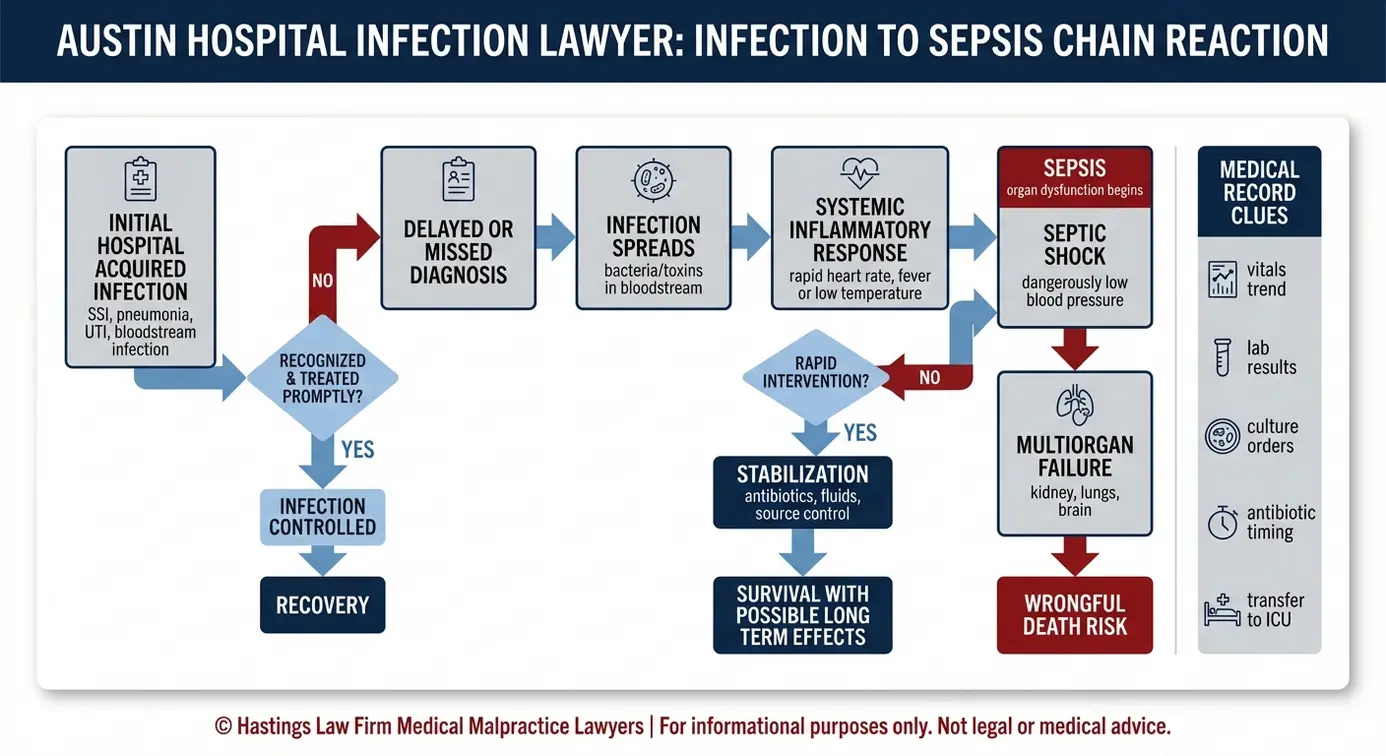
Sepsis is a life-threatening chain reaction to an infection that can lead to organ failure or death if medical staff fail to diagnose and treat it promptly. As defined by The Third International Consensus Definitions for Sepsis and Septic Shock (Sepsis-3), sepsis occurs when the body’s response to an infection begins damaging its own tissues and organs. A bloodstream infection, known medically as bacteremia, is one of the most common triggers.
What makes sepsis so dangerous is its speed. A localized infection, such as a urinary tract infection or a surgical site infection, can enter the bloodstream and escalate within hours. Without rapid intervention, patients may develop septic shock or multi-organ dysfunction, and the window to act narrows quickly.
Recognizing the Chain Reaction of Sepsis
When hospital staff miss or dismiss early warning signs of infection, a manageable condition can become a medical emergency. Septic shock, often resulting from a delayed diagnosis, is a severe drop in blood pressure caused by overwhelming infection that can starve organs of oxygen. This may progress to multi-organ dysfunction syndrome (MODS), where two or more organ systems begin to fail simultaneously.
The consequences for patients who survive can be devastating: amputations, permanent organ damage, cognitive impairment, and months of rehabilitation. In the worst cases, delayed sepsis treatment leads to wrongful death. As an Austin sepsis lawyer handling medical negligence cases, we help families file a sepsis malpractice lawsuit.
We examine medical records, lab results, and clinical timelines to determine whether staff recognized the signs and acted within the standard of care. The standard of care is the medical benchmark used to decide if a provider acted correctly under the circumstances.
The Hastings Law Firm Difference
Results matter, but what truly sets us apart is how we achieve them. Every verdict, every settlement, and every Austin courtroom victory comes from one guiding promise: To treat each client’s fight for justice as if it were our own.
This balance of skill, experience, and empathy reflects our core philosophy that justice should not only compensate the injured, but also make health care safer nationwide.

Proving Negligence in Hospital Infection Lawsuits
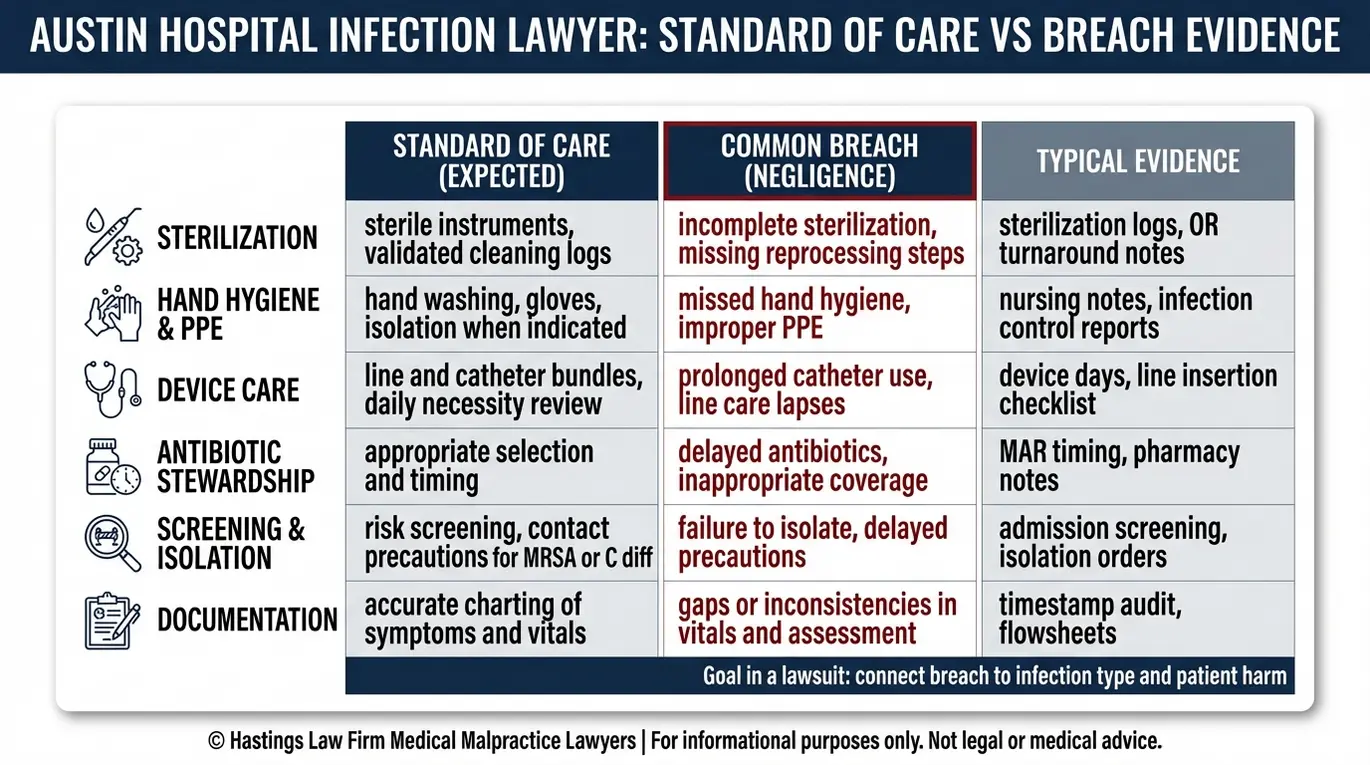
Proving liability requires demonstrating that the hospital violated the standard of care through actions such as failure to sterilize equipment or neglecting patient hygiene protocols. Under Texas Civil Practice and Remedies Code Chapter 74, medical negligence claims must establish that a healthcare provider’s conduct breached the duty of care and directly caused the patient’s injury. The standard of care is the level of attention and safety a competent medical professional or facility should provide.
The standard of care for infection prevention includes aseptic technique, the set of practices designed to keep surgical sites, instruments, and environments free from contamination. When hospitals fail to follow these protocols, surgical site infections (SSI) and other nosocomial infections can result. But knowing something went wrong and proving it in court are two different things.
Our team, which includes former defense attorneys and in-house nurse consultants, investigates these cases by examining the specific actions and omissions that may have caused the infection. Here is what we look for:
- Failure to follow hand hygiene and sterilization protocols
- Inadequate patient screening or isolation procedures
- Improper catheter insertion, maintenance, or removal
- Non-sterile surgical environments or contaminated instruments
- Delayed identification and treatment of infection symptoms
- Gaps or inconsistencies in medical records and nursing logs
As a hospital infection malpractice lawyer, we handle evidence collection to meet the burden of proof, establishing that hospital negligence caused the infection rather than an unavoidable complication.
Recoverable Damages for Infection Victims in Texas
Patients harmed by preventable hospital infections may recover compensation for extensive medical bills, lost wages, and non-economic damages like pain and suffering resulting from the infection. Damages are the legal term for the financial compensation you seek to cover your losses. According to a State Variation in Inpatient Stays Involving Sepsis report by HCUP, hospital stays involving sepsis are among the most expensive inpatient events in the country. The financial impact of a hospital-acquired infection can be significant.
Economic damages cover the measurable financial losses: intensive care unit (ICU) stays, follow-up surgeries, long-term rehabilitation, prescription medications, home care, and lost income during recovery. Non-economic damages address the personal toll, including pain and suffering, loss of enjoyment of life, and emotional distress. Under Texas Civil Practice and Remedies Code Section 74.301, non-economic damages in medical malpractice cases are subject to statutory caps, which are legal limits on the amount of compensation you can receive.
| Damage Category | Standard Infection Treatment | Sepsis / Severe Complications |
|---|---|---|
| Hospital Stay | Days to weeks | Weeks to months (often ICU) |
| Medical Costs | Moderate (antibiotics, monitoring) | Substantial (surgery, organ support, rehab) |
| Recovery Timeline | Weeks | Months to permanent impairment |
| Lost Income | Short-term absence | Extended disability or inability to return to work |
Understanding the Impact of Delayed Diagnosis
In some cases, the infection itself may not have been preventable, but the failure to diagnose or treat it in time reduced the patient’s chance of recovery or survival. Delayed diagnosis claims involve cases where medical negligence allowed a treatable condition to worsen, resulting in more severe harm or death. When a delayed response turns a survivable condition into a fatal one, families may be able to seek accountability by demonstrating that timely treatment would have, more likely than not, led to a better outcome. This legal theory allows families to pursue justice when provider negligence made a bad situation significantly worse.
Texas Statute of Limitations for Medical Injury Claims
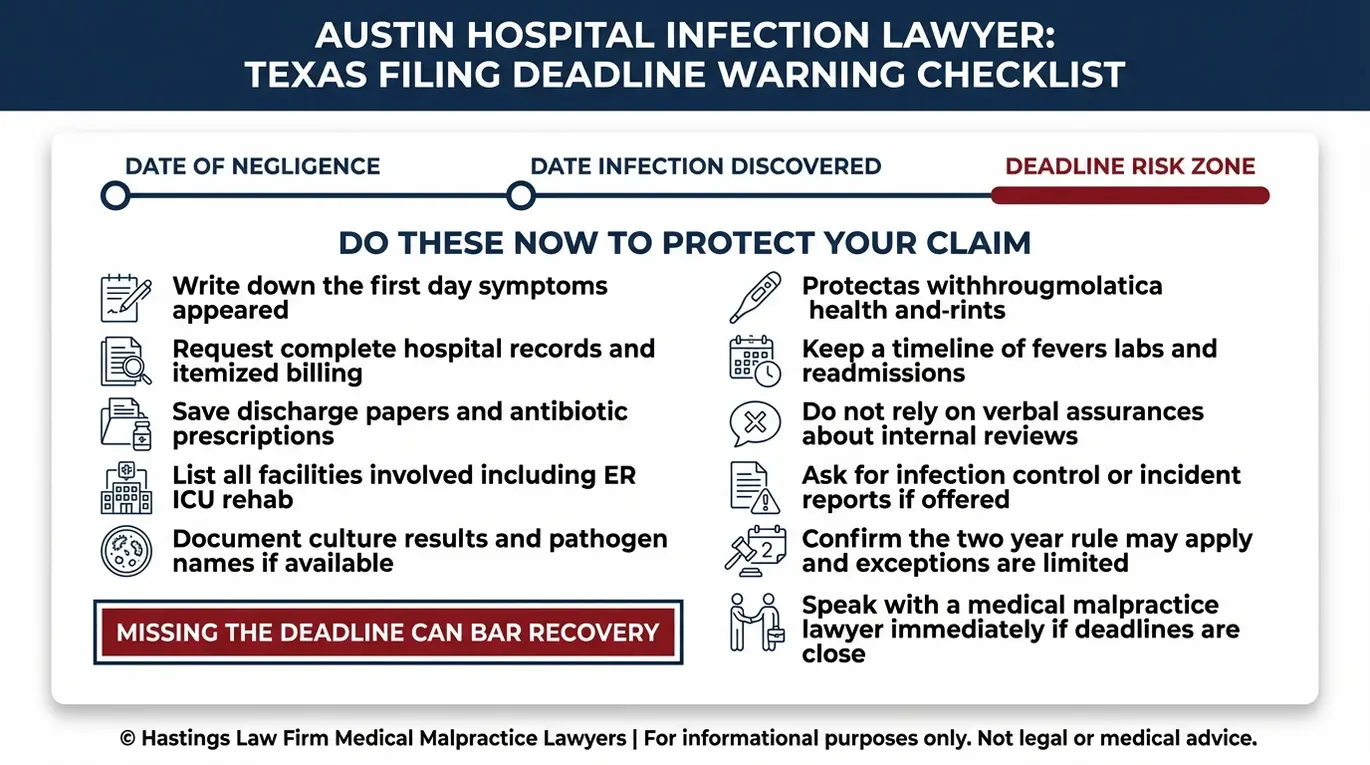
The statute of limitations under Texas law generally requires medical malpractice claims to be filed within two years from the date of the negligence or the date the injury was discovered. A statute of limitations is the legal deadline for filing a lawsuit. This deadline is strict, and missing it permanently bars you from recovering compensation.
One important exception is the discovery rule. Because hospital infections are not always immediately apparent, the two-year clock may begin on the date you knew, or reasonably should have known, that your infection was caused by negligent care rather than the date of the procedure itself. Even with this exception, Texas imposes strict time limits, including a 10-year outer limit. Acting quickly protects your ability to gather evidence and hold the responsible parties accountable.
Contact the Austin Hospital Malpractice Attorneys at Hastings Law Firm Today for Help
A preventable hospital infection can change your life in ways you never expected: mounting medical bills, prolonged recovery, and the unsettling feeling that the people who were supposed to care for you let you down. You deserve answers about what happened and whether someone else’s negligence caused your harm.
Hastings Law Firm is an Austin hospital infection law firm built to handle exactly these cases. Our team includes former defense attorneys who understand how hospitals and their insurers respond to claims, along with in-house medical professionals who can evaluate your records and identify where protocols may have failed. Founder Tommy Hastings, board-certified in Personal Injury Trial Law by the Texas Board of Legal Specialization, has spent over two decades holding healthcare providers accountable.
We charge no fees unless we secure compensation for you. Contact us today for a free, confidential case evaluation. Let us review what happened and help you understand your options.
Frequently Asked Questions About Hospital Infection in Austin


This content was researched and written by the Hastings Law Firm editorial team, which includes attorneys, medical professionals, and experienced researchers. Our writing is informed by internal knowledge and practical experience, and we cross-check critical details against authoritative sources cited throughout. Every piece undergoes human-led fact-checking and legal review. Because legal and medical information can change, if you spot an error, please contact us. Learn more about our content standards and review process on our editorial policy page.

Gabe Sassin has focused exclusively on medical malpractice law since 2007. After spending more than a decade as a malpractice defense attorney, he knows exactly how the other side works. He has seen firsthand how healthcare providers, insurers, corporate defendants, and their legal teams think, prepare, and build their defense against claims. That knowledge works for the people who need it most today, injured patients and their families. His unique experience shapes everything he writes, giving readers a look at how these cases actually work from someone who has handled them from both sides.
