


Fort Worth Shoulder Dystocia Birth Injury Lawyer
Written by: Hastings Law Firm | Reviewed by: Gabe Sassin | Updated: July 27, 2026
Shoulder dystocia is a delivery emergency that can occur when a baby shoulder becomes stuck after the head is delivered. When it is not managed safely, excessive traction or delayed decisions can lead to brachial plexus damage, oxygen deprivation, and long term developmental impacts that affect a child daily life and a family stability. Understanding warning signs, risk factors, and appropriate delivery maneuvers can clarify whether an injury may have been preventable. If your child suffered harm due to shoulder dystocia malpractice in Fort Worth, Texas, contact Hastings Law Firm for a free, confidential case review.

Trusted Fort Worth Birth Injury Attorneys for Shoulder Dystocia Malpractice Claims
What You Should Know About Stuck Shoulder Delivery Negligence Claims in Fort Worth:
- Lifelong physical limitations can result when shoulder dystocia is mishandled and the brachial plexus is injured.
- Severe neurologic harm can occur when delivery is significantly delayed and oxygen deprivation leads to brain damage.
- Liability disputes often focus on whether excessive traction was applied to the baby head and neck during delivery.
- Preventability can turn on whether the delivery team recognized warning signs such as the turtle sign and responded as an emergency.
- Negligence concerns may arise when known risk factors were not assessed or acted on before or during labor.
- Injury severity can be linked to the type of brachial palsy diagnosed, including Erb palsy or Klumpke palsy.
- Recovery options in Texas can be limited if malpractice requirements are not met, including the need for an expert report.
- Financial recovery can depend on documenting long term needs such as medical care, therapy, and loss of earning capacity.

A Healthcare Focused Law Firm
When a birth complication causes lasting harm to your child, the weight of that experience can feel impossible to carry alone. You may be dealing with new medical diagnoses, unanswered questions, and the unsettling feeling that something went wrong during delivery. Injuries like a brachial plexus injury, where the nerves controlling the arm and hand are damaged, or neonatal hypoxia, a dangerous lack of oxygen during birth, can change the course of a child’s life. If your family is facing this reality, a Fort Worth shoulder dystocia lawyer at Hastings Law Firm can review what happened and explain your options in a free, confidential consultation.
Understanding Shoulder Dystocia and Brachial Plexus Injuries
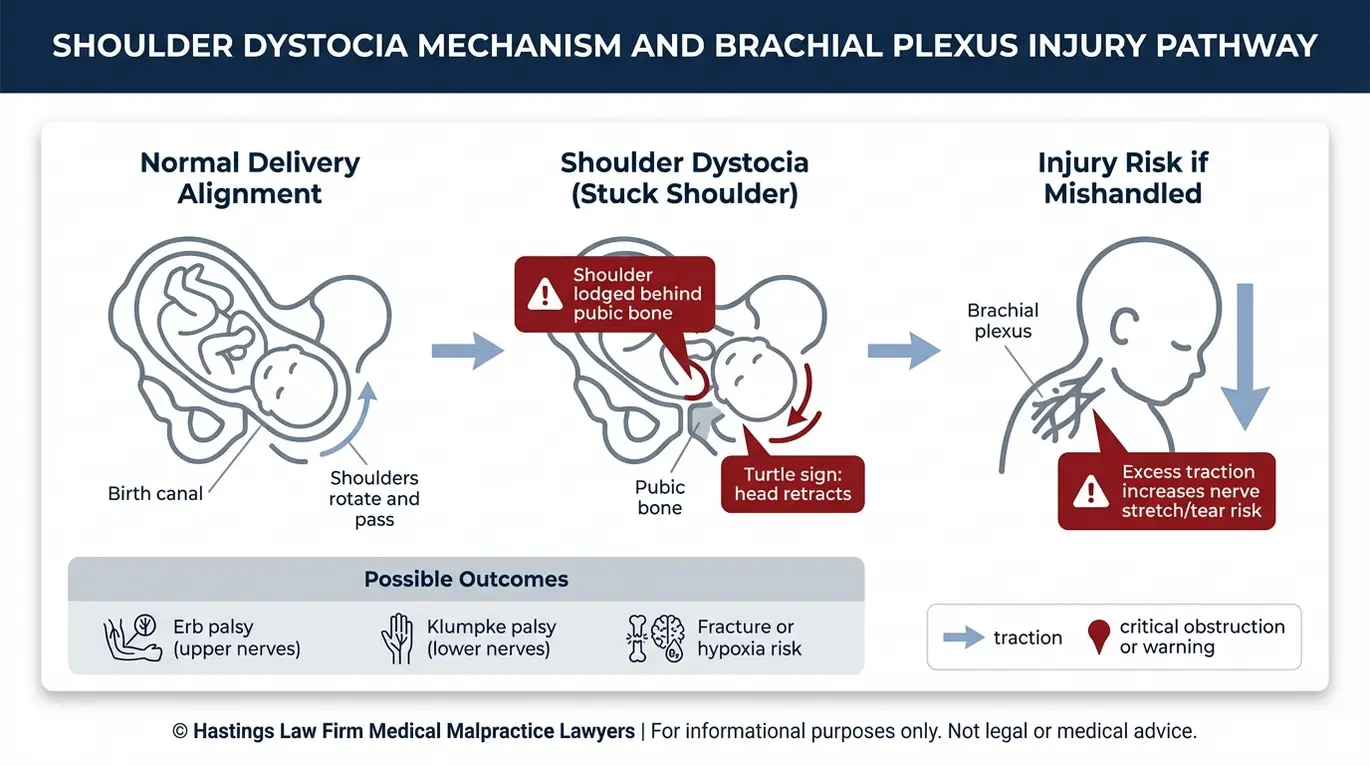
Shoulder dystocia occurs when a baby’s shoulder becomes lodged behind the mother’s pubic bone after the head has been delivered, creating a medical emergency. Fort Worth shoulder dystocia lawyers understand that during a vaginal birth, the baby must pass through the birth canal in a specific sequence. When the anterior shoulder catches, delivery stalls, and every second matters.
One early clinical indicator is the “turtle sign,” a visible retraction of the baby’s head back against the perineum after it emerges, as described by TeachMeObGyn. This sign alerts the delivery team that the shoulder is impacted and that standard delivery will not work.
If the situation is mishandled, excessive pulling on the baby’s head and neck can tear the brachial plexus. According to the Christopher Reeve Foundation, this nerve damage can result in:
- Partial or complete arm paralysis
- Loss of sensation in the hand or fingers
- Fractures of the clavicle or humerus
- Hypoxia, or lack of oxygen, if delivery is significantly delayed, which can lead to brain damage
As shoulder dystocia attorneys in Fort Worth, we investigate each of these outcomes to determine whether the injury was preventable.
Types of Nerve Damage: Erb’s Palsy vs. Klumpke’s Palsy
Two primary types of brachial palsy result from shoulder dystocia complications. Erb’s palsy affects the upper nerves of the brachial plexus, typically causing weakness or paralysis in the shoulder and upper arm. It is the more common of the two and often requires ongoing pediatric care, including physical therapy or surgery.
Klumpke’s palsy involves the lower nerves, affecting the forearm, wrist, and hand. Though less frequent, it can cause significant fine motor impairment and may indicate that more severe traction was applied during delivery. Both conditions require a thorough medical review to determine if the standard of care was met.
Medical Negligence: Did Your Doctor Fail the Standard of Care?
Medical negligence in a shoulder dystocia case can occur if a doctor uses excessive force, fails to recognize risk factors, or delays a necessary C-section. A Fort Worth shoulder dystocia lawyer can determine if these actions directly caused injury to the infant. Under Texas law, malpractice claims must meet requirements outlined in Texas Civil Practice and Remedies Code Chapter 74, including an expert report establishing the breach of care.
Here are common red flags our Fort Worth birth injury lawyers look for:
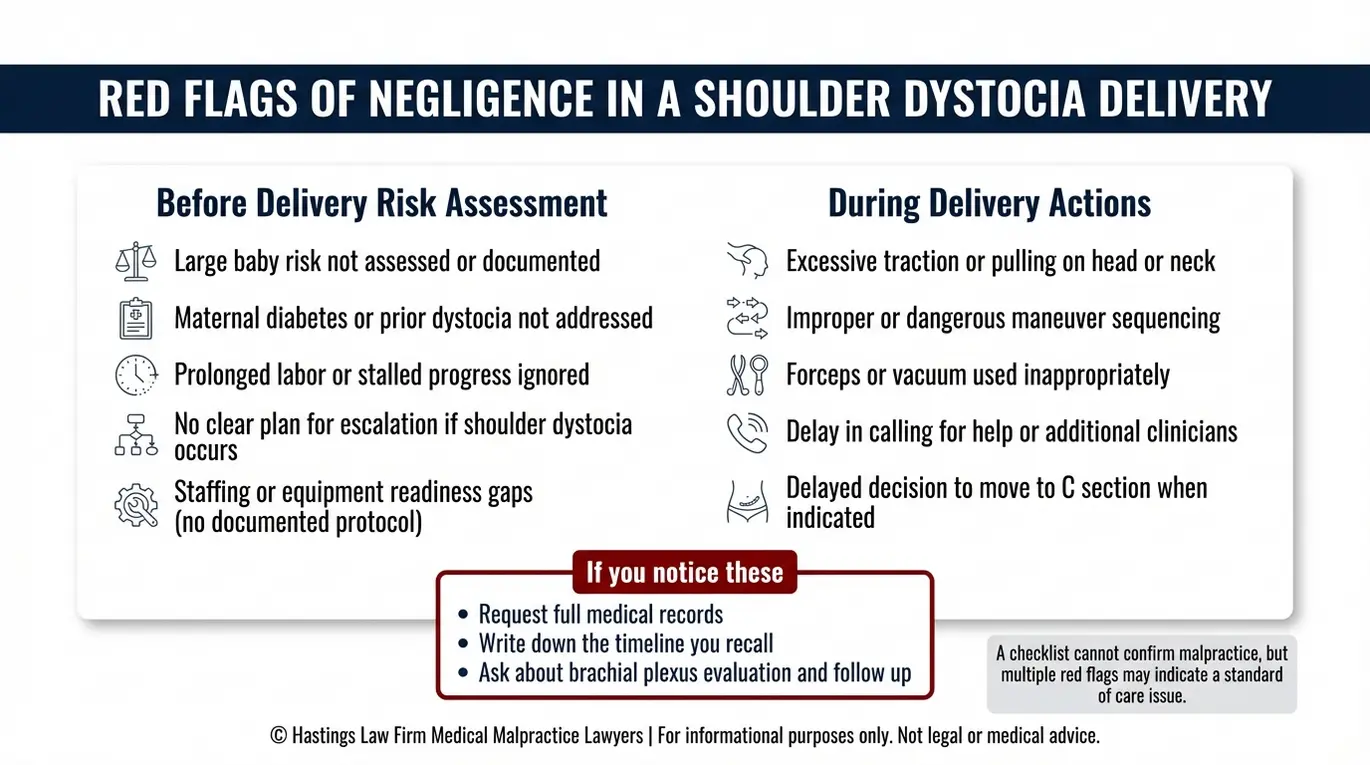
- Known risk factors were ignored: The medical team may have failed to act on indicators like fetal macrosomia (a large baby) or maternal gestational diabetes. Research in PubMed Central confirms that fetal biometric data can help identify at-risk pregnancies, meaning these risks are often foreseeable.
- Excessive traction was applied: Excessive traction, or pulling too hard on the baby’s head or neck, violates the standard of care requiring gentle maneuvers.
- Improper use of delivery tools: Forceps or a vacuum extractor used incorrectly can compound the injury.
- Approved maneuvers were not attempted: Skipping techniques like the McRoberts maneuver, which involves repositioning the mother’s legs to widen the pelvic opening, may indicate a breach in care.
- Delayed cesarean section: When labor stalls or fetal distress appears, a timely C-section can prevent injury.
At Hastings Law Firm, our team includes in-house nurse consultants and former defense attorneys. Our shoulder dystocia attorneys in Fort Worth reconstruct the timeline of your child’s birth to determine whether the obstetrician’s decisions fell below the accepted standard of care.
The Hastings Law Firm Difference
Results matter, but what truly sets us apart is how we achieve them. Every verdict, every settlement, and every Fort Worth courtroom victory comes from one guiding promise: To treat each client’s fight for justice as if it were our own.
This balance of skill, experience, and empathy reflects our core philosophy that justice should not only compensate the injured, but also make healthcare safer nationwide.

Damages: Securing Your Child’s Future After a Birth Injury
Compensation in shoulder dystocia cases covers past and future medical bills, physical therapy costs, pain and suffering, and loss of earning capacity. A Fort Worth shoulder dystocia lawyer can help you understand the full scope of what your family may be entitled to recover.
Damages must account for the long-term developmental impacts caused by a negligent healthcare provider. Specifically, if an obstetrician fails to manage the delivery safely, the financial burden should not fall on the family.
| Economic Damages | Non-Economic Damages |
|---|---|
| Lifetime medical care and surgeries | Physical pain and suffering |
| Physical and occupational therapy | Emotional distress |
| Adaptive equipment and assistive devices | Disfigurement or scarring |
| Lost future earning capacity | Loss of enjoyment of life |
Economic damages are calculated based on documented costs and projected future needs, often with input from medical experts. Non-economic damages account for the personal toll the injury takes on your child’s daily life. Holding the responsible party accountable ensures your child has resources for life.
Contact the Fort Worth Birth Injury Attorneys at Hastings Law Firm Today for Help
If you believe your child’s injury could have been prevented, trust that instinct. Our founder, Tommy Hastings, is a board-certified trial lawyer who oversees our strategy for these complex medical negligence claims. Contact a Fort Worth shoulder dystocia lawyer at Hastings Law Firm for a free case evaluation.
Our team is ready to review your child’s medical records, answer your questions, and help you understand your legal options. There is no fee unless we recover compensation for your family.
Frequently Asked Questions About Shoulder Dystocia Birth Injury in Fort Worth


This content was researched and written by the Hastings Law Firm editorial team, which includes attorneys, medical professionals, and experienced researchers. Our writing is informed by internal knowledge and practical experience, and we cross-check critical details against authoritative sources cited throughout. Every piece undergoes human-led fact-checking and legal review. Because legal and medical information can change, if you spot an error, please contact us. Learn more about our content standards and review process on our editorial policy page.

Gabe Sassin has focused exclusively on medical malpractice law since 2007. After spending more than a decade as a malpractice defense attorney, he knows exactly how the other side works. He has seen firsthand how healthcare providers, insurers, corporate defendants, and their legal teams think, prepare, and build their defense against claims. That knowledge works for the people who need it most today, injured patients and their families. His unique experience shapes everything he writes, giving readers a look at how these cases actually work from someone who has handled them from both sides.
