


Dallas Shoulder Dystocia Birth Injury Lawyer
Shoulder dystocia is an obstetric emergency that can occur during vaginal delivery when a baby becomes stuck after the head is delivered. Because oxygen deprivation and nerve damage can happen quickly, outcomes often depend on whether the medical team recognized risk factors, prepared an appropriate delivery plan, and used safe maneuvers instead of excessive force or dangerous pressure. Injuries can affect both the child and the mother and may require long term care. If your child suffered harm due to shoulder dystocia malpractice in Dallas, Texas, contact Hastings Law Firm for a free, confidential case review.

Last Updated: July 27, 2026
Trusted Dallas Birth Injury Attorneys for Shoulder Dystocia Malpractice Claims
When your child has been injured during delivery, the confusion and heartbreak can feel overwhelming. You may sense that something went wrong, but getting clear answers from the medical team feels impossible. That instinct deserves to be heard, not dismissed.
A Dallas Shoulder Dystocia Lawyer at Hastings Law Firm can help you understand what happened and whether the care your family received fell below accepted medical standards. Founded by Tommy Hastings in 2005, our team focuses exclusively on medical malpractice, and our in-house medical staff reviews the clinical details of every case alongside our attorneys. If your child suffered a preventable injury during a complicated delivery, we can review the records, explain your options, and help you take the first step toward accountability. Consultations are free and confidential.

Understanding Shoulder Dystocia and Obstetric Emergencies
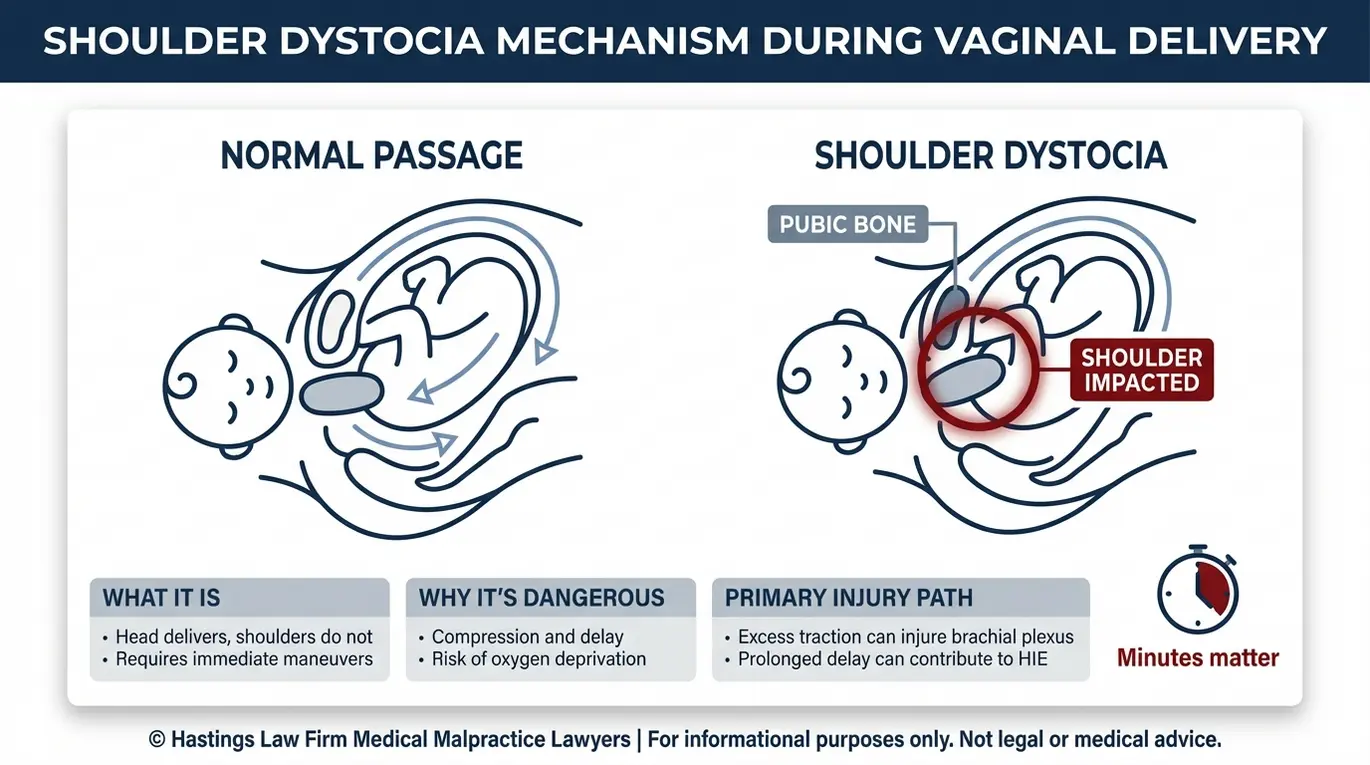
Shoulder dystocia is a medical emergency in which an infant’s head is born during a vaginal delivery but one or both shoulders become lodged behind the mother’s pubic bone, preventing the rest of the body from passing through the birth canal. This obstruction demands immediate and precise medical intervention to prevent permanent nerve damage or oxygen deprivation.
The danger is rooted in timing. Once the head delivers, the umbilical cord can become compressed between the baby and the pelvic structures. Every second the baby remains stuck increases the risk of birth asphyxia, a condition where reduced oxygen supply to the brain can lead to lasting neurological harm.
While shoulder dystocia is a recognized emergency, it is not an unforeseeable one. Obstetricians are trained in its management, and there are well-established protocols for resolving it safely. Because this condition is a known risk, hospitals must have protocols in place to handle it immediately.
There is no time for hesitation when a child’s oxygen supply is at risk. As Dallas shoulder dystocia lawyers, we evaluate whether those protocols were followed, and whether delays or departures from accepted practice caused the injury your child sustained. A shoulder dystocia attorney in Dallas focuses on the clinical timeline and the decisions made in those critical moments during labor and delivery.
Recognizing Medical Risk Factors That Signal Shoulder Dystocia
Obstetricians are trained to identify risk factors such as gestational diabetes, maternal obesity, and fetal macrosomia, a condition where the baby weighs more than 4,000 grams (roughly 8 pounds, 13 ounces) at birth, well before delivery begins. Screening for these conditions during prenatal care is a core part of the standard of care. A birth plan allows families and medical teams to prepare for these risks before labor starts.
When risk factors are present, the delivering physician has a duty to consider them as part of the birth plan and, in many cases, to discuss the option of a C-section (cesarean section) with the mother. Failing to account for known risks can suggest negligence if it leads to a preventable shoulder dystocia event. When these warning signs are ignored, the consequences can be devastating. A failure to plan for these risks effectively denies the mother the opportunity to choose a safer delivery method.
Common risk factors that should prompt heightened vigilance include:
- Fetal macrosomia (estimated birth weight over 4,000 grams), which is well-documented in the medical literature on the NCBI Bookshelf as a primary risk factor
- Maternal gestational diabetes, which increases the likelihood of a larger-than-average baby
- A history of prior shoulder dystocia in a previous delivery
- Prolonged labor stages, which may suggest cephalopelvic disproportion (CPD), a mismatch between the size of the baby and the dimensions of the mother’s pelvis
- Abnormal fetal positioning, including asynclitic positioning or other malpresentations that may complicate vaginal delivery
A Dallas shoulder dystocia attorney examines prenatal records to determine whether these warning signs were documented, communicated, and acted on appropriately. When a provider recognizes these risks but fails to adjust the delivery plan, that gap between knowledge and action is often where the legal case begins.
The Hastings Law Firm Difference
Results matter, but what truly sets us apart is how we achieve them. Every verdict, every settlement, and every Dallas courtroom victory comes from one guiding promise: To treat each client’s fight for justice as if it were our own.
This balance of skill, experience, and empathy reflects our core philosophy that justice should not only compensate the injured, but also make health care safer nationwide.

Identifying Negligence and Malpractice in Shoulder Dystocia Cases
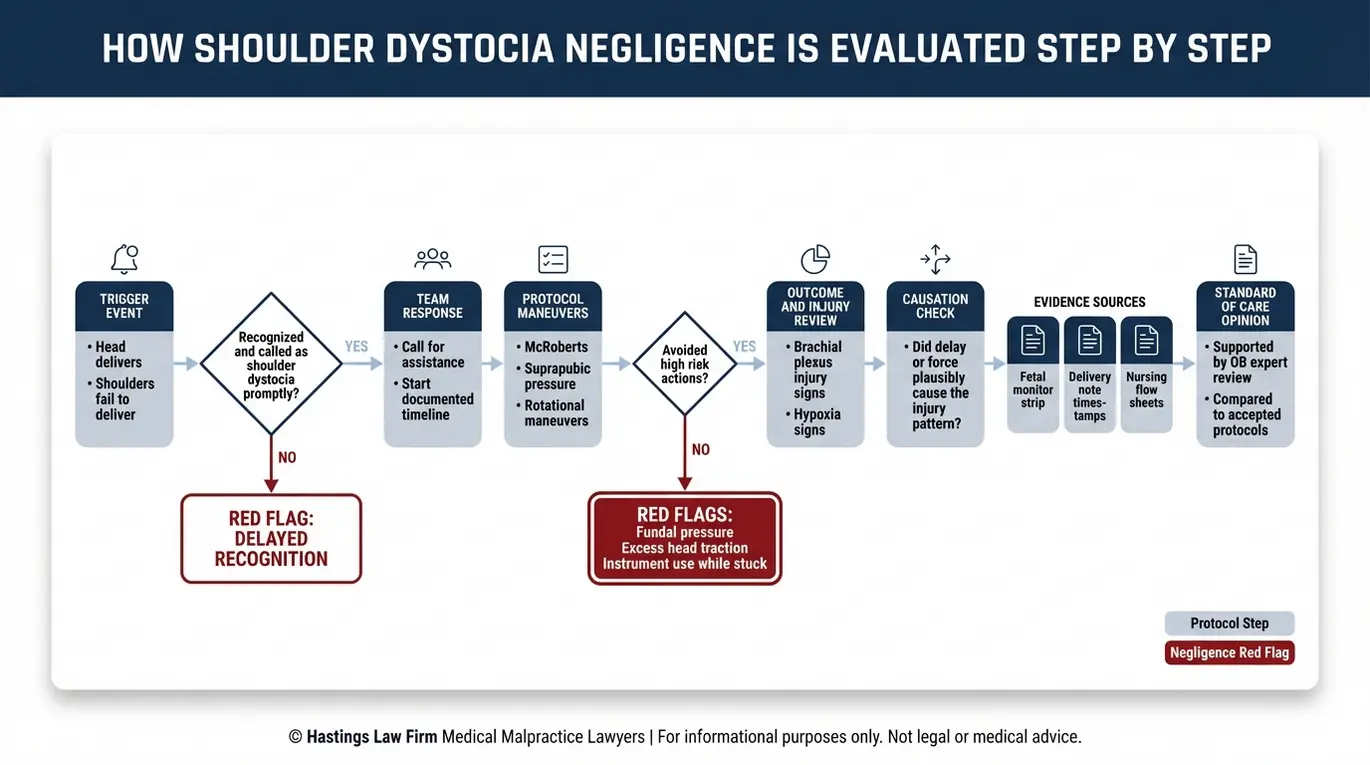
Medical malpractice occurs when a healthcare provider fails to follow the accepted standard of care during delivery, such as applying excessive force to the baby’s head or failing to perform the recognized maneuvers needed to release a trapped shoulder. The standard of care refers to the level of treatment a reasonably competent obstetrician would provide under the same circumstances. Proving negligence requires showing that a healthcare provider deviated from established safety protocols.
In shoulder dystocia cases, this standard is specific and well-documented. Medical training programs, clinical guidelines, and hospital protocols all outline what a provider should do when a baby’s shoulder becomes impacted. A shoulder dystocia lawyer in Dallas evaluates the delivery record against those benchmarks to determine whether the care provided met or fell below the accepted threshold.
Common signs of negligence include:
- Failure to document or act on known risk factors
- Misuse of assisted delivery instruments (forceps or vacuum extractors)
- Applying excessive force to the head or neck
- Failure to follow established safety protocols during the emergency
One common area of concern involves the misuse of assisted delivery instruments. Forceps or vacuum extractors applied when the shoulder is still lodged can increase traction on the baby’s head and neck, raising the risk of serious nerve injury. These tools have a role in obstetric care, but their use during an unresolved dystocia can signal a departure from safe practice.
Medical negligence in these cases often stems from a failure to follow protocol under pressure. When a provider pulls downward on the baby’s head with excessive force instead of transitioning to established relief maneuvers, the result can be permanent injury. Our Dallas birth injury lawyers work with qualified obstetric experts to reconstruct the delivery timeline and identify whether decisions were made in accordance with the standard of care.
Documentation is key in these claims. If the medical records show a lack of preparation or a failure to recognize the emergency, it strengthens the case for a Dallas birth injury lawyer to prove liability. As a shoulder dystocia law firm, we review charting, fetal monitoring strips, and nursing notes to build a clear picture of what happened and when.
Dangers of Improper Maneuvers During Delivery
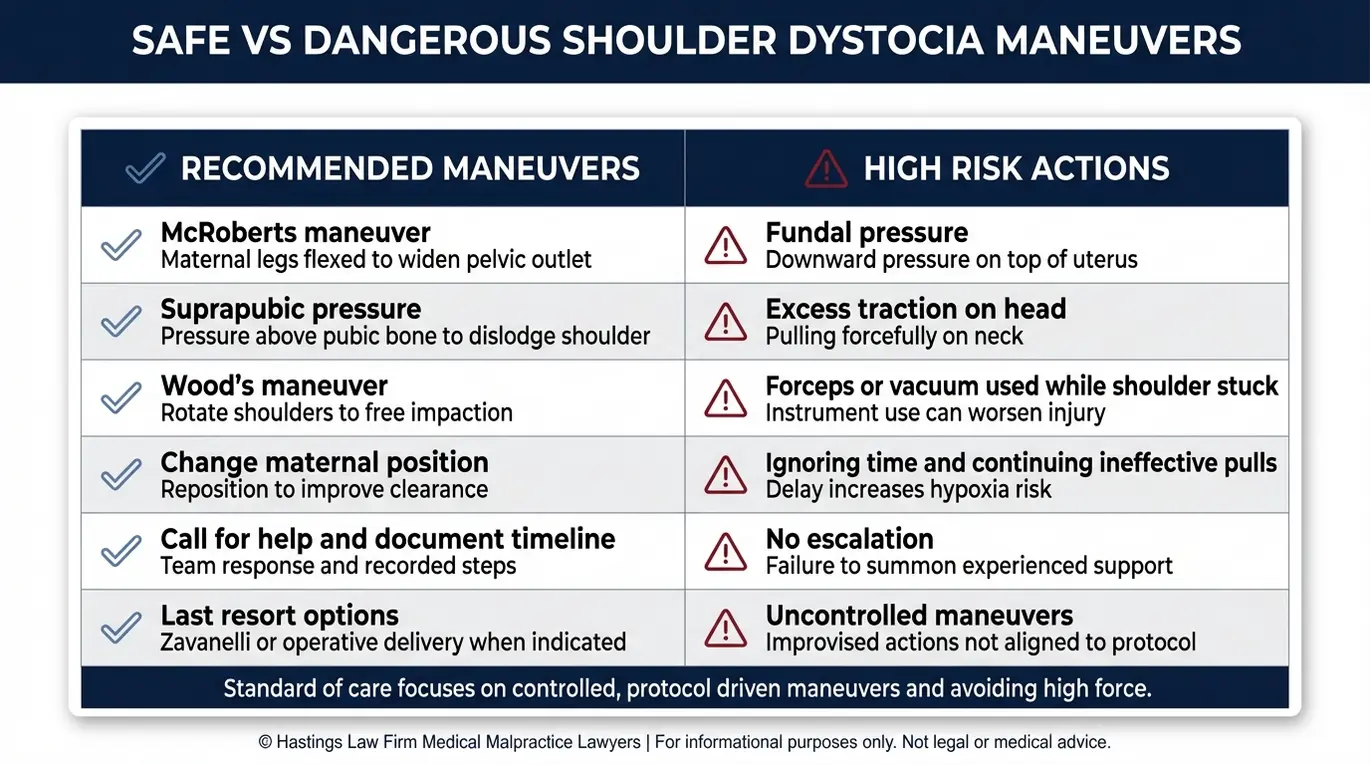
When shoulder dystocia occurs, doctors must use specific, evidence-based techniques to free the infant safely. Maneuvers like the McRoberts Maneuver, where the mother’s legs are sharply flexed toward her abdomen to widen the pelvic opening, and suprapubic pressure, where targeted force is applied just above the pubic bone to rotate the baby’s shoulder, are designed to resolve the obstruction without harming the child.
Other recognized techniques include Wood’s Maneuver, which involves rotating the baby’s posterior shoulder to release the impaction, and the Zavanelli Maneuver, an emergency technique that involves pushing the baby’s head back into the birth canal for delivery by cesarean section.
In contrast, certain actions are considered dangerous and inconsistent with accepted obstetric practice. Fundal pressure, the act of pushing down on the top of the mother’s uterus during a shoulder dystocia event, can worsen the impaction and increase the risk of uterine rupture. Excessive downward traction on the baby’s head can stretch or tear the delicate nerves of the neck.
| Recognized Safe Maneuvers | Dangerous Actions |
|---|---|
| McRoberts Maneuver (flexing the mother’s legs) | Fundal pressure (pushing on top of the uterus) |
| Suprapubic pressure (targeted force above the pubic bone) | Excessive traction on the baby’s head or neck |
| Wood’s Maneuver (rotating the posterior shoulder) | Forceful or prolonged pulling without repositioning |
| Zavanelli Maneuver (returning head for C-section) | Continued vaginal delivery attempts after failed maneuvers |
A Dallas shoulder dystocia malpractice lawyer examines the delivery notes to identify which maneuvers were attempted, in what order, and whether the provider escalated appropriately. A birth injury attorney in Dallas understands that the difference between a safe resolution and a catastrophic injury often comes down to training, composure, and clinical decision-making in those critical moments.
Improper Use of Force and Brachial Plexus Injuries
The brachial plexus is a network of nerves running from the spinal cord through the neck and into the arm that controls movement and sensation in the shoulder, arm, and hand. When a provider applies excessive downward traction on the baby’s head while the shoulder remains trapped, those nerves can be stretched, compressed, or torn.
The severity of the damage depends on the degree of force. Mild stretching may result in temporary weakness. In more serious cases, the nerve fibers can be pulled apart, a condition called nerve avulsion, where the nerve root is torn away from the spinal cord entirely. A brachial plexus injury of this magnitude is typically permanent and may require surgical intervention, with outcomes that still leave significant functional limitations.
Common Injuries Caused by Shoulder Dystocia Malpractice
The most common injuries from mismanaged shoulder dystocia include brachial plexus palsies, fractured bones, and brain damage caused by prolonged oxygen deprivation. These injuries can require years of surgeries and therapy. The physical and emotional toll on the child and family is immense, making accurate diagnosis and legal action essential.
Injuries often include:
- Brachial plexus injury (ranging from neuropraxia to avulsion)
- Fractures of the clavicle (collarbone) or humerus
- Erb’s palsy, which affects the upper nerves and limits shoulder movement
- Klumpke’s palsy, which involves the lower nerves and affects the hand
- Hypoxic ischemic encephalopathy (HIE) from oxygen deprivation
Brachial plexus injuries range in severity. Erb’s palsy affects the upper nerves of the brachial plexus and typically limits movement in the shoulder and upper arm. Klumpke’s palsy involves the lower nerves and affects the forearm, wrist, and hand. According to a systematic review of evaluation methods for neonatal brachial plexus palsy published on PubMed, these injuries require careful clinical assessment to determine the extent of nerve damage and long-term prognosis.
When oxygen deprivation is prolonged, the result can be hypoxic ischemic encephalopathy (HIE), a form of brain injury that may cause seizures, developmental delays, or cerebral palsy. The cognitive and physical effects of HIE can be lifelong.
Shoulder dystocia can also cause serious harm to the mother. Postpartum hemorrhage, severe vaginal tearing, and uterine rupture are among the maternal complications that may arise from a traumatic delivery. Shoulder dystocia attorneys in Dallas evaluate injuries to both the child and the mother when building a case.
Securing Compensation for Long-Term Care and Damages
Families may recover compensation for past and future medical expenses, pain and suffering, physical impairment, and the cost of lifelong therapy and care required for a child with permanent disabilities. Dallas shoulder dystocia lawyers work to ensure that a settlement or verdict accounts for the full scope of your family’s needs, not just today’s bills.
Economic damages can include costs for surgery, physical therapy, occupational therapy, adaptive equipment, and home modifications. In cases involving permanent disability, a life care plan may be developed to project future medical care and support needs over the child’s lifetime, including lost earning capacity.
Non-economic damages address the pain, suffering, disfigurement, and loss of enjoyment of life your child may experience. Dallas birth injury compensation claims also consider the emotional impact on the parent-child relationship, including the grief and stress that follow a preventable injury.
Why Choose Hastings Law Firm for Your Birth Injury Case
Hastings Law Firm offers a team led by board-certified trial lawyers and in-house medical staff who focus exclusively on medical malpractice, ensuring your case is prepared for trial from the very start. Our founder, Tommy Hastings, is a board-certified trial lawyer with over 20 years of experience representing families in complex birth injury cases. He was recently inducted into the American Board of Trial Advocates, an invitation-only group for elite trial lawyers.
Every resource in our firm is directed toward holding negligent medical providers accountable. Our team includes board-certified patient advocates and nurse consultants who help decode complex medical records. Our trial-ready approach means we investigate, document, and build every case as though it will go before a jury.
That level of preparation sends a clear message to defense attorneys and insurance carriers, and it consistently results in stronger outcomes for our clients. As your Dallas shoulder dystocia lawyer, we bring former defense attorneys and experienced nurses who understand hospital systems from the inside. You pay nothing unless we recover compensation on your behalf.
Contact the Dallas Birth Injury Attorneys at Hastings Law Firm Today for Help
Your family deserves honest answers about what happened during your child’s delivery. If you believe your child was harmed by preventable medical errors, we are here to listen and to help you understand your legal options.
Contact Hastings Law Firm to speak with a patient advocate for a free, confidential case evaluation. We will review the medical records, consult with qualified experts, and give you a clear assessment of your case. Our team is dedicated to uncovering the truth and fighting for the resources your child needs for a secure future. Taking this step costs nothing, and it may be the beginning of securing your family’s peace of mind.
Frequently Asked Questions About Shoulder Dystocia Birth Injury in Dallas


This content was researched and written by the Hastings Law Firm editorial team, which includes attorneys, medical professionals, and experienced researchers. Our writing is informed by internal knowledge and practical experience, and we cross-check critical details against authoritative sources cited throughout. Every piece undergoes human-led fact-checking and legal review. Because legal and medical information can change, if you spot an error, please contact us. Learn more about our content standards and review process on our editorial policy page.

Brady D. Williams is a nationally recognized medical malpractice attorney who has spent his career handling high-stakes litigation for injured patients and families across the country. Licensed in both Texas and California, Brady draws on experience from hundreds of resolved medical cases to break down complex legal and medical topics for the people who need that information most. His writing reflects the same attention to detail and commitment to clarity that he brings to every case he handles.
