


Austin Shoulder Dystocia Birth Injury Lawyer
Shoulder dystocia is an obstetrical emergency that can occur during vaginal delivery when a baby shoulder becomes trapped after the head is delivered. In those moments, delays, excessive force, or missed warning signs can lead to serious infant or maternal injuries with lasting consequences. The topic often turns on whether the medical team recognized risk factors, identified the turtle sign, and used accepted maneuvers in the right sequence. If your child suffered harm due to shoulder dystocia malpractice in Austin, Texas, contact Hastings Law Firm for a free, confidential case review.

Last Updated: July 27, 2026
Trusted Austin Birth Injury Attorneys for Shoulder Dystocia Malpractice Claims
When your child is injured during delivery, the confusion and grief can feel paralyzing. You trusted your medical team to keep your baby safe, and that trust was broken. If your family is facing a shoulder dystocia diagnosis and you suspect something went wrong, you are not alone, and you do not have to figure this out by yourself.
At Hastings Law Firm, founded by board-certified trial attorney Tommy Hastings, we focus exclusively on medical malpractice. Our team includes former defense attorneys, in-house nurse consultants, and board-certified patient advocates who understand both the medicine and the law. As an experienced Austin shoulder dystocia lawyer team, we are here to help you find answers about what happened and whether negligence played a role.
Reach out for a free, confidential case evaluation. There are no fees unless we recover compensation for your family.

Understanding Shoulder Dystocia and Medical Negligence
Shoulder dystocia is a birth complication where the infant’s shoulder becomes lodged behind the mother’s pubic bone after the head has been delivered, creating an obstetrical emergency that requires immediate and specific maneuvering by the physician. During a vaginal birth, the baby must pass through the birth canal in a specific sequence. When the shoulder gets trapped, every second counts.
A doctor’s duty of care, the legal obligation to provide treatment consistent with accepted medical standards, becomes critical when these emergencies arise. The physician must act quickly, but also correctly. Panic or improper technique can turn a manageable complication into a catastrophic injury. Shoulder dystocia attorneys know that not every shoulder dystocia results from negligence. But when a doctor skips recognized maneuvers, applies excessive force, or fails to call for help, that response may constitute a breach of standard of care.
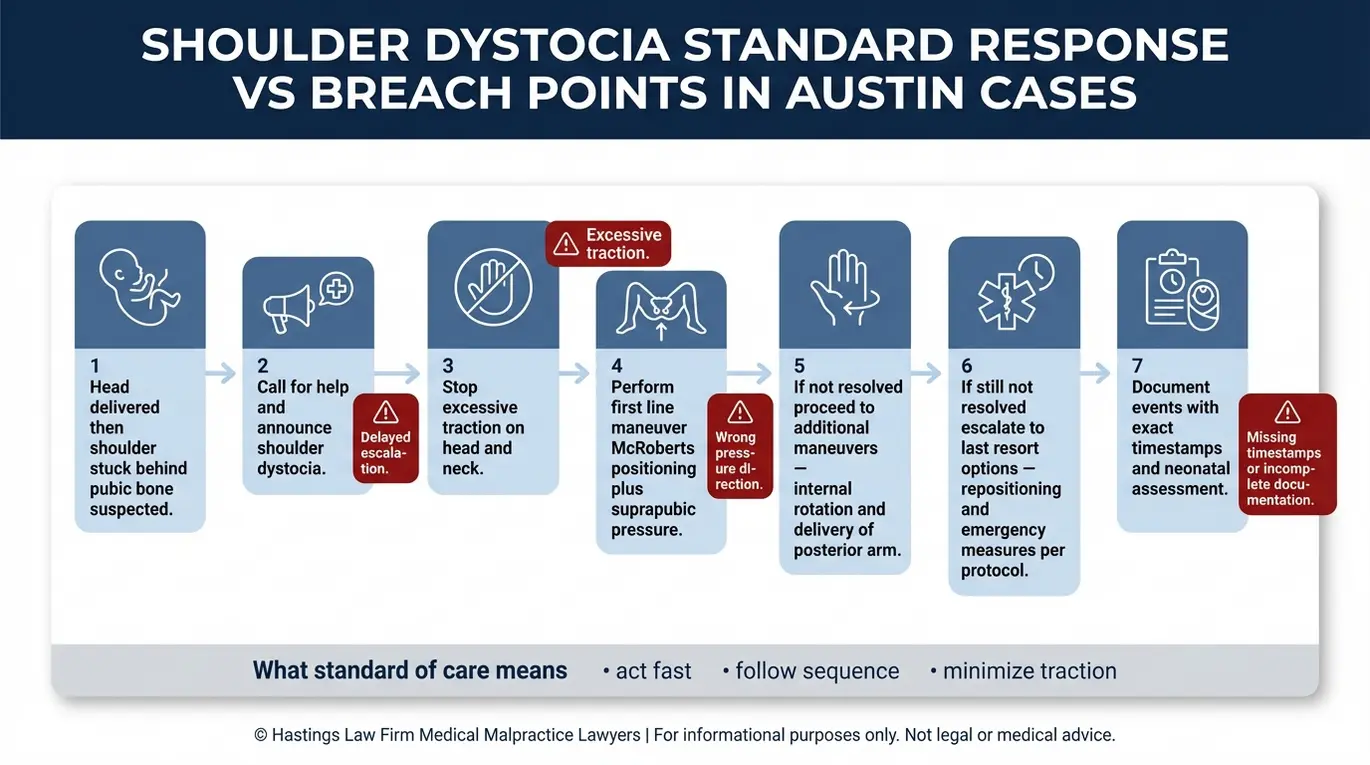
According to the NCBI Bookshelf overview of Shoulder Dystocia, there is a well-established sequence of maneuvers that physicians should follow, including:
- McRoberts maneuver, a repositioning of the mother’s legs to widen the pelvic opening, which is typically the first-line response
- Suprapubic pressure applied externally to dislodge the trapped shoulder
- Rotational maneuvers (such as the Woods or Rubin technique) to free the shoulder internally
- Delivery of the posterior arm to reduce the diameter of the baby’s shoulders
- Episiotomy when soft tissue is contributing to the obstruction
An Austin shoulder dystocia lawyer evaluates whether your provider followed or deviated from these recognized steps. Our team works with obstetric experts to reconstruct the delivery timeline and identify exactly where the standard of care may have been violated.
Recognizing Risk Factors and Warning Signs Missed by Doctors
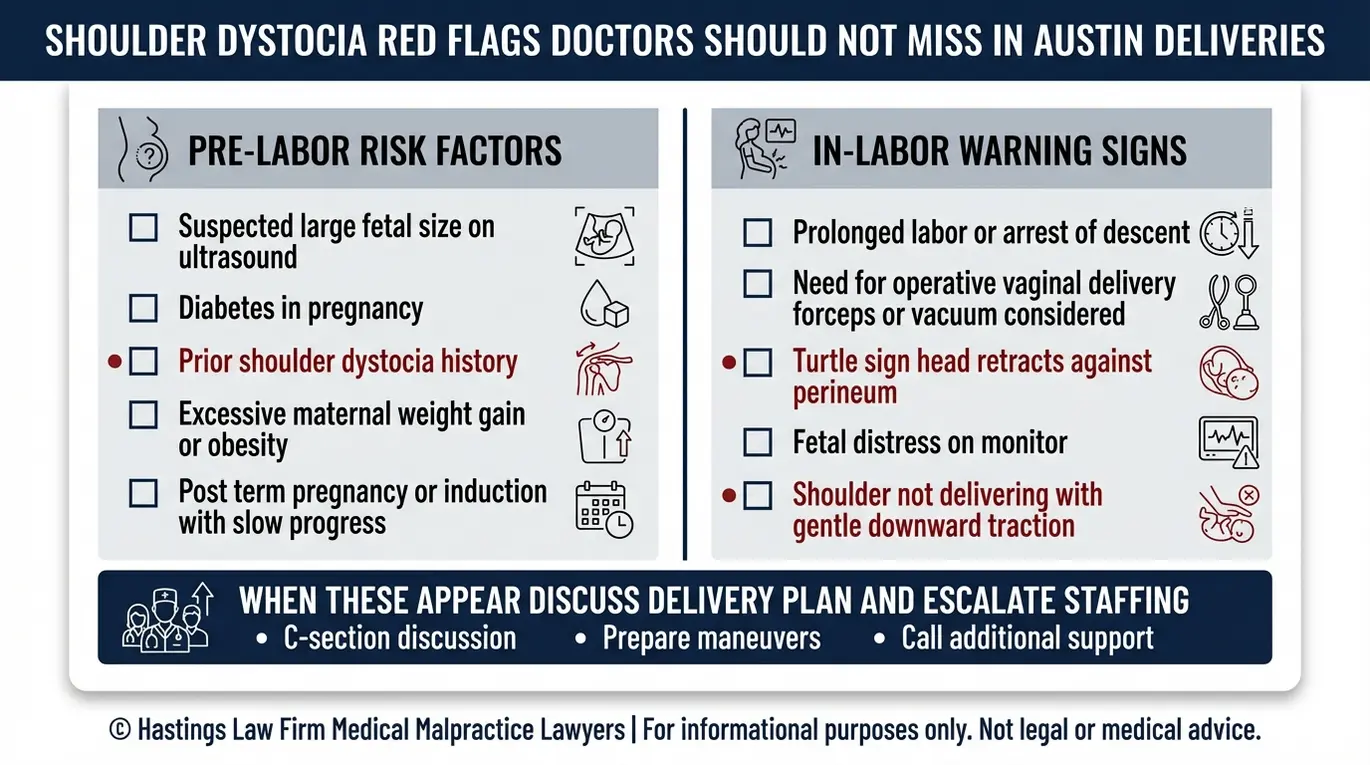
Doctors are trained to identify risk factors such as macrosomia (large fetal size), maternal diabetes, or a history of shoulder dystocia, and failure to recommend a Cesarean section in light of these risks may constitute medical malpractice.
Certain conditions increase the likelihood of this complication. Fetal macrosomia, meaning the baby is significantly larger than average, and gestational diabetes, a form of diabetes that develops during pregnancy, are key predictors. Research published in PubMed on the association between diabetes in pregnancy and shoulder dystocia confirms the link. When a provider ignores ultrasounds showing high fetal size, a shoulder dystocia attorney can help families investigate.
Pre-labor red flags your doctor should have assessed:
- Estimated fetal weight above 4,500 grams (approximately 9 lbs, 14 oz)
- Maternal diabetes or gestational diabetes
- History of shoulder dystocia in a prior delivery
- Prolonged labor or failure to progress
- Maternal obesity
The Significance of the Turtle Sign in Diagnosis
During delivery, the “turtle sign,” a visual cue where the baby’s head retracts tightly against the perineum, is a hallmark indicator of shoulder dystocia and signals that the baby may be in danger. The perineum is the area of tissue between the vaginal opening and the anus. If medical staff fail to recognize this sign immediately, the delay can lead to infant or maternal injuries. An Austin shoulder dystocia lawyer examines delivery records to determine whether the shoulder dystocia was identified and acted on in time.
The Hastings Law Firm Difference
Results matter, but what truly sets us apart is how we achieve them. Every verdict, every settlement, and every Austin courtroom victory comes from one guiding promise: To treat each client’s fight for justice as if it were our own.
This balance of skill, experience, and empathy reflects our core philosophy that justice should not only compensate the injured, but also make health care safer nationwide.

Common Injuries Caused by Improper Delivery Techniques
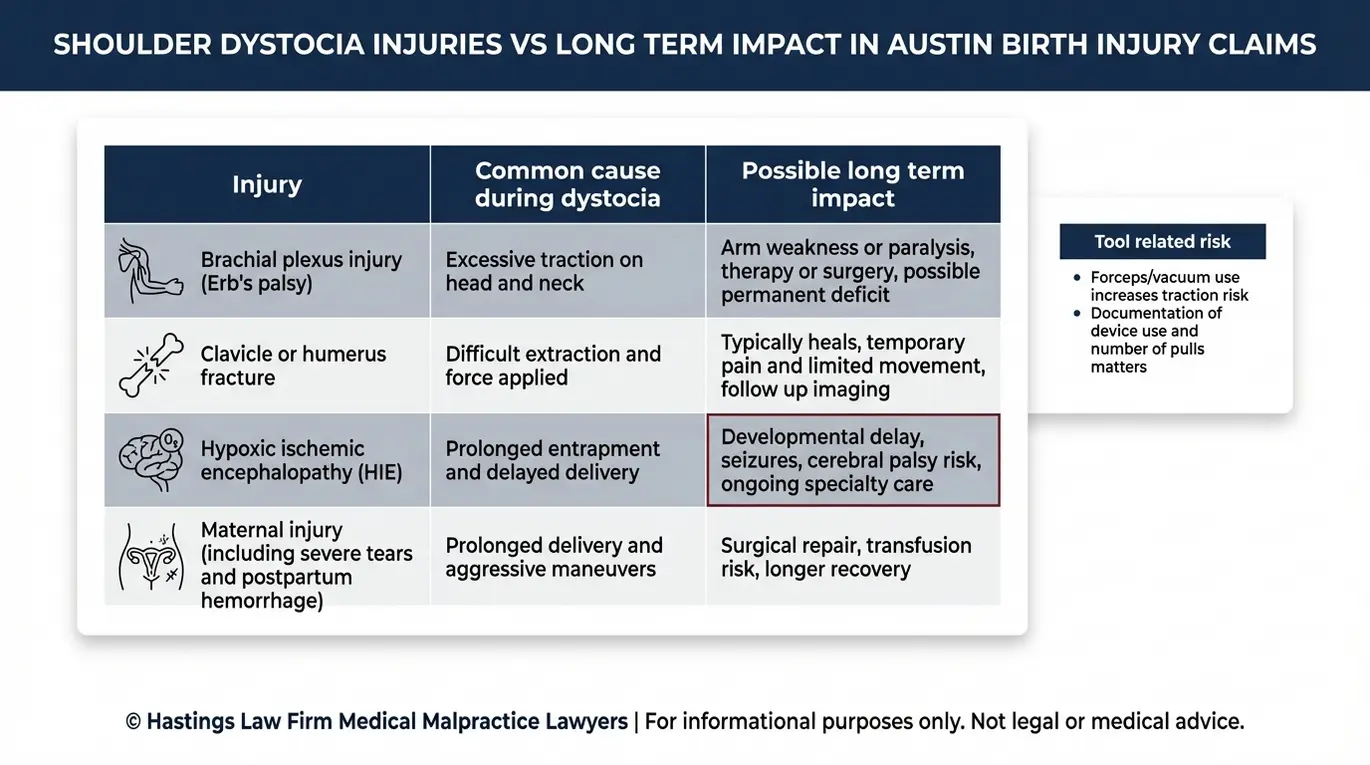
When physicians use excessive force or improper delivery tools like forceps or vacuum extractors during shoulder dystocia, it can result in permanent injuries including Erb’s palsy, brachial plexus damage, clavicle fractures, or hypoxic-ischemic encephalopathy (HIE). Operative vaginal delivery, which refers to the use of forceps or vacuum extractors to assist in birth, carries heightened risk in these situations.
The most common mechanism of injury involves pulling too forcefully on the baby’s head while the shoulder remains trapped. This can stretch or tear the brachial plexus, the network of nerves running from the neck through the shoulder and arm. According to MedlinePlus on brachial plexus injury in newborns, the severity ranges from temporary weakness to permanent paralysis. A lawyer for shoulder dystocia can determine if negligence occurred.
| Injury | Long-Term Impact |
|---|---|
| Erb’s palsy (upper brachial plexus injury) | Partial or full loss of arm movement and sensation |
| Complete brachial plexus injury | Permanent paralysis of the affected arm |
| Collarbone fracture | Typically heals, but may indicate excessive force was used |
| Hypoxic-ischemic encephalopathy (HIE), brain damage caused by oxygen deprivation | Cognitive disability, seizures, developmental delays |
An Austin shoulder dystocia lawyer helps families connect the injury to the provider’s actions and pursue accountability for the harm caused.
Steps to Protect Your Rights After a Birth Injury Diagnosis
Parents should request complete medical records immediately, avoid signing any settlement offers from the hospital or insurance risk managers, and consult with a specialized birth injury attorney to preserve evidence and determine liability.
To protect your right to compensation through a medical malpractice lawsuit, follow these steps:
- Request your full medical records immediately. Under the Texas Medical Board’s guidelines for obtaining medical records, you have a right to your chart, including labor and delivery notes, fetal monitoring strips, and nursing logs. Securing these records early helps ensure nothing is altered or lost.
- Do not discuss the delivery with hospital staff or insurance carriers. These conversations can be used against you later. Anything you say may be documented and shared with the hospital’s legal defense team.
- Contact an Austin shoulder dystocia lawyer for an independent case review. A qualified Austin shoulder dystocia lawyer will have obstetric experts examine the records to determine whether the standard of care was met. At Hastings Law Firm, our in-house medical staff begins this review during the initial evaluation.
Proving Negligence and Seeking Compensation in Austin
To win a shoulder dystocia case in Texas, a plaintiff must prove via expert testimony that the healthcare provider deviated from the accepted medical standard of care, directly causing the infant’s injury and resulting in specific damages. The standard of care represents the level of care and skill that a reasonably competent health care professional would provide under similar circumstances.
Texas law requires that before a medical malpractice lawsuit moves forward, the plaintiff must serve an expert report within 120 days after each defendant’s original answer is filed. This requirement, outlined in Texas Civil Practice and Remedies Code § 74.351, means your legal team needs immediate access to qualified medical experts. Hastings Law Firm maintains a national expert network of board-certified obstetricians and neonatal specialists who provide objective case analysis and credible testimony.
The financial impact is significant. A study published in PubMed Central on the cost of hospitalization for infants with HIE illustrates the expenses. Erb’s palsy, a condition caused by damage to the upper brachial plexus nerves, may require years of therapy.
HIE, brain damage resulting from oxygen deprivation during delivery, can lead to lifelong disabilities. Identifying liable parties is essential for securing full compensation. An Austin shoulder dystocia lawyer helps families handle this process.
Recoverable damages in an Austin shoulder dystocia case may include:
- Past and future medical expenses, including surgeries, therapy, and adaptive equipment
- Pain and suffering experienced by the child
- Mental anguish endured by parents and family
- Loss of the child’s future earning capacity
- Physical impairment or disfigurement
An experienced Austin shoulder dystocia lawyer builds the evidence needed to present these damages clearly to a jury or in settlement negotiations.
Contact the Austin Birth Injury Attorneys at Hastings Law Firm Today for Help
If your child was injured during delivery and you believe medical negligence was involved, the team at Hastings Law Firm is ready to listen. We exist to restore trust for families who feel betrayed by the healthcare system and to hold providers accountable so the same mistakes are not repeated.
Our firm handles shoulder dystocia and birth injury cases on a contingency fee basis, which means you pay no attorney fees and no costs unless we secure a recovery for your family. Every case begins with a free, confidential evaluation led by our in-house medical professionals. This includes a thorough risk-free case evaluation to determine the strength of your claim.
You deserve to know what happened. As a dedicated Austin shoulder dystocia lawyer team, we can review the medical records, consult with obstetric experts, and explain your legal options in plain terms.
Call Hastings Law Firm or contact an Austin shoulder dystocia lawyer online to schedule your evaluation today.
Frequently Asked Questions About Shoulder Dystocia Birth Injury in Austin


This content was researched and written by the Hastings Law Firm editorial team, which includes attorneys, medical professionals, and experienced researchers. Our writing is informed by internal knowledge and practical experience, and we cross-check critical details against authoritative sources cited throughout. Every piece undergoes human-led fact-checking and legal review. Because legal and medical information can change, if you spot an error, please contact us. Learn more about our content standards and review process on our editorial policy page.

Gabe Sassin has focused exclusively on medical malpractice law since 2007. After spending more than a decade as a malpractice defense attorney, he knows exactly how the other side works. He has seen firsthand how healthcare providers, insurers, corporate defendants, and their legal teams think, prepare, and build their defense against claims. That knowledge works for the people who need it most today, injured patients and their families. His unique experience shapes everything he writes, giving readers a look at how these cases actually work from someone who has handled them from both sides.
