


Phoenix Nursing Home Malnutrition Lawyer
Malnutrition and dehydration in nursing homes can signal serious neglect, especially when a resident depends on staff for meals, fluids, and monitoring. These failures are often linked to understaffing, poor training, or weak oversight, and they can lead to rapid decline, painful complications, and life threatening consequences. Families often notice physical changes and shifts in behavior that suggest basic needs are not being met. If you or a loved one were harmed or worse due to nursing home malnutrition or dehydration in Phoenix, Arizona, contact Hastings Law Firm for a free, confidential case review.
Last Updated: July 27, 2026
Trusted Legal Representation for Elderly Care Negligence in Phoenix
When a loved one in a nursing home shows signs of malnutrition or dehydration, it can feel like the system you trusted to provide care has failed in one of the most basic ways possible. You may have questions about what went wrong, who is responsible, and what options your family has moving forward.
At Hastings Law Firm, we focus exclusively on medical malpractice and negligence cases. Our team includes in-house medical professionals, former defense attorneys, and board-certified patient advocates who understand how to evaluate these claims from both sides. If you need a Phoenix nursing home malnutrition lawyer, we are here to review what happened and explain your options in a free, confidential consultation.

Understanding Malnutrition and Dehydration in Nursing Homes
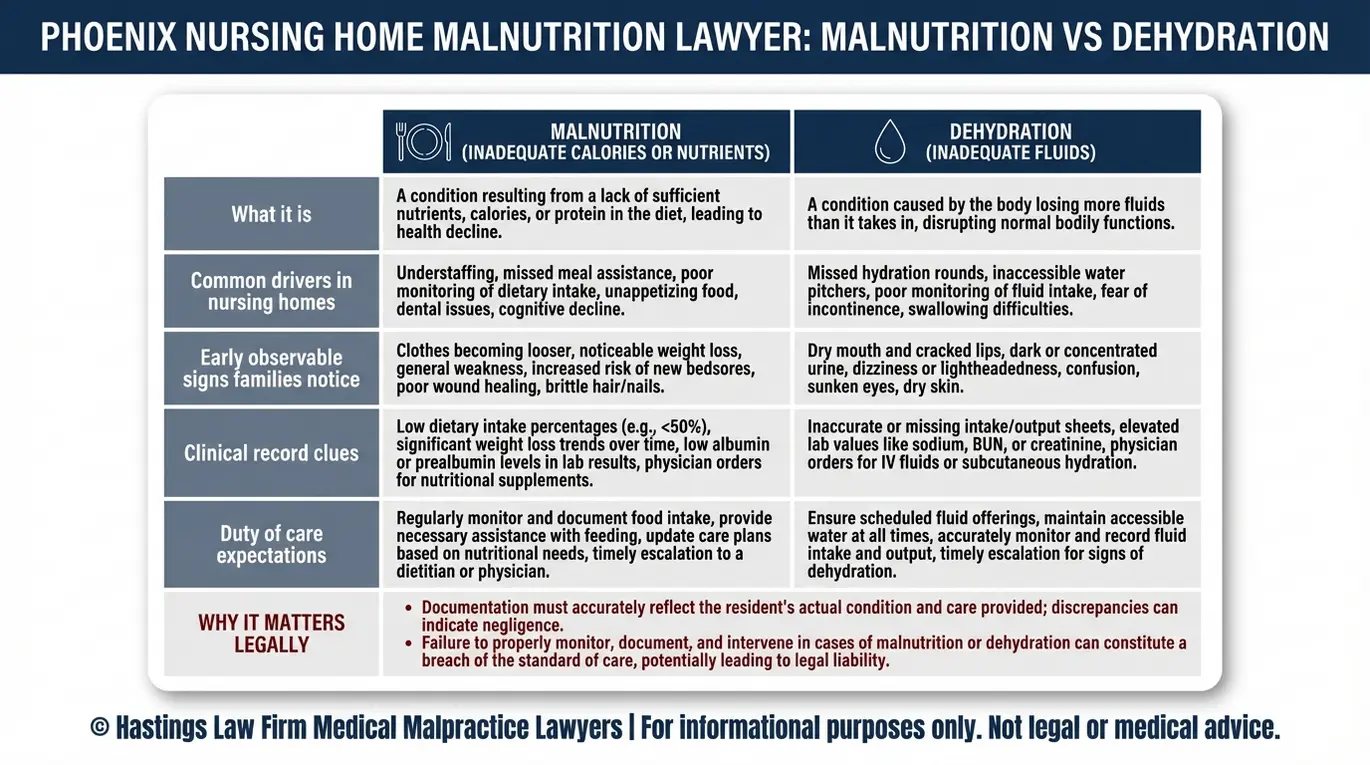
Malnutrition and dehydration in nursing homes occur when residents do not receive adequate food and fluids, leading to rapid and often preventable health decline. These failures are frequently tied to systemic breakdowns in staffing, training, or oversight rather than isolated incidents.
While these two conditions are closely related, they affect the body differently. To understand the risks, it is helpful to tell them apart:
- Malnutrition: A state where a person lacks sufficient calories, protein, vitamins, and minerals to maintain normal body function.
- Dehydration: The loss or inadequate intake of fluids, which disrupts electrolyte balance and organ function.
Research published in *Hydration Status in Older Adults: Current Knowledge and Future Challenges* (PubMed Central) highlights how difficult it can be to detect dehydration in elderly patients, making consistent monitoring essential.
Many elderly residents in long-term care facilities cannot feed themselves, communicate hunger, or reach a glass of water without help. Residents with cognitive decline, limited mobility, or swallowing difficulties are especially dependent on staff to meet their daily nutrition and hydration needs.
When a facility accepts a resident, it assumes a duty of care, the legal obligation to provide the level of attention and support that a reasonably competent facility would provide under similar circumstances. That duty includes ensuring residents receive proper nutrition.
In some instances, this duty is breached when inadequate staffing levels leave residents without the support they require. A Phoenix nursing home dehydration lawyer can help determine whether a facility met or fell short of this obligation.
A qualified Phoenix nursing home malnutrition lawyer can also investigate whether systemic neglect contributed to your loved one’s condition. When the evidence points to a failure in basic nutritional care, families have a right to hold the responsible parties accountable.
Types of Nutritional Deficiencies in the Elderly
Not all malnutrition looks the same, and undernutrition can appear in various ways depending on what the resident is lacking. The most common form in nursing homes is protein-calorie malnutrition (PCM), a condition where the body does not receive enough protein and calories to maintain muscle mass, immune function, and organ health. PCM can develop quickly in elderly residents who are not eating full meals or who are given nutritionally inadequate food.
Another category is micronutrient deficiency, which refers to the lack of specific vitamins and minerals such as iron, vitamin D, zinc, and B12. These deficiencies may not cause dramatic weight loss but can silently weaken bones, impair healing, and increase the risk of infection.
In more severe cases, residents may develop cachexia or experience dehydration-related malnutrition. These conditions can compound existing health problems because, without adequate fluids, the body struggles to absorb and transport the nutrients it does receive.
Warning Signs That Indicate Neglect and Starvation
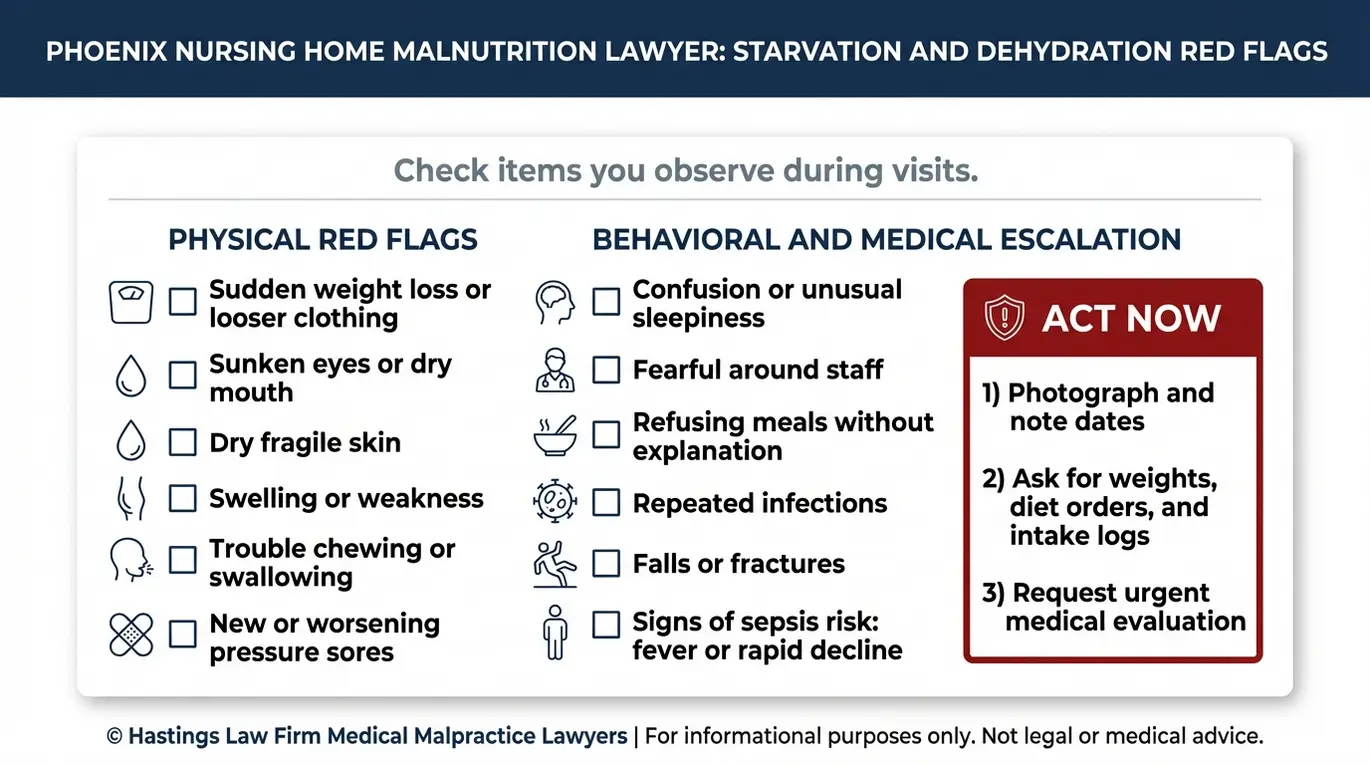
Common signs of malnutrition include sudden weight loss, sunken eyes, dry skin, confusion, and the development of bedsores. Identifying neglect often begins with observing physical and behavioral changes that suggest a resident is not receiving proper care.
Knowing what to look for during visits can make a real difference. The warning signs generally fall into three categories: physical changes, behavioral shifts, and secondary health complications.
Red Flag Checklist for Families:
- Unexplained or rapid weight loss
- Dry, cracked, or paper-thin skin
- Sunken cheeks or eyes
- Poorly fitting dentures or visible dental problems
- Chronic fatigue or difficulty staying awake
- New or worsening confusion or disorientation
- Fear, anxiety, or withdrawal around staff
- Clothes or jewelry that have become noticeably loose
- New pressure injuries, also called bedsores or pressure sores, which are wounds that develop when sustained pressure cuts off blood flow to the skin
- Repeated infections or slow-healing wounds
- Unexplained falls or fractures from muscle weakness
Physical indicators like dramatic weight loss and dry skin are often the first things families notice. But behavioral changes matter just as much. A resident who was previously alert but has become withdrawn, confused, or fearful during visits may be experiencing the cognitive effects of malnutrition or dehydration, or both. In extreme cases, a resident may suffer from cachexia, a wasting syndrome marked by extreme muscle loss that does not improve with normal feeding alone.
Secondary health outcomes are especially dangerous. When the body lacks proper nutrition, the immune system weakens, and the risk of infection, including sepsis, rises sharply. Muscle wasting from insufficient protein and calories also makes falls and fractures far more likely. According to research on risk factors of pressure injury in elderly inpatients (PubMed Central), poor nutritional status is a well-documented contributor to pressure sore development, a condition that can become life-threatening in frail residents.
If you recognize these signs in your loved one, speaking with a Phoenix nursing home malnutrition lawyer or attorneys experienced in nursing home malnutrition cases can help you understand whether neglect may be a factor.
The Hastings Law Firm Difference
Results matter, but what truly sets us apart is how we achieve them. Every verdict, every settlement, and every Phoenix courtroom victory comes from one guiding promise: To treat each client’s fight for justice as if it were our own.
This balance of skill, experience, and empathy reflects our core philosophy that justice should not only compensate the injured, but also make health care safer nationwide.

Common Causes of Malnutrition and Facility Liability
Most cases of malnutrition in long-term care facilities stem from systemic negligence, particularly understaffing. When a facility does not employ enough trained staff to assist residents with feeding and monitor dietary intake, residents who depend on that help simply do not eat or drink enough.
Understaffing is the most common issue we see. Many elderly residents need hands-on assistance at mealtimes. They may need someone to position them safely, help them eat, or simply encourage them to finish a meal.
When one aide is responsible for dozens of residents, that level of attention becomes impossible. This failure to monitor intake is a clear breach of the duty of care. The Centers for Medicare & Medicaid Services (CMS) tracks quality measures including nutritional status, and facilities that consistently fall short of staffing benchmarks often show patterns of nutritional neglect.
Lack of training is another frequent cause. Staff who are not educated on dysphagia, a condition where residents have difficulty swallowing, may serve foods that are unsafe or impossible for certain residents to eat. Without proper training, warning signs of aspiration or choking go unrecognized.
Dental neglect also contributes. Residents who need dentures, dental repairs, or soft-food diets may not receive them, making eating painful or impractical. Assisted feeding, the process of physically helping a resident eat and drink, requires time and patience that undertrained or overworked staff may not be able to provide.
As a Phoenix nursing home malnutrition lawyer, we examine staffing records, meal logs, dietary plans, and the facility’s own policies to identify where the standard of care was not met. Families dealing with nursing home abuse or neglect may find that a Phoenix nursing home dehydration lawyer helps build a case against the facility responsible for this negligence.
The Severe Consequences and Recoverable Damages
Patients who suffer malnutrition or dehydration due to negligence may recover compensation for a range of harms, including medical bills, ongoing care costs, and the physical pain caused by the facility’s failure. Untreated malnutrition often leads to medical complications that require extensive treatment.
The consequences of untreated malnutrition in elderly residents can be severe and sometimes irreversible. Organ failure, sepsis from infected pressure sores, and catastrophic falls caused by muscle wasting are among the most serious outcomes. When these injuries result from a facility’s failure to provide basic nutrition and hydration, the law allows families to seek damages.
Recoverable damages in these cases typically include:
- Medical expenses: Hospitalization, emergency treatment, surgery, and rehabilitation costs related to conditions caused or worsened by malnutrition, such as sepsis or organ failure.
- Future care costs: Ongoing medical treatment, specialized nutrition support, and any additional long-term care needs.
- Pain and suffering: Compensation for the physical pain, discomfort, and emotional distress the resident endured.
- Loss of quality of life: Damages reflecting the loss of dignity, independence, and daily enjoyment caused by the neglect.
- Wrongful death damages: If a loved one passed away as a result of malnutrition or dehydration, families can seek compensation for funeral expenses, loss of companionship, and the emotional toll of their loss.
Every case is different, and the specific damages depend on the circumstances. A Phoenix nursing home dehydration lawyer can evaluate the full scope of harm and help your family understand what a claim may include. A Phoenix nursing home malnutrition lawyer works to ensure families receive compensation through settlements or jury verdicts.
How Our Team Investigates and Proves Negligence
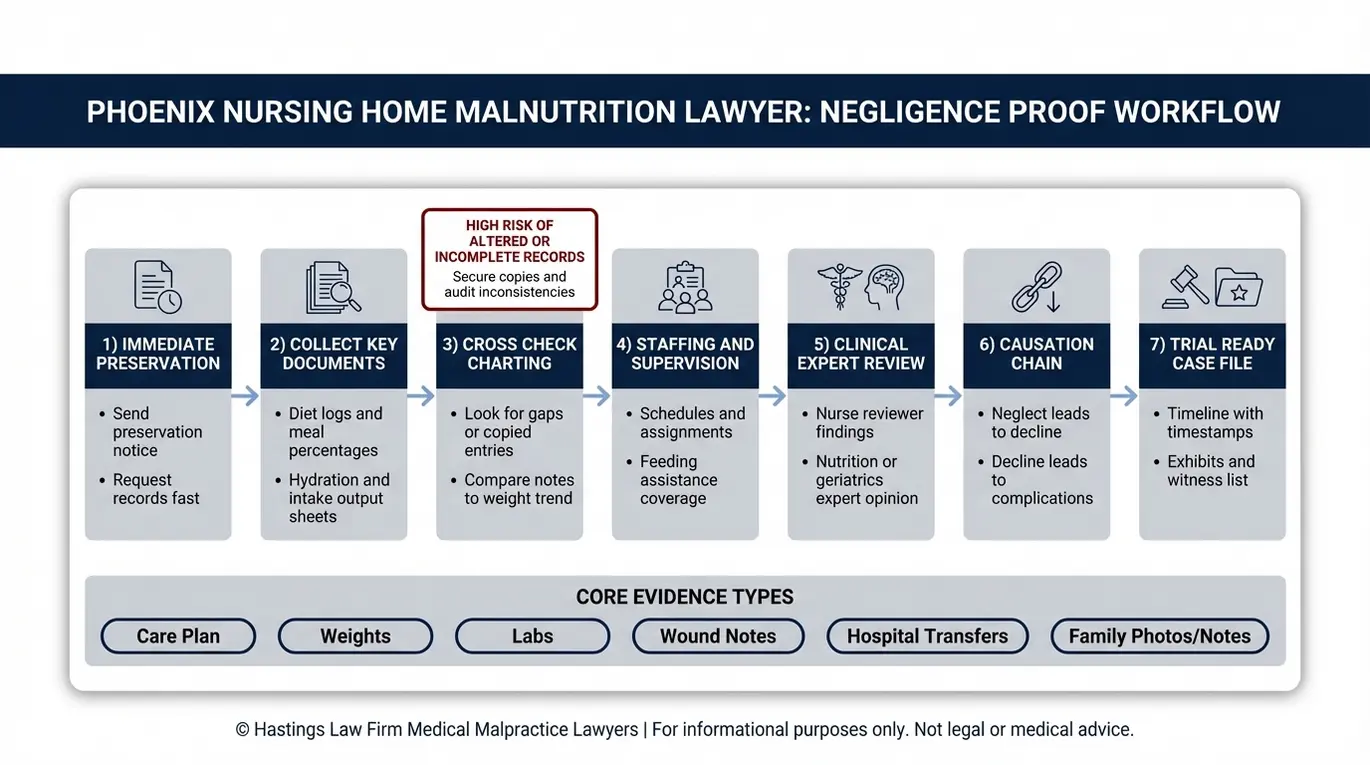
We use a thorough investigative process that involves securing dietary logs, staffing records, and medical charts, then cross-referencing those documents with expert analysis to establish whether the facility failed to prevent harm. Establishing negligence requires a detailed look at both clinical records and facility operations.
One of our first priorities is preserving evidence before records can be altered or lost. Our in-house medical staff, which includes nurse practitioners and board-certified patient advocates, begins reviewing the resident’s clinical records immediately. We look specifically at intake and output (I&O) charting, the logs where staff are required to document how much food and fluid a resident consumed each day. Missing entries or gaps in these records can be strong indicators of nursing home neglect.
Founded by Tommy Hastings, a board-certified trial lawyer with over two decades of experience, we prepare every case from day one as if it will go before a jury. Our investigation follows a structured process:
- Record collection and preservation: We secure medical charts, dietary plans, meal logs, and staffing records as early as possible.
- Staffing analysis: We obtain facility staffing schedules and compare them against resident needs to determine whether the facility was consistently short-staffed.
- Expert review: Through our national expert network, we engage geriatric specialists, nutritionists, and nursing experts to evaluate whether the standard of care was met.
- Causation assessment: Our medical and legal teams work together to connect the facility’s failures directly to the resident’s injuries or decline.
As a Phoenix nursing home malnutrition lawyer, we take a trial-ready approach to ensure we are ready to protect your legal rights. That level of preparation strengthens our position whether the case resolves through settlement or trial. If you need a Phoenix nursing home dehydration lawyer, our team has the resources to prove your case.
Contact the Phoenix Nursing Home Attorneys at Hastings Law Firm Today for Help
If your loved one has suffered from malnutrition or dehydration in a nursing home, you deserve answers. At Hastings Law Firm, our mission is to restore trust for families who have been let down by the care system and to hold negligent facilities accountable so this does not happen to someone else.
As a firm whose founder is a member of the Multi-Million Dollar Advocates Forum, we provide the specialized advocacy needed to hold negligent facilities accountable. Time matters in these cases. Arizona law limits how long you have to file a claim, and critical evidence can disappear quickly. We offer a free, confidential case evaluation with a board-certified patient advocate or attorney, and you pay no fees unless we recover compensation on your behalf. Contact us today to take the first step.
Frequently Asked Questions About Nursing Home Malnutrition in Phoenix


This content was researched and written by the Hastings Law Firm editorial team, which includes attorneys, medical professionals, and experienced researchers. Our writing is informed by internal knowledge and practical experience, and we cross-check critical details against authoritative sources cited throughout. Every piece undergoes human-led fact-checking and legal review. Because legal and medical information can change, if you spot an error, please contact us. Learn more about our content standards and review process on our editorial policy page.

Tommy Hastings, founder of Hastings Law Firm, is a board-certified personal injury trial lawyer dedicated exclusively to healthcare injury cases. Since 2001, he has represented injured patients and families in litigation against major hospital systems, pharmaceutical companies, and negligent healthcare providers nationwide. He has handled numerous high-profile cases that have drawn national media attention and resulted in multi-million dollar recoveries. He draws on that experience in his writing, helping readers understand how these cases work and what options may be available to them.
