


Arizona Nursing Home Malnutrition Lawyer
Written by: Hastings Law Firm | Reviewed by: Tommy Hastings | Updated: July 27, 2026
Malnutrition and dehydration in nursing homes are often preventable and can signal neglect rather than normal aging. Common warning signs may develop gradually and can be missed when staffing is thin or care plans are not updated as a resident changes. Untreated nutritional neglect can lead to serious medical decline, infections, organ damage, and or worse. Records such as weight logs and intake tracking can help clarify whether a facility recognized the problem and responded appropriately. If you or a loved one were harmed or worse due to nursing home malnutrition and dehydration in Arizona, contact Hastings Law Firm for a free, confidential case review.
Trusted Legal Representation for Elderly Neglect in Arizona
What You Should Know About Elderly Starvation & Dehydration Claims in Arizona:
- Serious medical decline can follow when a nursing home fails to provide adequate nutrition and hydration, including infections, kidney failure, non healing wounds, and wrongful death.
- Accountability can be disputed when a facility claims a resident refused food or was uncooperative, since staff are expected to use alternative methods to maintain nutrition.
- Harm can also result from providing the wrong nutrition, including failure to follow dietary restrictions or errors in tube feeding that can lead to aspiration pneumonia.
- Options for financial recovery may include medical expenses, funeral costs, pain and suffering, loss of dignity, and in severe cases punitive damages.
- Case value can vary widely based on the severity of harm and the quality of documentation showing what care was provided.
- Facility understaffing and cost cutting can leave residents without needed feeding assistance and hydration support.
- A lack of timely care plan updates can contribute to worsening nutrition when a resident condition changes and dietary needs are not reassessed.
- Objective weight tracking can be central when records show a steady decline without a corresponding change in the care plan.
- Documentation gaps can raise concerns about whether monitoring was neglected or records were altered, especially in intake and output tracking.
- Family observations and witness accounts can be important when they conflict with facility notes about meals, fluids, or resident behavior.
A Healthcare Focused Law Firm
When a loved one in a nursing home begins to lose weight rapidly, appears dehydrated, or seems weaker each time you visit, those observations deserve to be taken seriously. Malnutrition and dehydration in elderly care facilities are not inevitable consequences of aging. They are often the result of neglect, and Arizona law provides a path to hold facilities accountable.
At Hastings Law Firm, our legal and medical team works together to investigate these cases thoroughly. Our in-house nurse consultants and board-certified patient advocates review clinical records, identify gaps in care, and help build a clear picture of what went wrong. If you believe your loved one is suffering from inadequate nutrition or hydration in an Arizona facility, an experienced Arizona nursing home malnutrition lawyer can review what happened and explain your options. The consultation is free, confidential, and carries no obligation.
Recognizing the Critical Warning Signs of Starvation and Dehydration
Malnutrition and dehydration in the elderly often manifest as rapid weight loss, paper-thin skin, cracked lips, dark urine, confusion, and the development of bedsores due to skin breakdown. These signs can appear gradually, which makes them easy for busy staff to overlook, but families who visit regularly are often the first to notice that something is wrong.
The physical indicators tend to be the most visible. You may notice your loved one’s clothes fitting loosely, their cheeks appearing hollow, or their eyes looking sunken.
A simple clinical check known as the skin turgor test, which measures skin elasticity by gently pinching the skin on the back of the hand, can reveal dehydration. Skin that stays “tented” or returns slowly suggests the body lacks adequate fluids. Research published by the National Library of Medicine on hydration status assessment in older patients confirms that clinical signs like poor skin turgor and dry mucous membranes remain important indicators of dehydration.
Behavioral changes also signal a nutritional deficiency. A resident who was once alert may become lethargic, withdrawn, or stop asking for water because they lack the energy to do so. Poor nutrition also accelerates skin breakdown. When the body lacks adequate caloric intake, it cannot repair tissue, creating ideal conditions for pressure ulcers, commonly called bedsores. A Cochrane review on nutritional interventions for preventing and treating pressure ulcers examined the relationship between nutrition and these painful wounds, noting that adequate nutrition is part of the strategy for pressure ulcer prevention and treatment.
Warning signs families should watch for include:
- Sudden or unexplained weight loss
- Dry, cracked lips and mouth
- Dark or strong-smelling urine
- Skin that appears thin, bruises easily, or tears
- Poor skin turgor (skin stays tented when pinched)
- Sunken eyes or hollow cheeks
- New or worsening bedsores
- Confusion, delirium, or unusual drowsiness
- Complaints of thirst or hunger
- Lethargy or loss of interest in surroundings
Quantitative Benchmarks for Severe Dehydration
Medical professionals define clinically significant unintentional weight loss as a loss of 5% or more of body weight within 30 days, or 10% or more over six months. These benchmarks are red flags that should trigger immediate intervention. Weight logs are a standard part of nursing home care, and when those logs show a pattern of steady decline without a corresponding change in the care plan, it can indicate a serious failure to meet the standard of care. This objective measurement helps determine if a resident is receiving proper care. An Arizona nursing home malnutrition lawyer will look closely at these records to determine whether the facility identified the problem and whether they acted on it.

Systemic Causes of Nutritional Neglect in Arizona Facilities
Most cases of malnutrition in nursing homes stem from corporate negligence, specifically intentional understaffing and cost-cutting measures that leave caregivers with insufficient time to assist residents with meals and hydration.
When facilities prioritize budgetary considerations over resident safety by operating with too few staff members, individual attention suffers. Feeding a resident who has difficulty swallowing or who eats slowly can take 30 to 45 minutes per meal. When one aide is responsible for a dozen residents, providing this level of feeding assistance becomes impossible. Residents with dementia or Alzheimer’s disease are especially vulnerable because they may not remember to eat or need patient encouragement. Public data available through Medicare’s Care Compare tool for Arizona facilities allows families to review staffing levels and inspection results for specific nursing homes.
A related failure involves the care plan, which is the individualized document that outlines each resident’s medical needs and dietary requirements. When a resident’s condition changes, a licensed dietitian should be involved in assessing and adjusting nutritional goals. When these updates do not happen, residents suffer the consequences.
Overnutrition as a Form of Malnutrition
Malnutrition includes providing the wrong nutrition. Correct nutrition is vital for residents managing specific medical conditions like diabetes. A resident with diabetes who is consistently given high-sugar meals is being harmed by the facility’s failure to follow dietary restrictions. Improper management of enteral feeding, commonly known as tube feeding, can also cause injury. If a feeding tube is positioned incorrectly, liquid can enter the lungs and cause aspiration pneumonia, a dangerous and sometimes fatal lung infection. These errors reflect a breakdown in the standard of care that an Arizona nursing home malnutrition lawyer can investigate.
The Hastings Law Firm Difference
Results matter, but what truly sets us apart is how we achieve them. Every verdict, every settlement, and every Arizona courtroom victory comes from one guiding promise: To treat each client’s fight for justice as if it were our own.
This balance of skill, experience, and empathy reflects our core philosophy that justice should not only compensate the injured, but also make healthcare safer nationwide.

Severe Health Consequences of Untreated Malnutrition
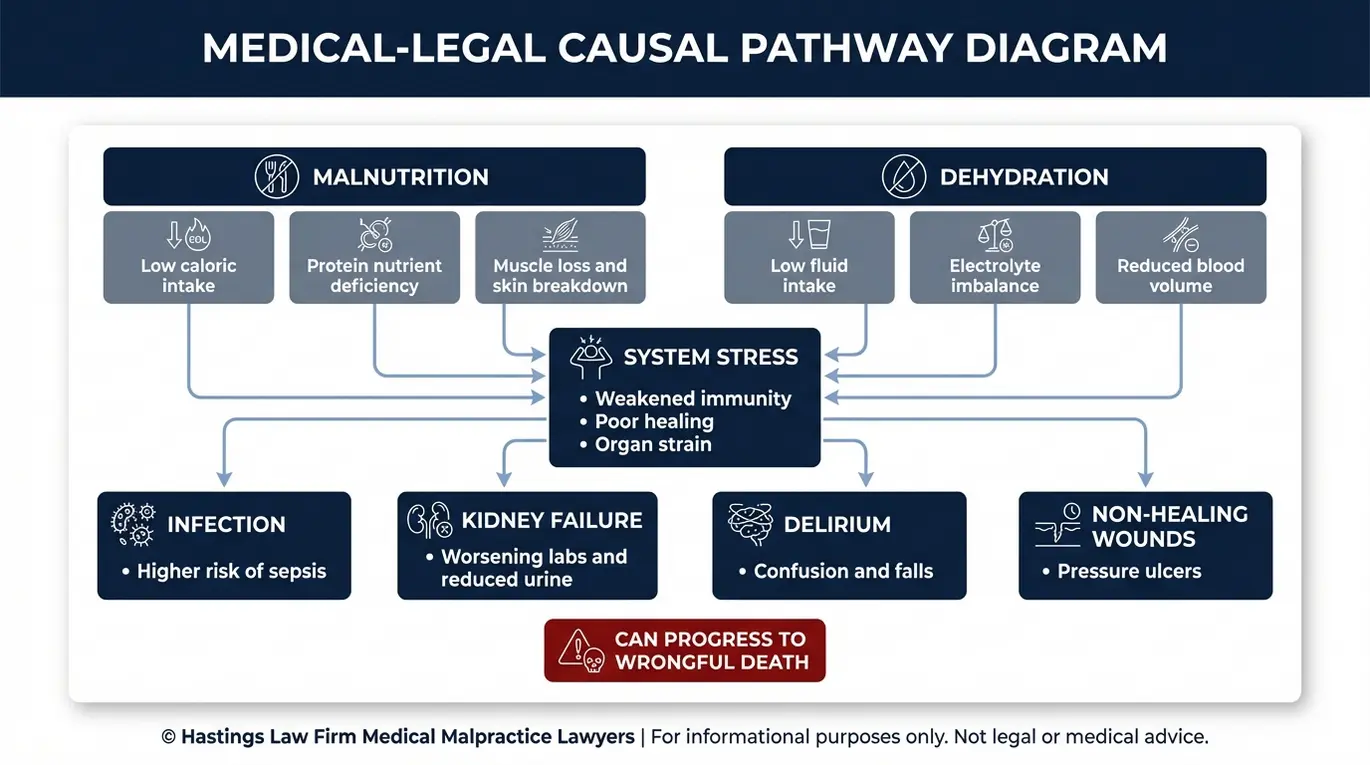
Left untreated, nutritional deficiencies lead to immune system collapse, increased susceptibility to infections, renal failure, non-healing wounds, and ultimately wrongful death. What begins as inadequate food and water intake can rapidly progress to organ damage and cognitive decline.
Dehydration, the condition that results when the body loses more fluid than it takes in, places enormous strain on the kidneys. Persistent dehydration in older adults can lead to acute kidney failure, a medical emergency. At the same time, the brain depends on proper hydration. Severe dehydration worsens delirium, causing episodes of extreme confusion that an elder abuse attorney often sees misdiagnosed as dementia progression.
Protein-calorie malnutrition, a state in which the body does not receive enough protein and calories, weakens the immune system and leaves residents susceptible to infections. Wounds heal slowly, and anemia develops. Bones weaken through accelerating osteoporosis, which dramatically increases the risk of fractures from even minor falls.
| Condition | How Malnutrition/Dehydration Contributes | Potential Outcome |
|---|---|---|
| Kidney failure | Chronic dehydration forces kidneys to filter concentrated waste | Hospitalization, dialysis, death |
| Infections | Weakened immune response from lack of nutrition | Sepsis, pneumonia |
| Delirium and seizures | Electrolyte imbalances and fluid loss | Cognitive decline, injury from falls |
| Non-healing wounds | Protein deficiency prevents tissue repair | Worsening bedsores, amputation |
| Osteoporosis | Calcium and vitamin D deficiency | Hip fractures, immobility |
| Wrongful death | Cumulative organ failure | Preventable loss of life |
When an Arizona nursing home malnutrition lawyer investigates these cases, the goal is to trace this cascade of harm back to the facility’s failure to provide adequate nutrition and hydration.
Overcoming the Uncooperative Resident Defense Strategy
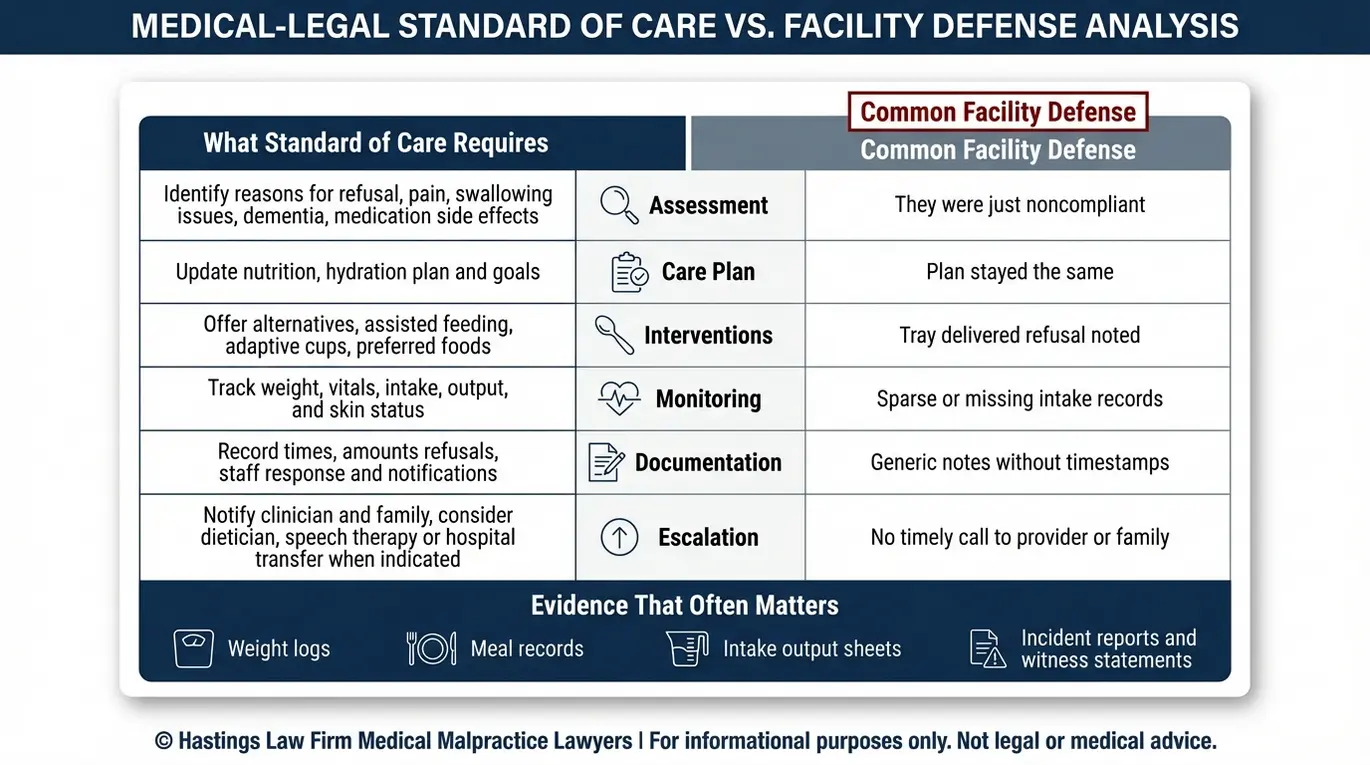
Nursing homes frequently attempt to avoid liability by claiming that the resident “refused” food or was “uncooperative” during mealtimes, but federal and state regulations require staff to find alternative methods to ensure proper nutrition. The standard of care does not permit a facility to simply note a refusal and walk away.
Feeding assistance, the hands-on support that includes positioning residents, offering preferred foods, and providing encouragement, is a required part of care. When a resident with cognitive impairment refuses a meal, staff are expected to try again later, offer substitutes, or involve a dietitian.
Medical records and intake and output records, commonly called I&O records, which track exactly how much fluid and food a resident consumed, serve as critical evidence. Gaps in these records can suggest defense tactics where documentation was fabricated or monitoring was neglected. Witness testimony from family members can further contradict the facility’s version of events. An Arizona nursing home malnutrition lawyer will examine incident reports and staffing schedules to determine whether the facility genuinely attempted to address refusals or used them as a convenient excuse.
Distinguishing Chronic Conditions from Acute Neglect
Many nursing home residents have chronic conditions that affect appetite. Understanding this distinction is critical when investigating nursing home negligence. Establishing liability for dehydration requires expert testimony to distinguish whether the decline resulted from natural disease progression or a failure to manage it. By comparing the resident’s clinical data against expected outcomes, attorneys can prove causation and identify where care fell short.
Securing Compensation for Nursing Home Neglect Victims
Families who pursue legal action for nursing home malnutrition may recover economic damages for medical expenses and funeral costs, as well as non-economic damages for the physical pain, emotional suffering, and loss of dignity endured by the elderly resident.
Economic damages cover measurable financial losses, including hospitalization, emergency treatment, and ongoing care related to the malnutrition. Non-economic damages address the suffering itself: the physical pain of bedsores, the emotional distress of a preventable decline, and the indignity of being left hungry. In cases involving particularly egregious conduct, punitive damages may also be available to deter the facility from repeating the same behavior.
The value of malnutrition lawsuit settlements or verdicts depends on the severity of harm and the strength of the evidence. At Hastings Law Firm, we prepare every case from day one as though it will go before a jury. This trial-ready approach sends a clear message to defense attorneys and insurance carriers that we will not accept less than fair compensation. An Arizona nursing home malnutrition lawyer handles these cases on a contingency fee basis, which means families pay no attorney fees or costs unless we secure a recovery.
Contact the Arizona Nursing Home Attorneys at Hastings Law Firm Today for Help
If your loved one is showing signs of malnutrition or dehydration in an Arizona nursing home, the evidence that supports your case may not last. Medical records can be altered, staff turnover can eliminate witnesses, and memories fade. Acting promptly helps preserve the information needed to hold the facility accountable.
Hastings Law Firm offers a free, confidential case evaluation led by a patient advocate who can help determine whether your family has a viable claim. Our team includes in-house medical professionals and former defense attorneys who understand the internal strategies facilities use to protect themselves. Founded by board-certified trial lawyer Tommy Hastings, our firm represents families throughout Arizona from our Phoenix office with a focus on trial-ready advocacy.
You do not need to have all the answers before reaching out. Contact an Arizona nursing home malnutrition lawyer at Hastings Law Firm to start the conversation. There is no fee unless we recover compensation for your family.
Frequently Asked Questions About Nursing Home Malnutrition in Arizona


This content was researched and written by the Hastings Law Firm editorial team, which includes attorneys, medical professionals, and experienced researchers. Our writing is informed by internal knowledge and practical experience, and we cross-check critical details against authoritative sources cited throughout. Every piece undergoes human-led fact-checking and legal review. Because legal and medical information can change, if you spot an error, please contact us. Learn more about our content standards and review process on our editorial policy page.

Tommy Hastings, founder of Hastings Law Firm, is a board-certified personal injury trial lawyer dedicated exclusively to healthcare injury cases. Since 2001, he has represented injured patients and families in litigation against major hospital systems, pharmaceutical companies, and negligent healthcare providers nationwide. He has handled numerous high-profile cases that have drawn national media attention and resulted in multi-million dollar recoveries. He draws on that experience in his writing, helping readers understand how these cases work and what options may be available to them.
