


Fort Worth Nursing Home Malnutrition Lawyer
Written by: Hastings Law Firm | Reviewed by: Brady D. Williams | Updated: July 27, 2026
Nursing home malnutrition can signal a serious breakdown in care when a facility fails to monitor intake, assist with eating, or follow a nutrition care plan. Families may notice rapid weight loss, dehydration, skin breakdown, or cognitive decline and struggle to separate natural aging from neglect. The causes often involve understaffing, poor training, and missed accommodations for swallowing or dental problems. When malnutrition is tied to deliberate food deprivation, the harm can be even more severe. If you or a loved one were harmed or worse due to nursing home malnutrition in Fort Worth, Texas, contact Hastings Law Firm for a free, confidential case review.
Trusted Legal Representation for Elderly Care Negligence in Fort Worth
What You Should Know About Elderly Starvation & Dehydration Claims in Fort Worth:
- Serious harm can result when a nursing home fails to monitor dietary intake or provide needed help with eating.
- Liability can turn on whether a facility recognized nutritional decline and took reasonable steps to address it.
- Severe outcomes can include dehydration, progressive physical deterioration, and pressure ulcers when nutrition is inadequate.
- Abuse allegations can arise when food deprivation is used as a tool of discipline or control.
- Ongoing malnutrition can be linked to systemic problems such as understaffing, poor training, or weak administrative oversight.
- Options for recovery can include damages for medical bills, pain and suffering, and funeral expenses when malnutrition leads to a resident dying.
- Additional damages may be available when misconduct is egregious or involves deliberate nursing home abuse.
- Proof can depend on whether documentation matches reality, including dietary logs, staffing schedules, and care plan compliance.

A Healthcare Focused Law Firm
When a loved one enters a nursing home, families trust that basic needs like nutrition and hydration will be met. Discovering that your parent or grandparent is losing weight, growing weaker, or showing signs of malnourishment can feel like a betrayal of that trust. You may sense something is wrong but feel uncertain about whether the facility is responsible or what you can do about it.
You are not powerless in this situation. Texas law holds nursing homes accountable when they fail to provide adequate care, and malnutrition caused by neglect is a serious, actionable harm. As a Fort Worth nursing home malnutrition lawyer, Hastings Law Firm focuses exclusively on medical negligence cases. Our team, led by board-certified trial attorney Tommy Hastings, includes in-house nurse consultants and former defense attorneys who understand both the medical and legal dimensions of these claims.
If your family member is suffering from unexplained weight loss or signs of neglect in a care facility, we can review what happened and explain your options. Contact us for a free, confidential case evaluation.
Identifying Signs of Actionable Malnutrition and Neglect
Actionable malnutrition occurs when a facility fails to monitor a resident’s dietary intake or provide assistance with eating, leading to rapid weight loss, dehydration (a dangerous loss of fluids and electrolytes), or progressive physical deterioration. Identifying these signs helps families determine if a facility’s actions meet the legal threshold for negligence. Not every instance of weight loss in an elderly resident points to negligence, but when the decline is sudden, unexplained, or accompanied by other red flags, it often signals a breakdown in care.
Fort Worth nursing home malnutrition lawyers look for specific clinical indicators that suggest a facility has neglected its duties. Protein-calorie malnutrition, or PCM, a condition in which the body is deprived of both the energy and protein it needs to maintain healthy tissue, is a common diagnosis. Research published through PubMed Central on the Mini Nutritional Assessment Scale Short Form confirms that validated screening tools exist to identify nutritional decline early.
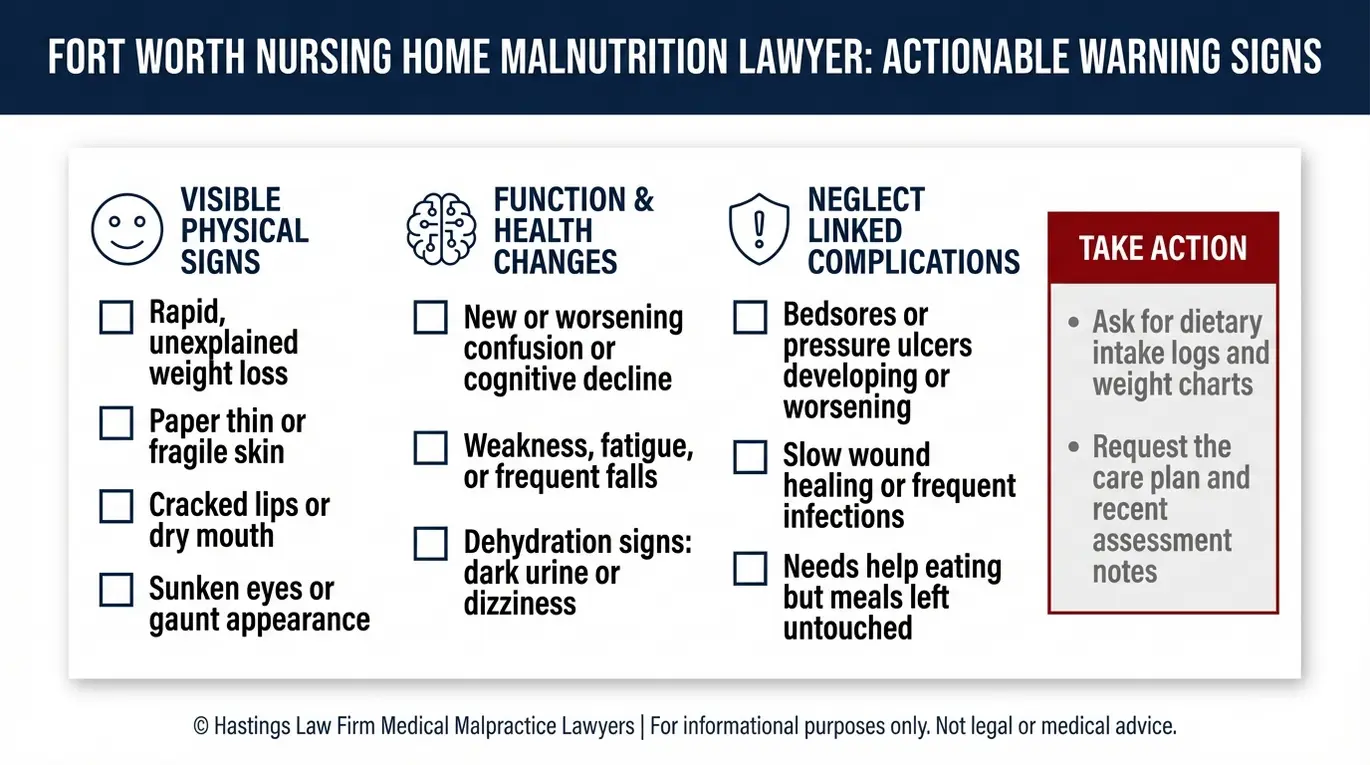
Families should watch for the following indicators:
| Sign of Neglect | What to Look For |
|---|---|
| :— | :— |
| Physical Decline | Rapid, unexplained weight loss or visible muscle wasting. |
| Dehydration | Cracked lips, dry mouth, dark urine, or confusion. |
| Skin Issues | Paper-thin skin or bedsores (pressure ulcers) on bony areas. |
| Facial Changes | Sunken eyes or hollow cheeks suggesting nutrient deficiencies. |
| Mental State | Cognitive decline, including increased lethargy or withdrawal. |
The connection between malnutrition and bedsores is well documented. When the body lacks adequate protein and calories, skin breaks down faster. A PubMed Central case report on the clinical impact of nutritional intervention on pressure injury healing illustrates how proper nutrition directly affects recovery.
Malnutrition as a Form of Discipline or Control
In some cases, food deprivation, the deliberate withholding of meals or snacks from a resident, is used as a tool of control. This deliberate neglect involves withholding nutrients to simplify staff workloads. This can occur when a facility attempts to reduce the frequency of bathroom assistance to accommodate understaffed shifts. When evidence supports this pattern, it can lead to a neglect claim involving nursing home abuse, which carries significant legal consequences for the facility.
Common Causes of Malnutrition in Tarrant County Facilities
Most malnutrition cases stem from administrative failures such as understaffing, lack of training, or the failure to assist residents who cannot feed themselves. In Tarrant County, these failures are often tied to staffing shortages and poor administrative oversight. When a facility does not employ enough aides to cover mealtimes, residents who need assisted feeding, where a staff member physically helps the resident eat, are often skipped or rushed.
Unaddressed dental problems and swallowing difficulties compound the issue. Dysphagia, a medical condition that makes swallowing difficult or dangerous, requires modified food textures. If a facility fails to accommodate this condition, residents may refuse to eat out of fear.
A malnutrition attorney in Fort Worth will examine whether these failures are isolated incidents. The Five Star Quality Rating System from the Centers for Medicare and Medicaid Services provides publicly available data on nursing homes. Low staffing scores or repeated health inspection deficiencies can reveal that a facility has consistently failed to meet nutritional standards or follow its own care plans.
The Hastings Law Firm Difference
Results matter, but what truly sets us apart is how we achieve them. Every verdict, every settlement, and every Fort Worth courtroom victory comes from one guiding promise: To treat each client’s fight for justice as if it were our own.
This balance of skill, experience, and empathy reflects our core philosophy that justice should not only compensate the injured, but also make healthcare safer nationwide.

Distinguishing Between Medical Decline and Legal Negligence
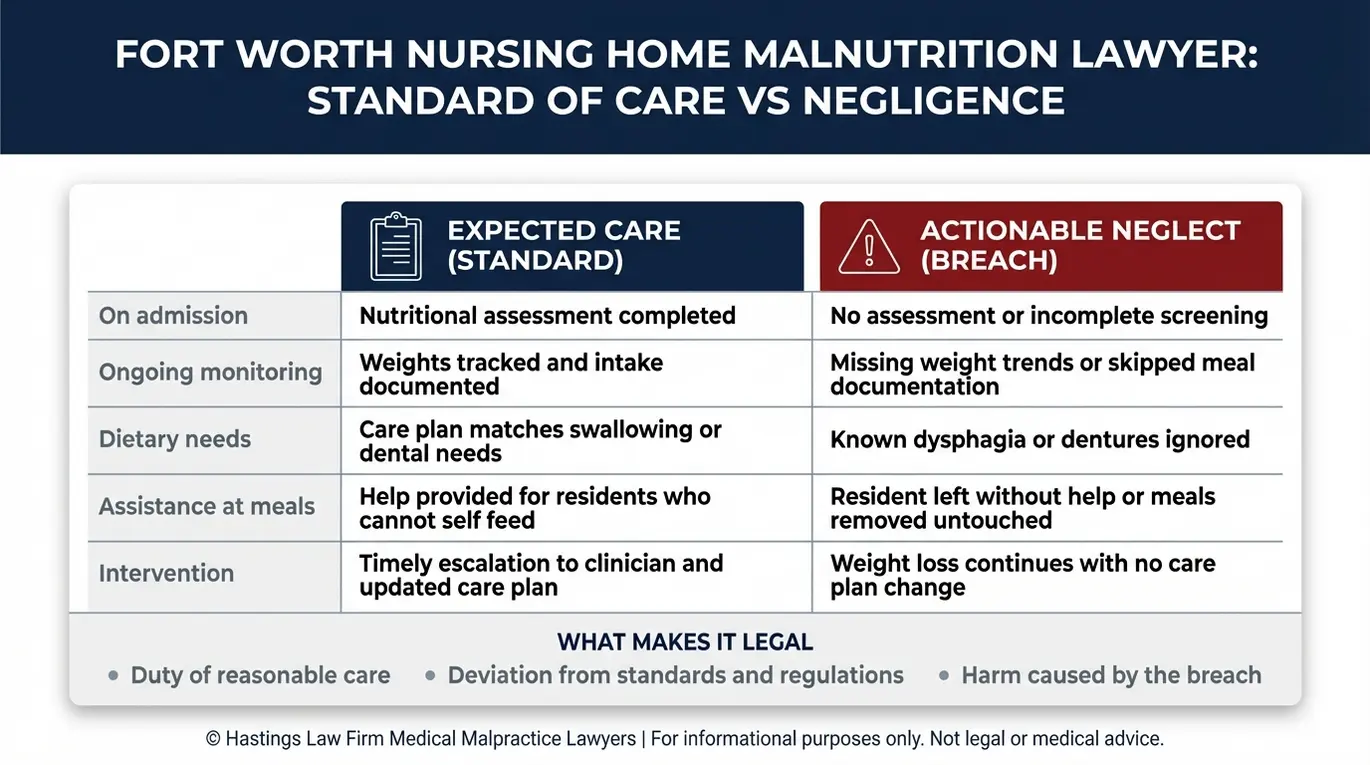
Negligence is established when a facility deviates from the accepted standard of care by ignoring a resident’s known dietary needs or failing to intervene when weight loss begins. Aging naturally affects metabolism, but the legal question is whether the responsible parties recognized the decline and took reasonable steps to address it. The standard of care refers to the level of attention a prudent facility would provide to prevent harm.
Federal regulations, including 42 CFR § 483.25 on Quality of Care, require nursing homes to provide care that maintains each resident’s well-being. Texas state regulations reinforce these standards. Upon admission, facilities must conduct comprehensive assessments to identify residents at risk for malnutrition. Validated screening tools such as the Mini Nutritional Assessment Scale Short Form (MNA-SF) can help detect nutritional decline early.
From that assessment, the facility must create a nutrition care plan, a documented strategy outlining the resident’s caloric and fluid requirements. When a Fort Worth nursing home malnutrition lawyer reviews a case, we verify if the staff followed this plan. A care plan that exists only on paper while a resident loses weight is strong evidence of liability.
How Our Legal Team Investigates Malnutrition Claims
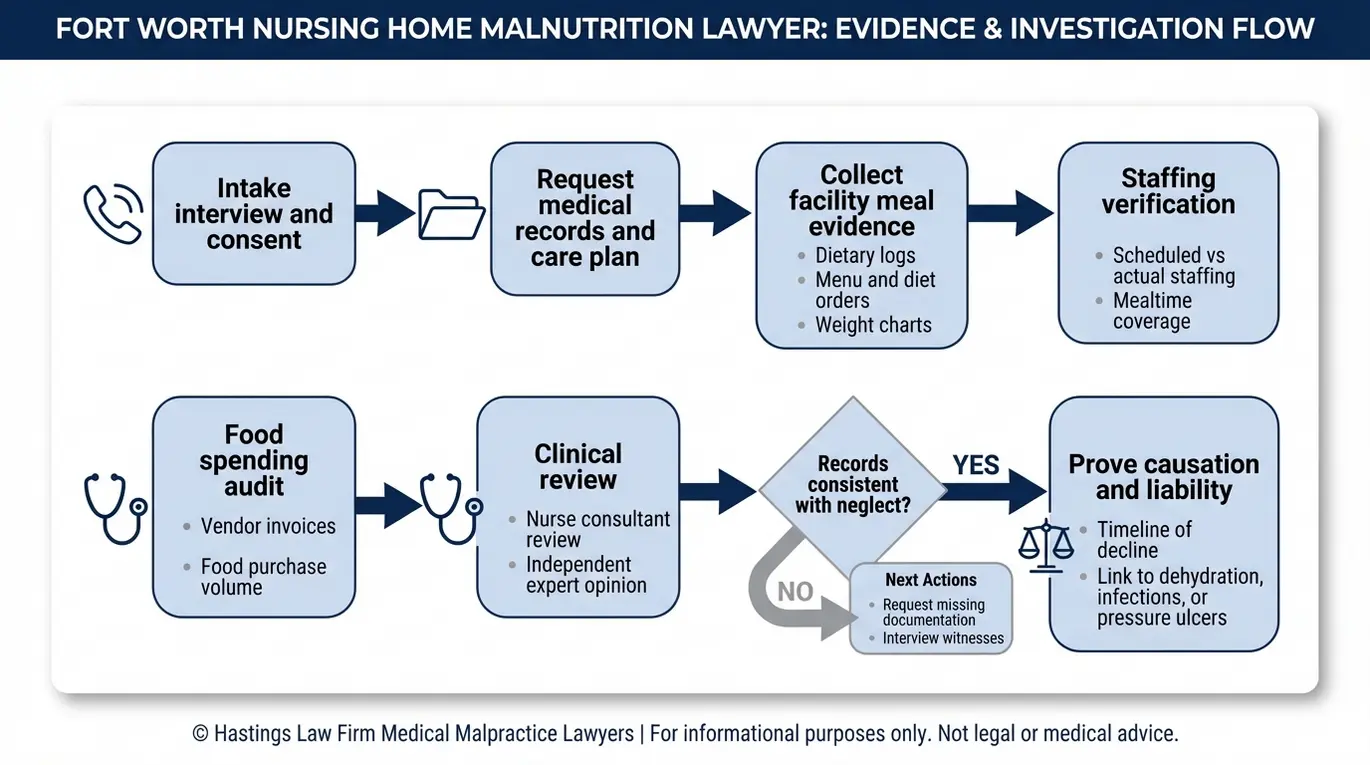
We build a case by securing dietary logs (meal intake records), staffing schedules, and food purchase records to prove that a facility failed to provide adequate nutrition. Every nursing home malnutrition lawyer in Fort Worth at our firm works alongside in-house nurse consultants to scrutinize clinical documentation. Hastings Law Firm is a nationally recognized trial firm focused exclusively on medical negligence litigation.
Our investigation typically focuses on these categories of evidence:
- Dietary logs: We compare the care plan against what was actually consumed. Identical entries across multiple days can indicate falsified records or a lack of monitoring.
- Staffing logs: We analyze whether the facility had enough staff on duty to assist residents during mealtimes.
- Food purchasing records: If a facility is cutting costs by buying insufficient food, financial records can demonstrate a systemic failure.
- Medical records: Serial weight records and lab results establish a timeline of decline.
- Medical Expert Review: We use expert testimony to link the facility’s failures directly to the resident’s injuries.
As Fort Worth nursing home malnutrition attorneys, we prepare every case for trial. This preparation, combined with skilled advocacy, positions our clients for the strongest possible outcome.
Recovering Compensation for Injuries and Wrongful Death
Families may recover damages for medical bills, pain and suffering, and funeral expenses if malnutrition led to the resident’s passing. A Fort Worth nursing home malnutrition lawyer at Hastings Law Firm evaluates each case to identify every category of recoverable compensation.
- Economic damages cover financial losses, including hospitalization for dehydration, nutrient deficiencies (a lack of essential vitamins and minerals), or infected pressure ulcers (injuries to skin and tissue also known as bedsores).
- Non-economic damages compensate for the resident’s physical pain, emotional suffering, and mental anguish caused by prolonged malnutrition.
- Wrongful death claims become available when a resident dies from malnutrition-related complications. Surviving family members may pursue a legal claim for justice, funeral expenses, loss of companionship, and the suffering the resident endured before death.
In cases involving egregious misconduct or deliberate nursing home abuse, Texas courts may also award punitive damages designed to punish the facility.
Contact the Fort Worth Nursing Home Attorneys at Hastings Law Firm Today for Help
Malnutrition in a licensed nursing home is not an inevitable part of aging. It is a failure of care that facilities have a legal obligation to prevent. If your loved one is showing signs of neglect, or if you have already lost a family member to malnutrition-related complications, you have the right to hold the responsible parties accountable.
Hastings Law Firm represents families across Fort Worth and Tarrant County in these cases. Our team of attorneys, nurse consultants, and medical experts will review your loved one’s records, identify what went wrong, and explain the legal options available to your family.
We handle these cases on a contingency fee basis, which means you pay no attorney fees or costs unless we recover compensation for you. Call us today for a free, confidential case evaluation and take the first step toward answers and accountability.
Frequently Asked Questions About Nursing Home Malnutrition in Fort Worth


This content was researched and written by the Hastings Law Firm editorial team, which includes attorneys, medical professionals, and experienced researchers. Our writing is informed by internal knowledge and practical experience, and we cross-check critical details against authoritative sources cited throughout. Every piece undergoes human-led fact-checking and legal review. Because legal and medical information can change, if you spot an error, please contact us. Learn more about our content standards and review process on our editorial policy page.

Brady D. Williams is a nationally recognized medical malpractice attorney who has spent his career handling high-stakes litigation for injured patients and families across the country. Licensed in both Texas and California, Brady draws on experience from hundreds of resolved medical cases to break down complex legal and medical topics for the people who need that information most. His writing reflects the same attention to detail and commitment to clarity that he brings to every case he handles.
