


Texas Nursing Home Malnutrition Lawyer
Malnutrition and dehydration in nursing homes are preventable and can signal neglect when a resident loses weight, grows weaker, or becomes confused and withdrawn. These problems can worsen wounds, increase infections, and lead to hospitalization or worse when staff fail to monitor intake, follow care plans, or provide needed feeding and hydration support. Understaffing and inaccurate charting can make the decline harder to spot and easier for facilities to deny. If you or a loved one were harmed or worse due to nursing home malnutrition or dehydration in Texas, contact Hastings Law Firm for a free, confidential case review.
Last Updated: July 27, 2026
Trusted Legal Representation for Elderly Neglect in Texas Facilities
When someone you love is losing weight, growing weaker, or showing signs of neglect in a nursing home, the fear and frustration can be overwhelming. You trusted a facility to provide proper care, and now you are watching your family member decline. That sense of betrayal is valid, and you deserve answers about what went wrong.
Malnutrition and dehydration in nursing homes are not inevitable consequences of aging. They are preventable conditions that often point directly to negligence. At Hastings Law Firm, we focus exclusively on medical negligence litigation. Founded by board-certified trial attorney Tommy Hastings, our team of attorneys, in-house nurse consultants, and patient advocates investigates these cases by reconstructing the medical timeline and identifying exactly where the standard of care broke down.
If you believe your loved one has suffered harm due to inadequate nutrition or hydration in a Texas facility, a Texas nursing home malnutrition lawyer at our firm can review the situation and explain your legal options at no cost and with no obligation.

Identifying Critical Signs of Malnutrition and Neglect
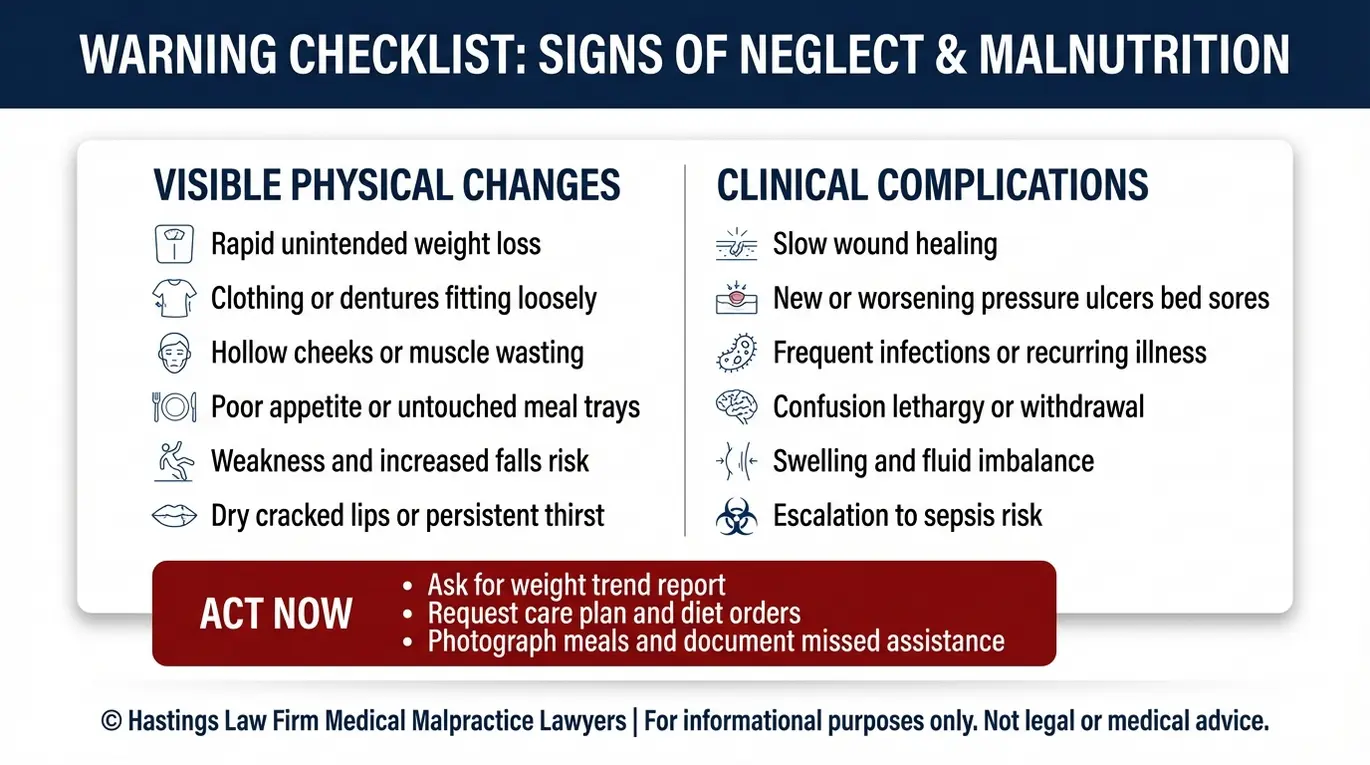
Malnutrition in nursing homes often presents as rapid weight loss, physical frailty, confusion, and prolonged wound healing. While facility staff may attribute these changes to a resident’s age or pre-existing conditions, they are frequently the result of failure to assist with feeding, monitor dietary intake, or follow an appropriate nutritional care plan.
The decline can be gradual, making it easy to miss during short visits. A resident may begin wearing clothing that fits more loosely. Their cheeks may appear hollow, or their skin may seem paper-thin.
These are not simply signs of getting older. They can indicate protein-calorie malnutrition (PCM), a condition where the body does not receive enough protein and calories to maintain healthy tissue, organ function, and immune response.
Families are often the first to notice these subtle shifts. Because you know your loved one best, you may detect changes in their appearance or demeanor long before the medical records reflect a problem. Trust your instincts if something feels wrong.
One of the most serious consequences of sustained poor nutrition is the development of pressure injuries, which are areas of damaged skin and underlying tissue caused by prolonged pressure, commonly called pressure ulcers or bed sores. When a resident is malnourished, the body lacks the resources to repair tissue, and even minor pressure can lead to deep, painful wounds that become infected. Maintaining a resident’s nutritional value levels is a fundamental aspect of the standard of care, yet facilities may provide lower-quality dietary options. Research published through PubMed Central on pressure injury prevention confirms that nutritional status is a recognized risk factor in pressure injury development among vulnerable patients.
Beyond physical deterioration, malnutrition affects the mind. Residents may become lethargic, withdrawn, or unresponsive. Family members sometimes mistake this for depression or cognitive decline when the underlying cause is that the resident simply is not eating enough.
Warning signs families should watch for include:
- Unexplained or rapid weight loss over weeks or months
- Clothing, dentures, or rings fitting noticeably looser
- Hollow cheeks, sunken eyes, or prominent bones
- New or worsening pressure ulcers or bed sores
- Slow-healing wounds or frequent infections
- Lethargy, confusion, or social withdrawal
- Dry, cracked skin or swollen extremities
Non-Obvious Physical Indicators of Malnutrition
Some signs of malnutrition are easy to overlook, especially if you are not sure what to look for. Dental corrosion, for example, can result from nutritional deficiencies and may also make eating painful, creating a cycle where the resident eats even less. Brittle, ridged, or spoon-shaped nails are another indicator that the body is not getting the nutrients it needs.
Sarcopenia, the progressive loss of skeletal muscle mass and strength, is a common but underrecognized consequence of prolonged malnutrition in elderly residents. A resident may struggle to sit upright, grip a cup, or move in bed. This loss of muscle makes them more susceptible to falls, fractures, and immobility.
In severe cases, untreated malnutrition weakens the immune system to the point where minor infections spiral into sepsis, a dangerous, life-threatening response where the body’s reaction to infection begins damaging its own organs. When a facility fails to address nutritional decline, every system in the body becomes vulnerable.
Recognizing Severe Symptoms of Dehydration in the Elderly
Dehydration in elderly residents is a life-threatening emergency characterized by dry mouth, sunken eyes, delirium, and dark urine. It is almost always preventable with proper monitoring and is one of the strongest indicators of systemic nursing home neglect.
According to the clinical overview on Adult Dehydration from the NCBI Bookshelf, older adults are at significantly higher risk for dehydration due to reduced thirst sensation, kidney changes, and medication side effects. Many common prescriptions, including diuretics and laxatives, increase fluid loss and require staff to adjust hydration protocols accordingly. Staff must maintain intake and output (I&O) charting, which is a continuous log of the fluids a resident drinks and eliminates, to track stability. When facilities fail to account for these factors, residents can decline quickly.
Dehydration generally falls into two patterns, and understanding the difference matters for both medical treatment and legal evidence:
| Acute Dehydration | Chronic Dehydration | |
|---|---|---|
| Onset | Rapid, over hours to days | Gradual, over weeks to months |
| Common Signs | Sudden confusion, rapid heart rate, fainting, dark urine | Persistent dry mouth, ongoing fatigue, repeated UTIs, chronic constipation |
| Serious Risks | Seizures, organ shock, cardiac events | Kidney failure, cognitive decline, increased fall risk |
| What Records May Show | Sudden lab changes, emergency interventions | Consistently abnormal labs over time, gaps in intake and output (I&O) charting |
Delirium, a sudden state of severe confusion and disorientation, is one of the most alarming symptoms of dehydration in the elderly. Families sometimes assume their loved one’s confusion is caused by dementia, when in reality it may be a reversible condition caused by inadequate fluid intake.
Acute Versus Chronic Dehydration Markers
Medical records and lab results can reveal whether dehydration developed suddenly or over a prolonged period. Blood tests and electrolyte panels are central to this analysis. Hypernatremia, an abnormally high concentration of sodium in the blood, often indicates that a resident has been dehydrated for an extended period. Similarly, an elevated BUN/creatinine ratio (BUN/Cr ratio), a measure of kidney waste products, can signal that the kidneys have been under stress from insufficient hydration.
When lab values show a pattern of chronic dehydration, it becomes difficult for a facility to argue the condition was caused by a sudden illness. These records can form a critical part of the evidence in a neglect claim, showing that staff had repeated opportunities to intervene and did not.

The Hastings Law Firm Difference
Results matter, but what truly sets us apart is how we achieve them. Every verdict, every settlement, and every Texas courtroom victory comes from one guiding promise: To treat each client’s fight for justice as if it were our own.
This balance of skill, experience, and empathy reflects our core philosophy that justice should not only compensate the injured, but also make health care safer nationwide.

How Staffing Shortages Contribute to Resident Starvation
The leading cause of malnutrition in nursing homes is understaffing, where facilities prioritize profit over patient care. When staff ratios are too low, aides physically do not have the time to assist residents with feeding, leading to missed meals and undocumented starvation.
Consider the reality of feeding a resident with dysphagia, a condition that impairs the ability to swallow safely. These residents often require thickened liquids and food prepared to specific textures. This careful, hands-on assistance can take 15 to 30 minutes per meal.
Yet, in many understaffed facilities, aides may have only two minutes per resident. When a single aide is responsible for an entire hall of residents, proper care is physically impossible. Meals get skipped, trays get dropped off untouched, and the charting may not reflect what actually happened.
This form of nursing home abuse often leads to a chain of failures:
- Meals left on trays out of the resident’s reach, with no one returning to assist
- Care plans specifying feeding assistance or dietary restrictions that are never followed
- Weight loss that goes undocumented or unaddressed for weeks
- Hydration needs ignored, especially for residents who cannot ask for water
- Staff falsifying or omitting records about food and fluid intake
Care plans specifying feeding assistance or dietary restrictions are legally binding documents, yet in understaffed facilities, they are often treated as mere suggestions. Publicly available data, such as staffing and quality ratings from Medicare’s Care Compare for Post Nursing Rehab Center, can reveal whether a facility has a documented history of low staffing levels. These records are one of the first things our team examines when evaluating a potential case.
The negligence in these situations is not limited to the individual aide. It extends to the administration and ownership groups that are responsible for ensuring every resident receives the care outlined in their individualized care plan.
Establishing Liability for Malnutrition in Texas Courts
Proving liability requires demonstrating that the facility violated the standard of care by failing to monitor weight, provide feeding assistance, or intervene when a resident’s nutritional status declined. Success in these claims depends on medical expert testimony paired with careful analysis of facility charting and records.
Because our team includes former defense counsel, we understand how to identify inconsistencies in facility records that are used to deny responsibility. We approach these cases through a structured evidence-gathering process:
- Obtain and review medical records. We analyze weight charts, dietary orders, nursing notes, and intake logs to identify gaps.
- Examine staffing records. Facility staffing schedules and payroll data can reveal whether there were enough staff to carry out required care.
- Interview witnesses. Family members, former employees, and other residents may provide testimony about conditions inside the facility.
- Retain qualified medical experts. Independent medical professionals review the evidence and provide opinions on whether the standard of care was met.
- Establish causation. We connect the documented failures to the resident’s injuries, whether those injuries include worsening health, hospitalization, or death.
If malnutrition or dehydration contributed to a resident’s death, the family may pursue a wrongful death claim under the Texas Civil Practice and Remedies Code Chapter 71. Securing fair compensation in these tragic circumstances requires a legal team that understands the complexities of Texas statutory requirements. Damages in these cases can include medical expenses, funeral costs, pain and suffering, and in cases involving gross negligence, punitive damages.
Defenses When a Resident Refuses Food
One of the most common defenses facilities raise is that the resident refused to eat. Under the standard of care, however, a facility cannot simply accept that refusal and move on. Staff are required to assess the root cause of the refusal, which may include dental pain, psychosocial drivers like depression, medication side effects, or difficulty swallowing.
If no root cause assessment was performed and no alternative interventions were attempted, the facility’s reliance on a blanket refusal of care defense can actually strengthen the family’s claim. We examine care plans, social work notes, and physician orders to determine whether the facility met its obligation to investigate and address the underlying reason.

Contact the Texas Nursing Home Attorneys at Hastings Law Firm Today for Help
Malnutrition is not a natural part of aging. When a nursing home resident loses weight, develops pressure ulcers, or shows signs of dehydration, those are indicators that someone failed to provide the care your loved one was promised. You have every right to question what happened, and you should not have to face the facility alone.
At Hastings Law Firm, our in-house medical staff and trial-ready attorneys know how to uncover the truth in these cases. We prepare every claim as though it will go to trial because that level of preparation is what it takes to hold facilities accountable. As a Texas nursing home malnutrition lawyer team, we handle these cases on a contingency fee basis, meaning you pay nothing unless we secure a recovery for your family.
Contact us today for a free, confidential case evaluation. We can review the medical records, explain what the evidence shows, and help you understand your options.
Frequently Asked Questions About Nursing Home Malnutrition in Texas


This content was researched and written by the Hastings Law Firm editorial team, which includes attorneys, medical professionals, and experienced researchers. Our writing is informed by internal knowledge and practical experience, and we cross-check critical details against authoritative sources cited throughout. Every piece undergoes human-led fact-checking and legal review. Because legal and medical information can change, if you spot an error, please contact us. Learn more about our content standards and review process on our editorial policy page.

Gabe Sassin has focused exclusively on medical malpractice law since 2007. After spending more than a decade as a malpractice defense attorney, he knows exactly how the other side works. He has seen firsthand how healthcare providers, insurers, corporate defendants, and their legal teams think, prepare, and build their defense against claims. That knowledge works for the people who need it most today, injured patients and their families. His unique experience shapes everything he writes, giving readers a look at how these cases actually work from someone who has handled them from both sides.
