


Austin Nursing Home Malnutrition Lawyer
Malnutrition in a nursing home can signal neglect rather than normal aging, and it can lead to serious decline, infections, and fatal outcomes. Warning signs may be subtle at first, such as weight loss, weakness, confusion, dehydration, poor wound healing, and more frequent falls. Facilities have duties under state and federal requirements to assess nutritional risk, provide appropriate meals, and monitor intake, and disputes often focus on whether weight loss was clinically unavoidable. If you or a loved one were harmed or worse due to nursing home malnutrition in Austin, Texas, contact Hastings Law Firm for a free, confidential case review.
Last Updated: July 27, 2026
Trusted Legal Representation for Elderly Care Negligence in Austin
When a loved one in a nursing home begins showing signs of malnutrition, the concern runs deep. You trusted a facility to provide proper nourishment and attentive care, and discovering that trust may have been broken can feel overwhelming. You may not be sure what went wrong, whether the facility is responsible, or what steps to take next.
You are not alone in this, and your concerns are valid. Malnutrition in a care setting is not a normal part of aging. When it results from neglect, Texas law provides a path to accountability and compensation for your family.
At Hastings Law Firm, our team of attorneys, in-house nurses, and medical consultants focuses entirely on medical malpractice cases, including nursing home neglect. Led by board-certified trial lawyer Tommy Hastings, our firm is dedicated to holding facilities accountable. Our legal team also includes former defense attorneys, giving us inside knowledge of the strategies facilities use to defend against neglect claims. As Austin nursing home malnutrition lawyers, we can review what happened to your loved one and explain your legal options in a free, confidential consultation.

Identifying Signs and Symptoms of Malnutrition in Austin Facilities
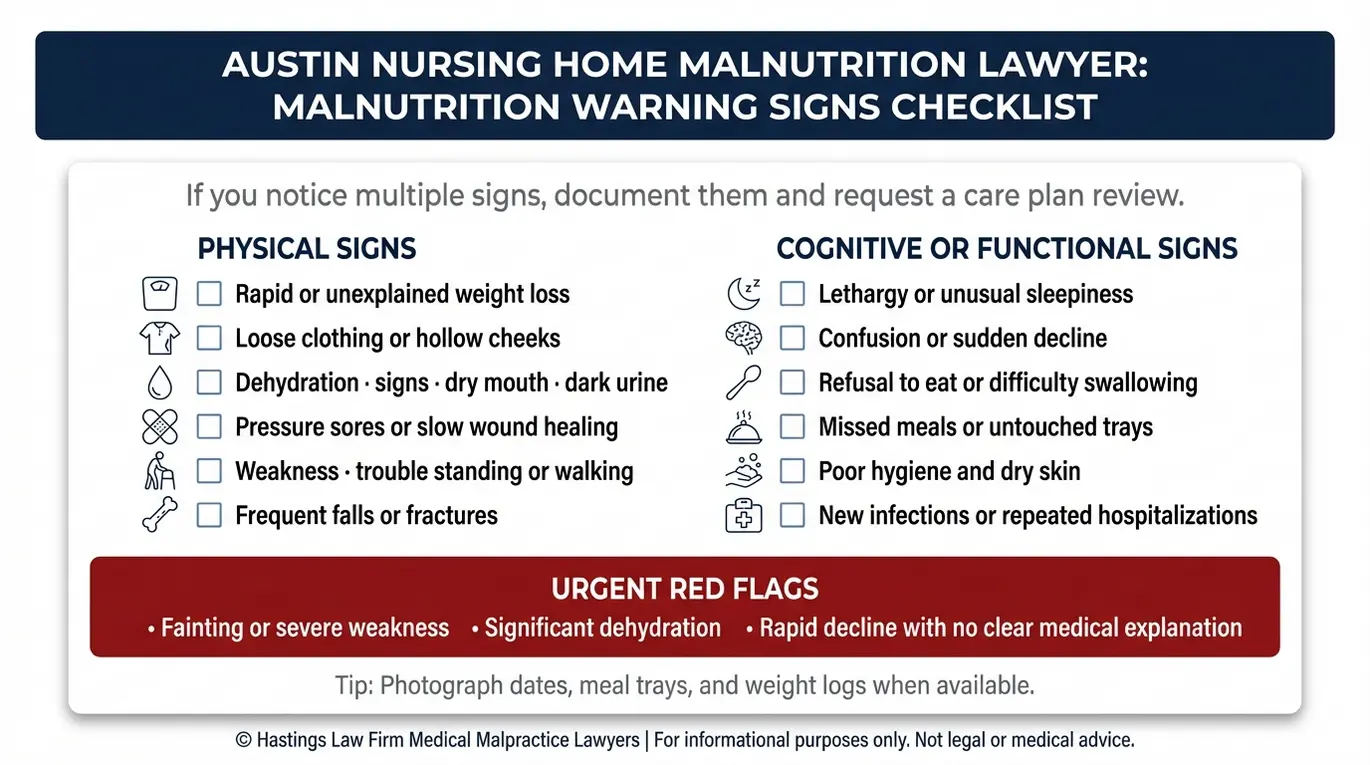
Malnutrition in nursing homes typically shows up as sudden weight loss, physical weakness, confusion, and delayed wound healing. These signs can develop gradually, making them easy to overlook during short visits, but they often signal serious neglect.
Unintended weight loss, meaning a noticeable drop in body weight without a deliberate change in diet, is a major red flag. You may notice loose clothes, hollow cheeks, or fatigue. Research published by the National Library of Medicine on malnutrition in older adults confirms that elderly malnutrition increases infection risks and mortality rates for vulnerable seniors.
Dehydration often accompanies malnutrition, causing dry skin and dizziness. Pressure ulcers, commonly called pressure sores, may also develop because malnourished skin cannot heal properly. Falls and fractures become more likely as muscles weaken.
The Houston Galveston Area Council’s DETERMINE Nutritional Health screening tool outlines warning indicators families should monitor:
- Significant, unexplained weight loss over weeks
- Persistent fatigue or difficulty standing
- New or worsening pressure sores
- Confusion, irritability, or withdrawal
- Signs of dehydration like dark urine
- Increased frequency of falls or fractures
- Difficulty chewing that the facility ignores
If these signs are present, an Austin malnutrition attorney can help you determine whether they point to actionable neglect.
Different Types of Malnutrition
When identifying elder neglect, it is important to know that not all malnutrition looks the same. Protein-calorie malnutrition (PCM), a condition where a resident does not receive enough protein and calories to maintain body weight, is the most common form in nursing homes. It is often reflected in medical records and care plans when properly documented.
A more severe condition, cachexia, a progressive muscle wasting driven by an underlying illness such as cancer or advanced heart failure, is harder to reverse. Facilities sometimes point to cachexia to explain weight loss, but a thorough review of dietary standards and intake records can reveal whether the decline was truly unavoidable or whether the facility failed to intervene.
Common Causes of Malnutrition in Nursing Homes
The primary causes of malnutrition in nursing homes are understaffing, lack of individualized care plans, and failure to assist residents with feeding. These issues often stem from inadequate resource allocation, resulting in dangerous systemic neglect.
Mealtime assistance, the hands-on help residents need to eat and drink safely, requires sufficient personnel. When facilities rely on inadequate staffing, residents may skip meals entirely. A nursing home malnutrition lawyer in Austin can investigate staffing logs to expose this form of nursing home negligence.
Dysphagia, a difficulty in swallowing requiring modified diets, is often mismanaged. When dietary standards are ignored or care plans are outdated, the consequences are severe. Common systemic failures include:
- Insufficient staff-to-resident ratios during meals
- Failure to update dietary plans when conditions change
- Ignoring dental problems or swallowing difficulties
- Removing trays before residents finish eating
- Lack of follow-up on documented weight loss
The Hastings Law Firm Difference
Results matter, but what truly sets us apart is how we achieve them. Every verdict, every settlement, and every Austin courtroom victory comes from one guiding promise: To treat each client’s fight for justice as if it were our own.
This balance of skill, experience, and empathy reflects our core philosophy that justice should not only compensate the injured, but also make health care safer nationwide.

The Nursing Home’s Duty to Prevent Malnutrition
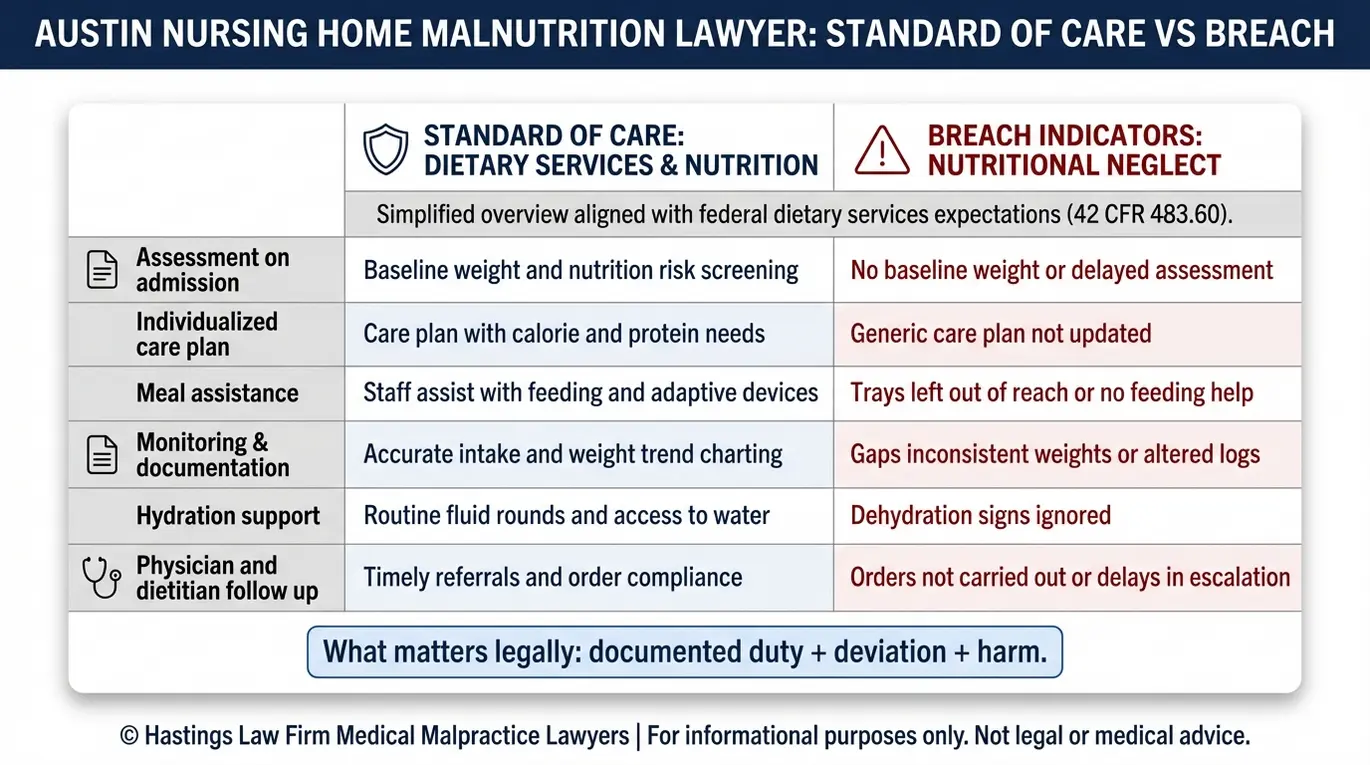
Nursing homes have a federal and state duty to ensure residents maintain acceptable nutritional parameters unless clinically unavoidable. This obligation is not voluntary; it is grounded in law.
The standard of care, the accepted level of treatment a reasonably competent facility would provide, requires a nutritional screening and risk assessment, a process to identify residents at risk of malnutrition using tools like the Mini Nutritional Assessment. An Austin nursing home negligence lawyer can help determine if a breach of duty occurred.
Under 42 CFR Part 483, federal regulations mandate that facilities meet daily nutritional needs. The Nursing Home Reform Act reinforces that facilities must prove any weight loss was clinically unavoidable, meaning the decline occurred despite all appropriate efforts to maintain nutrition.
Federal Regulations (42 CFR §483.60)
Regarding meal service, this specific section of federal regulations requires facilities to employ a qualified dietitian or other clinically qualified nutrition professional, prepare meals based on each resident’s assessed needs, and monitor intake consistently. A violation of these dietary standards constitutes a breach of duty and can form the foundation of a negligence claim. We evaluate whether the facility met these mandates or fell short.
Proving Liability in Malnutrition Cases
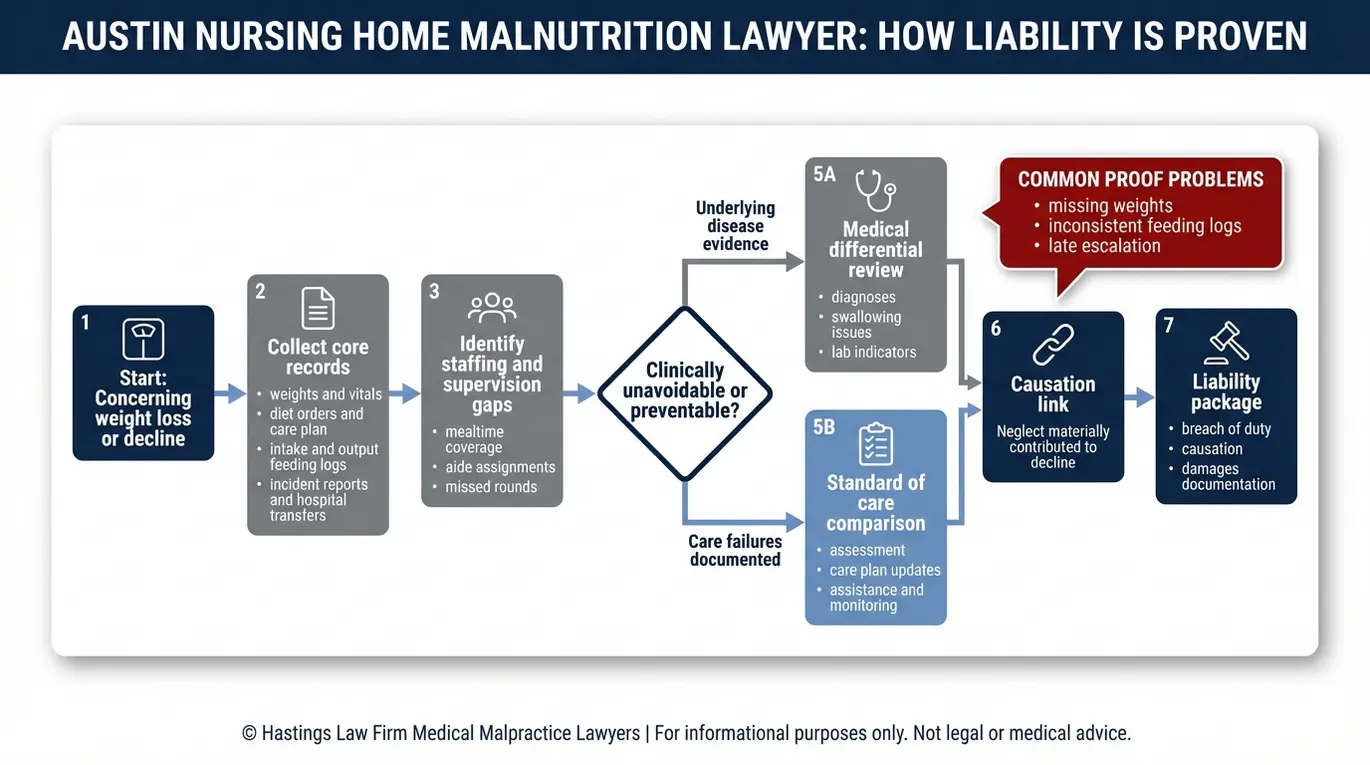
Proving liability requires evidence that the facility deviated from the standard of care and that this deviation directly caused the resident’s decline. Building that proof begins with securing medical records immediately.
These records contain meal intake charting, the logs where staff document percentage intake, which often reveal patterns indicating nursing home neglect. Establishing causation, the direct link between the facility’s failures and the resident’s harm, typically requires expert testimony. Experts can distinguish between weight loss caused by an underlying disease and decline caused by inadequate care.
Key evidence a malnutrition attorney will gather includes:
- Weight logs and lab results
- Dietary care plans and revisions
- Staffing schedules
- Facility inspection reports
- Witness statements
At Hastings Law Firm, we prepare every case using a trial-ready approach. This allows us to identify inconsistencies, anticipate defenses, and establish liability.
Compensation for Malnutrition Injuries in Texas
Families may recover damages for medical bills, pain and suffering, and in cases of gross negligence, punitive damages. The specific compensation depends on the severity of harm.
Economic damages cover tangible costs like hospitalizations and IV therapy. Non-economic damages address pain and loss of dignity. If a resident survives, we file a personal injury claim.
If a resident passed away, the family may pursue a wrongful death claim under the Texas Civil Practice and Remedies Code. As an Austin nursing home lawyer, we help families understand every category of recovery available to them, including punitive damages for egregious conduct.
Contact the Austin Nursing Home Attorneys at Hastings Law Firm Today for Help
If you believe your loved one has suffered from malnutrition or neglect in an Austin nursing home, we are here to listen and help you understand what happened. Our team of attorneys, nurses, and patient advocates will review the medical records, identify what went wrong, and explain your family’s options.
As your Austin nursing home malnutrition lawyer, Hastings Law Firm works on a contingency fee basis, meaning you pay no fees or costs unless we secure a recovery for your family. Every consultation is free and confidential.
Contact us today to schedule your case evaluation. Let us help you find the answers your family deserves.
Frequently Asked Questions About Nursing Home Malnutrition in Austin


This content was researched and written by the Hastings Law Firm editorial team, which includes attorneys, medical professionals, and experienced researchers. Our writing is informed by internal knowledge and practical experience, and we cross-check critical details against authoritative sources cited throughout. Every piece undergoes human-led fact-checking and legal review. Because legal and medical information can change, if you spot an error, please contact us. Learn more about our content standards and review process on our editorial policy page.

Gabe Sassin has focused exclusively on medical malpractice law since 2007. After spending more than a decade as a malpractice defense attorney, he knows exactly how the other side works. He has seen firsthand how healthcare providers, insurers, corporate defendants, and their legal teams think, prepare, and build their defense against claims. That knowledge works for the people who need it most today, injured patients and their families. His unique experience shapes everything he writes, giving readers a look at how these cases actually work from someone who has handled them from both sides.
