


Fort Worth Nursing Home Fall Lawyer
Written by: Hastings Law Firm | Reviewed by: Brady D. Williams | Updated: July 27, 2026
A fall in a nursing home can signal deeper problems with safety, supervision, and basic care. Many incidents are tied to preventable failures such as ignored fall risks, missed assessments, unsafe environments, or delayed staff response. The consequences can be severe, affecting mobility, independence, and emotional well being, and some injuries can worsen without timely monitoring after a fall. Clear documentation and accountability matter when families are given incomplete explanations. If you or a loved one were harmed or worse due to nursing home falls in Fort Worth, Texas, contact Hastings Law Firm for a free, confidential case review.
Trusted Fort Worth Injury Attorneys for Nursing Home Negligence Claims
What You Should Know About Elderly Fall Negligence Claims in Fort Worth:
- Long term health and independence can be permanently reduced after a nursing home fall because serious injuries can trigger rapid decline.
- Fatal outcomes can occur when head injuries go undetected because timely neurological checks are not performed after a fall.
- Ongoing emotional harm can follow a fall because fear of falling can lead to self restricted movement and worsening depression.
- A facility can be responsible when a resident care plan is ignored because known fall risks are not addressed in daily care.
- Falls are more likely to be linked to negligence when staffing is inadequate because call lights can go unanswered and residents attempt unsafe movement alone.
- Preventable hazards can drive liability when the environment is unsafe because wet floors, poor lighting, or broken alarms are not corrected.
- Medication related dizziness can increase fall risk when monitoring is inadequate because care plans are not updated after medication changes.
- Recovery options can be lost in Texas when filing deadlines are missed because late claims can be permanently barred.
- Key records can disappear quickly after a fall because facilities control staffing logs, incident reports, and surveillance footage.
- Responsibility can be harder to identify when ownership is layered because corporate structures may shift blame among related entities.

A Healthcare Focused Law Firm
When a loved one falls in a nursing home, it is natural to feel angry, confused, and unsure about what happened. You may have been told the fall was simply an accident, but something about that explanation does not sit right. That instinct matters, and you deserve real answers.
Many nursing home falls are not random events. They are the result of preventable failures in care, staffing, or safety protocols. At Hastings Law Firm, our team of attorneys, nurse consultants, and patient advocates focuses exclusively on medical negligence cases. We understand how these facilities operate, and we know how to uncover what went wrong. The firm’s founder, Tommy Hastings, is board-certified in personal injury trial law, a distinction held by less than 2% of Texas attorneys.
If you or a loved one has been injured in a nursing home fall, a Fort Worth nursing home fall lawyer at our firm can review the circumstances and explain your legal options. The consultation is free, and you pay no fees unless we recover compensation on your behalf.
Common Causes of Falls in Fort Worth Nursing Facilities
Nursing home falls are frequently caused by preventable negligence, including inadequate staffing, failure to complete fall-risk assessments, medication errors, and environmental hazards like poor lighting or wet floors.
Every resident should receive a fall-risk assessment upon admission to evaluate balance, mobility, medication side effects, and cognitive function. This assessment determines whether a resident needs assistive devices or extra supervision. When a facility skips this assessment, it removes the first and most important layer of protection.
Staffing shortages are also common contributors to falls. When there are not enough aides, residents who need help getting to the bathroom may attempt it alone. A call light can go unanswered for 20 minutes. This delay can lead to serious injury.
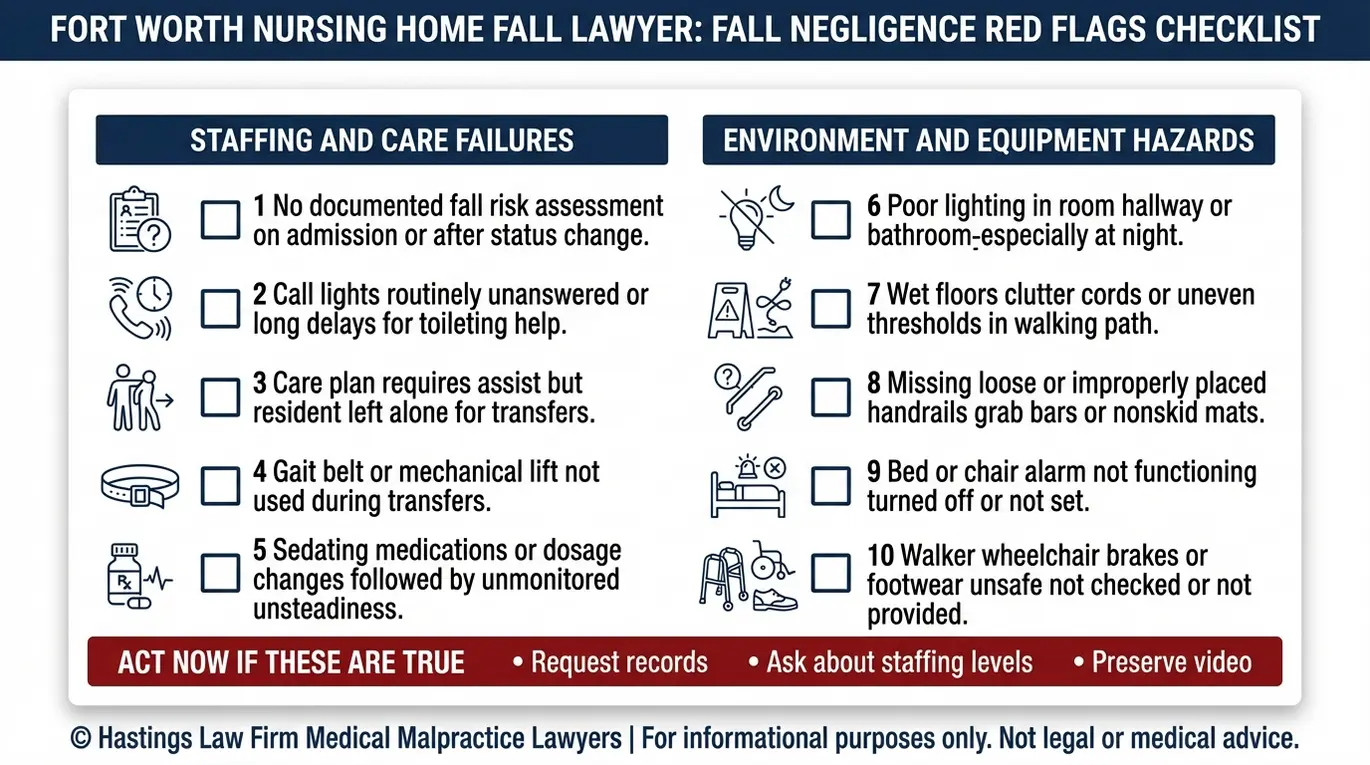
Environmental and equipment failures are equally dangerous. Common red flags include:
- Missing or loose handrails in hallways and bathrooms
- Wet or recently mopped floors without warning signs
- Inadequate lighting in rooms or corridors
- Broken bed alarms and chair alarms, which are pressure-sensitive devices designed to alert staff when a resident stands up
- Cluttered walkways or poorly maintained flooring
- Improperly trained staff who use incorrect techniques during transfers
Medication errors also increase fall risk. Sedatives and blood pressure medications can cause dizziness, especially in elderly residents. If nursing staff does not update the care plan or monitor the resident closely after a medication change, the facility may bear responsibility for any resulting fall.
The Catastrophic Physical and Emotional Impact of Falls
Falls in elderly residents often lead to life-altering injuries such as hip fractures, subdural hematomas, and spinal injuries, which can trigger a rapid decline in overall health and mobility. These catastrophic consequences often mean life never returns to normal for nursing home residents.
A broken hip, for example, often sets off a chain reaction. Immobility following surgery can lead to blood clots, pneumonia, and pressure ulcers. According to the Centers for Disease Control and Prevention, falls are the leading cause of injury and injury-related death among adults aged 65 and older. For elderly residents who are already medically fragile, recovery may never be complete.
In nursing home fall cases, head injuries are especially concerning. A subdural hematoma, or bleeding between the brain and skull, can develop slowly after a fall. Without timely post-fall neurological checks, which are brief assessments of a resident’s alertness and pupil response, these injuries can go undetected.
Some residents require specialized medical equipment such as cranial pressure monitors or surgical intervention. When staff fail to perform these checks, a survivable injury can become fatal, potentially leading to wrongful death.
Psychological Impact of Nursing Home Falls
The physical harm from a fall is only part of the picture. Many residents develop what clinicians call Fear of Falling (FOF), a persistent anxiety about falling again that causes them to restrict their own movement. This can be a sign of unaddressed psychological trauma following nursing home abuse or neglect.
This self-imposed immobility leads to deconditioning, the gradual loss of muscle strength, flexibility, and cardiovascular fitness that comes from prolonged inactivity. Over weeks and months, deconditioning accelerates cognitive decline and deepens depression. It is a cycle that can fundamentally diminish a resident’s remaining quality of life, and it often begins with a single preventable fall.
The Hastings Law Firm Difference
Results matter, but what truly sets us apart is how we achieve them. Every verdict, every settlement, and every Fort Worth courtroom victory comes from one guiding promise: To treat each client’s fight for justice as if it were our own.
This balance of skill, experience, and empathy reflects our core philosophy that justice should not only compensate the injured, but also make healthcare safer nationwide.

Establishing Liability and Proving Nursing Home Negligence
Liability is established by proving the facility breached its duty of care, specifically by failing to follow the resident’s care plan or ignoring known fall risks, and that the breach directly caused the injury. This framework separates a genuine accident from actionable nursing home neglect.
The duty of care is the legal obligation every nursing facility owes its residents: to provide a reasonably safe environment and appropriate medical attention. Under Texas Civil Practice and Remedies Code Chapter 74, claims must meet specific procedural requirements.
Breach of duty occurs when the facility fails to meet that standard. Examples include not answering call lights, leaving a fall-risk resident unattended, or performing a negligent transfer, which is moving a resident without proper technique or equipment. A gait belt, a safety belt placed around a resident’s waist, may have been required but never used.
Causation connects the breach to the specific injury. We must demonstrate that the fracture or trauma would not have occurred if the facility had followed proper procedures.
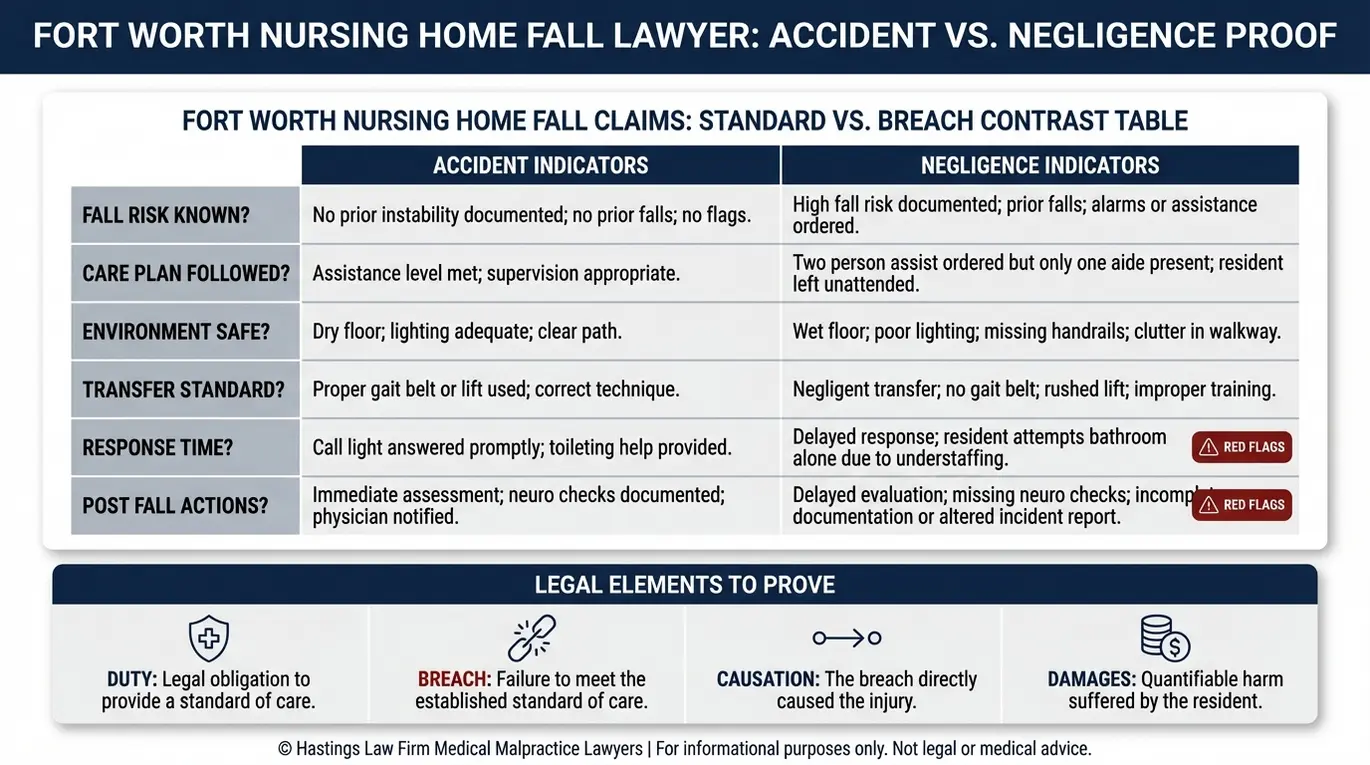
A Fort Worth nursing home fall lawyer can help distinguish between an unavoidable fall and negligence:
| Unavoidable Fall | Negligent Fall |
|---|---|
| Fall-risk assessment was completed and current | No assessment performed, or assessment was outdated |
| Care plan was followed at the time of the fall | Care plan requirements were ignored or not communicated |
| Adequate staff were present and responded promptly | Understaffing led to delayed response or unattended resident |
| Environment was maintained and free of hazards | Known hazards (wet floors, broken alarms) were not addressed |
| Proper transfer techniques and equipment were used | Transfer was performed without a gait belt or second aide |
Corporate Defense Tactics and Hidden Liability
Many nursing homes in Texas are not owned by a single operator. They are part of larger corporate structures that use multiple business entities to manage the facility, employ staff, and hold real estate separately. When a claim is filed, the corporate parent may argue that the responsible entity has limited assets.
This is a deliberate strategy. The facility’s administration and corporate stockholders may attempt to characterize the fall as an unavoidable accident while directing attention away from systemic issues. Identifying multiple liable parties, including management companies and staffing agencies, is an important part of building a strong case.
Strategic Evidence Collection for Fall Injury Claims
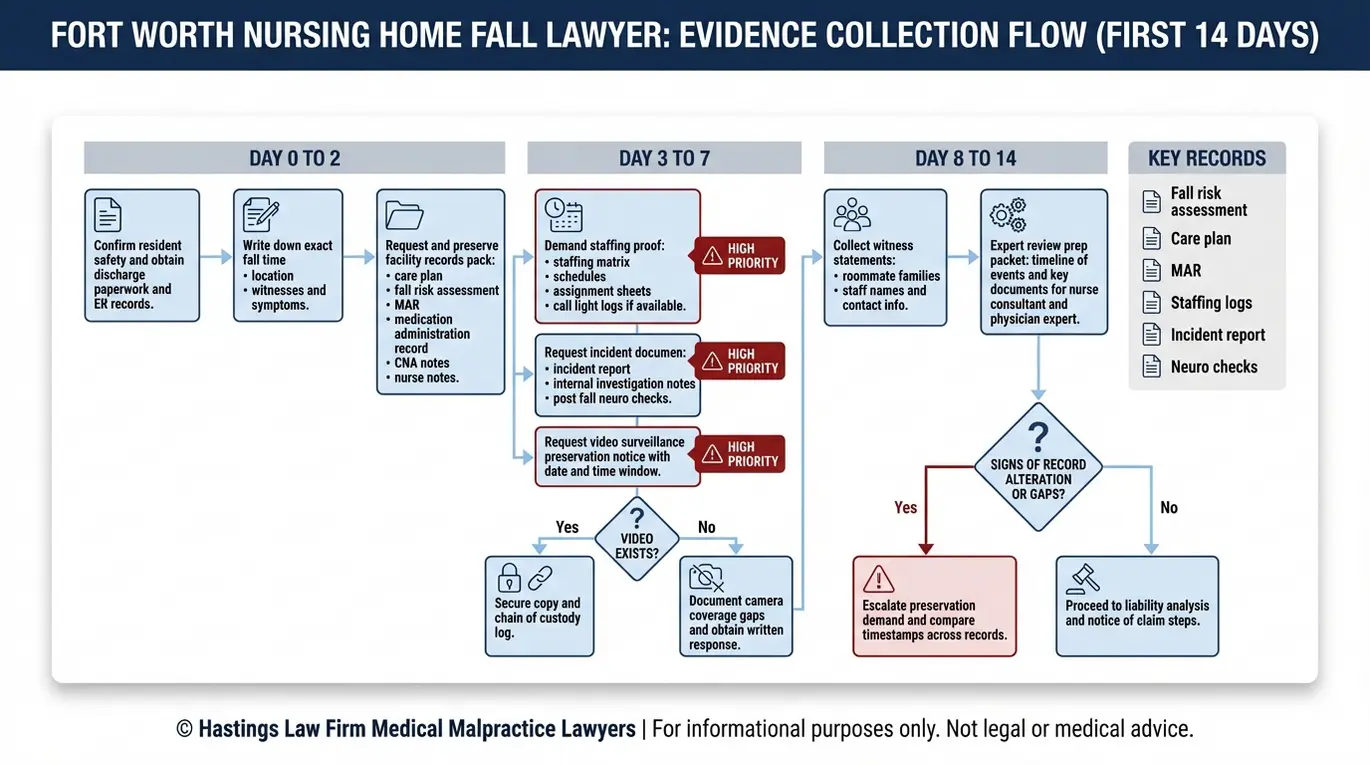
Successful claims rely on securing critical evidence such as staffing logs, the resident’s fall-risk assessment, video surveillance footage, and internal incident reports before they can be altered or destroyed. Early action is essential because facilities control nearly all of the relevant records regarding the patient’s care.
In nursing home fall cases, a Fort Worth nursing home fall lawyer can issue preservation demands and, if necessary, seek court orders to prevent evidence from disappearing. Here is a checklist of the key evidence sources we pursue in these cases:
- Staffing logs and schedules: These records can reveal whether the facility was understaffed at the time of the fall, or whether the assigned aide was responsible for too many residents
- The resident care plan (fall prevention care plan): This document outlines the specific precautions required for the resident, such as two-person assists, bed alarms, or hourly check-ins
- Incident reports (post-fall/accident reports): Facilities are required to document the circumstances of a fall shortly after it occurs, and these internal reports often contain details that differ from what families are told
- Medical records: Pre-fall and post-fall records can show whether neurological checks were performed, whether the resident’s medications were properly managed, and whether prior falls were documented
- Video surveillance footage: Many assisted living facilities and nursing homes have cameras in common areas that can confirm or contradict the facility’s account
- Witness statements: Roommates, visiting family members, and other residents or staff may have observed the fall or the conditions leading up to it
- Expert testimony: Medical and nursing experts review the records to determine whether the standard of care was met
Calculating Compensation and Damages for Elderly Victims
Victims may recover economic damages for medical bills and rehabilitation, as well as non-economic damages for physical pain, emotional suffering, and loss of quality of life. The specific amount depends on the severity of the injury and its long-term effects on the resident’s health and independence.
Economic damages typically include the cost of emergency care, surgeries, extended rehabilitation, and any adjustments to the resident’s ongoing care needs. A hip fracture in an elderly resident, for example, may require months of physical therapy and a higher level of daily assistance.
Non-economic damages account for the physical pain of fractures in brittle bones, the emotional distress of losing independence, and the diminished quality of life that often follows a serious fall. In personal injury cases where a fall leads to a fatality, surviving family members may pursue a wrongful death claim for their loss.
A Fort Worth nursing home fall lawyer at Hastings Law Firm can evaluate the full scope of your family’s economic damages and build a case that reflects the true cost of the injury.
Understanding the Texas Statute of Limitations
In Texas, the statute of limitations for filing a nursing home injury lawsuit is generally two years from the date of the incident, as outlined in Texas Civil Practice & Remedies Code §16.003. Missing this legal deadline for filing a lawsuit can permanently bar your family from pursuing a claim, regardless of how strong the evidence may be.
The period of two years may sound like a long time, but it goes quickly. Evidence begins to deteriorate almost immediately as surveillance footage is overwritten.
Staffing records are archived or discarded. Witnesses’ memories fade. The sooner an investigation begins, the stronger the foundation for your case.
There are limited exceptions to the two-year rule under Texas Civil Practice and Remedies Code Chapter 16, but these are narrow and fact-specific. Relying on an exception is risky. If you believe your loved one was injured due to negligent care, the safest course of action is to speak with an attorney as soon as possible.
Contact the Fort Worth Nursing Home Attorneys at Hastings Law Firm Today for Help
A fall in a nursing home is often a symptom of deeper, systemic problems: not enough staff, ignored care plans, and lack of accountability. When a facility fails to protect your loved one, you have the right to demand answers.
At Hastings Law Firm, our team includes former defense attorneys and in-house nurse consultants who identify where care broke down. We prepare every case as if it will go to trial, strengthening every negotiation.
There is no cost to speak with us. We handle nursing home negligence cases on a contingency basis, which means you pay no attorney fees unless we recover compensation for your family. If your loved one has been hurt in a fall, contact Hastings Law Firm for a free, confidential case evaluation. Let us help you find the truth and hold the responsible parties accountable.
Frequently Asked Questions About Nursing Home Fall in Fort Worth


This content was researched and written by the Hastings Law Firm editorial team, which includes attorneys, medical professionals, and experienced researchers. Our writing is informed by internal knowledge and practical experience, and we cross-check critical details against authoritative sources cited throughout. Every piece undergoes human-led fact-checking and legal review. Because legal and medical information can change, if you spot an error, please contact us. Learn more about our content standards and review process on our editorial policy page.

Brady D. Williams is a nationally recognized medical malpractice attorney who has spent his career handling high-stakes litigation for injured patients and families across the country. Licensed in both Texas and California, Brady draws on experience from hundreds of resolved medical cases to break down complex legal and medical topics for the people who need that information most. His writing reflects the same attention to detail and commitment to clarity that he brings to every case he handles.
