


Texas Maternal Listeria Infection Lawyer
Written by: Hastings Law Firm | Reviewed by: Tommy Hastings | Updated: July 27, 2026
Maternal listeria infection can cause serious harm during pregnancy because the bacteria can cross the placenta and injure an unborn baby even when a mother has mild symptoms. The illness is linked to contaminated foods and can be difficult to trace because symptoms may appear long after exposure. Families may face pregnancy loss, premature birth, severe newborn infection, long term disability, and overwhelming medical and emotional burdens. If you or a loved one were harmed or worse due to maternal listeria infection in Texas, contact Hastings Law Firm for a free, confidential case review.
Advocating for Mothers and Infants Harmed by Undiagnosed Illness
What You Should Know About Listeriosis Pregnancy Infection Claims in Texas:
- Life changing outcomes can occur during pregnancy because listeriosis can cross the placenta and cause miscarriage, stillbirth, or severe neonatal infection even when maternal symptoms are mild.
- Connecting illness to a specific food can be difficult because symptoms may appear long after exposure and the source may not be obvious.
- Ongoing risk can persist even with refrigeration because Listeria monocytogenes can survive and multiply at refrigerator temperatures.
- Accountability can extend beyond the store because manufacturers, distributors, and packaging facilities may share responsibility for contaminated food under different legal theories.
- Recovery can involve substantial long term costs because infant survivors may need intensive hospitalization and ongoing therapies for neurological injury.
- Options can narrow if timing rules are missed because Texas limits how long personal injury and related claims can be filed and exceptions may depend on when the cause is discovered.
- Public recall records can be central because confirmed contamination and outbreak investigations can create evidence tied to a defective product.
- Source attribution can be strengthened because genetic testing methods such as whole genome sequencing and older fingerprinting methods may link clinical samples to a food product or facility.
- Critical evidence can be lost quickly because leftover food, packaging, receipts, and medical records may be needed to connect contamination to injury.

A Healthcare Focused Law Firm
A listeria diagnosis during or after pregnancy can turn what should be a time of hope into a period of confusion, grief, and unanswered questions. Listeria monocytogenes, a dangerous foodborne bacterium, can cause a serious illness called listeriosis that is especially threatening to pregnant women, unborn babies, and newborns. When contaminated food reaches your table because a manufacturer, distributor, or retailer failed to uphold basic safety standards, you and your family should not bear the consequences alone.
At Hastings Law Firm, we work with families across Texas who are dealing with the aftermath of preventable foodborne illness during pregnancy. Founded by board-certified trial lawyer Tommy Hastings in 2005, our firm focuses exclusively on cases of negligence to help families find accountability. As a dedicated Texas maternal listeria infection lawyer team, we combine medical insight with legal experience to identify what went wrong and who is responsible. If your family has been affected, we can review what happened and explain your options in a free, confidential consultation.
Severe Medical Consequences of Listeriosis for Mothers and Infants
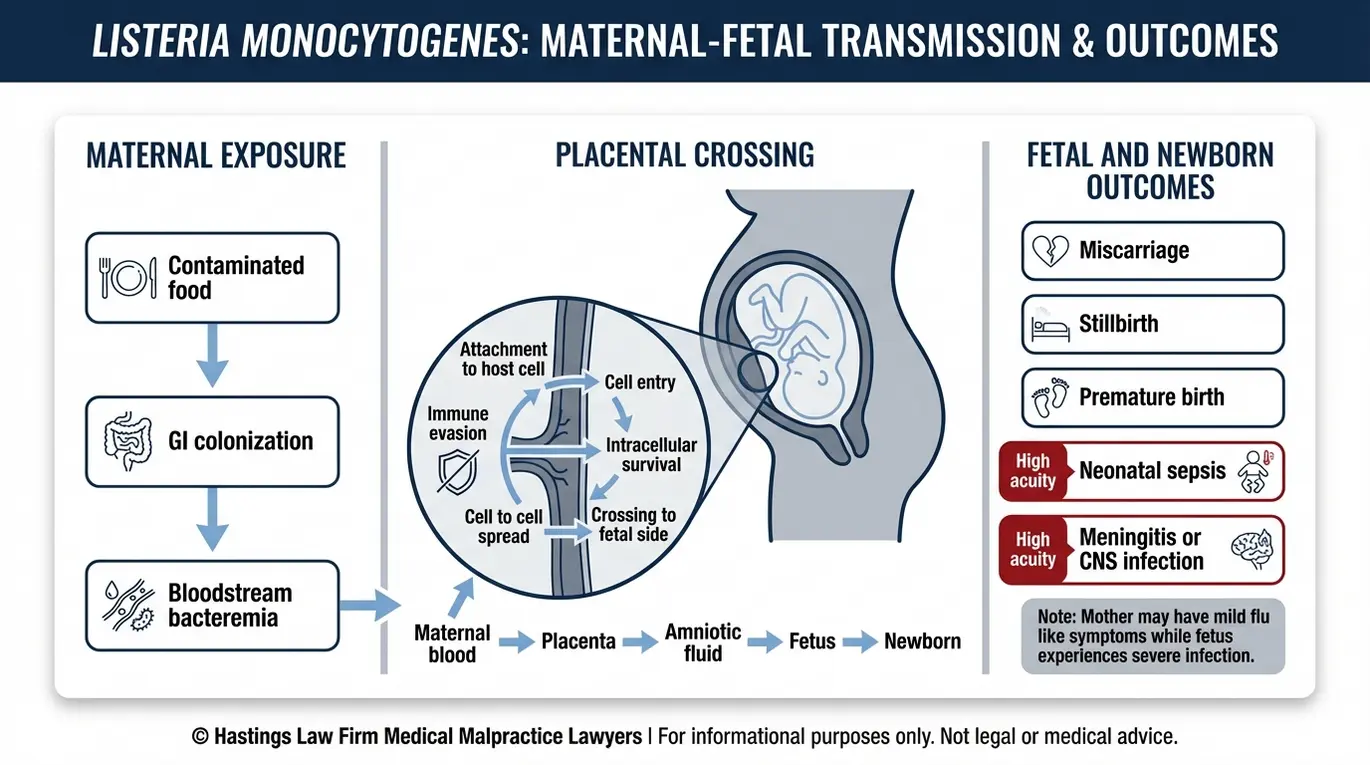
Listeriosis poses a serious risk during pregnancy because the bacteria can cross the placental barrier, a process known as transplacental transmission, leading to miscarriage, stillbirth, or severe neonatal infection even if the mother experiences only mild symptoms. This infection is primarily caused by consuming food contaminated with the bacterium Listeria monocytogenes. The disconnect between maternal symptoms and fetal harm is one of the most dangerous aspects of the disease.
Pregnant women are roughly ten times more likely to develop listeriosis than the general population, according to the Centers for Disease Control and Prevention. A mother may experience what feels like a mild flu, while the fetus suffers severe harm:
- Maternal Symptoms: Low-grade fever, muscle aches, nausea, or fatigue, which are often dismissed as normal pregnancy discomfort.
- Fetal Impact: Devastating systemic infection that occurs even while the mother recovers.
How the infection reaches the baby: Listeria is not a passive organism. It has a unique ability to invade human cells directly. The bacteria use surface proteins, specifically Internalin A (InlA) and Internalin B (InlB), to latch onto and enter cells lining the intestine.
Once inside, the bacteria are enclosed within a membrane-bound compartment called a phagosome. Listeria produces a toxin called Listeriolysin O (LLO) that punctures the phagosomal membrane, allowing the bacteria to escape into the cell’s cytoplasm. From there, Listeria hijacks the cell’s own machinery to propel itself through the cytoplasm and push into neighboring cells, spreading without being exposed to the bloodstream where the immune system could fight it. Research published on PubMed Central detailing the roles of Listeriolysin O, InlA, and InlB describes this invasion pathway in detail.
This cell-to-cell movement is what allows the bacteria to eventually reach and cross the placenta. This process, known as transplacental transmission, means the placenta, which normally protects the fetus, becomes a pathway for infection.
The incubation period, the time between eating contaminated food and developing symptoms, can range from one to four weeks. In some cases, it can extend even longer. This delay makes it difficult to connect the illness to a specific food source without a thorough investigation.
Potential outcomes for the infant include:
- Pregnancy loss: Listeriosis is a recognized cause of miscarriage and stillbirth, sometimes occurring before the mother even realizes she is infected.
- Premature birth: The infection can trigger early labor, placing the newborn at risk for the many complications associated with prematurity.
- Neonatal sepsis: A blood infection that can develop shortly after birth, overwhelming the infant’s underdeveloped immune system.
- Meningitis: Listeria can infect the membranes surrounding the brain and spinal cord, causing inflammation of the central nervous system that may lead to permanent neurological damage.
- Encephalitis: In severe cases, the infection reaches the brain tissue itself, potentially causing seizures, developmental delays, or long-term disability.
Cellular Invasion and Immune Evasion in Pregnancy
What makes Listeria monocytogenes especially dangerous during gestation is its ability to hide. Most bacteria circulate in the bloodstream where immune cells can detect and destroy them. Listeria avoids this by living inside the body’s own cells, effectively using the patient’s cells as shields.
During pregnancy, the immune system naturally suppresses certain responses to protect the developing fetus. This change in the immune system, while necessary for a healthy pregnancy, creates an environment where Listeria can thrive with less resistance. The combination of intracellular hiding and a dampened immune response means that by the time the infection shows symptoms, the bacteria may have already caused significant harm to the fetus.
For families affected by these outcomes, maternal listeria lawyers can help determine whether the contamination could have been prevented and who in the food supply chain is responsible.
Common Sources of Contamination and High-Risk Foods
Listeria outbreaks are frequently linked to unpasteurized dairy products, deli meats, and soft cheeses that have been contaminated during processing or packaging due to unsanitary facility conditions. Contamination refers to the presence of harmful bacteria in food that should be safe to eat. Unlike most foodborne pathogens, Listeria monocytogenes can survive and even multiply at refrigerator temperatures, which is why standard food storage does not eliminate the risk.
This ability to grow in cold environments is sometimes called a “cold chain failure” because refrigeration, the primary safety measure consumers rely on, does not stop this particular bacterium. A contaminated product can become more dangerous the longer it sits in the refrigerator, not less.
The U.S. Food and Drug Administration’s guidance on preventing Listeria infections identifies several categories of food that pose the greatest risk. Cross-contamination, when bacteria spread from a contaminated surface, utensil, or product to a clean one during processing, is a frequent cause of outbreaks.
High-Risk Foods for Listeria Contamination:
| Food Category | Examples | Why It’s Risky |
|---|---|---|
| Unpasteurized Dairy | Raw milk, queso fresco, brie, camembert | Pasteurization, the process of heating milk to kill harmful bacteria, is skipped; Listeria survives |
| Deli Meats & Hot Dogs | Sliced turkey, ham, bologna, frankfurters | Can be contaminated after cooking during slicing and packaging |
| Soft Cheeses | Feta, blue cheese, Mexican-style soft cheeses | Moisture content supports bacterial growth |
| Smoked Seafood | Refrigerated smoked salmon, lox, trout | Cold-smoking may not reach temperatures needed to kill bacteria |
| Raw Sprouts | Alfalfa, bean, clover sprouts | Growing conditions (warm, humid) are ideal for bacterial multiplication |
| Pre-Cut Produce | Bagged salads, pre-sliced melons, celery sticks | Processing and handling create contamination opportunities |
When the FDA or CDC issues a food recall, it typically means investigators have already confirmed contamination through laboratory testing. According to the U.S. Food and Drug Administration’s overview of Listeria and listeriosis, these recall notices and outbreak investigations create a public record that can be valuable evidence in a legal claim. The recall itself can demonstrate that a product was defective and that the manufacturer or distributor failed to prevent contamination.
For anyone who suspects a connection between a recalled product and a pregnancy complication, consulting an attorney for listeria lawsuits early can help preserve that evidence before it disappears.
The Hastings Law Firm Difference
Results matter, but what truly sets us apart is how we achieve them. Every verdict, every settlement, and every Texas courtroom victory comes from one guiding promise: To treat each client’s fight for justice as if it were our own.
This balance of skill, experience, and empathy reflects our core philosophy that justice should not only compensate the injured, but also make healthcare safer nationwide.

Identifying Liable Parties in Texas Food Supply Chains
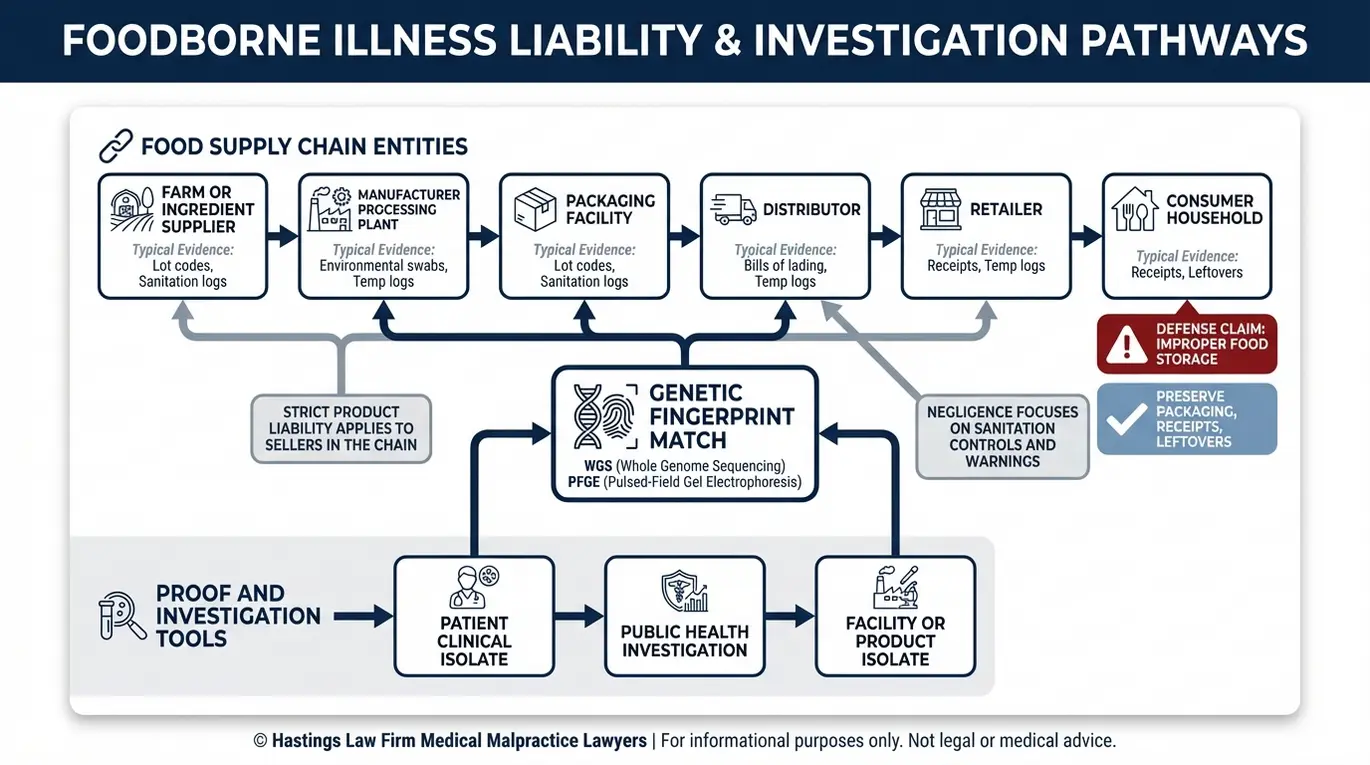
Liability for a listeria infection often extends beyond the retailer to include food manufacturers, distributors, and packaging facilities under the legal theories of strict product liability and negligence. This process involves determining which company in the supply chain failed to keep the food safe. Under Texas law, each theory opens a different path to holding the right parties accountable.
Our team includes former defense attorneys and hospital nurses who understand how organizations investigate these incidents. This insider perspective helps us build a case by anticipating how a manufacturer might attempt to deny responsibility.
Strict liability versus negligence: Under strict product liability, you do not need to prove that a company knew the food was contaminated. You need to show that the product was defective, meaning it was contaminated with Listeria monocytogenes, and that the contaminated product caused your illness or your child’s injuries.
The Supreme Court of Texas has addressed the framework for product liability claims, and contaminated food fits squarely within its scope. A negligence claim requires showing that a specific party failed to follow reasonable safety practices, such as proper sanitation protocols, temperature controls, or testing procedures.
In many cases, both theories apply. A food processor may be strictly liable for selling a contaminated product and also negligent for failing to maintain clean equipment.
Tracing the source of contamination is one of the most important steps in building a case. Modern outbreak investigations rely on advanced scientific tools:
- Whole Genome Sequencing (WGS) is a technique that maps the complete DNA of the Listeria bacteria found in a patient’s blood or spinal fluid and compares it to bacteria recovered from food products or processing facilities. A genetic match can establish a direct link between a specific food source and a specific illness.
- Pulsed-Field Gel Electrophoresis (PFGE) is an older but still-used method that creates a genetic “fingerprint” of the bacteria. While less precise than WGS, PFGE results remain part of the national tracking database and can help connect cases across state lines.
- Epidemiological investigation: Public health officials interview patients about what they ate, where they shopped, and when symptoms appeared. Patterns across multiple patients often point investigators toward a common source.
These tools allow us to trace the contamination backward through the supply chain, from the grocery store shelf to the distribution warehouse to the processing plant where the failure likely occurred.
Evidence preservation matters. If you or a family member has been diagnosed with listeriosis, take these steps:
- Save any leftover food from suspected products and freeze it immediately
- Keep all grocery receipts and packaging, including lot numbers and expiration dates
- Document where and when the food was purchased
- Preserve medical records showing diagnosis, treatment, and lab results
As a Texas food poisoning lawyer team, we work with food safety experts and epidemiologists to reconstruct the chain of events, identify every responsible party, and build the evidence needed to support your claim.
Calculating Damages for Long-Term Infant Care and Loss
Compensation for listeriosis in maternal cases covers medical expenses for the mother and child, lost income, and non-economic damages for the emotional trauma of a stillbirth or the lifetime care costs of a disabled child. Damages refer to the monetary compensation sought to cover losses, such as medical bills and emotional pain. These cases often involve significant financial exposure because the injuries, particularly to infants, may require decades of medical support.
Economic loss and damages represent the measurable financial losses your family has suffered or will suffer. These typically include:
NICU hospitalization can cost tens of thousands of dollars per day for critically ill newborns. If the infant survives with neurological damage from meningitis or encephalitis, long-term therapies may be needed. These include physical rehabilitation, speech therapy, occupational therapy, and special education for conditions like cerebral palsy. A life care plan, prepared by a qualified medical economist, projects these costs over the child’s expected lifetime. Lost wages for the mother, both during recovery and in situations where a parent must reduce or stop working to care for a disabled child, are also recoverable.
Non-economic damages address the suffering that cannot be measured with receipts. This includes the mental anguish of pregnancy loss, the grief of stillbirth, and the anxiety of watching a newborn fight infection in the NICU. Texas law recognizes that families deserve compensation for this pain, and juries regularly award substantial non-economic damages in cases involving infant death or disability.
Wrongful death claims are available to families who lose a child due to listeriosis. Under Texas wrongful death law, parents can pursue damages for the loss of companionship, the emotional devastation of losing a child, and the funeral and burial expenses. When a stillbirth or neonatal death results from contaminated food, the responsible parties in the supply chain can be held liable.
Statute of Limitations and the Discovery Rule
Texas generally requires personal injury claims for listeriosis to be filed within two years of the date of injury. The long incubation period and the difficulty of linking an illness to a specific food product mean that families may not discover the true cause of their loss for weeks or months.
The discovery rule may extend the filing deadline in situations where the connection between the contaminated food and the injury was not and could not have been immediately known. The clock may start running from the date the contamination source was identified rather than the date of the illness itself. For cases involving infants, the statute of limitations may also be tolled, or paused, until the child reaches the age of majority.
Because evidence can deteriorate and recalls expire from public awareness, contacting a lawyer early gives your case the strongest possible foundation.
Contact the Texas Birth Injury Attorneys at Hastings Law Firm Today for Help
If you or your newborn suffered severe harm from contaminated food during pregnancy, you deserve answers and accountability. Hastings Law Firm is dedicated to helping families who feel betrayed by failures in the systems they trusted, whether that system is a hospital or a food manufacturer.
Our team includes in-house medical professionals and former defense attorneys who understand how to investigate these cases from every angle. Tommy Hastings is a 2025 inductee into ABOTA, a distinction held by a small percentage of trial lawyers. We work with food safety experts and epidemiologists to trace contamination to its source and identify every responsible party.
As your Texas maternal listeria infection lawyer, we handle the investigation, the expert analysis, and the litigation so you can focus on your family. We operate on a contingency fee basis, which means you pay no attorney fees or costs unless we recover compensation for you.
Call Hastings Law Firm today for a free, confidential case evaluation. Let us help you find the answers you deserve.
Frequently Asked Questions About Maternal Listeria Infection in Texas


This content was researched and written by the Hastings Law Firm editorial team, which includes attorneys, medical professionals, and experienced researchers. Our writing is informed by internal knowledge and practical experience, and we cross-check critical details against authoritative sources cited throughout. Every piece undergoes human-led fact-checking and legal review. Because legal and medical information can change, if you spot an error, please contact us. Learn more about our content standards and review process on our editorial policy page.

Tommy Hastings, founder of Hastings Law Firm, is a board-certified personal injury trial lawyer dedicated exclusively to healthcare injury cases. Since 2001, he has represented injured patients and families in litigation against major hospital systems, pharmaceutical companies, and negligent healthcare providers nationwide. He has handled numerous high-profile cases that have drawn national media attention and resulted in multi-million dollar recoveries. He draws on that experience in his writing, helping readers understand how these cases work and what options may be available to them.
