


Texas Lung Cancer Misdiagnosis Lawyer
A delayed lung cancer diagnosis can change treatment options and prognosis, especially when warning signs were present but imaging, follow up, or communication broke down. These cases often turn on whether the cancer should have been detected earlier, whether stage progression occurred during the delay, and whether the missed opportunity caused measurable harm. Understanding how diagnostic errors happen and how responsibility can extend across multiple providers can help families make informed decisions after a devastating outcome. If you or a loved one were harmed or worse due to a delayed lung cancer diagnosis in Texas, contact Hastings Law Firm for a free, confidential case review.

Last Updated: July 27, 2026
Trusted Texas Medical Attorneys for Delayed Lung Cancer Diagnosis Claims
Learning that your lung cancer could have been caught earlier is a devastating realization. You trusted your doctors to investigate your symptoms, read your scans correctly, and act on the results. If that trust was broken, you deserve to know what went wrong and what options are available to you now.
At Hastings Law Firm, founded by board-certified trial lawyer Tommy Hastings, we focus exclusively on medical malpractice. Our team includes attorneys, experienced hospital nurses, and medical experts who investigate missed cancer diagnoses across Texas. As an experienced Texas lung cancer misdiagnosis lawyer, we understand both the medical science and the legal strategy these cases demand.
If you believe your lung cancer should have been diagnosed sooner, we can review what happened and explain your options. Contact us for a free, confidential case evaluation.

Understanding Delayed Diagnosis of Lung Cancer
Delayed diagnosis of lung cancer occurs when a medical professional fails to identify the disease at an early, treatable stage, despite the presence of symptoms or risk factors that should have prompted further investigation. This delay allows the cancer to progress, often reducing treatment options and worsening the patient’s prognosis.
It helps to understand the distinction between two types of diagnostic failure. A complete misdiagnosis means the doctor identified the wrong condition entirely, perhaps diagnosing pneumonia or chronic bronchitis when cancer was actually present. A delayed diagnosis means the cancer was eventually identified, but only after a period during which it should have already been caught and treated.
That distinction matters because stage progression, which classifies the disease from Stage I (localized) through Stage IV (spread to distant organs), directly determines treatment options and survival rates. Data from the SEER Explorer Application (National Cancer Institute) shows a dramatic gap in five-year survival rates. There is a clear difference between patients diagnosed at the localized stage versus those diagnosed after the cancer has spread.
When the cancer is caught early, often as a suspicious pulmonary nodule still confined to the lung, the survival outlook is significantly better than when it has metastasized to other parts of the body. The SEER data highlights a critical reality: the window for effective intervention is narrow. When the disease advances to distant metastasis, the opportunity for a cure diminishes rapidly. This statistical drop-off underscores why timely action is not just procedural, but life-saving.
This is why early detection is the single biggest factor in lung cancer survival. Every week or month of delay can mean the difference between a treatable tumor and a terminal diagnosis.
For patients and families, that gap creates an agonizing “what if.” What if the scan had been read correctly six months earlier? What if the doctor had ordered a follow-up instead of dismissing a persistent cough? A Texas Lung Cancer Misdiagnosis Lawyer can help answer those questions by investigating the medical timeline and determining whether earlier diagnosis would have changed the outcome. If you or a loved one experienced a diagnostic delay in Texas, a lung cancer misdiagnosis lawyer can evaluate whether the standard of care was met.
Is a Missed Lung Cancer Diagnosis Considered Medical Malpractice?
Yes, a missed lung cancer diagnosis can be considered medical malpractice if the failure to diagnose resulted from a provider breaching the accepted standard of care, and that breach directly caused the patient’s condition to worsen beyond what would have occurred with timely detection.
Not every missed diagnosis automatically qualifies as malpractice. To bring a successful claim, Texas lung cancer misdiagnosis lawyers must establish four legal elements of medical negligence:
- Duty: A doctor-patient relationship existed, creating a legal duty of care to provide competent services. This is typically established the moment a physician agrees to evaluate or treat a patient.
- Breach: The physician failed to act as a reasonably competent doctor would have under the same circumstances. For example, failing to order a CT scan for a long-term smoker with a persistent cough and unexplained weight loss could constitute a breach.
- Causation: The delay directly caused specific, measurable harm. If the cancer advanced from Stage I to Stage IV during the period it went undiagnosed, that progression is the link between the doctor’s failure and the patient’s worsened condition. This is known as proximate cause, meaning the harm would not have occurred, or would have been less severe, but for the doctor’s error.
- Damages: The patient suffered real, quantifiable losses, including additional medical costs, lost income, physical suffering, or death.
A lung cancer misdiagnosis attorney must prove each of these elements. If any one is missing, the claim cannot succeed, which is why thorough medical investigation is essential from day one.
One particular concern in lung cancer cases is metastasis, the spread of cancer from its original site to other organs such as the brain, bones, or liver. Metastatic disease, also called metastatic lung cancer, dramatically reduces treatment options and survival rates. Proving that the cancer had not yet metastasized at the time it should have been diagnosed is often central to the case. A lung cancer malpractice lawyer works closely with medical experts to establish this timeline.
The Role of Tumor Doubling Time in Proving Causation
Defense attorneys in lung cancer misdiagnosis cases often argue that the cancer “grew too fast to catch” or “wasn’t visible on earlier imaging.” Medical experts counter this with tumor doubling time, the estimated period it takes for a tumor to double in size based on its cell type and growth characteristics.
By calculating the tumor doubling time, an expert witness can work backward from the date of actual diagnosis to determine the approximate size of the tumor on the date it should have been detected. This analysis can mathematically demonstrate that the cancer was present and visible on prior scans, even if the radiologist failed to identify it.
This type of expert testimony is one of the most powerful tools in proving causation, because it replaces speculation with measurable data.
The Hastings Law Firm Difference
Results matter, but what truly sets us apart is how we achieve them. Every verdict, every settlement, and every Texas courtroom victory comes from one guiding promise: To treat each client’s fight for justice as if it were our own.
This balance of skill, experience, and empathy reflects our core philosophy that justice should not only compensate the injured, but also make health care safer nationwide.

Common Causes of Lung Cancer Diagnostic Errors in Texas Hospitals
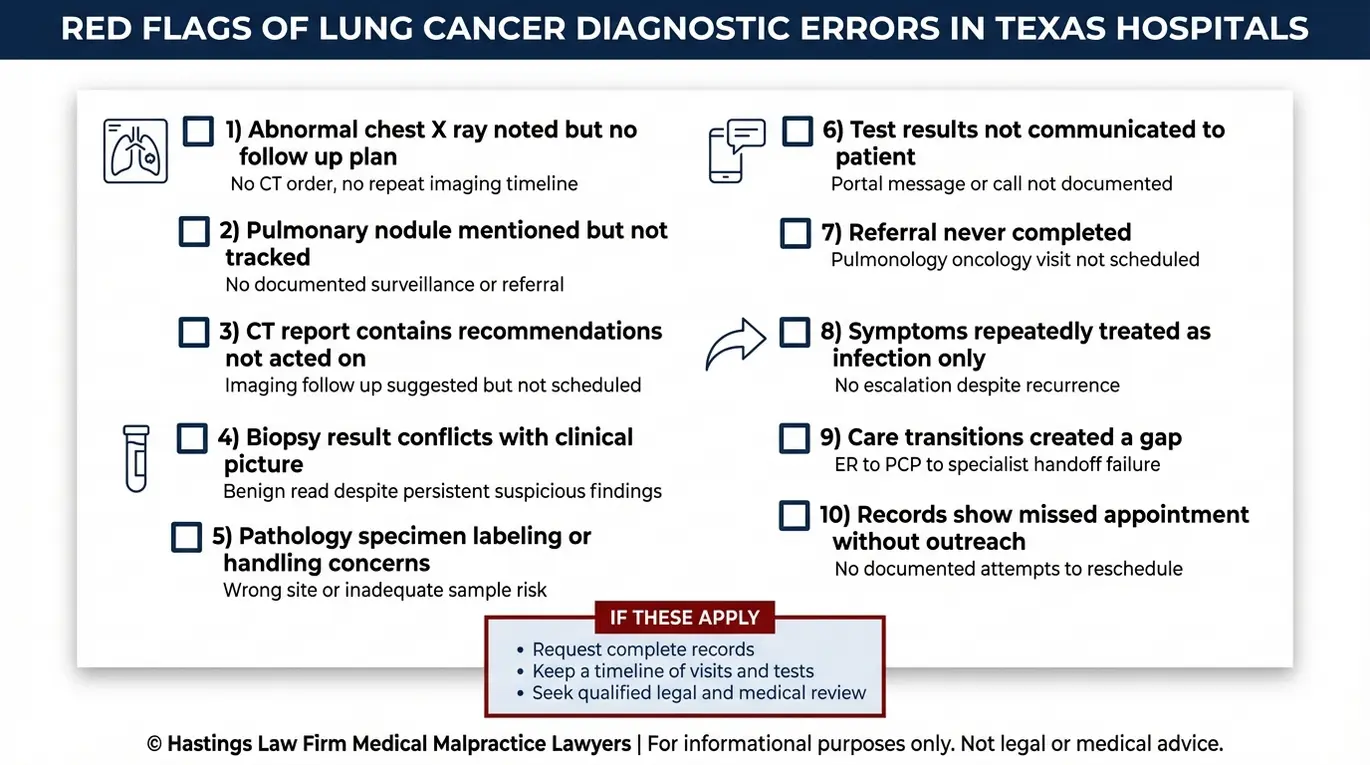
Diagnostic errors often stem from system failures or individual negligence, including radiologists missing nodules on imaging, primary care physicians failing to order follow-up testing for symptomatic patients, or administrative breakdowns where test results never reach the patient.
According to Improving Diagnosis in Health Care (NCBI Bookshelf), diagnostic errors are among the most common and harmful types of medical mistakes in the United States. This research indicates that system failures often lead to missed diagnoses. Lung cancer cases are particularly susceptible because they involve multiple providers, multiple imaging studies, and handoffs between departments where communication can break down.
As a Texas lung cancer misdiagnosis lawyer, we see recurring patterns in these cases. Here are the most common errors our team investigates:
- Radiology errors: A radiologist fails to identify a pulmonary nodule, a small growth on the lung visible on imaging, during a routine chest X-ray or CT scan. These nodules can be subtle, but established reading protocols exist for a reason.
- Failure to follow up on abnormal findings: An imaging study notes a suspicious area, but no one orders a repeat scan, a PET scan, a bronchoscopy, or a biopsy, a procedure in which a small tissue sample is removed and examined under a microscope to determine whether cancer cells are present.
- Pathology errors: A lung biopsy is performed, but the pathologist misinterprets the tissue sample as benign when cancer cells are actually present.
- Failure to refer: A primary care physician treats recurring respiratory symptoms with antibiotics or inhalers without referring the patient to a pulmonologist or ordering advanced imaging.
- Systemic communication failures: Lab results or radiology reports get lost within the hospital’s electronic system, and no one contacts the patient about an abnormal finding.
- Failure to correlate clinical history: The physician does not account for the patient’s smoking history, occupational exposures, or family history of cancer when evaluating symptoms.
Each of these errors can delay a diagnosis by weeks, months, or even years. A lung cancer lawyer in Texas can help determine where the breakdown occurred, who was responsible, and how it affected the course of the disease. If you recognize any of these patterns in your own experience, a lung cancer malpractice attorney can evaluate your records.
Blind-Read Methodology: Detecting Radiology Errors
One of the most effective ways to prove that a radiologist missed a tumor in a lung cancer case is through a blind-read methodology. In this process, an independent radiologist reviews the original imaging studies without any knowledge of the eventual diagnosis.
The purpose is straightforward: if a qualified radiologist, reading the same scan with fresh eyes, identifies the tumor that was missed, it demonstrates to an expert witness and the jury that a reasonably competent professional should have seen it at the time. This comparison between what was reported and what was actually visible on the scan is powerful evidence of a breach of the standard of care. Our team works with independent radiology experts across the country to conduct these reviews as part of every lung cancer misdiagnosis investigation.
Standard of Care Regarding Symptoms and Risk Factors
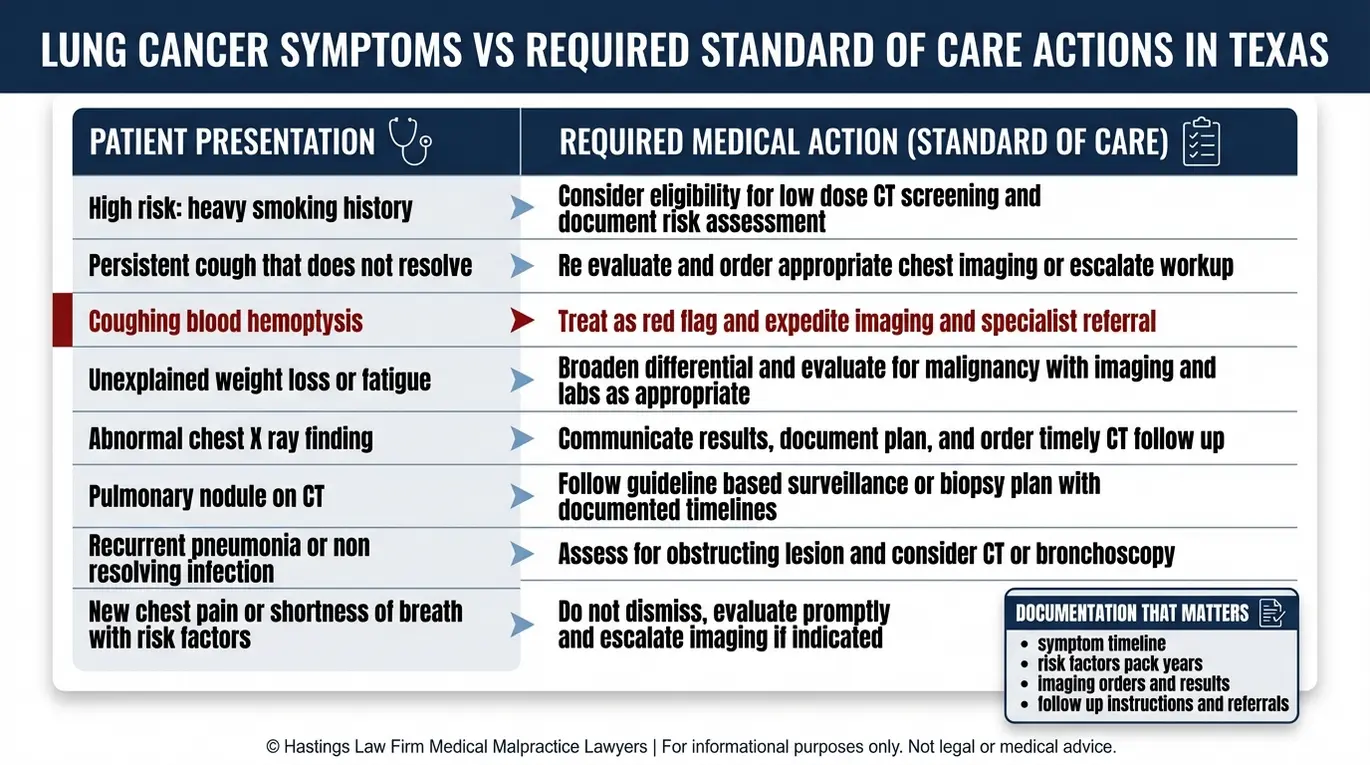
The medical standard of care requires physicians to screen high-risk patients and investigate persistent respiratory symptoms using appropriate diagnostic imaging, rather than dismissing them as minor conditions like bronchitis or a lingering cold. These protocols are the medical community’s consensus on how to catch cancer before it spreads.
A key screening tool is the low-dose CT scan (LDCT), a specialized imaging study that uses lower amounts of radiation to detect lung abnormalities early. According to the USPSTF Lung Cancer Screening Recommendation Toolkit (American Lung Association), annual LDCT screening is recommended for adults aged 50 to 80 who have a 20 pack-year smoking history and currently smoke or have quit within the past 15 years. A pack-year is a measure of lifetime tobacco exposure. It is calculated by multiplying daily packs by the number of years a person smoked, as defined by the National Cancer Institute’s SEER glossary.
When doctors fail to account for these risk factors, or when they dismiss warning signs as something less serious, the delay can be catastrophic. A Texas lung cancer misdiagnosis lawyer evaluates whether the treating physician followed established screening and diagnostic protocols.
The table below outlines common symptoms, associated risk factors, and the medical response generally expected under the standard of care:
| Symptom or Risk Factor | Expected Medical Action |
|---|---|
| Persistent cough lasting more than 3 weeks | Chest X-ray; consider CT scan if no resolution |
| Hemoptysis (coughing up blood) | Immediate imaging (CT scan); possible bronchoscopy referral |
| Unexplained weight loss with respiratory symptoms | CT scan; lab work; specialist referral |
| 20+ pack-year smoking history (age 50–80) | Annual LDCT screening per USPSTF guidelines |
| Known pulmonary nodule on prior imaging | Scheduled follow-up imaging per Fleischner Society guidelines |
| Recurring pneumonia in the same lung lobe | CT scan to rule out obstructing mass; pulmonology referral |
When a physician fails to act according to these guidelines, and the patient’s cancer progresses as a result, that gap between what should have been done and what actually happened forms the foundation of a malpractice claim. Texas lung cancer misdiagnosis attorneys build cases around this exact analysis.
Missed Opportunity Analysis Using Prior Scans
In many lung cancer cases, the evidence of delay is already in the patient’s own medical records. Our team conducts a missed opportunity analysis by gathering all prior imaging studies, including chest X-rays, CT scans, and any other available records, and comparing them in chronological order.
This forensic review identifies the exact point in time when an abnormality first appeared on imaging. By working with radiology and oncology experts, we can determine whether the cancer was detectable at that earlier date and whether appropriate follow-up would have led to a timely diagnosis. This process establishes both the timeline of medical negligence and causation linking the missed opportunity to the patient’s worsened outcome.
Establishing Liability: Who Is Responsible for the Delay?
Liability in lung cancer misdiagnosis cases often extends well beyond a single physician. Radiologists who misread scans, pulmonologists who failed to biopsy suspicious masses, and hospitals responsible for systemic failures in patient follow-up protocols may all share responsibility for the delay.
As a Texas lung cancer misdiagnosis lawyer, we investigate the full chain of care to identify every party whose negligence contributed to the diagnostic failure. Our team includes former defense attorneys who use their experience to anticipate hospital legal strategies during this process. Potentially liable parties include:
- Radiologists: These specialists bear significant liability when they fail to identify visible nodules or masses on imaging. Radiology errors are among the most common causes of delayed lung cancer diagnosis.
- Primary care physicians: A PCP who fails to refer a symptomatic or high-risk patient for imaging or specialist evaluation may be liable for the resulting delay.
- Pulmonologists: If a pulmonologist evaluates a patient with suspicious findings but does not order a biopsy or bronchoscopy, that decision can directly contribute to disease progression.
- Oncologists: While usually involved after diagnosis, an oncologist may be liable if they fail to properly stage the cancer or delay treatment initiation, allowing the disease to advance unchecked.
- Pathologists: When a biopsy is performed but the tissue sample is misread as benign, the pathologist who interpreted the slide may bear responsibility for the missed diagnosis.
- Hospitals and health systems: Under legal theories such as corporate negligence or vicarious liability, a hospital can be held liable for systemic failures. These include inadequate staffing, broken communication protocols, or lost test results that prevented a timely diagnosis.
Identifying all responsible parties is not about assigning blame broadly. It is about ensuring that the full scope of negligence is accounted for so that a lung cancer malpractice lawyer can pursue the appropriate claims on your behalf. In many cases, multiple defendants contributed to the delay at different points in the patient’s care. Vicarious liability allows patients to hold a hospital accountable for the negligence of its employees, such as nurses or technicians. However, because many doctors are independent contractors, establishing hospital liability often requires proving direct corporate negligence, such as failure to credential or supervise its staff properly.
Compensation for Victims of Lung Cancer Misdiagnosis
Patients affected by lung cancer misdiagnosis may be entitled to compensation for medical bills, lost wages, pain and suffering, and, in fatal cases, wrongful death damages. The value of a claim is often shaped by the degree to which the disease progressed during the period of delay and the resulting impact on the patient’s prognosis and treatment options.
Economic damages cover the financial losses that can be calculated with documentation. These include past and future medical expenses related to additional treatments that would not have been necessary with a timely diagnosis, such as chemotherapy, radiation, surgery, and hospice care. Lost wages and diminished earning capacity also fall into this category, particularly when the progression of the disease prevents a patient from returning to work.
Non-economic damages compensate for losses that do not carry a specific price tag but are no less real. These include physical pain and suffering, mental anguish, loss of enjoyment of life, and the physical impairment caused by a more advanced stage of cancer. For spouses and family members, loss of consortium, the deprivation of the benefits of a family relationship, may also be recoverable.
A concept central to many lung cancer cases is the difference between the prognosis the patient would have had with early detection and the prognosis they now face. Even when a cancer diagnosis would not have guaranteed survival, a diagnostic delay that eliminated or significantly reduced the patient’s chance of a better outcome can be the basis for proving causation and calculating damages. A lung cancer malpractice lawyer works with medical and financial experts to document this difference and present it effectively.
Wrongful death damages are available to the surviving families of patients who died as a result of a delayed or missed diagnosis. These claims can include funeral and burial costs, loss of financial support, loss of companionship and guidance, and the mental anguish experienced by surviving family members.
Whether a case resolves through settlement or proceeds to trial, a Texas lung cancer misdiagnosis lawyer works to ensure that every category of harm is documented and presented. At Hastings Law Firm, our lung cancer misdiagnosis law firm brings in medical and financial experts to calculate the full impact of the delay on your life and your family’s future.
Texas Statute of Limitations for Lung Cancer Claims
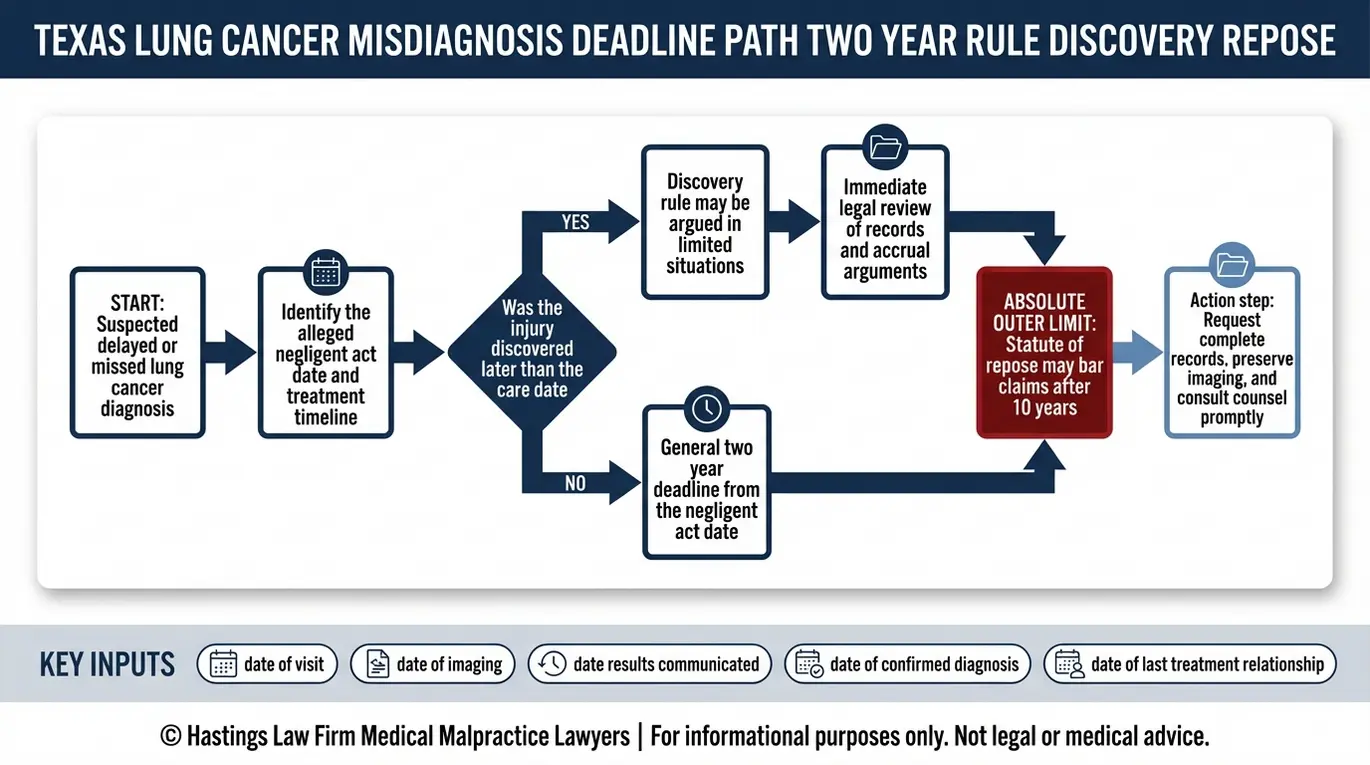
In Texas, medical malpractice claims generally must be filed within two years, but specific rules govern when that deadline begins in misdiagnosis cases, making timely legal consultation important.
The two-year rule is set by Texas Civil Practice and Remedies Code § 74.251, which states that a medical malpractice lawsuit must be filed within two years of the date the negligent act occurred. In a straightforward case, that date is when the doctor failed to diagnose the cancer. But lung cancer misdiagnosis cases are rarely that simple, because the patient often does not know about the error until much later.
The discovery rule can adjust the starting point of the two-year clock. Under this rule, the statute of limitations may begin when the patient discovered, or reasonably should have discovered, that the cancer was missed, rather than on the date of the original negligent act. Texas courts apply this rule narrowly, and it requires demonstrating that the patient could not have known about the error through reasonable diligence.
Even with the discovery rule, Texas imposes a hard outer boundary. The statute of repose, also outlined in Texas Civil Practice and Remedies Code Chapter 74, sets a 10-year absolute deadline from the date of the negligent act. After 10 years, a claim is barred regardless of when the patient learned of the misdiagnosis.
The statute of repose is particularly strict in Texas. Even if a patient had no way of knowing about the malpractice, for instance, if a radiologist missed a tumor that did not cause symptoms for eleven years, the claim is likely barred. This absolute deadline protects healthcare providers from indefinite liability but places patients at a disadvantage. Because of these rigid timeframes, waiting to “wait and see” is rarely a safe legal strategy. Early evaluation gives your legal team the best chance to preserve evidence and protect your right to file.
Contact the Texas Misdiagnosis Attorneys at Hastings Law Firm Today for Help
No amount of money can undo a lung cancer diagnosis. But holding negligent providers accountable can protect your family’s financial future and help prevent the same failure from happening to someone else.
At Hastings Law Firm, founder Tommy Hastings built this practice on two commitments: uncovering the truth about what happened, and making sure it does not happen again. Our team of attorneys, in-house nurses, and medical experts treats every client as a partner in that effort, not a case number.
If you or a loved one suffered harm because of a delayed or missed lung cancer diagnosis, a Texas lung cancer misdiagnosis lawyer at our firm can evaluate your case at no cost. We work on a contingency fee basis, meaning you pay no attorney fees or costs unless we recover compensation for you.
Call us today or complete our online form for a free, confidential case evaluation. Let us help you find the answers you deserve.
Frequently Asked Questions About Lung Cancer Misdiagnosis in Texas


This content was researched and written by the Hastings Law Firm editorial team, which includes attorneys, medical professionals, and experienced researchers. Our writing is informed by internal knowledge and practical experience, and we cross-check critical details against authoritative sources cited throughout. Every piece undergoes human-led fact-checking and legal review. Because legal and medical information can change, if you spot an error, please contact us. Learn more about our content standards and review process on our editorial policy page.

Brady D. Williams is a nationally recognized medical malpractice attorney who has spent his career handling high-stakes litigation for injured patients and families across the country. Licensed in both Texas and California, Brady draws on experience from hundreds of resolved medical cases to break down complex legal and medical topics for the people who need that information most. His writing reflects the same attention to detail and commitment to clarity that he brings to every case he handles.
