


Houston Laparoscopic Surgery Error Lawyer
Laparoscopic surgery uses small incisions and specialized tools, and it can offer meaningful benefits when performed safely. A preventable mistake during these procedures can cause severe injuries, prolonged recovery, and even fatal outcomes, especially when internal damage is missed or treatment is delayed. Common concerns involve organ or blood vessel injury, electrical burns, and failures to respond appropriately when complications arise. If you or a loved one were harmed or worse due to a laparoscopic surgery error in Houston, Texas, contact Hastings Law Firm for a free, confidential case review.
Last Updated: July 27, 2026
Trusted Houston Medical Attorneys for Surgical Negligence Claims
Laparoscopic surgery, a technique where surgeons operate through small incisions using a laparoscope (a thin, fiber-optic camera), has become one of the most common approaches in modern operating rooms. When performed correctly, it offers real benefits. But when a preventable error occurs during one of these procedures, the consequences can be severe and life-altering.
If you or a loved one was injured during a laparoscopic operation, you may have questions about what went wrong and whether the care you received fell below accepted medical standards. Our team, led by Tommy Hastings, who is Board Certified in Personal Injury Trial Law, focuses exclusively on medical malpractice and can thoroughly review what happened in a free, confidential consultation.

Understanding Risks in Minimally Invasive Surgeries
Laparoscopic errors often occur when a surgeon inadvertently damages surrounding organs or blood vessels with the laparoscope or a trocar, the sharp instrument used to create entry ports. In these minimally invasive procedures, surgeons operate through small ports in the abdomen using specialized tools. While minimally invasive surgery generally allows for faster recovery than open procedures, keyhole surgery carries distinct risks.
One major risk involves “blind entry,” where nearby organs are injured before the camera provides a clear view of the abdominal cavity. Another danger involves CO2 insufflation, the process of inflating the abdomen to create a pneumoperitoneum (a gas-filled working space). If gas enters a blood vessel, it can cause a gas embolism, a potentially fatal complication.
A laparoscopic surgery error lawyer evaluates these cases by examining the technique used. Procedures that carry higher risk of complications include:
- Gallbladder removal (cholecystectomy)
- Gynecological procedures, such as hysterectomy
- Hernia repair
- Appendectomy
- Bariatric surgery
An attorney for laparoscopic mistakes understands the technical details behind these operations and can identify where the standard of care was breached.

Common Injuries During Laparoscopic Procedures
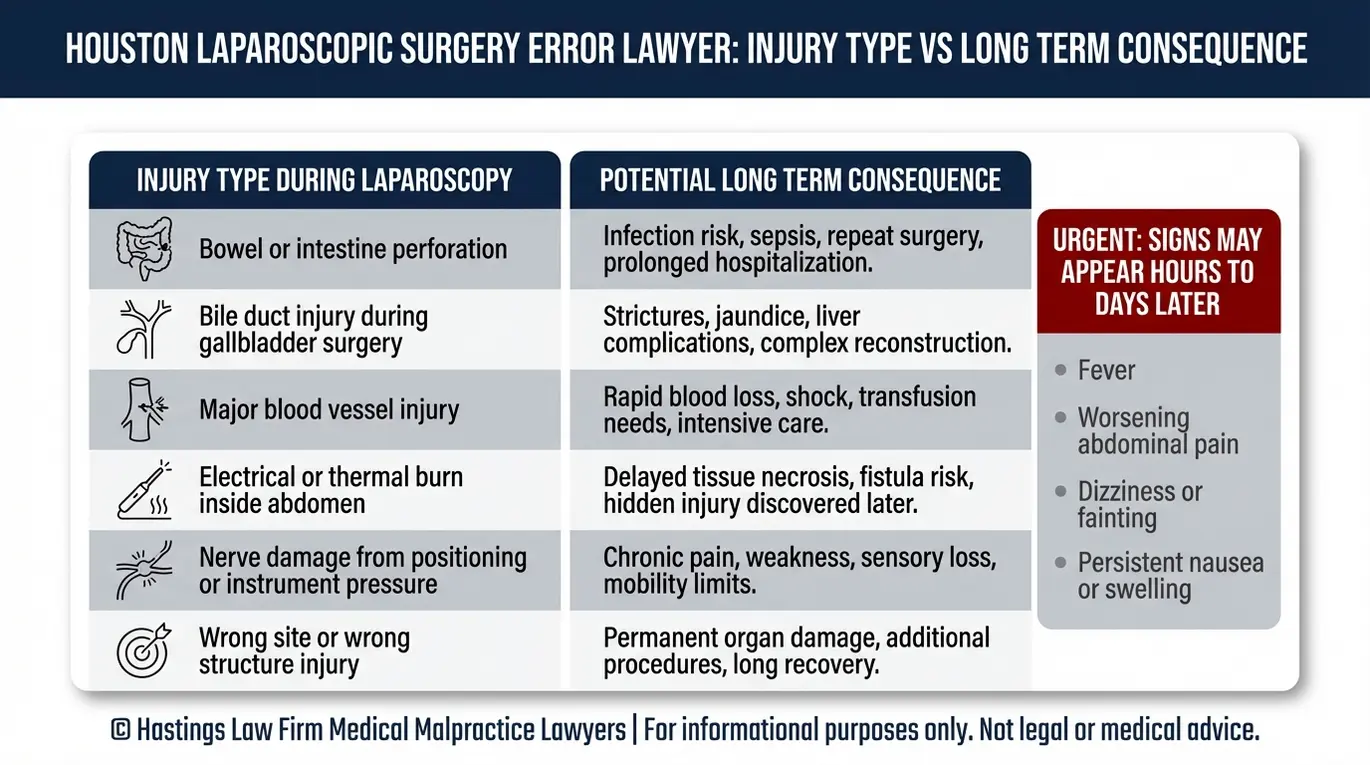
The most frequent injuries involve accidental perforation of the bowel, bile duct, or major blood vessels, which can lead to sepsis if not detected immediately. Laparoscopic surgery involves working in tight spaces near vital structures where small slips can lead to severe harm. Delayed diagnosis of these injuries can be fatal, as the bacteria from a perforated organ quickly leads to sepsis. A Houston laparoscopic surgery lawyer reviews records to determine if these injuries resulted from negligence.
| Injury Type | Potential Long-Term Consequence |
|---|---|
| Bowel or intestine perforation (a puncture in the wall) | Sepsis, emergency surgery, colostomy |
| Bile duct injury (damage to the common bile duct) | Chronic digestive problems, liver damage |
| Electrical burns from uninsulated instruments | Internal tissue death, organ damage |
| Major blood vessel damage | Internal bleeding, organ failure |
| Nerve damage | Chronic pain, loss of sensation |
Trocar insertion can cause perforated organs. If a nick goes unrecognized, bacteria trigger infection. Gallbladder removal often results in bile duct injuries. Research from the National Library of Medicine documents how insulation failure causes stray electrical burns. While wrong site surgery is rarer, it also occurs.
If you suspect surgical error counsel is needed, understanding these injuries is the first step.
Converting to Open Surgery
When complications arise during a laparoscopic procedure, the standard of care may require the surgeon to convert to open surgery, also known as a laparotomy, where a larger incision is made to allow direct visualization and repair. Laparoscopic procedures rely on clear visualization through a camera, but some complications require a more direct approach to ensure patient safety. This decision point is critical.
If a surgeon encounters unexpected bleeding, unclear anatomy, or signs of organ damage and continues with the laparoscopic approach rather than converting, that choice can constitute medical negligence. We examine operative records and surgical technique to evaluate whether the surgical team recognized and responded appropriately to intraoperative complications.
The Hastings Law Firm Difference
Results matter, but what truly sets us apart is how we achieve them. Every verdict, every settlement, and every Houston courtroom victory comes from one guiding promise: To treat each client’s fight for justice as if it were our own.
This balance of skill, experience, and empathy reflects our core philosophy that justice should not only compensate the injured, but also make health care safer nationwide.

Proving Negligence in Laparoscopic Operations
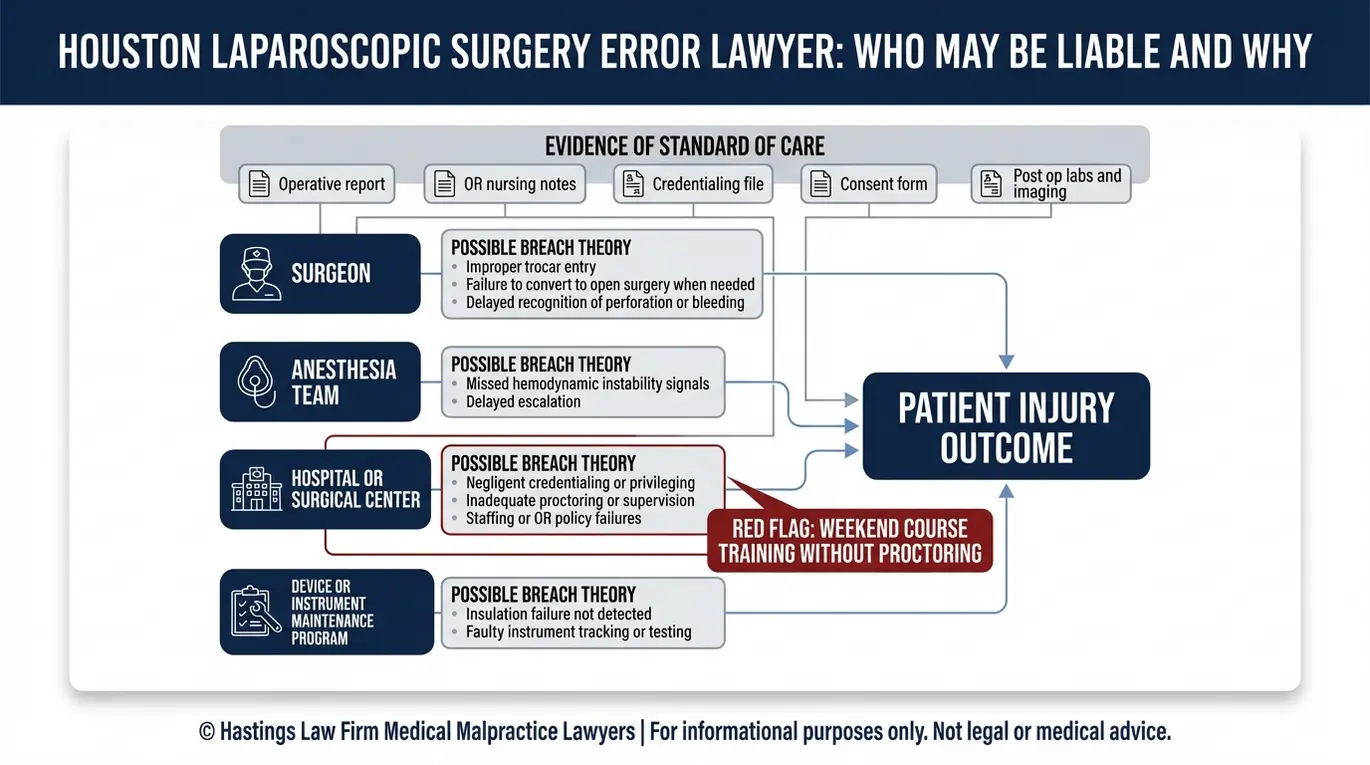
To prove malpractice, a plaintiff must demonstrate that the surgeon deviated from the accepted medical standard of care, directly causing injury or worsening the patient’s condition. Establishing liability requires a detailed analysis of medical records and surgical protocols to determine if a breach occurred.
Under Texas Civil Practice and Remedies Code Chapter 74, medical malpractice claims require a qualified expert report supporting the allegations, typically served within 120 days after the date each defendant’s original answer is filed, per Section 74.351.
Laparoscopic cases present specific challenges. We closely examine whether inadequate training played a role, as some surgeons learn techniques through weekend seminars rather than formal residency. Our legal team includes former defense attorneys and experienced hospital nurses who understand how hospitals manage these complications. We also analyze technical failures, such as electrosurgical insulation failure (stray electrical burns) or gas embolism (gas entering blood vessels).
Failure to diagnose post-operative complications is another form of medical negligence. As a lawyer for surgical errors in Houston, our team works with a skilled medical malpractice attorney network and board-certified experts to reconstruct the event. We prepare every case for trial from day one.
Contact the Houston Surgical Error Attorneys at Hastings Law Firm Today for Help
If a laparoscopic procedure left you or a loved one with unexpected injuries, Hastings Law Firm is here to help you find answers.
Our Houston laparoscopic surgery error lawyers handle these cases on a contingency fee basis, which means you pay nothing unless we recover compensation on your behalf. This approach is backed by Tommy Hastings’ more than 20 years of experience in medical litigation.
We understand that medical errors shake your trust in the system that was supposed to help you heal. Our goal is to restore that trust by uncovering the truth, holding the responsible parties accountable, and securing the compensation you need for corrective surgeries, lost wages, and ongoing care.
Contact us today for a free, confidential case evaluation. Let us review your records and explain your legal options.
Frequently Asked Questions About Laparoscopic Surgery Error in Houston


This content was researched and written by the Hastings Law Firm editorial team, which includes attorneys, medical professionals, and experienced researchers. Our writing is informed by internal knowledge and practical experience, and we cross-check critical details against authoritative sources cited throughout. Every piece undergoes human-led fact-checking and legal review. Because legal and medical information can change, if you spot an error, please contact us. Learn more about our content standards and review process on our editorial policy page.

Tommy Hastings, founder of Hastings Law Firm, is a board-certified personal injury trial lawyer dedicated exclusively to healthcare injury cases. Since 2001, he has represented injured patients and families in litigation against major hospital systems, pharmaceutical companies, and negligent healthcare providers nationwide. He has handled numerous high-profile cases that have drawn national media attention and resulted in multi-million dollar recoveries. He draws on that experience in his writing, helping readers understand how these cases work and what options may be available to them.
