


Fort Worth Laparoscopic Surgery Error Lawyer
Written by: Hastings Law Firm | Reviewed by: Gabe Sassin | Updated: July 27, 2026
Laparoscopic surgery is often described as minimally invasive, but serious harm can occur when a preventable error happens during entry, dissection, or post operative monitoring. Injuries may be missed at first and later lead to infection, emergency surgery, extended hospitalization, or life threatening consequences. Concerns often involve whether proper technique was used, whether warning signs were recognized, and whether the care team acted quickly when complications emerged. If you or a loved one were harmed or worse due to a laparoscopic surgery error in Fort Worth, Texas, contact Hastings Law Firm for a free, confidential case review.

Trusted Fort Worth Medical Attorneys for Surgical Negligence Claims
What You Should Know About Keyhole Surgery Malpractice Claims in Fort Worth:
- Outcomes can become severe when an internal injury is not recognized promptly after laparoscopic surgery.
- Recovery can be shaped by whether a surgical team missed warning signs of a developing infection after the procedure.
- Liability can turn on whether the surgeon used proper technique during blind entry with a trocar.
- Accountability can still apply even after a consent form is signed because informed consent does not excuse preventable negligence.
- Long term financial impact can be substantial when injuries require corrective surgery, extended hospitalization, or ongoing follow up care.
- Compensation options can be limited for non economic losses in Texas even when economic losses remain recoverable.
- Disputes can focus on whether the surgeon operated beyond the scope of training for a specific device.
- A breach can be alleged when a surgeon continues laparoscopic work despite poor visualization instead of converting to open surgery.
- Wrongful death claims may be available for families when complications lead to fatal outcomes.
- Case clarity can depend on what operative reports and post operative records show about technique and monitoring.

A Healthcare Focused Law Firm
If you or a loved one experienced unexpected complications after laparoscopic surgery, a minimally invasive procedure that uses small incisions and a camera to perform operations inside the body, you may be wondering whether something went wrong that should not have. That feeling deserves to be taken seriously, not dismissed.
At Hastings Law Firm, we focus exclusively on medical malpractice cases. Our team includes in-house medical professionals who understand both the clinical details and the legal standards involved in surgical error claims. As a Fort Worth laparoscopic surgery error lawyer team, we can review your medical records, explain what we find, and help you understand your options. The consultation is free, and you pay nothing unless we recover for you.
Common Laparoscopic Surgical Errors and Complications
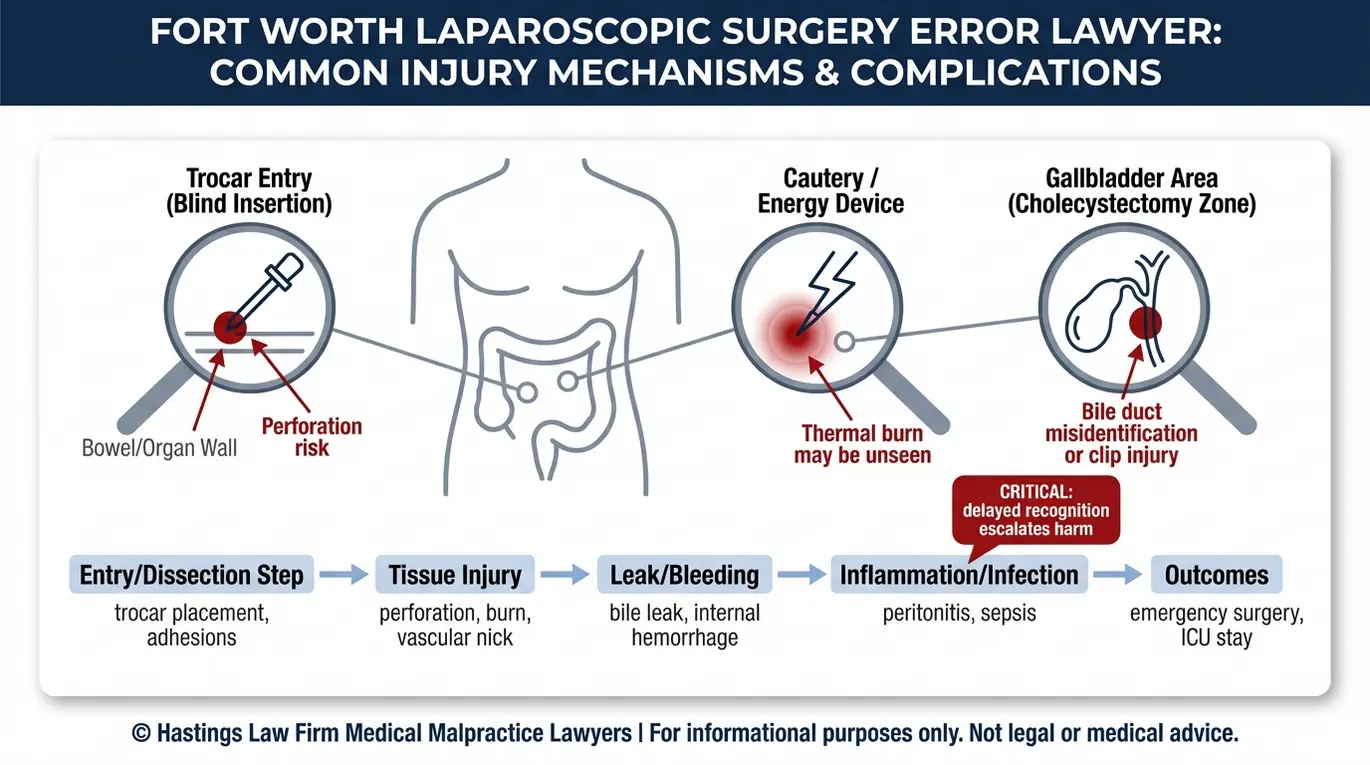
Laparoscopic errors often involve accidental puncture of nearby organs, bile duct injuries during gallbladder removal, or failure to diagnose bowel perforations immediately post-operation. These laparoscopic surgical errors can occur when a surgeon fails to adhere to established safety protocols during the procedure.
During most laparoscopic procedures, a surgeon inserts a trocar, a sharp, tube-shaped instrument, through a small incision to create a port for the camera and surgical tools. Because the initial trocar insertion is often performed “blind,” meaning the surgeon cannot yet see inside the abdomen, there is an inherent risk of striking an organ or blood vessel. The question in a surgical malpractice case is whether the surgeon used proper technique and recognized any injury before closing. When surgeons fail to visualize the entry path correctly, the sharp tip can easily slice through delicate tissue, causing damage that may go unnoticed until infection sets in.
According to research published by the Oxford University Press in the *British Journal of Surgery*, bowel injury remains a well-documented complication. Delayed recognition of these injuries is often a major factor in poor outcomes.
Here are some of the most common laparoscopic surgical errors we investigate in Fort Worth and across Texas:
- Bowel or organ perforation: An accidental puncture of the intestine or another organ, often caused by improper trocar insertion. Bowel perforation, a hole or tear in the intestinal wall, can lead to leaking contents and a severe post-surgical infection known as peritonitis if not caught immediately.
- Bowel burns: Thermal injuries, or burns, are caused by tools that use heat to seal tissue. These injuries may not produce symptoms until hours or days after the procedure. Stray energy from electrosurgical tools can damage tissue outside the surgeon’s field of view.
- Bile duct injuries: Damage to the bile duct during gallbladder surgery (cholecystectomy), which can require complex reconstructive procedures and long-term medical care. Misidentification of the anatomy often leads to the duct being clipped or cut.
- Vascular injury: Nicking a major blood vessel like the aorta or iliac artery during trocar entry or dissection, leading to internal hemorrhage that demands emergency intervention to prevent shock or death.
Any of these injuries can result in extended hospitalization, emergency open surgery, or worse. If you suspect a surgical error caused your complications, a laparoscopic surgical errors attorney can help you determine whether negligence was involved.
Proving Negligence in Laparoscopic Surgery Cases
Proving negligence requires demonstrating that the surgeon deviated from the accepted standard of care, such as failing to convert to open surgery when complications arose or lacking proper training for the specific device used. Medical negligence occurs when a healthcare provider fails to act with the same level of care that a reasonably competent professional would have provided under similar circumstances.
One area our medical malpractice attorney team examines closely is inadequate surgeon training. As highlighted in a comparative study on laparoscopic skills published in PubMed Central, proficiency gaps often exist between different training levels. Surgeons with extensive residency training generally show higher skill than those with only short-course certifications. A narrative review from the Association of Surgical Technologists also emphasizes the safety considerations that must guide every step of a laparoscopic procedure. When a surgeon operates beyond the scope of their training, the risk to the patient increases substantially.
Another common issue involves the failure to convert to open surgery. Conversion to open surgery means the surgeon abandons the laparoscopic approach and makes a larger incision to operate with direct visibility. This decision often becomes necessary when a patient has adhesions, bands of scar tissue from prior surgeries that distort anatomy and limit visibility. If a surgeon presses forward with laparoscopic instruments despite poor visualization, and that decision leads to injury, it can be strong evidence of a breached standard of care.
We also address the medical waiver myth directly: signing a consent form before surgery does not give the doctor permission to be negligent. Under Texas law, including Chapter 74 of the Texas Civil Practice and Remedies Code, informed consent acknowledges known risks. It does not shield a provider from accountability for preventable errors.
Delay in Diagnosis of Sepsis and Peritonitis
A surgical error is not always the initial injury, but sometimes the failure to recognize it afterward. When a bowel perforation goes undetected, intestinal contents can leak into the abdominal cavity and cause peritonitis, a serious and potentially fatal infection of the abdominal lining. Left untreated, peritonitis can progress to sepsis, a life-threatening condition in which the body’s response to infection begins damaging its own organs.
Post-operative symptoms like persistent fever, worsening abdominal pain, and rapid heart rate can signal a developing emergency requiring emergency surgery. If a surgical team dismisses or overlooks these warning signs, the delay in diagnosis may itself constitute negligence. We evaluate whether the post-surgical monitoring met the standard of care and whether earlier intervention could have prevented the harm.

The Hastings Law Firm Difference
Results matter, but what truly sets us apart is how we achieve them. Every verdict, every settlement, and every Fort Worth courtroom victory comes from one guiding promise: To treat each client’s fight for justice as if it were our own.
This balance of skill, experience, and empathy reflects our core philosophy that justice should not only compensate the injured, but also make healthcare safer nationwide.

Recovering Damages for Surgical Injuries in Texas
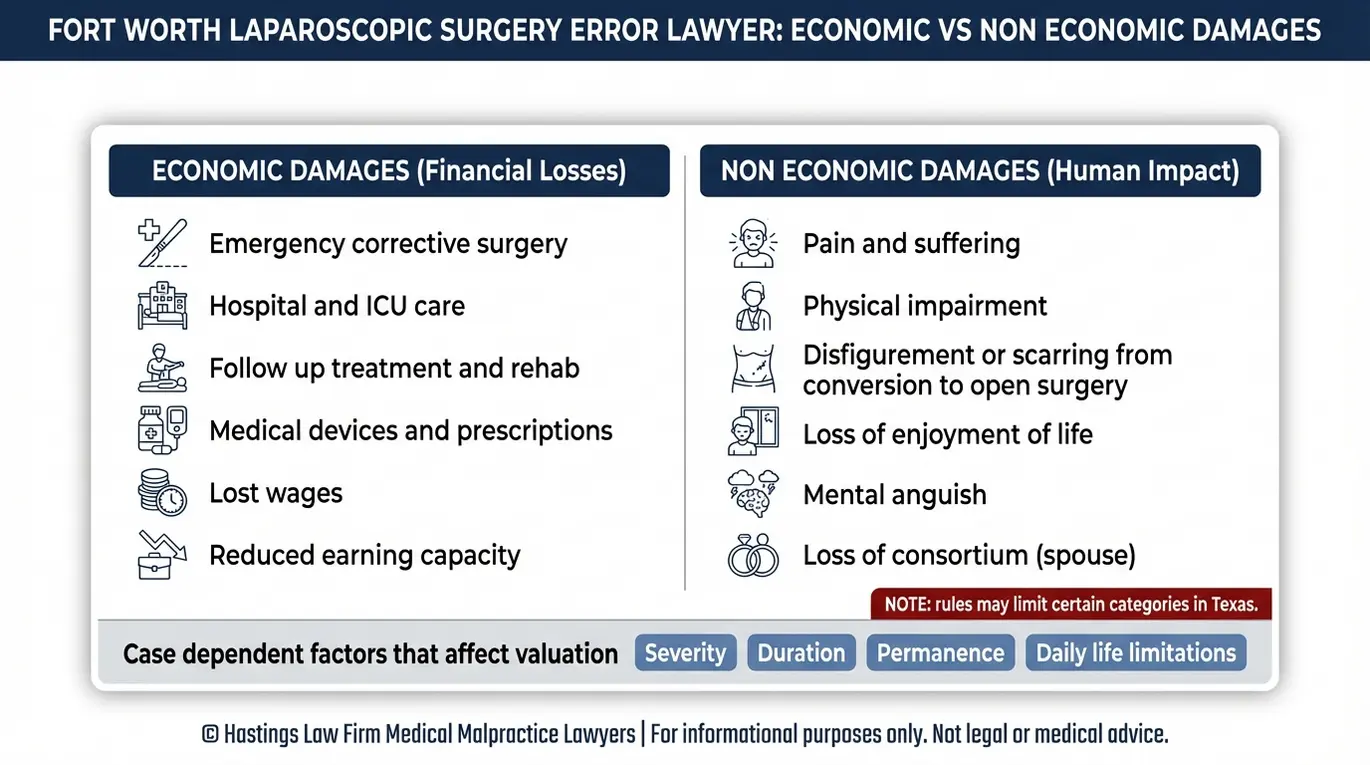
Patients harmed by surgical negligence in Texas may pursue economic damages for medical bills and lost income, as well as non-economic damages for pain, suffering, and physical impairment. In medical malpractice cases, damages represent the financial and personal losses you experience because of a preventable error.
A bile duct injury, damage to the tube that carries bile from the liver to the small intestine, may require multiple reconstructive surgeries and years of follow-up care. A vascular injury, internal hemorrhage caused by a nicked blood vessel, can lead to emergency transfusions and extended ICU stays. Both carry significant financial and personal consequences. While there are statutory caps on damages for non-economic losses, there is no limit on the economic compensation you can recover for verifiable financial costs.
Here is a general breakdown of how damages are categorized in these cases:
| Economic Damages | Non-Economic Damages |
|---|---|
| Corrective and reconstructive surgeries | Physical pain and suffering |
| Hospital and ICU costs | Disfigurement (e.g., scars from emergency open surgery) |
| Lost wages during recovery | Loss of enjoyment of life |
| Future medical care and rehabilitation | Emotional distress and mental anguish |
For families who lost a loved one to complications like uncontrolled hemorrhage or sepsis, Texas law also allows wrongful death claims to recover both economic and non-economic losses.
Why Choose Hastings Law Firm for Your Claim
We are a specialized medical malpractice firm with a board-certified founder and in-house medical staff, ensuring every case is prepared for trial rather than a quick settlement. Our approach is designed to drive fair outcomes by holding negligent providers fully accountable.
We do not handle car accidents, slip-and-fall claims, or general personal injury work. Our medical malpractice lawyer team, including former defense attorneys and experienced nurses, is focused on holding healthcare providers accountable when they cause preventable harm. Tommy Hastings, our founder, is board-certified in Personal Injury Trial Law by the Texas Board of Legal Specialization and leads our efforts to secure justice for patients.
As your Fort Worth laparoscopic surgery error lawyer, we also make the process accessible. we work on a contingency-fee basis, which means you pay no attorney fees or costs unless we secure a recovery for you. Our firm is based in Texas with the resources and medical expert network to take on major hospital systems in Fort Worth and beyond.
Contact the Fort Worth Surgical Error Attorneys at Hastings Law Firm Today for Help
Texas law generally gives you two years from the date of injury to file a medical malpractice claim, so the timeline to act matters. But beyond the legal deadlines, we know that many families are searching for something just as important as compensation: the truth about what happened.
When you contact us, a nurse on our team reviews your records during the initial evaluation. That clinical perspective helps us identify whether a breach in the standard of care occurred, and it gives you real answers early in the process.
If you or a loved one suffered harm after a laparoscopic procedure, our Fort Worth medical malpractice attorneys are ready to listen. The consultation is free, completely confidential, and there is no obligation. Reach out to Hastings Law Firm today and let us help you understand your options.
Frequently Asked Questions About Laparoscopic Surgery Error in Fort Worth


This content was researched and written by the Hastings Law Firm editorial team, which includes attorneys, medical professionals, and experienced researchers. Our writing is informed by internal knowledge and practical experience, and we cross-check critical details against authoritative sources cited throughout. Every piece undergoes human-led fact-checking and legal review. Because legal and medical information can change, if you spot an error, please contact us. Learn more about our content standards and review process on our editorial policy page.

Gabe Sassin has focused exclusively on medical malpractice law since 2007. After spending more than a decade as a malpractice defense attorney, he knows exactly how the other side works. He has seen firsthand how healthcare providers, insurers, corporate defendants, and their legal teams think, prepare, and build their defense against claims. That knowledge works for the people who need it most today, injured patients and their families. His unique experience shapes everything he writes, giving readers a look at how these cases actually work from someone who has handled them from both sides.
