


Austin Laparoscopic Surgery Error Lawyer
Laparoscopic surgery is often described as minimally invasive, but errors during these procedures can still cause severe and life altering harm. Injuries may occur when instruments enter the body or when damage to organs or blood vessels is not recognized during the operation. Concerns also arise when a surgeon attempts advanced techniques without sufficient training or experience. Understanding the difference between a known complication and preventable negligence can help families make informed decisions after a bad outcome. If you or a loved one were harmed or worse due to a laparoscopic surgery error in Austin, Texas, contact Hastings Law Firm for a free, confidential case review.
Last Updated: July 27, 2026
Trusted Austin Medical Attorneys for Surgical Negligence Claims
If you or someone you love was harmed during a laparoscopic procedure, you may be dealing with pain, confusion, and unanswered questions about what went wrong. Laparoscopic surgery, a type of minimally invasive surgery that uses small incisions and a laparoscope (a thin camera and scope) to view and operate on internal organs, is one of the most common procedures performed today. When performed correctly, recovery is typically faster than open surgery. But when surgical errors occur, the injuries can be severe and life-altering.
As an experienced Austin Laparoscopic Surgery Error Lawyer, Hastings Law Firm focuses exclusively on medical malpractice. Founded by Tommy Hastings, who is Board Certified in Personal Injury Trial Law, our team includes in-house nurses and former defense attorneys who know how to identify what went wrong and why. If you suspect negligence caused your injury, we can review your case and explain your options at no cost.

Identifying Common Errors and Injuries in Minimally Invasive Procedures
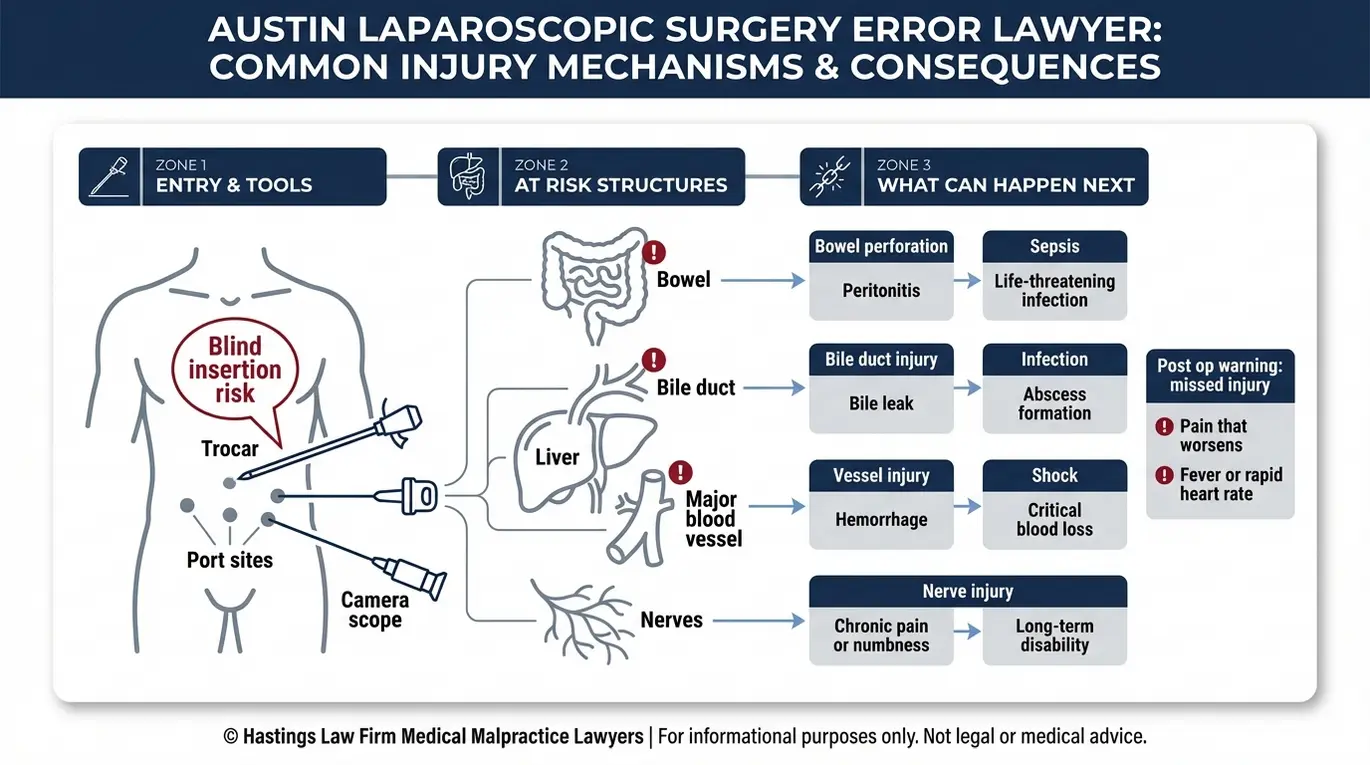
Laparoscopic errors frequently involve accidental punctures of nearby organs or blood vessels that go unnoticed by the surgeon during the procedure. Laparoscopic surgery is a minimally invasive approach that relies on specialized tools to perform surgery through small ports rather than large openings. Many injuries happen during the “blind” insertion of the trocar, a sharp-tipped instrument used to create the initial entry point, creating risk to surrounding structures.
Research in JAMA Network Open notes meaningful rates of bile duct injuries during gallbladder surgery. While UW Medicine Health Online advises patients to watch for warning signs, undetected injuries during the operation can be critical.
Common injuries include:
- Bowel perforation, a tear in the intestinal wall causing sepsis or peritonitis
- Bile duct injury
- Hemorrhage
- Nerve damage
- Infection
A laparoscopic surgery malpractice lawyer investigates if injuries were identified. A surgical error attorney works with medical experts to determine if failure to diagnose was negligence.
The Hidden Danger of Inexperienced Surgeons
Laparoscopic procedures require a distinct set of skills that differ significantly from open surgery. The laparoscopic “learning curve” refers to the period during which a surgeon develops proficiency with these techniques, and research consistently shows that complication rates are higher during this phase.
Some surgeons may attempt advanced procedures without sufficient surgical training or case volume, which can fall below the standard of care. When a surgeon performs a technique they have not yet mastered, that decision itself may constitute negligence.
Proving Liability When Routine Surgery Goes Wrong
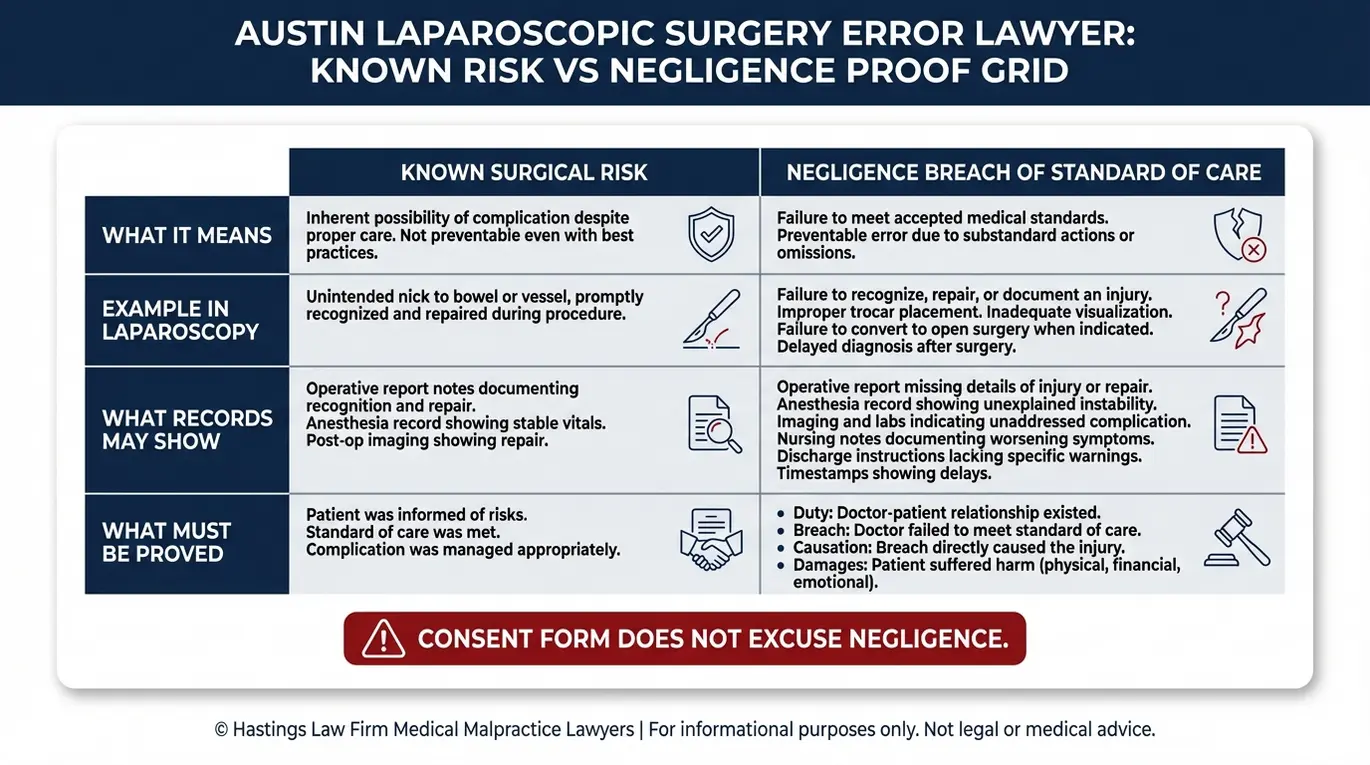
Proving liability requires demonstrating that the surgeon deviated from the accepted professional standard of care and that this deviation directly caused the patient’s injury. The standard of care is the clinical guideline that determines if a medical professional acted appropriately. In Texas, your Austin surgical malpractice attorney must establish this breach through qualified expert testimony and an expert report.
A key distinction exists between a known risk and negligence. While a bile duct injury, a damaged tube carrying bile, might be a risk, failing to notice it or ignoring the operative report, the surgeon’s own written account, is often a preventable error.
Signing a medical waiver or consent form does not excuse negligence. Under Texas Civil Practice and Remedies Code, Subchapter C (Sections 74.101–74.106), informed consent requires risk disclosure. Research by Texas A&M University School of Law clarifies that this acknowledges complications, not substandard care. A laparoscopy error lawyer can determine if you have a claim.
The Hastings Law Firm Difference
Results matter, but what truly sets us apart is how we achieve them. Every verdict, every settlement, and every Austin courtroom victory comes from one guiding promise: To treat each client’s fight for justice as if it were our own.
This balance of skill, experience, and empathy reflects our core philosophy that justice should not only compensate the injured, but also make health care safer nationwide.

Recovering Compensation for Surgical Injuries in Texas Courts
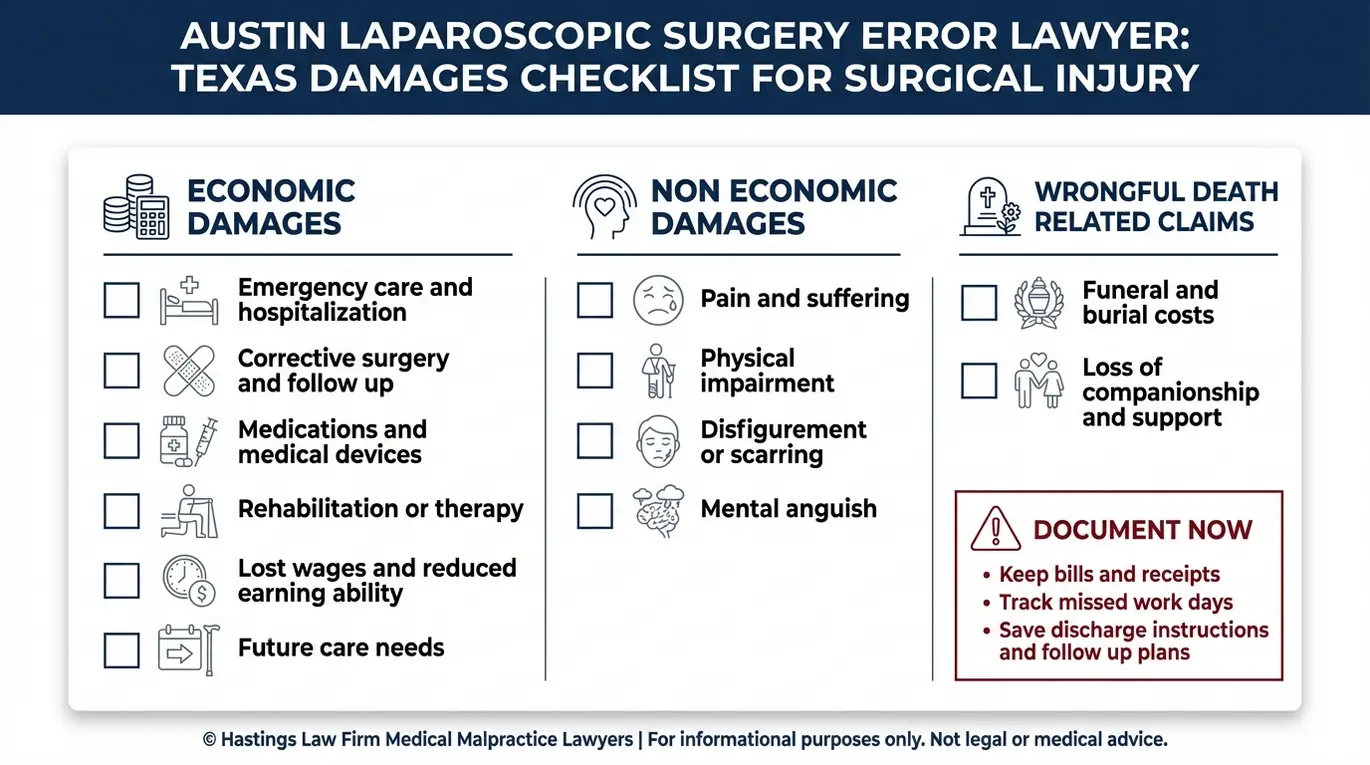
Victims of surgical negligence in Texas may be entitled to economic damages for medical costs and lost wages, as well as non-economic damages for pain, suffering, and physical impairment. These damages help address the financial and emotional burdens caused by medical negligence. Under Texas Civil Practice and Remedies Code Section 74.301, non-economic damages have caps, which a medical malpractice lawyer in Austin can explain.
Recoverable damages include:
- Corrective surgeries and future care
- Lost wages and earning capacity
- Compensation for pain and suffering
- Wrongful death claims for losses from complications like sepsis, the body’s extreme response to an infection, or peritonitis, inflammation of the abdominal lining.
These damages aim to provide the resources needed for long-term recovery and financial stability.
Contact the Austin Surgical Error Attorneys at Hastings Law Firm Today for Help
If a laparoscopic procedure caused serious injuries, Hastings Law Firm helps you find answers. As a dedicated Austin laparoscopic surgery error lawyer, we charge no fees unless we recover compensation. We are a trial-ready firm that restores trust for clients betrayed by the system. Contact us today for a free evaluation before the statute of limitations expires.
Frequently Asked Questions About Laparoscopic Surgery Error in Austin


This content was researched and written by the Hastings Law Firm editorial team, which includes attorneys, medical professionals, and experienced researchers. Our writing is informed by internal knowledge and practical experience, and we cross-check critical details against authoritative sources cited throughout. Every piece undergoes human-led fact-checking and legal review. Because legal and medical information can change, if you spot an error, please contact us. Learn more about our content standards and review process on our editorial policy page.

Gabe Sassin has focused exclusively on medical malpractice law since 2007. After spending more than a decade as a malpractice defense attorney, he knows exactly how the other side works. He has seen firsthand how healthcare providers, insurers, corporate defendants, and their legal teams think, prepare, and build their defense against claims. That knowledge works for the people who need it most today, injured patients and their families. His unique experience shapes everything he writes, giving readers a look at how these cases actually work from someone who has handled them from both sides.
