


Fort Worth Infant Brain Injury Lawyer
Written by: Hastings Law Firm | Reviewed by: Gabe Sassin | Updated: July 27, 2026
An infant brain injury around delivery can leave families overwhelmed and searching for clear answers about what went wrong. These injuries can be linked to oxygen deprivation, physical trauma, or missed treatment after birth, and the effects can shape a child’s health and development for years. Understanding warning signs, possible causes, and who may be responsible can help families make informed decisions while protecting access to records and accountability. If your child suffered harm or worse due to an infant brain injury from birth negligence in Fort Worth, Texas, contact Hastings Law Firm for a free, confidential case review.

Trusted Legal Representation for Birth Negligence Claims in Fort Worth
What You Should Know About Newborn Head Trauma Claims in Fort Worth:
- Long term care needs can be life changing when an infant brain injury causes lasting neurological damage.
- Accountability can extend beyond the delivering physician when nurses, anesthesiologists, hospitals, or drug manufacturers contributed to the harm.
- Recovery options can narrow if filing deadlines under Texas law are missed.
- Compensation can be limited for non economic harms in Texas medical malpractice cases because damage caps apply to pain and suffering type losses.
- Financial support for lifetime needs can still be substantial because economic damages for medical care and lost earning capacity are not capped under Texas law.
- Disputes can focus on causation because it must be shown that a specific act or omission directly caused the brain damage.
- Severe outcomes can follow when oxygen deprivation is unrecognized or untreated around birth.
- Preventable injury risk can rise when fetal distress is not monitored or acted on and when delivery tools are used improperly.
- Evidence can become harder to obtain over time because records can be altered or lost and witnesses can become unavailable.
- Early warning signs can be missed without close monitoring because seizures and feeding difficulties may be subtle in newborns.

A Healthcare Focused Law Firm
When a newborn suffers a brain injury, the emotional weight on a family is enormous. You may be facing an uncertain medical future while trying to understand whether the care your child received fell below accepted standards. These feelings of confusion and frustration are valid, and you are not alone.
Since founding our firm in 2005, we have focused exclusively on medical malpractice to help families find clarity. A Fort Worth infant brain injury lawyer at Hastings Law Firm provides a team of attorneys, in-house nurse consultants, and former defense lawyers who investigate birth injury claims with the depth and precision these cases demand. We prepare every case as though it will go before a jury, because that level of preparation is what these families deserve.
If your child was harmed during or after delivery, we welcome the chance to review what happened and explain your options. The consultation is free, and there is no fee unless we secure a recovery for your family.
Understanding the Different Types of Infant Brain Damage
Understanding the type of injury your child sustained is one of the first steps in evaluating whether medical negligence may have occurred, and it shapes the direction a Fort Worth infant brain injury lawyer will take when building a case. These injuries generally occur when the infant’s brain is damaged shortly before, during, or after the delivery process. An experienced attorney for infant brain injuries can ensure these complex medical details are analyzed correctly.
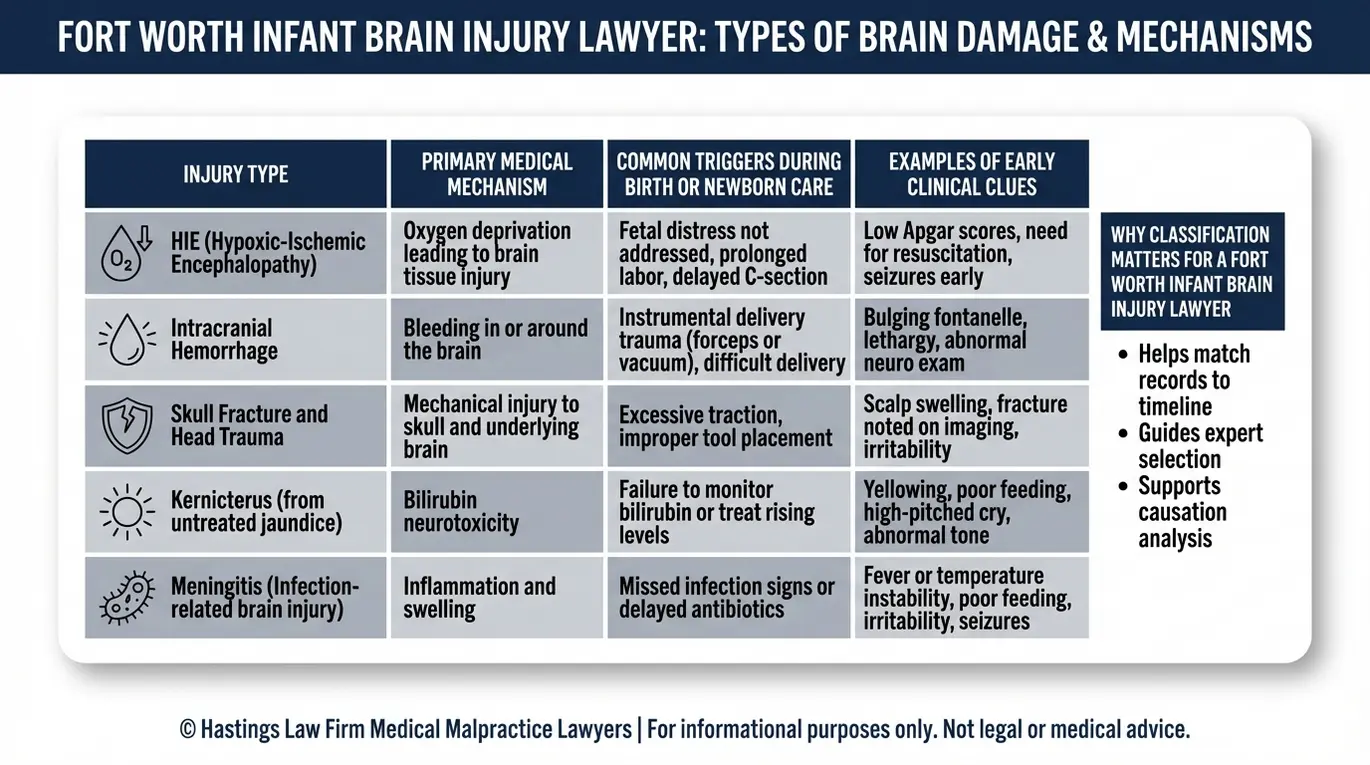
Oxygen Deprivation (HIE). Hypoxic-Ischemic Encephalopathy, commonly called HIE, is a condition where the brain does not receive enough oxygen or blood flow around the time of birth. According to Nationwide Children’s Hospital, HIE can lead to lasting neurological damage and is a leading cause of cerebral palsy. When oxygen deprivation goes unrecognized or untreated, the consequences can affect a child for life.
Physical Trauma. Injuries such as skull fractures and brain hemorrhages can occur during a difficult delivery, particularly when excessive force is applied. These injuries often involve structural damage to the skull or delicate brain tissue and require careful medical-legal analysis by an experienced brain injury lawyer in Fort Worth.
Metabolic and Chemical Injuries. Not all brain damage happens in the delivery room. Untreated jaundice, for example, can lead to kernicterus, a form of brain damage caused by dangerously high bilirubin levels in a newborn’s blood. The American Academy of Pediatrics Clinical Practice Guideline on Hyperbilirubinemia Management sets clear screening and treatment protocols for jaundice. A failure to follow those guidelines may support a claim for infant brain injury legal help. Untreated infections like meningitis can similarly cause severe and preventable harm.
| Injury Type | Medical Mechanism | Possible Clinical Indicators |
|---|---|---|
| Hypoxic-Ischemic Encephalopathy (HIE) | Oxygen deprivation to the brain during or near delivery | Seizures, low muscle tone, organ dysfunction |
| Skull Fracture / Brain Hemorrhage | Excessive physical force or improper use of delivery tools | Swelling, lethargy, abnormal head shape |
| Kernicterus | Untreated or undertreated severe jaundice (high bilirubin) | Yellowing skin, high-pitched cry, arching of the back |
| Cerebral Palsy (secondary) | Often linked to HIE or other perinatal brain injury | Delayed motor milestones, spasticity, coordination issues |
Under Texas law, the Texas Civil Practice and Remedies Code § 74.251 establishes strict deadlines for filing medical malpractice claims, so families should consult with an infant brain injury attorney early.
Common Causes of Infant Brain Damage Due to Medical Negligence
Preventable brain damage frequently stems from medical errors such as failure to monitor fetal distress signals, delayed C-sections, improper use of delivery tools, or medication errors during labor. A Fort Worth infant brain injury lawyer investigates each of these potential failures to determine whether the care provided fell below the accepted standard. A qualified lawyer for infant brain damage knows how to uncover preventable brain damage, making the decision to hire a medical malpractice attorney essential for your family’s future.
Common causes of medical negligence leading to infant brain damage include:
- Misuse of Pitocin: Pitocin is a synthetic form of oxytocin used to induce or speed up labor contractions. When administered improperly or without adequate monitoring, it can cause excessively strong contractions that reduce blood flow and oxygen to the baby.
- Delayed or failed C-section: When fetal distress, a pattern of abnormal heart rate readings indicating the baby is not tolerating labor, appears on the monitor, the medical team must act quickly. A delay in performing a C-section during these critical minutes can result in oxygen deprivation and lasting brain damage.
- Improper use of forceps or vacuum extractors: Vacuum-assisted delivery uses a suction device attached to the baby’s head to help guide the infant through the birth canal. When forceps or vacuum extractors are applied incorrectly or with excessive force, they can cause skull fractures, brain hemorrhages, and other serious injuries.
- Umbilical cord complications: Umbilical cord entrapment, where the cord becomes compressed or wrapped around the baby, can cut off the infant’s oxygen supply during labor. Timely recognition and intervention are essential.
- Post-delivery failures: Brain injuries do not always occur during labor. A failure to diagnose and treat conditions such as severe jaundice or infections like meningitis after birth can also result in preventable brain damage.
Data from the Texas Alliance for Innovation on Maternal Health (Texas AIM) highlights ongoing maternal and infant health challenges across the state, reinforcing the need for close adherence to clinical protocols.
Physical Mechanics of Traumatic Brain Injury
During a difficult delivery, the physical forces applied to an infant’s head can cause the brain to shift within the skull. Understanding the physical mechanics of this movement is necessary to identify shearing injuries where brain tissue tears at a microscopic level. An intracranial hemorrhage, or bleeding inside the skull, is one of the most serious outcomes of this type of head trauma. These injuries are particularly associated with the improper application of vacuum extractors or forceps, making the method of delivery a key area of investigation for any Fort Worth lawyer handling infant brain injury claims.
The Hastings Law Firm Difference
Results matter, but what truly sets us apart is how we achieve them. Every verdict, every settlement, and every Fort Worth courtroom victory comes from one guiding promise: To treat each client’s fight for justice as if it were our own.
This balance of skill, experience, and empathy reflects our core philosophy that justice should not only compensate the injured, but also make healthcare safer nationwide.

Identifying Signs and Symptoms of an Infant Brain Injury
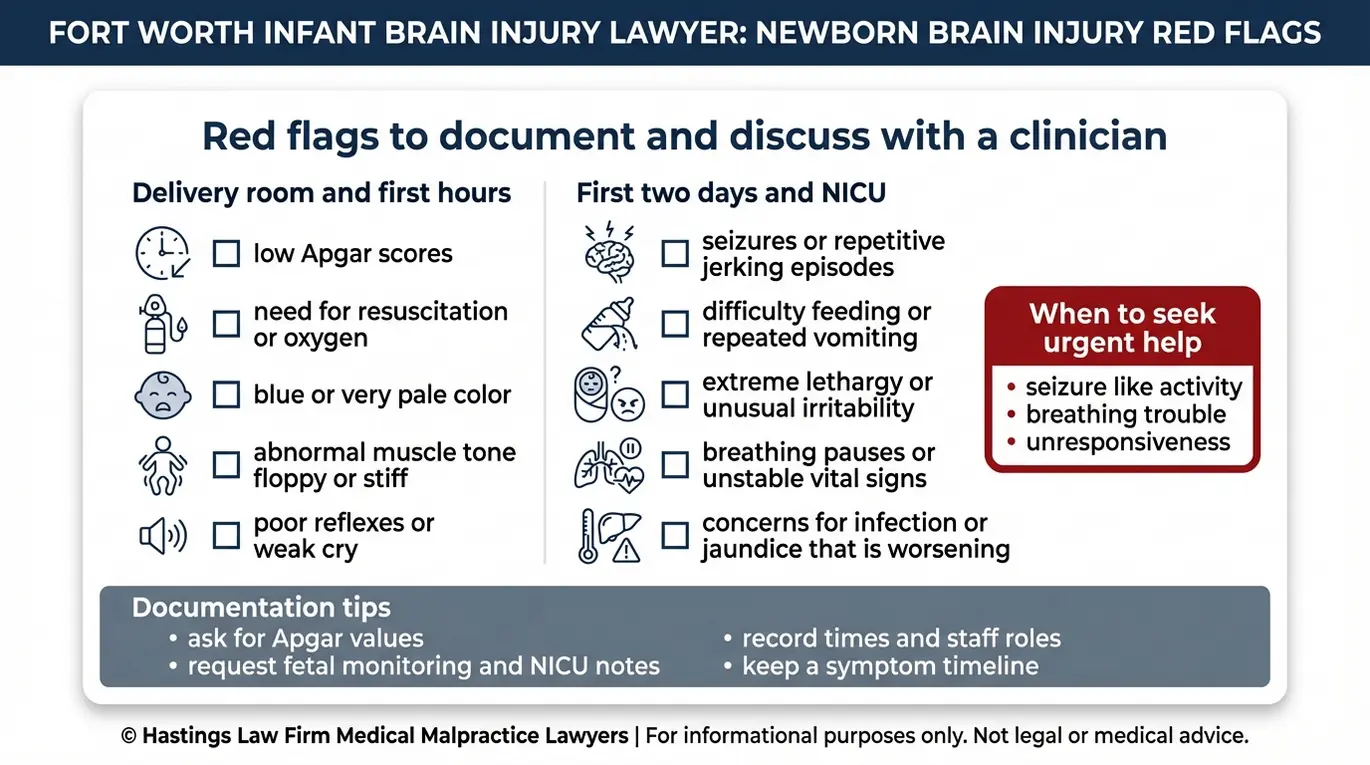
Early indicators of brain injury may include low Apgar scores immediately after birth, seizures within the first 48 hours, difficulty feeding, or abnormal muscle tone such as floppiness or stiffness. Apgar scores are a standardized assessment used by medical teams to evaluate a newborn’s health at one and five minutes after delivery. Recognizing these signs early is critical, both for your child’s medical care and for preserving evidence if you later consult with a brain injury lawyer.
Signs in the delivery room. Some indicators appear right away. Apgar scores rate a newborn’s heart rate, breathing, muscle tone, reflexes, and skin color, and they can signal distress when they are unusually low. A baby who appears blue, limp, or requires immediate resuscitation may have experienced oxygen deprivation.
Symptoms in the NICU. In the hours and days that follow, neonatal seizures can be an early warning of brain injury. These are abnormal electrical discharges in a newborn’s brain that may appear as repetitive jerking, staring, or subtle movements like lip smacking. According to Children’s Health, seizures in infants may look very different from what most people expect and can be easy to miss without close monitoring. Lethargy, poor feeding, and an unusually high-pitched cry are also warning signs.
Long-term developmental concerns. Some effects of an infant brain injury do not become apparent for months or even years. Delayed milestones, such as not sitting, crawling, or speaking on schedule, may point to an underlying injury sustained during birth.
If you have noticed any of the following, consider seeking both medical evaluation and Fort Worth infant brain injury legal advice from a trusted advisor:
- Low Apgar scores at birth
- Need for resuscitation in the delivery room
- Seizures or tremors within the first days of life
- Extreme lethargy or difficulty staying awake for feedings
- Poor feeding or inability to latch
- Abnormal muscle tone (unusually floppy or rigid)
- High-pitched or inconsolable crying
- Missed developmental milestones in the weeks and months ahead
Recovering Compensation for Infant Brain Damage in Texas
Compensation in birth injury cases is designed to cover the lifetime cost of care, including past and future medical expenses, loss of earning capacity, and non-economic damages for pain and suffering. Legal recovery helps families manage the high costs of specialized care required for long-term injuries. When a Fort Worth infant brain injury lawyer evaluates a case for compensation for birth injury, the goal is to ensure that the recovery reflects the full scope of your child’s needs.
Economic damages cover the measurable financial impact of the injury. These are not capped under Texas law and may include:
- Past and future medical costs, including surgeries, therapy, and specialist care
- Rehabilitative services such as physical, occupational, and speech therapy
- Specialized equipment like wheelchairs, communication devices, or adaptive technology
- Home modifications to accommodate a child’s disability
- Loss of future earning capacity
- Costs outlined in a life care plan developed by medical and vocational experts
An experienced attorney for birth injury damages will calculate these figures.
Non-economic damages compensate the child and family for losses that are harder to quantify but no less real. These include physical pain, suffering, mental anguish, and physical impairment. A Fort Worth infant brain injury lawyer will work to present these damages in a way that reflects the actual daily impact on your child and family.
Texas damage caps apply specifically to non-economic damages in medical malpractice cases. Under current Texas law, non-economic damages are generally limited to $250,000 per claimant against all physicians and individual providers combined, and $250,000 per health care institution, up to $500,000 total across all institutions. Economic damages, such as the cost of future medical care and lost earning capacity, are not subject to these caps. Because the lifetime care costs for a child with a brain injury can be substantial, building a strong economic damages case is essential to securing a brain injury settlement that truly protects your child’s future.
Determining Liability for an Infant Brain Injury
Liability can extend beyond the attending obstetrician to include nurses, anesthesiologists, the hospital itself for inadequate staffing or unsafe protocols, and even pharmaceutical manufacturers if a drug error caused the harm. Liability means identifying every party legally responsible for the harm. Identifying all liable parties is one of the most important tasks a Fort Worth infant brain injury lawyer undertakes.
Physicians. The delivering OB-GYN or any specialist involved in the mother’s or infant’s care can be held liable if their actions fell below the standard of care. This standard refers to the level of skill and treatment a reasonably competent provider would deliver under similar circumstances. You may need a doctor malpractice lawyer to depose the attending physician.
Nursing staff and technicians. Nurses responsible for monitoring fetal heart tracings or administering medications may bear direct liability. In many cases, the hospital that employs them can also be held accountable through vicarious liability, a legal principle where an employer is responsible for the actions of its employees. This form of nursing negligence is a critical component of the case. As explained in a review published by PubMed Central on health care liability claims under Texas law, institutional responsibility often extends beyond the actions of a single provider.
Hospitals and facilities. Systemic failures, such as insufficient nurse-to-patient ratios, poorly maintained equipment, or lack of emergency protocols, can form the basis of a separate claim against the facility. Proving hospital negligence often involves analyzing systemic failures. These claims focus on the institution’s policies rather than the decisions of any one doctor or nurse. Suing a hospital in Fort Worth is a complex process that demands specialized legal counsel.
Pharmaceutical companies. If a medication error, contaminated drug, or defective medical product contributed to the injury, the manufacturer or distributor may also be a liable party. Cases involving pharmaceutical injury require specific expertise. Our team includes former defense attorneys and hospital nurses who understand how healthcare systems assign blame, and we use that knowledge to hold every responsible party accountable.
Navigating the Statute of Limitations for Birth Injury Claims
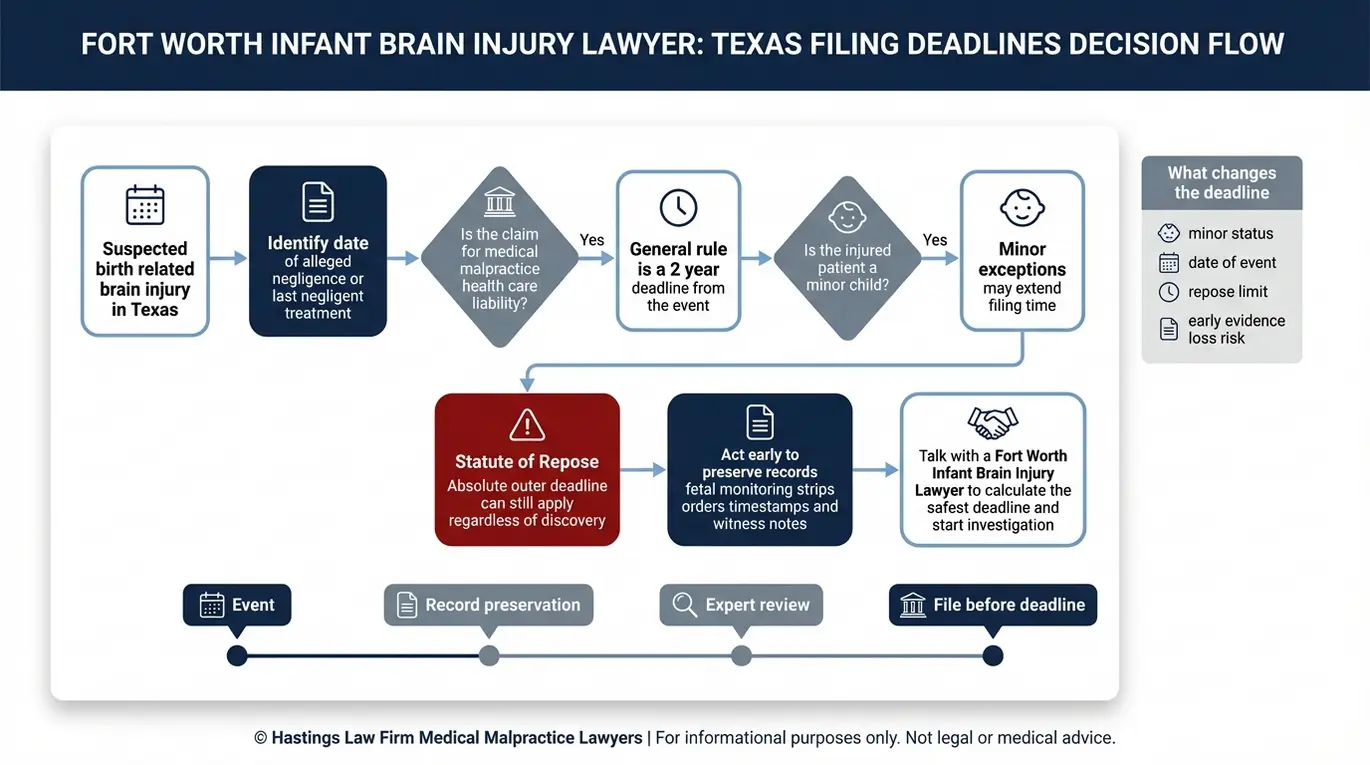
While Texas generally has a two-year statute of limitations for medical malpractice, specific exceptions exist for minors that may allow a lawsuit to be filed until the child reaches a certain age. A statute of limitations is the legal deadline for filing a case. Understanding the deadlines for filing a birth injury claim is essential for protecting your child’s legal rights, and a Fort Worth infant brain injury lawyer can help you determine exactly which timelines apply.
The general rule. Under the statute of limitations set by the Texas Civil Practice and Remedies Code, most medical malpractice claims must be filed within two years from the date the negligence occurred or was discovered.
The exception for minors. Texas law tolls, or pauses, the statute of limitations for children. This means a minor under the age of 12 may have until their 14th birthday to file a claim. However, this extension does not apply in every scenario, and certain circumstances can shorten or affect this window.
The statute of repose. Texas also imposes an absolute 10-year deadline from the date of the negligent act, regardless of when the injury was discovered. This outer boundary cannot be extended, even for children.
Why early action matters. Medical records can be altered or lost, and key witnesses may become unavailable over time. Filing a birth injury claim early allows your legal team to preserve critical evidence, including fetal monitoring strips, nursing logs, and hospital protocols, while it is still accessible.
Why You Need a Board Certified Trial Attorney for These Cases
Birth injury cases are medically complex and aggressively defended; success requires a specialist with the resources to hire national experts and the trial experience to prove a breach in the standard of care. This is not an area of law where a general practitioner can match the preparation required. Choosing a board-certified trial lawyer identifies an advocate with specialized training and proven experience in the courtroom.
Proving causation is often the most contested element of an infant brain injury claim. It is not enough to show that something went wrong. Your legal team must demonstrate, through qualified expert witnesses, that a specific act or omission directly caused the brain damage. Defense teams backed by hospital systems and malpractice insurers will challenge every link in that chain.
Tommy Hastings, founder of Hastings Law Firm and a board-certified trial lawyer recognized by the Texas Board of Legal Specialization, has spent over two decades focused exclusively on medical malpractice. Our team includes in-house nurse consultants and former defense attorneys who know how hospital systems and their insurers prepare their cases. We maintain a national network of medical experts and prepare every case as if it will go to trial. That trial-ready posture is what drives fair outcomes.
We handle these cases on a contingency fee basis, which means there is no cost to your family unless we secure a recovery. The financial risk of expert fees, litigation costs, and years of preparation falls on us.
Contact the Fort Worth Birth Injury Attorneys at Hastings Law Firm Today for Help
If your child suffered a brain injury during or after delivery, you deserve honest answers about what happened and whether the care provided met accepted medical standards. That search for the truth starts accountability and is the first step toward protecting your child’s future.
Hastings Law Firm was built for cases exactly like yours. Our team of attorneys, nurses, and medical experts will conduct a thorough, confidential investigation into your child’s delivery and medical care. We offer a free case evaluation and take these cases on a contingency basis, so there is no fee unless we win.
Contact us today to schedule a consultation. Let us review the records, explain your options, and help you understand what comes next.
Frequently Asked Questions About Infant Brain Injury in Fort Worth


This content was researched and written by the Hastings Law Firm editorial team, which includes attorneys, medical professionals, and experienced researchers. Our writing is informed by internal knowledge and practical experience, and we cross-check critical details against authoritative sources cited throughout. Every piece undergoes human-led fact-checking and legal review. Because legal and medical information can change, if you spot an error, please contact us. Learn more about our content standards and review process on our editorial policy page.

Gabe Sassin has focused exclusively on medical malpractice law since 2007. After spending more than a decade as a malpractice defense attorney, he knows exactly how the other side works. He has seen firsthand how healthcare providers, insurers, corporate defendants, and their legal teams think, prepare, and build their defense against claims. That knowledge works for the people who need it most today, injured patients and their families. His unique experience shapes everything he writes, giving readers a look at how these cases actually work from someone who has handled them from both sides.
