


Austin Infant Brain Injury Lawyer
An infant brain injury during labor and delivery can leave families facing overwhelming uncertainty and long term care needs. Preventable medical errors such as missed fetal distress, delayed surgical delivery, or improper use of delivery tools can lead to oxygen deprivation or trauma with lasting effects on a child and family. Understanding warning signs, how medical records reflect the care provided, and how the standard of care applies can clarify whether negligence played a role. If your child suffered harm or worse due to infant brain injury during birth in Austin, Texas, contact Hastings Law Firm for a free, confidential case review.

Last Updated: July 27, 2026
Trusted Legal Representation for Birth Negligence Claims in Austin
When a child suffers a brain injury during birth, the emotional weight can feel unbearable. You may sense that something went wrong, but proving it requires more than intuition. It requires a thorough medical and legal investigation led by professionals who understand both the medicine and the law.
At Hastings Law Firm, our team focuses exclusively on medical malpractice. Founded by board-certified trial lawyer Tommy Hastings, our staff includes former defense lawyers and in-house nurse consultants. As your Austin infant brain injury lawyer, we examine every detail of your child’s delivery records to determine whether negligence caused the injury. If you believe your baby was harmed by a preventable medical error, we can review what happened and explain your options at no cost and with no obligation.

Common Medical Errors Leading to Infant Brain Damage
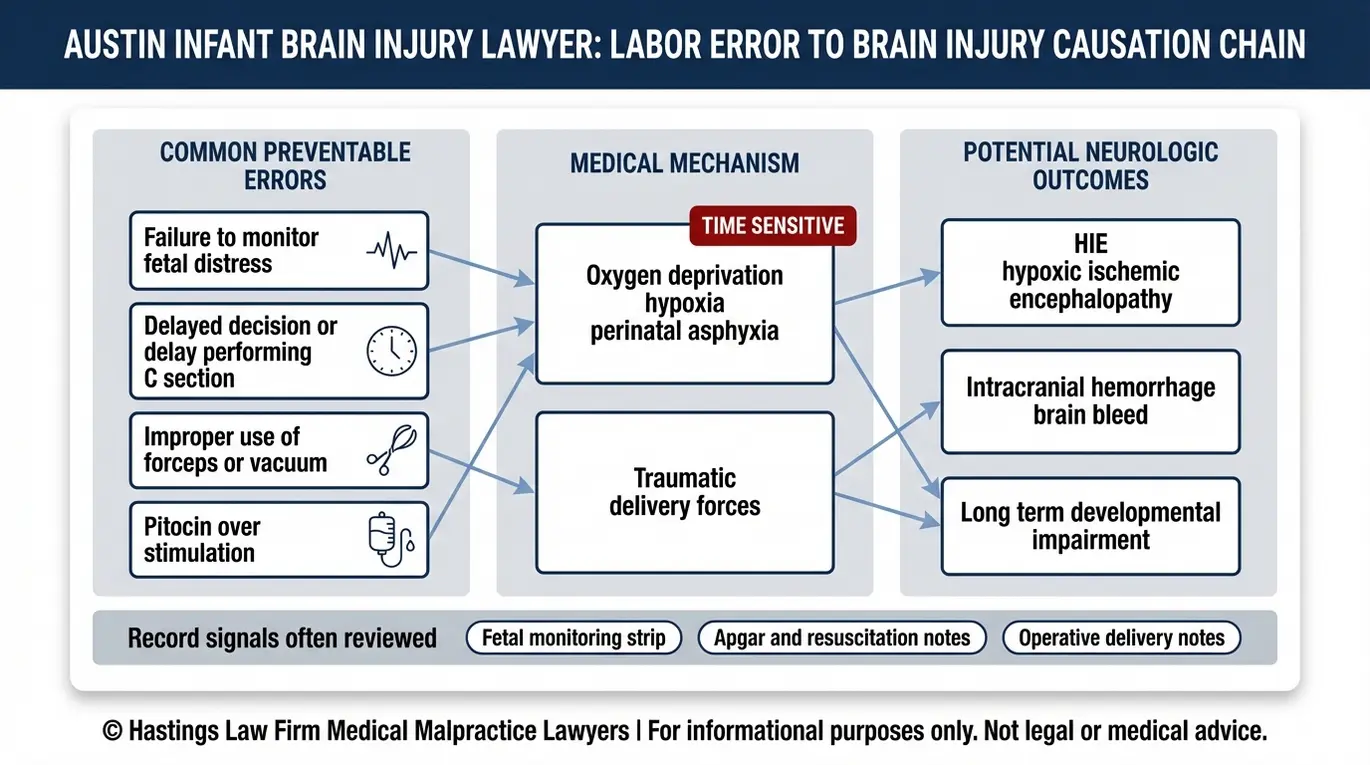
Infant brain damage is often caused by preventable medical errors such as failure to monitor fetal distress, delayed C-sections, or improper use of delivery tools like forceps. When these mistakes occur during labor and delivery, they can lead to severe oxygen deprivation or direct physical trauma to the baby’s brain. These errors often occur when medical professionals fail to follow established safety protocols.
Fetal distress, a condition where the baby shows signs of not getting enough oxygen, should be identifiable on fetal heart rate monitors. When medical staff fail to recognize or respond to these warning signs, the consequences can be severe. An Austin infant brain injury lawyer investigates whether the clinical team acted within accepted standards.
According to the Office of Inspector General’s report on adverse events, preventable harm in healthcare settings remains a widespread concern. Medical negligence during birth is a complex area of law. For families in Austin, an infant brain injury attorney can determine whether specific errors contributed to your child’s condition. By reconstructing the timeline of care, a qualified lawyer for infant brain injuries identifies where the standard was breached.
Common errors we see in these cases include:
- Failure to monitor or respond to fetal distress: Ignoring abnormal heart rate patterns that may indicate hypoxia or perinatal asphyxia.
- Delayed emergency C-section: Waiting too long to deliver the baby surgically when fetal monitoring signals a crisis.
- Improper use of forceps or vacuum extractors: Applying excessive force during an assisted delivery, causing direct trauma.
- Medication mismanagement: Administering Pitocin without proper monitoring, which can trigger uterine tachysystole, a pattern of excessively frequent contractions that reduces oxygen flow.
- Failure to address umbilical cord problems: Not identifying cord compression or prolapse to prevent oxygen loss.
Recognizing Signs of Brain Injury in Newborns
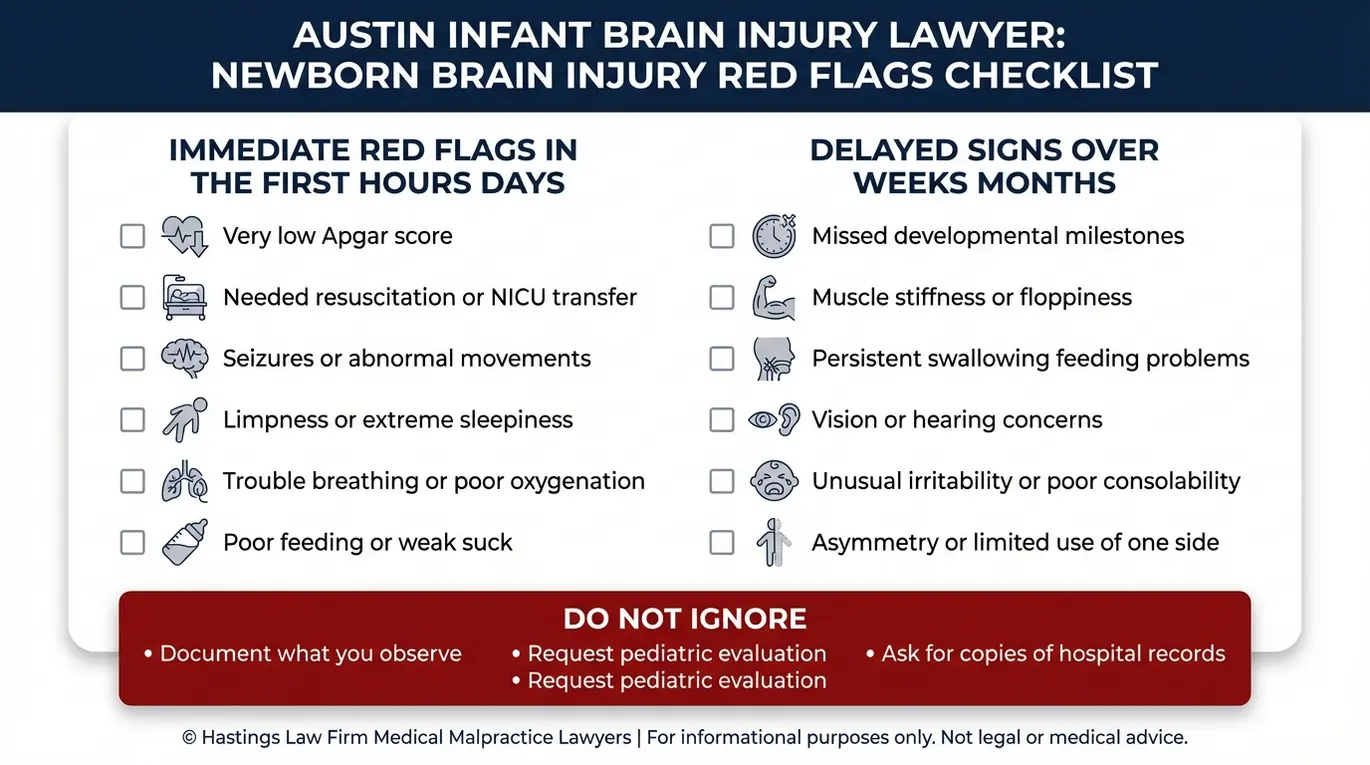
Symptoms of infant brain injury may appear immediately as seizures or limpness, or they may present later as developmental delays or difficulty feeding. Identifying these signs is the first step in understanding if medical negligence occurred during birth.
Immediate signs to watch for:
- Low Apgar scores (a quick assessment of a newborn’s health at birth based on breathing, heart rate, muscle tone, reflexes, and skin color)
- Neonatal seizures, abnormal electrical discharges in the brain that may cause jerking, stiffness, or subtle repetitive movements
- Need for resuscitation or emergency intervention after delivery
- Unusual limpness or lack of responsiveness
Delayed signs that may develop over weeks or months:
- Missed developmental milestones tracked by the CDC’s Developmental Milestones resource
- Signs of physical disabilities or mental disabilities affecting motor skills
- Persistent difficulty feeding or swallowing
- Abnormal muscle tone, either stiffness or floppiness
If your pediatrician downplays your concerns, trust your instinct. Parents often notice subtle changes before they show up on a standard exam. An early evaluation by a specialist, paired with a consultation with an attorney for brain injuries, can help protect your rights. A qualified lawyer can guide you through the next steps to secure necessary care for your child.
The Hastings Law Firm Difference
Results matter, but what truly sets us apart is how we achieve them. Every verdict, every settlement, and every Austin courtroom victory comes from one guiding promise: To treat each client’s fight for justice as if it were our own.
This balance of skill, experience, and empathy reflects our core philosophy that justice should not only compensate the injured, but also make health care safer nationwide.

Types of Birth Injuries and Neurological Conditions
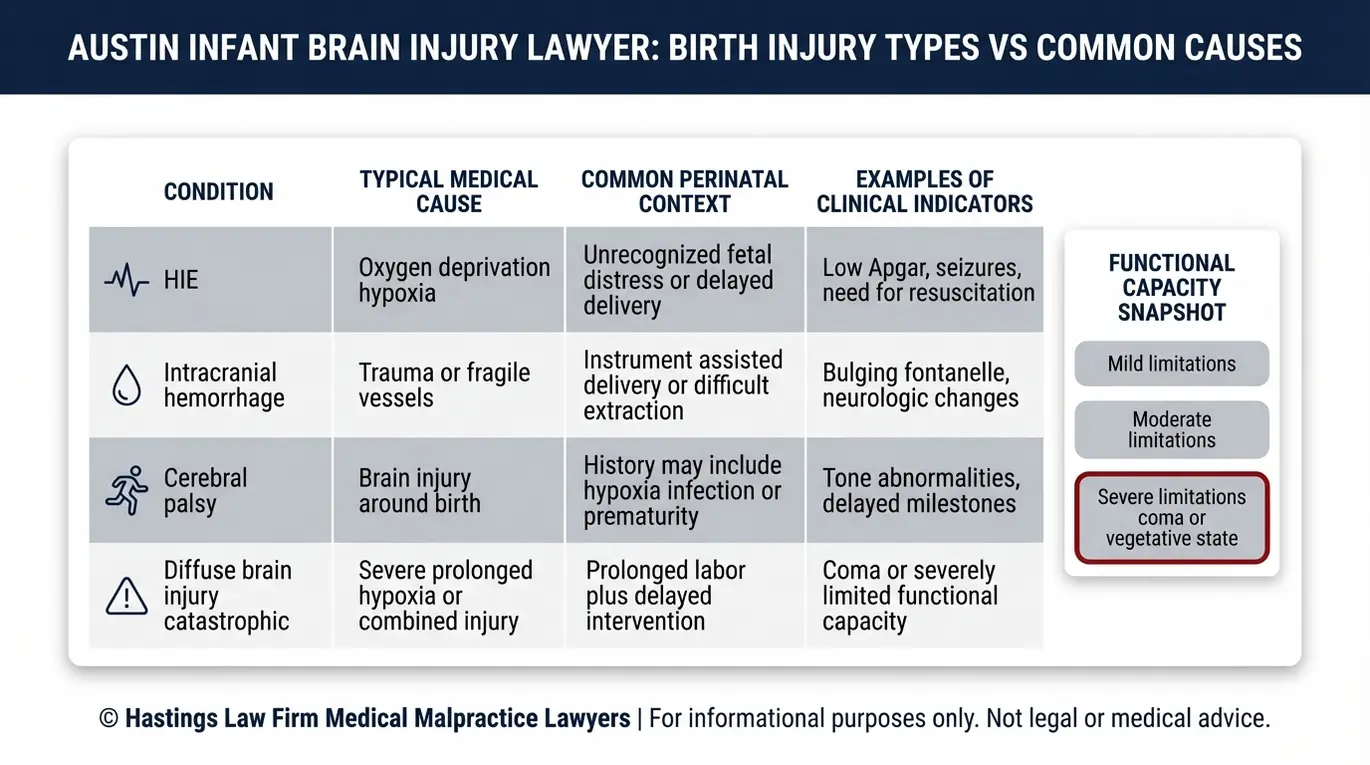
We litigate cases involving Hypoxic-Ischemic Encephalopathy (HIE), cerebral palsy, intracranial hemorrhages, and other catastrophic injuries resulting from oxygen deprivation or trauma. Each condition carries different long-term implications for the child and family. These medical conditions often result from complications that were not properly managed by the birthing team.
| Condition | Common Cause | Potential Impact |
|---|---|---|
| Hypoxic-Ischemic Encephalopathy (HIE), brain damage from lack of oxygen and blood flow | Delayed delivery, unmanaged fetal distress | Cognitive disability, motor impairment, seizure disorders |
| Intracranial Hemorrhage, also known as a brain bleed | Traumatic use of forceps or vacuum extractors | Neurological damage, developmental delays, risk of stroke |
| Cerebral Palsy | Prolonged oxygen deprivation during labor | Lifelong movement and coordination difficulties |
As an Austin infant brain injury lawyer, we work with experts to trace the injury’s origin. Research published by Nationwide Children’s Hospital on Neonatal Hypoxic-Ischemic Encephalopathy confirms that HIE is often preventable when the clinical team responds appropriately. A study on short and long-term outcomes in neonatal HIE treated with hypothermia and vasoactive medications also highlights the importance of rapid diagnosis and treatment.
States of Consciousness and Functional Capacity
In severe cases involving birth injuries, a legal team must account for reduced functional capacity and states of consciousness. A coma, a deep state of unconsciousness where the child cannot be awakened, differs from a vegetative state, a condition where the child may have sleep-wake cycles but lacks awareness. These outcomes drastically affect lifetime care costs and legal damages.
Proving Negligence and The Role of the Standard of Care
Proving negligence requires demonstrating that the healthcare provider deviated from the accepted standard of care, directly causing the infant’s injury. The standard of care is the level of treatment that a reasonably competent medical professional would have provided under similar circumstances. Establishing this deviation involves a deep dive into the medical records from the labor and delivery.
In an obstetrics setting during labor and delivery, this means evaluating whether the delivery team properly monitored the mother and baby. An Austin infant brain injury lawyer works with qualified experts to review records and provide expert testimony linking the breach to the injury. We identify negligent healthcare providers responsible for medical malpractice to establish clear liability.
Defense teams often argue that the outcome was unavoidable. Our lead attorney at Hastings Law Firm builds a detailed, minute-by-minute timeline of the delivery using fetal monitoring strips, nursing notes, and physician orders. This level of preparation allows us to establish causation clearly and counter common defense strategies with evidence, not speculation.
Calculating Compensation for a Child’s Lifetime Needs
Compensation in infant brain injury cases covers lifetime medical expenses, specialized therapy, home modifications, and non-economic damages for pain and suffering. Because these injuries often affect a child for decades, the financial analysis must be thorough. These damages are intended to provide financial security for the child’s future needs.
Economic damages may include:
- Future surgeries, hospitalizations, and prescription medications
- 24/7 in-home nursing or residential care
- Special education and assistive technology
- Lost earning capacity over the child’s expected working life
Non-economic damages address the injury’s personal toll:
- Physical pain and ongoing discomfort
- Pain and suffering experienced by both the child and parents
- Disfigurement or permanent physical limitations
An essential part of this process is the life care plan, a detailed projection created with life care planners and economists. As an infant injury attorney, we ensure every foreseeable need is accounted for so your child’s future is protected. A skilled lawyer fights to secure the full resources your family deserves.
The Statute of Limitations for Birth Injury Cases in Texas
In Texas, the statute of limitations for medical malpractice involving minors under 12 allows filing until the child’s 14th birthday; however, a strictly defined statute of repose bars claims filed more than 10 years after the negligent act. Because birth injuries occur at or near the time of birth, the 10-year repose period effectively requires that a claim be filed before the child turns 10. These time limits determine how long a patient has to file a legal claim in Texas.
Important: Even though these deadlines seem far off, critical evidence can be lost. Consulting an Austin infant brain injury lawyer early helps preserve evidence.
Under Texas law, a discovery rule or tolling provision may extend deadlines when the injury was not immediately apparent. Because these rules interact in complex ways, an early consultation is one of the most protective steps you can take for your child’s future claim.
Contact the Austin Birth Injury Attorneys at Hastings Law Firm Today for Help
You should not have to carry the weight of a legal investigation while caring for an injured child. At Hastings Law Firm, our goal extends beyond compensation. We believe that holding negligent providers accountable is one of the most effective ways to prevent the same mistakes from happening to another family.
Our firm handles every case on a contingency fee basis, which means you pay no attorney fees or costs unless we recover for you. Contact our Austin infant brain injury lawyer team today for a free, confidential case evaluation.
Frequently Asked Questions About Infant Brain Injury in Austin


This content was researched and written by the Hastings Law Firm editorial team, which includes attorneys, medical professionals, and experienced researchers. Our writing is informed by internal knowledge and practical experience, and we cross-check critical details against authoritative sources cited throughout. Every piece undergoes human-led fact-checking and legal review. Because legal and medical information can change, if you spot an error, please contact us. Learn more about our content standards and review process on our editorial policy page.

Tommy Hastings, founder of Hastings Law Firm, is a board-certified personal injury trial lawyer dedicated exclusively to healthcare injury cases. Since 2001, he has represented injured patients and families in litigation against major hospital systems, pharmaceutical companies, and negligent healthcare providers nationwide. He has handled numerous high-profile cases that have drawn national media attention and resulted in multi-million dollar recoveries. He draws on that experience in his writing, helping readers understand how these cases work and what options may be available to them.
