


Austin Home Health Care Provider Malpractice Lawyer
Home health care is meant to support recovery and protect dignity, but negligent care in the home can leave a patient injured, declining, or facing life threatening consequences. Because visits often happen without constant oversight, problems like missed warning signs or unsafe assistance can go unnoticed until serious harm occurs. Understanding how standards of care apply to nurses, aides, and therapy providers can clarify where responsibility may lie and why documentation matters. If you or a loved one were harmed or worse due to home health care provider malpractice in Austin, Texas, contact Hastings Law Firm for a free, confidential case review.

Last Updated: July 27, 2026
Trusted Austin Medical Attorneys for Patients Injured by Home Healthcare
When someone you love is receiving care at home, you expect that care to be safe, professional, and consistent. Learning that a home health provider may have caused harm or allowed a condition to worsen can feel like a deep betrayal of that trust. You may be unsure about what went wrong, who is responsible, or what options are available to you.
As an Austin home health care provider malpractice lawyer, Hastings Law Firm focuses exclusively on medical malpractice cases. Our team of attorneys, in-house nurses, and board-certified patient advocates understands both the medical and legal questions these cases raise. If you believe a home health provider’s negligence led to injury or worsening health, we can review what happened and explain your options in a free, confidential consultation.

Defining Home Health Care Malpractice in Texas
Home health care malpractice occurs when a visiting nurse, home health aide, or therapy provider fails to meet the accepted standard of care, the level of treatment a reasonably competent professional in the same role would have provided under similar circumstances, resulting in injury or a worsening of the patient’s condition. The standard of care acts as the legal baseline for professional behavior.
This standard applies to every health care provider who enters the home: registered nurses (RNs), licensed vocational nurses (LVNs), physical therapists, occupational therapists, and home health aides. The law measures each professional against specific expectations based on their role and training. A home health aide responsible for assisting with daily tasks like bathing and feeding is held to a different benchmark than an RN administering IV medications.
Both must deliver care that meets their respective professional standards. A home health negligence attorney can help determine if these standards were met.
The setting itself distinguishes home health care malpractice cases. In a hospital, oversight is constant. At home, a patient may be entirely dependent on a single caregiver during a visit. This isolation can make patients, particularly the elderly or those with cognitive decline, more vulnerable to medical negligence. An Austin home health care provider malpractice lawyer understands how this isolation increases risk.
Texas law classifies these cases as health care liability claims. As defined by PubMed Central’s analysis of Texas health care liability law, a health care liability claim involves treatment or a lack of treatment. It also includes any departure from accepted standards of care by a health care provider that causes injury. The patient must demonstrate that the defendant committed a breach of duty that directly caused the harm. A home health negligence attorney is necessary for managing these legal requirements.
An Austin home health care provider malpractice lawyer can help you understand whether the care your family member received fell below what the law requires. At Hastings Law Firm, our in-house medical staff reviews records and the patient’s plan of care (POC). This POC consists of the individualized treatment instructions created by the prescribing physician.
We evaluate whether the skilled nursing care, such as wound management and assessments, met the applicable standards. This medical-legal approach allows an Austin home health care provider malpractice lawyer to identify where the breakdown occurred. Experienced home health negligence attorneys are important in these detailed cases.
Common Examples of Negligence by Home Health Providers
Common forms of negligence include medication errors, improper wound care leading to infection, failure to monitor vital signs, and dropping patients during transfers. Medication errors are mistakes involving the prescription or administration of drugs. While the specific facts of each case vary, malpractice by home health providers appears frequently in these patterns.
- Medication Errors: Mistakes with medication are among the most frequent and dangerous forms of nursing negligence in home care. These errors include administering the wrong dosage, skipping scheduled doses, or giving a patient a drug that conflicts with their existing prescriptions. A home health lawyer in Austin often finds inconsistencies in the medication administration record (MAR). This is a log documenting every medication given along with the time and dosage.
- Improper Wound Care: Patients recovering from surgery or managing chronic wounds depend on their home health providers to change dressings on schedule and watch for signs of infection. When wound care is neglected, especially for bedbound patients, minor issues can escalate to dangerous infections or sepsis. An Austin home health negligence lawyer can help if this leads to hospitalization.
- Equipment Misuse: Home health aides frequently assist patients with mobility using devices such as Hoyer lifts, walkers, or wheelchairs. Improper use of these devices can result in falls, fractures, and head injuries. malpractice by home health providers also includes catheter and IV mismanagement leading to infections or tissue damage.
- Failure to Escalate (Failure to Rescue): One of the most serious forms of gross negligence occurs when a provider recognizes that a patient’s condition is getting worse but does not call emergency services. This failure to treat emerging issues is often referred to as failure to rescue. It means the provider failed to act in time to prevent a foreseeable medical crisis.
These categories often overlap. A home health lawyer in Austin may uncover that a missed medication triggered a decline that went unescalated, compounding the harm. In every case, causation must be established through medical evidence. This is the direct link between the provider’s failure and the patient’s injury. An Austin home health negligence lawyer will use this evidence to prove the link. Consulting a home health malpractice attorney in Austin is the first step.
The Hastings Law Firm Difference
Results matter, but what truly sets us apart is how we achieve them. Every verdict, every settlement, and every Austin courtroom victory comes from one guiding promise: To treat each client’s fight for justice as if it were our own.
This balance of skill, experience, and empathy reflects our core philosophy that justice should not only compensate the injured, but also make health care safer nationwide.

Identifying Signs of Abuse and Neglect by Caregivers
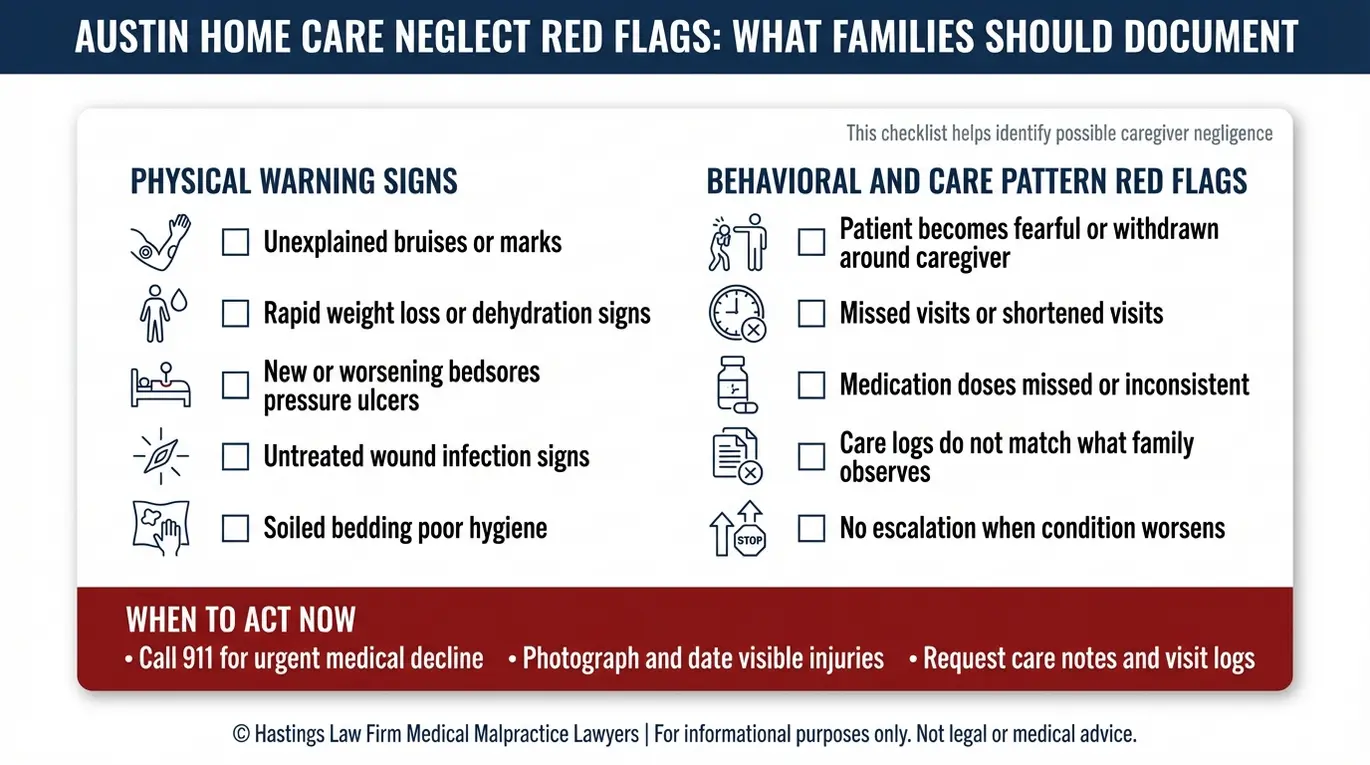
Signs of caregiver negligence often include unexplained bruising, rapid weight loss, development of bedsores, poor hygiene, and sudden behavioral changes like fear or withdrawal. Recognizing these indicators early can be the difference between stopping ongoing abuse and discovering it too late.
Active caregiver abuse and passive neglect are two different types of harm. Active abuse involves intentional acts, such as hitting or verbally threatening a patient. Passive neglect results from ignoring the patient’s needs or failing to assist with activities of daily living (ADLs). These are the basic personal tasks like eating, bathing, and dressing that a patient may need help with.
Physical indicators are often the most visible. Look for dehydration, malnutrition, soiled bedding left unchanged, and pressure ulcers (bedsores). These are skin and tissue injuries caused by prolonged pressure on the body. They most commonly occur on the heels, tailbone, and hips. Bedsores that develop or worsen under a provider’s care can be strong evidence of caregiver negligence. Preventing them is a basic responsibility of home health professionals.
Emotional and behavioral indicators can be equally telling. A patient who becomes unusually quiet, anxious, or withdrawn, especially when a specific caregiver is present, may be signaling home health abuse. These behavioral shifts are not always easy to interpret, but they warrant attention and documentation.
If you notice any of these warning signs, you can report suspected abuse or neglect through the Texas Department of Family and Protective Services. You should also consider consulting an Austin home health care provider malpractice lawyer to evaluate whether the situation supports a personal injury or caregiver negligence claim.
Warning Signs Checklist:
| Category | Warning Signs |
|---|---|
| :— | :— |
| Physical Injuries | Unexplained bruises, cuts, or burns |
| Skin Integrity | New or worsening pressure ulcers (bedsores) |
| Health Status | Sudden weight loss or signs of dehydration |
| Hygiene | Soiled clothing, unchanged bedding, unkempt appearance, or poor hygiene |
| Medical Issues | Untreated infections or open wounds; missing medications |
| Behavioral | Patient appears fearful, withdrawn, or unusually quiet around caregiver |
Establishing Liability Against Austin Home Health Agencies
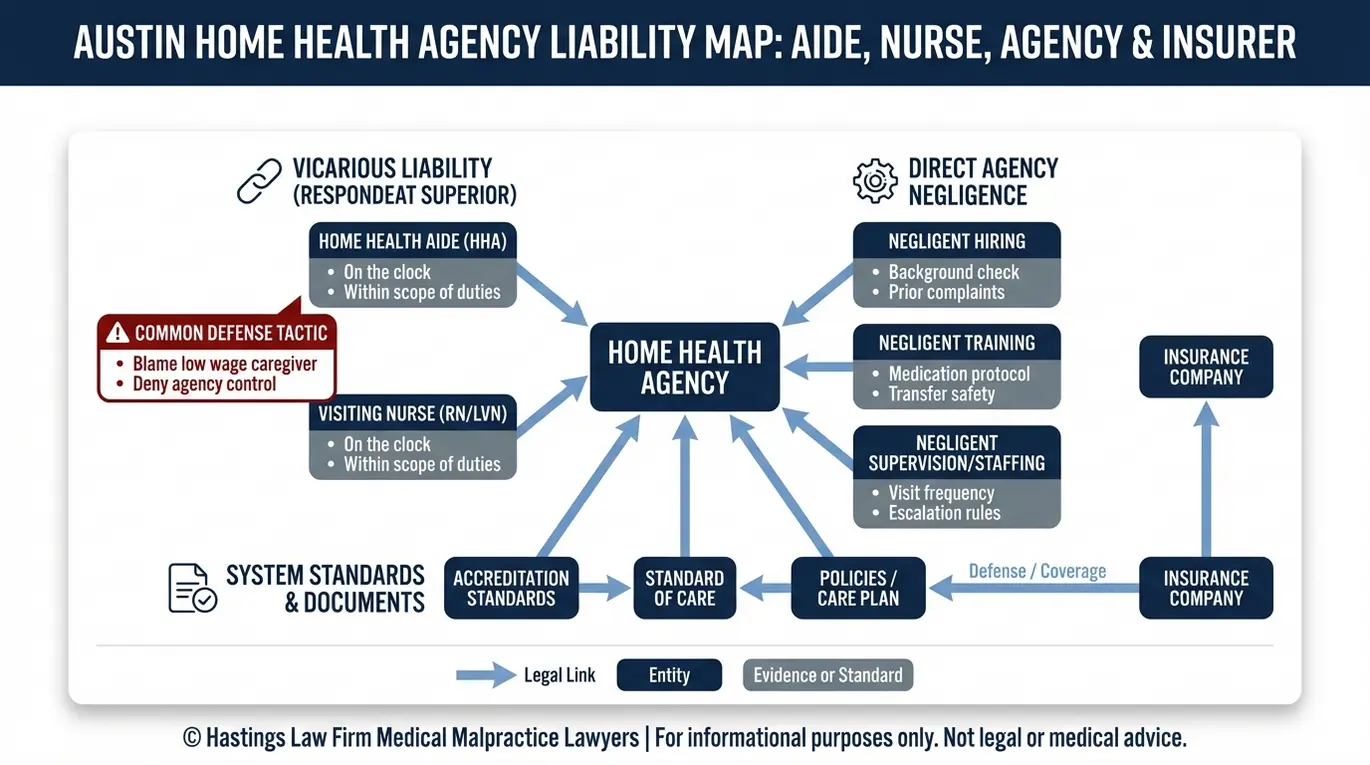
Liability in home health malpractice cases often extends beyond the individual caregiver to the agency that employs them. Liability determines which party is legally responsible for the harm caused. This responsibility can occur through the legal doctrine of *respondeat superior*. This Latin term means “let the master answer,” and it holds an employer responsible for the actions of employees performed within the scope of their job. Liability can also arise from agency liability for direct negligence in hiring, training, or supervising staff.
Vicarious Liability
When a home health aide or nurse causes injury while performing job duties, suing a home health agency is often the primary recourse. The agency does not need to have been directly involved in the negligent act. If the employee was on the clock and carrying out assigned responsibilities, the agency shares legal responsibility. This is a critical pathway for filing a lawsuit against a home health agency because individual caregivers rarely carry enough insurance to cover serious injuries.
Negligent Hiring and Supervision
If an agency failed to run a background check or hired someone with a history of abuse, it may face direct liability for negligent hiring. Similarly, failures in medication reconciliation can be a systemic issue. This is the process of comparing a patient’s medication orders to all medications the patient has been taking. If the agency failed to provide adequate training on equipment like a Hoyer lift, those failures can form the basis of a separate claim. Suing a home health agency for these failures is common.
The Role of Accreditation Standards
Organizations like the Joint Commission (JCAHO) set accreditation standards for home care agencies. When an agency falls short of these published standards, it can support a finding of negligence. Accreditation records, training logs, and staffing schedules are all evidence that a home health negligence attorney can obtain during litigation. These documents help demonstrate whether the agency met its obligations. Filing a suit against a home health agency often relies on this evidence.
Potential liability tiers in a home health malpractice case:
- The individual caregiver (nurse, aide, or therapist) who provided substandard care
- The home health agency through vicarious liability for employee actions
- The agency directly for negligent hiring, training, credentialing, or supervision
- Third-party staffing companies, if the caregiver was placed through a contract agency
Recoverable Damages for Home Health Injury Victims
Patients harmed by home health negligence may recover economic damages for medical bills and future care costs, as well as non-economic damages for pain, suffering, and physical impairment. Seeking compensation for home health negligence helps cover these losses. The specific types and amounts depend on the severity of the injury and the circumstances of the case.
Economic vs. Non-Economic Damages:
| Category | Economic Damages | Non-Economic Damages |
|---|---|---|
| Definition | Measurable financial losses | Subjective, quality-of-life losses |
| Examples | Medical bills, hospitalization costs, future care needs, lost income, rehabilitation | Pain and suffering, physical impairment, mental anguish, loss of enjoyment of life, disfigurement |
| How Calculated | Based on bills, records, and financial projections | Evaluated by a jury based on the evidence presented |
Economic damages cover the tangible costs of the harm: emergency room visits, corrective surgeries, additional home care, and lost income. Recovering compensation for home health negligence is necessary in cases involving elderly or disabled patients. Future care costs are especially important if the negligence caused a permanent decline in function.
Non-economic damages address the human cost. These include the physical pain endured, the emotional toll of being harmed by a trusted provider, and the loss of independence. For family members, compensation for home health negligence acknowledges the weight of grief and frustration. A fair settlement often depends on accurately quantifying these damages to ensure all medical costs are covered.
In Texas, non-economic damages in medical malpractice cases are subject to caps under the Texas Civil Practice and Remedies Code Section 74.301. Understanding the distinction between bodily injury and personal injury matters when pursuing compensation for home health negligence. Bodily injury refers to the physical harm itself. Personal injury can encompass broader harms, including emotional distress. An Austin home health care provider malpractice lawyer can help you understand what financial recovery for home health injury may be available.
Punitive damages may also be available in cases involving gross negligence. compensation for home health negligence in these instances is designed to punish egregious behavior and deter similar conduct.
Texas Statute of Limitations for Home Health Claims
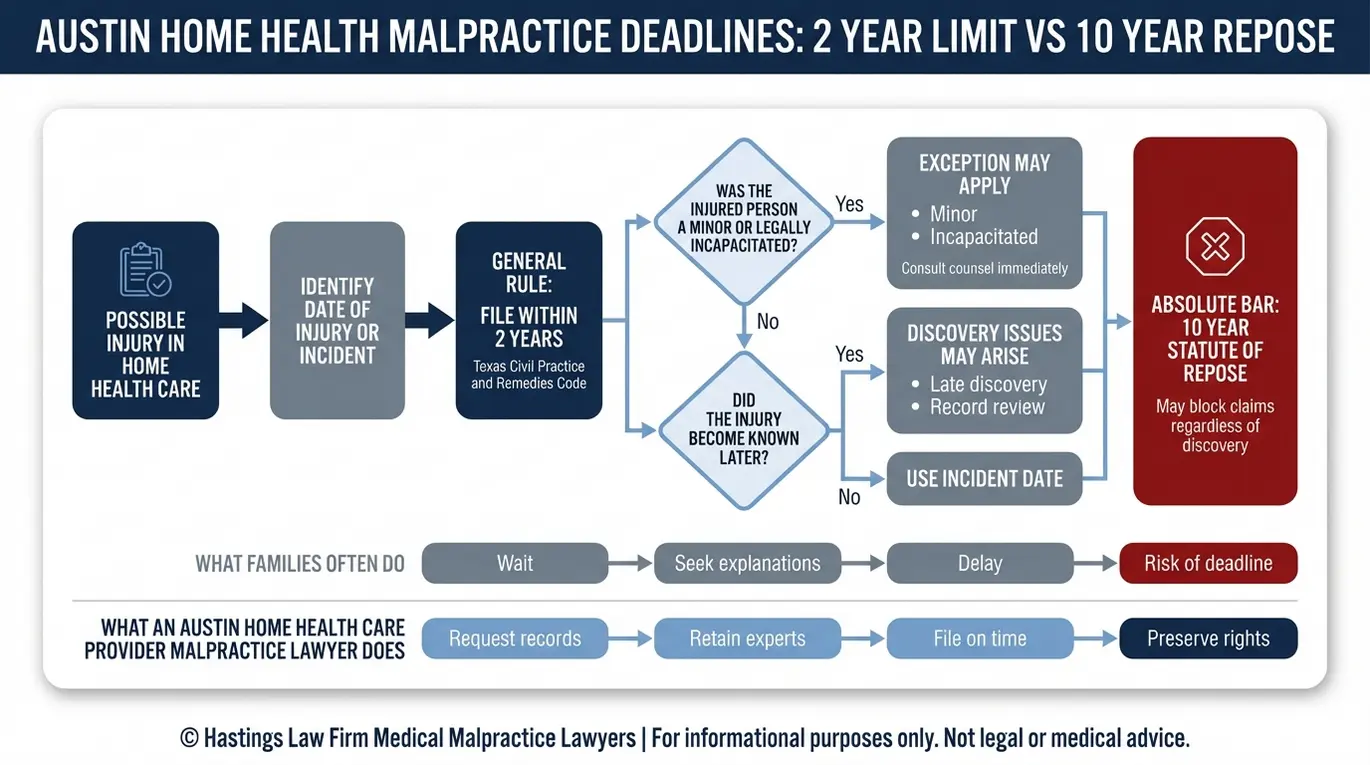
In Texas, medical malpractice claims generally must be filed within two years from the date the injury occurred or was discovered. Missing a filing deadline usually results in the court dismissing the claim. Missing this statute of limitations for malpractice can permanently bar your legal recourse. This is true regardless of how strong the underlying case may be. The statute of limitations is a strict legal deadline that dictates how long you have to take action.
The Two-Year Rule
The Texas Civil Practice and Remedies Code establishes a two-year statute of limitations for malpractice claims. The clock typically starts on the date the negligent act took place. However, the discovery rule may apply if the injury was not immediately apparent. This starts the clock from the date the injury was discovered or reasonably should have been found.
The 10-Year Statute of Repose
Texas also imposes an absolute 10-year statute of repose. Unlike the statute of limitations for malpractice, which the discovery rule can extend, the statute of repose sets a hard cutoff. No medical malpractice claim may be filed more than 10 years after the date of the negligent act.
Exceptions for Minors and Incapacitated Patients
Special rules apply for minors under 12 and for patients who are legally incapacitated. These exceptions can extend the statute of limitations for malpractice, but they have their own specific requirements.
Critical Deadlines to Know:
* General filing deadline: 2 years from the date of injury or discovery (time limit) * Absolute outer limit: 10 years (statute of repose) * Minors under 12: Extended deadline until the child’s 14th birthday * Incapacitated patients: Tolling provisions may apply; consult an attorney for specifics
Because these deadlines are strictly enforced, contacting an Austin home health care provider malpractice lawyer as early as possible protects your ability to file a claim.
Seeking Justice for Wrongful Death in Home Care Settings
If home health negligence leads to a patient’s death, surviving family members may file a wrongful death lawsuit to recover funeral costs, lost companionship, and other financial losses. A wrongful death home health lawyer can guide the family through this process. Texas law designates specific family members who have standing to bring these claims.
The surviving spouse, children, and parents of the deceased may file a wrongful death claim. Each may seek damages for the loss of companionship, financial support, and the emotional pain of losing a family member. The deceased person’s estate may also have a claim to recover losses for the benefit of heirs.
The preventable nature of these deaths is what makes them so difficult. The patient was at home, in a setting that was supposed to be safe and supportive. When a caregiver’s negligence leads to death, families deserve answers. A wrongful death home health lawyer helps families seek these answers.
One of the most important steps in a wrongful death case involving home health care is obtaining an autopsy. An autopsy is a medical examination conducted after death to determine the cause. It can be essential in distinguishing between death caused by the patient’s underlying condition and death caused or accelerated by negligence. Defense attorneys often argue that the patient died of natural causes.
The Southwestern Institute of Forensic Sciences (SWIFS) FAQ page provides helpful information about how and when autopsies are conducted in Texas. A wrongful death home health lawyer can advise you on whether to request an independent autopsy and how to preserve this evidence. We can help you recover funeral costs and other related expenses.
Contact the Austin Healthcare Malpractice Attorneys at Hastings Law Firm Today for Help
Losing trust in a caregiver who was supposed to help your loved one is painful. You may be struggling with unanswered questions about what happened and whether it could have been prevented. Those questions matter, and you have the right to pursue them.
Hastings Law Firm is dedicated exclusively to medical malpractice litigation. Our Austin office is backed by a national team that includes former defense attorneys and hospital nurses who understand both sides of a claim. Founder Tommy Hastings is board-certified in Personal Injury Trial Law, a distinction held by less than 2% of Texas attorneys. He has built this firm around the principle that accountability leads to safer care.
We handle home health care malpractice cases on a contingency fee basis. This means you pay no attorney fees or costs unless we recover compensation for you. If you believe a home health provider’s negligence harmed your family member, contact us for a free case evaluation. We will review the records, explain your options, and help you take the first step toward answers.
Frequently Asked Questions About Home Health Care Provider Malpractice in Austin


This content was researched and written by the Hastings Law Firm editorial team, which includes attorneys, medical professionals, and experienced researchers. Our writing is informed by internal knowledge and practical experience, and we cross-check critical details against authoritative sources cited throughout. Every piece undergoes human-led fact-checking and legal review. Because legal and medical information can change, if you spot an error, please contact us. Learn more about our content standards and review process on our editorial policy page.

Gabe Sassin has focused exclusively on medical malpractice law since 2007. After spending more than a decade as a malpractice defense attorney, he knows exactly how the other side works. He has seen firsthand how healthcare providers, insurers, corporate defendants, and their legal teams think, prepare, and build their defense against claims. That knowledge works for the people who need it most today, injured patients and their families. His unique experience shapes everything he writes, giving readers a look at how these cases actually work from someone who has handled them from both sides.
