


Texas Home Health Care Provider Malpractice Lawyer
Home health care negligence can leave families feeling shocked and uncertain, especially when a trusted caregiver fails to follow a plan of care or provide basic support. In Texas, these situations often turn on whether the provider met the accepted standard of care and whether the lapse directly caused injury or a worsening condition. Concerns may involve missed visits, poor monitoring, unsafe assistance, or record problems that hide gaps in care. If you or a loved one were harmed or worse due to home health care negligence in Texas, contact Hastings Law Firm for a free, confidential case review.
Last Updated: July 27, 2026
Trusted Legal Representation for In-Home Healthcare Negligence in Texas
When you trust a home health care provider to look after someone you love, you expect safe, professional treatment. Learning that a caregiver may have caused harm, or failed to provide basic care, can leave you feeling both angry and unsure of what to do next. These cases involve a unique overlap of medical standards, employment law, and state regulations that most general practice firms are not equipped to handle.
At Hastings Law Firm, our entire team focuses exclusively on medical malpractice. Founded by board-certified trial attorney Tommy Hastings, our firm has focused exclusively on medical malpractice since 2005. As an experienced Texas home health care provider malpractice lawyer, we understand the specific challenges these claims present and how to build them effectively. If you believe a home health provider harmed your loved one, we can review what happened and explain your options in a free, confidential consultation.

Defining Home Health Care Negligence in Texas
Home health care negligence occurs when a visiting nurse, aide, or therapist fails to meet the accepted standard of care, directly causing injury or worsening a patient’s condition. This section explains how legal standards apply to home healthcare services. Understanding negligence is the first step toward seeking legal accountability.
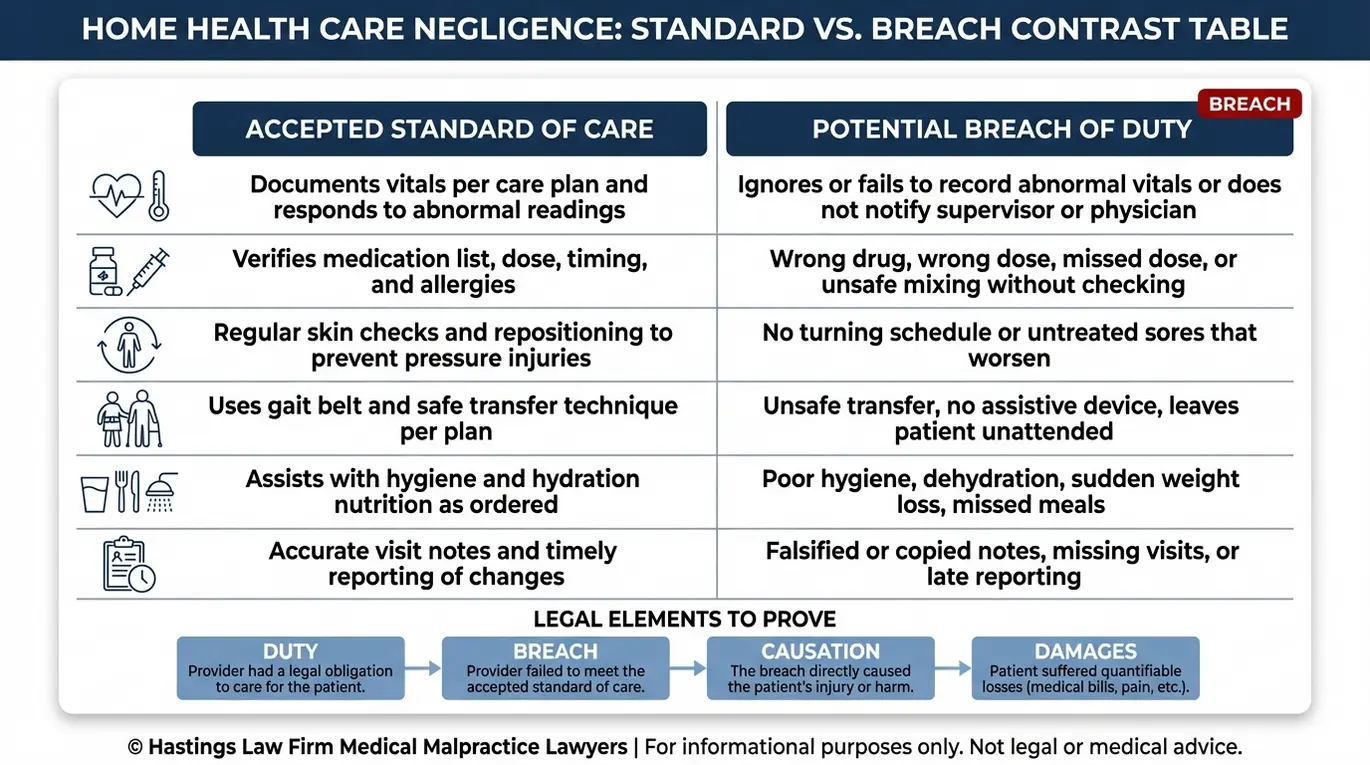
The standard of care in home care settings covers a broad range of responsibilities. Providers are expected to follow the patient’s home health plan of care, the individualized treatment instructions created by a physician that outline medications, therapies, wound care, and monitoring requirements. This plan of care acts as the medical roadmap the agency must follow. They must also safely assist with activities of daily living (ADLs), which are routine tasks like bathing, dressing, eating, and mobility that patients need help performing.
To pursue a claim with a home health care malpractice attorney, we must establish four legal elements:
- Duty of care: The provider had a professional obligation to deliver competent treatment.
- Breach of duty: The provider’s care fell below the accepted medical standard.
- Causation: The breach directly caused or contributed to the patient’s injury.
- Damages: The patient suffered measurable harm, whether physical, financial, or emotional.
The distinction between an unfortunate medical outcome and actionable medical negligence comes down to whether the provider’s conduct met the standard. A patient whose condition worsens despite proper care has not necessarily been the subject of malpractice. But a patient who develops a serious infection because a wound was never cleaned or monitored as prescribed may have a strong claim.
Our in-house medical staff reviews every case to identify exactly where the line was crossed. Distinguishing between a natural decline and preventable harm is complex. Our team analyzes the plan of care to determine if the provider’s actions deviated from the protocols that ensure patient safety, helping families understand if they have a viable case.
Common Injuries and Abuse Scenarios in Home Care
Common indicators of malpractice include unexplained bruising, untreated bedsores, medication errors, and sudden weight loss due to malnutrition. Recognizing common types of neglect can help family members protect their loved ones. Because home health patients are often elderly, disabled, or recovering from surgery, they may not be able to report problems themselves. That makes it especially important for family members to recognize warning signs of negligent treatment or patient abuse allegations.
A qualified lawyer for home health negligence can help determine causation, linking these failures to the injury, or evaluate a wrongful death claim if the neglect was fatal. Injuries we frequently evaluate in these cases include:
- Medication administration errors: A medication administration error, any deviation from what was prescribed, includes overdosing, under-dosing, or giving the wrong drug.
- Pressure injuries: Also called pressure ulcers or decubitus ulcers, these wounds develop when immobile patients are not repositioned regularly. According to PubMed Central on pressure injury prevalence and management, prevention requires consistent skin assessment. A stage 4 bedsore can lead to life-threatening infections.
- Falls during transfers: Improperly assisting a patient during movement. The CDC’s Patient and Caregiver Resources outline fall prevention strategies trained caregivers should follow.
- Malnutrition and dehydration: Failing to prepare meals or monitor fluid intake.
- Hygiene failures: Ignoring signs of infection or failing to bathe patients.
One pattern involving medically unnecessary services is “phantom visits.” When a provider logs services on paper but never shows up, the patient goes without critical treatment. The physical decline that follows is a direct result of that gap in care. If you suspect a loved one’s condition has worsened despite supposedly receiving regular home health visits, that disconnect between billing records and the patient’s actual condition may point to something deeper.
The Hastings Law Firm Difference
Results matter, but what truly sets us apart is how we achieve them. Every verdict, every settlement, and every Texas courtroom victory comes from one guiding promise: To treat each client’s fight for justice as if it were our own.
This balance of skill, experience, and empathy reflects our core philosophy that justice should not only compensate the injured, but also make health care safer nationwide.

Liability: Can You Sue the Agency for an Aide’s Error?
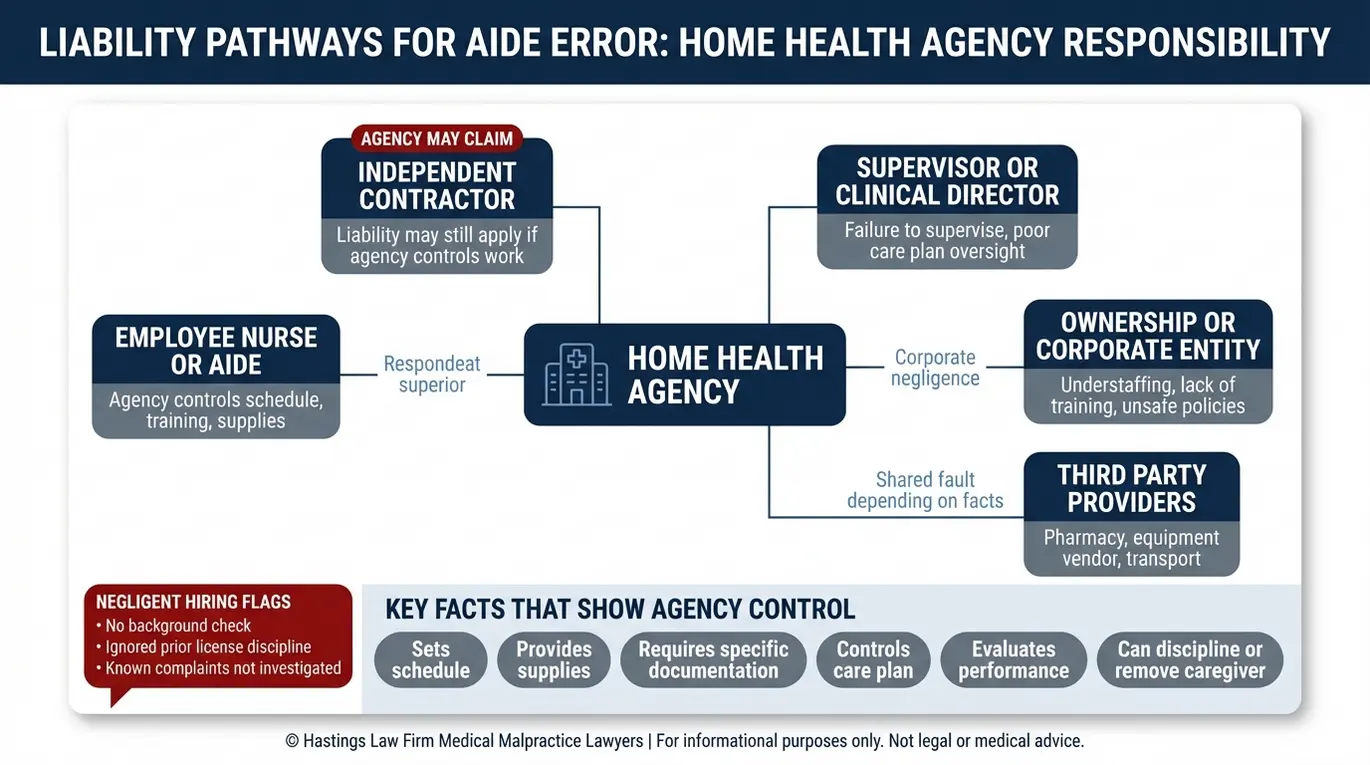
When considering suing a home health agency in Texas, the answer is generally yes. Liability determines who is legally responsible for medical errors in a home setting. Under the doctrine of *respondeat superior*, home health agencies (HHAs), the licensed organizations that employ and deploy caregivers into patients’ homes, are liable for the negligent actions of their employees performed within the scope of employment. This means the agency itself, not just the individual home health aide (HHAide), the caregiver who provides direct patient services, can be held responsible.
One common defense tactic is for agencies to classify their workers as independent contractors rather than employees. If successful, this can shield the agency from direct liability for an aide’s mistakes. However, when the agency controls the worker’s schedule, provides equipment, assigns patients, and directs the type of care delivered, the legal reality often points to an employment relationship regardless of how the paperwork is labeled. We investigate the actual working arrangement to determine who should be held accountable.
Agencies also face liability for their own institutional failures. Negligent hiring, such as failing to run background checks to ensure licensing and certification standards or employing a caregiver whose license has been revoked, creates direct exposure. The same applies to inadequate training, lack of clinical supervision, or chronic understaffing that leaves patients without timely care.
Agency compliance with state and federal regulations is mandatory. Our team includes former defense attorneys who previously worked for health systems, giving us insider insight into how agencies attempt to avoid responsibility. These are not just the aide’s failures; they reflect decisions made at the corporate level, and Texas law allows us to hold the agency responsible for those decisions when they result in patient harm.
Systemic Fraud as Evidence of Malpractice
Billing fraud often correlates with patient neglect. Regulatory violations often indicate that a patient is not receiving the care they require. If an agency is falsifying records to bill Medicare or Medicaid for visits that never happened, the patient is not receiving necessary care. What may initially look like a financial crime frequently has a direct medical consequence, and that connection can strengthen a malpractice claim.
Falsification of medical records, the deliberate alteration or fabrication of clinical documentation, is one of the clearest red flags. Phantom visits, where records show a caregiver provided treatment on a day they never arrived, are a common example. When charting says vitals were taken and wounds were dressed but the patient’s condition tells a different story, those records become evidence of both fraud and neglect.
Federal oversight data can also support these claims. The Office of Inspector General’s Exclusions database tracks providers and entities that have been sanctioned for fraud or abuse. The OIG investigates programs like Medicare to ensure providers follow safety and billing laws. Prior investigations or audits of an agency can help establish a pattern of misconduct. The CMS Program Statistics on Medicare Home Health Agencies provide billing and utilization data that our team can compare against actual patient outcomes.
Violations of federal regulations like the anti-kickback statute and Stark Laws, which prohibit certain referral arrangements and self-dealing in healthcare, can also reveal an agency that prioritizes revenue over patient welfare. As Texas home health malpractice counsel, we examine these regulatory threads not just as abstract compliance issues but as direct evidence that a patient’s care was compromised. When an agency is cutting corners on billing, they are often cutting corners on care.
Texas Law: Damages and Deadlines
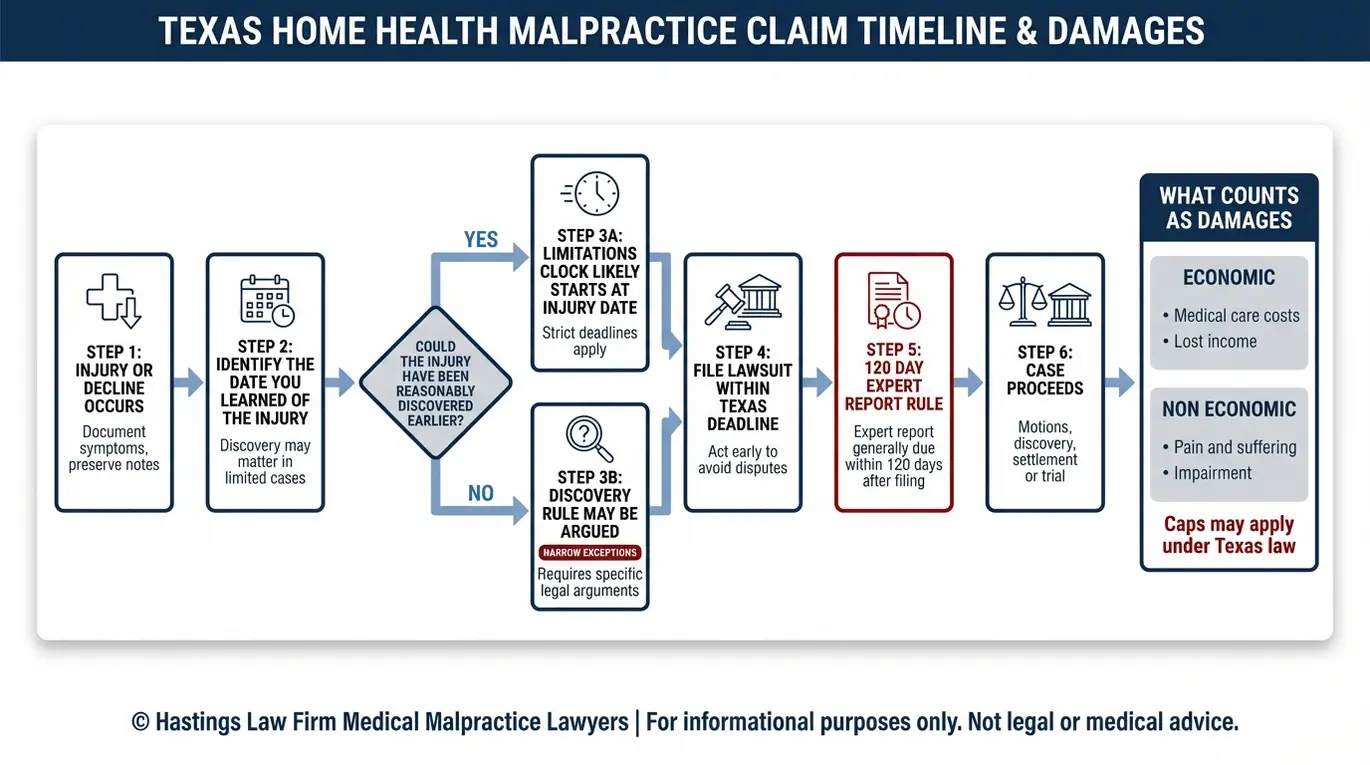
Texas law allows patients and families to recover economic damages (medical bills, lost wages) and non-economic damages (pain and suffering), subject to specific caps and strict filing deadlines. Texas law defines what families can recover and how long they have to act. Understanding these rules early is essential because missing a deadline can permanently bar your malpractice claim, regardless of how strong the evidence is.
Types of Damages
Economic damages cover financial losses: past and future medical expenses, rehabilitation costs, lost income, and replacement care costs. Damages are the legal term for the compensation a patient may receive for their losses. Non-economic damages account for physical pain, emotional suffering, and diminished quality of life. Texas law caps non-economic damages in certain healthcare liability claims, which is one reason working with experienced home health care injury attorneys matters. We evaluate the full scope of compensation the law allows.
Statute of Limitations
Under Texas Civil Practice and Remedies Code Chapter 74, you generally have two years from the negligent act to file suit. A statute of limitations is a strict legal deadline for filing a lawsuit. The Discovery Rule is a legal exception that can pause the filing clock if the injury could not have been reasonably discovered, but exceptions are interpreted narrowly.
Deadline Alert: Texas imposes a strict 120-day expert report requirement. Under Texas Civil Practice and Remedies Code Section 74.351, once a healthcare liability lawsuit is filed, you must serve a qualified expert report within 120 days of the defendant’s filing of an original answer, or the court can dismiss your case with prejudice.
The Critical Role of Expert Testimony
Texas requires a qualified medical expert to provide a written opinion establishing that the provider breached the standard of care and that the breach caused the patient’s injury. Expert testimony involves using medical professionals to explain the standard of care to the court. This expert testimony is not optional. Without it, the case cannot proceed.
The 120-day clock begins when the defendant files an original answer, meaning investigation and report preparation must start well before filing. We prepare every case by securing the expert testimony Texas law demands.
Contact the Texas Healthcare Malpractice Attorneys at Hastings Law Firm Today for Help
If someone you love has been harmed by a home health care provider, you do not have to face the insurance companies or the agency’s legal team alone. At Hastings Law Firm, our team of attorneys, nurse consultants, and former defense lawyers is built specifically for cases like yours. We understand the medical details, the regulatory framework, and the defense strategies these agencies rely on.
We operate on a contingency fee basis, which means you pay no attorney fees or costs unless we recover compensation for you. Every free, confidential consultation allows you to ask questions and learn about the legal process without financial risk.
Texas deadlines are strict, and evidence can deteriorate quickly. Contact Hastings Law Firm today to start your investigation and take the first step toward accountability and answers.
Frequently Asked Questions About Home Health Care Provider Malpractice in Texas


This content was researched and written by the Hastings Law Firm editorial team, which includes attorneys, medical professionals, and experienced researchers. Our writing is informed by internal knowledge and practical experience, and we cross-check critical details against authoritative sources cited throughout. Every piece undergoes human-led fact-checking and legal review. Because legal and medical information can change, if you spot an error, please contact us. Learn more about our content standards and review process on our editorial policy page.

Gabe Sassin has focused exclusively on medical malpractice law since 2007. After spending more than a decade as a malpractice defense attorney, he knows exactly how the other side works. He has seen firsthand how healthcare providers, insurers, corporate defendants, and their legal teams think, prepare, and build their defense against claims. That knowledge works for the people who need it most today, injured patients and their families. His unique experience shapes everything he writes, giving readers a look at how these cases actually work from someone who has handled them from both sides.
