


Fort Worth Forcep & Vacuum Birth Injury Lawyer
Written by: Hastings Law Firm | Reviewed by: Brady D. Williams | Updated: July 27, 2026
Instrument assisted delivery with forceps or a vacuum extractor can be appropriate in urgent labor, but improper use can cause lasting harm to a baby and serious injury to a mother. Risks rise when key preconditions are not confirmed, when attempts are prolonged or repeated, or when a clinician continues pulling instead of moving to a cesarean delivery. Families may face intensive newborn care, long term therapy needs, and significant financial strain while trying to understand what went wrong. If your child suffered harm due to forceps or vacuum birth injuries in Fort Worth, Texas, contact Hastings Law Firm for a free, confidential case review.

Trusted Medical Attorneys in Fort Worth for Labor and Delivery Instrument Injuries
What You Should Know About Infant Delivery Intrument Negligence Claims in Fort Worth:
- Lifelong impairment can result from improper forceps or vacuum use, including brain injury and nerve damage.
- Fatal outcomes can occur in severe cases of traumatic injury during instrument assisted delivery.
- The risk of serious harm can increase when instruments are used before key delivery conditions are confirmed.
- Severe injury can be more likely when attempts are prolonged, repeated, or switched between instruments instead of moving to cesarean delivery.
- Options for recovery in Texas can be limited by procedural requirements that apply to medical malpractice claims.
- Compensation can include long term medical care costs and loss of future earning capacity when a child needs ongoing support.
- Non economic harm can be part of recovery, including pain and suffering and the emotional toll on parents.
- Case outcomes can depend on whether records document fetal monitoring concerns and the timing and manner of instrument use.
- Access to medical records can matter when evaluating what was documented about delivery decisions and newborn condition.

A Healthcare Focused Law Firm
If your baby required time in the NICU (neonatal intensive care unit) or suffered injuries after delivery with forceps or a vacuum extractor, you deserve answers. You need to know if the care your family received met medical standards.
Hastings Law Firm focuses exclusively on medical malpractice. As a Fort Worth Forcep & Vacuum Birth Injury Lawyer, our team of trial attorneys, in-house nurses, and medical consultants works to uncover the facts behind delivery room injuries and hold negligent providers accountable. If your child was harmed during an instrument-assisted birth, we welcome you to contact us for a free, confidential case evaluation so we can review what happened and explain your options.
Understanding the Risks of Assisted Delivery with Forceps and Vacuum Extractors
Assisted vaginal delivery involves the use of forceps or vacuum extractors to guide a baby through the birth canal during difficult labor, but improper use can cause permanent physical and neurological damage. These tools exist for situations where a vaginal birth needs to progress quickly, yet they carry serious risks that require strict adherence to clinical protocols.
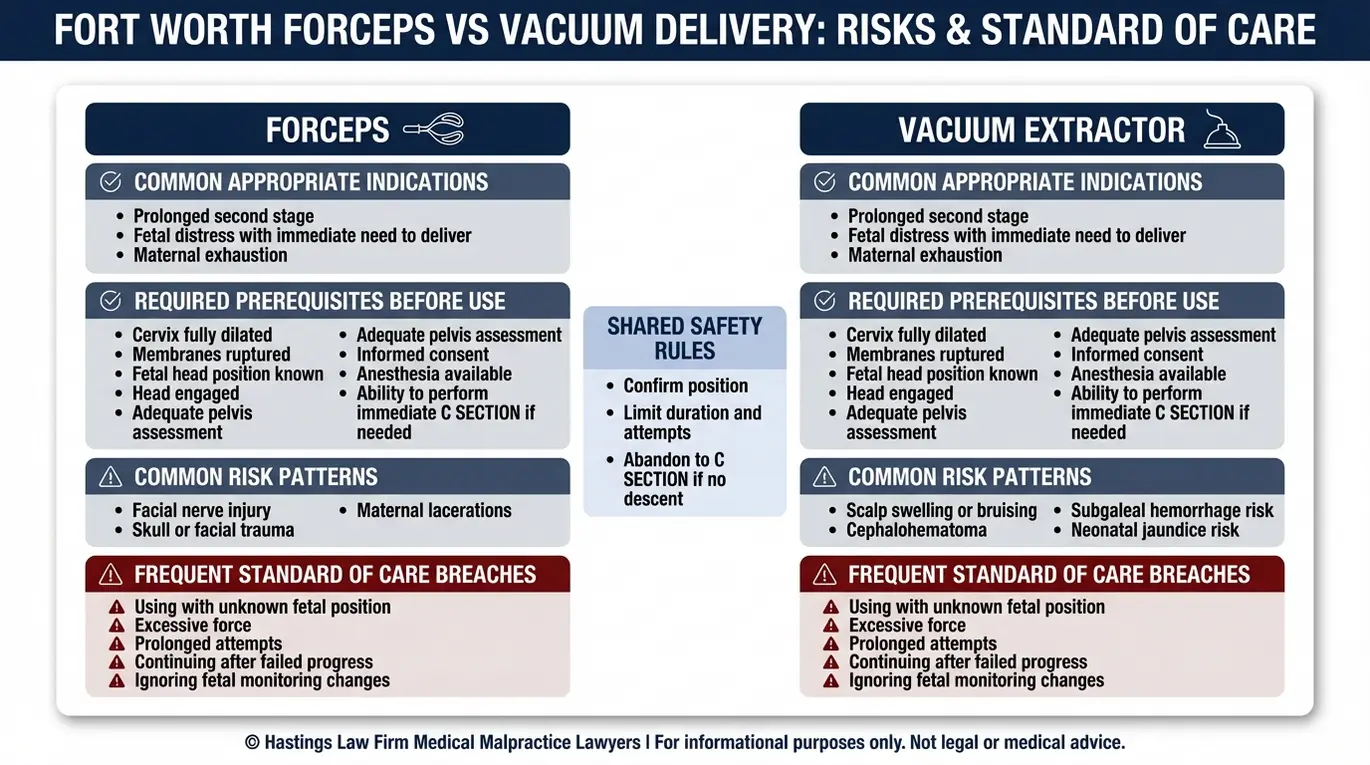
OB-GYNs may consider an operative vaginal delivery, the clinical term for using instruments to assist a vaginal birth, when specific conditions arise. Common indications include prolonged labor where the mother is exhausted, signs of fetal distress on the heart rate monitor, or a need to shorten the pushing stage for maternal health reasons. According to research published in PubMed on indications and prerequisites for operative vaginal delivery, these tools should only be applied when well-defined clinical criteria are met.
Before any instrument is placed, the standard of care generally requires that specific preconditions be confirmed. The cervix must be fully dilated. The membranes must be ruptured. The baby’s head must be at the correct fetal station, meaning the baby’s head is sufficiently low and engaged in the pelvis.
The exact position of the baby’s head must also be identified. Using forceps or a vacuum extractor before these conditions are met can significantly increase the risk of injury to both mother and child during the delivery process.
One principle that experienced birth injury lawyers in Fort Worth examine closely is the abandonment rule. If an initial attempt with forceps or a vacuum fails to deliver the baby safely, the delivering physician is generally expected to abandon the instrument and move to a cesarean section. Persisting with several attempts, or switching from one instrument to another, raises the risk of serious harm. The decision to continue pulling rather than proceed to a C-section is one of the most common areas of negligence a Fort Worth birth injury lawyer investigates in these cases.
Texas law provides the legal framework for pursuing accountability when these standards are not met. Under the Texas Civil Practice and Remedies Code Chapter 74, medical malpractice claims require specific procedural steps, including an expert report, which is why working with a forcep and vacuum injury attorney who understands both the medicine and the law is essential.
The table below outlines key differences between these two instruments and the risks associated with each:
| Forceps | Vacuum Extractor | |
|---|---|---|
| How It Works | Metal tongs placed around the baby’s head to guide delivery | Suction cup applied to the baby’s scalp to assist with traction |
| Common Risks to Baby | Skull fractures, facial nerve damage, bruising | Scalp lacerations, cephalohematoma, intracranial hemorrhage |
| Common Risks to Mother | Vaginal tears, pelvic floor injury | Vaginal lacerations |
| Key Prerequisite | Baby’s head position must be precisely identified | Cup must be placed at the correct point on the skull (flexion point) |
| Common Breach Points | Excessive force, misapplication on face or jaw | Too many pull attempts, cup pop-offs, prolonged application |
Severe Infant Injuries Caused by Improper Forceps and Vacuum Use
Negligent use of extraction tools can lead to skull fractures, brain bleeds, nerve damage, and long-term conditions like cerebral palsy or Erb’s palsy. These injuries often occur when medical providers apply excessive force or fail to recognize that a vaginal delivery is no longer safe. The severity of injury often depends on the amount of force applied, the number of attempts made, and how quickly the medical team recognized and responded to signs of distress. An experienced vacuum extraction injury lawyer often sees how the severity of these injuries correlates with lapses in care.
Traumatic Physical Injuries
Traumatic physical injuries include any damage caused by mechanical force during the delivery process. Skull fractures occur when forceps compress the head with excessive pressure or are incorrectly positioned. Spinal cord injuries result from improper traction on the head and neck during delivery. Research in the Journal of Neonatal Surgery on birth injuries in instrumental vaginal deliveries documents the range of physical trauma associated with these instruments. In severe cases, these injuries can be fatal, giving rise to wrongful death claims.
Oxygen Deprivation and Brain Damage
When instrument-assisted delivery attempts are prolonged or repeated, the baby may experience a dangerous reduction in oxygen supply. This can result in hypoxic-ischemic encephalopathy (HIE), a form of brain damage caused by insufficient oxygen and blood flow to the brain. HIE is one of the most serious outcomes of a failed or mismanaged extraction and can lead to lifelong impairment, a reality our Fort Worth forcep injury counsel works to address.
Nerve Damage
Excessive pulling or twisting during delivery can injure the nerves that control the face, arms, and shoulders. A brachial plexus injury, which is damage to the bundle of nerves running from the spine through the neck and into the arm, is one of the most frequently seen nerve injuries in these cases. When this injury affects the upper nerves, it is often diagnosed as Erb’s palsy.
If your child experienced any of the following after an instrument-assisted delivery, consult a birth trauma attorney immediately:
- Visible bruising, swelling, or marks from instrument placement on the head or face
- Seizures or abnormal movements within the first 24 to 48 hours
- Difficulty feeding, weak cry, or unusual lethargy
- One arm appearing limp or the baby not moving both arms equally
- Admission to the NICU following delivery
- Low Apgar scores at birth
- Asymmetry in facial expressions, such as one eyelid drooping
Recognizing the Long-Term Impact of Developmental Delays
Not every birth injury is immediately obvious. Some conditions only become apparent weeks, months, or even years after delivery. Cerebral palsy (CP), a group of disorders affecting movement, muscle tone, and posture caused by damage to the developing brain, may not be formally diagnosed until a child begins missing developmental milestones. A child who is slow to sit up, crawl, walk, or speak may be showing signs of an injury that traces back to the delivery room.
Developmental delays, or lags in reaching physical and cognitive milestones, tied to instrument-related trauma can require years of occupational therapy, physical therapy, speech therapy, and specialized education. Many children who suffered oxygen deprivation or traumatic brain injury during delivery need ongoing medical monitoring and long-term care. The financial weight of these needs is significant, and families often do not fully understand the scope of future costs until well after the initial injury.
These delayed presentations are one reason why working with a Fort Worth birth injury attorney experienced in instrument-related cases matters. Our team reviews not only what happened during delivery but also the child’s medical trajectory afterward, connecting current diagnoses to the events surrounding birth.

The Hastings Law Firm Difference
Results matter, but what truly sets us apart is how we achieve them. Every verdict, every settlement, and every Fort Worth courtroom victory comes from one guiding promise: To treat each client’s fight for justice as if it were our own.
This balance of skill, experience, and empathy reflects our core philosophy that justice should not only compensate the injured, but also make healthcare safer nationwide.

Proving Medical Malpractice in Assisted Delivery Cases
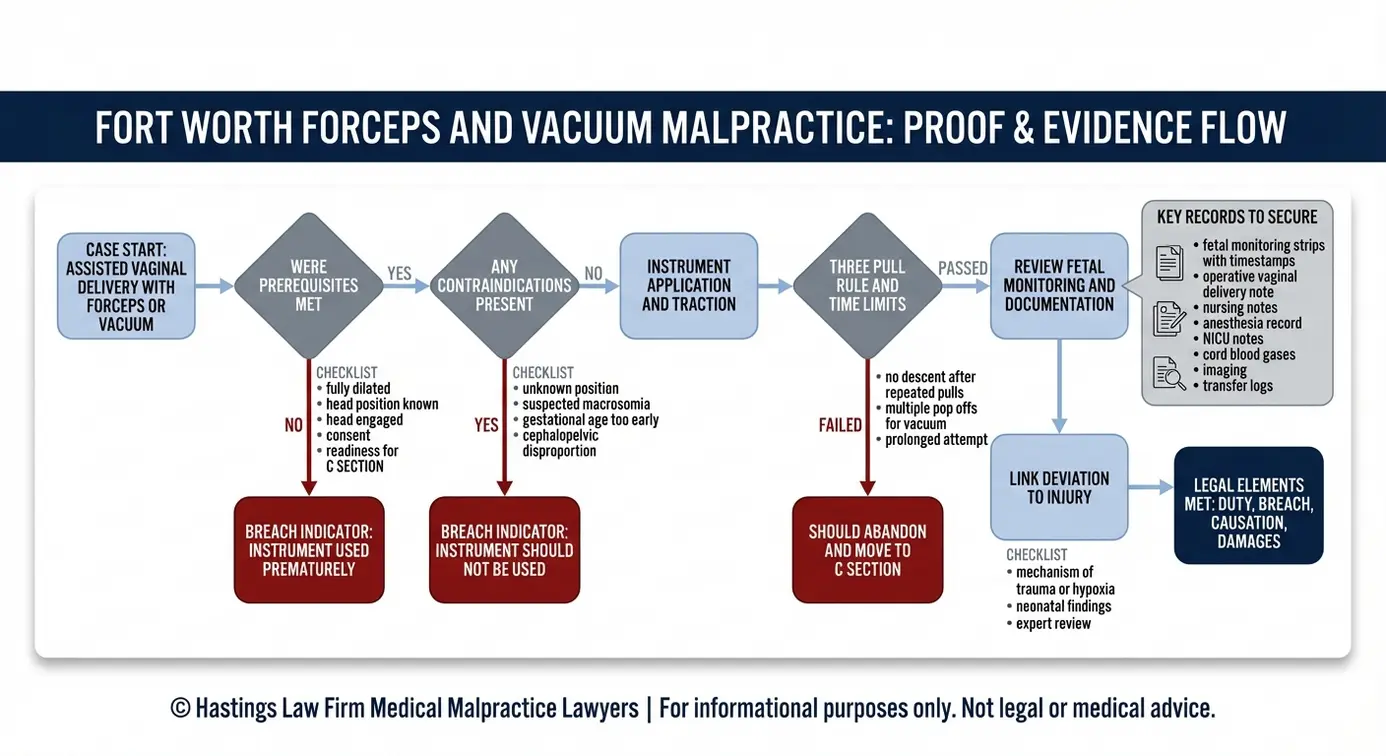
Proving malpractice requires clear evidence that the healthcare provider deviated from the accepted standard of care regarding instrument placement, force applied, or duration of use. We investigate whether the doctor’s actions met the accepted standard of care, which is the level of skill and care a reasonably competent OB-GYN would provide in a similar situation. A bad outcome alone is not enough. The legal question is whether the doctor’s negligence caused the actions to fall below what a reasonably competent OB-GYN would have done under similar circumstances.
Contraindications and Decision-Making Errors
One of the first things we examine is whether the instruments should have been used at all. There are recognized contraindications, situations where forceps or vacuum extractors should not be applied. If the baby’s position in the birth canal was unknown, if the baby was suspected to be too large for a safe vaginal delivery during difficult labor, or if the gestational age raised concerns about skull fragility, proceeding with instruments may represent a clear departure from the standard of care. According to research published in PubMed Central on vacuum extraction safety and current trends, adherence to established criteria is directly linked to reducing injury rates.
The Three Pull Rule
Clinical guidelines generally recognize what is known as the three pull rule, a standard that limits the number of traction attempts during a vacuum-assisted delivery. If the baby does not deliver after approximately three pulls, or if the vacuum cup detaches (a “pop-off”), the standard of care typically calls for abandoning the instrument and proceeding to a cesarean section. Shoulder dystocia, a dangerous complication where the baby’s shoulder becomes lodged behind the mother’s pelvic bone after the head has delivered, can also arise during these attempts, potentially leading to wrongful death if not managed correctly. Continuing to pull when progress has stalled is one of the most common forms of negligence in assisted delivery cases.
How We Investigate
Our vacuum birth injury attorney team works to reconstruct a detailed timeline of everything that happened before, during, and after delivery. We secure and review fetal monitoring strips, operative reports, nursing notes, and anesthesia records. This detailed evidence collection is essential. Our in-house medical staff, including nurses who previously worked in labor and delivery units, analyze charting for inconsistencies and gaps. This process allows a Fort Worth forcep injury counsel to identify where, and whether, the care provided went wrong.
As medical malpractice lawyers for birth injuries, our approach is built on the understanding that these cases require both medical fluency and legal precision. Every case we accept is prepared as if it will go to trial, because that level of preparation is what drives fair results.
Calculating Damages for Lifelong Disabilities in Texas Courts
Compensation in birth injury cases covers past and future medical expenses, life care planning, pain and suffering, and loss of future earning capacity. Legal damages are the financial and personal losses families experience after a medical error, and because many instrument-related injuries result in conditions that require a lifetime of care, the financial stakes in these cases are often substantial.
Economic Damages
The foundation of any birth injury claim is a thorough accounting of the actual costs the family will bear. These are called economic damages, and they include both expenses already incurred and those projected into the future. For a child with cerebral palsy, HIE, or a permanent brachial plexus injury, these costs can be extensive:
- Past and future medical bills, including surgeries, hospital stays, and specialist visits
- Physical, occupational, and speech therapy over the child’s lifetime
- Adaptive equipment such as wheelchairs, braces, and communication devices
- Home modifications to accommodate mobility limitations
- In-home nursing care or 24/7 attendant care for severe disabilities
- Lost wages for parents who must stop working to care for the child, as well as the child’s lost future earning capacity
A life care plan, developed by a qualified specialist, projects these costs across the child’s expected lifespan. This comprehensive document is critical evidence for establishing the full value of a birth injury lawsuit. Your Fort Worth forcep birth injury attorney will ensure this plan reflects the true scope of your child’s needs.
Non-Economic Damages
Texas law also allows families to seek compensation for birth injuries covering non-economic harm. This includes the child’s physical pain and suffering, mental anguish, and physical impairment. For parents, it includes the emotional toll of caring for a child whose injuries were preventable. These damages do not have a fixed dollar value and are typically evaluated by a jury based on the severity and permanence of the harm.
Why Trial Preparation Matters
Insurance carriers and hospital defense teams evaluate every case based on the likelihood that it will actually reach a courtroom. When a Fort Worth vacuum birth injury lawyer prepares a case for trial from day one, it helps us secure equitable offers through a clear narrative of negligence. Defense attorneys recognize when a firm is genuinely prepared to present a case to a jury, and that preparation often leads to fairer results before trial becomes necessary.
Why Choose Hastings Law Firm for Your Birth Injury Claim
Hastings Law Firm offers a dedicated team of board-certified trial lawyers and medical experts who operate on a contingency fee basis to fight for families across Texas. We do not handle car accidents, slip-and-falls, or other personal injury claims. Every resource in our firm is directed toward holding healthcare providers accountable for negligent care.
Founded by Tommy Hastings, a board-certified trial lawyer in Personal Injury Trial Law with over two decades of experience, the firm specializes exclusively in medical malpractice to ensure every client receives expert representation. When you hire a Fort Worth Forcep & Vacuum Birth Injury Lawyer at Hastings Law Firm, you work with a team that includes former defense attorneys who previously represented hospitals and nurses who once worked inside the systems we now challenge. That insider perspective gives us a strategic advantage in anticipating how the other side will build its case.
We operate on a contingency fee basis; you pay no attorney fees and no upfront costs unless we secure a recovery for your family. This structure exists because we believe access to justice should not depend on financial resources. Because our firm is trial-ready, we approach every claim with the rigor needed to win in court. Our national network of medical experts, combined with our local presence and knowledge of Texas courts, positions us to handle complex birth injury claims with the depth and attention they require.
At its core, our work is about more than financial recovery. Our team acts as a patient advocate for your child. We believe that accountability is the path to prevention. When we take on a birth injury case, we are working not only to secure your child’s future but also to ensure that what happened to your family does not happen to someone else.
Contact the Fort Worth Birth Injury Attorneys at Hastings Law Firm Today for Help
Evidence in birth injury cases can deteriorate or become harder to obtain as time passes. We act quickly to secure hospital records and fetal monitoring logs before they are lost. Texas also imposes filing deadlines that limit the time you have to pursue a claim.
Hastings Law Firm provides a supportive, pressure-free environment where you can share your family’s experience and get honest answers. Our team begins every conversation with a free, confidential case evaluation led by a patient advocate who will listen, review the facts, and help you understand whether you have a case.
If your child was injured during a forceps or vacuum-assisted delivery in Fort Worth or anywhere in Texas, contact us today. There are no fees unless we win, and the call costs you nothing. Let us help you find the answers your family deserves.
Frequently Asked Questions About Forcep & Vacuum Birth Injury in Fort Worth


This content was researched and written by the Hastings Law Firm editorial team, which includes attorneys, medical professionals, and experienced researchers. Our writing is informed by internal knowledge and practical experience, and we cross-check critical details against authoritative sources cited throughout. Every piece undergoes human-led fact-checking and legal review. Because legal and medical information can change, if you spot an error, please contact us. Learn more about our content standards and review process on our editorial policy page.

Brady D. Williams is a nationally recognized medical malpractice attorney who has spent his career handling high-stakes litigation for injured patients and families across the country. Licensed in both Texas and California, Brady draws on experience from hundreds of resolved medical cases to break down complex legal and medical topics for the people who need that information most. His writing reflects the same attention to detail and commitment to clarity that he brings to every case he handles.
