


Austin Fetal Monitoring Injury Lawyer
Fetal monitoring during labor is meant to detect oxygen deprivation early enough for the care team to act. When warning signs on the fetal heart rate tracing are missed or ignored, a baby can suffer swift and irreversible harm that changes a family’s life. Understanding how electronic fetal monitoring works, what distress patterns can signal, and why timely intervention matters can help families make sense of what happened in the delivery room. If your child suffered harm or worse due to fetal monitoring errors in Austin, Texas, contact Hastings Law Firm for a free, confidential case review.
Last Updated: July 27, 2026
Trusted Medical Attorneys for Birth Negligence Claims in Austin
When something goes wrong during labor and delivery, the confusion and heartbreak that follow can feel overwhelming. If your child suffered a preventable injury, you may suspect that warning signs on the fetal heart rate tracing were missed. This tracing is the continuous record of your baby’s heart rate patterns during labor. You deserve clear answers about what happened and why.
At Hastings Law Firm, founded by board-certified trial attorney Tommy Hastings, our legal and medical team focuses exclusively on medical malpractice. As an experienced Austin fetal monitoring injury lawyer team, we work alongside in-house nurse consultants and medical experts. We reconstruct what occurred in the delivery room, to determine whether the care your family received fell below accepted medical standards.
If you believe a monitoring failure contributed to your child’s injury, we welcome the chance to review your records and explain your options at no cost and no obligation.

Understanding Fetal Distress and Monitoring Failures
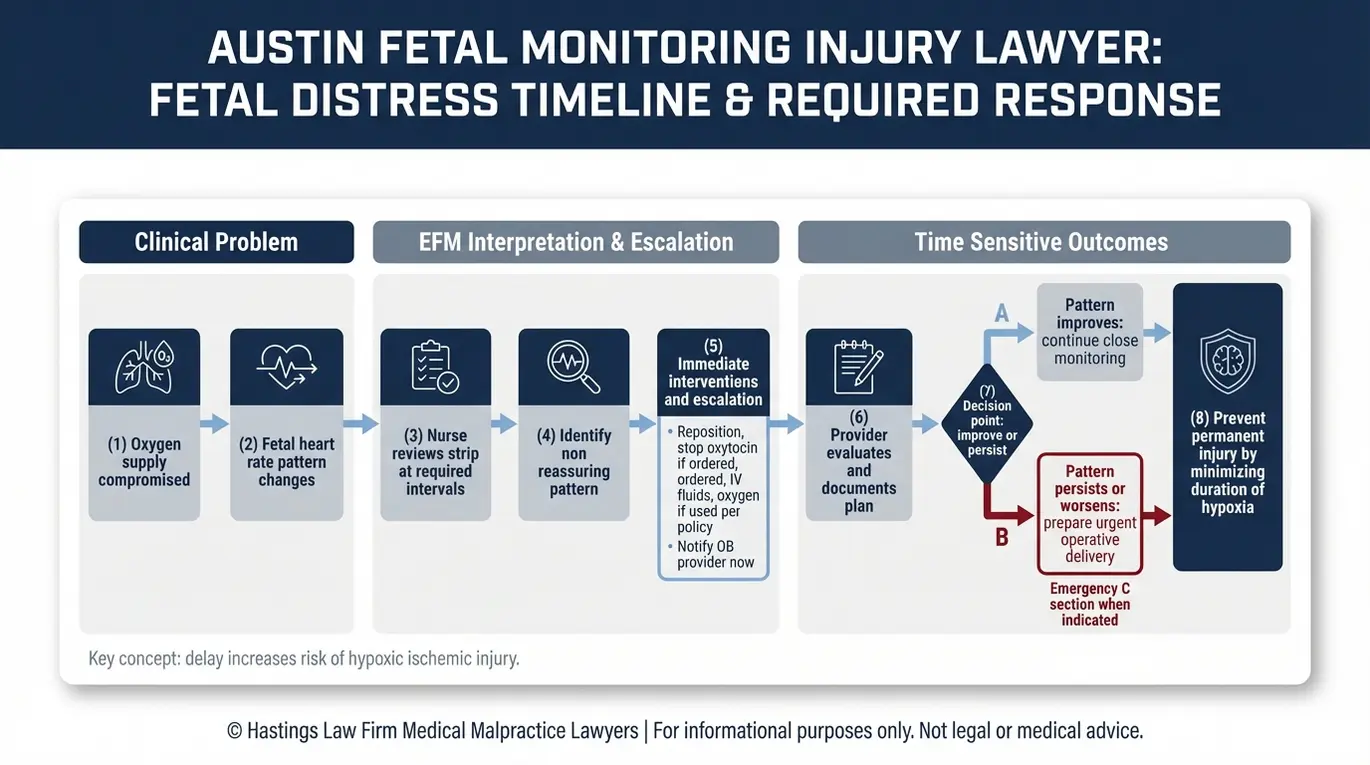
Fetal distress occurs when a baby’s oxygen supply is compromised during labor, often indicated by abnormalities on the electronic fetal monitor that require immediate medical intervention to prevent permanent brain injury.
An electronic fetal monitor (EFM) tracks two critical data streams: the baby’s heart rate and the timing and strength of uterine contractions. This device is placed on the mother’s abdomen or attached to the baby’s scalp. Together, these readings give the medical team a real-time picture of how the baby is tolerating labor. EFM is used in the vast majority of hospital births because it can reveal oxygen deprivation before irreversible harm occurs.
The standard of care during labor and delivery generally requires nurses to evaluate these tracings at regular intervals. This typically happens every 15 to 30 minutes during active labor and more frequently during the pushing stage. When patterns suggest the baby is struggling, the clinical team is expected to act quickly. This may involve repositioning the mother, administering oxygen, or preparing for an emergency delivery.
Several conditions can trigger fetal distress during labor, including:
- Umbilical cord compression or prolapse, where the cord becomes pinched or drops ahead of the baby, cutting off blood flow. This sudden loss of circulation requires immediate action to prevent brain injury.
- Placental abruption, a sudden separation of the placenta from the uterine wall. This is a medical emergency that stops the baby from receiving nutrients and oxygen.
- Uterine rupture, a tear in the uterus that can compromise both maternal and fetal blood supply. This serious event often necessitates an immediate surgical delivery.
Each of these situations produces recognizable changes on the monitor strip. When clinical staff fail to identify or respond to those changes, a fetal monitoring injury attorney can help families determine whether negligence occurred and what legal options may be available.
Critical Signs of Distress on Fetal Monitor Strips
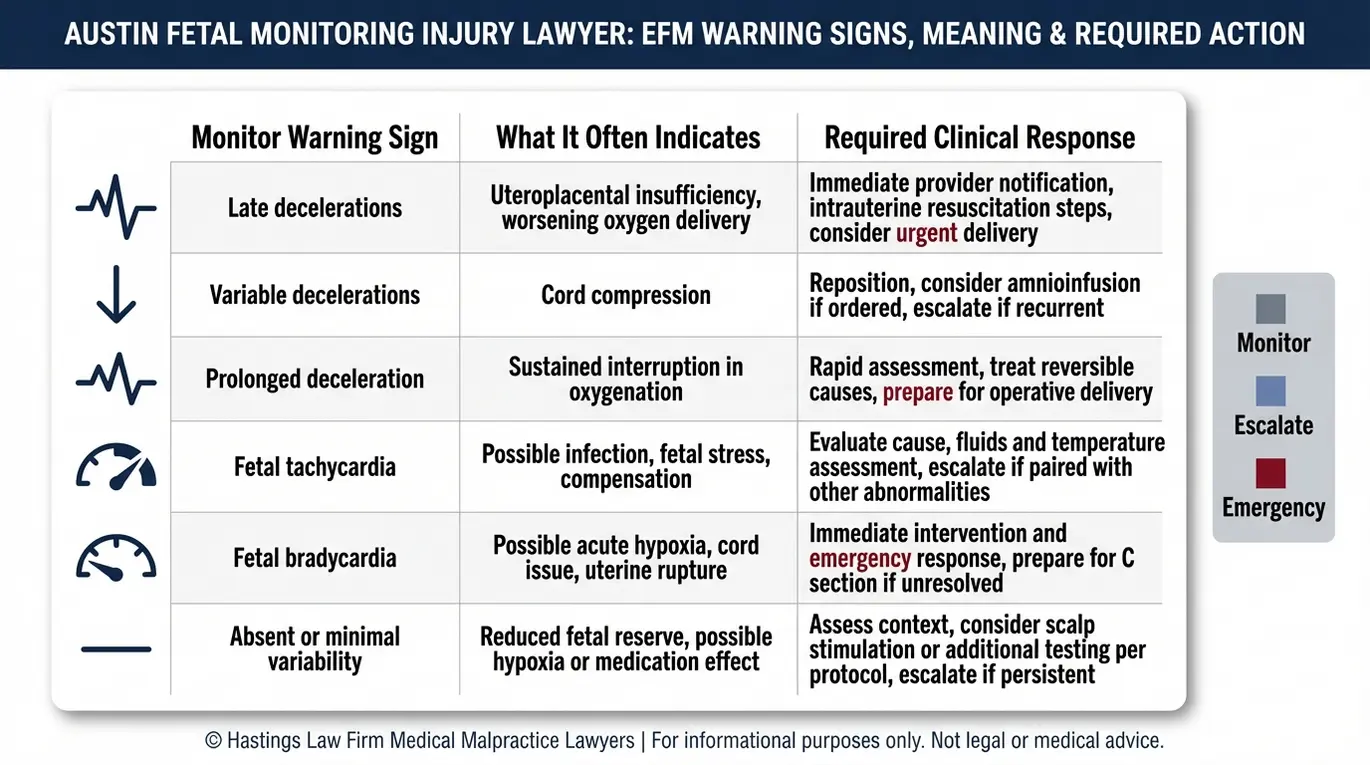
Critical signs of fetal distress include late decelerations, variable decelerations, fetal tachycardia (rapid heart rate), bradycardia (slow heart rate), and a lack of heart rate variability, all of which signal that the baby is not tolerating labor.
Nurses and obstetricians are trained to categorize fetal heart rate patterns as reassuring or non-reassuring. Non-reassuring patterns demand a clinical response, because they can indicate progressive hypoxia, which is a dangerous lack of oxygen. Protocols from medical risk management groups reinforce the expectation of timely recognition and escalation when these patterns appear.
Recognizing these warning signs is central to evaluating negligent fetal monitoring.
| Monitor Warning Sign | What It Indicates | Required Action |
|---|---|---|
| Late Decelerations (heart rate drops after a uterine contraction peaks) | Utero-placental insufficiency; the placenta is not delivering enough oxygen | Reposition mother, administer oxygen, consider emergency C-section if pattern persists |
| Variable Decelerations (abrupt, irregular heart rate drops) | Umbilical cord compression | Reposition mother, amnioinfusion if appropriate, prepare for operative delivery |
| Fetal Tachycardia (sustained heart rate above 160 bpm) | Possible infection, maternal fever, or early hypoxia | Evaluate for infection, hydrate, monitor closely for worsening patterns |
| Bradycardia (sustained heart rate below 110 bpm) | Severe oxygen deprivation, cord prolapse, or uterine rupture | Immediate intervention; emergency C-section is often required within minutes |
| Minimal or Absent Variability (flat, unchanging heart rate) | Central nervous system depression from prolonged oxygen loss | Escalate urgently; this pattern paired with decelerations may indicate the baby is already compromised |
Persisting signs typically require an emergency C-section. A delay in recognizing these patterns or notifying the physician can mean the difference between a healthy delivery and a catastrophic outcome. Consequences can extend beyond the courtroom when providers ignore distress and lose their medical licenses. Regulatory agencies take these failures seriously.
The Hastings Law Firm Difference
Results matter, but what truly sets us apart is how we achieve them. Every verdict, every settlement, and every Austin courtroom victory comes from one guiding promise: To treat each client’s fight for justice as if it were our own.
This balance of skill, experience, and empathy reflects our core philosophy that justice should not only compensate the injured, but also make health care safer nationwide.

Permanent Injuries Caused by Negligent Monitoring
Failure to respond to fetal monitoring alarms can result in catastrophic injuries such as hypoxic-ischemic encephalopathy (HIE), cerebral palsy, cortical blindness, and developmental delays due to prolonged oxygen deprivation.
When a baby’s brain is deprived of adequate oxygen during labor, damage can be swift and irreversible. This condition is called intrapartum hypoxia. The severity depends largely on how long the deprivation lasts and how quickly the medical team intervenes. Even a few extra minutes of delay can change the trajectory of a child’s entire life.
The most common severe outcome of fetal monitoring failure is hypoxic-ischemic encephalopathy (HIE). This is a type of brain damage caused by reduced oxygen and blood flow to the brain around the time of birth. HIE can range from mild to severe and may lead to lasting neurological impairment.
Injuries that an Austin fetal monitoring lawyer may see in these cases include:
- Cerebral palsy, a group of disorders affecting movement, muscle tone, and coordination. This condition typically requires lifelong physical therapy and specialized medical equipment.
- HIE, with outcomes ranging from learning disabilities to profound cognitive impairment. This brain injury occurs when oxygen flow is restricted and can require ongoing neurological care.
- Cortical blindness, caused by damage to the visual processing areas of the brain. This means that while the eyes work, the brain cannot interpret the images it receives.
- Developmental delays that may not become fully apparent until the child reaches school age. Families may need to seek early intervention services to support their child’s learning.
- Seizure disorders requiring lifelong medication and monitoring. These neurological disruptions can impact a child’s safety and daily functioning.
- Stillbirth or wrongful death, in the most tragic cases where the failure to monitor results in the loss of the baby. Families in this situation face immense emotional trauma and the loss of a future together.
These represent lifetimes of specialized care, adaptive equipment, and therapy. For families, the emotional and financial weight is immense. Understanding what went wrong is often the first step toward securing the support their child will need.
Proving Liability in Fetal Monitoring Malpractice Cases
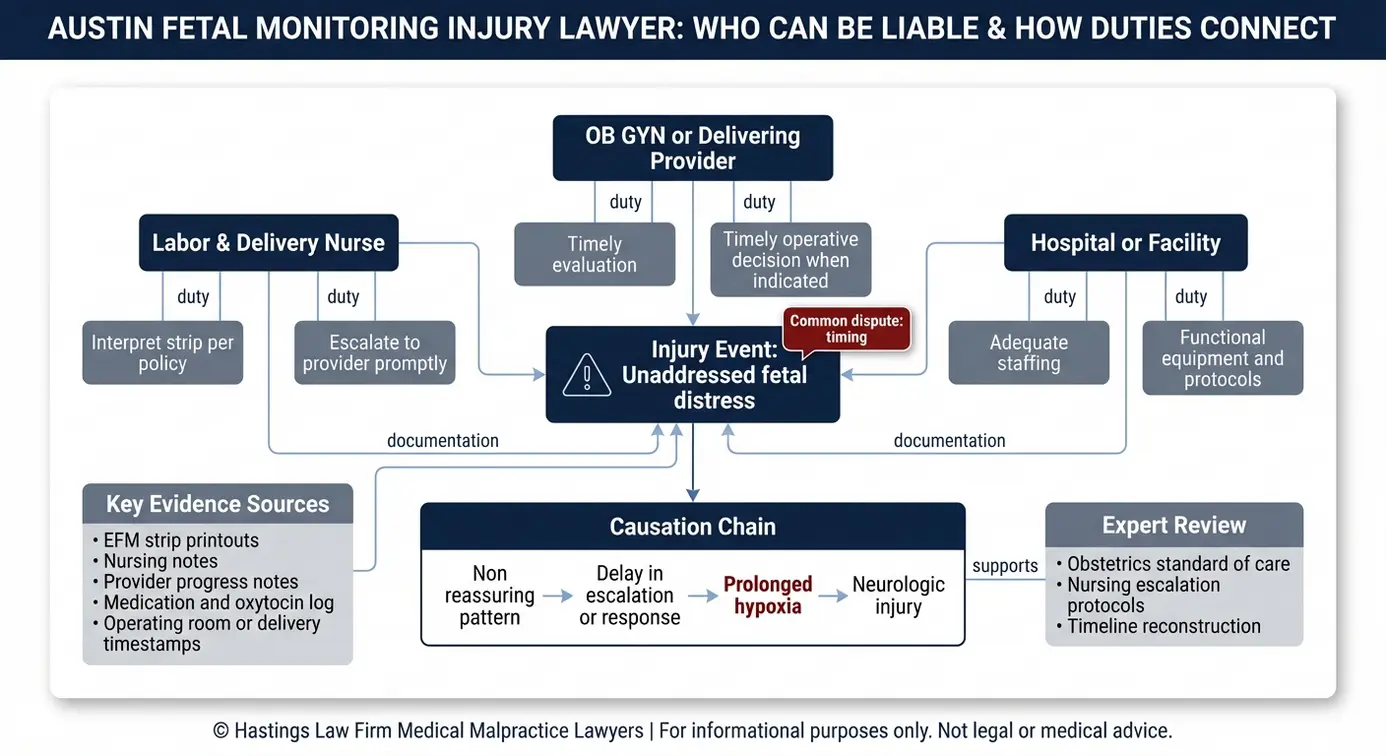
Proving liability requires demonstrating that the healthcare provider breached the standard of care by failing to interpret the fetal monitoring strips correctly or failing to intervene with a C-section in a timely manner, directly causing the infant’s injury.
Medical malpractice claims involving fetal monitoring are built on duty, breach, causation, and damages. The complexity of these cases demands a team that can reconstruct the clinical timeline minute by minute. Our legal team includes former defense attorneys who previously worked for the hospital systems we now challenge. Because we prepare every case for a jury trial from day one, we use in-house medical professionals and nationally qualified experts to analyze strip data, nursing notes, and delivery logs.
Liability in these cases may fall on one or more parties:
- Nurses who failed to accurately read the strip, delayed notifying the physician, or did not escalate care when non-reassuring patterns appeared.
- Obstetricians who were slow to respond to complications like placental abruption, a separation of the placenta from the uterus. They may have also delayed the decision to perform an emergency C-section. This is often evaluated by reviewing the decision to incision time, which is the interval between the decision to operate and the start of surgery.
- The hospital or birthing facility that may have contributed through understaffing, inadequate training, or use of faulty monitoring equipment.
Under Texas law, medical malpractice claims require a qualified expert report early in the case. This report must identify the applicable standard of care and explain how the provider’s actions fell short. As a Texas birth injury lawyer team, we coordinate with specialists who can provide evidence-based opinions on whether the care met accepted standards.
Courts Rejecting Arguments That Fetal Monitors Are Unreliable
Defense attorneys frequently employ defense tactics arguing that electronic fetal monitors produce a high rate of false positives, suggesting that the distress signals were unreliable and that inaction was therefore reasonable. Electronic fetal monitoring (EFM) is the primary tool used to track a baby’s heart rate during labor. While EFM technology does have limitations, courts and medical experts increasingly reject this defense when the strip shows clear, persistent patterns of distress.
Our legal team anticipates this argument in every case we handle. Through expert testimony and a detailed reconstruction of the monitoring data, we work to demonstrate that the warning signs were recognizable and actionable. We aim to show that a reasonable provider would have intervened based on the reliable evidence.
Recoverable Damages for Fetal Monitoring Injuries
Damages in fetal monitoring cases cover the lifetime cost of medical care, loss of future earning capacity, pain and suffering, and in cases of gross negligence, punitive damages to punish the healthcare facility.
Children who suffer brain injuries from monitoring failures often require care that spans decades. A thorough life care plan helps quantify the true scope of these needs. Under Texas law, recoverable damages generally fall into three categories:
- Economic damages: Past and future medical expenses, rehabilitative therapy, specialized equipment, home modifications, around-the-clock care, and loss of future earning capacity. These damages are not subject to a statutory cap.
- Non-economic damages: Pain and suffering, mental anguish, loss of enjoyment of life, and physical impairment. Under Texas law, these are capped at $250,000 per physician and $250,000 per hospital, with a total cap of $500,000 if more than one institution is involved.
- Punitive damages: In rare cases involving especially egregious conduct, the court may award additional damages intended to deter similar behavior.
As Austin birth injury counsel, we build each case to account for the full financial reality our clients face, ensuring the financial security and lifetime of support their child will need.
Contact the Austin Birth Injury Attorneys at Hastings Law Firm Today for Help
Texas imposes strict deadlines on medical malpractice claims, and critical evidence, including fetal monitoring strips and nursing logs, can become harder to obtain as time passes. If you believe your child was harmed by a failure to monitor or respond during labor, acting sooner gives your legal team the best opportunity to preserve that evidence.
At Hastings Law Firm, our medical and legal team will review your records, analyze the fetal monitoring data, and give you honest answers about what we find. There are no upfront fees. We only collect a fee if we secure a recovery for your family.
If you need an Austin fetal monitoring injury lawyer who will treat your family’s case with the seriousness and care it deserves, contact us today for a free, confidential case evaluation.
Frequently Asked Questions About Fetal Monitoring Error in Austin


This content was researched and written by the Hastings Law Firm editorial team, which includes attorneys, medical professionals, and experienced researchers. Our writing is informed by internal knowledge and practical experience, and we cross-check critical details against authoritative sources cited throughout. Every piece undergoes human-led fact-checking and legal review. Because legal and medical information can change, if you spot an error, please contact us. Learn more about our content standards and review process on our editorial policy page.

Gabe Sassin has focused exclusively on medical malpractice law since 2007. After spending more than a decade as a malpractice defense attorney, he knows exactly how the other side works. He has seen firsthand how healthcare providers, insurers, corporate defendants, and their legal teams think, prepare, and build their defense against claims. That knowledge works for the people who need it most today, injured patients and their families. His unique experience shapes everything he writes, giving readers a look at how these cases actually work from someone who has handled them from both sides.
