


Dallas Eclampsia & Preeclampsia Lawyer
Preeclampsia and eclampsia are serious pregnancy related conditions that can escalate quickly when warning signs are missed or care is delayed. The risks can affect both mother and baby, with outcomes that may involve seizures, organ damage, emergency delivery, long term disability, or worse. Clear documentation, timely monitoring, and appropriate intervention are central to safe care, including after delivery when symptoms can still appear. If you or a loved one were harmed or worse due to preeclampsia or eclampsia malpractice in Dallas, Texas, contact Hastings Law Firm for a free, confidential case review.

Last Updated: July 27, 2026
Trusted Legal Representation for Preventable Maternal Injuries in Dallas
When a pregnancy complication like preeclampsia or eclampsia causes serious harm to a mother or her baby, families are often left with devastating questions. You may suspect that something was missed, that warning signs went unrecognized, or that your medical team failed to act when it mattered most. These concerns deserve honest answers from people who understand both the medicine and the law.
At Hastings Law Firm, our legal and medical professionals work together to investigate whether the care you received met the standard your family deserved. Our team includes in-house nurse consultants and former defense attorneys who know how hospitals build their cases, and we use that knowledge to build yours. If you or a loved one experienced a serious injury related to preeclampsia or eclampsia, our team is ready to help. A Dallas Eclampsia & Preeclampsia Lawyer at our firm can review what happened and explain your options in a free, confidential consultation.

Understanding Preeclampsia and Eclampsia Risks
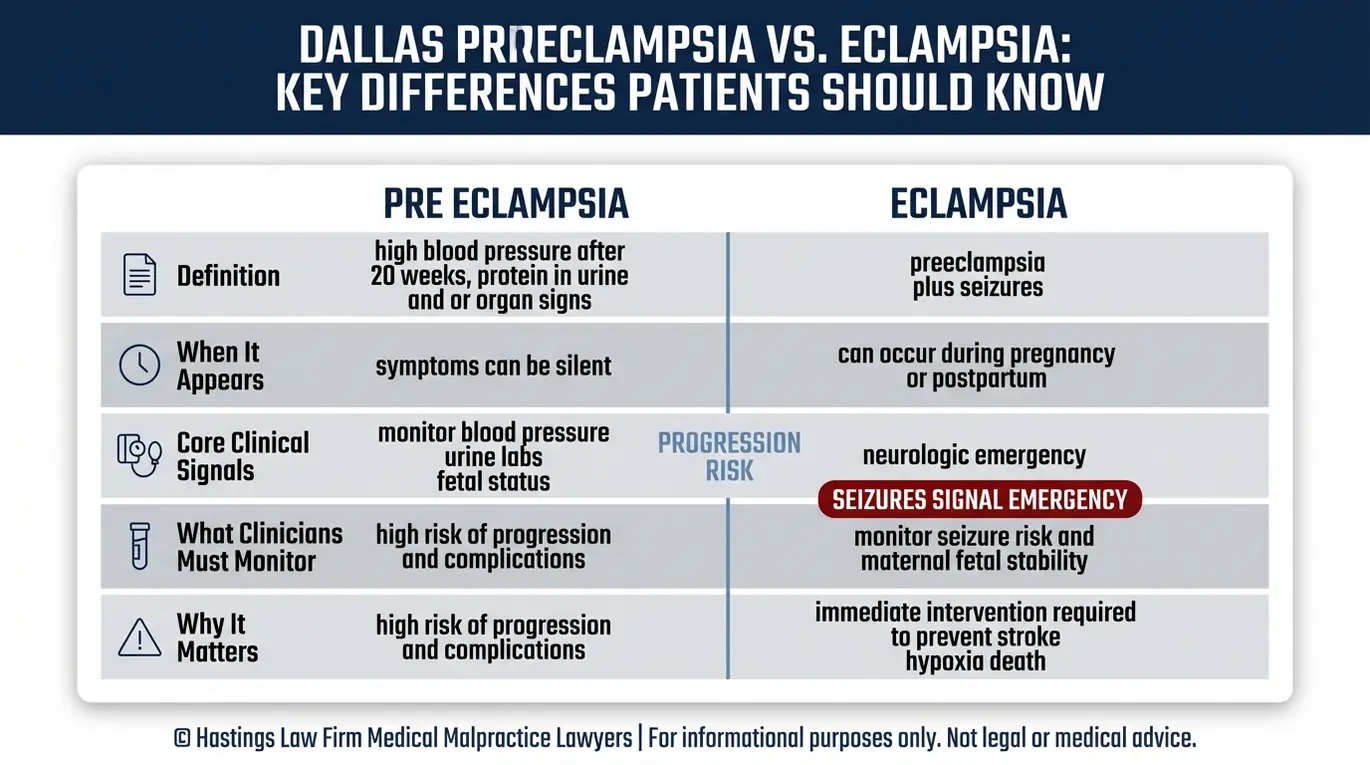
Preeclampsia is a serious pregnancy complication characterized by high blood pressure and signs of damage to another organ system, most often the liver and kidneys. It typically develops after 20 weeks of gestation, unlike chronic hypertension which is present earlier. A key diagnostic marker is proteinuria, the presence of excess protein in the urine, which signals that the kidneys are under stress.
When preeclampsia is not treated, it can escalate to eclampsia, a severe progression marked by seizures. This emergency threatens the life of mother and baby. As a Dallas preeclampsia lawyer, we emphasize that these conditions are detectable. According to the Preeclampsia Diagnostic Criteria published on the NCBI Bookshelf, clinical guidelines have existed for decades. When a provider fails to follow them, a preeclampsia attorney can help determine negligence. An eclampsia lawyer in Dallas can evaluate your care against these standards.
| Feature | Preeclampsia | Eclampsia |
|---|---|---|
| Primary Indicator | High blood pressure + organ involvement | Seizures in a preeclamptic patient |
| Typical Onset | After 20 weeks of pregnancy | Can occur before, during, or after delivery |
| Key Symptoms | Elevated BP, proteinuria, headaches, vision changes | Seizures, loss of consciousness |
| Risk Level | Serious; requires close monitoring | Life-threatening emergency |
| Standard Medical Response | Monitoring, medication, potential early delivery | Immediate stabilization and delivery |
Recognizing the Warning Signs and Symptoms of Preeclampsia
Common symptoms include severe headaches, changes in vision, upper abdominal pain, and sudden swelling (edema) in the face or hands. Mothers often report these complaints, and competent providers should recognize them immediately as potential signs of a developing complication.
Some warning signs, like proteinuria (protein spilling into the urine), are “silent” and found only through lab work. Postpartum preeclampsia, a form of the condition that develops after delivery, also catches families and providers off guard because many assume the risk ends once the baby is born.
The Preeclampsia Foundation’s Signs and Symptoms resource outlines indicators medical teams must screen for during routine prenatal checkups. When a patient voices these concerns and the care team does not investigate further, a preeclampsia lawyer can help evaluate the response. A lawyer for eclampsia cases examines whether the documented complaints and test results should have prompted earlier action.
Symptoms that may indicate preeclampsia:
- Severe or persistent headaches that do not respond to medication
- Visual disturbances, including blurred vision, light sensitivity, or seeing spots
- Upper abdominal pain, particularly under the right ribs
- Sudden swelling (edema) of the face, hands, or feet
- Rapid, unexplained weight gain
- Nausea or vomiting in the second half of pregnancy
- Difficulty breathing or shortness of breath
- Decreased urine output
- Elevated protein levels in urine (found through lab testing)
The Hastings Law Firm Difference
Results matter, but what truly sets us apart is how we achieve them. Every verdict, every settlement, and every Dallas courtroom victory comes from one guiding promise: To treat each client’s fight for justice as if it were our own.
This balance of skill, experience, and empathy reflects our core philosophy that justice should not only compensate the injured, but also make health care safer nationwide.

Known Risk Factors and Preventative Care Standards
Doctors determine risk by evaluating factors such as a history of high blood pressure, first-time pregnancy, age over 35, and obesity. Chronic hypertension, which is high blood pressure that exists before pregnancy, significantly increases the likelihood of developing preeclampsia. Other factors include carrying multiples and pre-existing kidney disease.
Common risk factors include:
- First pregnancy
- Chronic hypertension or pre-existing kidney disease
- Maternal age over 35 or under 20
- Obesity (BMI of 30 or greater)
- History of preeclampsia in a prior pregnancy
- Multiple gestation (twins, triplets)
- Autoimmune conditions such as lupus
- In vitro fertilization (IVF)
Black women face a disproportionately higher risk of severe maternal outcomes. Data from the CDC’s Maternal Mortality Rates report for 2023 confirms persistent racial disparities. Dallas preeclampsia attorneys note this raises the standard of care required for high-risk patients.
Competent physicians should consider preventative measures like low-dose aspirin prophylaxis, a preventative regimen of daily aspirin. The American College of Obstetricians and Gynecologists (ACOG) recommends this therapy for specific risk profiles. A medical malpractice lawyer can investigate if this was offered.
Understanding the Dangers of HELLP Syndrome
HELLP syndrome is a life-threatening variant of preeclampsia defined by Hemolysis, Elevated Liver enzymes, and Low Platelet count. This syndrome is a high-risk medical emergency. This condition can lead to rapid physical deterioration if it is not caught early.
- H: Hemolysis (the destruction of red blood cells)
- EL: Elevated Liver enzymes (indicating liver damage)
- LP: Low Platelet count, also called thrombocytopenia (a condition where the blood loses its ability to clot properly)
HELLP syndrome can deteriorate a patient’s condition within hours. Organ damage, internal bleeding, and maternal death are possibilities without immediate intervention. According to the Indiana Department of Health’s HELLP Syndrome Chart, prompt recognition is essential. A HELLP syndrome lawyer investigates whether the provider recognized markers like thrombocytopenia (low platelet count) in blood work. As a preeclampsia and eclampsia lawyer, we examine if the team followed protocols.
Severe Complications for Mother and Infant
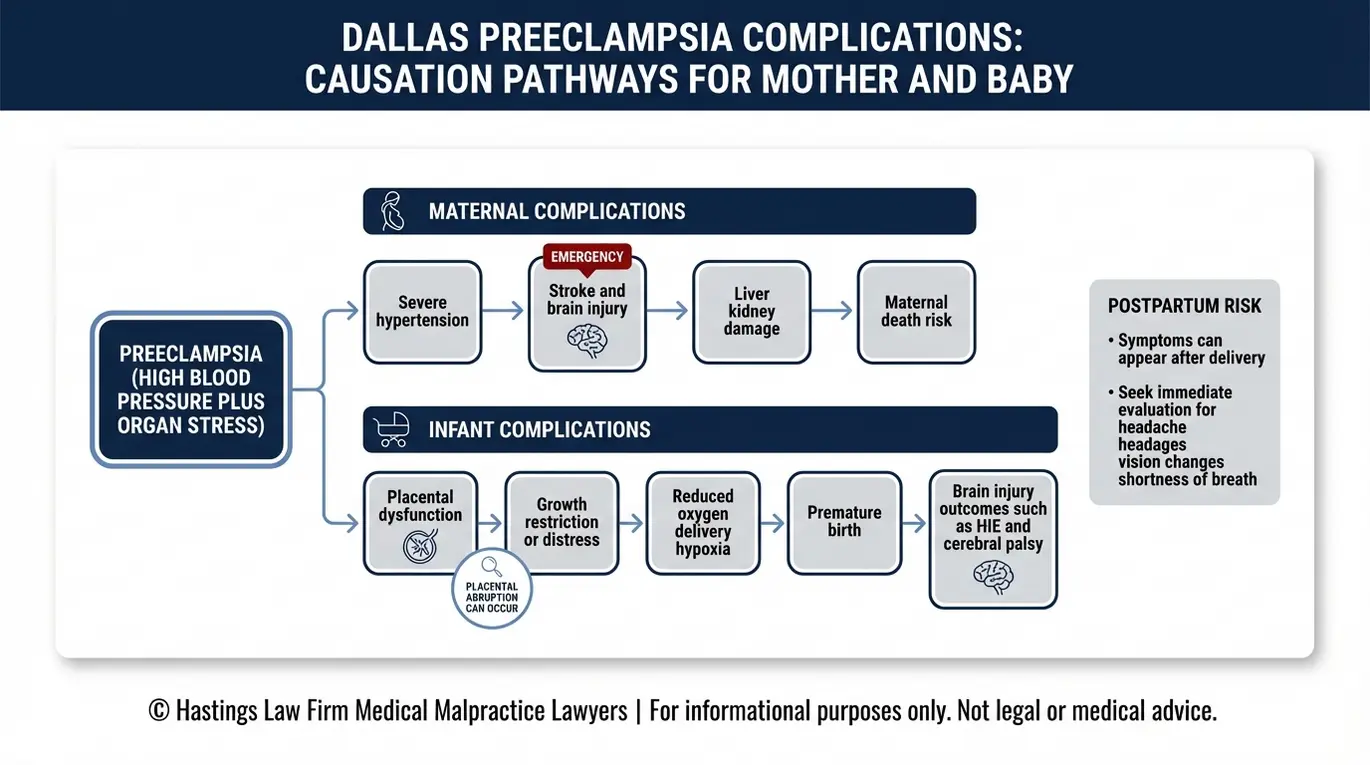
Untreated preeclampsia can lead to placental abruption, stroke, premature birth, and permanent brain injury like cerebral palsy due to oxygen deprivation. These conditions are medical emergencies requiring immediate attention.
Maternal Complications
For the mother, uncontrolled blood pressure can result in stroke, liver rupture, and death. Research published in PubMed on hypertensive disorders of pregnancy and long-term stroke risk confirms elevated cardiovascular risks. Postpartum preeclampsia presents additional danger as symptoms may appear after delivery.
Infant Complications
For the baby, placental abruption, the premature separation of the placenta, can cut off oxygen. This hypoxia can lead to hypoxic-ischemic encephalopathy (HIE), a brain injury causing cerebral palsy. Premature birth forced by an emergency delivery carries dangers like underdeveloped lungs. Stillbirth remains a grave risk.
A birth injury lawyer evaluates if earlier intervention could have prevented these outcomes. As a Dallas eclampsia lawyer, we reconstruct care decisions. A preeclampsia malpractice attorney examines if proper fetal monitoring was in place.
Proving Medical Negligence in Preeclampsia Cases
Negligence is proven by demonstrating that the healthcare provider deviated from the accepted standard of care, directly causing injury to the mother or child. The standard of care represents the accepted medical guidelines doctors must follow. Breaching this duty of care is the core of a claim.
As a Dallas Eclampsia & Preeclampsia Lawyer, we use experts to analyze whether fetal monitoring was ignored or medical intervention was delayed. If you are suing for preeclampsia errors, our team reviews charting and lab results to prove the connection between the breach and the injury.
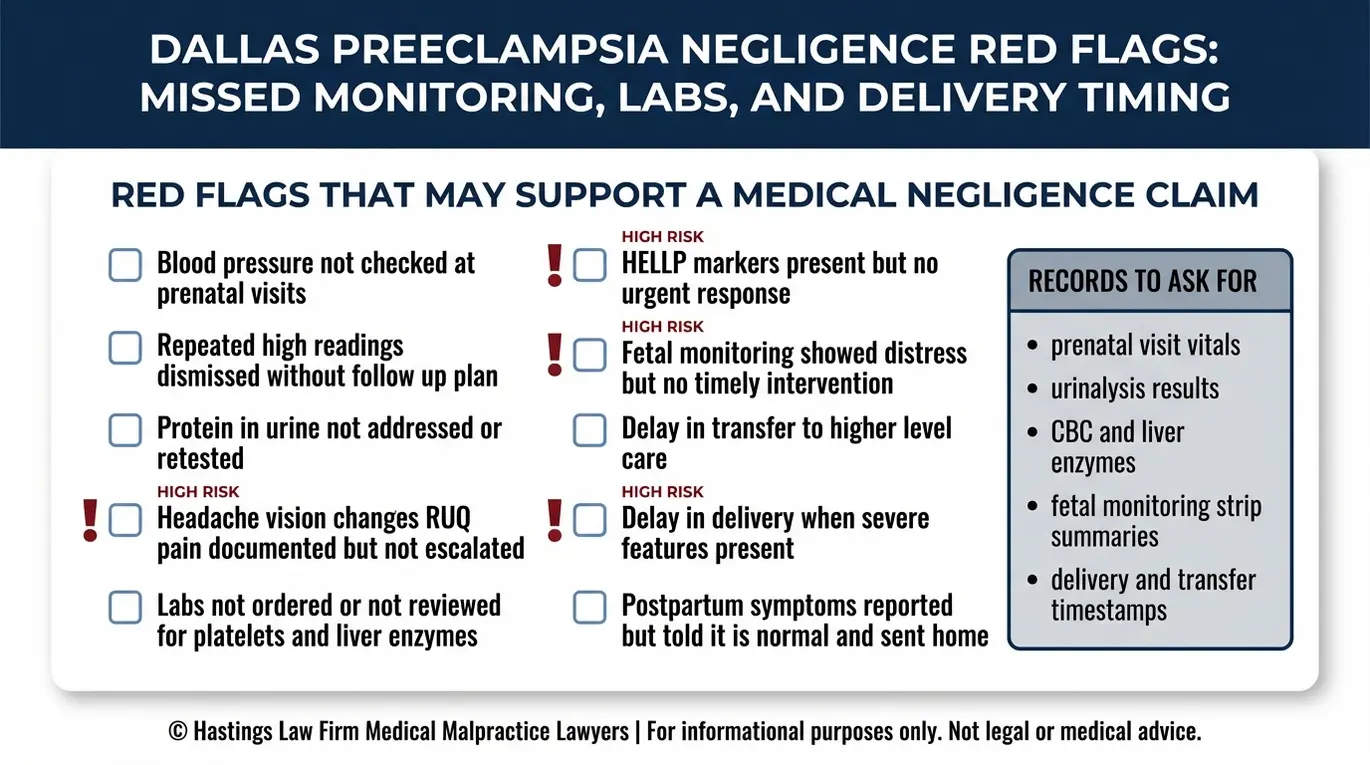
Potential indicators of negligence we investigate:
- Failure to monitor blood pressure consistently during prenatal visits
- Failure to order or follow up on lab work indicating proteinuria or HELLP syndrome markers
- Dismissing or failing to document the patient’s reported symptoms
- Delayed referral to a maternal-fetal medicine specialist
- Failure to administer magnesium sulfate when indicated
- Failure to perform a timely C-section when fetal distress or maternal deterioration was evident
- Inadequate postpartum monitoring for signs of ongoing preeclampsia
If delayed diagnosis, misdiagnosis, or failure to act caused harm, a medical negligence lawyer can help. At Hastings Law Firm, every medical malpractice case is prepared for trial to ensure accountability.
Legal Options for Dallas Families After Birth Injuries
Families may pursue compensation for past and future medical bills, lost wages, pain and suffering, and the lifetime costs of care for a disabled child. Texas law recognizes damages for economic losses and non-economic suffering. In tragic cases, families may pursue a wrongful death claim.
Time is a factor. Under Texas Civil Practice and Remedies Code § 74.251, medical malpractice claims generally must be filed within two years.
As a Dallas Eclampsia & Preeclampsia Lawyer, Hastings Law Firm handles cases on a contingency fee basis. A preeclampsia lawsuit in Texas begins with a no-cost evaluation. You pay no medical malpractice attorney fees unless we win.
Contact the Dallas Birth Injury Attorneys at Hastings Law Firm Today for Help
You do not have to face a hospital’s legal team alone. Hastings Law Firm was built for cases like these, where families need someone who understands the medicine, knows the law, and is prepared to hold negligent providers accountable. Our team includes in-house medical professionals and former defense attorneys who know how the other side operates.
Founder Tommy Hastings has dedicated his career to uncovering the truth in complex medical cases and using that truth to protect families and prevent future harm. His board certification in personal injury trial law reflects a high level of expertise. This, combined with the firm’s record of multi-million-dollar results, shows a commitment to preparation that the defense takes seriously.
If your family suffered a preventable injury related to preeclampsia, eclampsia, or HELLP syndrome, we want to hear from you. Contact Hastings Law Firm for a free, confidential case review. There is no fee unless we win, and the conversation may be the first step toward the answers and accountability your family deserves.
Frequently Asked Questions About Eclampsia & Preeclampsia in Dallas


This content was researched and written by the Hastings Law Firm editorial team, which includes attorneys, medical professionals, and experienced researchers. Our writing is informed by internal knowledge and practical experience, and we cross-check critical details against authoritative sources cited throughout. Every piece undergoes human-led fact-checking and legal review. Because legal and medical information can change, if you spot an error, please contact us. Learn more about our content standards and review process on our editorial policy page.

Brady D. Williams is a nationally recognized medical malpractice attorney who has spent his career handling high-stakes litigation for injured patients and families across the country. Licensed in both Texas and California, Brady draws on experience from hundreds of resolved medical cases to break down complex legal and medical topics for the people who need that information most. His writing reflects the same attention to detail and commitment to clarity that he brings to every case he handles.
