


Austin Eclampsia & Preeclampsia Lawyer
Preeclampsia and eclampsia are serious pregnancy complications that can escalate quickly when warning signs are missed or treatment is delayed. The conditions are often detectable through routine prenatal monitoring, and timely intervention can reduce the risk of severe maternal and infant harm. Concerns commonly arise when symptoms are dismissed, testing is not performed, or care decisions do not match established obstetric guidelines. Families may face lasting medical needs, financial strain, and profound emotional stress after preventable complications. If you or a loved one were harmed or worse due to preeclampsia or eclampsia mismanagement in Austin, Texas, contact Hastings Law Firm for a free, confidential case review.

Last Updated: July 27, 2026
Trusted Legal Representation for Preventable Maternal Injuries in Austin
When a pregnancy is affected by preeclampsia or eclampsia, the experience can be frightening for the entire family. If you believe that your care team failed to properly monitor, diagnose, or treat one of these conditions, you are not alone in questioning what went wrong. These are not rare or unforeseeable emergencies. With appropriate screening and timely intervention, the worst outcomes are often preventable.
At Hastings Law Firm, we focus exclusively on medical malpractice cases, including those involving pregnancy complications caused by provider negligence. Founded by Tommy Hastings, a board-certified trial lawyer, our firm represents families harmed by medical errors. This certification is held by less than 2% of attorneys in Texas. Our team of attorneys, in-house nurses, and medical consultants understands both the clinical details and the legal standards that apply to these situations.
If you or a loved one suffered serious harm during pregnancy or delivery, an Austin Eclampsia & Preeclampsia Lawyer at our firm can review what happened and explain your options during a free, confidential case evaluation.

Understanding Liability in Preeclampsia and Eclampsia Cases
Preeclampsia is a serious pregnancy complication characterized by high blood pressure; when left untreated, it can escalate to eclampsia (seizures). Medical providers may be held liable if they fail to monitor, diagnose, or treat these conditions according to the standard of care. These cases help hold medical teams accountable for preventable maternal harm.
The progression from mild hypertension to severe preeclampsia or eclampsia is well-documented in obstetric medicine. An Austin preeclampsia lawyer knows that as outlined in the Preeclampsia Diagnostic Criteria published on the NCBI Bookshelf, clinical guidelines for identifying and managing these conditions have existed for decades. Providers are expected to monitor blood pressure readings, test for proteinuria, and track symptoms at every prenatal visit. An experienced eclampsia attorney in Austin can evaluate whether these protocols were followed.
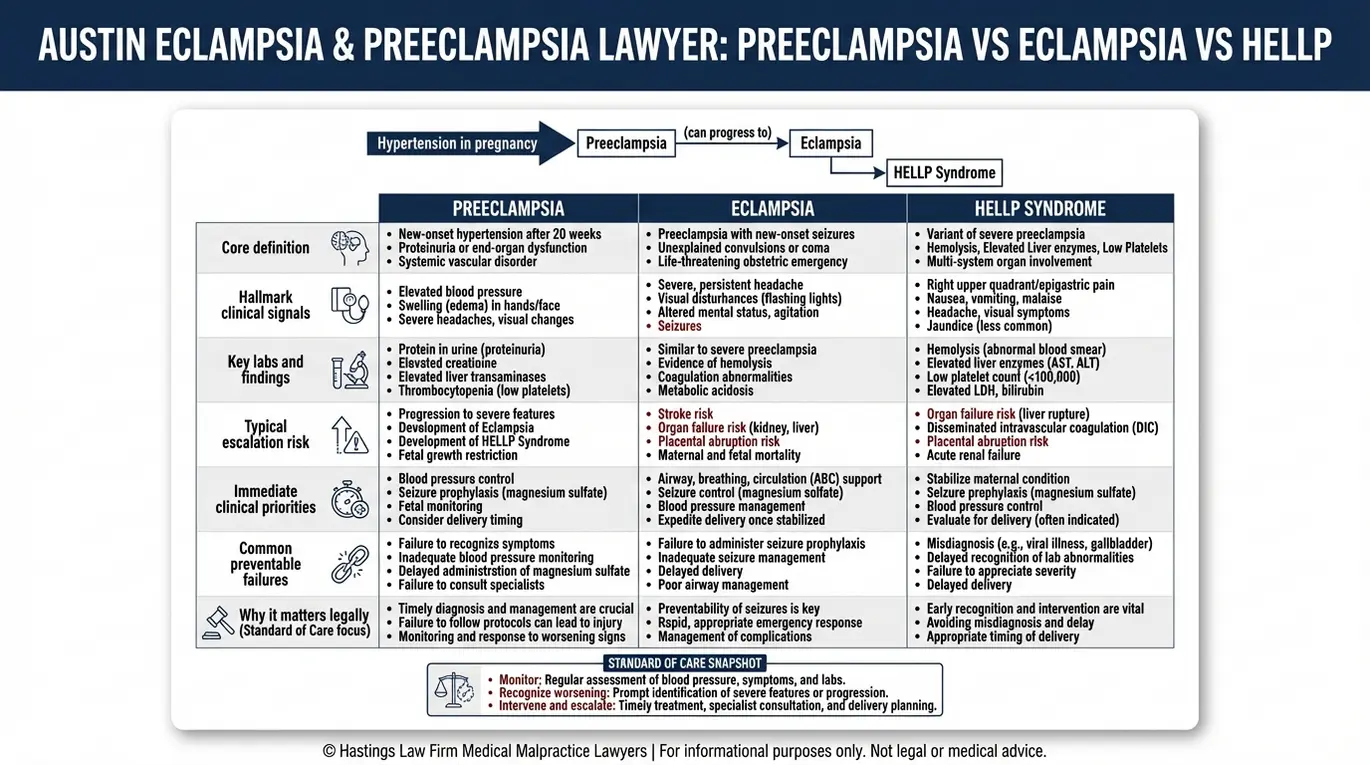
A related and equally dangerous condition is HELLP syndrome, which involves the breakdown of red blood cells, elevated liver enzymes, and a low platelet count. HELLP syndrome is a life-threatening obstetric complication often considered a variant of preeclampsia. A preeclampsia malpractice lawyer understands that HELLP syndrome can develop rapidly, sometimes without the classic signs of preeclampsia, and requires immediate medical intervention.
An Austin preeclampsia lawyer evaluates whether a provider recognized these warning signs and acted in time. If a care team dismisses elevated readings or delays necessary treatment, an eclampsia attorney in Austin can help determine whether that failure meets the legal threshold for medical malpractice under Texas Civil Practice and Remedies Code, Chapter 74. A skilled preeclampsia malpractice lawyer is essential for working through these statutes. An Austin preeclampsia lawyer will investigate every aspect of your prenatal care, while a dedicated eclampsia attorney in Austin fights to hold the negligent parties accountable.
| Condition | Key Features | Primary Risks |
|---|---|---|
| Preeclampsia | High blood pressure and proteinuria, typically after 20 weeks of pregnancy | Organ damage, restricted blood flow to the placenta, progression to eclampsia |
| Eclampsia | Seizures occurring in a patient with preeclampsia | Stroke, brain injury, maternal and fetal death |
| HELLP Syndrome | Hemolysis, elevated liver enzymes, low platelet count | Liver rupture, kidney failure, placental abruption, stillbirth |
Each of these conditions is detectable through standard prenatal testing. A preeclampsia malpractice lawyer examines whether your provider followed established protocols or allowed a manageable condition to become a medical emergency.
Recognizing Medical Negligence in the Management of Preeclampsia
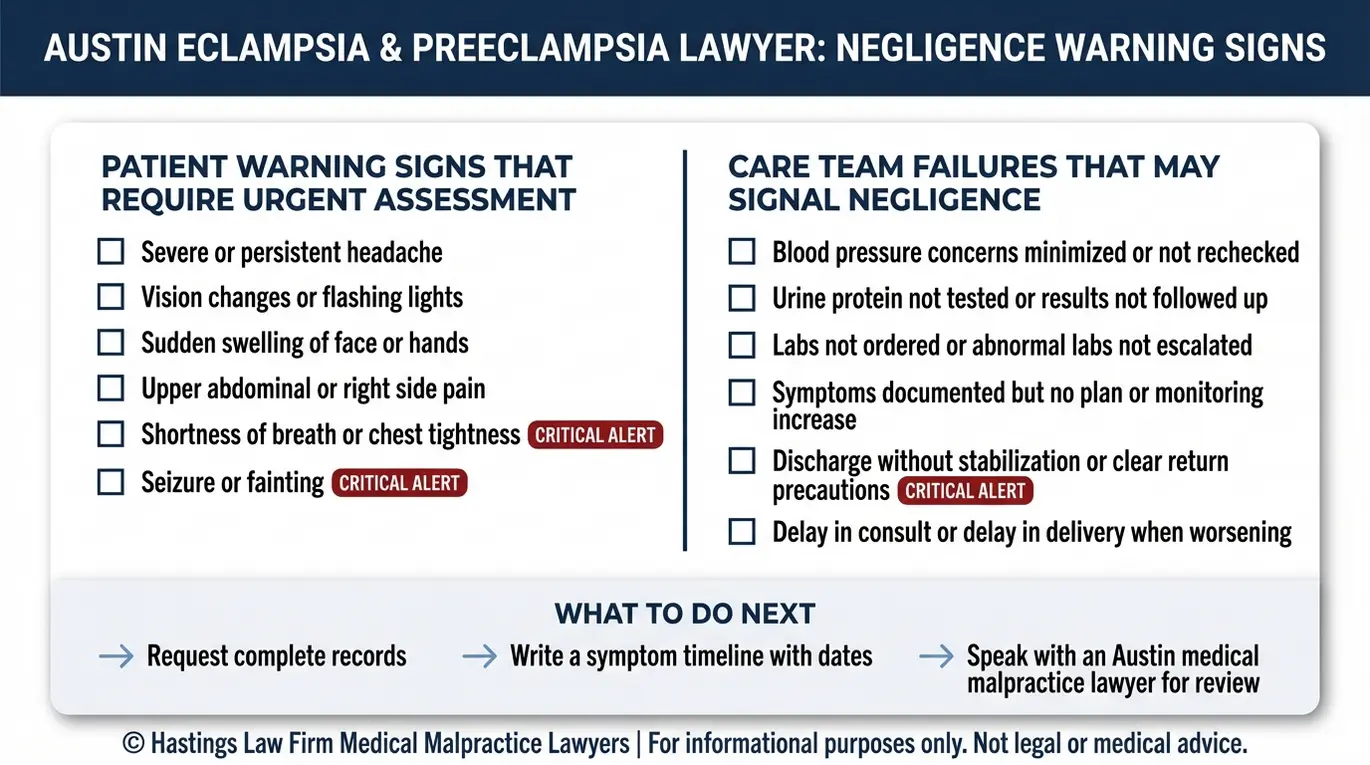
Medical negligence occurs when a doctor fails to recognize classic warning signs like proteinuria or severe hypertension, fails to order necessary tests, or delays delivery when the mother or baby is in distress. Proteinuria is defined as protein in the urine, while severe-range hypertension refers to severe high blood pressure readings with a systolic blood pressure at or above 160 mmHg or a diastolic blood pressure at or above 110 mmHg. A legal review helps determine if standard obstetric guidelines were ignored.
Preeclampsia symptoms can develop gradually or appear suddenly, but the warning signs are well-established. According to the Arkansas Department of Health’s Maternal Health Warning Signs, symptoms such as persistent headaches, sudden swelling of the face or hands, and vision changes all warrant immediate clinical evaluation. A medical malpractice lawyer will investigate whether these signs were ignored, leading to a failure to diagnose or a delayed diagnosis that caused harm.
If providers dismiss these symptoms or attribute them to normal pregnancy discomfort, a diagnosis can be dangerously delayed. An Austin birth injury attorney reviews the clinical timeline to determine whether a provider’s response was appropriate given the available information. A preeclampsia negligence lawyer can identify gaps in care that others might miss.
Common failures that may constitute negligence include:
- Failing to test urine for protein during routine prenatal visits
- Dismissing patient reports of severe headaches, edema, or visual disturbances
- Not ordering blood work to check liver enzymes or platelet counts
- Discharging a patient with elevated blood pressure without proper follow-up
- Delaying the administration of anti-hypertensive medication
- Failing to refer the patient to a maternal-fetal medicine specialist
- Not initiating delivery when clinical indicators show worsening preeclampsia
Under Texas Civil Practice and Remedies Code, Chapter 74, a medical negligence claim requires proof that the provider’s actions fell below the accepted standard of care. An Austin birth injury attorney works alongside medical experts to evaluate whether each of these failures contributed to the harm suffered by the mother, the baby, or both.
A preeclampsia negligence lawyer can help you understand whether what happened to your family was preventable. Trusting your case to a qualified medical malpractice lawyer or an experienced Austin birth injury attorney ensures that every avenue for justice is explored. A dedicated preeclampsia negligence lawyer will fight for the compensation you deserve.
The Hastings Law Firm Difference
Results matter, but what truly sets us apart is how we achieve them. Every verdict, every settlement, and every Austin courtroom victory comes from one guiding promise: To treat each client’s fight for justice as if it were our own.
This balance of skill, experience, and empathy reflects our core philosophy that justice should not only compensate the injured, but also make health care safer nationwide.

Severe Complications Caused by Untreated HELLP Syndrome and Eclampsia
When preeclampsia is mismanaged, it can lead to catastrophic outcomes including HELLP syndrome (hemolysis, elevated liver enzymes, low platelet count), placental abruption, stroke, cerebral palsy in the infant, or maternal and fetal death. These injuries often require life-long care and significant financial resources. HELLP syndrome can cause organ failure, internal bleeding, and death if not treated promptly.
Eclampsia-related seizures can lead to stroke, brain damage, and cardiac arrest. Research published through Hypertensive Disorders and Cardiovascular Severe Maternal Morbidity in the US, 2015-2019 (PubMed Central) confirms that hypertensive disorders remain a leading contributor to severe maternal morbidity in the United States. An Austin wrongful death lawyer can assist families if these complications lead to tragedy.
Maternal injuries may include:
- Stroke caused by uncontrolled hypertension
- Kidney failure or liver damage from HELLP syndrome
- Placental abruption, the premature separation of the placenta from the uterine wall
- Permanent organ damage
- Maternal death
Fetal and infant injuries may include:
- Hypoxic-ischemic encephalopathy (HIE), brain damage caused by oxygen deprivation
- Cerebral palsy resulting from prolonged fetal distress
- Fetal growth restriction due to impaired placental blood flow
- Premature birth and associated complications
- Stillbirth or fetal death
In many of these cases, the timely use of magnesium sulfate, a medication used to prevent eclamptic seizures, and an emergency C-section (emergency cesarean delivery) can significantly reduce the risk of permanent harm. A birth injury lawyer Austin families trust understands that a PubMed study on magnesium sulfate and the risk of hypoxic-ischemic encephalopathy highlights the connection between treatment timing and infant brain injury outcomes.
The long-term financial burden of these injuries can be enormous, from ongoing medical care and rehabilitation to lost income. A preeclampsia injury attorney can help families pursue compensation that reflects the full scope of these losses.
An Austin wrongful death lawyer may also assist families coping with the devastating loss of a mother or child due to provider negligence. If your child suffered harm, a birth injury lawyer Austin residents rely on can evaluate your claim.
Consulting a preeclampsia injury attorney is the first step toward justice. If you need an Austin wrongful death lawyer or a birth injury lawyer Austin, our firm is here to help. Our preeclampsia injury attorney is ready to fight for you.
How Our Austin Medical Malpractice Lawyers Prove Negligence
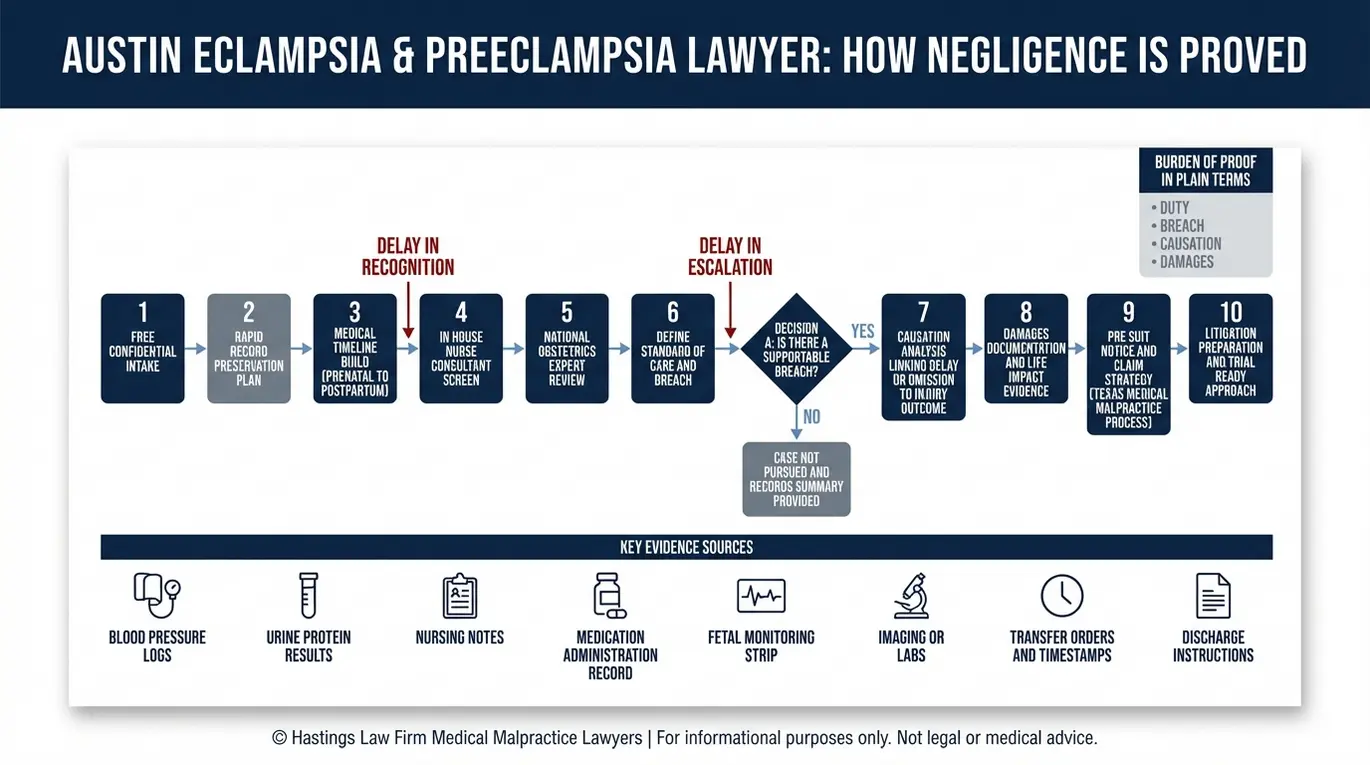
We prove negligence by securing expert testimony from top-tier obstetricians to establish the standard of care, analyzing medical charts for inconsistencies, and demonstrating a direct link between the provider’s error and the injury. This method allows us to build a trial-ready case based on clinical facts. Every preeclampsia lawsuit Texas families file must meet specific legal requirements, and our team prepares each case with the depth and rigor needed to satisfy them. An Austin medical malpractice lawyer at our firm carries the full burden of investigation.
Our approach follows a structured process:
- Case Screening: A patient advocate and our in-house nursing staff conduct a confidential review of your medical records to determine whether the care you received may have fallen below the standard of care.
- Expert Medical Review: We consult with a qualified expert witness and specialists from our national expert network, including board-certified obstetricians and maternal-fetal medicine physicians, to evaluate what should have happened at each stage of your care. A birth injury attorney oversees this critical step.
- Medical Record Analysis: Our team, which includes former defense attorneys and experienced hospital nurses who previously worked for the systems they now challenge, examines charting timelines, lab results, fetal monitoring strips, and nursing notes to identify where evidence of errors occurred.
- Causation and Injury Assessment: We work with experts to establish causation, showing that the provider’s failure directly caused conditions such as hypoxic-ischemic encephalopathy (HIE). HIE is brain injury from oxygen deprivation. We also evaluate fetal growth restriction (FGR), which is the failure of a baby to grow at a normal rate in the womb.
- Litigation Strategy: Because an Austin medical malpractice lawyer prepares every case from day one as though it will go to a jury, insurance carriers and defense teams understand that we will not accept less than fair value. This trial-ready posture strengthens every negotiation.
A medical malpractice attorney understands the clinical details that make or break these cases. We bring the resources needed to hold providers accountable. If you are considering a preeclampsia lawsuit Texas, you need a skilled birth injury attorney by your side. Our Austin medical malpractice lawyer will guide you through the legal details of a preeclampsia lawsuit Texas to ensure your rights are protected. Trust a seasoned birth injury attorney to handle your claim.
Contact the Austin Birth Injury Attorneys at Hastings Law Firm Today for Help
No family should bear the financial and emotional weight of a preventable medical error alone. If preeclampsia, eclampsia, or HELLP syndrome was mismanaged during your pregnancy or delivery, you deserve to know what happened and whether you have legal options. This legal guidance helps families understand their right to compensation.
Hastings Law Firm handles these cases on a contingency fee basis, which means you pay no attorney fees or costs unless we recover compensation for you. Our goal is not only to secure the resources your family needs but also to hold negligent providers accountable so that the same failures are less likely to happen again.
Contact an Austin eclampsia lawyer today for a free, confidential case evaluation. Call our Austin preeclampsia attorneys to take the first step toward understanding your rights and getting the answers your family deserves.
Frequently Asked Questions About Eclampsia & Preeclampsia in Austin


This content was researched and written by the Hastings Law Firm editorial team, which includes attorneys, medical professionals, and experienced researchers. Our writing is informed by internal knowledge and practical experience, and we cross-check critical details against authoritative sources cited throughout. Every piece undergoes human-led fact-checking and legal review. Because legal and medical information can change, if you spot an error, please contact us. Learn more about our content standards and review process on our editorial policy page.

Gabe Sassin has focused exclusively on medical malpractice law since 2007. After spending more than a decade as a malpractice defense attorney, he knows exactly how the other side works. He has seen firsthand how healthcare providers, insurers, corporate defendants, and their legal teams think, prepare, and build their defense against claims. That knowledge works for the people who need it most today, injured patients and their families. His unique experience shapes everything he writes, giving readers a look at how these cases actually work from someone who has handled them from both sides.
