


Austin Delayed or Prolonged Surgery Lawyer
Surgical delays and unnecessarily prolonged operations can expose patients to avoidable harm during a time when prompt, coordinated care matters. Problems can arise from missed urgency in the emergency room, operating room scheduling breakdowns, or errors that extend time under general anesthesia. These failures can increase the risk of serious complications and can turn a routine procedure into a life threatening event. Careful review of what happened before, during, and after surgery can help clarify whether the delay was medically justified. If you or a loved one were harmed or worse due to delayed or prolonged surgery in Austin, Texas, contact Hastings Law Firm for a free, confidential case review.

Last Updated: July 27, 2026
Representation for Victims of Surgical Delays in Austin
When a surgery is delayed or takes far longer than it should, the consequences can be severe and life-altering. If you or a loved one has been harmed because a medical provider failed to perform a timely surgical intervention, the perioperative period, the timeframe before, during, and after the operation, deserves close scrutiny. Delayed surgical intervention, which may involve the failure to perform a necessary procedure within the medically appropriate window, requires identifying the cause to determine if negligence occurred.
You do not have to sort through the medical records alone. As a dedicated Austin Delayed or Prolonged Surgery Lawyer, Hastings Law Firm focuses exclusively on medical malpractice and can review what happened, explain your legal options, and help you determine whether you have a case. Contact us for a free, confidential evaluation.

How Does Delayed or Prolonged Surgical Treatment Occur
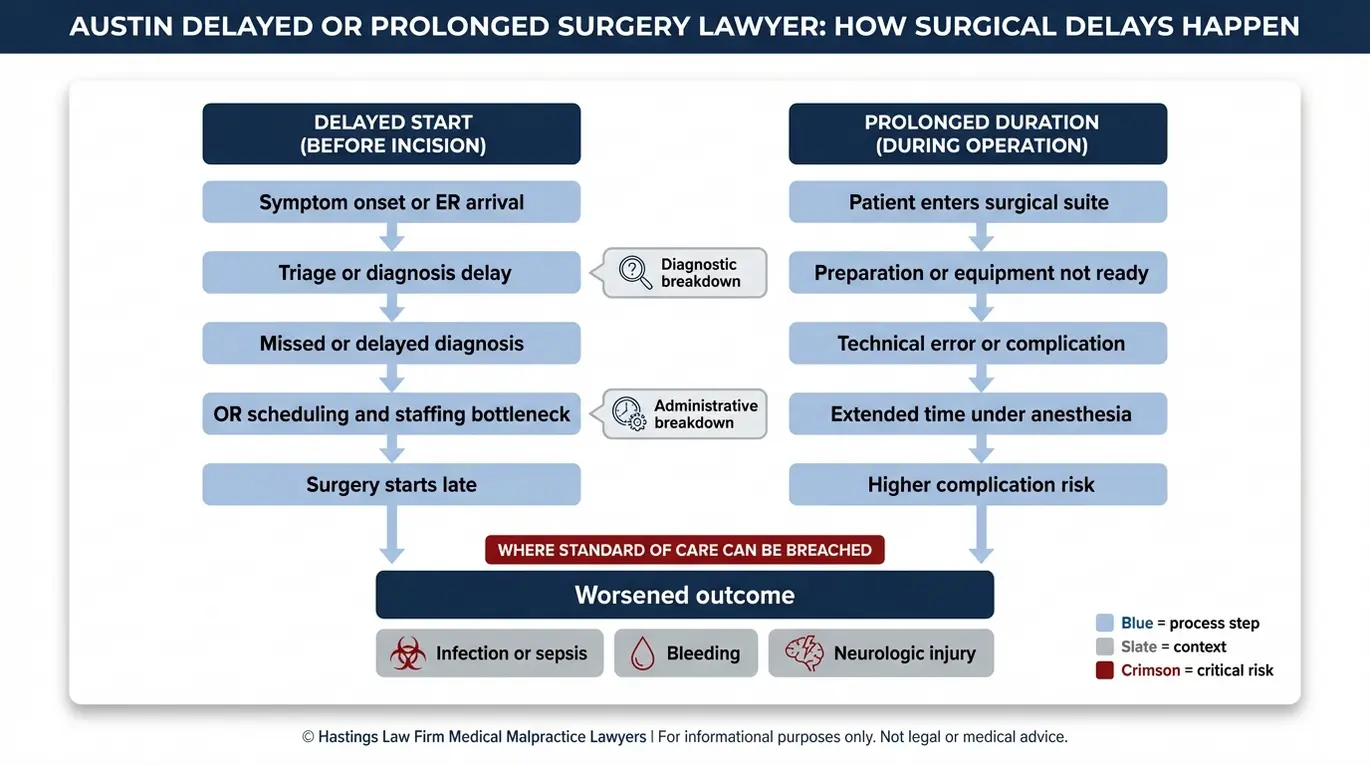
Delayed or prolonged surgical treatment occurs when medical providers fail to diagnose a condition timely, mismanage operating room schedules, or make errors during a procedure that extend its duration beyond what the standard of care requires. These failures generally fall into two categories: a delayed start and a prolonged duration.
A delayed start, the time-to-incision delay representing the gap between when a patient should have gone into surgery and when the procedure actually began, often stems from a missed or delayed diagnosis in the emergency room. It can also result from operating room scheduling problems and overbooking, where administrative decisions prevent patients from receiving care when they need it.
A prolonged duration, on the other hand, involves a procedure that takes significantly longer than expected because of complications in the surgical suite. Common causes of delayed surgery include:
- Diagnostic failures: A misdiagnosis in the ER that prevents the surgical team from recognizing the urgency.
- Scheduling and administrative breakdowns: Lax scheduling practices, including overbooking operating rooms, that push back critical procedures.
- Intraoperative errors: Technical mistakes during surgery that require additional time to correct.
- Inadequate preoperative preparation: Failure to complete proper imaging, lab work, or consultations.
Claims involving delayed surgical treatment in Austin are governed by the Texas Civil Practice and Remedies Code Chapter 74, which sets specific procedural requirements for medical malpractice lawsuits in Texas. Patients also have the right to obtain their own medical records under 45 CFR § 164.524 (HHS.gov), which can be a critical early step in understanding what went wrong. An experienced Austin delayed or prolonged surgery lawyer can help you interpret those records and determine where the breakdown occurred.
Common Justifications Doctors Use to Excuse Delays
After a surgical delay causes harm, it is not uncommon for providers to characterize the wait as “conservative management,” a non-operative approach where the medical team monitors the patient instead of proceeding with surgery. While conservative management is appropriate in certain clinical scenarios, it can also be used to justify what was actually surgical negligence.
The distinction matters. Emergency department triage protocols, the procedures designed to identify patients who need immediate intervention, must be followed. When a provider’s duty of care required prompt action and the records show the patient was instead placed in a “wait and see” posture without medical justification, that delay may constitute medical negligence. Our team examines the clinical documentation closely to determine whether a conservative approach was medically reasonable or whether it masked a failure to act.
Consequences and Complications of Prolonged Surgery
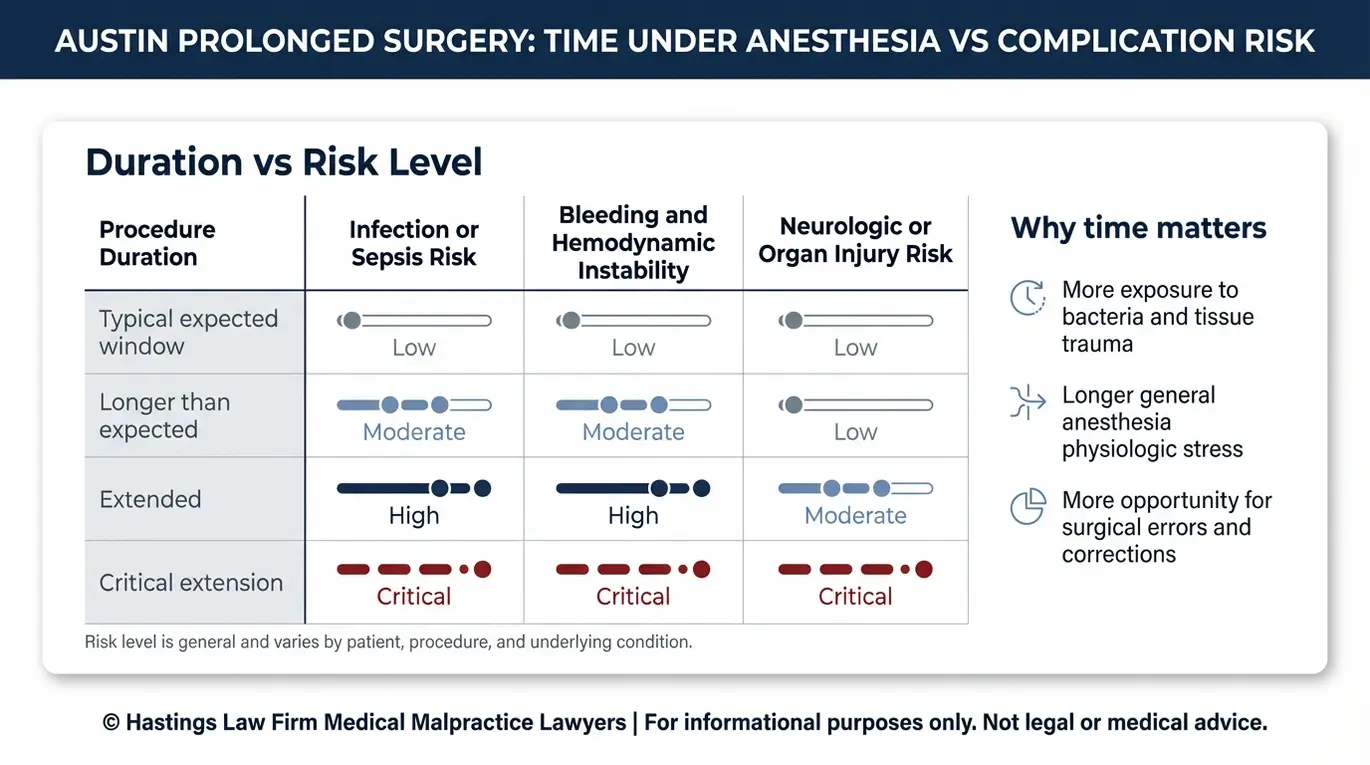
Extended time under general anesthesia, the state of medically induced unconsciousness maintained throughout an operation, significantly increases the risk of severe complications. These include post-surgical infections, dangerously low blood pressure, blood clots, and permanent neurological damage. Understanding prolonged surgery and prolonged operative time, a duration that exceeds the expected length based on complexity, is central to evaluating whether a patient was exposed to preventable harm.
Anesthesia time, or the total duration a patient remains under general anesthesia, has a direct relationship to complication rates. Research published by PubMed Central on surgical site infection risk factors confirms that longer procedures carry a meaningfully higher risk of post-operative infection and sepsis. The physical toll on tissues from prolonged exposure in the surgical suite compounds these dangers, as extended retraction, drying, and manipulation of internal structures increase the likelihood of bleeding and delayed healing.
The risk profile climbs as operative time increases:
| Operative Duration | Infection Risk | Anesthesia-Related Risk | Overall Complication Level |
|---|---|---|---|
| Under 1 hour | Lower baseline | Minimal | Low |
| 1–3 hours | Moderate | Low to moderate | Moderate |
| 3–5 hours | Elevated | Moderate | High |
| Over 5 hours | Significantly elevated | High | Very high |
Age is another compounding factor. As noted by the American Society of Anesthesiologists (Made for This Moment), older patients face heightened vulnerability to the effects of extended anesthesia, making prolonged surgery even more dangerous for this population.
When surgical complications or errors force a procedure to take longer than planned, the patient bears the physical cost of correcting the mistake. A delayed surgical treatment that should have been routine can escalate into a life-threatening event. Our team works with medical experts to determine whether the prolonged surgery and resulting surgical complications were avoidable.
The Hastings Law Firm Difference
Results matter, but what truly sets us apart is how we achieve them. Every verdict, every settlement, and every Austin courtroom victory comes from one guiding promise: To treat each client’s fight for justice as if it were our own.
This balance of skill, experience, and empathy reflects our core philosophy that justice should not only compensate the injured, but also make health care safer nationwide.

Why Choose Hastings Law Firm for Your Surgical Negligence Case
Hastings Law Firm is a team of dedicated medical malpractice attorneys with a track record of multi-million dollar results, offering Austin families the resources of a national practice with the focused attention of a specialized team. When you need an Austin delayed or prolonged surgery lawyer, that distinction matters.
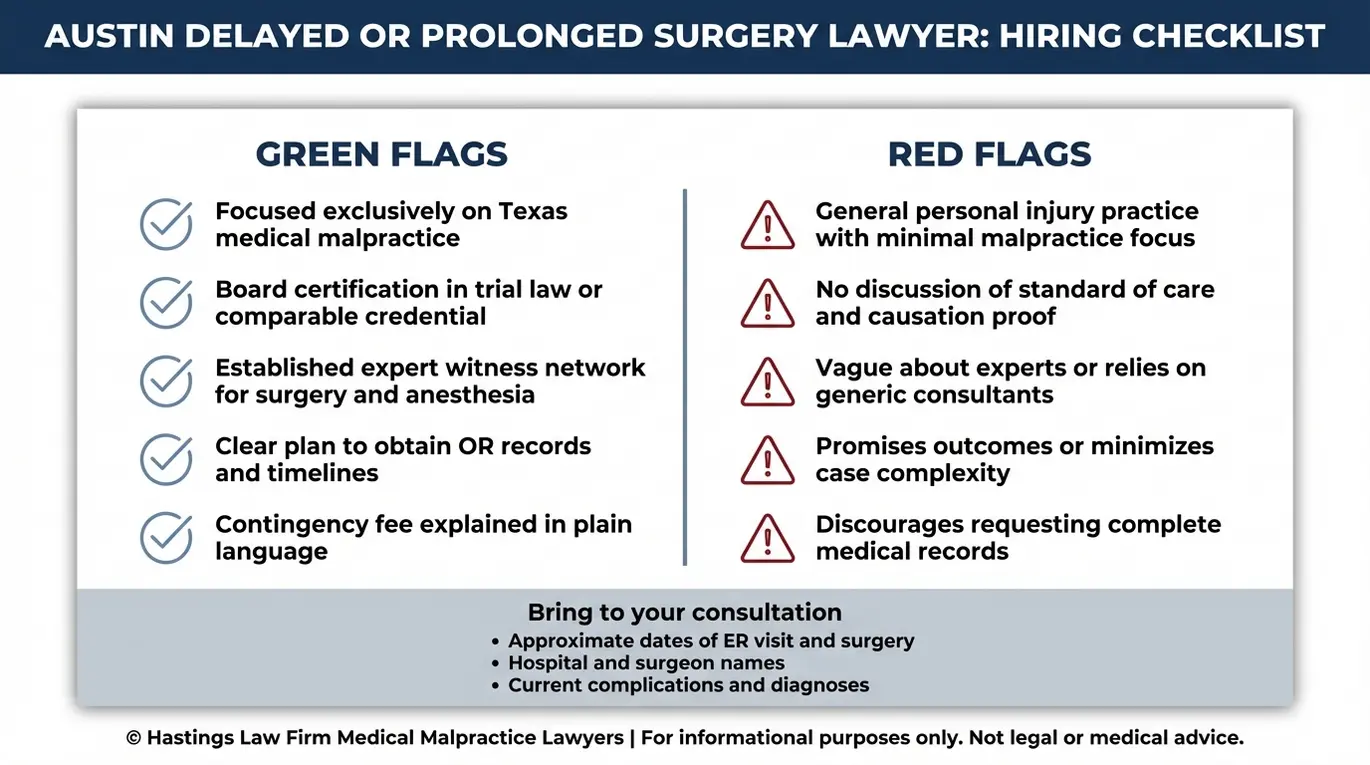
Unlike general personal injury firms that handle car accidents, slip-and-falls, and malpractice cases all at once, every medical malpractice lawyer, nurse consultant, and staff member at Hastings Law Firm works on medical malpractice cases exclusively. This focus allows our team to identify issues that other firms may overlook. This includes evidence of ischemia, restricted blood flow that starves tissue of oxygen, and tissue necrosis, the death of body tissue, both of which can result from surgical delays and prolonged procedures.
Our medical malpractice attorneys prepare every case from day one as if it will go before a jury. That trial-ready approach, combined with in-house medical staff and a national network of expert witnesses, puts us in a strong position to establish liability under Texas medical malpractice law.
The Hastings Difference:
- Exclusive focus on medical malpractice, not general personal injury
- In-house nurse practitioners and Board Certified Patient Advocates who review clinical records
- Former defense attorneys who understand how hospitals and insurers build their cases
- A local Austin office with familiarity with area courts and medical systems
- Contingency fee structure, so you pay nothing unless we recover compensation for you
The Deterrent Effect of Malpractice Lawsuits
Founder Tommy Hastings built this firm on the belief that medical malpractice law is about more than compensation. Holding a negligent surgeon or hospital accountable sends a clear message that substandard care has consequences. Every case we take is an opportunity to restore trust for our clients and help protect future patients in Austin from suffering the same kind of delayed treatment. When a medical malpractice lawyer takes action, it creates meaningful pressure for safer protocols and better accountability across the healthcare system by holding a negligent surgeon or hospital accountable.
Contact the Austin Surgical Error Attorneys at Hastings Law Firm Today for Help
If you or a loved one suffered harm because a surgeon or hospital failed to act in time, you deserve answers. The Austin delayed or prolonged surgery lawyers at Hastings Law Firm are ready to listen, review your medical records, and help you understand whether negligence caused your injury.
We offer a free, confidential case evaluation led by a patient advocate. Our firm operates on a contingency fee basis, which means you pay no attorney fees or costs unless we secure a recovery for you. Time limits apply to medical malpractice claims in Texas, so reaching out sooner gives us the best opportunity to preserve critical evidence.
Call Hastings Law Firm today or contact us online. Let us help you find the answers you deserve.
Frequently Asked Questions About Delayed or Prolonged Surgery in Austin


This content was researched and written by the Hastings Law Firm editorial team, which includes attorneys, medical professionals, and experienced researchers. Our writing is informed by internal knowledge and practical experience, and we cross-check critical details against authoritative sources cited throughout. Every piece undergoes human-led fact-checking and legal review. Because legal and medical information can change, if you spot an error, please contact us. Learn more about our content standards and review process on our editorial policy page.

Gabe Sassin has focused exclusively on medical malpractice law since 2007. After spending more than a decade as a malpractice defense attorney, he knows exactly how the other side works. He has seen firsthand how healthcare providers, insurers, corporate defendants, and their legal teams think, prepare, and build their defense against claims. That knowledge works for the people who need it most today, injured patients and their families. His unique experience shapes everything he writes, giving readers a look at how these cases actually work from someone who has handled them from both sides.
