


Austin Defective Joint Replacement Lawyer
A failed joint replacement can leave a person dealing with persistent pain, swelling, and instability long after surgery, and some failures trace back to defects in the implant itself. The article describes how design flaws, manufacturing errors, or inadequate warnings can lead to early loosening, premature wear, or metal related toxicity that may require revision surgery and extended recovery. It also distinguishes manufacturer product liability from surgical malpractice and highlights the importance of preserving key information about the device. If you or a loved one were harmed or worse due to a defective joint replacement in Austin, Texas, contact Hastings Law Firm for a free, confidential case review.
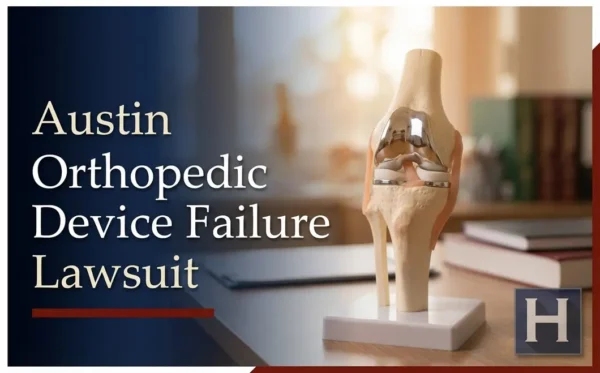
Last Updated: July 27, 2026
Trusted Legal Representation for Failed Medical Implants in Austin
If you had a joint replacement and something feels wrong, you are not imagining it. Persistent pain, instability, or swelling months or years after surgery can signal that the device itself was defective. These situations raise serious questions, and you deserve clear answers about what happened and what your legal options are.
At Hastings Law Firm, we focus exclusively on medical malpractice and defective medical device cases. Tommy Hastings is board-certified in personal injury trial law, a distinction held by less than 2% of attorneys in Texas. Our team includes in-house medical professionals who review surgical records and identify device failures, giving us the clinical insight needed to build strong claims.
If you suspect your implant has failed, contact our Austin office for a free, confidential case evaluation. There is no fee unless we recover compensation for you.

Identifying Common Defects in Joint Replacement Hardware
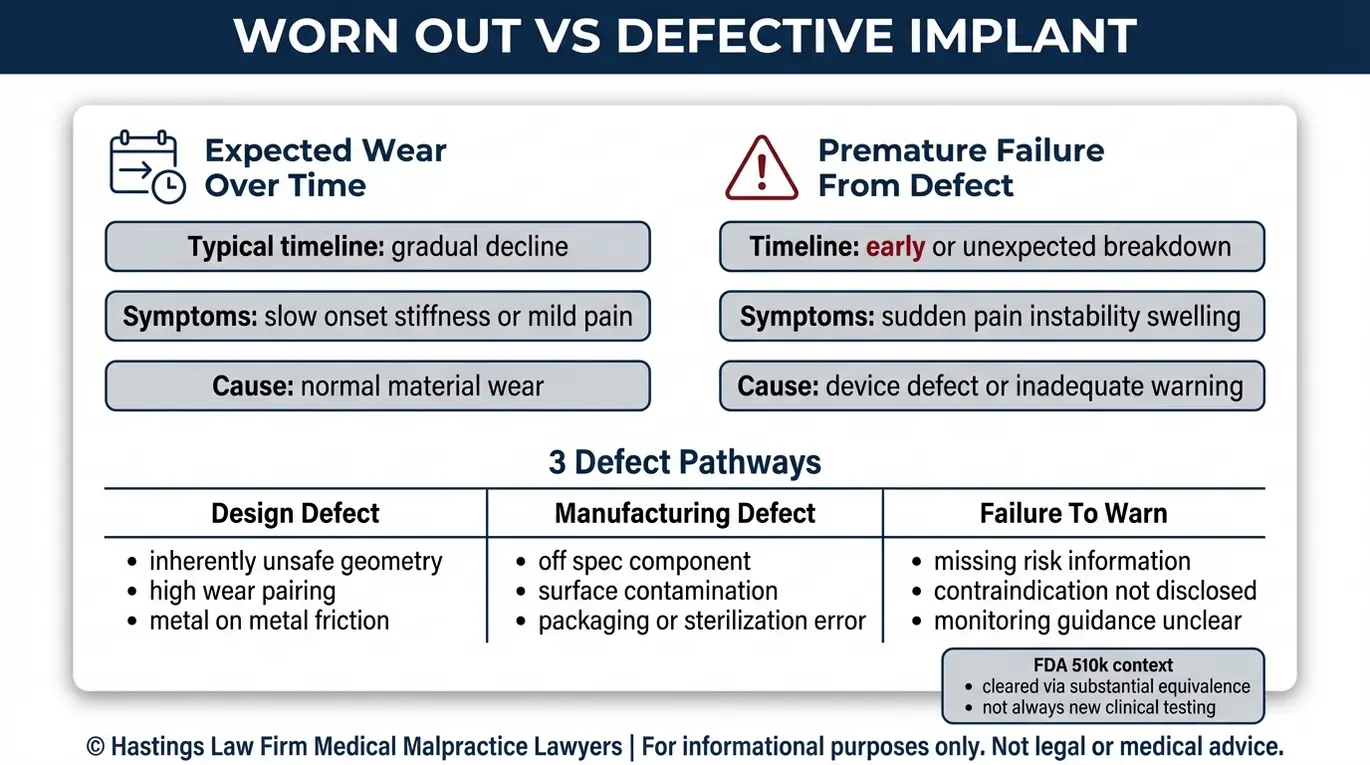
A defective joint replacement occurs when a medical device fails due to design flaws, manufacturing errors, or inadequate warnings, often leading to premature wear, component loosening, or toxicity that requires surgical revision. This is different from a joint that simply wears out over time after decades of normal use. A defective implant fails earlier than it should because something was wrong with the product before it was ever placed in your body.
These failures generally fall into distinct categories. Design defects affect every unit of a particular model because the flaw is built into the product’s blueprint. Metal-on-metal hip implants, which use two metal surfaces that grind against each other and release microscopic metal debris into surrounding tissue, are one well-known example. Manufacturing defects affect specific production batches. The recall of Exactech knee replacements involved polyethylene liner oxidation, a breakdown of the plastic liner caused by defective vacuum-sealed packaging that allowed oxygen to degrade the material before implantation.
A third category involves failure-to-warn claims, where joint replacement manufacturers knew about risks but did not adequately disclose them to surgeons or patients. Regulatory pathways can contribute to device failure. The Premarket Notification 510(k) process used by the U.S. Food and Drug Administration allows many devices to reach the market by showing they are “substantially equivalent” to an existing product, rather than requiring independent clinical testing. This means some implants are cleared without ever being tested in human trials.
A defective joint replacement lawyer can help determine whether your device was subject to a recall or known defect. You can check the FDA’s Medical Device Recalls and Early Alerts database directly, but a defective medical device attorney will know how to connect a recall notice to the specific legal claims available for recalled implants.
Several high-profile recalls have affected patients across Austin and the rest of Texas:
- Exactech: Polyethylene knee and ankle inserts recalled due to packaging defects causing premature wear
- DePuy ASR: Metal-on-metal hip system recalled after high failure rates and metallosis
- Stryker Rejuvenate/ABG II: Hip stems recalled due to fretting and corrosion at the neck-body junction
- Zimmer NexGen: Defective knee replacement components linked to early loosening
- Wright Medical Conserve: Metal-on-metal hip implants associated with elevated metal ion levels
Recognizing the Symptoms of a Failed Hip or Knee Implant
Signs of a failed implant include chronic pain, instability or a sensation of the joint “giving way,” unusual swelling, grinding noises during movement, and systemic symptoms of metal toxicity like fatigue or skin rashes. An implant is a manufactured device meant to replace a biological joint. Many patients assume post-surgical discomfort is normal, but pain that persists well beyond the expected recovery window or returns after a period of improvement may indicate the device is failing.
Local symptoms often appear first. You may notice heat radiating from the joint, stiffness that worsens rather than improves, or a decreased range of motion that was not present shortly after surgery. Mechanical failures like implant loosening or dislocation can cause the joint to feel unstable, as though it cannot support your weight.
Systemic symptoms are harder to recognize but can be more dangerous. Symptoms of implant failure can be local or systemic. Metallosis, a condition where metallic debris from the implant accumulates in surrounding tissue, can cause tissue death and bone loss around the joint. According to research published by PubMed Central on the mechanism of metallosis after total hip arthroplasty, this debris triggers an inflammatory response that progressively destroys healthy tissue.
Cobalt and chromium ion toxicity, sometimes called metal poisoning, occurs when these metal particles enter the bloodstream and affect organs beyond the joint itself. If you are experiencing any combination of these symptoms, consulting both a medical specialist and a Texas defective joint lawyer can help clarify whether your defective hip implant or knee replacement is the source. An Austin defective joint replacement lawyer at our firm can coordinate with medical experts to connect your symptoms to a specific device defect.
| Symptom Type | Common Signs |
|---|---|
| Physical (Local) | Persistent or worsening pain, swelling and inflammation, joint instability, grinding or clicking, heat at the joint site, decreased range of motion |
| Systemic (Whole Body) | Chronic fatigue, skin rashes, neurological symptoms (headaches, cognitive fog), elevated blood metal levels, tissue necrosis near the implant |
The Hastings Law Firm Difference
Results matter, but what truly sets us apart is how we achieve them. Every verdict, every settlement, and every Austin courtroom victory comes from one guiding promise: To treat each client’s fight for justice as if it were our own.
This balance of skill, experience, and empathy reflects our core philosophy that justice should not only compensate the injured, but also make health care safer nationwide.

Distinguishing Product Liability from Surgical Malpractice
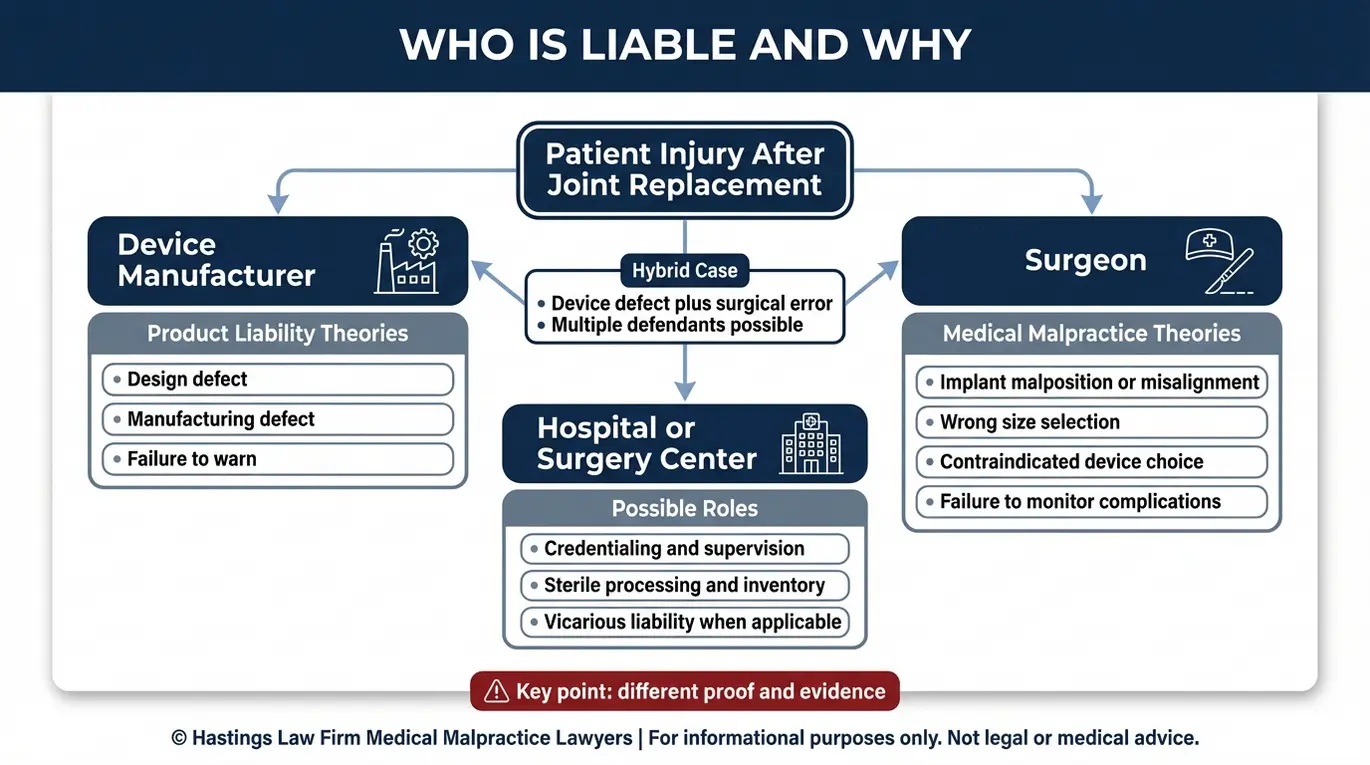
Legal claims may be filed against the device manufacturer under strict product liability in a product liability lawsuit, or against the surgeon for medical malpractice in a medical malpractice lawsuit. Strict liability means a manufacturer is responsible for a defective product regardless of intent. Understanding which theory applies to your situation shapes the defendants named and evidence needed.
Manufacturer liability
Manufacturer liability applies when the product itself is defective. Under strict liability principles, the manufacturer can be held responsible even without proof of carelessness. If a recalled Exactech knee failed due to the known packaging defect, the manufacturer bears responsibility. These claims often proceed through mass tort litigation, where individual patients maintain separate lawsuits while sharing discovery resources.
Surgeon liability
Surgeon liability falls under medical malpractice law. If a surgeon caused component malposition, performed wrong-site surgery, or selected a device known to be contraindicated for a specific patient’s anatomy, that decision may violate the standard of care. Claims against Texas healthcare providers must comply with the procedural requirements outlined in the Texas Civil Practice and Remedies Code, Chapter 74, including the filing of an expert report.
Many cases involve both theories. Hastings Law Firm handles product liability and medical malpractice claims under one roof. This allows us to investigate every angle without referring parts of your case to another firm. Our team includes former defense attorneys who understand the tactics used by medical device companies and in-house medical staff.
We evaluate whether osseointegration, the process where bone bonds to the implant, failed because of a device defect or surgical error.
Damages Recoverable in Revision Surgery Cases
Revision surgery, or revision arthroplasty, is a second operation to remove and replace a failed implant. Revision surgery is often necessary when the original device fails to function safely. It is typically more complex and carries greater risk than the original procedure. The surrounding bone may have deteriorated, scar tissue complicates the approach, and recovery time is often significantly longer.
Patients who require revision surgery may be entitled to compensation for revision surgery and extended rehabilitation. This includes lost wages during an additional recovery period, pain and suffering, and loss of enjoyment of life caused by prolonged immobility. Because the medical risks are higher with revision procedures, these cases often reflect greater damages than the original surgery alone would have supported.
Steps to Take Before Filing a Defective Device Claim
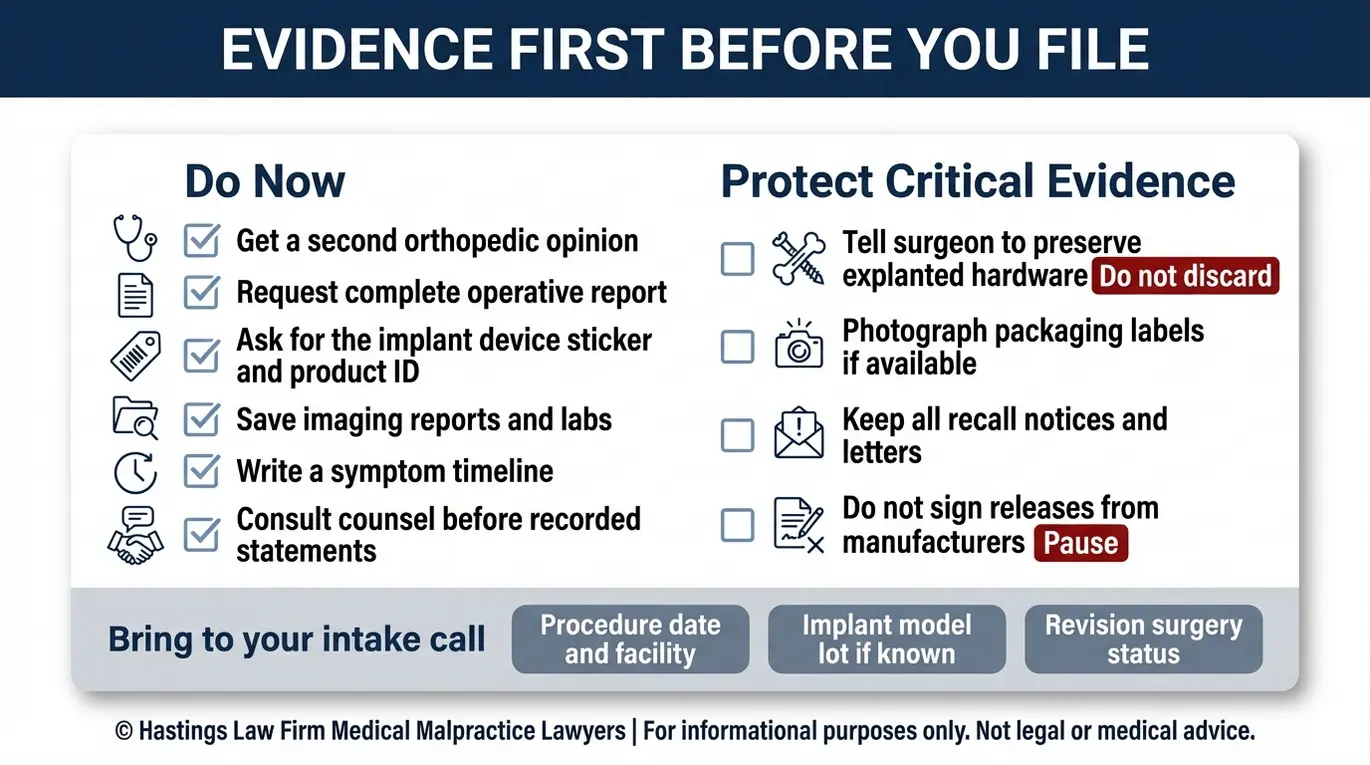
Patients should immediately seek a second medical opinion, request their full operative report to identify the device model, preserve any explanted hardware as evidence, and consult an attorney before speaking to insurance adjusters or signing any documents from the manufacturer. The operative report is the medical record detailing exactly what occurred during your surgery.
Taking these steps early ensures evidence preservation and protects your ability to pursue a defective joint replacement claim:
- Get a second medical opinion. An independent orthopedic specialist can assess whether your implant has failed prematurely and document the clinical findings.
- Request your operative report and device identification. Your medical records should contain a “device sticker” or product label identifying the manufacturer, model, and lot number. This information can also be cross-referenced through the Global Unique Device Identification Database (GUDID) maintained by the FDA. The Unique Device Identifier (UDI) is a standardized code assigned to every medical device that allows us to trace your specific implant back to the manufacturer and any associated recalls.
- Preserve the explanted device. If you are undergoing revision surgery, tell your surgeon to save the removed implant hardware. The explanted device, meaning the physical components taken out of your body, is your single most important piece of evidence.
- Do not sign anything from the manufacturer. Manufacturers may send early settlement offers or release forms. Signing before you understand the full extent of your injuries can permanently limit your recovery.
- Contact joint replacement lawyers before giving recorded statements. An attorney can protect your interests during communications with insurers and device companies.
Contact the Austin Medical Device Attorneys at Hastings Law Firm Today for Help
Living with a failed joint replacement affects everything, from how you move through your day to your ability to work and spend time with the people who matter most. A contingency fee means legal costs are deducted only from the final settlement or award. You should not have to absorb those losses because a manufacturer sold a defective product or a surgeon made a preventable error.
Since 2005, Hastings Law Firm has focused exclusively on medical malpractice and device failure litigation. Our legal and medical team will review your records, identify the device involved, and explain whether you have a viable claim. We offer a free case review to help you understand your legal standing.
We handle these cases on a contingency fee basis, which means you pay no attorney fees or costs unless we recover compensation for you. Texas law imposes strict deadlines for filing these claims, so early evaluation matters. Contact our Austin office today for a free, confidential case review.
Frequently Asked Questions About Defective Joint Replacement in Austin


This content was researched and written by the Hastings Law Firm editorial team, which includes attorneys, medical professionals, and experienced researchers. Our writing is informed by internal knowledge and practical experience, and we cross-check critical details against authoritative sources cited throughout. Every piece undergoes human-led fact-checking and legal review. Because legal and medical information can change, if you spot an error, please contact us. Learn more about our content standards and review process on our editorial policy page.

Gabe Sassin has focused exclusively on medical malpractice law since 2007. After spending more than a decade as a malpractice defense attorney, he knows exactly how the other side works. He has seen firsthand how healthcare providers, insurers, corporate defendants, and their legal teams think, prepare, and build their defense against claims. That knowledge works for the people who need it most today, injured patients and their families. His unique experience shapes everything he writes, giving readers a look at how these cases actually work from someone who has handled them from both sides.
