


Fort Worth C Section Malpractice Lawyer
Written by: Hastings Law Firm | Reviewed by: Brady D. Williams | Updated: July 27, 2026
A C section is often performed to protect a mother and baby during a difficult delivery, but preventable errors can turn a necessary procedure into a life changing injury. Harm can stem from surgical mistakes, anesthesia problems, infection, or delays in ordering an emergency delivery when warning signs appear. Families may struggle to understand whether an outcome was an unavoidable complication or a deviation from accepted care. If you or a loved one were harmed or worse due to C section malpractice in Fort Worth, Texas, contact Hastings Law Firm for a free, confidential case review.
Fort Worth Medical Attorneys for Negligent C-Section Complications
What You Should Know About Cesarean Delivery Negligence Claims in Fort Worth:
- Long term harm can follow when a C section is performed with preventable surgical errors, anesthesia mistakes, or post operative infection.
- Permanent infant injury or worse can result when delivery is delayed despite warning signs that call for urgent surgical intervention.
- Liability can turn on whether the outcome was a known complication or a deviation from the accepted standard of care.
- Options can be affected when an unnecessary C section is performed without medical justification or without informed consent.
- Recovery can be limited because Texas places statutory caps on non economic damages in medical malpractice cases.
- Compensation can account for both financial losses and personal harm such as pain, mental anguish, and physical impairment.
- Case outcomes can depend on whether the timeline links the alleged breach to the specific injury.
- Disputes can hinge on what the medical record shows in items such as fetal monitoring strips and operative reports.

A Healthcare Focused Law Firm
A cesarean delivery is supposed to protect you and your baby when complications arise. When that procedure causes harm instead of preventing it, the confusion and emotional weight can be overwhelming. You may be left wondering whether the injury was unavoidable or the result of a medical error you had no power to prevent.
If you or your baby were injured during or because of a C-section, you are not wrong for asking questions. These cases are medically complex, but a Fort Worth C Section Injury Lawyer with the right resources can help you understand what happened and why. Hastings Law Firm focuses exclusively on medical malpractice. Our founder, Tommy Hastings, is board-certified in Personal Injury Trial Law, a credential held by less than 2% of Texas attorneys.
Contact us for a free, confidential case evaluation. We can review what happened and explain your options.
Understanding C-Section Injuries Caused by Medical Malpractice
C-section injuries caused by medical malpractice occur when a healthcare professional deviates from the accepted standard of care during the procedure, resulting in preventable harm to the mother or infant. Standard of care refers to the accepted level of treatment for childbirth procedures. Not every difficult outcome means medical negligence occurred, but there is an important distinction between a known surgical complication and harm caused by a medical error.
A cesarean section, the surgical delivery of a baby through an incision in the mother’s abdomen and uterus, known as a hysterotomy, carries inherent risks. Patients are typically informed about these risks before the procedure. Known complications can happen even when every step is performed correctly. Medical negligence involves a failure to meet the standard of care, the level of skill a reasonably competent provider would deliver under similar circumstances.
C-sections are high-stakes procedures. The margin for error is narrow, and surgical errors during delivery can result in life-altering consequences for both mother and child. When something goes wrong, families often feel a deep sense of betrayal by the very system they trusted to keep them safe. Fort Worth C-section injury lawyers at our firm understand that feeling, and we work to help families get clear answers about what happened during their care.
Common Cesarean Section Injuries to Mothers and Infants
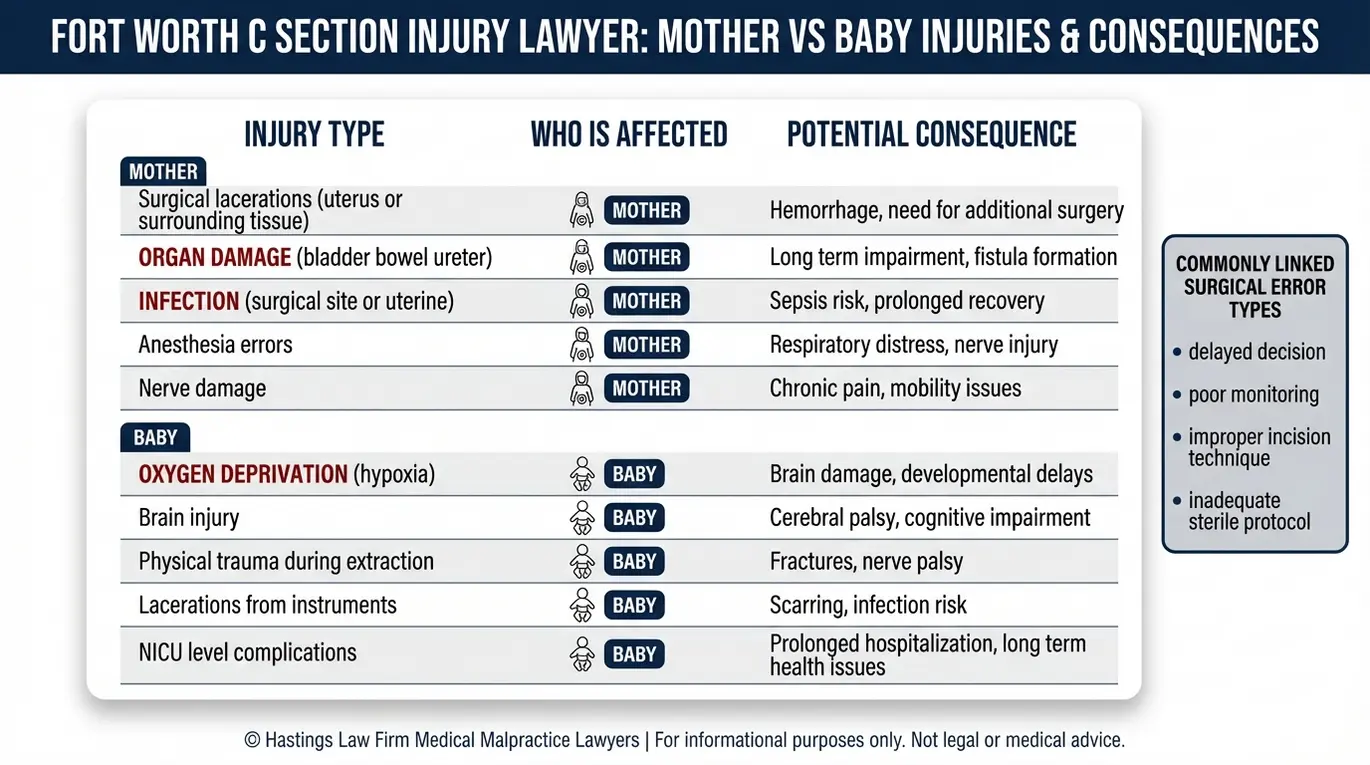
Common C-section injuries include surgical lacerations, organ damage, and infection for mothers, while infants may suffer from oxygen deprivation, brain damage, or physical trauma during extraction. The type and severity of the injury often depends on the specific error that occurred.
Maternal injuries frequently involve direct surgical errors. A surgeon may inadvertently lacerate the bladder or bowel during the uterine incision. Anesthesia errors, such as improper spinal block placement or dosing mistakes, can cause nerve damage or cardiovascular complications. Post-operative infections remain a well-documented risk.
These include surgical site infections (SSIs), which are infections that develop at or near the incision. Research published through CDC Stacks has examined simplified surveillance definitions for SSIs following cesarean delivery. This research underscores how common and trackable these complications are. Longer-term consequences for mothers may include internal adhesions and future fertility complications.
Infant injuries can be equally severe. Oxygen deprivation during a delayed or mismanaged delivery, often signaled by fetal distress, can lead to hypoxia and permanent brain damage. Neonatal lacerations, which are cuts to the baby’s skin caused by the surgical instrument during extraction, also occur. In the most tragic cases, prolonged oxygen deprivation or catastrophic trauma may result in wrongful death.
A C-section injury lawyer in Fort Worth can help determine whether these injuries resulted from a preventable deviation from accepted medical practice.
| Injury Type | Affected Party | Potential Consequence |
|---|---|---|
| Surgical lacerations (bladder, bowel) | Mother | Organ damage, additional surgery |
| Anesthesia errors | Mother | Nerve damage, cardiovascular complications |
| Surgical site infection | Mother | Prolonged recovery, sepsis risk |
| Adhesions | Mother | Chronic pain, future fertility issues |
| Oxygen deprivation (hypoxia) | Infant | Brain damage, developmental delays |
| Neonatal laceration | Infant | Scarring, infection risk |
| Prolonged birth trauma | Infant | Permanent disability, wrongful death |
An attorney for C-section injuries will review the clinical details to identify where the care provided fell short of what was medically required.
The Hastings Law Firm Difference
Results matter, but what truly sets us apart is how we achieve them. Every verdict, every settlement, and every Fort Worth courtroom victory comes from one guiding promise: To treat each client’s fight for justice as if it were our own.
This balance of skill, experience, and empathy reflects our core philosophy that justice should not only compensate the injured, but also make healthcare safer nationwide.

Negligence Involving Failure to Order a Timely C-Section
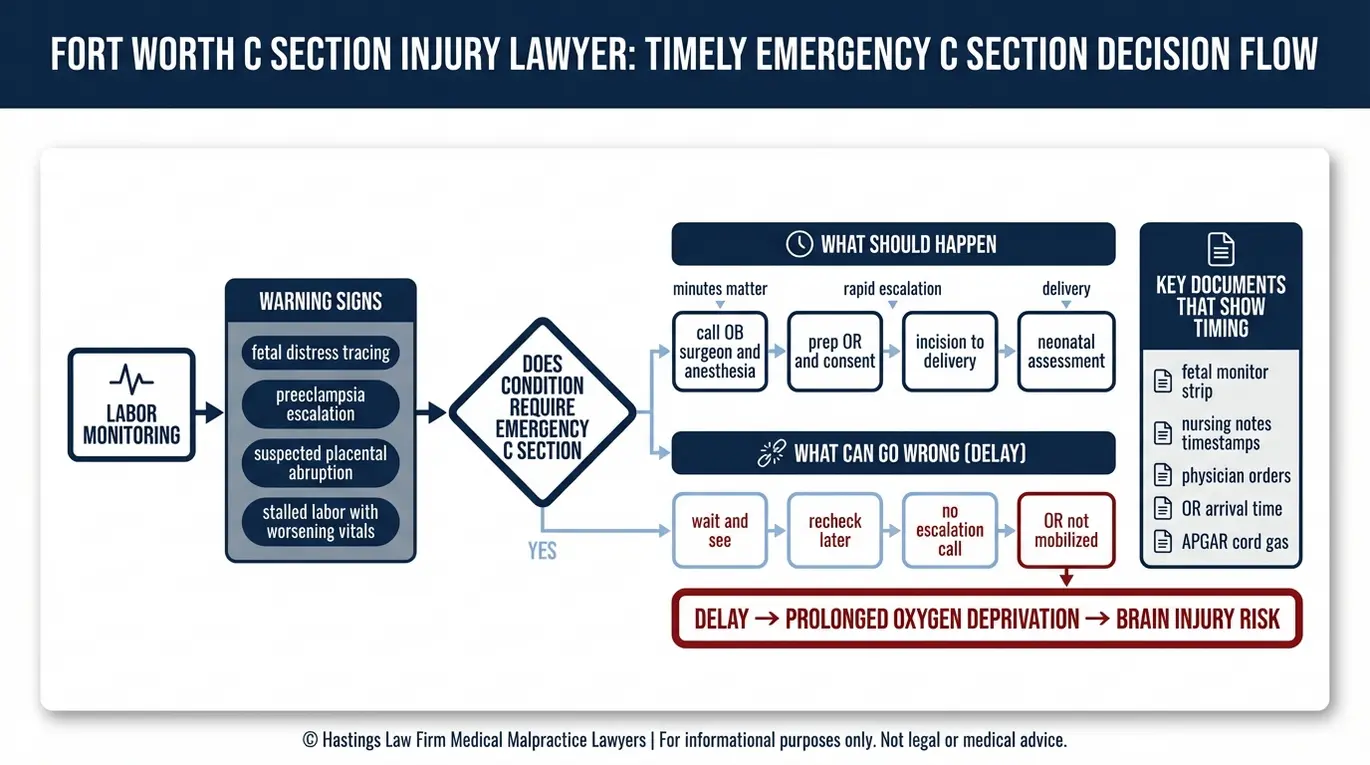
Failure to order a timely C-section is a form of negligence that occurs when medical staff do not act on signs of fetal distress or maternal complications that call for immediate surgical intervention. Hypoxia, or lack of oxygen to the baby’s brain, is a significant risk during birth delays. In emergency situations, minutes matter, and delays in the decision to deliver can have irreversible consequences.
Certain conditions require urgent escalation. When warning signs are present and the care team does not respond appropriately, or when a delayed diagnosis prevents prompt action, the resulting injuries may be the direct result of that delay. Conditions that may require an emergency C-section include:
- Non-reassuring fetal heart rate patterns (fetal distress, a condition where the baby shows signs of not receiving adequate oxygen)
- Preeclampsia with severe features, including dangerously elevated blood pressure
- Placental abruption, where the placenta separates from the uterine wall before delivery
- Umbilical cord prolapse or compression
- Uterine rupture
When any of these warning signs are present, a “wait and see” approach can result in prolonged hypoxia. Even a short delay can lead to permanent brain damage or worse. A Fort Worth C-section injury lawyer can help evaluate whether the medical team’s response time fell below what the clinical situation demanded.
Legal Options Regarding Unnecessary C-Sections and Informed Consent
Patients may have grounds to sue for an unnecessary C-section if the procedure was performed without medical justification or without informed consent, exposing the patient to surgical risks without valid cause. Informed consent ensures patients understand surgical risks before delivery. This is a process where the doctor explains the risks, benefits, and alternatives so the patient can agree to move forward.
In some cases, a cesarean delivery may be performed as a matter of convenience rather than medical necessity. When a patient is not given accurate information about why surgery is being recommended, or when their questions are disregarded, the foundational requirement of informed consent may be violated. This can constitute a breach of duty of care, and suing a hospital may be necessary if the patient suffers injury from a procedure they would not have agreed to had they been fully informed. A C-section injury lawyer can review medical records and consent documentation to assess whether the decision to operate was clinically supported and properly communicated.
Proving Negligence in a Fort Worth C-Section Injury Case
Proving negligence requires establishing four elements: a duty of care existed, the provider breached that duty, the breach directly caused the injury, and the patient suffered quantifiable damages. Medical malpractice in Texas is governed by specific rules for expert reporting. Negligence in these cases is often established through a detailed reconstruction of the surgical timeline.
Duty of Care. The first step is confirming that a doctor-patient relationship existed, which establishes the provider’s legal obligation to deliver competent care. In a hospital delivery setting, this element is typically straightforward.
Breach. The next step is demonstrating a breach of duty of care where the provider deviated from the standard of care. This is where expert testimony becomes essential. A qualified obstetrician or surgeon reviews the medical records and identifies specific actions, or failures to act, that fell below accepted practice.
Causation. It is not enough to show that an error occurred. The breach must be directly linked to the specific injury. For example, if a delayed decision to deliver resulted in oxygen deprivation and brain damage, the timeline between the clinical signs and the delivery must support that connection. Decision-to-incision time, the interval between the decision to perform a C-section and the first surgical cut, is one metric we evaluate closely.
Damages. The harm must be documented and measurable, whether it involves ongoing medical costs, permanent disability, or other losses.
When proving medical malpractice under the Texas Civil Practice and Remedies Code Chapter 74, claims carry specific procedural requirements, including the submission of an expert report early in the case. Our founder, Tommy Hastings, is board-certified in Personal Injury Trial Law and is a member of the American Board of Trial Advocates. These distinctions reflect deep experience in the courtroom and a commitment to high legal standards.
Evidence we evaluate in these cases includes:
- Fetal monitoring strips and labor logs
- Surgical operative reports
- Anesthesia records
- Nursing notes and charting timelines
- Pre-operative consent forms
- Post-delivery imaging and lab results

Recovering Damages for C-Section Malpractice in Tarrant County
Recoverable damages in C-section malpractice cases include economic costs like medical bills and lost wages, as well as non-economic damages for physical pain, mental anguish, and physical impairment. Compensation in Texas malpractice cases accounts for long-term care needs.
Economic damages cover financial losses, including past and future medical care, rehabilitation, assistive devices, and lost income.
Non-economic damages address the personal toll, such as pain and suffering, disfigurement, and the emotional impact on the family, especially in cases involving permanent disability.
Texas law does place statutory caps on non-economic damages in medical malpractice cases, which can affect the total recovery. An experienced Fort Worth C-section injury lawyer understands how to document and present damages in a way that accounts for these limitations and pursues the full compensation and value of each claim.
Contact the Fort Worth Birth Injury Attorneys at Hastings Law Firm Today for Help
C-section injuries caused by medical errors are preventable, and families affected by them deserve honest answers about what went wrong. At Hastings Law Firm, our mission is to restore trust for families who feel let down by the healthcare system and to hold negligent providers accountable so the same mistakes are not repeated.
Our team includes nurse practitioners and former defense attorneys who understand how hospitals build their cases. We use that insight to build yours. Every case we accept is prepared to take to a jury, which puts us in a strong position whether the case resolves through negotiation or trial.
If you or your baby were harmed during a C-section delivery, reach out for a free, confidential evaluation with a patient advocate. As a Fort Worth C Section Malpractice Lawyer, our firm charges no fees unless we recover compensation for you.
Call Hastings Law Firm today to discuss what happened and learn what steps you can take.
Frequently Asked Questions About C-Section Malpractice in Fort Worth


This content was researched and written by the Hastings Law Firm editorial team, which includes attorneys, medical professionals, and experienced researchers. Our writing is informed by internal knowledge and practical experience, and we cross-check critical details against authoritative sources cited throughout. Every piece undergoes human-led fact-checking and legal review. Because legal and medical information can change, if you spot an error, please contact us. Learn more about our content standards and review process on our editorial policy page.

Brady D. Williams is a nationally recognized medical malpractice attorney who has spent his career handling high-stakes litigation for injured patients and families across the country. Licensed in both Texas and California, Brady draws on experience from hundreds of resolved medical cases to break down complex legal and medical topics for the people who need that information most. His writing reflects the same attention to detail and commitment to clarity that he brings to every case he handles.
