


Texas C-Section Malpractice Lawyer
A cesarean delivery should be performed with careful surgical technique, appropriate anesthesia management, and timely decision making when an emergency arises. When providers deviate from the accepted standard of care, mothers and infants can suffer severe injuries, long recoveries, and lasting emotional and financial strain. Concerns often involve surgical mistakes, delayed response to fetal distress, retained surgical items, or a lack of informed consent for an unnecessary procedure. If you or a loved one were harmed or worse due to C section malpractice in Texas, contact Hastings Law Firm for a free, confidential case review.

Last Updated: July 27, 2026
Trial-Ready Texas C-Section Malpractice Lawyers
When a cesarean delivery results in unexpected harm to a mother or baby, the confusion and grief can feel overwhelming. You may sense that something went wrong during your care, yet finding clear answers from the medical system itself can feel impossible. You are not wrong for questioning what occurred, and you do not have to figure it out alone.
As a Texas C-section malpractice lawyer team that focuses exclusively on medical negligence, our firm has the medical and legal resources to investigate what occurred. Founded by board-certified trial lawyer Tommy Hastings, we prioritize accountability to help make the healthcare system safer for everyone. If you believe your family was harmed by a preventable C-section error, we invite you to contact us for a free, confidential case evaluation.

Common Types of C-Section Malpractice and Surgical Errors
C-section malpractice occurs when a healthcare provider deviates from the accepted standard of care during a cesarean delivery, resulting in preventable injury to the mother or child. Negligence in the delivery room often involves specific failures, such as surgical mistakes, anesthesia errors, or untimely decision-making. The standard of care defines the level of treatment a reasonably competent medical professional would have provided under similar circumstances. When that standard is not met, the consequences can be life-altering, and families often turn to C-section malpractice attorneys for guidance.
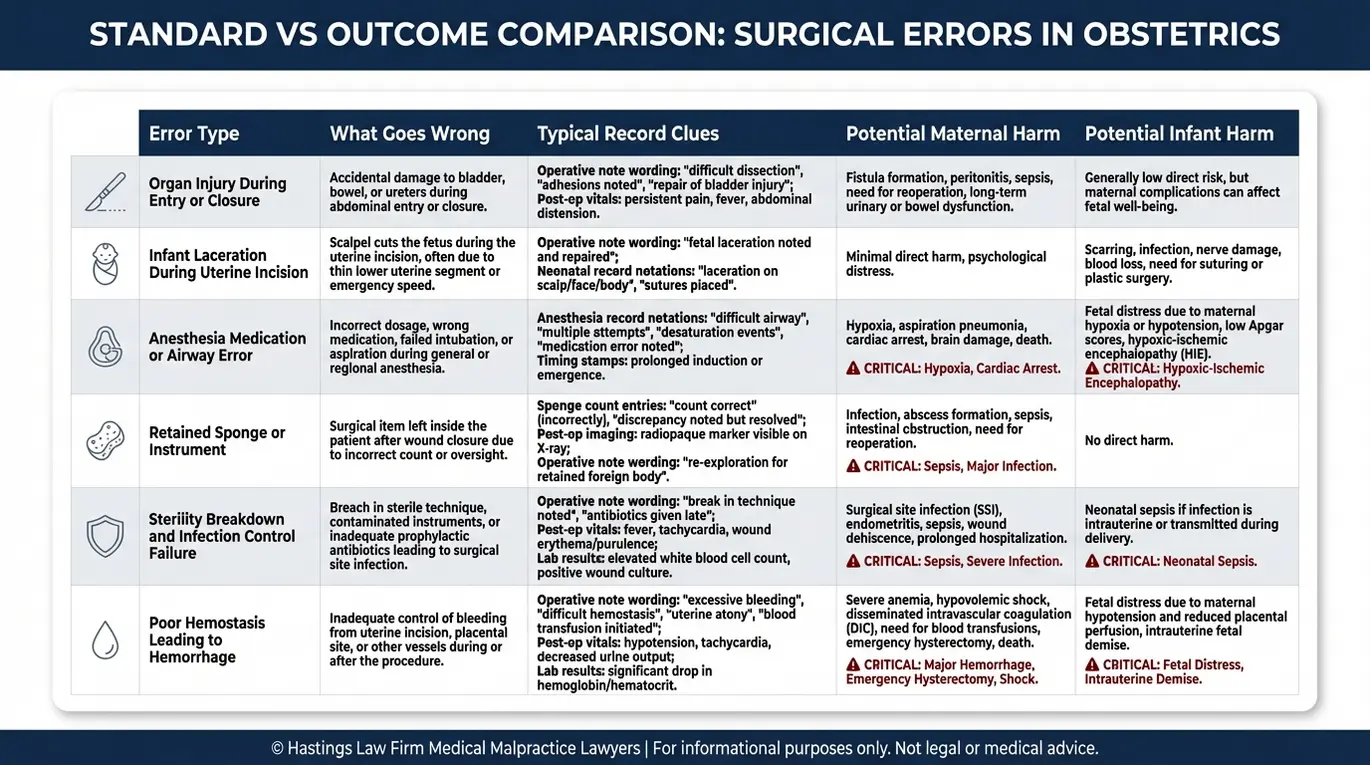
Surgical errors during a cesarean section can take many forms and may cause permanent damage. A surgeon may inadvertently lacerate the bladder, bowel, or other maternal organs during the uterine incision, leading to hemorrhage or infection. In some cases, the incision itself can injure the baby, causing cuts or lacerations that were preventable with proper technique.
Anesthesia-related negligence is another common basis for C-section malpractice claims. Neuraxial anesthesia, which refers to spinal or epidural anesthesia used during cesarean deliveries, must be carefully dosed and monitored. Errors in administration can cause dangerously low blood pressure, respiratory failure, or maternal oxygen deprivation. These complications require immediate intervention to prevent permanent injury to both patients.
One of the most well-documented surgical errors involves a retained surgical item (RSI). This occurs when a sponge, instrument, or other object is left inside the patient’s body after the procedure is closed. According to the Agency for Healthcare Research and Quality (AHRQ) Patient Safety Network, retained surgical items are a persistent patient safety concern that can lead to infection, obstruction, and the need for additional surgery. The failure to perform a correct instrument count is a clear deviation from safety protocols.
The table below illustrates how specific C-section errors connect to potential outcomes:
| Error Type | Potential Outcome |
|---|---|
| Surgical laceration to maternal organs | Hemorrhage, organ damage, additional surgery |
| Laceration to the infant during incision | Scarring, nerve damage, infection |
| Anesthesia dosing or monitoring errors | Maternal hypoxia, cardiac arrest, brain injury |
| Retained surgical item (sponge/instrument) | Infection, bowel obstruction, reoperation |
If any of these errors played a role in your family’s experience, a Texas C-section malpractice lawyer can help determine whether negligence occurred and what legal options may be available.
Liability for Delayed Cesarean Sections and Fetal Distress
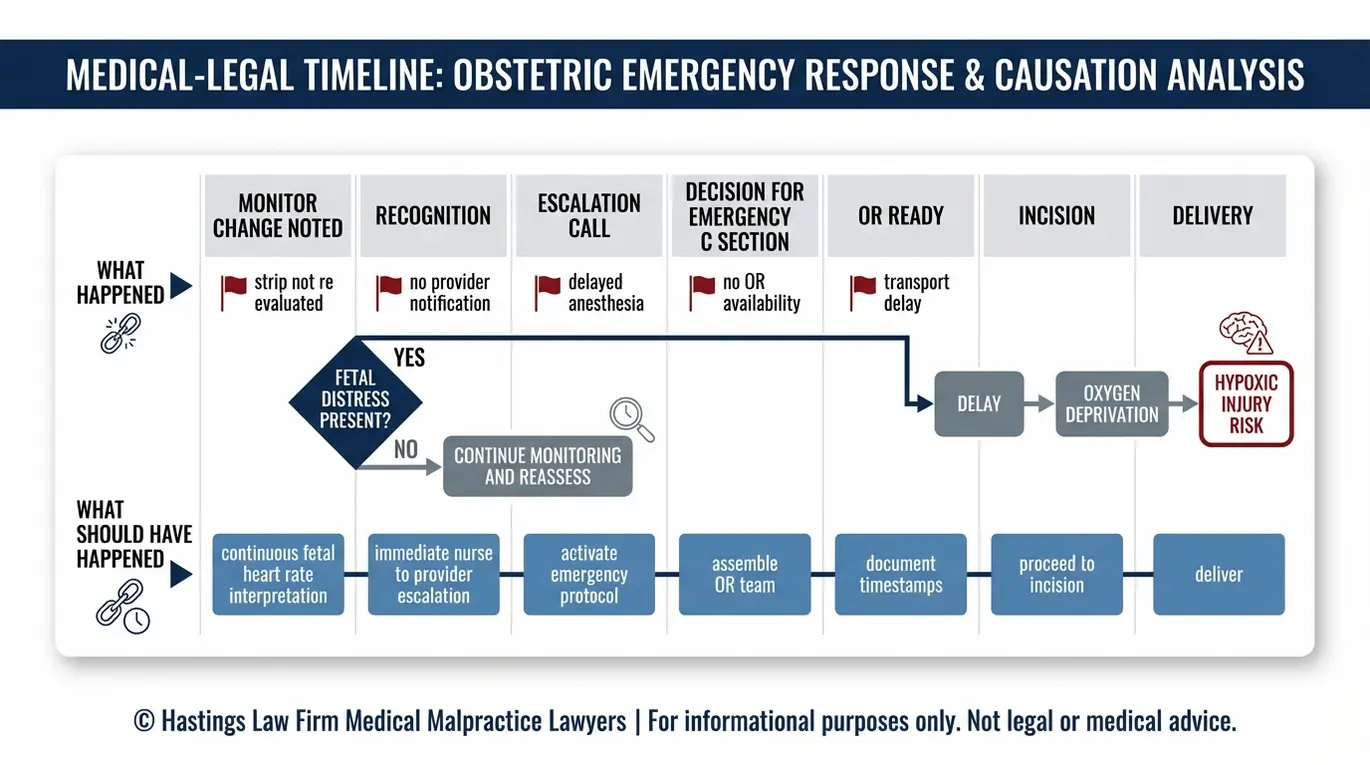
Medical professionals may be liable for malpractice if they fail to recognize signs of fetal distress on heart monitors and delay a necessary emergency C-section, causing oxygen deprivation or permanent brain injury to the infant. These cases often center on what the medical team knew, when they knew it, and how quickly they acted. A lawyer for delayed C-section cases can be instrumental in uncovering these critical timeline details.
Electronic fetal monitoring (EFM) involves continuous fetal heart rate monitoring and tracking of the mother’s contractions during labor. EFM strips produce a real-time record that trained providers are expected to interpret and respond to throughout the delivery process. When the strips show warning patterns, the clinical team has a responsibility to act.
A critical concept in delayed C-section cases is the decision-to-delivery interval, sometimes called the “30-minute rule.” This refers to the generally accepted standard that once a decision is made to perform an emergency cesarean section, the baby should be delivered within approximately 30 minutes. While clinical circumstances may vary, an unexplained delay beyond this window can expose the infant to prolonged oxygen deprivation, also known as hypoxia, which may result in lasting brain damage.
Several red flags on fetal monitoring strips may indicate that an emergency delivery is needed:
- Prolonged fetal heart rate decelerations that do not recover between contractions
- Absent or minimal heart rate variability over an extended period
- Persistent late decelerations suggesting the placenta is not delivering adequate oxygen
- Signs consistent with placental abruption, such as sudden fetal distress paired with vaginal bleeding
- Patterns indicating possible umbilical cord prolapse, where the cord compresses and restricts blood flow
When our team evaluates a potential delayed C-section case, we reconstruct the timeline minute by minute. We review the fetal monitoring strips, nursing notes, physician orders, and communication logs to identify gaps between the onset of distress and the delivery. A Texas C-section malpractice lawyer at our firm works alongside in-house medical professionals and independent experts to determine whether the clinical team’s response met the standard of care or fell short.
The Hastings Law Firm Difference
Results matter, but what truly sets us apart is how we achieve them. Every verdict, every settlement, and every Texas courtroom victory comes from one guiding promise: To treat each client’s fight for justice as if it were our own.
This balance of skill, experience, and empathy reflects our core philosophy that justice should not only compensate the injured, but also make health care safer nationwide.

Unnecessary C-Sections and Lack of Informed Consent
An unnecessary C-section may constitute medical malpractice if the physician performed the surgery without medical indication or failed to obtain proper informed consent, exposing the mother and child to surgical risks without valid cause. Cesarean delivery is major abdominal surgery, and the decision to proceed should always be supported by a clinical reason. A medical indication is a valid clinical reason for a specific procedure.
In some cases, doctors may rush to surgery for convenience or scheduling reasons rather than medical necessity. When a physician opts for surgery without a clear clinical justification, the mother is subjected to unnecessary risk exposure, including infection, hemorrhage, and longer recovery. If the baby is also injured during the procedure, the lack of medical justification makes the harm that much harder to accept. A malpractice lawyer in Texas can evaluate whether the documented circumstances actually supported the decision to operate.
Texas law requires physicians to disclose the risks, benefits, and alternatives of a proposed procedure before the patient agrees to it. This is the foundation of informed consent. The Texas Medical Disclosure Panel, established under Title 25, Part 7 of the Texas Administrative Code, sets specific requirements for what must be disclosed before certain procedures, including cesarean delivery. If a doctor did not explain why a C-section was recommended, what the alternatives were, or what risks were involved, the patient may not have been able to make a truly informed decision.
Two conditions often discussed in these cases are placental abruption, where the placenta separates from the uterine wall before delivery, and umbilical cord prolapse, where the umbilical cord drops through the cervix ahead of the baby. Both can create genuine emergencies requiring a cesarean section. But when these conditions are not present and no other emergency exists, the medical justification for surgery must be carefully scrutinized.
Consequences of Errors Causing Maternal and Infant Injuries
Negligence during a C-section can lead to catastrophic outcomes, ranging from maternal hemorrhage and infection to permanent infant brain damage like cerebral palsy or hypoxic-ischemic encephalopathy. In the most tragic cases, these errors result in wrongful death. The physical, emotional, and financial toll of these injuries often extends far beyond the delivery room.
Maternal Injuries
Mothers can suffer severe complications when surgical or postoperative care falls below the accepted standard. Some of the most serious maternal injuries linked to C-section negligence include:
- Postpartum hemorrhage (PPH), which is excessive bleeding after delivery that can become life-threatening if not recognized and treated quickly
- Sepsis, a dangerous infection that spreads through the bloodstream, sometimes caused by unsterile surgical technique or failure to treat early signs of infection
- Blood clots, including deep vein thrombosis (DVT) and pulmonary embolism (PE), which can occur when proper post-surgical monitoring and prevention protocols are not followed
- Uterine rupture, a tear in the uterine wall that may require emergency intervention
- Hysterectomy, the surgical removal of the uterus, sometimes performed as a last resort to control bleeding or treat organ damage caused by surgical error
The Centers for Disease Control and Prevention (CDC) tracks severe maternal morbidity indicators, including many of these complications, as part of its effort to improve maternal health outcomes.
Infant Injuries
Infants are especially vulnerable during cesarean deliveries. Errors in timing, surgical technique, or fetal monitoring can result in injuries that affect a child for the rest of their life:
- Hypoxic-ischemic encephalopathy (HIE), a form of brain damage caused by perinatal hypoxia, which is oxygen deprivation around the time of birth
- Cerebral palsy, a group of movement and posture disorders often linked to oxygen loss or trauma during delivery
- Erb’s palsy, nerve damage in the shoulder and arm that can occur during a difficult extraction
- Fractures or lacerations caused by improper instrument use or incision technique
For families, the long-term financial burden of these birth injuries can be staggering. Infants diagnosed with conditions like HIE or cerebral palsy may require lifetime medical care. A birth injury attorney can help families pursue compensation that accounts for these future costs.
Long-Term Maternal Impacts and Quality of Life
Some maternal injuries receive far less attention but carry lasting consequences. Pelvic adhesions, which are bands of scar tissue that form between internal organs after surgery, can cause chronic pain, bowel complications, and fertility issues. Many mothers also experience post-traumatic stress disorder (PTSD) related to a traumatic birth experience, which can affect bonding, daily functioning, and mental health for years.
These long-term maternal impacts deserve recognition in any legal claim. A Texas C-section malpractice lawyer should account for diminished quality of life, lost fertility, chronic pain, and emotional harm when evaluating the full scope of damages.
Proving Negligence with Medical Evidence and Expert Testimony
Proving a C-section malpractice claim in Texas requires clear evidence, including expert witness testimony and thorough records review, to demonstrate that the provider’s actions fell below the accepted standard of care. Our team includes former defense attorneys and experienced nurses who understand the internal protocols of hospital systems. This is not a simple process, as Texas law places specific procedural demands on plaintiffs in medical malpractice cases.
Under Texas Civil Practice and Remedies Code, Chapter 74, a plaintiff must file an expert report within 120 days of initiating a lawsuit. This report, written by a qualified medical professional, must identify the applicable standard of care and explain how the healthcare provider breached it. If the report is not filed on time or does not meet these requirements, the court can dismiss the case. A C-section negligence lawyer ensures these deadlines are met using expert witness testimony.
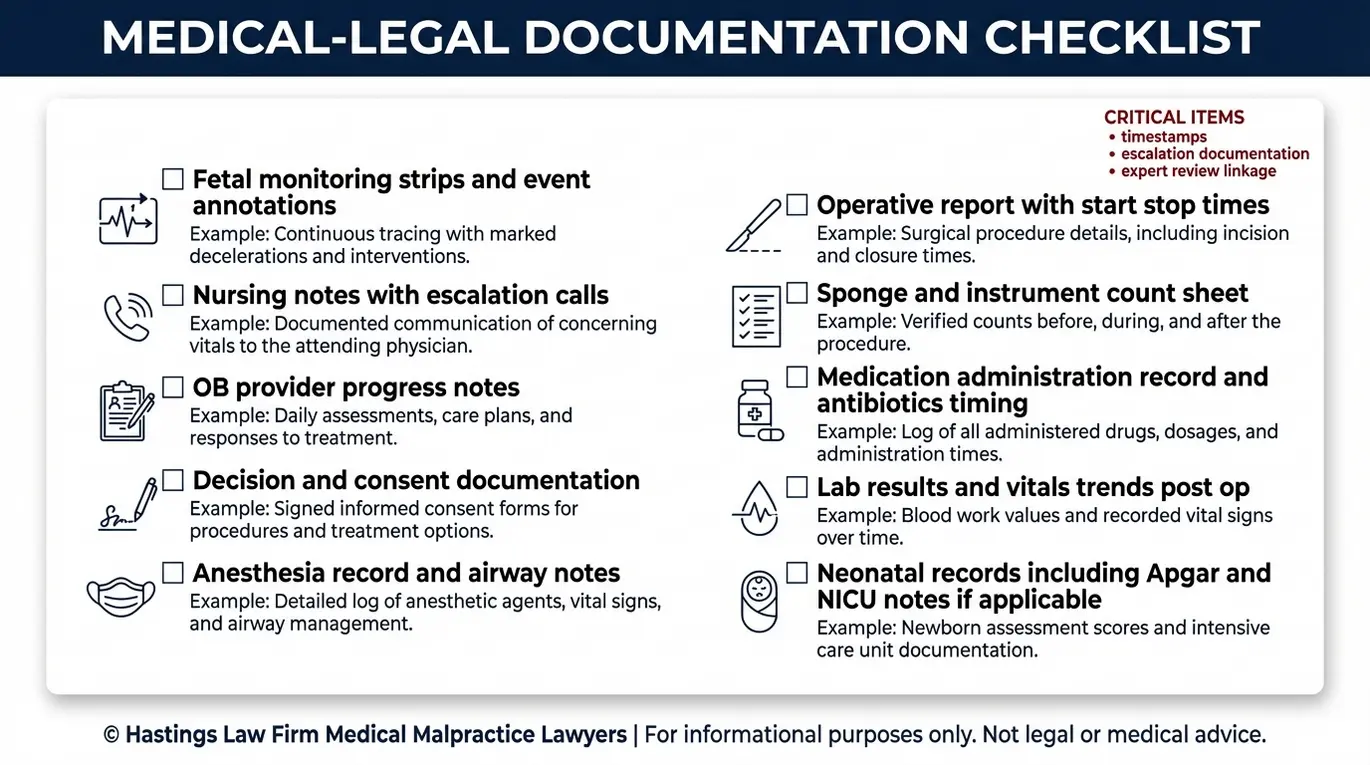
Building a strong evidentiary foundation starts well before that deadline. Key evidence in a C-section negligence case typically includes:
- Prenatal records documenting the mother’s health, risk factors, and care plan throughout pregnancy
- Labor and delivery records, including nursing notes, physician orders, and medication logs
- Electronic fetal monitoring strips showing the baby’s heart rate and the mother’s contractions over time
- Operative and anesthesia records from the cesarean delivery itself
- Postpartum records tracking recovery, complications, and any follow-up interventions
- Hospital policies and protocols related to emergency cesarean procedures, staffing levels, and chain-of-command communication
At Hastings Law Firm, our in-house medical staff, including nurse practitioners and board-certified patient advocates, reviews these records alongside our legal team. We also work with a national network of independent medical experts who provide objective analysis and testimony about what the standard of care required.
Hospital Protocol Failures and Communication Breakdowns
Not every C-section error traces back to a single physician’s decision. In many cases, system failures contribute to delays in the operating room. Communication breakdowns, shift changes with incomplete hand-offs, and understaffing on labor and delivery units can all create dangerous gaps in care. Our investigation process examines not just individual actions, but the institutional environment and hospital protocol that allowed the harm to occur.
Recovering Compensation for C-Section Injuries in Texas
Families affected by C-section malpractice in Texas may be entitled to economic damages for medical bills and lost wages, as well as non-economic damages for pain and suffering, though these are subject to statutory limits known as Texas caps. These caps are statutory limits on the amount of money a plaintiff can receive for non-financial losses. Understanding the categories of compensation available is an important step in evaluating a potential claim.
Economic damages cover the measurable financial losses caused by the injury. These may include:
- Past and future medical expenses, including surgeries, hospitalizations, therapy, and medications
- Lost wages or loss of earning capacity if the mother or a caretaker can no longer work
- The cost of a life-care plan for a child with a permanent disability, covering projected future care costs, assistive equipment, home modifications, and specialized education required for the child’s lifetime
Non-economic damages address the personal and emotional toll of the injury:
- Physical pain and suffering
- Mental anguish and emotional distress
- Physical impairment or disfigurement
- Loss of consortium, which compensates a spouse for the loss of companionship and support
In wrongful death cases involving a mother or infant lost to C-section negligence, surviving family members may also seek compensation for funeral expenses, lost future earnings, and loss of the relationship.
Texas law does impose caps on non-economic damages in medical malpractice cases. A medical malpractice lawyer can explain how these caps apply to your specific circumstances and help ensure that every category of economic loss is fully documented, since economic damages are not subject to the same limits.
Texas Statute of Limitations for Birth Injury Claims
In Texas, the general statute of limitations for medical malpractice is two years from the date of the injury. But specific exceptions exist for minors involved in birth injury claims that may extend these filing deadlines.
Under the two-year rule, a parent’s own claims, such as those for the mother’s physical injuries or a family’s emotional distress, must typically be filed within two years of the date the malpractice occurred. Missing this deadline can permanently bar the claim, regardless of how strong the evidence may be.
For a child injured during birth, the timeline works differently. Texas law provides for tolling, which pauses the statute of limitations for minors. In many birth injury cases, the child’s claim may be filed until the child reaches age 14. However, Texas also has a statute of repose, which sets an absolute 10-year outer limit on filing medical malpractice claims. This means that even with tolling, there is a hard deadline that cannot be extended.
Because these deadlines interact in ways that vary by case, consulting a Texas C-section malpractice lawyer as early as possible helps protect your family’s right to pursue a claim.
Contact the Texas Birth Injury Attorneys at Hastings Law Firm Today for Help
If your family experienced a preventable injury during a cesarean delivery, you deserve answers, and you deserve a legal team that knows how to find them. Hastings Law Firm focuses exclusively on medical malpractice. Our attorneys, in-house medical staff, and national expert network work together to uncover what happened, hold negligent providers accountable, and pursue fair compensation for your family’s future.
Many of our clients come to us seeking more than a financial recovery. They want the truth about what went wrong, and they want to help prevent it from happening to another family. Those goals drive everything we do.
We handle every case on a contingency fee basis, which means you pay no attorney fees or costs unless we secure a recovery for you. Contact our team today to start a free, confidential case evaluation. A Texas C-section malpractice lawyer at Hastings Law Firm is ready to listen and explain your next steps.
Frequently Asked Questions About C-Section Malpractice in Texas


This content was researched and written by the Hastings Law Firm editorial team, which includes attorneys, medical professionals, and experienced researchers. Our writing is informed by internal knowledge and practical experience, and we cross-check critical details against authoritative sources cited throughout. Every piece undergoes human-led fact-checking and legal review. Because legal and medical information can change, if you spot an error, please contact us. Learn more about our content standards and review process on our editorial policy page.

Tommy Hastings, founder of Hastings Law Firm, is a board-certified personal injury trial lawyer dedicated exclusively to healthcare injury cases. Since 2001, he has represented injured patients and families in litigation against major hospital systems, pharmaceutical companies, and negligent healthcare providers nationwide. He has handled numerous high-profile cases that have drawn national media attention and resulted in multi-million dollar recoveries. He draws on that experience in his writing, helping readers understand how these cases work and what options may be available to them.
