


Austin Brachial Plexus Injury Lawyer
Brachial plexus injuries during delivery can leave a child with lasting limits in arm and hand function, and families often struggle to understand whether the harm was preventable. The brachial plexus is a network of nerves that can be stretched or torn during a difficult birth, sometimes leading to permanent loss of function. Excessive traction, improper use of delivery tools, and delayed decisions during emergencies such as shoulder dystocia can contribute to these injuries. If your child was harmed or worse due to brachial plexus birth injuries in Austin, Texas, contact Hastings Law Firm for a free, confidential case review.

Last Updated: July 27, 2026
Trusted Legal Representation for Birth Negligence Claims in Texas
When your child suffers a preventable injury during delivery, the weight of that experience can feel overwhelming. You may have questions about what went wrong, whether the medical team made a mistake, and what options your family has going forward. These are valid concerns, and you deserve clear answers.
Damage to the brachial plexus, the network of nerves running from the spine through the neck, shoulder, and arm, can have lasting consequences for a child’s mobility and quality of life. If your child was harmed during birth due to medical negligence, an Austin brachial plexus injury lawyer at Hastings Law Firm can help you understand what happened and whether you have a case.
We offer a free, confidential case evaluation at no cost to your family. Reach out so we can review your child’s medical records and explain your legal options.

Understanding Brachial Plexus Injuries and Erb’s Palsy
A brachial plexus injury occurs when the network of nerves controlling the arm and hand is damaged during delivery, often resulting in conditions like Erb’s palsy. The brachial plexus is a bundle of five nerve roots originating in the spinal cord and extending through the arm. These nerves control upper extremity movement. When stretched or torn during a difficult birth, consequences range from weakness to permanent paralysis.
Severity depends on the type of nerve damage:
- Neurapraxia: The mildest form involves nerve stretching. Neurapraxia often resolves on its own, according to the National Center for Biotechnology Information (NCBI).
- Rupture: The nerve tears, often requiring surgical repair.
- Neuroma: Scar tissue forms on a damaged nerve, limiting recovery.
- Avulsion: The nerve root tears completely from the spinal cord, often resulting in permanent loss of function.
Erb’s palsy, a condition affecting the upper nerves, causes weakness or paralysis of the shoulder and arm. Klumpke’s palsy affects the lower nerves and impacts the hand and wrist. Children may also suffer fractures during these difficult deliveries.
Austin brachial plexus injury lawyers work with specialists to determine the extent of nerve damage. If your child has a birth injury, a brachial plexus injury attorney can help evaluate what went wrong.
How Medical Negligence Causes Brachial Plexus Injuries
Medical negligence occurs when an obstetrician uses excessive force or improper tools during a difficult delivery, breaching the standard of care and causing physical harm to the infant. While some deliveries are challenging, medical teams must respond appropriately to avoid preventable injury.
One common cause is excessive traction, pulling too hard on the baby’s head or neck during delivery. When the shoulder is stuck, applying downward force beyond what is medically appropriate can stretch or tear the brachial plexus nerves.
Improper use of delivery tools also causes harm. A forceps delivery, involving hinged instruments placed around the baby’s head to assist birth, and vacuum extractors can cause nerve damage if used with too much force or at wrong angles.
A lawyer for brachial plexus injuries looks for these red flags:
- Excessive or prolonged traction applied during delivery
- Improper positioning with forceps or vacuum extractors
- Failure to recognize a risky vaginal delivery
- Delay in ordering a cesarean section when warning signs like fetal distress appeared
An Austin injury lawyer at Hastings Law Firm examines the timeline to see if the medical team met the standard of care. Our brachial plexus injury attorneys understand the clinical details separating complications from mistakes.
The Hastings Law Firm Difference
Results matter, but what truly sets us apart is how we achieve them. Every verdict, every settlement, and every Austin courtroom victory comes from one guiding promise: To treat each client’s fight for justice as if it were our own.
This balance of skill, experience, and empathy reflects our core philosophy that justice should not only compensate the injured, but also make health care safer nationwide.

Shoulder Dystocia and Failure to Diagnose Risk Factors
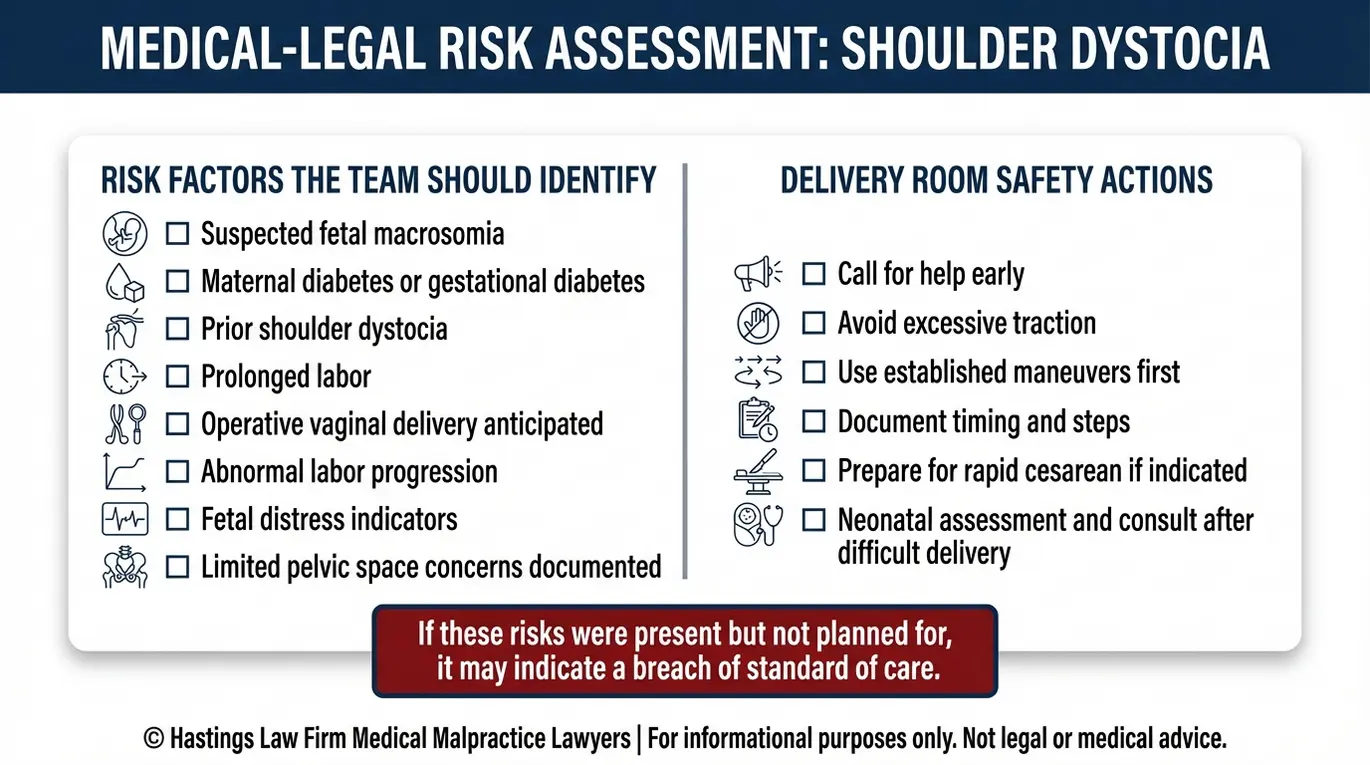
Shoulder dystocia is a medical emergency where the baby’s shoulder becomes lodged behind the mother’s pubic bone, requiring immediate and specific maneuvers to resolve safely without causing injury. Failure to manage this risk often causes damage.
Legal cases focus on whether the medical team identified risk factors like:
- Fetal macrosomia, a condition where the baby is much larger than average
- Maternal gestational diabetes
- Prolonged labor or fetal distress
- History of shoulder dystocia
When an obstetrician fails to account for warning signs, they may breach the standard of care. A PubMed Central study on predicting shoulder dystocia confirms that diagnostic tools exist to help doctors identify this risk. If dystocia occurs, protocols like the McRoberts maneuver (NCBI Bookshelf) must be used. Failure to follow these protocols can constitute a breach of standard care.
As an Austin brachial plexus injury lawyer, we evaluate if protocols were followed. Under Texas Civil Practice and Remedies Code, Chapter 74.051, a lawyer in Austin can help handle the strict notice requirements for claims.
Proving Liability with Our In-House Medical Team
We prove liability by utilizing our in-house medical staff to reconstruct the delivery room events and demonstrate exactly how the healthcare provider deviated from accepted medical protocols. Founded by board-certified trial attorney Tommy Hastings in 2005, our firm focuses exclusively on medical negligence litigation. Mr. Hastings is board-certified in Personal Injury Trial Law, a distinction held by less than 2% of Texas attorneys.
Many families hesitate due to the White Coat Effect, a deep trust in doctors that makes questioning healthcare providers difficult. However, pursuing accountability is necessary when negligence occurs.
At our firm, the team includes nurse consultants who analyze records to pinpoint instances of medical malpractice. A brachial plexus lawyer uses this analysis to build your case. Our injury lawyer team focuses on establishing the four legal elements: duty of care, breach, causation, and damages.
Why Specialized Medical Knowledge Matters
Birth injury cases involve clinical details that general practice attorneys may not fully understand. Recognizing the difference between neurapraxia, a temporary nerve stretch that often heals, and a nerve root avulsion, where the nerve is permanently torn from the spinal cord, can make or break a case.
Our medical consultants and nurse paralegals conduct detailed chart reviews to identify the type and mechanism of injury. This level of analysis allows our injury lawyers to build a case grounded in medical fact rather than assumption.
Securing Compensation for Your Child’s Future Care
Compensation in brachial plexus cases covers past and future medical expenses, physical therapy costs, lost earning capacity, and non-economic damages for pain and suffering. The goal is to ensure your child has the resources needed for the best possible quality of life.
| Damage Category | Examples |
|---|---|
| Economic Damages | Surgeries, NICU bills, physical and occupational therapy, adaptive equipment, future medical care |
| Non-Economic Damages | Pain and suffering, disfigurement, loss of enjoyment of life, emotional distress |
Our firm often works with medical and financial experts to develop a life care plan that projects the full lifetime cost of a child’s care. Programs like the Brachial Plexus Injury Program at Children’s Hospital of Philadelphia (CHOP) illustrate the ongoing, specialized treatment these injuries require.
As an Austin brachial plexus injury lawyer, we also believe these cases serve a dual purpose. Compensation addresses your family’s financial needs, and the accountability that comes with a claim or lawsuit can help prevent the same mistakes from happening to another child. A brachial plexus attorney at Hastings Law Firm will work to secure a recovery that reflects the true scope of your child’s injury.
Contact the Austin Birth Injury Attorneys at Hastings Law Firm Today for Help
If your child suffered a brachial plexus injury during delivery, your family deserves honest answers about what happened and whether negligence played a role. At Hastings Law Firm, you are not just a case file. You are a partner in holding the system accountable and protecting other families from the same experience.
Our Austin birth injury law firm handles these cases on a contingency fee basis, meaning you pay no attorney fees or costs unless we recover compensation for your family. This arrangement allows families to pursue justice without the burden of upfront legal expenses. Every consultation begins with a free, confidential evaluation led by a patient advocate who will listen to your story and help determine if your case has merit.
You do not have to carry this alone. Contact Hastings Law Firm today so we can review your child’s records, explain your options, and help you take the first step toward answers.
Frequently Asked Questions About Brachial Plexus Malpractice in Austin


This content was researched and written by the Hastings Law Firm editorial team, which includes attorneys, medical professionals, and experienced researchers. Our writing is informed by internal knowledge and practical experience, and we cross-check critical details against authoritative sources cited throughout. Every piece undergoes human-led fact-checking and legal review. Because legal and medical information can change, if you spot an error, please contact us. Learn more about our content standards and review process on our editorial policy page.

Gabe Sassin has focused exclusively on medical malpractice law since 2007. After spending more than a decade as a malpractice defense attorney, he knows exactly how the other side works. He has seen firsthand how healthcare providers, insurers, corporate defendants, and their legal teams think, prepare, and build their defense against claims. That knowledge works for the people who need it most today, injured patients and their families. His unique experience shapes everything he writes, giving readers a look at how these cases actually work from someone who has handled them from both sides.
