


Texas Brachial Plexus Injury Lawyer
A brachial plexus injury during birth can leave a child with lasting weakness, limited arm function, or permanent paralysis, and families often struggle to understand whether the outcome was preventable. These injuries are frequently linked to how shoulder dystocia is managed, including the use of excessive traction or delays in choosing a cesarean delivery when risk factors are present. Clear medical documentation and early clinical evaluation can shape both prognosis and long term care planning. If your child suffered harm or worse due to brachial plexus birth injury malpractice in Texas, contact Hastings Law Firm for a free, confidential case review.

Last Updated: July 27, 2026
Trial-Ready Medical Attorneys for Birth Injury Claims in Texas
When your child has been injured during delivery, the weight of that experience can feel impossible to carry alone. You may be searching for answers about what went wrong and whether someone could have prevented it. A Texas Brachial Plexus Injury Lawyer can help you understand the medical facts, determine whether negligence played a role, and outline what legal options may be available for your family.
At Hastings Law Firm, we focus exclusively on medical malpractice. Our team, led by founder Tommy Hastings, a board-certified trial lawyer, includes in-house nurse consultants and former defense lawyers who understand how hospitals and their insurers respond to these claims. We prepare every case as if it will go before a jury, and we do it on a contingency fee basis, meaning you pay nothing unless we recover compensation for your family.
If your child suffered a nerve injury during birth, we welcome the chance to review what happened and explain your options during a free, confidential case evaluation.

Understanding Brachial Plexus Injuries and Birth Trauma
A brachial plexus injury is damage to the network of nerves that sends signals from the spine to the shoulder, arm, and hand, often caused by excessive traction during delivery. The brachial plexus, a bundle of five nerve roots originating from the spinal cord in the neck (C5 through T1), branches outward to control all movement and sensation in the upper limb. When these nerves are stretched, compressed, or torn during a difficult birth, the result can range from temporary muscle weakness to permanent paralysis.
The C5 and C6 roots typically control the shoulder and elbow, while C8 and T1 control the hand and finger function, making the specific location of the injury critical for diagnosis. The location of the damage within the nerve network determines which condition a child develops. Erb’s palsy affects the upper nerves (C5-C6), typically causing weakness or paralysis in the shoulder and upper arm.
Klumpke’s palsy involves the lower nerves (C8-T1) and tends to affect the forearm, wrist, and hand. Some injuries involve both upper and lower nerve roots. Brachial plexus injury attorneys evaluate the severity of the nerve damage to build an accurate picture of a child’s prognosis.
Texas birth injury counsel often work closely with pediatric neurologists to classify the injury using the following nerve root classification framework:
| Injury Type | Description | Severity | Typical Prognosis |
|---|---|---|---|
| Neurapraxia | Nerve is stretched but not torn; the mildest form of brachial plexus injury | Mild | Most recover within 3 to 4 months without surgery |
| Neuroma | Stretched nerve fibers form scar tissue that presses on healthy nerve | Moderate | Partial recovery possible; may require therapy or surgery |
| Rupture | Nerve is torn but not at the spinal cord | Severe | Surgical repair (nerve grafts) typically required |
| Avulsion | Nerve root is torn away from the spinal cord | Most Severe | Cannot be reattached; nerve transfers may restore partial function |
Understanding the type and severity of nerve damage is the first step toward building a case and planning for a child’s long-term care needs.

How Medical Negligence Causes Brachial Plexus Injuries
Medical negligence occurs when a doctor applies excessive force, such as pulling on the baby’s head during a shoulder dystocia event, or fails to perform a timely C-section despite known risk factors. Shoulder dystocia, an obstetric emergency where the baby’s shoulder becomes lodged behind the mother’s pelvic bone after the head has already been delivered, requires the delivery team to act quickly and follow established shoulder dystocia protocols.
The standard of care typically requires the use of recognized techniques to free the baby safely. One example is the McRoberts maneuver, a procedure where the mother’s legs are sharply flexed toward her abdomen to widen the pelvic opening. Other accepted methods include suprapubic pressure (applying downward force above the pubic bone) and repositioning the mother. These maneuvers are designed to resolve the dystocia without placing dangerous traction on the baby’s neck and head.
A Texas Brachial Plexus Injury Lawyer investigates whether the delivery team deviated from these protocols. Common actions that may constitute negligence include:
- Applying excessive lateral traction (pulling sideways on the baby’s head or neck) instead of using approved release maneuvers
- Failure to diagnose or account for fetal macrosomia, a condition where the baby is significantly larger than average, which increases the risk of shoulder dystocia
- Improper or aggressive use of forceps or vacuum extraction devices
- Ignoring maternal risk factors such as gestational diabetes, prior shoulder dystocia, or prolonged labor
- Failing to recommend or perform a cesarean section (C-section) when the clinical picture suggested a high-risk vaginal delivery
A lawyer for infant nerve injuries examines delivery records, nursing notes, and fetal monitoring strips to determine whether the care team recognized these risk factors and responded appropriately. When the evidence shows a preventable deviation from accepted medical practice, it can form the basis of a malpractice claim.

The Hastings Law Firm Difference
Results matter, but what truly sets us apart is how we achieve them. Every verdict, every settlement, and every Texas courtroom victory comes from one guiding promise: To treat each client’s fight for justice as if it were our own.
This balance of skill, experience, and empathy reflects our core philosophy that justice should not only compensate the injured, but also make health care safer nationwide.

Symptoms and Signs of Nerve Damage in Infants
Common symptoms of a brachial plexus injury include a limp or paralyzed arm, absence of the Moro reflex (the involuntary “startle” response where a newborn extends both arms), a claw-like hand appearance, or the arm hanging loosely at the baby’s side with the palm facing backward. Parents often notice Erb’s palsy symptoms within hours of delivery.
Erb’s palsy, the most common form of brachial plexus birth injury, typically presents as the affected arm rotated inward with the elbow straight and the wrist flexed. Some infants may also develop Horner’s syndrome, a condition marked by a drooping eyelid, a constricted pupil, and decreased sweating on the affected side of the face. The presence of Horner’s syndrome can indicate more severe nerve damage.
Signs parents should watch for include:
- One arm that displays limited mobility or moves differently than the other
- Weak or absent grip in one hand
- The arm held against the body with the elbow bent
- Delayed milestones such as difficulty crawling, reaching, or grasping objects
- Noticeable difference in muscle tone between the two arms
- A drooping eyelid or unequal pupil size on the injured side
According to clinical guidance from Nationwide Children’s Hospital, early identification and treatment of brachial plexus injuries in infants leads to better outcomes. If you notice any of these symptoms, prompt medical evaluation is essential. A brachial plexus injury legal team can also help connect the clinical findings to what happened during delivery, using the medical records and applicable standards under the Texas Health and Safety Code Chapter 74 to evaluate whether a malpractice claim may exist.
Long Term Consequences and Life Care Planning
Severe brachial plexus injuries can result in permanent disability, requiring lifelong physical therapy, potential nerve graft surgeries, and adaptive equipment that may lead to millions of dollars in lifetime medical costs. The distinction between temporary and permanent damage shapes every aspect of a child’s future and a family’s life care planning.
Milder injuries, such as neurapraxia, often resolve on their own within months. But when the nerve suffers an avulsion, a tearing away from the spinal cord entirely, the damage may be irreversible. Avulsion injuries are the most serious because the nerve root cannot be surgically reattached. Klumpke’s palsy, which affects the lower nerve roots controlling the hand and wrist, can leave a child without fine motor function in the affected hand for life.
Children with permanent injuries may need ongoing physical therapy and occupational therapy to maintain range of motion and build compensatory strength. Some require surgical interventions, including nerve grafts (where a healthy nerve from another part of the body replaces the damaged segment) or nerve transfers (where a functioning nerve is rerouted to restore movement). Research published by PubMed Central on long-term outcomes in neonatal brachial plexus palsy confirms that early surgical intervention can improve function, but many children still face lasting limitations.
A Texas Brachial Plexus Injury Lawyer works with medical economists and life care planners to calculate the full scope of future damages and costs. This includes projected expenses for therapy, surgery, assistive devices, home modifications, and lost earning capacity. For families seeking legal help for lifelong disability, this detailed life care plan is one of the most important tools for ensuring a child receives the financial support they will need over a lifetime.
Surgical Repair Options for Infant BPI
When natural recovery for a brachial plexus injury does not occur within the first few months, surgical options may be considered. Nerve graft procedures, involving the harvesting of a healthy sensory nerve often from the lower leg, are used to bridge the gap in the damaged brachial plexus nerve. Nerve transfers, where a working nerve that controls a less critical function is redirected, take a different approach to restore movement in the affected arm or hand.
Other procedures may include nerve decompression, which relieves pressure on a compressed nerve, and microsurgery techniques used to repair individual nerve fibers under high magnification. The timing of surgery is critical, with most specialists recommending intervention between three and nine months of age if there is no sign of spontaneous recovery.
Establishing Liability with a Trial Ready Approach
A specialized lawyer establishes liability by securing expert testimony to prove the delivery team deviated from the standard of care and directly caused the nerve injury. Building a medical malpractice litigation case around a brachial plexus birth injury requires more than medical records alone. It requires an investigation that connects specific clinical decisions to a preventable outcome.
At Hastings Law Firm, we employ a rigorous process to build your case:
- Thorough Record Review: Our process begins with a detailed review of the full medical file, including fetal monitoring strips, labor and delivery notes, nursing charting, and anesthesia records. Our in-house medical staff, which includes nurse consultants and board-certified patient advocates, analyzes this documentation to identify inconsistencies and potential breaches in protocol. Texas law requires that medical records related to care in public health settings be retained in accordance with the Texas State Library’s Local Schedule HR Retention Schedule, and acting early helps ensure this evidence is preserved.
- Expert Analysis: A Texas Brachial Plexus Injury Lawyer then retains independent expert witnesses, such as board-certified OB-GYNs and pediatric neurologists from our national expert network. These experts review the records, provide opinions on whether the standard of care was met, and testify regarding causation.
- Defense Strategy: Our team includes former defense attorneys who previously represented hospitals in cases like these. That experience gives us direct insight into the strategies the other side will use, and it allows us to anticipate and counter those arguments during discovery and trial preparation.
As a malpractice firm for birth injuries, we use a trial-ready philosophy, preparing every case from day one as though it will go before a jury. This level of preparation sends a clear signal to insurance carriers that we will not accept less than fair value for a child’s injuries.
Texas Statute of Limitations for Birth Injury Claims
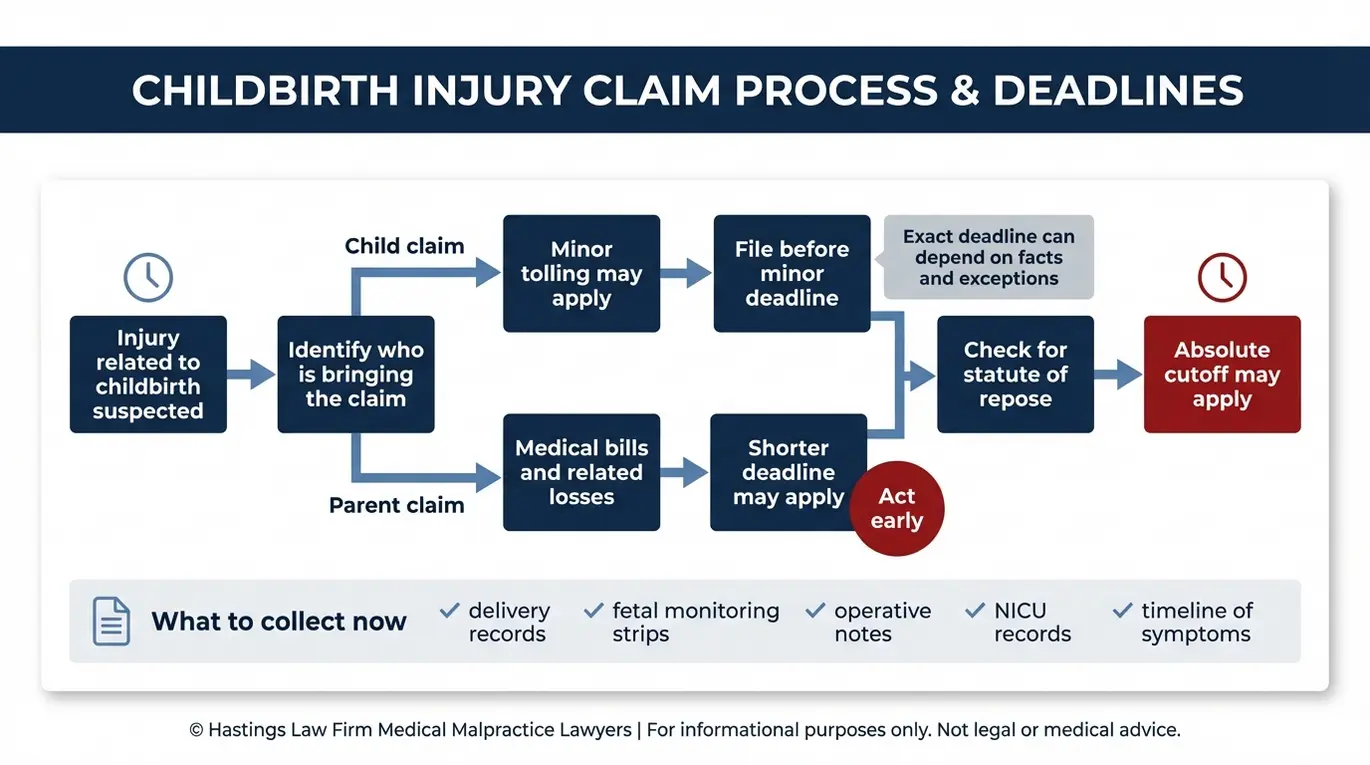
In Texas, the statute of limitations for medical malpractice is generally two years from the date the negligence occurred. But for minors who suffer birth injuries, the timeline works differently. The statute is “tolled,” or paused, for children, which allows parents to file a lawsuit on the child’s behalf beyond the standard two-year window. The child’s claim may be preserved until they reach a certain age, though the specific deadline depends on the circumstances of the case.
There is an important distinction between the child’s claim and the parents’ claim. Parents who seek reimbursement for medical bills or other out-of-pocket expenses related to the injury may face the standard two-year deadline. This separation of claims can create a significant financial burden. If the parents miss their two-year deadline, they may be personally responsible for the initial years of medical bills, even if the child later wins compensation for future care.
Texas also imposes a statute of repose, which sets an absolute 10-year outer deadline for filing a medical malpractice lawsuit, regardless of when the injury was discovered. Once that window closes, the right to file is permanently lost.
Texas birth injury laws include overlapping deadlines that can affect different parts of your claim in different ways. Evidence can also degrade or disappear over time. Consulting with an attorney as early as possible gives your family the best chance of preserving all available claims and securing the records needed to support them.
Because these rules are strict and fact-specific, speaking with a qualified attorney early protects your family’s ability to pursue every available legal option.
Contact the Texas Birth Injury Attorneys at Hastings Law Firm Today for Help
If your child suffered a brachial plexus injury during delivery, you deserve to know what happened and whether it could have been prevented. At Hastings Law Firm, that search for the truth drives everything we do. Our mission is to restore the trust that was broken and to secure the resources your child needs for the future.
We handle brachial plexus injury cases on a contingency fee basis. You pay no attorney fees and no costs unless we recover compensation for your family. Our free, confidential case evaluation is led by a patient advocate who will listen to your experience, review the details, and help you understand whether you have a claim.
You do not have to carry this alone. Contact our Texas Brachial Plexus Injury Lawyer team today by calling our office or completing our online form. Let us help you find the answers your family deserves.
Frequently Asked Questions About Brachial Plexus Malpractice in Texas


This content was researched and written by the Hastings Law Firm editorial team, which includes attorneys, medical professionals, and experienced researchers. Our writing is informed by internal knowledge and practical experience, and we cross-check critical details against authoritative sources cited throughout. Every piece undergoes human-led fact-checking and legal review. Because legal and medical information can change, if you spot an error, please contact us. Learn more about our content standards and review process on our editorial policy page.

Tommy Hastings, founder of Hastings Law Firm, is a board-certified personal injury trial lawyer dedicated exclusively to healthcare injury cases. Since 2001, he has represented injured patients and families in litigation against major hospital systems, pharmaceutical companies, and negligent healthcare providers nationwide. He has handled numerous high-profile cases that have drawn national media attention and resulted in multi-million dollar recoveries. He draws on that experience in his writing, helping readers understand how these cases work and what options may be available to them.
